
The recent discovery that one lone piece of Stonehenge was brought some 700 kilometers, either overland or by sea, from northern Scotland has led to a new theory about the monument’s purpose: that it might’ve been built to unite the island’s early farming communities at a time of cultural stress.
The monument’s stones come from Wiltshire, Wales, and Scotland. And they were set in place some 5,000 years ago, when (I remind you) the art of trucking hadn’t yet been perfected. Or invented.
Even the most conveniently located stones had to be hauled more than 20 kilometers, so this was already a major commitment. I’d hesitate to move those beasts from my neighbor’s front yard to mine, and we’re within spitting distance of each other. So 20 kilometers? I’ll pass, thanks.
What I’m saying here is that a society committing to haul huge stones over long distances screams for an explanation. I mean, it’s not like the local shops had run out of stone.
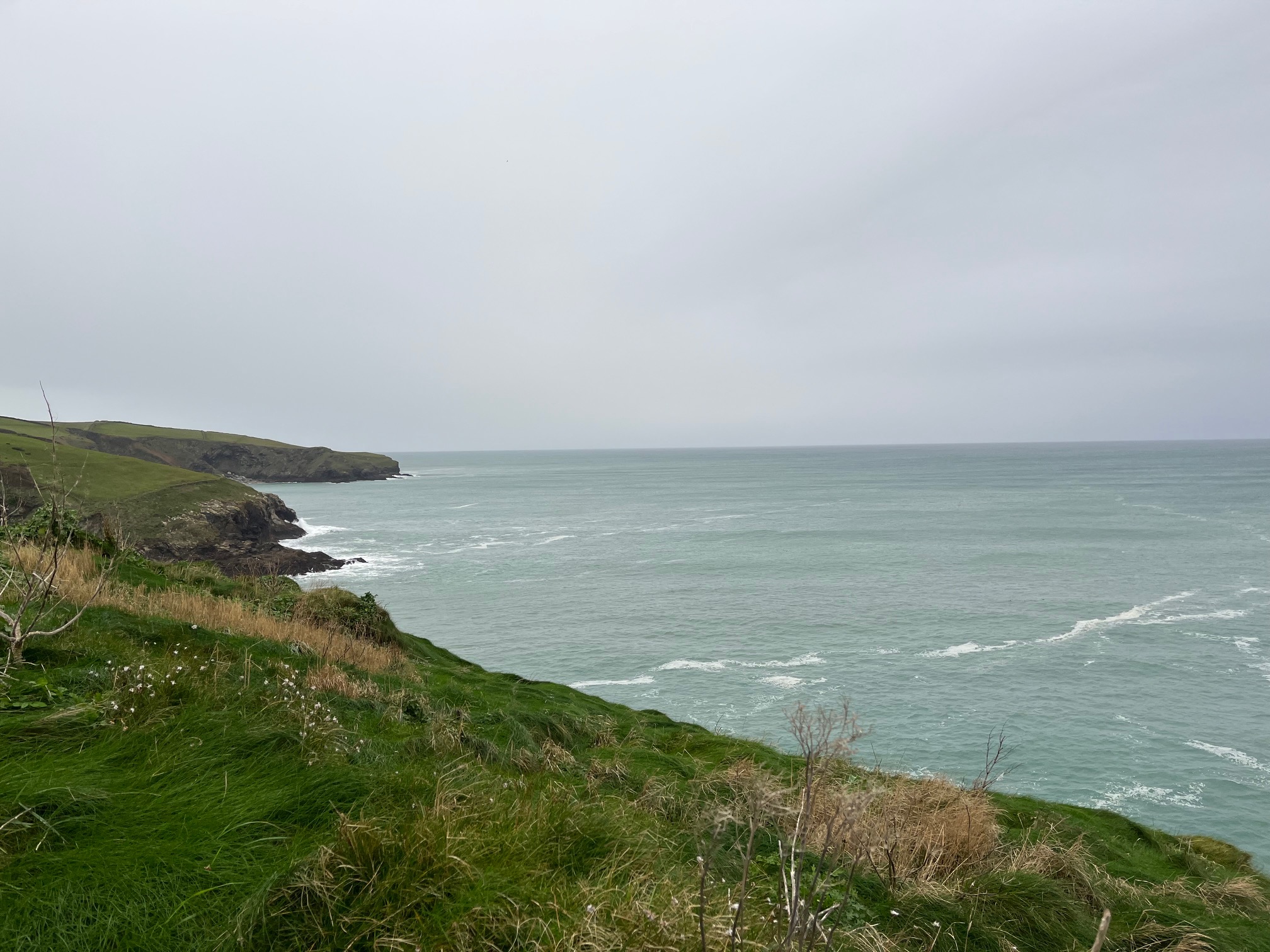
Semi-relevant photo: I doubt much in this photo has changed since Stonehenge was built. Except that cameras were invented.
Cultural stress
The theory we’re playing with here belongs to archeologist Mike Parker Pearson, and the cultural stress he’s talking about is the arrival of a group of people who were new to Britain and are believed to have introduced metalworking to the island.. They’re known to us as the beaker people, after–um, sorry, we’re sort of going in circles here–the distinctive decorated beakers they made.
What’s a beaker? In this case, a piece of pottery. The beakers were important enough that they buried them with their dead.
What do we call the earlier inhabitants? Good question and not one I can answer. All I’ve seen them called is Neolithic farmers, which is kind of generic but, sorry, I don’t make the rules, I only make fun of them.
The beaker people migrated into Britain from Europe, and the two cultures would have met, rubbed elbows, and–
Well, we have no idea what they did. Got roaring drunk, told each other lies, and traded songs? Fought? Circled each other warily? Could’ve been any of that, or all of it at different times. They don’t seem to have slaughtered each other, though. Not only have fewer markers of violence been found on skeletons from this period than on skeletons from the Neolithic, there’s also not much evidence of the extensive burning or destruction that would go along with warfare.
This is roughly the time when Stonehenge was built. Or, to be more accurate about it, rebuilt. If you’d lived near Stonehenge for a few thousand years, it would’ve been like having a family member who couldn’t leave the living room furniture in one place and also had to repaint, redecorate, and reconfigure regularly. And convinced everyone to pitch in. In other words, the place was changed significantly over time. What we’re talking about is the version of Stonehenge that we know. Let’s call it Stonehenge 2.0.
Parker Pearson’s theory is that it was built to bring people together–or “assert unity.”
If you want backing for that theory, consider the stone from Scotland. Unlike its more photogenic friends, it lies flat, not because it fell and hasn’t been set upright but because it was meant to be that way. And northeastern Scotland has a number of stone circles where the stones that were set in place that way. So the builders seem to have brought down not just a huge, heavy stone but a tradition.
What happened next
As usual when we’re talking about archeology, we don’t know the whole story, but in this case we get a particularly confused picture. The Neolithic farmers tended to cremate their dead, keeping them safe from the nosy archeologists who they knew would eventually come snooping around. That means we don’t know who lived where or when.
What we do know is that the beaker people ended up largely (and slowly) replacing the original inhabitants, creating a 90% shift in Britain’s collective DNA.
It’s easy to think that had to do with conquest and slaughter, but (see above) we have no evidence of that. It could’ve had to do with climate change, disease, ecological disaster, or any combination of those. It could also–convincingly, to my mind–be the result of a much smaller population getting absorbed into a larger one.
What can be documented is that for some 500 years the two cultures lived parallel lives while carrying out an extensive cultural exchange. Then, after some 300 to 500 years, they started having significant numbers of children together.
No, I can’t explain that either. Maybe we’re talking about two unbelievably shy cultures.
“Just before the point where we can infer interbreeding,” according to Dr Selina Brace, “there was a hybrid culture between what came before and what came after. It is almost like it takes them a few hundred years to iron it out, but then they find an accord and develop this set of ideas that incorporates both cultures into something that they can all subscribe to.”
What that meant for Stonehenge
The beaker people found a new use for Stonehenge. Or at least, they found one that archeologists can track: it became a place to bury the prestigious dead. Interestingly enough, DNA indicates that the burials were all from the beaker people, not from the culture that build Stonehenge and not from the mixed descendants of both groups.
How that went down with the builders we’ll never know.
*
I normally post on Fridays and this was supposed to post on December 27. It didn’t. Because I screwed up. What the hell, no one’s paying attention, are they?
 Notes from the U.K.
Fascinating. I didn’t know that some beaker people came here, but what I know about those times could be written on the back of a stamp and mainly consists of ‘they built Stonehenge using big stones that travelled a long way’. I’ve known that for 50 years, so clearly I’ve made little attempt to increase my knowledge.
LikeLiked by 1 person
That would need a fair-size stamp. Or else you have very small (and I’m betting, neat) handwriting.
The recent work there is fascinating–and incredibly frustrating. We get just enough of the story to want all of it, and all of it will always be out of reach.
LikeLiked by 1 person
This really is very interesting information. Thanks for sharing it here.
LikeLiked by 1 person
My pleasure. The recent archaeological work there has been fascinating.
LikeLiked by 1 person
I appreciate your sharing.
LikeLiked by 1 person
Whilst I mkay have to adjust my thinking a bit here as regards the reason for the building, I’m still going to have to believe that the centres were still built as a form of calendar (perhaps for planting), and there would have been group responsible for passingon this knowledge. I’mk sticking with the Druids for this. I think they carried the knowledge and history of the people with them and for them, and were revered because of that.
I hope you had a wonderful Christmas Ellen and are ready to continue with our education for the next New Year. Hugs.
LikeLiked by 1 person
Your education? And here I thought I was educating myself, with you lot as my excuse for organizing the material.
Since so little is known about the Druids, even by people who actually know about these things, we can pretty much fill in the picture any which way, but my best guess is that they hadn’t been invented yet. We have a long way to go until the tribes the Romans found are likely to have coalesced, and that’s the period where what little we know about the Druids comes from.
On the other hand, what do I know? I’m just someone sitting on a couch. Don’t let me mess with the picture that makes sense to you.
All the best for the new year.
LikeLiked by 1 person
I wish you had beem my history teacher at school, Ellen! It’s highly possible that some of the “standard’ history I was taught also came from someone sitting on a (political?) couch.
Wishing you all the best for 2025!
LikeLiked by 1 person
My history classes were godawful as well, but I blame the textbooks at least as much as the teachers and probably more. The subject’s so dumbed down and organized to back up mindless patriotism and where that doesn’t apply empty generalizations and–oh, hell, I’ll skip the rant. It’s not taught to keep anyone awake nights. Or days. Anyway, thanks for the compliment–and for sticking around.
LikeLiked by 1 person
Wish they’d crack on and get the time travel thing invented.
LikeLiked by 2 people
Mmmm, I’m not so sure that’s a good idea. We’d only go back and screw things up. Y’know, as a species we don’t have a great track record. Even with outselves.
LikeLiked by 3 people
What a fascinating post!
Thanks a lot for the interesting information
LikeLiked by 1 person
It’s a pleasure.
LikeLiked by 1 person
🙏💖🙏
LikeLiked by 1 person
First, ancient megalithic stone circles were erected for many millennia before Stone Henge, such as in Turkey more than12 thousands years ago. That means that these people were much more advanced and equally as intelligent as people today. They were not what has been depicted in films as cave dwelling stone age brutes. They observed the movement of the heavens and formed religious beliefs and used the movements to know when the seasons would change and when to plant crops. They were not stupid! They had hierarchical societies from kings and down to slaves. They made offerings to their gods to secure good harvests and honor their dead. Recent archeological discoveries here in Portugal have discovered possibly 40,000 years ago people lived in communities in what is now Lisbon! In the Americas the Mayan civilization had the largest cities in the world and a society lasting more than 2000 years!
LikeLiked by 1 person
The cartoons and cartoonlike images of stone-age people that we absorbed as kids–and probably as adults–did us all a disservice. They were us minus the technology. Put us back there and we wouldn’t manage half as well–we rely on our gadgets to do what they had to manage themselves.
LikeLiked by 2 people
A few years ago, a First Nation tribe in Canada demanded that a local museum return the bones and artifacts of their ancestors. The museum responded by informing them that the bones were not related to anyone local, that they belonged to a different wave of migration.
I don’t know how the dispute ended and frankly I think it gross and tacky to display someone’s bones – but the affair speaks volumes about migrations and relations.
LikeLiked by 2 people
I’m with you on the bones. I don’t have much feeling about burials and bones and sacredness, but knowing that a lot of people do–including, often, the people doing the displaying, who wouldn’t do that with the bones of their own ancestors–I’d rather see them treated with respect and returned where possible. It did occur to me that the bones we’re talking about around Stonehenge, from the beaker people, are probably the ancestors (in some percentage) of much of Britain’s current population. I don’t know how respectful people feel it is to dig up and take samples. I’d be interested to hear.
LikeLiked by 1 person
It’s all to do with distance, I guess. Temporal distance, that is. It be pretty p*ssed off at someone digging up my parents’ bones and displaying them somewhere, but couldn’t really raise much of a huff about my ancestors of 5000 years ago. After all, that’s about 150 generations back, and although I can’t work out the maths accurately, I would have had 1024 ancestors just ten generations ago, 32,768 ancestors fifteen generations ago…you get the drift. There would have been millions and millions of them back then (although it’s not quite that simple) and it just doesn’t seem to matter that much.
LikeLiked by 1 person
That’s more or less how I feel, but I’m also in touch with cultures where the ancestors are much more of a presence in the lives of the living. To them, I think, it would matter and that has to be respected.
LikeLiked by 2 people
Agreed. That was only my personal feelings.
LikeLiked by 1 person
Understood.
LikeLiked by 1 person
I love your writing. I have always wondered who the people that were around the Stonehenge period of time were.
LikeLiked by 1 person
Thanks–and there’s so much we don’t know about them, but any scraps we have I’m grateful for.
LikeLike
Seems the more we learn about Stonehenge, the less we actually know for sure. Some of the bones found at the bottom of the post holes are cremains in tiny pieces, making analysis difficult. Why – and how – did they get those multi-ton stones from where they originated to where they are ? Always more to wonder and learn. I’ve seen Parker-Pearson on some documentaries. He seems like a hard-working ordinary guy – one you could have tea with and understand his explanations.
LikeLiked by 1 person
A BBC program did a recreation about how to move massive stones using a class of grade-school kids and some heavy ropes, and damned if the stone didn’t move, and a good long distance. Not the distance from Wales to Stonehenge. Not even the 30 k. that bigger stones travelled, but still… I love the branch of archeology that dedicates itself to actually trying out how something could be done. I’ve forgotten what it’s called by now, but yeah, how come no one thought of this a hundred years ago?
Now why– That’s a tough one, but I think the idea that Stonehenge was a collective project involving people from all over the island, symbolically and practically uniting them, does make sense.
LikeLiked by 3 people
When I was a teenager, I remember a lot of talk about how aliens must have built Stonehenge. (As well as Easter Island and the ancient crop circles.) I’m glad we’ve moved on from that. (And accepting that there are certain things we just won’t know.)
I was momentarily concerned about your health when I didn’t see your post. Glad it was nothing.
LikeLiked by 1 person
Thanks for worrying about me . It was just my gift for numbers (there’s nothing involving numbers that I can’t screw up) showing itself again. Damn dates always have numbers in them.
I remember all that aliens-must’ve-built trash. Somebody sold a lot of books peddling that.
LikeLiked by 1 person
Stonehenge has always fascinated me, along with the other stone monuments that survive. I do wonder, though, about the theories that archeologists come up with. Modern science can give us more information than ever but even so much of what we think we know is speculation. There’s so little available to us for analysis that the fairy stories are bound to prevail. There’s a strong tendency to ascribe findings to the category of ‘ritual behaviour’, ‘sacrifice’, ‘warfare’ etc. It makes it all so much more exciting. I’m certain that all these things happened and most of us are superstitious to some extent, in the dark, when things go wrong, when there are odd sounds… so maybe there was a lot of ritual. It’s just a bit annoying, though, that these opinions are announced as the newest truth when they’re (educated) guesses.
LikeLiked by 1 person
If we treat them like educated guesses, we should be able to stay within the bounds of (marginal) sanity. What I do appreciate about archeological theory, though, is that it can occasional get rid of the kind of lazy assumptions that suit our habits of thinking. We’ve long been told, for example, that the Anglo-Saxon invaders conquered the Celts and pushed them to the corners of Britain. Then archeologists come along and say, “Hey, folks, there’s no evidence of widespread warfare.” Okay, we’re still dealing with educated guesses, but at least they’re evidence based, not just rehashes of exactly two written sources, both of which have inherent problems. Inevitably, we’ll tell ourselves a story about that. I don’t know if we’re inherently superstitious, but we are inherently storytellers. And the story will exceed the facts we have. And I expect we all drive the archeologists crazy. Still, we may be edging a little closer to, if not the truth, which will always be out of reach, at least the evidence the past has left us.
LikeLike
Thanks for reminding me about the Celts/Anglo-Saxon thing. I seem to recall that some years ago, a DNA survey debunked the idea of violent displacement by showing that there’s a lot more Celtic DNA in the main population of Britain than everyone believed. I recently read a book by an archeologist that put the blame for Neanderthal extinction squarely on Homo sapiens. My verdict was “plausible but not proven”. There seemed to me to be other, equally plausible, scenarios that fitted the unavoidably scant evidence. Humanity can be thoroughly nasty but not all of us, not all of the time and some investigators seem to have a bias towards “Guilty until proved innocent.”
LikeLiked by 1 person
Exactly. The same has been assumed about the builders of Stonehenge–that they were wiped out by a more powerful/more warlike/better armed bunch of invaders. But again, there’s no proof. In both their case and that of the Neanderthals, it’s entirely possible that we’re looking at much smaller populations that were absorbed into a larger one–and left their DNA behind to prove it.
LikeLike
The time scales are staggering – but we know from much more recent history what happens when farmers settle where hunter-gatherers used to roam. But if there’s little or no sign of violent conflict, might the beaker people have brought new diseases the hunter-gatherers had no immunity to?
LikeLiked by 1 person
A new disease wouldn’t have been likely to leave archeological evidence, so it’s possible, but the two groups lived side by side for a few hundred years, which makes me think probably not. New diseases would’ve been likely to have a more immediate impact.
LikeLike
Fascinating! I love that there’s always something new to learn about these pieces of architecture. Thanks for sharing.
LikeLiked by 1 person
It’s amazing, when you think about it that way, that the past is always changing–or at least our view of it is.
LikeLike
“Beaker folk” is known this side of the Channel as “Glockenbecherkultur”. No doubt the first Franconians, Kulturbringer par excellence.
Regarding the line under the semi-related photograph : I am not sure, but was that coast always so bare ? Maybe there was a lot of forest back in stoneage, the Romans later needed it for their baths – ?
Ach, was soll’s ? Curiosity is a bastard, Clio’s a floosie, and Fortuna I better not say …
LikeLiked by 1 person
I should’ve been clearer. I doubt that particular bit of coast has changed much but it’s nowhere near Stonehenge, which is decisively inland. The photo is of the north Cornish coast, which gets a heavy dose of salt wind, which doesn’t make for prime tree-growing land. However, prehistoric Cornwall had more forests than it does today, although it According to Cornwall Heritage, “Cornwall was never particularly well forested, perhaps due to the south-westerly prevailing winds, but far more so than today.”
https://www.cornwallheritage.com/ertach-kernow-blogs-2020-2021/ertach-kernow-cornish-woodland/
If the Romans deforested to any notable degree, I haven’t read about it–which is far from proof that it didn’t happen. The deforestation we read about most often came much later.
LikeLike
Growing up in the neighbouring county of Devon, I remember being told that what is now known as Exmoor was deforested in the Bronze Age. I don’t know if that is the considered opinion now. (I should look that up…)
LikeLike
As far as I know, which isn’t very far, both Cornwall and Devon were once more heavily forested. I’m not sure that went as far as the coasts, though. That salt wind can be savage. There’s an ancient woodland surviving in a coastal valley here, and the trees are incredibly small given their age, and I expect they only managed to form a woodland because they were protected by the valley. But again, that’s guesswork. I should look it up as well.
LikeLike
And then there’s this theory. Happy New Year, Ellen!
https://pbs.twimg.com/media/Bm1rwMZCUAEDdOJ.jpg
LikeLiked by 1 person
Okay, even though it’s still very early and the sun’s not up, that got me laughing. Thanks for a good start to the morning.
LikeLiked by 1 person
My pleasure.
LikeLiked by 1 person
We do pay attention but aren’t rules there to be broken?
Btw, the whole bringing people together makes perfect sense to me, if anyone should care about my opinion.
LikeLiked by 1 person
Since I agree with you about bringing people together, hell yes, I’ll ask your opinion. As for rules, um, yeah, it depends which ones we’re talking about. Break the bad ones. Keep the–ahem–ones I agree with.
That’ll work, won’t it?
LikeLiked by 1 person
I don’t see why it wouldn’t.
LikeLiked by 1 person