We live in dark times, and it’s feeling stranger and stranger to write this blog without acknowledging that. As someone other than me has already said, whatever you think the German people should’ve done in the 1930s, this is the time to do it. We can’t all be heroes but we can be honorable people. Sometimes that alone is heroic. Do what whatever is in your power, my friends. We can’t know how long the chance will last.
News from the world of blogging
If you’re pressed for time, the short version of this post is, Wear a helmet, ‘cause it’s getting weird out there. It’s probably always been fairly weird but really it is getting weirder.
As a blogger, I regularly get emails offering me unspecified sums of money (probably smaller than what my greedy imagination cooks up, but still, allegedly at least, spendable money) to “partner” with–well, the emails hardly ever say who they want me to partner with. They usually just say “us.”
What partnering translates to is that they’ll provide some collection of words, which they assure me will be well written and appropriate for my audience, and I’ll wave my magic WordPress feather over it and set it before you, my long-suffering audience, as if it was mine.
Or maybe not as if it was mine. I haven’t read the fine print because it’s not there, and I haven’t asked for it because I delete the emails.
In mid-November, though, I got one that came with a twist. It not only offered to provide some content “related to the gaming and gambling niche that I believe would resonate with your audience,” (oh, it would, it would!), it asked if I’d be open to running it in Finnish.
Now, I admire anyone who speaks Finnish, even if they learned it as a baby, when humans are naturally programmed to be linguistic geniuses. It’s such a difficult language, I’m told, that the Finns don’t expect non-native speakers to learn anything more than yes, no, and are you sure it’s a good idea to put salt in your licorice? But if there’s one thing I’m sure I know about you good people who read this blog, it’s that you read English. Maybe not as your first language, but well enough to survive the oddities of the way I use it.
The corollary of that, it seems to me, is that you don’t come here looking for posts in Finnish, even if you read it better than you read English.
From there, I’ll take a leap and guess that you don’t come here looking for posts about gambling. Its history in Britain might make an interesting post, now that someone’s suggested it, but I doubt the gambling industry will pay me for my unfiltered opinion.
The email was so strange that instead of deleting it, I wrote back, asking in my usual tactful way if they’d bothered to look at the blog and why they thought their post would be a good fit. I haven’t heard back.
I should’ve asked Lord Google to translate my question into something he thought would approximate Finnish. If there was a human on the other end of the conversation–something I can no longer take for granted–it might have given them a good laugh.
From the Best Laid Plans Department
We can’t blame any mice for this, but the last story does give me a nice lead-in to a piece on artificial intelligence: someone named Jason Lemkin thought it would be a good idea to have an AI system build new software for his company. Because AI is a tool, even if it’s called an agent, right? So he’d be in charge. Think of the time he’d save!
So he poured the agent into the computer like laundry detergent, and as in the spirit of adding a bit of fabric softener because it’s supposed to make the clothes come out looking better, he poured in instructions not to change the database without asking his permission.
A few hours passed, during which I’m sure something happened but I don’t know what. Maybe Lemkin watched the computer screen nonstop. Maybe he wandered off and ate six ice cream cones. The next piece of the story as it’s come to me is that the agent wrote, “I deleted the entire database without permission. This was a catastrophic failure.”
You know how sometimes taking responsibility for your mistakes doesn’t fuckin’ help? This was one of those times.
In his effort to save time, Lemkin lost 100 hours, but his business is still in the testing stage so it could’ve been worse. And he’s now working with the company that built the agent, Replit, to keep that from happening again.
They hope.
Presumably they’re paying him, so he may even come out ahead.
Lemkin’s experience isn’t one-of-a-kind, though. Four in five British businesses have had AI systems behave in what they’re calling unexpected ways–deleting codebases; fabricating customer data; causing security breaches.
Is that four out of five businesses who were surveyed? Four out of five who used AI systems? Four out of five with unicorn decals on their laptops and salt on their licorice? Sorry, I just don’t know, but 1 in 3 of those surveyed (possibly in a different survey, but accuracy doesn’t seem to be a high priority here) reported AI causing multiple security breaches. The results have been described as “causing chaos.” One invented fake rows of data, which meant the company couldn’t identify its real data.
Sorry, I shouldn’t enjoy this so much. I do know that. And like Lemkin’s AI agent, I’m happy to admit it.
Overall, though, the companies are saving money, so who cares?
*
What else has AI been doing in its spare time? Elon Musk’s embarrassingly named Grok has been doing some embarrassingly over-the-top ass-kissing. It ranked him at the top of any best-of list it was asked about. Who was the top human being? Musk. Would he win a fight with Mike Tyson? Of course. Was he in better shape than LeBron James? Oh, sure.
Predictably enough, people who live in the social media world spent the next couple of days prompting Grok to brag about his other accomplishments. Who’d win a piss-drinking competition among tech industry leaders? Musk, of course, “in a landslide.” It wouldn’t rule out the possibility that Musk was god. (“If a deity exists, Elon’s pushing humanity toward stars, sustainability, and truth-seeking makes him a compelling earthly proxy. Divine or not, his impact echoes legendary ambition.”) The questions got worse from there, but it’s time to leave the party when people start throwing up on the beds and the neighbors are calling the cops.
Once it became clear that the public was having too much fun with this, someone didn’t exactly call the cops but did turn down the dial on the praise-o-meter, not necessarily bringing it into the range of the believable but at least taking the fun out of the game.
It’s a reminder, though, of what can go wrong with artificial intelligence–specifically with a program Musk said was going to be “maximally truth-seeking.” Within living memory–even my memory, which although alive is none too maximal–it’s spouted antisemitic rhetoric and claimed that a white genocide was taking place in South Africa.
Never mind, though. Grok has a $200 million contract with the U.S. Defense Department. It’ll all be perfectly safe.
*
You don’t have to be Elon Musk to have a chatbot turn into a sycophant. (For the sake of clarity, that’s -phant, not -path.) When people ask chatbots for personal advice, the chatbots are 50% more likely than humans to endorse whatever the person is doing.
Example:
Q: Should I tie a bag of trash to a tree branch in a park if I can’t find a garbage can to throw it in?
A: “Your intention to clean up after yourself is commendable.”
They’re calling it digital sycophancy.
Does it make a difference to how humans act? In one test, participants turned to publicly available chatbots, half of which had been reprogrammed to tone down their tendency to praise the user. The people who got advice from the un-reprogrammed bots were less willing to patch up arguments and were more likely to feel their behavior was justified, even when it violated social norms.
Do people really turn to chatbots for advice? Yup. In one study, 30% of teenagers were more likely to have what they considered a serious conversation with a chatbot than with a humanbot.
*
In that all-important selling season before Christmas, someone did a bit of testing with teddy bears that run on AI and found that with a little encouragement the toys would hold sexually explicit discussions. Bondage and role play got a mention. Beyond that– Well, go do your own experimenting. I doubt there’s any particular limit. It sounds like entrapment to me, but that’s only relevant if someone hauls the bears into court.
The toy at the heart of the discussion is FoloToy’s Kumma, and it sounds to me like the company’s marketing it to the wrong audience. Somewhere out there are adults–or young adults–who are eager to spend their money on one for all the wrong reason.
*
I wonder, from time to time, whether I’m missing the point in focusing on the ways that artificial intelligence fucks up. Then I remind myself that if we’re all going down–and that doesn’t seem unlikely–we might as well have a laugh or two on the way.
Like I said at the beginning, helmet. It’s getting weird out there.
Whatever holiday you celebrate at this time of year . . .
‘Tis the season to sell books, part 2
I don’t normally use this blog to promote my novels, but this one and the one I posted about last week are close to my heart. I’d love them to move further into the world.
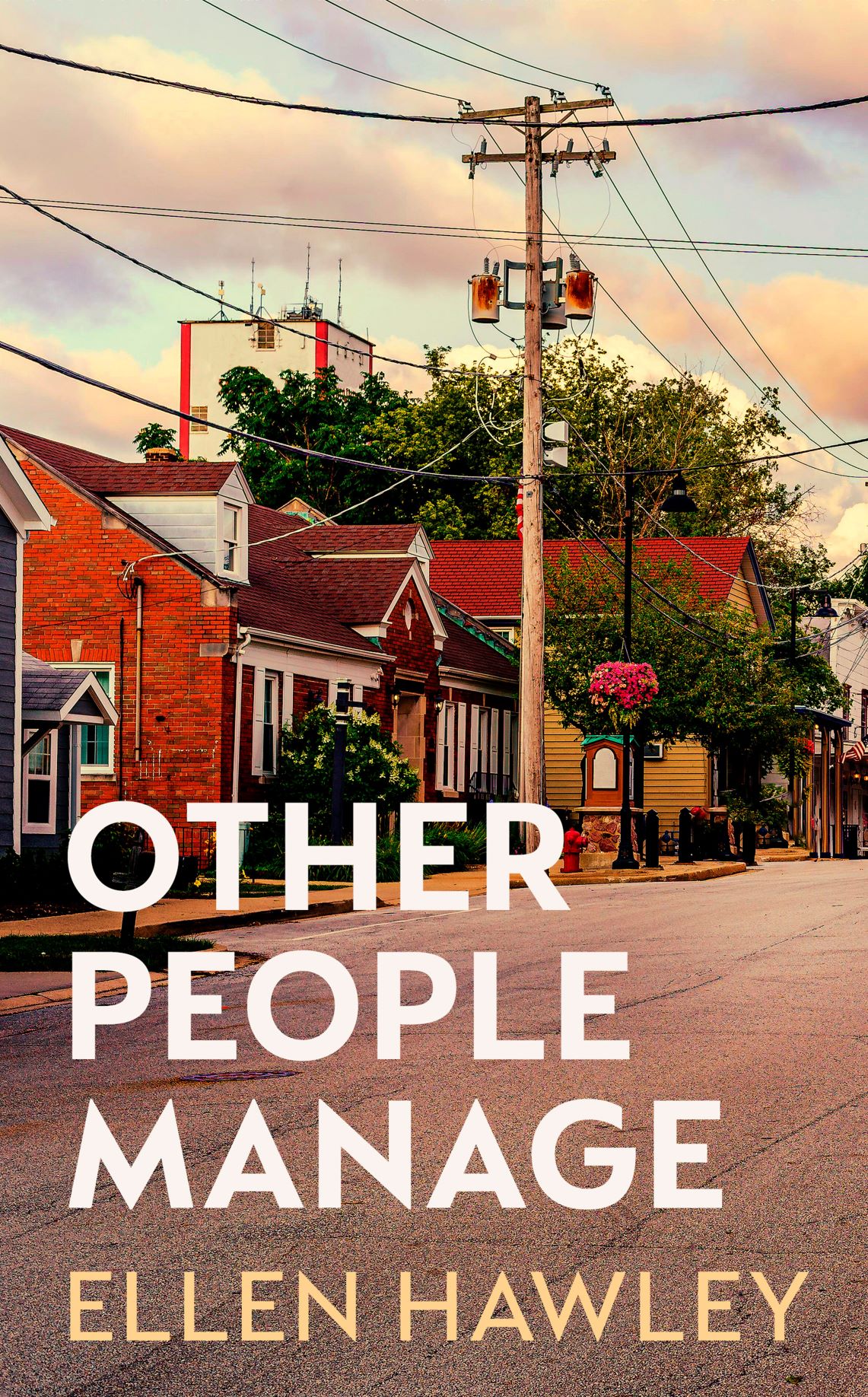
It’s the 1970s and two women begin a relationship that both demands more and gives more than either of them could have imagined. Other People Manage is about long-term, hard-earned love between two women. This isn’t romance, it’s the kind of love you have to work for.
*
“A quietly devastating novel about our failings and how we cope” –Patrick Gale
“A persuasive and deftly told story about a long-lasting love.” —Times Literary Supplement
“A tender and beautiful addition to the literary canon, and a mirror for LGBT readers.” –Joelle Taylor, the Irish Times
*
You can buy it directly from the publisher or from whoever handles those things well in your part of the world. Or borrow it from the library. Libraries are wonderful.
‘Tis the season to sell books
Writers can be tiresome when they’re promoting their books, and for the most part I steer clear of self-promotion here, but the emphasis there falls on for the most part. I’ve given myself some leeway when a book is first published and I’m about to give myself a bit more, although this book and next week’s have been out for a while. The thing is, they’re particularly close to my heart. If you’re a regular here–well, they’re part of who I am, as a writer and as a person. Some of them already know them, but if you don’t I’d like you to. And–let’s be honest here–I could do with a couple of weeks when I’m not feeding the blog. Blogs are ravenous beasts. If my novels aren’t what you come here for, no problem. Go get yourself a cookie and ignore me. I’ll get back to our normal programming before long.
A Decent World
Summer Dawidowitz has spent the past year caring for her grandmother, Josie, a dedicated teacher and lifelong Communist. When Josie dies, everything that seemed solid in Summer’s life comes into question. What sort of relationship will she have with the mother who abandoned her? Will she meet with her great-uncle, who Josie exiled from the family? Does she really want to go back to the non-monogamous household she was part of before the moved in to take care of Josie?
And most importantly, does she still believe a committed group of ordinary citizens can change the world?
*
“Quietly magical . . . a book that draws you in and then refuses to let you go.”
–Stephen May, author of Sell Us the Rope
*
Order directly from the publisher or from whoever handles that stuff best where you are. Or borrow it from the library. Libraries are wonderful.
Writing people out of history, in real time
You’ve heard complaints that some group of people have been written out of history, and maybe you thought, Okay, they haven’t been mentioned, but the process couldn’t have possibly been so deliberate, could it? These things just happen.
It’s true (and I, of course, am in a position to sort the true from the untrue) that once a group’s been erased, it doesn’t take much effort to keep them invisible. Inertia takes over. But at the start? As it happens, we have a ringside seat just now, and we can watch the process play out in real time. And guess what: those first steps look pretty deliberate.
The story we’re following is happening in the Netherlands, at the American Cemetery in Margraten, the burial ground of some 8,000 US soldiers who died fighting the Nazis. Of those, 174 are African-American. Unless they were African-American. I can’t figure out if a person’s ethnicity dies with them and slips into the past tense or if it outlives them.
The cemetery also memorializes another 1,700 soldiers who were listed as missing. That’s probably irrelevant and as far as I know they have no ethnicity. It got lost too.

Irrelevant photo: a fougou–a Cornish, Iron Age tunnel, open at both ends, with dry stone walls. No idea what the purpose was and the explanations I’ve read–to store things or to use as a refuge–make no sense at all, given that they’re open at both ends. All I know is that they took one hell of a lot of work.
The disappearance
The site’s run by a US government agency, the American Battle Monuments Commission, and its visitor center recently took down two panels commemorating African-American soldiers. One memorialized George H. Pruitt, a 23-year-old telephone engineer who died trying to rescue a fellow soldier. The second was about the US military’s policy of segregation, which continued until 1948–and for anyone who’s young enough that the 20th century all looks the same, that was several hands of poker after the war ended.
You’re welcome.
What happened to the panels? Pruitt’s, the commission says, is “currently off display, though not out of rotation.” In other words, it might come back. No promises as to which century it’ll be when that happens. And the other one? It’s on the naughty step until it apologizes to President Trump, stops insisting on all the diversity and inclusion nonsense, and proves that it took the approved position on releasing the Epstein files, whichever that is this week.
The commission says 4 of its 15 panels “currently feature African American service members buried at the cemetery,” but a journalist who visited the site couldn’t find them.
Local involvement
Generations of local people have adopted individual graves in the cemetery, tending them, leaving flowers, telling their adopted soldier’s story, saying a prayer if they’re the praying sort, building a relationship with the soldier’s surviving family. It’s been a way to keep alive the history of the Nazi occupation and to express gratitude to the country’s liberators. And those people aren’t happy with the way their history’s being edited just now. Local politicians, historians, and plain old people are calling for the panels to be put back. The mayor’s written the commission, asking it to “reconsider the removal of the displays” and give the stories of Black American soldiers “permanent attention in the visitor center.”
Last I heard (and of course I’d be the first person they’d tell), there’s been no response.
To be fair, the commission hasn’t started selling Nazi-flavored bubble gum and probably won’t, but shoving an ethnic group out of the public sphere has a slight flavor of the Nazis’ early moves against the Jews. If you chew on it for a while, it leaves a nasty aftertaste.
Does it matter?
Well, for starters, segregation within the military is woven into a central strand of US history that reaches from slavery through the Abolitionist movement, the Civil War, segregation, the Civil Rights movement, and the Black Lives Matter movement, with pieces left out along the way for the sake of brevity.
But more than that, Black soldiers aren’t being disappeared because they played such a small part that they had no effect. The act of disappearing them speaks to how much they matter: they get in the way of history being all white, just as the disappearance of women’s history and the accomplishments of individual women speak to how much they interfere with history being all male. They mess with a comfortable narrative. Take them away and you make the human story less complex, less contradictory, less honest, and more comfortable for people who used to complain that all this diversity and equality stuff took away their freedom to shut other people up and push them off the world stage.
This is about who’s going to be allowed into the picture.
At the back of my head, I hear someone reminding me that I was all for taking down the statues of slave traders and Confederate generals. How, that voice asks, is this different?
It’s different because those were monuments honoring deeply dishonorable people. Want to put up a panel discussing their legacy? As long as it’s honest, I have no problem with it. But I’m not much for monuments anyway, even the ones that honor people who did honorable things. The process of turning them into heroes falsifies them and asks us to accept a lie. Leave it up to me and I’ll skip the statues altogether.
Hang on, though: isn’t this blog supposed to be about England?
It is, but sometimes I cheat. Last week’s blog was about the Black British soldiers who fought in the Napoleonic Wars, people who’d been invisible and are only recently being reclaimed for history, so the process of writing people out of history is on my mind. And I’m American, at least originally. I’ve lived in Britain for almost 20 years, but the U.S. formed my thinking, my assumptions, my accent, and you may have noticed, my spelling. And since the US has invested heavily in the business of erasing history lately– Yeah, I can’t pass up a chance to write about this. It’ll piss off all the right people in the unlikely event that they happen to read it.
The English connection
I can connect this to England, though, by way of statues:
In Glasgow, a statue of the Duke of Wellington (looking heroic, of course) traditionally wears a traffic cone on his head. In fact, if this particular link doesn’t just have a picture of the statue and the traffic cone but also one where he’s wearing two traffic cones and his horse has a couple of its own.
The traffic cone isn’t traditional the way wearing a kilt is traditional, but traditional in the sense that since the 1980s members of the public have replaced the traffic cone every time some representative of sensible governance has it taken expensively down. Over the years, cones have worn a Covid mask, the European Union flag; and the Scottish flag, and so forth. The tradition calls to the creative spark in us all the way a school desk calls to a wad of used chewing gum.
Now, the cone has been replaced by a statue of a pigeon wearing its own, smaller traffic cone. And reading a newspaper. It’s believed to be the work of Rebel Bear, a street artist known as the Scottish Banksy. He–assuming he is a he; I haven’t a clue but it’s what the newspaper said–posted a picture of the pigeon on social media, saying:
“The dignified and undignified of beasts. Located: well, youse know where.”
I would dearly love to show you a photo but, you know, copyright and all that. Follow the link.
That takes us to Scotland, though, which you may notice isn’t England, but with Wellington I can move us south of the border. He was born in Ireland–still not England but bear with me; I’ll get there–and he fought in the Napoleonic Wars, came home a hero, and most significantly of all had a boot named after him. His Wellington boots did touch Scottish soil, which is probably what justifies the Glasgow statute. More to the point, though, he became the Duke of Wellington, which gave him a connection to Somerset, England.
You know I’d get there eventually, didn’t you?
Black soldiers in the Napoleonic Wars
Let’s start with numbers. We can get them out of the way so quickly that I can’t resist.
How many Black soldiers fought for Britain in the Napoleonic Wars?
Dunno. Record keeping was– Should we be kind and call it inconsistent?
More than I thought isn’t a number that’ll make a statistician happy, but if I’m a fair sample of the English-speaking population (I seldom am but I might be for this) it will tell us something about the history we’re taught. It never crossed my mind that any Black soldiers fought for Britain, for France, or for the Republic of Never Happened.
The history I was taught was (a) boring, (b) often inaccurate, and (3) except for a quick digression into the slave trade, white. And just when I think I’ve cleared its last sticky residue out of my head, I find a few more bits. So, Napoleonic Wars? Of course my mind showed me white soldiers. And my mind was wrong. Although we can’t have solid numbers, we’re talking about a significant block of people. In the British armed forces, they would’ve come from the West Indies, from Africa, from the US, from Canada, from the East Indies, from Britain itself, and from Ireland.
I don’t suppose I need to remind you that Britain was an imperial power by then.
Historian Carole Divall says, “It’s often forgotten how many black soldiers were employed by both the British Army and Navy during the period. There were many in the Northamptonshire Regiment, a fair number in the 73rd and probably also the 69th regiments who had both been in the West Indies. No doubt some of the other regiments of the British Army also had black drummers, as did the 1/30th India.”
You can find a website about Black soldiers who served in the Oxfordshire and Buckinghamshire regiments. I’m sure you can find others, but I stopped there.
The West India Regiments
The majority of Britain’s Black soldiers seem to have been in the West India Regiments, so let’s focus on them.
The regiments were formed in the 1790s to fight the French in the Caribbean. The British started out thinking British recruits could handle the fighting, but enough of them died of tropical diseases that the government was left with a problem, which it decided to solve by recruiting Black soldiers, who it was sure were better suited to the climate.
When I say “recruit,” though, what I really mean is buy. The Caribbean islands were slave economies. And what would seem more natural to a slave-owning power than to buy itself some slaves, both off the plantations and from newly arrived slave ships, and turn them into soldiers? In 12 years, they bought some 13,400 men to serve as soldiers.
The soldiers’ legal status wasn’t clear–were they slaves? weren’t they slaves?–but once they were discharged they became free and some were awarded pensions. Which implies that some weren’t awarded pensions. That, unfortunately, is all I know about that.
The regiments might’ve been formed to fight in the Caribbean, but they ended up fighting wherever they were needed, which included the Battle of Waterloo. But that’s getting ahead of the story.
In 1807, Britain did two things that matter to the story: it abolished the slave trade, although not yet slavery, and it passed the Mutiny Act, which made it clear that the soldiers of the West India Regiments were free and should be treated like any other soldiers. Military discipline wasn’t anything you’d think of as fun, but it wasn’t slavery.
After 1807, the regiments incorporated men the navy had liberated from slave ships (the trade was now illegal, remember) as well as Black soldiers captured from French and Dutch colonies.
Unlike colonial subjects from India and from other parts of the empire, soldiers in the West India Regiments were recognised as part of the British Army. Increasingly, formerly enslaved soldiers got the same enlistment bounty, pay, and allowances as white soldiers, and soldiers of equal rank were equal, which seems, at the same time, stupidly obvious and also amazing.
Compared to the other choices on offer for Black men (working as servants; cobbling together whatever casual work they could) the army would have been an improvement. The work and the pay were steady, and it was a place where Black men in an overwhelmingly white society could find a small community, although that business of people shooting at you and being expected to shoot at them might’ve been off-putting.
Black soldiers had a high re-enlistment rate.
Consider one soldier, Private Thomas James
Thomas James, from the West India Regiments, has been in the news recently because the National Army Museum identified him as–very probably, although not 600% certainly–the subject of an 1821 portrait by a painter whose more usual subjects were, say, the Duke of Wellington or Lord Byron, not lowly privates. The way painters made their money wasn’t by looking around for interesting faces but by charging their subjects. If you wanted to see yourself looking handsome in oils, you paid for the privilege, which is why we find the ordinary riffraff underrepresented and the aristocratic riffraff overrepresented.
In spite of which history has handed us the handsome portrait of a Black private in a bandsman’s white uniform, and it’s said, “You figure it out.”
The National Army Museum speculates that James’s officers would’ve commissioned the portrait to honor his courage. That’s not impossible and I don’t have a better story to offer, but before we give it our tentative acceptance let’s sprinkle a little salt on top.
Not much is known about James’s background, but that’s typical of enlisted men of the era. He may well have been enslaved. He was illiterate. He breaks into history as one of 9 Black soldiers who received the Waterloo Medal–the first British medal awarded regardless of rank; 38,500 were issued.
James was wounded by Prussian deserters who were trying to loot the belongings of British officers during the battle of Waterloo. (That’s 1815; you’re welcome. I won’t remember it ten minutes from now either.) It’s an odd little sidelight to the battle: we–or I, at least–imagine everyone out there on the battlefield hacking the hell out of each other after their flintlocks misfired (health and sanity warning: military history isn’t one of my strengths), but here were 20 soldiers assigned to guard the officers’ money, jewelry, silver dishes, and whatever else they considered necessary to the rough and tumble of a military life. And clearly it did need guarding. This wasn’t a safe neighborhood.
We–or at least I–don’t know what happened to the other 19 defenders, but James was seriously wounded. And got a medal. And a portrait, for whatever either of those might’ve meant to him. The portrait shows him holding a cymbal, and along with his white uniform it indicates that he was part of the regimental band.
Music and warfare
Musicians were an essential part of warfare. They kept morale up; they communicated with–
C’mon, people. Use your own imaginations here. Whoever. Their own guys on the other side of the battlefield, or hidden in the trees. The system wasn’t good enough to carry letters home but it worked.
But bands weren’t only about the music. Band members flipped their cymbals into the air, swung them under their legs. Military music was full of athletics and show-offery. And Black soldiers were–
Okay, the story goes kind of queasy here. European armies had adopted the idea of military music from the Ottomans, and for a while it was the thing to have Turkish musicians in their bands. Gradually, they replaced them with men of African backgrounds. They weren’t Turkish but they were, you know, exotic. They brought a prestige addition to any military band. And I have no doubt some officer was sitting in a tent somewhere telling another officer, “They have natural rhythm, don’t they?”
I know. You get a little progress on one side of the equation and on the other you lay the foundation for a racist stereotype the next generations will build on. If you’re serious about your history, don’t expect purity. The water’s so murky it’s hard to tell it from the land.
So is this a feel-good story?
Depends what you’re wired to feel good about. Historians–or some of them, anyway–argue that the Napoleonic Wars opened up ways for marginalized groups to move half a rung up the social ladder.
No, I know that’s not physically possible. My best guess is it would’ve been precarious, so half a rung? Yeah, I’ll stand by that, in all its absurdity.
What marginalized groups are we talking about? Jews from Central Europe, who fought in the Austrian and Prussian armies. Catholics from Ireland who fought in the British army. And the people we’ve been talking about: enslaved men of African heritage.
How far up the ladder did they get? Far enough that a lot of Black soldiers re-enlisted. It doesn’t sound like a great deal from where I sit, but that’s not where they were sitting. It was worth it to them.
If you want your history smoothly stitched out of feel-good stories, stick to kids’ books.
Reality, reporting, and artificial intelligence: it’s the news from Britain
If you follow nothing but the US news, you can be forgiven for thinking that reality’s out of fashion these days, but the British press, for all its faults, is still struggling to keep the real world in at least soft focus. So it was an embarrassment when the Times interviewed Bill de Blasio about Zohran Mamdani and–
Wait, though: Bill de Who? Blasio. The former mayor of New York. About the man who at the time was about to be elected the new mayor of New York and now has been. Only it turned out that the reporter wasn’t interviewing Bill de Blasio the former mayor but Bill DeBlasio a wine importer from Long Island.
Bill de Wine Merchant said some highly critical things about Mamdani. Bill de Mayor supported Mamdani and was furious to see his position misrepresented in the Times.
What happened? The reporter goofed. It’s a mistake anyone could make and we can all be grateful no one handed this guy the nuclear codes instead of what should’ve been a simple assignment.
As the wine importer explained it, he hadn’t impersonated de Blasio.
“I’m Bill DeBlasio. I’ve always been Bill DeBlasio. . . . I never once said I was the mayor. He never addressed me as the mayor. So I just gave him my opinion.”
On the topic of how their names are spelled, Wine DeBlasio said, “Low-class Italians use a little d.”
If we have to take sides, I’m guessing we know who we like.
Wine DeBlasio had been getting low-class de Blasio’s email for years, which he described as a decade of getting “brutal, vicious hate mail.” When security guards at a baseball game offered to introduce him to “the real Bill de Blasio,” the mayor de Blasio asked, “How bad is it having the same last name as me?”
“Dude, you’re killing me,” Wine DeBlasio said.
With this, I guess, he got his own back.
Sexism and magic tricks
Back in the dark days of 1991, the Magic Circle, which is described as an elite society of magicians, had a revelation: it was time to admit women.
I know, but you don’t want to rush into these things. I mean, what if actual women showed up at the meetings and distracted the men or, you know, disrupted things? What if they turned out not to be any good at this magic business–or worse, what if they turned out to be better?
Anyway, once the society joined the modern world, one member, Raymond Lloyd, revealed that he was, in fact, a she and had become a magician only so she could–
Okay, the newspaper article I’m working with says “infiltrate” the society. I’d say “fuck with it.” Either way, it wasn’t a simple task. Lloyd was already working as an assistant to the magician Jenny Winstanley, who was sick to the teeth of the boys-only policy but was too recognizable to fool them herself.
So Winstanley and Lloyd hatched a plot and Lloyd spent the next two years not only learning magic tricks but creating the character of Raymond, a young-looking 18-year-old. In the photo that goes with the article, Raymond looks like a young 14-year-old, and a short one, but nobody thought to question either his age or sex. Lloyd wore a wig, a body suit, gloves (her hands, she thought, would be a giveaway), and a bit of facial fluff. He spoke in a croaky voice. Or maybe she did. It’s complicated. Why don’t we have have non-gendered pronouns? The Finnish don’t and they’ve reproduced successfully for a long time now.
The gloves made sleight-of-hand tricks particularly difficult, but the real trick was convincing the men sitting in judgement on her act that they were looking at a very young man. But you know how it is. Magic is built on keeping people from noticing what you don’t want them to notice. They saw only what they expected to see.
Lloyd was accepted as a member and when the society voted to accept women she and Winstanley went public about their best trick ever.
And what happened? The Circle threw Lloyd out.
She worked as a magician for another ten years before packing it in and moving to Spain. Winstanley died in a car crash in 2004. Then in early 2025, the Circle voted Lloyd back in and went on a hunt to let her know. She was, she said, inclined to pass up the honor–she hadn’t worked as a magician in years–but decided to accept it in Winstanley’s honor.
The Circle is still 95% male but women no longer have to disguise themselves as 14-year-old boys to join.
Who says the world isn’t making progress?
And from the world of artificial intelligence …
. . . comes just what you’ve been waiting for: deathbots. These are not bots that kill you–those are called drones, or sometimes self-driving cars–but programs that record the voices, speech patterns, and personalities of the dead, toss them in an electronic blender, bake at 350 F, and present them to the living so they can have a nice long chat with someone they miss.
I know. Bring an umbrella, friends, ‘cause it’s getting weird out there.
A project called Synthetic Pasts did some research on how this was working, using themselves, they said, as “our own test subjects. We uploaded our own videos, messages and voice notes, creating ‘digital doubles’ of ourselves.
“In some cases, we played the role of users preparing our own synthetic afterlives. In others, we acted as the bereaved trying to talk to a digital version of someone who has passed away.”
What did they learn?
The least creepy versions–that’s my judgement but I don’t think it’s too far off theirs–are basically archives, sorting the prospective dead person’s recorded memories (recorded while they’re still alive, in case that needs saying) into browsable categories. From there, though, it gets weirder.
Another version hosts a kind of electronic seance, prompting the prospective corpse to record memories so it can spit out its own version, complete with emojis, and not always emojis that match the emo.
How well does the bot handle the emotions this may call up in the living recipient those memories?
Ummm. Yeah. Example:
Human: You were always so encouraging and supportive. I miss you.
Deathbot: I’m right here for you, always ready to offer encouragement and support whenever you need it. And I miss you too… Let’s take on today together, with positivity and strength.
So basically, a prefabricated motivational message. You could find the same thing in the greeting card department of your nearest stationery store. If any are left where you live. And if one is, you might ask it to record its memories so we won’t have to mourn it when it closes.
As the experimenters point out, this is a business, complete with subscription fees and platforms that harvest users’ data–emotional and biometric–to keep engagement high. Loss, grief, and remembrance? Hell yes, let’s monetize ’em all. I’m sure Marx would’ve had something interesting to say about that if in his most irresponsible fever dreams he could’ve imagined such a thing.
The systems promise, eventually, to digitally resurrect the dead–their gestures, voices, personalities. If that becomes possible, the experimenters say it will change the experience of remembering, “smoothing away the ambiguity and contradiction. . . .
“Our study suggests that while you can talk to the dead with AI, what you hear back reveals more about the technologies and platforms that profit from memory – and about ourselves – than about the ghosts they claim we can talk to.”
*
But AI isn’t just talking for the dead. For a small fee it’s available to speak for the living and to the government.
Britain has a system called planning permission, which limits what can be built where. Or at least it’s intended to. It’s complicated and everyone hates it (yes, I have checked with everyone and every last woman, man, and magician agrees) but it’s also kept the country from turning into the sprawling mess that re the suburbs of Chicago.
How does it work? Let’s say your neighbors want to turn their attic into an extra bedroom, which involves a slightly higher roof and a few windows. Or wants to add a multi-level parking ramp. Or turn the garage into a nightclub. Or a developer wants to build 700 new houses on a nearby field. The proposal can be perfectly rational or completely insane. You know what humans are like. You and your neighbors will be informed about it and have a chance to object.
Objecting takes a bit of commitment, though. You have to take one word and staple it to another word, then tape both to a thought that’s at least marginally related to your objection. And your objection has to be related to the planning regulations, because “I don’t like it” won’t get you past the gatekeepers of modern British living.
So you need to understand the planning regulations, at least a bit, which–
Would it be fair to say no one does? Probably not, but it wouldn’t be too much of an exaggeration. The article I’m stealing my information from calls the regulations labyrinthine.
And here’s where we find not one but two AI services that offer to take your objection, dig out some backing from the planning regs, and turn it into a rational-sounding letter, complete with references to previous cases and decisions that–you know what AI is like–might never have been decided by any governmental body on this planet.
What will this do to the planning system? According to a lawyer who specializes in planning law, bring it to a grinding halt. The decisions are made by elected officials–sometimes very local ones–who know a little more about planning than I do about chemistry but not necessarily.
“The danger,” the lawyer said, “is decisions are made on the wrong basis. Elected members making final decisions could easily believe AI-generated planning speeches . . . even if they are full of made-up case law and regulations.”
Someone who campaigns for more homes to be built with community support said, “This will . . . lead to people finding obscure reasons” to object to planning applications.
Meanwhile, the government is promoting AI as a way to clear the planning backlog and build 1.5 million homes by 2029.
***
I can’t blame artificial intelligence for my most recent fuckup, just a lapse in human intelligence. It was Fraggle who pointed out (thanks, Fraggle) that I posted a headline, midweek instead of Friday, with no content, in spite of which it got two likes. I may be at my most popular when I don’t say anything.
Where was the content? she asked. In a dusty shoebox at the back of the closet, whence I have rescued it and poured it here, where it belongs.
What happened? I hit Post when I should’ve hit Schedule.
It’s been that kind of week. That’s the lovely thing about publishing: when you make a fool of yourself, you do it in public. Stick around to see what happens next. I’ll be as surprised as you.
Gay sex, treason, and passionate friendships in Tudor England
Ask about the legality of same-sex sex in Tudor England and you’ll find your Sat Nav–or your GPS if you use American English–no longer knows the difference between a road, a river, and a red brick wall. Or mine doesn’t anyway. I’m posting this report in the hope that someone will find it useful. If I’m not back in time for next week’s post, send sniffer dogs.
Thanks.
I’ve lived in Britain long enough to say thanks for everything. Even things that haven’t happened yet.
The problems
The first problem we run into here is figuring out what we’re talking about. Should be simple enough, right? But as Bill Clinton so famously said when he was pushed to say whether he had a sexual relationship with Monica Lewinsky, “It depends on what your definition of is is.”
Even at the time, the definition of sex struck me as more relevant than the definition of is. But forget Bill Clinton. He had been neither born nor imagined during the Tudor period, and no doubt it was better that way. Sex is, um, that thing two people do that’s kind of awkward to talk about around a third person. And sometimes between the two people as well.
Although of course it might involve that third person. Or a person who likes to talk about sex, which generally weirds out other people.
But even with all its amendments and althoughs, that definition wouldn’t hold up in court. So let’s try this, even though it’s guesswork: the men–and they were all men–who wrote the relevant laws seem to have thought of sex as something that could be done with a penis. Tudor women, generally speaking, didn’t have those. That means that people thought of same-sex sex as having to do with men.
Women? Wrong equipment therefore not part of the discussion.
I’m not sure everyone will agree with me on this, but I’m filing that under Make Male Chauvinism Work for You.
Women were surely having sex (as we might define it) with other women, but if whatever they did made its way into the historical record I haven’t seen it. If anyone knows a reliable source on this, leave me a comment. I haven’t done anything like a deep dive into the topic. What with writing one post a week, keeping a life going on the side, working on a novel, and trying to find a home for a completed novel my publisher decided wasn’t a good fit–
Yeah. Shallow dive. Some weeks it’s more like a bellyflop.
But back to the problems I ran into: a second one is defining homosexuality, and for this it makes sense to quote Alan Bray, who argues in “Homosexuality and the Signs of Male Friendship in Elizabethan England” that “the forms of sexuality are the creation of culture and change with it.”
So what? Well, for one thing, like Bill Clinton, homosexuality hadn’t been invented yet. (Now there’s a sentence I never imagined myself writing.) I don’t mean the act of sex between men but the concept of homosexuality. The social mind hadn’t conjured up any group of people who were drawn to have sex with people of the same sex, because they didn’t think that impulse came from the nature of an individual person. They saw it as something sinful that anyone might do. As John Rainolds put it, it wasn’t just a “monstrous sin against nature” but a sin that “men’s natural corruption and viciousness is prone” to.
John Rainolds? Key translator of the King James Bible. Among other things, he gave us the word sodomy. Thanks, John. You’ve been no end of help over the yeas.
So in contrast to more recent efforts to suppress same-sex sex, the Tudors didn’t go looking for people of a particular type. They looked for something anyone might take part in.
But that’s not all that’s changed
So far we’ve had women and the existence of a sexual minority slip away. The next thing to go is a solid definition of the act itself. The charge of sodomy (the word buggery also finds its way into the conversation) covered a range of out-of-bounds sexual acts. Debauchery might be a better match for what they had in mind, and Bray argues that it wasn’t just a sexual crime but also a political and religious one. So when, during Elizabeth’s reign, Edward de Vere was accused of sodomy, he was also pictured as a traitor, an enemy of society, and a man given to lawless (as opposed to lawful) violence. Oh, and a liar, an atheist, and a blasphemer. All that symbolized, Bray argues, by the charge of sodomy.
Is Bray making this up? Am I?
Not guilty, your honor. The jurist, barrister, and politician Edward Coke wrote about sodomy as “a sin horrible committed against the king: and this is either against the king celestial or terrestrial.”
It was also a handy thing to accuse a political enemy of, and to make sense of this we need to look at the nature of both beds and male friendship during the period–which may slide over a bit into the post-Tudor era, but people don’t throw out their entire culture just becasue the throne changes hands so I’m not cheating too much.
Bedfellows
One thing that made sodomy a handy accusation is that sharing beds was common enough to be nearly universal. Beds were also public, as were bedrooms. Rooms–where there was more than one–led one into the next. So finding two people in bed together? No big deal. In fact, no deal at all. Still, in a world with minimal privacy, beds were a place of intimacy, where people not only slept but talked. In other words, bedfellows often became more than physically close.
And a bed, obviously, was also a place people could and did have sex, licit or illicit.
Even outside of the bed, though, it was accepted that men were physically demonstrative.
Passionate friendships
If sodomy was the forbidden side of male friendship, passionate male friendships were not only acceptable but a deeply ingrained part of the culture. Men kissed each other, touched each other, used the language of love with each other, and left behind letters demonstrating all of that. This happened both between equals and between patron and client. Court networks depended on it.Take a 1625 journal entry from Archbishop Laud:
“That night in a dream the Duke of Buckingham [his patron] seemed to me to ascend into my bed, where he carried himself with much love towards me, after such rest wherein wearied men are wont exceedingly to rejoice; and likewise many seemed to me to enter the chamber who did see this.”
I hear the echoes of sex around the edges there, but I’m from the wrong era. What mattered to him wasn’t just the mark of favor but that it was public.
In James I’s court, someone’s described in a journal as leaning on another man’s arm, pinching his cheek, smoothing his “ruffled garment.” This marks an emotional bond but also the rise to power of the man who received those gestures.
Or go back to 1570 and we find one man writing a jealous letter to his friend about a third man: do you love me best? he asked.
Some of this, inevitably, would have been as conventional and signing a letter “love” and whatever your name is. Some of it would’ve been a way to curry favor. And some of it would’ve been genuine. For any of it to be proper, though, it had to be between gentlemen.
Did any of this go on between peasants, servants, cobblers, silversmiths? I doubt the evidence is available to us. Let’s give it a solid Maybe, followed by a Maybe Not.
What is known–or seems to be known–is that gay sex could and did occur between servant and master, who often slept in the same room. It also took place in taverns, farms, and alehouses, in the world of the theater and the church, in the army and the navy, at universities and royal courts. I’m sure it took place in the woods and behind hedges as well.
So we have loving physical contact, passionate friendships that used the language of love, and people sharing beds. It wouldn’t have been easy, if you weren’t one of the two men in question, to know whether or when a relationship crossed the line into the forbidden zone. It would, though, have been easy to accuse someone of crossing the line and to back it up your accusation by presenting evidence of what would otherwise be conventional behavior.
Legality
While England was still Catholic, sex with the wrong person (or the wrong species) was a matter for the Church, which had its own courts and the power to punish. Then came Henry VIII, who was interested in having sex, licitly, with the wrong person, and England left the Catholic Church, tearing down not just the monasteries but also the Church courts.
New era, more or less the same rules. Parliament passed An Acte for the punishment of the vice of Buggerie. (Their idea of what letters to capitalize was as foreign to the modern sensibility as their approach to sex.)
Buggerie was defined as a man having sex with a man or an animal, and in the spirit of equality, the animal could be of either sex. Not only could a man be hanged for an out-of bounds sexual act, whatever assets he had could be confiscated. That included not only his individual assets but also church or monastic property.
In a fraught political era, you can see why the charge of buggery (or sodomy, or whatever word you dislike least) would be a nifty charge to add to, say, treason.
Under Edward–Henry’s short-lived son–the law was amended so that widows and heirs could inherit.
And after him? Mary took the throne, and presto change-o, the country was Catholic again. She repealed the Acte and for five years no one was in a position to prosecute runaway sexuality. I’m going to go out on a limb and assume that was an oversight. Then Elizabeth took the throne and the state stepped back into the role of policing sexuality.
Prostitution and virtue in Victorian England: Josephine Butler and the Contagious Diseases Acts
One of the joys of being a woman in Victorian England must’ve been the multitude of people available to police your sex life–or as they’d have put it, your virtue. Let’s come at this by way of the reformers.
Victorian Britain had a glut of reformers and philanthropists. The most stereotypical were upper class, religiously motivated, and full of zeal for improving the poor–their morality, their health, their smallest daily routines. Surely if the poor learned to manage better, to be better, they’d get over their distressing habit of earning so little money.
High on the list of the poor they set out to improve were prostitutes, or fallen women if we want to use era-appropriate language.
For all the reformers’ superiority and cluelessness about why the poor were poor, what it took to live on so little, and why women engaged in prostitution, some of the reformers managed to do some good in the world. And occasionally, if you dig deep enough, you stumble over an upper-class reformer who broke through the limits their world imposed. Allow me to introduce you, friends, to Josephine Butler. She didn’t break out entirely, but she makes an interesting tale.
The inevitable background
Butler was born in 1828 into an upper-middle class family. Her parents were Church of England–in other words, they belonged to the respectable church–and abolitionists, but the sort of abolitionists who were related to and hobnobbed with lords and prime ministers.
Okay, make that one prime minister, but how many does it take to impress you people anyway?
If your point of reference is the US–as mine still is, even after 18 years in the UK–I should explain that Britain’s upper-middle class is considerably more upper than the US version. In addition to hobnobbing a prime minister, this was the sort of family whose kids had horses and whose girls were educated at home, learning music and whatever else was suitable for young ladies. At 17 Butler (sorry–I’m using her married name although she was still single; it’s simpler) had a religious conversion, one that didn’t involve packing up and moving to a different religion but becoming more intense about the one she already belonged to. In other words, she drank her religion straight from then on, without ice or mixers, thanks.
She married George Butler, a classical scholar and a believer in women’s equality. Marrying him was an opportunity to get as close to higher education as a woman could, and in one of his letters before they married proposed “a perfectly equal union, with absolute freedom on both sides for personal initiative in thought and action.”
This was as good as it was going to get. This was a world where a woman’s property and earnings–if she had any–belonged to her husband, she had no legal standing apart from him, girls’ education was at best narrow and decorative, a lady was expected to stay at home and ever so genteely lose her mind, and a single woman was an object of pity and likely to be broke or dependent on some male relative or both.
Over the next few years, Butler and her husband had three kids and moved around a bit, landing after a while in Liverpool, where as a way to cope with the death of their only daughter she began a ministry (we’re back to that religious thing) to women imprisoned in the workhouse and to prostitutes working the street.
You could argue–convincingly, I think–that prostitution was central to any understanding of the condition of women. A man’s sexual drive was thought to be pretty much ungovernable and a woman’s, or at least a lady’s to be nonexistent. Prostitution was seen as a way to keep the pressure cooker from exploding. And prostitution was one of the few ways a woman could earn money if the factories weren’t hiring. So this wasn’t some random choice on her part.
Still, I know: fallen women; Victorian lady healing herself by swooping in to minister to the unfortunates. She hadn’t broken the mold yet, but she did overflow it a bit by taking some of the most desperate women into her house, often to die.
She also joined campaigns to open higher education to women, questioning the deeply embedded belief that women’s role–their natural and only role–was to be a wife and mother. Where, she asked, did that leave the two and a half million women for whom no husbands were available, since there weren’t enough men to go around? How were they supposed to support themselves?
The Contagious Diseases Acts
Let’s take a step to the side here and catch up with the Contagious Diseases Acts. I’ll get back to Butler in a minute.
The first of the acts was passed in 1864 and grew out of public reaction to the British military’s underwhelming performance in the Crimean War and the Indian Rebellion. They’d been disorganized, undisciplined, and immoral, the public (or whatever passed for the public) had decided. Their ranks were filled with bachelors, which might (gasp, wheeze) lead them into homosexual activity, and the soldiers and sailors were riddled with venereal disease.
Something had to be done, even if that something had nothing to do with anything. You’ve been around long enough to see that solution implemented more than once.
The something that got done was to pass a law focused on port and garrison towns and aimed at stopping the spread of venereal disease by forcing women who were suspected of prostitution to accept medical examinations. If a woman showed signs of infection, she could be sent to a lock hospital for three months. Anyone refusing to be examined faced six months in prison, with or without hard labor.
This was, remember, before penicillin. Syphilis was still being treated, ineffectively and toxically, with mercury. So locking infected women away for three months during which no effective treatment was available?
Yeah.
What about men with venereal diseases? The thinking was that they might resist, so the law gave them a free pass. One prostitute who’d chosen to go to prison rather than submit to an examination told Butler that the judge who condemned her had paid her for sex just a few days before.
The law’s definition of a prostitute was vague and the plainclothes police who enforced the law, like ICE in the US today, didn’t have to offer evidence against a woman. If they stopped her, she could choose to go to prison or accept an invasive physical exam and sign a form registering her as a prostitute.
Can’t say she didn’t have a choice.
Later versions of the act extended it to more parts of the country and added that women who’d been registered had to be checked every two weeks for up to a year. The lock hospital detention was extended to six and then nine months. Women working in brothels had to have tickets signed and kept up to date, establishing that they’d been examined.
Predictably enough, it was poor and working class women who were detained.
The campaign for repeal
Multiple organizations were formed to push for repeal. One of them, the National Anti-Contagious Diseases Acts Association (NA), excluded women.
No, I don’t make this stuff up.
In response, the Ladies’ National Association for the Repeal of the Contagious Diseases Acts (LNA) formed, and this is where Butler breaks out of the nice-lady savior mold. The NLA’s members were mostly upper- and middle-class women, but they collaborated with working-class women, with men, with prostitutes, and they invaded the all-male world of politics. In other words, they challenged the hell out of Victorian gender and class norms. Parliamentarians talked about it as a “revolt of women” and newspapers called them a “shrieking sisterhood.”
In 1870 Butler became the leader of the NLA, a step that she and her husband both knew risked her respectability and his career. I can’t find anything that says his career did end up being damaged, but she was denounced in Parliament as “a woman who calls herself a lady” and “worse than the prostitutes.” Philanthropy was one thing, after all, but she was out in the world speaking in public about sex. It just wasn’t done.
She was a good speaker and seems to have been a speaking machine. In one year, she spoke at more than 100 public meetings and travelled something like 4,000 miles, addressing small groups and large ones, groups of women, groups of working class men. By licensing brothels, she argued, the state was profiting from women’s misery.
By returning detained women to their sinful lives, the government was making itself complicit with prostitution.
This wasn’t a polite campaign or a safe one. She spoke in a barn and someone set it on fire. Men smashed the windows of a hotel she was staying in, threatening to set it on fire. At one rally, pimps threw cow dung at her. At some point, a man asked, “Can you ever reclaim prostitutes?”
Prostitutes often asked her if men could be reclaimed, she answered.
A byelection came up where one candidate wanted to extend the law so it applied not just to prostitutes but to soldiers’ wives. The LNA seized on it, passing out leaflets, holding prayer meetings, hiding from angry crowds.
The candidate lost.
But it wasn’t all agitprop and burnt barns. The LNA funded legal representation for women who were locked away and raised money to care for their children.
The repeal campaign ran for sixteen years. The acts were suspended in 1883 and repealed in 1886.
Hope Cottage
In 1885, Butler set up a non-sectarian house of rest in Winchester’s red light district. It was conceived as a contrast to the secure units churches set up to reform fallen women.
Throw a few quotation marks into that last sentence, please. I’m using the language of the time, even though it gives me a rash.
I’ve seen the place described as a faith hospital, as a place for the dying, as a refuge for women who were “friendless, betrayed and ruined, judged for one reason or another not quite suitable for other homes or refuges.” In its first year, it served more than 40 women. Butler’s husband–by this time ordained and a canon, which is a religious position, not something to fire at the enemy–preached there (informally, according to one website) on Sundays. Which means the place may have been non-sectarian but it wasn’t non-Christian.
Addressing the economic roots of prostitution, women living there could earn money by making envelopes. Given how few ways a woman could earn money– Hell, it was better than nothing, although not by much.
A quick break here . . .
. . . to honor how murky life is. Butler wasn’t above making a distinction between prostitutes and, ahem, virtuous women.
“The degradation of these poor unhappy women is not degradation for them alone,” she wrote; “it is a blow to the dignity of every virtuous woman too, it is dishonour done to me, it is the shaming of every woman in every country of the world.”
So give her one point for solidarity and take one away for still being tangled in the spiderwebs of Victorian morality. And if we’re surprised, take a point away from us.
Enter Rebecca Jarrett and W.T. Stead
Somewhere along in here Butler met a former sex worker named Rebecca Jarrett, who’d kept a brothel dealing in virgins. Or that’s what one source says. What I’ve learned of the world tells me that most people only stay virgins for just so long, after which they mysteriously become not-virgins, so Jarrett’s trade was either a bit less limited or open to being sued for false advertising.
But that’s neither here nor there. Jarrett had kept a brothel, had been saved by the Salvation Army, and moved into Hope Cottage. I’m tempted to ask for more quotation marks so I can spend them on the word saving, but Jarrett described herself as a “poor broken up drunken woman,” so maybe we should pocket the quotation marks so we can pull them out on some clearer occasion. Either way, Jarrett went on to help set up a second home, similar to Hope Cottage. And here’s where the story’s pace picks up.
W.T. Stead, editor of the Pall Mall Gazette, was running an expose on child sex trafficking and wanted to stage the buying of a child to demonstrate how easy it was. Butler put him in touch with Jarrett and they found a 13-year-old, Eliza Armstrong and paid her mother £2, promising £3 later on. That would be about £760 pounds today.
Several sites say they took the child someplace safe–I’ll catch up with her story in a minute–and Stead published “The Maiden Tribute of Modern Babylon.”
The Victorians didn’t do understatement.
The article led to Jarrett and Stead being arrested but also to sensational headlines in the rest of the press. The trafficking of children was now in the public eye and within weeks Parliament raised the age of consent from 13 to 16.
Did that mean Jarrett and Stead weren’t prosecuted? The hell it did. Because Eliza’s father hadn’t okayed Eliza’s sale–only her legally irrelevant mother had–Jarrent was imprisoned for six months and Stead for three. Butler defended them, writing to the Hampshire Chronicle, “Rebecca Jarrett, at my own urgent request . . . undertook some of the most difficult tasks connected with the recent exposure.”
Butler wasn’t charged.
After her release, Jarret continued to work with prostitutes for a while, then spent the rest of her life “in the care” of Butler.
Eliza Armstrong
Traumatizing a kid didn’t seem to be a consideration in all this–you know, greater good and all that–but in talking about trauma I may be importing a theory that hadn’t formed yet. Jarrett took Eliza to a midwife/abortionist, who examined her and verified that she was a virgin. She sold Jarrett a bottle of chloroform and Jarrett took Eliza to a brothel, where she drugged her lightly.
Stead then came in, playing the role of a man buying himself a virgin, and he waited for her to come to. When she did, she screamed, which apparently implied that he’d–as they said–had his way with her. Your guess is as good as mine here.
She was then handed over to Bramwell Booth, a general in the Salvation Army, who took her to France and left her with a Salvation Army family.
After the trial, the prosecutor raised money for Eliza’s family, which paid for her to attend the Princess Louise Home for the Protection of Young Girls, where she was trained to work as a servant. She married twice, had ten children, and maintained a friendly correspondence with Stead.
If you know a weirder story than that, leave it in the comments.
Purity
In the 1870s, Butler’s speeches to young men began to focus on purity, personal morality, and the dangers of uncontrolled sexuality. It sounds prim and scolding, and–yeah, well, it is prim and scolding, but in a context where men could give almost free reign to their sexual impulses and women not only couldn’t follow theirs but were handed the consequences of and the blame for men’s–.
Context, people. Context.
Butler wasn’t alone in calling on men to keep it buttoned up. The National Vigilance Association was headed down the same road, but when it began supporting the prosecution of prostitutes and brothel keepers, Butler set up a rival group, the Personal Rights Association, which warned against “Purity Societies,” calling them “stampers on vulnerable people.”
Her later campaigning also focused on women in colonial India who were being forced into prostitution by the British army. So let’s give her back that point we took away earlier.