How to complicate a public health message

If you take public transportation in Sweden, you have to wear a mask to keep from spreading Covid. Unless if it’s between 9 a.m. and 4 p.m. or between 6 p.m. and 7.a.m. Or unless you have a reserved seat. Or unless you were born after 2004.  

I believe that wins Sweden the prize for the most complicated Covid regulation on this planet. Or any other. 

There is a certain logic to this. Germs don’t move from person to person outside of rush hour. They’re also very fond of reserved seats, so if you have one they’ll stay with you and you don’t need a mask. Besides, you spent extra money for that seat, and germs travel in inverse proportion to how much money people have. 

If you were born after 2004, your math isn’t up to figuring this out. Automatic exemption. 

I’ve heard a rumor that the Covid virus doesn’t like pink. I’m not a big fan myself, so I can understand this. So if you wear pink–well, that’s not enshrined in law yet. I’m just saying: You might not need a mask then either. 
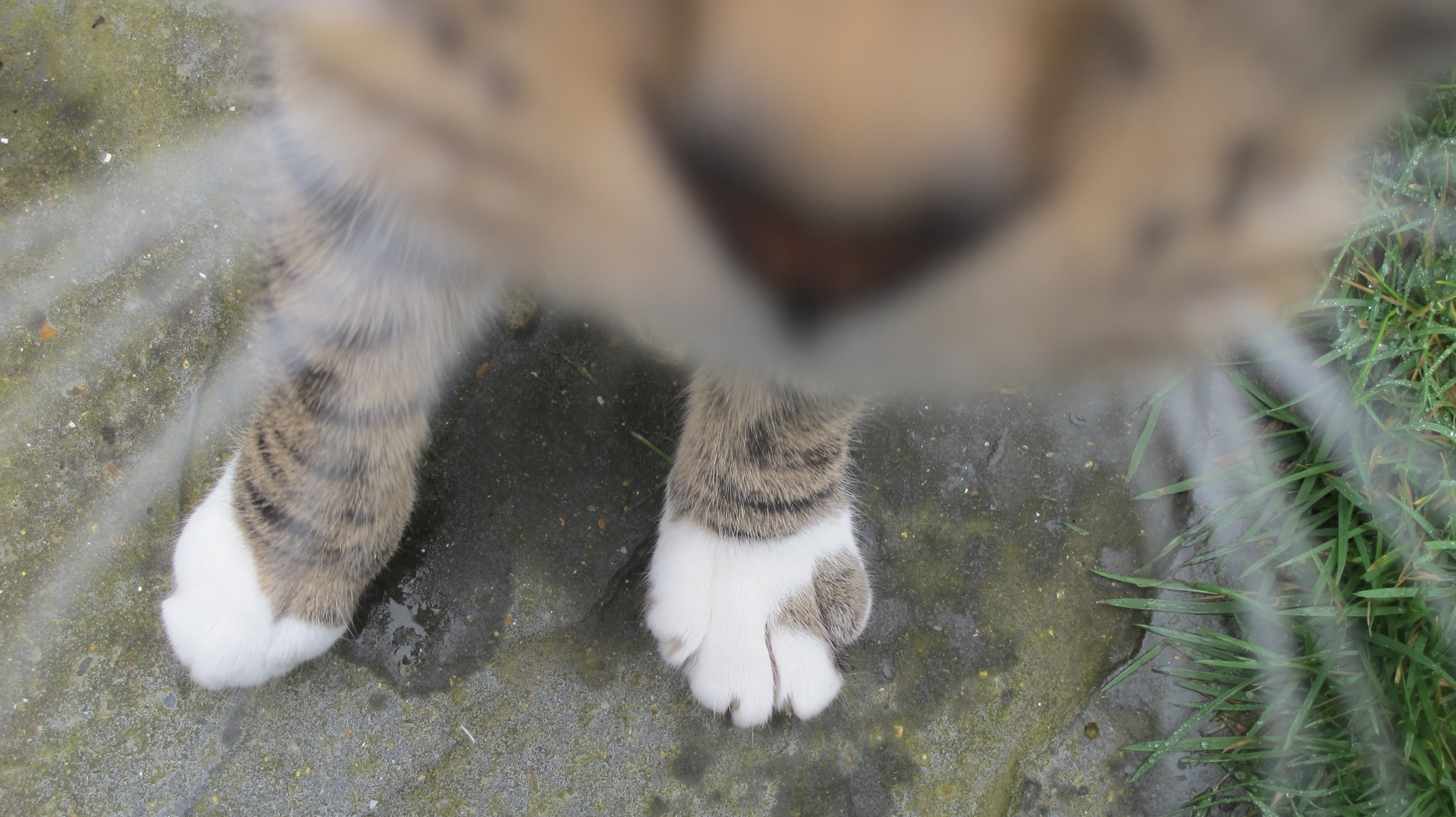
Relevant but slightly odd photo: This is Fast Eddie (he sneaks into the text later) in motion.

Yes, Sweden’s made an admirable mess of its public health advice. Its public health agency started out by telling people that masks weren’t effective against Covid. In fact, it said, they could be dangerous. In April, the chief epidemiologist wrote the European Centre for Disease Control (which is based in Stockholm), warning it not to recommend masks. It would imply that “the spread is airborne,” which would “seriously harm further communication and trust.”

To hell with science, we’ve got to protect communication and trust.

And when those annoying scientists established that the spread is primarily airborne? It stuck by its wrong advice with admirable pigheadedness. While other countries began emphasizing masks, Sweden’s chief epidemiologist was still swearing blind not only that the case for them was weak but that they could actually increase the spread.

In December, the country finally required masks on public transportation. Except when–

Yeah. See above. You can’t expect me to retype all that. 

About half of the country’s commuters still hop on their bus or train barefaced–including the head of the public health agency, who forgot that it was rush hour. 

In one municipality after another, some bureaucrat will still pop up and forbid employees to wear masks–in schools, in libraries, in places of that sort.  Because if masks were dangerous once, they’re dangerous now. Eventually the bureaucrat has to back down and the whole Punch and Judy show starts somewhere else. I don’t know that anyone’s calculated how many people are exposed to the virus while everyone waits for the bureaucrat to back down.

So basically, when the government’s advice was wrong, the format was right: It was straightforward and simple and it gave people something they could do, which is how public health advice should work. When their advice was right, though, the format became incomprehensible.

My thanks to Bear at Scribblans for giving me a shove in the direction of this fast-moving train. 


Covid clarity, British style

On Monday night, the government announced that if you’re over 70 and haven’t been contacted about vaccination, you can sign up in one of three ways, the third one being by calling your GP. 

The next night, GPs in the southwest said (by way of the nightly news), Please don’t call us. We’re already coming unglued. 

It’s a small thing (unless you’re trying to hold a GP’s office together), but it’s a reminder that in spite of the vaccinations going well, we’re still governed by incompetents. 


Clarity, South Korean style

South Korea has started testing symptomatic pets for Covid after finding its first pet-case, in a kitten. Animals that test positive will have to be kept at home for fourteen days, or if the owner is in quarantine (the country has quarantine facilities for anyone who tests positive), they’ll be kept in a quarantine kennel or cattery. 

The resident cat here at Notes, Fast Eddie, has written a very forthright letter to his Member of Parliament to protest, and also Larry the Cat, who works inside and outside 10 Downing Street. I tried to explain that South Korea’s a whole different country from Britain but he doesn’t see what difference it should make. 

You never win an argument with a cat.  


Hopeful things that aren’ vaccines

In response to a recent post, Mabel Kwong commented on the need to not just vaccinate against Covid but also treat it, so I’m including one potential treatment and other ways of responding to it. 

An experimental antiviral drug developed in Canada could cut recovery time in Covid patients who aren’t hospitalized. It’s called peginterferon-lambda, and may it be as effective as it is hard to pronounce. 

In a small test, patients who got a single injection were four times more likely to recover within a week than people in the control group. They were also less likely to need hospital treatment. The effect was clearest in people with the highest viral loads–the people who are considered most likely to pass on the disease.

A large trial is planned.  

And doctors at Imperial College London and the headteacher at a secondary school argue that government guidance to schools should emphasize air quality, not just masks and hand washing. They point out that the airline industry has taken the issue seriously and the risk of catching Covid on a flight is now lower than in an office building or a classroom. And I’ll go ahead and admit that this is news to me.

Airlines are circulating a mix of fresh and recycled air through High-Efficiency Particulate Air filters, and since I’m admitting ignorance, I might as well say that this is the first time I’ve known what HEPA stands for. 

Where permanent HEPA filters aren’t possible, portable ones can be used. 

There’s a lot of pressure on the government–understandably–to reopen the schools. If there’s any discussion about HEPA filters, or even opening the windows, it hasn’t leaked out yet.

*

In the US, a study hints that banning evictions and utility shutdowns reduces the spread of Covid by 4% and deaths by 11%. 

The study can’t prove it, though. This isn’t the kind of thing where you can do a randomized study, assigning people to groups that either do or don’t get evicted and creating a placebo group that gets evicted but thinks it doesn’t. All the study could do was compare counties that banned evictions and utility shut-offs with ones that didn’t, so other factors might well have affected the numbers. 

Still, when you look at people going from living in apartments to sleeping in homeless shelters or moving in with family, both in overcrowded conditions–

Someone who wasn’t involved in the study but who got herself quoted anyway said, “Housing is healthcare.”

Fighting to outrun Covid’s mutations

A small test of the Oxford AstraZeneca vaccine has come back with bad news: It gives people only minimal protection against the mild form of the South African Covid variant. It may, though, prevent the most serious forms of the disease.

May. The study involved only 3,000 people–yeah, that’s a small test–and they were young, with an average age of 31. In other words, they’re less likely than older people to get serious Covid, which limits the information the test could deliver. 

AZ is frantically working to tweak its vaccine and expects to have a modified vresion–a booster shot–in the fall. 

But there’s a way to broaden and deepen people’s immunity, according to an expert I can’t link to because he was on the evening news, and that’s to mix vaccines: one dose of AstraZeneca, one of Johnson & Johnson, or of Pfizer. If you were drinking that way, you’d have a hell of a hangover the next morning, but you’re not, you’re sampling vaccines. It’s a way to keep ahead of the virus’s evolution, at least for a while.

The expert said he was fairly sure that the virus will turn out to be seasonal, in which case we should get some breathing room come summer. 

Irrelevant photo: A viola, stolen from last summer. Sorry–it’s late and a couple of other new photos have gone strange on me.

For the UK, the good, if tentative, news is that the South African variant doesn’t seem to have spread widely in the country. Note the weasel-word there: seem. A lot of frantic testing’s going on, trying to identify the variant and contain it. I haven’t seen much about how competently the testing’s being handled. In spite of itself, the government’s managed the vaccination process well. It handed it to the National Health Service instead of contracting it out to Conservative Party donors and friends. Who’d have thought that asking experts to do the job would work so well?

The government’s also done good work in sequencing the virus, which is turning out to be important. But its test and trace system has been an expensive farce. Until further notice, I’m skeptical about them containing the virus. 

A number of people sound like they’re betting on the Kent variant out-competing it, because it’s believed to be more contagious. That’s sort of like–

Well, I was once on a committee with two difficult people who disliked each other. I counted on their dislike to keep them busy enough that the rest of us could get some work done. It wasn’t one of my better ideas. But they were humans, not viruses, although at the time I might have said differently. I don’t see how one variant will block the other, although it might outspread it. 

*

If the AZ virus protects against the serious forms of the virus, what does that leave? Mild or moderate Covid, and they’re nothing you’d volunteer for. 

With mild Covid you get to choose from a list of symptoms: fever, tiredness, muscle aches, headache, sore throat, runny nose, and loss of your sense of smell or taste, but you won’t be breathless and you’ll still be able to take care of yourself. You get to keep your appetite but you may be sad and weepy. So basically, you feel like shit and it lasts seven to ten days. 

And moderate? That’s even more fun. You get to choose from a cough that may be worse than the one they forgot to mention in the mild case, a higher temperature, breathlessness when you do normal stuff like going up stairs but not if you just bump around the kitchen, disturbed sleep, diarrhea, headache, and a dry mouth.But you can still take care of yourself, even if you don’t really want to. You can sit still and not be breathless. You can make sense when you talk to people. You may feel not just weepy or low but downright miserable. You may want to stay in bed for a couple of days. And that goes on for a week or two. 

Is either version likely to lead to long Covid? If anyone knows, they haven’t told me. I’m sure it was just an oversight. 


Nanobodies

Could we have some good news, please? Why, yes, I think we can: A bunch of sciency types have found a nanobody that looks like it’ll block Covid.

Let’s chop that into little pieces and try to figure out what I’m talking about. Nanobodies aren’t people who’ve lost a lot of weight. They’re synthetic versions of tiny antibodies that were originally found in llamas and camels–who for the sake of simplicity should probably be known as llamels but aren’t. 

Viruses work by hijacking human cells. Or any cells, but it’s humans we’re interested in just now. To do that, Covid uses those spikes we keep seeing pictures of. I don’t  know about you, but I’m really tired of seeing them. 

The researchers’ idea was to give the virus the right nanobody to grab onto–something that isn’t a human cell. Better yet, the nanobody they found is cheap to produce, easy to store and transport, and can be delivered as an aerosol–a couple of sniffs and you have nanobodies.

The problem–there’s always a problem, isn’t there?–is that the next stage, testing, is expensive and they’re still looking for a partner with money. But pharmaceutical companies are focused on vaccines right now, so they’re not being overwhelmed with offers. Still, it’s hard to believe that someone won’t show up, cash card in hand.

How likely is Covid reinfection?

A small study–it turns out that 3,000 people is a small group as long as they’re not all in your kitchen–hints that 10% of the people who’ve had Covid can get reinfected. 

Possibly. 

Or, of course, possibly not. First, the study (like so many in these scientifically frantic times) hasn’t been peer reviewed, so it doesn’t have the Good Housekeeping Seal of Approval. Second, the reason 3,000 people is a small group is that only 189 of them turned out to have previously had Covid. So that would mean–what?–18.9 of them got it a second time. 

Now we stir vigorously and compare that to 48% of the previously uninfected group who picked up Covid, meaning that having had the disease leaves you with a fifth the risk of getting it again compared to someone who’s never had it. Or so the study says. My brain glazed over just typing that. If there’s anything odd about the numbers, you can blame my brain, not me.

These were young people–probably in their late teens, maybe early twenties–and recent recruits to the US Marines. Interestingly, all the reinfections were from the same variant of the virus as their original infections, not the new strains that are circulating, so we don’t get to blame the reinfections of the virus’s tendency to mutate. 

All the recruits had mild symptoms, but the length of infection and risk of having symptoms was the same for both the previously infected and the previously uninfected. It may be significant that the previously infected people had lower levels of antibodies, suggesting that some people don’t generate antibodies–or don’t generate them as enthusiastically.

Irrelevant photo: A hellebore, a.k.a., a Christmas rose.

The moral of this story is that masks, distance, and vaccination still matter, even if you’ve had the damned thing. 

The whole tale ends with a warning: It’s a small study and very preliminary, so take it with a grain of salt. Why did I bother you with it, then? Because it’s interesting. And I like the idea of three thousand people in your kitchen.

Although not in mine.


Tests, studies, and work-in-progress

A study in Aberdeen shows that the single strongest influence on a country’s death rate from Covid during the first wave of the pandemic was international travel. The more travelers came into the country, the more deaths it had. 

And the moral of that tale is obvious and tells us what we should’ve done. There’ll be arguments, though, about how what we should be doing now. Is it too late for limiting or stopping travel to work? Discuss. 

*

In an early trial, an antibody cocktail blocked 100% of symptomatic Covid cases in people who’d been exposed to the disease. On top of that, their asymptomatic infections lasted a shorter time and their viral load–the number of teeny tiny viruses attending the party inside each infected person–was significantly lower than in the control group.

And if that isn’t impressive enough, the viruses kept the music levels significantly lower at the parties and no one called the cops on any of them. 

This isn’t a vaccine, and it doesn’t prevent a later infection. It’s the first treatment to offer protection to people who are known to have been exposed–say an unvaccinated person caring for someone who has Covid. 

*

Britain’s setting up a test of mix-and-match vaccines. This won’t work like those candy displays that take up a whole wall and let you pick 100 grams ( or 3.5274 ounces, give or take a few decimal places) of mixed jelly beans and 100 of (shudder) licorice, but it’s close enough. Participants will get one dose of the Pfizer vaccine and one dose of the AstraZeneca, although not necessarily in that order and they don’t get to pick which way it goes.

On the other hand, they can be sure that they won’t end up with licorice, and I don’t care what they say, it’s for their own good.

The two vaccines are very different, and use very different–well, let’s call them platforms. Mixing the two inside one human is sort of like combining  a horse race with a concert. It’s hard to know what’ll happen. One vaccine comes riding in on a small bit of genetic code. The other is played by a string quartet on a deactivated cold virus.

Okay, that metaphor went wrong. I’d take it out but it’s so wrong that I’d miss it. We’ll just move on and pretend this is a day like any other, okay? Just a perfectly normal day.

The trial hopes to recruit 800 volunteers, will run for 13 months, and will also play around with the length of time between the doses to see what effect that has. 

Volunteers have to be over 50, unvaccinated, and live in a few specific areas in Britain. If you’re interested, you can sign up at the NHS Covid vaccine signup site. It’s not specific to this one trial, so you may have to wander around a bit on your own. If you hear a string quartet, you’re in the right place. If you smell licorice, run.


How not to do Covid testing

Canadian otolaryngologists have lined up the Covid test instructions used in all the Canadian provinces and compared them, and they turned out to be wildly inconsistent. In fact, I’d begun to wonder if the size–and possibly shape–of Canadian heads depends on geography.

In the Northwest Territories, Nunavut, Ontario, Saskatchewan, Prince Edward Island, and Alberta, people are told to insert the test swab to a depth of four centimeters, or half the distance from nostril to ear. 

I have to interrupt here, because I was confused about that “distance from nostril to ear.” Are they measuring that on the outside of the head? Or is it as the crow flies, assuming a small crow that could fly through bone and whatever else Canadians keep inside their heads? And is the nostril just that hole at the tip of the nose or the whole passage that rises toward the arched eyebrows that signal confusion? If it’s the second, what part of the nostril are we talking abou?

I could go on, but I’ve probably introduced you to enough of my befuddlement. Whatever Canadians keep inside their heads, I’m telling you, it’s strange inside of mine. 

Whatever the instructions mean, the article told me that four centimeters would take the swab to the mid-nasal cavity, not the nasopharynx, which is where it’s supposed to go to find the viral gold at the end of the Covid rainbow. So done as prescribed, the test will kick up a lot of false negatives.

In British Columbia and Manitoba, people are told to get the swab seven centimeters up the nose, which would take it to the posterior nasal cavity but still not to the nasopharynx. Again, false negatives.

In Nova Scotia and Newfoundland, the article I stole this from abandoned centiwhosits and just said it was two-thirds of the distance from nostril to ear, which would take it all the way to the nasopharynx. Yay! Those provinces get the viral gold and we’ll award them some jelly beans to go with it! 

We’ll give some licorice to New Brunswick and Yukon, which tell people to insert the swab from nostril to the external ear canal. That would take the swab to the nasopharynx, so they do get the viral gold, but it all sounds like the swab has to make a 90-degree turn inside your head, pierce your eardrum, and emerge triumphant from your ear. 

Licorice. Sorry.

I’m reasonably sure I misunderstood something in there, but the otolaryngologists think they could maybe improve the instructions if they got involved. I’m inclined to think they could.


Vaccine nationalism

Remember Covax? It’s the international plan to ensure that the world’s richest countries don’t suck up all the Covid vaccines, leaving the people of 145 other countries to (a) suffer and die and (b, in case high-minded arguments aren’t enough to move enough people and nations) become a pool in which new variants of the virus will be created before turning around to re-infect the richest countries, which will have been vaccinated but only against earlier variants. 

Was that last sentence long enough for you?

Okay, in case you didn’t remember Covax, you’ve now been introduced and you didn’t have to admit that you’d forgotten its face. Hello, Covax. Glad to meet you. How’re you doing?

Not so well, as it turns out. High income countries have reserved 60% of the vaccine supplies that have been ordered so far. That 60% will go to just 16% of the world’s population.

The International Chamber of Commerce figures that if developing countries don’t get the vaccine, it’ll end up costing rich countries $4.5 trillion. Trillion. That’s 4.5 with so many zeroes after it that I went comatose.

Compare that to Covax’s long-term cost, which is $26 billion. So far, it’s raised $6 billion and needs another $2 billion to fund its initial stage. That’s 1% of Jeff Bezos’s net worth. 

If you find a stray billion or so behind the couch cushions–yours or his–do get in touch. 

Given what will happen to the rich countries’ economies if they only look to their own populations, the article in the Atlantic that I stole these numbers from figures that if the rich countries fund the project fully they’ll get a 166-fold return on their investment. 


Beer, Britain, and lockdown

With lockdowns keeping Britain sober–or more probably drunk behind their own closed doors–pubs have had to throw away an estimated 87 million pints of beer since the start of the pandemic. If they’d been able to sell it, that would’ve put £331 million in their pockets.

When beer in barrels isn’t sold before its best-before date, it goes back to the breweries to be–

Um, I’m not sure what the breweries do with it. I know they don’t set it on fire. Give a pint or two to the local stray dogs and drunks, then pour the rest into the river, leaving the trout wondering why they’re so woozy? 

Well, it just so happens that I asked Lord Google, who referred me to the Morning Advertiser, which told me that it gets poured it down the drain. Why does it have to go back to the brewery to go down the drain? Can’t the pub do that? The M. A. was talking about pub drains, not brewery drains, and about water companies wanting to charge them for adding huge amounts of beer to the sewage system.

So we’ve got some conflicting information, but it’s not our topic, so let’s just set it aside and talk about how long beer stays best-before: Pasteurized beers keep for three to four months after they reach the pubs and unpasteurized ones keep for six to nine weeks. 

After that, the dogs outside the breweries start wagging their tails.

How much beer is 87 million pints? It would fill 20 Olympic-size swimming pools, 33 million kettles (standard size, please, because it’s important to get this right), or 495,000 bathtubs. 

The bathtubs, though, aren’t a reliable measure, because they have to be filled to “the usual level required for a bather,” which is worryingly vague. We all have our standards, and I have never yet let a statistician or a beer brewer into the tub with me–at least not knowingly; people do lie about these things–so they’re guessing at how high I fill the tub. They’re probably guessing about  your tub too. 

I’m less selective about who gets near my tea kettle. I don’t know about you, but I’m inclined to trust them on that. 

The Cornish diaspora

Cornwall–that nobbly foot sticking its toes into the waters of southwestern Britain–lost about a third of its population in the nineteenth century. 


The background stuff

To come up with that number, we have to use a flexible definition of the nineteenth century, then we have to admit that no one actually counted heads. Yes, you can document the number of people who left Britain, which ports they left from, and where their ships were bound, but no one asked where they were from. Or if they did, they didn’t write it down. 

You can guess more or less reasonably that most people leaving from Cornish ports were Cornish, since Cornwall (being foot-shaped and sticking into the ocean) isn’t on the way from anywhere except Cornwall, but not everyone would’ve left Cornwall from Cornish ports. Plymouth, which is in Devon, is temptingly close. 

Never mind. A third is close enough, so let’s call that calculated.

Irrelevant photo: A wild primrose. Although it’s in Cornwall, so let’s call it semi-relevant.

Are we ready to start yet?

Nope. To understand the story, you need to know although England swallowed Cornwall centuries ago, it never managed to digest it completely. 

Cornwall was once its own country, with its own language, and even today it holds onto its identity. The last native speaker of the Cornish language, Dolly Portreath, died in 1777, not all that long before the period we’re talking about, and I’m reasonably sure that “native speaker” here means that Cornish was her only language, not that she was the last person who spoke it fluently, because the language survived in isolated communities into the nineteenth century.

If we’ve got the pieces in place now, we’ll go on.


Early emigration

In 1815, the Napoleonic Wars ended, and instead of joy and relief, peace brought a depression. For farm workers, that meant low wages and unemployment. For farmers, it meant being squeezed between high rents and high taxes. 

In Britain, remember farmers were likely to rent their land, not own it. 

For Cornwall, it meant the start of wholesale emigration, with families headed to the U.S. and Canada. 

The West Briton (that’s a newspaper) wrote in 1843, “The spirit of emigration continues active in the neighbourhood of Stratton. High rents, heavy rates, and obnoxious and impoverishing taxes are driving some of the best of our agriculturalists to climes where these demons of robbery and ruin are unknown.”

Agriculturalists? That translates to farmers. And Stratton’s in North Cornwall, not all that far from where I live.

But if poverty and depression were the primary forces driving people out, they weren’t the only ones. Cornwall was a stronghold of Methodism, and even though they no longer belonged to the Church of England, they still owed it a tithe, which was basically a tax the church levied. You could quit the church if you liked, but your money couldn’t. If you left England, though, you could shuck off that history and those obligations and be free in your religion. 

Still, if leaving England gave people a whiff of freedom and the promise of a decent living, or at least a full meal, it also meant leaving their families, their homes, and their culture. It’s the story of immigrants everywhere, and as always, hope mingled with grief.

Between 1815 and 1830, Latin American countries were winning their independence, and some of them drew Cornish emigrants. Copper, gold, and silver were being mined in Brazil, Chile, Mexico, Colombia, and Peru, and Cornwall was hard-rock mining country, from prehistory onwards. Cornish miners had the experience mine owners were looking for. The saying is that you can go anywhere in the world and if you look into a hole in the ground you’ll find a Cornishman at the bottom, digging. 

In the 1840s, the same potato blight that devastated Ireland hit Cornwall. Potatoes had become a staple in the Cornish diet as well as a cash crop and pig food. With the blight, people faced starvation in Cornwall, although not in the same devastating numbers as in Ireland. But if you’re starving, you don’t stop to argue if somewhere else more people are even closer to the edge than you are. There were food riots.

At about the same time, the Australian government offered free passage to anyone who met their standards. They wanted people who were “healthy, sober, industrious and in the habit of working for wages.” To prove that they qualified, applicants needed two signatures from “respectable householders,” one from a physician or surgeon, and one from a clergyman. Presumably the clergyman was supposed to attest to the sober and industrious part.

Don’t get me started.

They wouldn’t have needed to say this, but they also wanted people who were white. 


And the later waves

In 1859, Australian mines started producing copper–lots of copper–and the price dropped worldwide. Cornish mines closed. Then in the 1870s, the price of tin collapsed. More jobs lost. More emigration. 

Reverend Hawker, from a North Cornwall parish, wrote in 1862,

“They come to me for advice. If they have a few pounds out of the wreck my advice always is ‘Emigrate!’ And accordingly nearly a hundred in the current year go across the seas. Our population in 1851 was 1,074 in 1861 it was 868.”

Toward the end of the nineteenth century, the Cornish began emigrating to South Africa to mine diamonds and gold. By then, steamships had made the trip faster, and miners were more likely to go abroad and return home rather than sink permanent roots in new countries. 

Wherever they went, though, and for however long, many emigrants sent money home. At the end of the nineteenth century, 7,000 miners in South Africa  sent £1 million a year to Cornwall. In 1898, the West Briton reported a rush to the banks after mail came from South Africa. 

By the time World War I ended, emigration had slowed down, but the population of Cornwall kept on shrinking until the late 1960s. By one estimate, between 1815 and 1920, 250,000 people left Cornwall for other countries and almost the same number left to find work–mostly in mining–in other parts of Britain and in Ireland. 

A different source estimates that between 1861 and 1900 44.8% of the Cornish male population who were between fifteen and twenty-four left to work overseas. So did 26.2% of the female population in the same age group. Another 30% of men and 35.5% of women left for other parts of Britain. 

By the time you add all that up, you have something like half a dozen people left at home to keep the fire going.


Cousin Jack

Outside of Cornwall, the non-Cornish considered the Cornish to be clannish. Somehow immigrants are always accused of being clannish. They cluster together to share their customs, their food, their memories, their language, their joys, and their grief. They lean into each other for familiarity and for help–material and emotional–in negotiating the transition. And they’re resented for it. It’s an old story, and it seems to play on a loop throughout–well, I can’t speak for all of human history but the parts of it that I know about.

This led to the belief that Cousin Jack, the common name for a Cornishman, especially a miner, came from Cornish miners always lobbying for some other Cornishman to be hired–his cousin Jack. 

The parallel name for a Cornishwoman is Cousin Jenny.

The story’s vivid enough to be convincing, although that doesn’t make it true. Especially since different sources trace the origin of the phrase to Australia, to the California gold fields, and to Devon, Cornwall’s neighboring county. 

The historian and archeologist Caitlin Green traces it to either Cornwall itself or to Devon and wonders if it didn’t start out as a name to mock Cornishmen, which was then stolen and repurposed by the community it was meant to mock. 

Cousin, she reminds us, didn’t just mean a family member at the time. It was a friendly way to address someone who was close but not family.

I’ll leave you with a link to a beautiful and heartbreaking song about Cornwall, mining, and emigration, “Cousin Jack.” It’s by the Fisherman’s Friends, a group of Cornish singers who are the subject of a movie made a few years ago. It’s got a joke embedded in it about Cornish and English nationalism, although maybe you have to have spent time in Cornwall to get it.

*

My thanks to Pete Cooper for sending me a link about the origin of the phrase Cousin Jack, which got me going on this.

Covid variants, vaccines, and all our clean hands

An assistant professor of food science says that all the hand washing, surface cleaning, and food washing we’re doing may or may not keep Covid in check but has kept us from spreading salmonella, e.coli, and listeria.

It’s not what we’re trying to do, but it is good for us.

There’s no evidence that Covid is spread through food, although that’s not the same as saying that it isn’t spread that way. 

But having (with her team) overdosed on US and Canadian internet videos telling us how to clean everything in sight, Yaohua “Betty” Feng reports that a bunch of them have it wrong. Of the videos telling people how to wash their hands, only 41% of the presenters used soap. The remainder, presumably, relied on good wishes and intense looks. Less than 33% mentioned hand sanitizer. And how many of us, since the start of the pandemic, can get through a day without mentioning hand sanitizer?

Like–I’m going to assume–you, I thought I knew how to wash my hands. I’ve been doing it for better than 70 years now, most of the time without supervision, but there’s no predicting what people will feel the need to learn in these difficult times. Maybe I’ve been doing it wrong. Maybe, for instance, I’ve mistaken my hands for some other body parts.

Irrelevant photo: The first spring violets.

Other videos were about washing produce, and 16% of the presenters used soap while 12% used other chemical cleansers. That sounds promising, but they’re both no-nos. If you don’t rinse them off completely, they can cause diarrhea.

Feng didn’t say this, but you might draw the conclusion that random internet videos aren’t the best places to look for reliable information. Or you might not. 


British and (eek!) foreign Covid variants

The British Covid variant, which to make things more complicated is now called the Kent variant, after the part of England where it was first found–

Let’s start that over: The Kent Covid variant has mutated since it was first identified. That’s standard operating procedure in the viral world. Every new infection is a chance for the disease to pick up a mutation. Some of those won’t work well for it and will die out and others will make the disease better at hiding from the immune system. Those are the ones that will spread.

So the Kent variant has picked up a new mutation, and it’s similar to one of the mutations on the South African variant. The going theory is that it evolved the change on its own rather than picking it up like an STD after a one-night stand with the South African variant. Which basically means that two strains of the virus have found the same way to partially evade the human immune system. 

There’s been a lot of focus on stopping, or at least getting control of, the imported Covid variants. In parts of the UK, house-to-house testing is looking for the South African variant.

But that may be a sideshow. Virologist Julian Tang wrote, “Unfortunately, the lack of control of these different variants in the UK may lead this population to become a melting pot for different emerging SARS-COV-2/COVID-19 variants–so we really need to reduce our contact rates to reduce the opportunities for viral spread/replication to reduce the speed with which these different virus variants can evolve.

“Closing borders/restricting travel may help a little with this, but there is now probably already a sufficient critical mass of virus-infected people within the endemic UK population to allow this natural selection/evolution to proceed . . . so we really need to stick to the COVID-19 lockdown restrictions as much as possible.”

In other words, the more the people get infected, the more times the virus gets to mutate, and the more times it mutates the more chances it has of presenting us with a more difficult problem.

There’s something tempting about focusing on imported strains of the virus–Eek! South African! Argh, Brazilian!–but all Covid infections are dangerous. That’s what we need to focus on. 


Symptoms

In England–possibly in all of Britain, but don’t trust me on that; I’m at least as confused as you are–the only way to book a Covid test is to claim at least one of three symptoms: cough, loss of smell or taste, and a high temperature. But a GP and senior lecturer in primary care, Alex Sohal, writes that the list should include a runny or blocked nose, a sore throat, hoarseness, muscle pain, fatigue, headache, vomiting, and diarrhea. She’s seen patients come in with them and go on to test positive for Covid.

“These patients have frequently not even considered that they may have Covid-19 and have not self-isolated in the crucial early days when they were most infectious.”

She advocates telling “the public, especially those who have to go out to work and their employers, that even those with mild symptoms . . . should not go out, prioritizing the first five days of self-isolation when they are most likely to be infectious.

“This will help to get—and keep—us out of this indefinite lockdown, as Covid-19 becomes increasingly endemic globally. Ignoring this will be at our peril.”

As it stands, if you have good reason to book a Covid test and don’t have the magic three symptoms, the best thing to do is lie. And almost none of us recognize the full list she gives as possible Covid symptoms.


The bad news

Some of the recent Covid mutations have outpaced the monoclonal antibodies we’d all been counting on as a treatment in case we did catch it. 

Mono-whats? 

Okay, if you have to ask, that says we haven’t all been counting on them, but let’s pretend we were so I can explain what’s happening.

Basically, monoclonal antibodies are human antibodies that have been cloned. In this case, they’re antibodies to Covid, and they’ve been used to treat serious Covid cases. The problem is that the humans who developed them did so in the presence of one form of Covid, not all of them. As the virus mutates, they can get left behind.  

They also have another problem, which is that they’re expensive and not easy to make. Other than that, though, they’re great.


The good news

At the beginning of February, after a 25-day lockdown, the Isle of Man (population 84,000) lifted almost all  its Covid restrictions. The exceptions are its border controls, which–well, I was going to say they take no prisoners, but in fact taking prisoners is exactly what they do. Someone who tried to get onto the island on a jet ski was jailed for four weeks. 

They seem to have eliminated the virus. Before the lockdown, the island had 400 cases and it’s had 25 deaths. 

The Isle of Man is in the water somewhere between Scotland and Northern Ireland. It’s a self-governing British crown dependency, and don’t ask what that means because it’s complicated and we’re running out of space here in the infinite internet.  

*

Two bits of news about the AstraZeneca vaccine. 

One, a single dose (which is what the UK is focused on at the moment, with the second one delayed for up to twelve weeks) is still 76% effective after three months. That’s not as good as the 82% protection it offers after the second dose, but it ain’t bad, and there’s finally some data backing up the government’s decision to focus on getting an initial dose to as many people as possible–at least for this vaccine.

Delaying the second dose may strengthen the protection, but that’s not definite.

Two, the vaccine may reduce the number of Covid transmissions by two-thirds. That’s not definite–it’s still preliminary–but it’s promising. 

*

A late-stage trial reports that Russia’s Sputnik V vaccine is both safe and 92% effective. It can be stored in a normal refrigerator and comes in two doses, but the second dose is slightly different than the first one. They use different vectors–the neutralized viruses that they ride on. The idea is that this will give the immune system an extra boost and protect people for longer.


The little-bit-of-both news

Britain’s vaccinated over 10 million people with at least one dose of one vaccine or another, and the number of hospitalized Covid patients is coming down, but it’s still higher than it was during the first peak of the pandemic. England’s chief medical officer, Chris Whitty, said infection rates are also coming down“but they are still incredibly high.” That may mean, in the American tradition of Groundhog Day, that we get six more weeks of winter. Or lockdown. 

Nutburgers, Covid variants, and yes, good news stories

Back in December, an overnight pharmacist at a Wisconsin hospital left 57 Covid vaccine vials–each holding enough for 10 doses– out of the refrigerator so they’d spoil. He was convinced they’d make people infertile and implant them with microchips. He also believed the earth is flat and the sky isn’t real. Seriously. That wasn’t me saying something absurd to make you laugh, and I put his beliefs in the past tense, but for all I know he still believes that.

What is the sky if it’s not real? It’s a shield that the government put up to keep people from seeing god. What the microchips do is anyone’s guess. Make you dance like a carrot, maybe.

He pled guilty to deliberately spoiling the vaccine. Do I need to say that he doesn’t work at the hospital anymore?

Irrelevant photo: a hellebore.

…and meanwhile in Britain

Some dozen hospitals around Britain have seen Covid deniers barging in, denouncing the staff, and taking photos for social media. At one, a group of I’m not sure how many insisted that a Covid patient be sent home and treated with vitamins and zinc. 

“He will die if he is taken from from here,” a doctor told them before they were thrown out. 

Some of the photos they’ve posted on social media have been of empty hospital corridors, which are shown as proof that the hospitals, and intensive care units in particular, aren’t overstretched. NHS staff are being denounced as “ventilator killers,” and are being harassed and threatened on social media.

Seven people have faced fines and arrests, and posts have been taken off social media but more keep cropping up. 

“Staff are exhausted and are running on fumes,” said said Dr Samantha Batt-Rawden, the president of the Doctors Association UK. “They should not be having to deal with abuse and even death threats on social media. Nor should they be worried about turning up for their shift due to crowds of people chanting ‘Covid is a hoax’ outside hospitals full of patients who are sick and dying. This is decimating morale, but worse still, could be obstructing patient care.”

*

The Wales office of Britain’s Driver and Vehicle Licensing Agency turned itself into a pandemic hotspot by–employees say–encouraging workers to come back to work while they still had symptoms and turning down the requests to work from home, even when the people involved were vulnerable. The IT systems, apparently, are so outdated that it’s not always possible for people to use them from home.

One complaint to Public Health Wales said the DVLA had asked people to turn off their test and trace apps so that their phones wouldn’t ping. Because who wants to be bothered at work with news that you’ve been exposed to Covid and should get yourself tested? 

People who did take time off for Covid-related reasons had that time taken off their sick leave. If they took more than ten days off, they got a warning.

The office has had more than 500 Covid cases since September, in an office with 1,800 employees.

A DVLA spokesperson said that safety is a priority. Want to bet whoever it is is working from home, or at least in a different office?

*

The Covid variant first found in Britain seems to have somewhat different symptoms than the earlier variants. Coughs, sore throats, fatigue, and muscle pain are common, but loss of smell and taste are less likely.

As for the South African variant, over 100 cases have been identified in England. It’s not known to be more dangerous, but it has mutations that may–emphasis on may–make the current crop of vaccines less effective. It also may not. The experts are working frantically to figure that out right now. 

It’s not time to panic over this one. A couple of the vaccines may be less effective against it, but they’re not ineffective. One, the Pfizer, looks like it will be fine, but that’s in early tests. And keep in mind that when they talk about the vaccines being effective, they’re talking about people not getting sick at all, not about preventing hospitalization and death and all those things that have a way of focusing our attention on the disease. The statistics on the most severe aspects of the disease are better. 

*

And having learned nothing from the Covid spike that followed the Christmas loosening of restrictions, caused the current lockdown, and brought our stats up to more than 100,000 deaths, Boris Johnson, Britain’s booster-in-chief and part-time prime minister, tells us that we may all be able to go on vacation–or in British, on holiday–this summer. Because, yeah, that’s what we should really be thinking about right now. 

I won’t even mention last summer’s encouragement to go on holiday, go out for a drink, go out for a meal, and join in the great germ exchange.


What are people doing in lockdown?

In the first lockdown, we read about people baking. Not people who’d been baking since they were twelve, but people who had to call helplines before they could reliably recognize their ovens. Flour was hard to buy unless you were buying in industrial quantities. Experimental banana bread loaves were, some of them, so heavy that if they’d been dropped from third-floor windows they’d have been more dangerous than Covid itself. 

This time, sure, some people are baking, but we’re not talking about that anymore. The focus has moved on and we’re talking about people fitting itty bitty jigsaw pieces together. 

In 2020, sales of jigsaw puzzles were up 38% in Britain compared to 2019. That’s over £100 million spent on something that’s completely useless. Unless, of course, you consider it useful to save your sanity and keep your family members from spilling each other’s blood. People, understandably, have different opinions about that. 

Traditionally, the jigsaw market (a phrase I never expected to find myself typing) skews heavily toward kids, but the best sellers last year were the thousand-piece ones that are meant for adults. I’ll skip the breakdown of what graphics are most popular, but manufacturers reported that they could sell just about any image, even plain white.

*

Scandinavia’s biggest film festival, the Gothenburg Film Festival, will go ahead this year, in spite of the pandemic, but it’ll be held on an isolated island and movies will be screened for an audience of one. They invited applications and got 12,000, and I’m not sure if they chose Lisa Enroth because she’s a nurse or because someone drew her name out of a hat, but the festival’s chief exec said, “It feels particularly right to be able to give this unique experience to one of the many heroes of the healthcare system who are all working so hard against Covid-19.”

Enroth will watch a week’s worth of movies and post a daily video diary on the festival’s website, and I’m sure we’ll all be welcome to read it, so polish up your Swedish. (Parts of the website are in English, but the audience member is Swedish. I admit, I’m making assumptions here.)

*

We can all take a more active part in the Great Big Art Exhibition, which is inviting people to make art at home and display it in their windows or on balconies or porches, or wherever their neighbors can appreciate it. The first theme, launched at the end of January, is animals. 

The arts organization sponsoring it, FirstSite, has organized British galleries to make work available for people to download as inspiration. When I looked, a handful of people had already posted their work on the site, and it’s wonderful. 

The project will run through April.