Quarantine, sunburn, and interplanetary theology: It’s the pandemic news from Britain

Since Britain can’t get on the sun’s schedule more than once a measly month, going abroad in the summer is a Big Deal here. Preferably to places with sun, pools, and German tourists to be outraged by. So opening the doors and letting the British public go abroad looks like a measure of success to a government overwhelmed by the bad pandemic choices it’s made,

So the government made a list of countries Britons could visit safely, then it opened the doors and it said, “Have fun, kiddies. Don’t get sunburned.”

Of course they got sunburned. They’re British. 

Irrelevant photo: A rose.

So far, so good, but Spain went and had a spike of Covid cases and Britain’s announced that anyone coming home from Spain will have to isolate themselves for fourteen days. That did three things: It made the government look like it was protecting us; it made the tourists already in Spain, along with the travel and aviation industries, furious; and it encouraged people who’d planned to go to Spain to cancel their plans.

Spain was and is (predictably, given how much of its economy depends on tourism) mad enough to spit tacks. The spikes, it said–

Okay, it didn’t say. Countries don’t really talk. The spikes, its spokefolks said, are regional. Travelers who’ve been visiting spikeless parts of Spain shouldn’t be quarantined. Heroically resisting any urge to be catty, Spain’s prime minister pointed out that most of the country has a lower infection rate than the U.K. 

“It would be safer to be in [parts of Spain] than in the United Kingdom,” he said.

If I’m reading the tea leaves correctly, Spain’s also implying that the spike is at least in part a result of increased testing, which catches asymptomatic cases–something the UK would do well to look for. 

*

Except that, stop the press, Britain’s been giving this quarantine business some thought and you know what? We might just cut it from fourteen days to ten. Because we’ve got, you know, testing. And we could use that, couldn’t we, to see if people are carrying the virus?

Why, yes we could. 

Could we have thought of this earlier? Possibly, but we didn’t take the time.

We’ll get back to you about this ASAP. As soon as we know what our plans really are.

*

Figuring out what it means that a country has a certain number of cases is, genuinely, a problem. If you test more–and that’s still the best way to control the virus–you find more cases. If you find more cases, you look like the thing’s gone out of control, although what it may mean is that you’re getting it under control. If, being a headline-based government, you resist the urge to test more, the thing really is likely to get–or stay–out of control, and that doesn’t look good either.

*

One thing Britain hasn’t bungled is its work on medical responses to the coronavirus. The UK Recovery Trial is conducting randomized tests on a variety of medicines you can’t pronounce– and neither can I in case I made you feel bad for a moment there. 

They started work when Wuhan’s lockdown meant that Chinese researchers had so few enough cases to work with that drug trials came to a halt, and with the virus clearly headed for Britain they worked at high speed, taking nine days to do work that would normally take nine months, from drafting protocols to enrolling patients. 

Large trials need more patients than any single hospital can supply, and the existence of the National Health Service made it easy for them to enroll patients from multiple hospitals. Even better, the UK’s high death rates meant that at the beginning they had plenty of available cases. 

Every cloud has a silver lining, not to mention a cough and a fever. And sometimes a headache.

To date, they’ve shown that neither hydroxychloroquine or a combination of two drugs used for HIV help with the virus but that the steroid dexamethasone does.  They’re currently testing an antibiotic called azithromycin; an antibody called tocilizumab, and convalescent plasma–blood plasma from people who’ve recovered from the disease. 

I can pronounce convalescent plasma. Forget the rest of them.

The bad news is that because fewer people are being hospitalized in Britain (yes, every silver lining has a cloud as well), they have a smaller group of patients to recruit from, so research is moving more slowly.

*

The New York Times has been tracking Covid-related medical trials. One that’s been in the news lately is work on monoclonal antibodies, which is satisfyingly easy to type. 

These are, more or less, a designer form of convalescent plasma. Instead of taking the whole range of a recovering patient’s antibodies, some of which will be as irrelevant to Covid as my photos are to my posts, they isolate the ones that look most potent, then replicate them synthetically and inject them into a patient.

Safety trials–the earliest stage of testing–have only just started.  

The Times also has a vaccine tracker if you want to take a look. Their Covid coverage isn’t behind a paywall.

*

Can we abandon both the virus and the UK for a minute? A Texas state legislator, Jonathan Stickland, read a report about the Pentagon having an Unidentified Aerial Phenomenon Task Force and felt the need to tweet, “IF aliens are real, salvation through Jesus Christ is the only way they enter Heaven.”

And you’re telling us this why, Jon? In case they read Twitter? In case their sat-navs (in American, those are their GPSs) aren’t working?

It does raise the question of whether, if Christian beliefs (pick any strand you like) are correct, other planets couldn’t expect to get their own saviours or would have to ride on ours. And whether they’d be prone to different evils, which for the sake of simplicity I’ll agree to call sins. 

Interplanetary theology is going to be complicated.

*

Want your feelgood story of the day? A family made up of parents, kids, and a huge honkin’ St. Bernard dog named (well, of course) Daisy climbed Scafell Pike–England’s highest mountain–and Daisy collapsed and couldn’t walk down. 

Daisy weighs 8 stone 9 pounds, or to put that in European, 55 kilos. Or in American, 121.25 pounds. You might be happy to carry that much weight down a mountain if it was neatly bundled into a backpack, but you’d struggle to even pick it up if it was distributed into the shape of a large, floppy dog.

The family called the Mountain Rescue Team, and two hours later a team of sixteen appeared, carrying a stretcher but not the cask of–was it supposed to be rum that St. Bernards carried around their necks when they were the ones doing mountain rescue? Or was that brandy?  

It took the team five hours to carry her down.

A long-time rescue team member said, “The team rescues canine casualties around a dozen times every year but this was the first time a St Bernard breed has been rescued by the team.

“Some might ask: ‘why rescue a dog?’ but our mission is to save life and alleviate distress. You can’t leave a dog on a mountain.”

C’mon, admit it, you tough old thing: You feel better, don’t you?

Tea, biscuits, and sewage: It’s the pandemic news from Britain

How did the  Great British Public cope with lockdown? By spending an extra £24m on tea and coffee in the last three months, and they splurged an extra £19m on biscuits–or to put that in American, on cookies. 

Alcohol? Sales were up by 41% this month. And people are reading more, although based on the alcohol sales they can’t remember a word of it come morning.

A number of readers have written that they look for something upbeat in these posts. I hope that qualifies. I’m vain enough that I want people to remember what I write, but let’s face it, I’ve written–yea, and published–some stuff that if they couldn’t remember it by morning they’d be doing me a favor.

*

Screamingly irrelevant flowers. Whatsit flowers. In bloom. In our yard. They’re wonderful–the slugs don’t eat them.

By the end of October, the Great British Government will have some Great British Walk-In Testing Centers open in the hope that they’ll persuade more people to get tested. According to Great Government Estimates, the current testing program is picking up only a third of the estimated 1,700 Great New Infections per day.

Why? For starters, they’re testing either primarily or only people with symptoms. That leaves the symptomless carriers walking around shedding their germs. The rumor mill insists that if you go deeply enough into the small print of the government website you’ll find that symptomless people can be tested, but the font must be too small for my aging eyes. I haven’t found it. 

Of course, you can also just lie about having symptoms, and if I thought I’d been exposed I’d do it with no hesitation, but most people aren’t as [fill in your choice of adjective(s) here] as I am, and counting on people lying when it’s necessary isn’t the best way to set up a program.

Meanwhile, the centralized Test and Trace system is missing 45% of infected people’s close contacts. Or according to a different source, 20%. (Those may cover different areas. They may not. Go figure.)Local teams miss 2%, but we can’t rely on them because it’s important to privatize the service so someone can make a profit.

Does my writing look bitter in this?

*

With twelve hours to go before face masks became compulsory in some places in England but not in others, the government released details on who-what-when-where-how. 

Okay, less than twelve hours, but I like round numbers.

We won’t do all the details. If you need them, go someplace sensible. But to give you a sense of how well thought out the guidelines are, if you’re a shop worker, you don’t have to wear a mask but if you’re a shop customer you do. However, they’re strongly recommended for shop workers. Where appropriate. 

What’s appropriate? The shop has to figure that out.

You do have to wear a mask in a bank. You don’t have to wear one in a movie theater. The virus is highly distractible. Give it a good shoot-em-up and it forgets its goal, which is to spread. Money, on the other hand, bores it shitless, so in a bank it continues to methodically infect your cells and spew forth its colleagues to infect new people.

Assuming, of course, that you’re a carrier. Which I don’t wish on any of us, but we can’t cover all the possible variations here. We’ll sink under the weight of verbiage. It’s bad enough as it is.

You do have to wear a mask when you go into a sandwich shop or cafe, but when you sit down to eat you can take it off. There’s no need to liquidize your sandwich and infuse through the layers or shove the mask into your mouth as you bite into your sandwich. If there’s table service, though, the virus getss lazy, so again, no mask.

Cabinet Minister Brandon Lewis explained that this is all “clear, good common sense.” 

I hope he and I have cleared things up.

Some chains have announced that they won’t be enforcing the rules. The police have said they can’t be bothered. 

Thanks, everyone. Speaking only for myself and a few hundred of my closest friends, we appreciate everything you’re doing to keep us safe. We’ll have to rely on the Great British Institutions of quiet social pressure and tutting. According to Hawley’s Small and Unscientific Survey, they work. My partner stopped at the store today and everyone was wearing a mask except for one man. He looked around uneasily and tied a sweatshirt around his face. So that’s 100% out of a sample of one.

*

Early studies in several countries make it look like sewage sampling will give an early warning of local coronavirus flare ups, even before people notice any symptoms. That bit of news comes from the most romantic of cities, Paris. From Eau de Paris, in fact, which sounds like something ladies dabbed behind their ears and on their wrists when I was a kid but is, in fact, the water and sewage company.

Who said the virus hasn’t brought us anything to enjoy?

*

As long as we’re in France, a hospital in Lyon is running trials on a breathalyzer-like Covid detector that gives a result in seconds. They hope to have it up and running by the end of the year so they can test patients as they come in. If it gets through the early tests, the next hurdle will be making it affordable. At the moment, it’s too expensive to distribute widely.

*

An international team has identified what seem to be the most powerful anti-Covid antibodies. Some of them, they think, hold promise as treatments. You may be able to get more out of the article than I could, so I’ll give  you a link. I didn’t even understand enough to make jokes. What little I’m telling you comes from a dumbed-down summary. What I do understand–or think I understand–is that the antibodies could be reproduced on a large scale and work as a treatment. 

Potentially.

*

And finally, 84 of the world’s richest people have called for governments to tax the world’s wealthiest people–including them–more heavily to fund the world’s recovery from the Covid-19 crisis. The pandemic’s economic impact, they say, could last for decades and “push half a billion more people into poverty” while they–the world’s wealthiest–have money and it’s desperately needed. 

Masks, anti-masks, treatments, and vaccines: It’s the pandemic news from Britain

I shouldn’t keep telling you about small, promising trials of one thing or another that’ll prevent or cure  Covid-19, should I? Or the ones that will–it they work–roll time backward so humanity wiped the virus out before it sank its teeth into our immune systems. Because most of them, inevitably, won’t come to anything.

But you know what? I will anyway. Because I can’t help myself. Because one just might work. And because we need some hope, no matter how badly shredded it is these days. As long as it’s not total bullshit.

A company in Britain has run a small trial on a protein called interferon beta, which patients inhale through a nebuliser–one of those things that people with serious asthma use when it gets particularly bad. That puts the protein deep into the lung, where–apologies for using heavy-duty scientific language–it gives the immune system a swift kick in the pants and tells it to get back to work. 

Irrelevant photo: The Cornish coastline.

Interferon beta was tried on hospitalized patients and they were 79% less likely to develop severe disease. Their hospital stays were shorter, and (better yet) they were two or three times more likely to recover well enough to handle everyday activities.

One of the particularly frightening things about Covid-19 is that not everyone who survives can go back to handling everyday activities. 

Interferon beta may be even more effective on patients who aren’t as sick. It’s on its way to a larger trial. 

And an early trial of an Oxford University vaccine shows that it makes both antibodies and white blood cells that fight the coronavirus. It appears to be safe. The question, though, is how well it will work in the real world. 

The answer is a resounding we dunno. Now they need to set volunteers loose to toddle through the real world, some with the real vaccine in their systems and some with a placebo, and then wait to see how many get infected. 

Let’s hope it does, because Britain’s ordered 100 million doses. Plus 90 million doses split between two other vaccines that are still in development. 

Do they pay for those in advance? Or do they pony up some small amount of money to prove they know where their wallets are and promise the rest if the things works out? They pay in advance.

All told, 163 vaccines are in various stages of testing. They may be as promising as the Oxford one, or more so, but Oxford’s the one getting a lot of ink in Britain just now.

C’mon, admit it: You’re glad to know some of that, aren’t you?

*

A hundred or so people gathered in London for an anti-mask rally. They hugged each other. They posed for photos. They carried signs saying things like “Flu world order” and “Spread love, not fear.” 

They spread fear all the way down here to me in Cornwall. In the most loving possible way.

One of the organizers said they were “campaigning for the return of our rights and liberties.” 

Ah, yes, those traditional rights and liberties set out in the  Magna Carta. You know, the part where it says, “No Briton shall be compelled to wear a mask, or even shamed into it, yea, even during a plague year. Even if it would save another person’s life.”

Except that since the Magna C. was written when spelling was still a liquid, nothing except  the word a was spelled the way you’d expect. Which is why no one’s ever drawn attention to that clause before.

You won’t find news like that in the press. What are they covering up? Have you ever asked yourself that?

*

In spite of the many ways Britain has mishandled the pandemic, the number of infections is, generally, falling. Speaking for myself and several thousand of my closest friends, we’d feel more confident about those numbers if the test and trace program was testing everyone it could convince to stick a swab up their nose instead of concentrating on people with symptoms. But even if we don’t know how many cases we really have, fewer people are dying. That can only be a good thing. 

*

However. 

An assortment of doctors are basically (and I’m doing just the tiniest bit of paraphrasing here) giving up on government leadership and hoping the public stays (or in some cases, becomes) sane, understanding “that [the virus] has certainly not disappeared and could come back and cause even more suffering.”

That’s Carrie MacEwen that I’m quoting, the chair of the Academy of Medical Royal Colleges. Try typing that three times quickly. She expects a second surge in the winter, which could be larger than the first.

“The public has begun to think we are free of this,” she said, “but we are not.”

Why are they giving up on the government?

On the one hand, it’s finally telling people they have to wear masks in shops and on public transportation when on the other hand they’re saying people don’t have to wear one at work because “when you’re in close proximity with somebody that you have to work closely to, if you’re there for a long time with them, then a mask doesn’t offer that protection.”

That incisive bit of explanation comes from our health secretary, Matt Hancock, and if you followed his logic you might be eligible for a cabinet post yourself, because not many people could. 

In case you can’t, it works like this: Masks keep people from spreading the virus, but if you share a workplace with someone for eight hours a day, they stop offering any protection because familiarity breeds contempt. Even in the virus world. Once you and I get to know each other, my germs lose interest in you. And yours–it’s dismaying but it’s true–see right through me and look for someone more exciting to infect.

I might be eligible for a cabinet post myself, and may all the gods I don’t believe in protect us.

The noises coming from government ministers haven’t consistently supported even the government’s half-hearted policy on wearing masks in shops. Michael Gove, the cabinet minister, said it was best to “trust people’s common sense” on mask wearing instead of mandating it. 

Indeed. The chancellor, Rishi Sunak, common sensically posed for one of those press photos where he pretended to serve food to restaurant customers, with his naked face smiling over two plates of food. I like to think the customers got up and fled, but they may not have been real, in which case they didn’t.

Priti Patel, the home secretary, wore a mask out of doors when she met her French counterpart and then took it off for their indoor meeting.

Well, of course she did. It’s a workplace. Germs got bored during meetings. 

Conservative MP Desmond Swayne called masks a “monstrous imposition.”

All of which helps explain why Chaand Nagpaul of the British Medical Association said, “There needs to be clear, concise public messaging. To introduce measures for shops but not other situations where physical distancing is not possible–including some workplaces –is illogical and adds to confusion and the risk of the virus spreading.”

A poll shows that 71% of the public support making masks mandatory in shops. Another 13% oppose it. The remaining 16%? (It is 16%, isn’t it?) They’re still trying to work out which part of the face a mask is supposed to cover and haven’t formed an opinion yet. 

*

I keep reading King-Kong-meets-Godzilla warnings about what will happen when the current pandemic meets the upcoming flu season, and I finally found an explanation of what that’s about. The worry goes like this:

There’s this thing called viral interference. It happens when you (or an entire population) get one virus and it keeps you (or that same population) from getting a second one at the same time. 

Yes, that really happens. Think of it as professional courtesy. But it doesn’t happen with all viruses. Some of them don’t play nice. They push other viruses off the monkey bars. They steal their lunch money.

What no one knows for sure is what kind of virus Covid is. In one early case from China, it infected a man who also had the flu. Beyond that, not much is known. In Australia, lockdown short-circuited the winter flu season, so we didn’t get any information from it. 

It’s not impossible that when kids go back to school in the fall (assuming they do) and start trading all their usual seasonal colds, they’ll short-circuit the coronavirus. It’s also possible that they won’t. 

It’s not clear what the effect of having the flu and Covid-19 at the same time would be, but the assumption is that it wouldn’t be good. The worst scenario would be if this winter’s flu turns out to be a pandemic in its own right and, to pick up our opening metaphor, if Godzilla and King Kong join forces. Who made the rule that they have to fight each other? They don’t. 

And that, at long last, brings us to another bit of good news: For years, researchers–unrealistic souls that they are–have been working on a universal flu vaccine. The idea behind it is to target the viral bits shared by all versions of the flu. It’s good science but, in the current system, bad economics. The researchers haven’t been able to run the expensive trials that are needed to show that it’s safe and effective so it can be marketed. Because where’s the profit in selling people a vaccine they’ll only need once or twice in their lives when you can sell them one every damn year?

All of a sudden, though, a universal flu vaccine looks profitable, and one is being tested. Expect results by the end of the year.

Hope, despair, and statistical glitches: It’s the pandemic news from Britain

A couple of scientists discovered that Public Health England may be overcounting coronavirus deaths–or as they put it, overexaggerating them. They’re numbers people, not word people. I’d underexaggerate an equation if you were silly enough to let me near one.

Having heard about this, the health secretary, Matt Hancock, is calling for an urgent review of England’s coronavirus deaths.

Why’s this urgent? Because Britain has the highest Covid death rate in Europe, and England has the highest rate in Britain. And that doesn’t look good. So that sense of urgency that was missing when front-line workers were catching the virus (and, some of them, dying) because they couldn’t get protective gear? The one that was missing when an early lockdown could have prevented ten thousand or so deaths? It’s come out of quarantine feeling reinvigorated, partially exaggerated, and raring to go. Dissect those numbers, kids, because we need a better result.

*

Irrelevant photo: a rose

The statistical glitch that may be overexaggerating the numbers is this: Anyone who tested positive for the virus and later died is counted as a virus death, although they could, for all we know, have been killed by a meteor or a health secretary falling from the sky. Fair enough. But it’s also true that many people, especially in the early stages of the pandemic, never got tested at all. I’m not sure how many of them were counted as Covid deaths. The person I know who died of it of wasn’t counted as a virus death. That’s one out of one, so 100% of my sample went uncounted.

There’s no accepted standard for untangling coronavirus deaths from other deaths, and given the complexity of the situation we’re in, that’s not surprising. Different countries are using different standards. The best measure is probably a count of excess deaths, which compares the deaths of, say, June 2020 with those in June 2019. 

*

I read recently that Australian researchers have developed a new coronavirus test which can spot both current and past infections using a blood sample. It takes only 20 minutes to get a result. They’ve filed for a patent and are trying to gather both government and commercial support (that means money in case you were about to offer them a nice letter) so they can ramp up production.

It sounds hopeful, and it reminds me that I’ve posted news about a variety of other tests that also sound promising. I’d see and article about them, drop the news into a post, and then never hear of them again. Britain’s still using the same-old, same-old–the test with a false negative rate of 30%. 

So I asked Lord Google about other Covid tests, hoping to find updates on at least one or two of the ones I’d mentioned. Instead, I found one being developed in Canada that promises a 15-minute turnaround and the possibility that it could be done at home. It’s not one of the tests I’ve written about before, but what the hell, it’s a nice shred of hope.

And we do need shreds of hope. This one’s being developed by Sona Nanotech and doesn’t have approval yet. It sounds like it still relies on sticking something long and unpleasant up your nose or down your throat. 

You may be able to untangle the explanations better than I could. I found the article hard going. 

A saliva test had a trial run in Britain–and this is one I wrote about–but it turns out to miss more cases than testing mucus does. So we’re back to sticking something long and uncomfortable up your nose and down your throat. It’s better than no test at all and could be useful for people who can’t or won’t put up with the other, but it doesn’t seem like the solution to our problems. What is clear is that testing’s crucial in controlling the spread of the disease. 

*

The government set itself a target of June 33 to get all covid tests back to people in 24 hours, but at the beginning of July and 50% of the tests still weren’t being returned in time. During the first week of July, they actually managed to get fewer results back to people on time than during the week before.

It’s okay, though, because we went right into July without passing June 33. 

And our world-beating test and trace system is managing not to trace the contacts of 21% of the people who test positive. Russian hackers may be interested in the vaccines being developed here, but they are, very wisely, passing on the opportunity to steal and replicate our test and trace system.

*

In the meantime, Britain’s chief scientific advisor, Patrick Vallance, announced on July 16 that he didn’t see any reason to change the advice that people who can work from home should. 

The next day, Boris Johnson–he is, somehow or other, our prime minister–said that starting on August 1 employers would be given “more discretion” on calling employees back.

*

Johnson told us recently the pandemic will all be over “in time for Christmas.” He did, at least, add “hopefully,” but to anyone who knows the history of World War I it has an ominous sound. When the first volunteers marched off to the sound of brass bands and cheering, that was the prediction: It would all be over by Christmas.

The war went on for four years and, arguably, destroyed a generation of young men.

Face masks, tutting, and electric fences: It’s the pandemic news from Britain

England’s pubs have opened, and the rule is that you can sit at the tables but not hang around at the bar. A pub in St. Just, Cornwall, is taking that seriously. They installed an electric fence at the bar. According to one version of the tale, it’s mostly off but if you get in the bartender’s face and it goes on, and–zap– you will respect social distancing. 

According to the other version, it’s never on but just having it there makes the point.

Take your pick. 

*

After a false start, or two, England finally has a policy on face masks

The false starts? While the prime minister hinted that we would probably, maybe, almost certainly, and quite possibly need to wear masks in shops, a government minister was saying categorically that we wouldn’t. Then they went into the back room to arm wrestle, came out friends, and agreed that we do need to. 

But not right away. Starting on the 24th. 

Why not right away? 1) We need to allow time for people to locate their mouths. 2) The government needs time to craft a message explaining that masks, properly worn, cover the entire human breathing apparatus, which includes both the mouth and the nose. C) We need to allow time for people to absorb that message and then locate their noses. 4) What’s your hurry anyway?

Irrelevant photo: Orange berries. What would you do without me to explain these thing to you?

What will happen if someone doesn’t wear a mask in a shop?

Good question. Theoretically, they’re risking a £100 fine, only the police have said they’re not in the business of policing shops and should be called only as a last resort. Many shops and shop workers are, understandably, hesitant about enforcing it. 

The country may have to rely on the power of tutting to enforce the rule. 

Tutting? I’m going to refer to that more unreliable of experts, me, for an explanation. It’s point number 2.

*

With its usual laserlike precision, the government is trying to boost the economy by offering people half off when they eat out in August. From Mondays to Wednesdays. Excluding alcohol. Up to a value of £10. If the place you eat is eligible. But you yourself? You’re eligible time after time after time until the end of August. 

The slogan is, “Eat out to help out.” 

Not that I’m trying to draw a parallel or anything, but the number of kids showing up in hospitals with malnutrition has doubled this year, to 2,500, although the number’s probably higher, since not all hospitals responded to the request for information. Food bank use has surged, and government figures show that as many as 7.7 million adults cut their portion sizes or missed meals because they couldn’t afford food.

So half off for people who can afford the other half? Yup, we’ve got our priorities right.

*

Speaking of laserlike targeting of economic stimulus, let’s indulge in a semi-good news story. Primark–a clothing chain–announced that it wouldn’t take up a government offer of £1,000 for every employee that they brought back from furlough. The company doesn’t need it. 

That’s £30 million it’s passing up.

*

Most Augusts, the Edinburgh Fringe Festival turns everything larger than a trash can into a theater, packs as many people in as is physically possible, and fire regulations be damned. Edinburgh fills up with as many people as it can hold plus many thousand more. The shows range from the professional, unexpected, and inspired to the amateur and embarrassing.

This year, with the pandemic still on the prowl, it’s not going to happen, so the festival’s gone virtual. You can sit on your couch and watch a selected number of shows. You can fund the artists. I’m not sure what else you can do, if anything, because I’m too busy telling you about it to actually learn anything. But it looks like it’s worth some exploration. 

Enjoy.

The National Health Service & lockdown rules: It’s the pandemic news from Britain

Run for the hills, everyone: If the political tea-leaf readers are right, Britain’s National Health Service is going to be restructured. Again. Because in the face of a pandemic, it’s important to throw everything up in the air and see where it lands.

That information has a bit of history clanking along behind it. Remember the ghosts from A Christmas Carol? Didn’t one of them clank chains as it walked? Or did I make that up? Let’s pretend I didn’t. The clanking you hear is from The Ghost of the Christmas We Set the Tree on Fire and Burned the House Down Because We Wanted to Privatize the Candles.

Except it wasn’t the tree or the house that we burned. It was the NHS and–since we need two things to make this image work–the NHS.

Irrelevant photos: Hydrangeas.

Back in 2012, when the Conservatives shared power with the Liberal Democrats–this was in prehistoric times, before anyone dreamed the country would be facing a pandemic –the two parties passed a bill that restructured the NHS, putting elements of the NHS into competition with other elements and setting up bidding for contracts in ways that advantaged the largest, privatest contractors and disadvantaged the NHS itself. 

In the name of simplifying a complicated organizational structure, the bill created new levels of management. Then some poor soul was given the job of producing graphics illustrating how simple it all was. They were, by accident, by necessity, maybe even by some sly bit of honesty, very funny. They involved arrows running in all directions to illustrate how simple it was.

And in the interest of saving money, the restructuring was very expensive. 

One of the changes it made was to put some distance between the government and the NHS. At the time, I’d have told you that was a bad idea, and I had a lot of company in thinking that. The government had just denied its responsibility for the NHS and the nation’s health.

This re-reorganization–the current one–will give the government back control of it. The health minister will be able to say, “Fix this,” and see it fixed.

What do they want fixed? Staff shortages, long waiting times, budget overruns.Especially budget overruns.

Will the government having the power to say “fix this” help? Well, it’s been underfunding the NHS for over ten years now. And it’s made staff shortages worse by cutting the support that was available to nursing students and by the country’s hostility to immigrants, who keep the NHS working. Unless it’s planning to change that, then no. 

But it’s good to have a few weeks when you can point at the old structure, say it’s to blame, and wait to see if it works.

What will happen when the government has power over the NHS and none of the problems get solved? We may have to invade some small country to distract everyone. Or set the house on fire. 

*

Since I mentioned contracts, let’s talk about contracts. One for £840,000 was given, without competition, to Public First, an outfit owned by two long-term associates of Michael Gove and Dominic Cummings.

Cummings is the prime minister’s brain and advisor. Gove? He’s a member of parliament and the minister for the cabinet office. I had to look that one up. It means he’s the minister responsible for cabinet office policies. If you feel like you’re going in circles there, it’s okay. I am too. 

Since the pandemic, a lot of contracts have been handed out without competitive bidding. Hey, we’re in a crisis. Who’s got time to find the lowest bidder or, god forbid, the most competent one?

Only part of this contract is about Brexit, not the pandemic. 

*

Let’s not slog through an entire post without some good news: During the pandemic–and possibly before; what do I know?–the University of London is offering free online courses. I have no idea what they’re like, but if you’re interested, they’re there. I wish I’d known during lockdown. Sorry.

*

A survey of what we have to assume is a representative sampling of British society reports that 72% of Britons followed lockdown rules more closely than the average person. 

Statistically, that means that, um–

Okay, I’m not good with numbers, but I’m reasonably sure it means that 72% of people are above average. I knew I loved this country. Now I understand why. 


Coffee mugs and vaccines: It’s the pandemic news from Britain

Let’s not go into the details of the government’s plan to jump-start the British economy. Let’s talk instead about the serious stuff: The chancellor, Rishi Sunak, presented his budget sitting at a desk the size of Ohio with a computer in front of him and rows of identically bound books behind him, looking at a printout, pen in hand as if he’s about to take three zeros away from a whole bunch of programs and add one to a bunch of other, worthier ones.

Have I built up enough suspense yet?

So there he is, presenting himself to the nation as the guy we can trust to save our asses from looming economic disaster, and what does he have on the corner of his desk? A mug. 

No big deal, you say? I’d have said the same thing, but some wiseacre spotted that it’s a £180 mug. The kind that keeps your beverage at exactly the temperature you set it to. 

“Our smart mug,” the copy on the mug’s website drones, “allows you to set an exact drinking temperature and keeps it there for up to three hours, so your coffee is never too hot, or too cold.”

And the promotional copy comes with a spare comma at no extra charge. Bonus points if you can spot it.

It’s good to be reminded that the country’s being led by people who understand how ordinary folks live.

The identically bound books? Did he buy them wholesale because they make an impressive backdrop? 

Nah, that’s too cynical even for me. I would never plant that thought in your head.

Irrelevant photo: a stone age monument.

*

Okay, I shouldn’t exaggerate. The mug doesn’t really cost £180. It costs £179.95, but by the time they add shipping and handling–hell, I figured we’d be somewhere in the neighborhood.

*

Drive-in comedy clubs have opened in London parking lots, allowing you to go to a live (sort of) show without risking the spread of the virus. You park, you tune your radio to whatever they tell you to tune it to, and you watch someone perform standup on a big screen. If you’d like to laugh, you honk your horn to set that tone of communal experience that’s so important in live theater. 

You’re welcome to laugh as well, but you’re less likely to want to, because something about hearing other people laugh makes us laugh. If other people are laughing, our bodies decide, we must be hearing something funny. We’re herd animals. It’s the same mechanism that sets whole fields full of cows laughing at the same time.

FYI: In British, a parking lot is a car park. In American, a car park is a parking lot. In the rest of the world, I’m out of my depth so I’ll shut up. 

*

The government missed another coronavirus testing target. Does anyone care anymore? Nah. We just tell each other, “Well, at least they’re still setting targets. That means they’re trying, right?”

The correct answer to that is, “Right.” It makes us feel so much better.

This target was about getting test results to people. By the end of June, 100% were supposed to get toe people in 24 hours. Or–why be misers?–possibly more than 100% Instead, they managed 54.9% by July 1. But hey, close enough. They both involve numbers. And months. So the will was there.

*

The government has finally extended testing to asymptomatic workers whose  jobs put them in contact with lots of people–folks like cab drivers, pharmacists, and cleaners. 

What took the government so long? Good question. Without testing asymptomatic people, we’re not likely to get ahead of this beast.

But I don’t really give you a full picture here. I focus on the fuckups and the bad decisions. That’s partly because they infuriate me and partly because they’re easy to make fun of. And the government makes so many of them. Wouldn’t I be ungrateful not to enjoy that bounty?

In spite of the incompetence this government’s so good at, cases are going down by somewhere between 2% and 5% a day. Assuming, of course, that anyone knows what the numbers are given how limited testing’s been. 

*

It looks like Britain will tell the European Union that it doesn’t want to be part of an EU corona virus vaccine-buying plan. According to a House of Commons committee, that’s because Britain refused to pay the EU some money this year. According to government ministers, though, it’s because Britain can get just as good a deal on its own. Besides, the EU plan would limit the number of doses it could get, would be slower than going it alone, and the grapes were sour anyway.

We’ll be fine.

*

Enough about Britain. Let’s hear from New York.

A Manhattan branch of the upscale (I think–I haven’t been there) food market Trader Joe’s has had long lines outside since the start of the pandemic, and people on the line do what people do these days when they have to wait: They talk on their phones. Loudly. Driving the people who live in the building (or possibly buildings, but we only know about one–and by we, of course, I mean me) behind them nuts, because let’s face it, most of those conversations are dull as ditchwater and even the ones that aren’t, you know, sometimes you just want to sleep in, or have your own conversation, or think your own thoughts.

So being New Yorkers, the people in one building took action: They copied down parts of the conversations they overheard, put them on signs, and hung them out their windows. 

“Stacey,” one read. “Shut up. No one cares you are getting more frozen berries for your epic smoothies.”

They change some of the names, but there’s no guarantee.

“You know what Jaclyn!? I think he IS cheating on you.”

“Hey Christopher, we can hear that Match, Tinder, Bumble and maybe Grindr have not been doing you justice in these times.”

You can find more on Instagram: @traderjoeslineUWS.

Has it make people shut up? Given how many signs there are, I’d guess not, but it’s made everyone who lives in the building happier.

Boris Johnson’s minders, & other pandemic and Black Lives Matter news from Britain

Somebody in government let the prime minister out on his own and before anyone could shut him down he’d blamed care homes for the nearly 20,000 Covid-19 deaths on their premises.

“Too many care homes didn’t really follow the procedures in the way they could have,” Boris Johnson said. 

All the predictable hell broke loose, along with reminders that: Care homes hadn’t been able to get protective gear. What guidelines they were given were unclear. They couldn’t get either staff or patients tested for the virus. Agency staff–that’s British for temporary workers–spread infections between homes because (guess what) they couldn’t get tested. The government rejected a proposal to lock down care homes before the infection entered. 

And did I mention that 25,000 people were discharged from hospitals into care homes without being tested?

Sorry, I meant to mention it. It’s a detail. It slipped my mind.

As soon as Johnson was bundled back out of sight, a government spokesperson said, “The PM was pointing out that nobody knew what the correct procedures were because the extent of asymptomatic transmission was not known at that time.”

Which sounds almost exactly like what Johnson said if you took away his words and replaced them with other, more coherent words on a slightly different subject.

FYI: Asymptomatic transmission was known at that time, and at several other times, but let’s not pretend we’re talking about reality here.

Johnson’s minders are under strict instructions not to let him wander loose that way, but you know what it’s like. They can’t keep an eye on him every minute of every day. And he is the prime minister, so he gets to give the orders, at least when Dominic Cummings is out of the office.

They don’t have an easy job.

*

Irrelevant photo: a red hot poker.Not an actual one, you understand. A flower by that name.

The health minister has said that in all but  “certain circumstances” the government will be scrapping free parking for National Health Service staff members once the pandemic eases. No one’s told us yet what he really meant to say, but the shit is flying thick and fast. By tomorrow, someone should step in to explain that he really meant there’s been some concern about people parking on the white lines that divide their spaces and would they please exercise a bit more care.

Clapping for NHS workers, which the top government ministers did dutifully on many a Thursday, doesn’t cost anything, but it did have an unfortunately way of focusing the nation’s attention on NHS staff. And the next thing you know, people are looking asking why it’s been so long since they got a pay raise. And why they were charged for parking in the first place? 

It’s not easy, placating an entire country.

*

The committee of the Morris Federation–an organization of morris dancing groups–has written to its members calling for a halt to the use of blackface.

One strand of morris dancing has a tradition of appearing in blackface. No one’s sure when or how that started, and some dancers argue that it isn’t racist, it came out of the dancers’ need to disguise themselves. Other dancers have stopped arguing about origins and dropped it.

The committee writes:

Our traditions do not operate in a vacuum. . . . We must recognise that full-face black or other skin tone makeup is a practice that has the potential to cause deep hurt.

“Morris is a living tradition and it is right that it has always adapted and evolved to reflect society. . . .  We welcome the fact that many long-standing teams who used to wear full-face black makeup have chosen to use masks, alternative colours, or other forms of disguise.  We now believe we must take further steps to ensure the continued relevance and inclusivity of the tradition.”

They’ll be asking the group’s annual general meeting not to renew the membership of teams that continue to use blackface.

An annual general meeting? It’s a British thing. All you have to do is say AGM and everyone will know what you mean. It’s an–um, well, it’s complicated. It’s a general meeting. Held annually. And you have to have one or your right to call yourself an organization will be revoked. That’s enforced, with no mercy and no appeal, by the laws of physics, a handful of which apply only in Britain.

My thanks to @amuddleofmorris for keeping me up to date on this. 

*

I keep promising myself that I won’t report on coronavirus studies, possibilities, and assorted carrots dangling in front of us as we look for a way out of the hall of Covid mirrors. Most of them will come to nothing. That too is enforced, with no appeal, by the laws of physics. 

They’re ruthless bastards, those laws of physics.

Then I see a mention of another promising study or three and I break my promise. Because promises aren’t governed by law. And because we all need shreds of hope as we stumble through, bumping our noses into exits that turn out to be more damn mirrors.

So, here’s what I’ve found. I don’t promise that any of them will ultimately work, but they might. They just might.

1. A proposal to try the MMR (mumps, measles, rubella) vaccine against the coronavirus in the hope that it will reduce lung inflammation and sepsis, two of the body’s most dangerous responses to the disease.

2. A synthetic antibody that may be able to neutralize Covid-19, both preventing any initial infection and helping people who’ve become infected to recover. Basically, it works as a decoy, drawing virus particles away from cells that could become infected. It was developed in mouse models. 

Mouse models? They’re improbably good-looking mice. The scientists give them the drug and photographers take pictures.

The less than great news is that if it works it would have to be injected into the bloodstream every two to four weeks.

They’re working toward human trials.

3. A test of canakinumab, a drug no one can pronounce that’s used to treat juvenile rheumatoid arthritis. It damps down the body’s immune response and could prevent the cytokine storm–the immune overreaction–that occurs in some severe cases.

I was going to say it works by being so hard to pronounce that the disease goes into a state of paralysis, but I was afraid someone would believe me.

*

Madrid’s Teatro Real became the first European theater to stage a live production (as far as I know, which isn’t all that far; it’s a big continent) since the continent locked down. That doesn’t include the concert that was staged in Barcelona for an audience of live plants. That one’s in a category of its own. 

The Madrid production was Verdi’s La Traviata.

How’d they do it? They doubled the size of the orchestra pit so the musicians could keep a safe (we hope) distance from each other. The intermission lasted forty minutes so everything could be disinfected. The conductor was behind a plastic screen. The production was semi-staged, presumably to keep the singers at a distance from each other. And the audience wore masks and was half the usual size.

The production opened with a moment of silence for the victims of the virus and a statement from journalist Iñaki Gabilondo: “Nothing is simple now, including being here tonight. “ 

My thanks to Max Burrows for sending me a link to this article.

*

If you’re still holding out for herd immunity to protect us from Covid-19, prepare to accept a lot of dead bodies and damaged survivors along the way, because we’re nowhere close. A large study in Spain, which was hit hard by the virus, found that only 5.2% of the population has antibodies. The standard estimate is that 60% would need antibodies before you could talk about herd immunity.

If–and it’s a big if–anyone develops immunity to the virus. That hasn’t been established. We may, we may not. 

*

A group of 239 scientists from 32 countries urged the World Health Organization to give more emphasis to the use of masks and to acknowledge that the virus is spread not just by the big droplets we breathe out but by the aerosols we breathe out along with them–those tiny, near-weightless bits of breath that surf the air currents more gracefully (and more to the point, for longer) than their clunky droplet cousins.

WHO seems to be taking it on board. Its latest statement says there’s emerging evidence of aerosol transmission but it’s not definitive.

If the 239 scientists are right, it means that we may need to do more than keep two (or one, or however many) meters (or yards) apart. It means that especially in crowded, badly ventilated space, we need masks. 

Yeah, you too, cowboy. 

And there’s some evidence that wearing a mask does give the wearer a bit of protection. Which is a bit better than no protection.

*

York Minster’s been the center of a debate over whether a statue of a Roman emperor, Constantine, should be removed because of his support of slavery. Two newspapers, the Daily Mail and the Telegraph, have run articles. Comedians and politicians have tweeted in the statue’s defense. It’s Black Lives Matter gone insane, they say.

The only problem is that no one proposed getting rid of it.

“We have not received a single complaint about Emperor Constantine’s statue,” a minster spokesperson said. “Nothing is happening: there is no discussion, action, intention or even thoughts about it.”

It’s disappointing. Just when you get a good lungful of outrage going–

*

That’s it for the moment. Stay well. I don’t have so many readers that any of you are expendable. 

Drinking while drunk, driving while black, advertising while fake: It’s the news from Britain

England’s pubs reopened, and either there was chaos or the predictions of mass disorder turned out to be exaggerated. It depends on what papers you read. But where’s the fun in people behaving sensibly? Let’s talk about what disorder there was.

The predictions were that drunks not only wouldn’t social distance but couldn’t if they wanted to, and to at least some extent that was true. A policeman from Southampton, said he’d dealt with “naked men,  happy drunks, angry drunks, fights, and more angry drunks.”   

In London, Soho was packed. “Barely anyone was wearing masks and nobody respected social distancing,” a store manager said. “To be honest, with that many people on one street it was physically impossible.”

A few days later, three pubs announced that someone who’d been there had come down with the virus and they  were closing temporarily. Three out of however many pubs there are in England isn’t bad, but it doesn’t make me want to go out. 

People had to leave contact information, so they’re able, at least, to get in touch with everyone who’d been in.

*

Screamingly irrelevant photo: The white cliffs of–nope, not Dover. They’re in Dorset, near Swannage.

Here in Cornwall, we’re meeting the onslaught of visitors with mixed feelings. The economy depends on them. So jobs, businesses, all that stuff: We need them. Our health, though? It does better without them. Compared to many parts of the country, we haven’t had that many cases.

Our neighbor, who cuts lawns for second homes and holiday cottages, was calling the first day outsiders could legally stay overnight in the county (we won’t discuss the illegal ones) Spiky Saturday. Someone else tweeted a photo of three people holding up a sign on a Cornish highway bridge. It said, “Turn around and fuck off.”

The country government estimated the influx at 70,000 to 80,000 people. Who all ignored the sign. 

*

In case you’re wondering what Britain’s Black Lives Matter is fussing about, two black former Olympic athletes were stopped by the police in their own neighborhood, and handcuffed, while their three-month-old son was in the car. The police claim they were stopped because the car had blacked-out windows and they were driving on the wrong side of the street. 

The couple, Bianca Williams and Ricardo dos Santos, say they were stopped because they’re black and were driving a Mercedes. Dos Santos said the police have stopped him  as many as 15 times since 2017, when they bought the car. They weren’t charged with driving on the wrong side of the road, which makes me (cynic that I am) think they probably weren’t, and tinted car windows aren’t illegal, although there’s a limit on how dark they can be. 

After a forty-five minute search, they were let go. 

The police Directorate of Professional Standards said they’ve reviewed footage of the incident and don’t see any problem with the officers’ conduct. So that solves that.

*

From the Ministry of Embarrassing Decisions comes this story:

The government launched an ad campaign urging people to “enjoy summer safely,” which disappoints those of us who’d planned to spend it bungee jumping off London Bridge at the end of rubber bands and ending up in a plague-infested hospital–

Sorry, where was I? A government campaign urging us toward unobjectionable behavior used a photo of a baker from Haxby, near York. It ran in newspapers with the headline “Welcome back to freshly baked bread.”

Why freshly baked bread? Bread–stale, fresh, and every state in between–was available throughout Britain’s lockdown. Probably more of it than before the virus hit, since with cafes and restaurants closed bakeries had more bread than usual and the number of newly converted home bakers exceeded the number of men, women, children, and dogs living in Britain. On top of which, the government didn’t invent the fresh baked bread and not many people will be convinced that they did, so why are they acting as if they did? But never mind. That wasn’t the fault of the Ministry of Embarrassing Decisions. The ad’s text came from the Undersecretary of World-Beating Pandemic Screwups. All the Ministry of Embarrassing Decisions contributed was the photo, which was of a baker, Phil Clayton, who not only has no use for the way the government’s handled the pandemic, he’s a long-time Labour and Corbyn supporter, a Brexit opponent, and known for stenciling political slogans onto his bread. He’s demanding that they pull the ads and pay him a modeling fee.

I don’t know if they pulled the ad or not, but I know I couldn’t find it. On the other hand, I had no trouble finding multiple articles about it. 

The bread looks delicious. Especially the loaf that says “F*ck Boris.”

*

The British government has announced a large support package for arts organizations, but film and theater director Sam Mendes, together with Netflix, has set up an emergency fund for theater freelancers who haven’t received any government support and are at the “breaking point.” The idea is to get £1,000 grants to them as quickly as possible. 

There’s been some government support for people whose jobs disappeared, but it hasn’t covered everybody and there doesn’t seem to be any governmental interest in identifying the gaps and filling them. 

The fund was set up after Mendes called on Netflix to use some of its pandemic windfall to support the performing arts. It donated £500,000. The money’s expected to run out quickly but the fund’s hoping for additional donations. 

Sorry, I haven’t found anything funny about that, but good news stories are hard to find, so I figured it was worth including.

*

Which?, a group that offers consumer advice and advocacy and claims the question mark as part of its name, decided to test how hard they’d have to work to pay Lord Google and Facebook to run fake ads. The answer is, not hard at all. They set up a website claiming that a nonexistent brand of water could help you “lose weight, improve your mood and feel better.” 

Yes, it both improved your mood and made you feel better. The ordinary stuff–you inow, the stuff that comes out of your tap–might do one or the other, but never both.

A second site offered health and hydration “pseudo-advice.” I’d love to quote the pseudo-advice, but I can’t find any of it. Still, the internet’s awash with pseudo-advice. Ask Lord Google about weight loss and you’ll find more advice than one human being could follow in a lifetime. If you want to, you can lose so much weight that when you step on the scales you’ll register in the negative numbers. 

We didn’t need to provide any proof that our business actually existed,” Which? said. “In fact, it took barely an hour for our fake advert applications to be approved by Google, with no further input required from our fake company. . . .

“Our first Facebook ad targeted accounts that Facebook had deemed to be UK females aged 18-65 with interests including ‘health and wellbeing’ and ‘water’. That may seem fairly reasonable. However, we were also able to target those with the associated terms ‘extreme weight loss’ and ‘defeat depression’. Our second ad targeted US women, with interests including ‘insomnia’, ‘suicide prevention’ and ‘panic’. It doesn’t take a great leap of imagination to see how having these sorts of ‘interests’ attached to individual accounts could lead to people whose search history shows them to be in a vulnerable position being hand-picked by scammers wishing to prey on those vulnerabilities.”

*

A Colombian tree frog turned up in Wales, having ridden there in a bunch of bananas. A staff member took it home and got it to an animal center. 

It’s doing just fine, thanks. Amphibians can slow down their metabolism, and that let it survive the trip without food or water. The animal center has put in a special order for crickets.

*

This is a followup to the story about the Starbucks barista, Lenin Gutierrez, who asked a customer to wear a mask only to be cursed at and blasted on social media for it. A stranger set up a GoFundMe page for the barista.

According to ComicSands, “It’s gotten over $100k for Lenin, who used to teach dance to children before the pandemic. Lenin has said he will use the money to further his education, continue dancing and give back to the community by launching a community dance program to teach children who could not afford lessons.”

The woman who started this mess is now demanding at least half of the money and threatening to sue him if she doesn’t get it. And while she’s at it, she wants to sue GoFundMe. But before any of that, someone set up a GoFundMe page for her–to redress the defamation and slander against her. I found a link to it , but the page seemed to have been taken down. 

Since ComicSands isn’t what you’d call a news site, so I thought I’d better look around for confirmation. Most newspapers have lost interest in the story by now, but I did find something in the Mail, a trashy newspaper that I also don’t trust, but it is at least a newspaper. Same story. It seems to be true.

*

The president of the Royal Society, Venki Ramakrishnan, has said that wearing masks protects both other people and the wearer. He says everyone should be wearing them in crowded public spaces. 

According to Paul Edelstein of the University of Pennsylvania (which, just to be clear, is not in the U.K.) the evidence that they protect other people is clearer all the time but there’s also some evidence that they protect the wearer.

Traffic cones, pubs, and coronavirus testing: It’s the news from Britain

According to a small and deeply meaningful study, fans of apocalyptic movies may be handling the pandemic better than the rest of us. 

I wasn’t part of the study, but I’ve watched one or possibly two movie apocalumps (that’s the not-quite-official plural of apocalypse), and I don’t know about other people, but I come out thinking, Live? Die? Does it really matter? I can see where take some of the angst out of the pandemic.

*

There’s a bit more news about remdesivir, the drug that shortens people’s Covid-19 recovery time: The studies showing that shortening turn out to be small, preliminary, and ambiguous. In one small study that was cut short, it didn’t outperform a placebo. In another, patients on remdesivir recovered an average of four days ahead of the control group, but there was no difference in their death rates. 

But, according to the Medical Express, “That study was also stopped early, which can lead to exaggerated estimates of treatment benefits. A British Medical Journal editorial highlighted the study’s financial links to Gilead [the drug’s manufacturer] as another source of bias.”

The U.S. has bought out almost three months’ worth of Gilead’s production of remdesivir, for a sizable sum of money.

Now we have to wait and see how useful it’ll be.

*

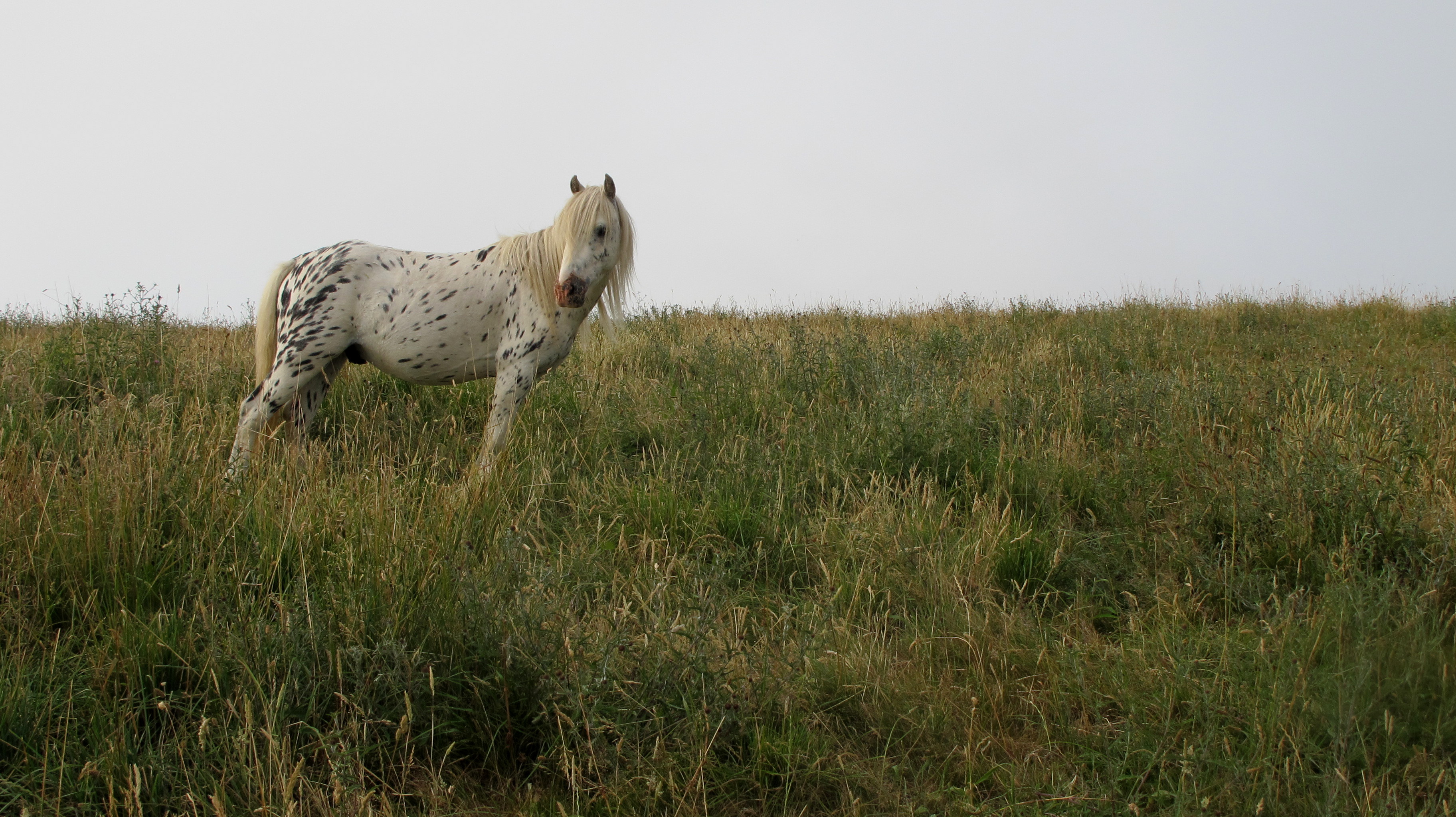
This isn’t, as you’ll probably have noticed, the Duke of Wellington on his horse. (Wellington appears just below, with his horse). It’s a wild horse on the Cornish cliffs, but it’s as close as I could come. No traffic cones were injured in the making of this photo.

Let’s take a break from the coronavirus. We owe ourselves that.

In Glasgow, a statue of the Duke of Wellington generally wears a traffic cone on his head, and he looks quite fetching in it. Go on, click both links here. This is important.

The city authorities generally take it down.

And someone generally puts it back on. 

This has been going on since the 1980s. That’s a lot of traffic cones. I like to think the city puts them back into its working stash of traffic cones instead of throwing them away, and if today weren’t Saturday I’d play intrepid reporter and make a phone call or two, but as things stand I just don’t know. And, you know, we have to go to press. We have deadlines to meet. The world is counting on us.

And by us, of course, I mean me.

The city estimates that it spends £10,000 a year taking traffic cones off the duke’s head. That’s £100 per cone. 

The city may or may not be padding its expenses. That’s another thing I don’t know. Let’s pretend we believe them. It’ll keep the story flowing.

In 2011, the Lonely Planet included the Coneheid (as Duke W. is known locally) on a list of the world’s ten most bizarre monuments, and if you don’t think that’s a big deal, just try getting something on the list by your own self.

In 2013, the council decided to stop all this fooling around once and for all by doubling the height of the statue’s base–called a plinth in case you ever need to know that–to the tune of £65,000. By the next day, 72,000 people had signed onto a Facebook page supporting the cone. Before much more time had passed, a petition had 100,000 signatures. A demonstration was held.

How many people showed up? Somewhere between 3 and several million.

The cone was local culture, they said, and the council had better keep its hands off it.

It all settled down for a while, with the cone staying in place, but a July 3 tweet showed that in retaliation for the cone being taken down again someone had put a whole stack of cones on the duke’s head. And one on the horse’s. 

And the pubs in Scotland hadn’t even re-opened yet. 

My thanks to Pete Cooper, who was entirely sober when he sent me these links. As–I would never imply anything else–he generally is. 

*

A new coronavirus testing program worth £5 billion looks like it will go to private companies, although the president of the Institute of Biomedical Science said, “We are campaigning for NHS labs to be allowed to bid for these contracts. This should not be exclusive to commercial partners.”

Translation? Britain’s own National Health Service is blocked from the bidding. Why? Because.

NHS sources say the money will go to expand the Lighthouse laboratory program, which has successfully kept communities from getting early notice of local spikes, making it impossible for them to respond to them. For two months, IT and data protection problems meant they didn’t let local governments, hospitals, or doctors know about growing clusters of cases in their areas. They’ve also (anecdotally: I wasn’t there and I can’t prove it) lost samples, left them sitting until they were too old to be tested, and generally made themselves beloved of the medical community.

Some of those problems have been sorted out, but if a patient’s test was processed by a Lighthouse lab, hospitals still can’t find out the result. 

The number of Covid cases and deaths have both gone down in Britain–and in England, where I think this program is running. The more I read about it, though, the more I wonder how.

*

Locally, a friend who drives people to medical and hospital appointments was exposed to the virus by a symptomatic passenger and spent ”a silly part of the day trying to find out how this works, with no joy at all.” 

She called 111, the number for medical advice. They told her to phone 119, “even though 119 is supposed to be to book a test only.” 

She called anyway and the “operator only knew how to book a test but couldn’t as I didn’t have any symptoms.” 

Government advice is that you shouldn’t get tested unless you have symptoms. The test, they say, is most accurate in a relatively short window of time after the symptoms appear.

That left my friend with no idea of what to do next. She went into isolation, which she’d have to do anyway, since the test comes up with a fair percentage of false negatives. But she would like to know if she has a life-threatening disease. You know how these whims can be.

She tried to find out how long it would be before the woman who’d exposed her would get a test and how long would it be before she herself would be contacted if the woman tested positive.

No answers.

She gave up and phoned the doctor’s office–called, in British, a surgery. They were in the dark, they said. The test and trace program doesn’t talk to them. Or write. Or email. You could say it was a bad breakup, but they’d never been married.

She phoned the woman who’d exposed her. She hadn’t been contacted about having a test.

If I weren’t a better person, I’d remind you that all that only costs us £5 billion. But I won’t because that wouldn’t be accurate. The £5 billion’s to expand this wondrous program, not fund its current work of saving our sorry asses.

*

So how can a country find asymptomatic cases if the tests are most accurate after symptoms appear? 

By massive testing. With the same type of test the government’s using–a PCR test. As far as I can follow this, the tests may be more accurate once symptoms appear, but they’re very much worth doing beforehand.

According to Healthline“ ‘People exposed to the virus who have had close contact with a confirmed case should get tested whether or not they have symptoms,’ Amira Roess, PhD, a professor of global health and epidemiology at George Mason University, told Healthline.

“ ‘By identifying individuals who are positive early in disease progression before they develop symptoms and implementing public health interventions, we can prevent a large percentage of infections. This is key, because we have learned that asymptomatic infection is a key driver of this epidemic,’ she said. ‘Finding asymptomatic individuals will allow us to prevent them from spreading the virus.’ ”

As far as I can sort this mess out, it seems to be true that early testing comes up with some false negatives (the test has a fair number of those anyway), but Antibiotics Research UK talks about the importance of mass testing to identify asymptomatic carriers, meaning both people with symptoms and people without, and notes that the World Health Organization has called for it.

“Doing so has seen South Korea handle the outbreak with exceptional efficacy. A similar project in Iceland has shown that around half of the people who tested positive are showing no symptoms, too. Mass testing is the example we should be following here in the UK. This should be followed by tracking and quarantining the people who have been in contact with those found to have the virus. We need to be able to identify asymptomatic coronavirus carriers to further limit the spread.”

And we’re not doing that.

*

On the other hand, the virus must be under control, because England’s pubs are opening today. The prime minister’s urging us all not to be silly about it, and of course we won’t be. But I would recommend putting the traffic cones someplace safe for a few days.

*

Finally, Florida State University sent out an email saying that starting on August 7 it would “no longer allow employees to care for children while working remotely.”

Predictably enough, the shit started flying in all directions. So they sent out new announcement, saying, “We want to be clear—our policy does allow employees to work from home while caring for children.”

And that upset the people who’d already cleared out space in their freezers to stash their kids in. All that ice cream gone to waste.