‘Tis the season to sell books, part 2

I don’t normally use this blog to promote my novels, but this one and the one I posted about last week are close to my heart. I’d love them to move further into the world.


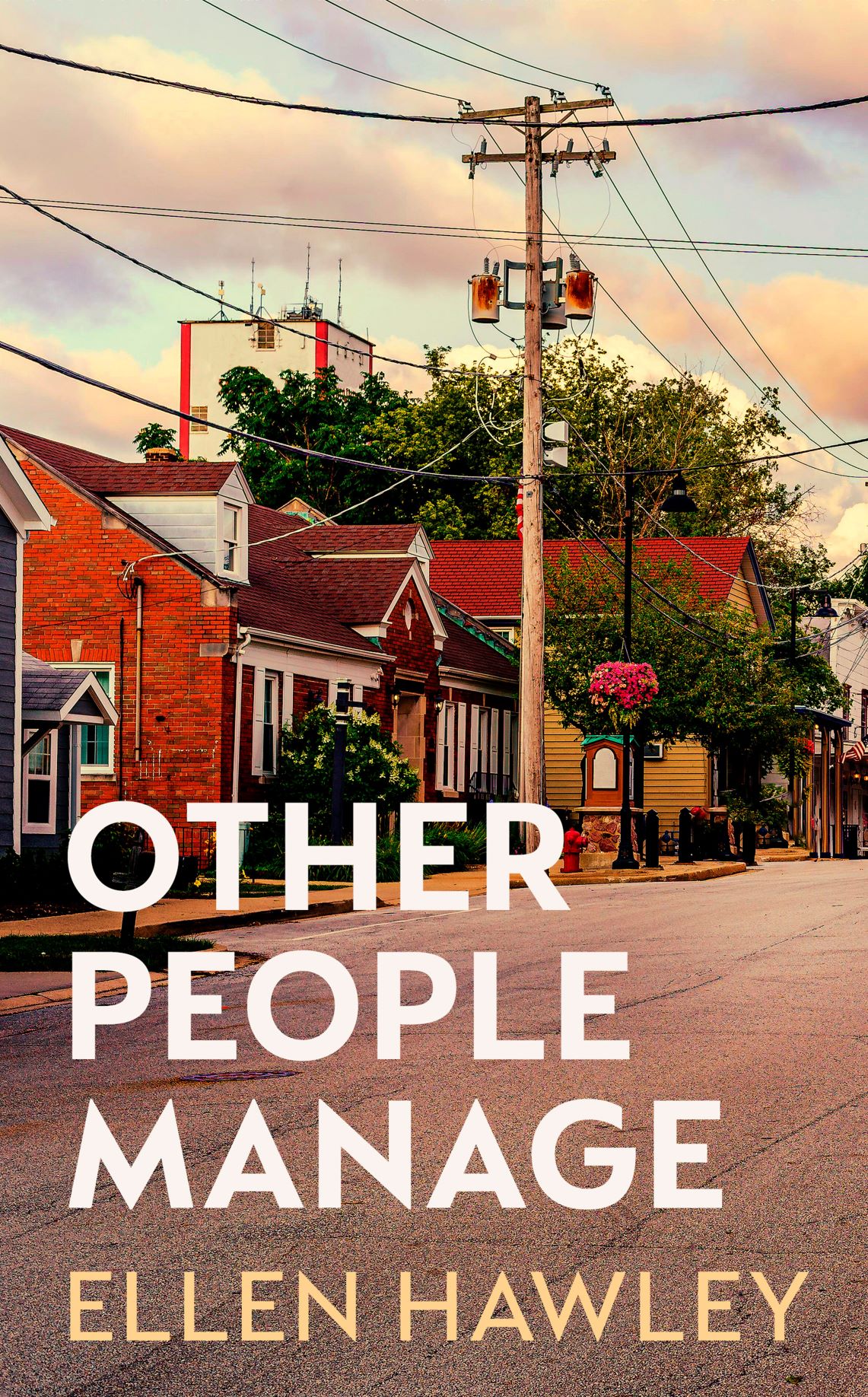
It’s the 1970s and two women begin a relationship that both demands more and gives more than either of them could have imagined. Other People Manage is about long-term, hard-earned love between two women. This isn’t romance, it’s the kind of love you have to work for.

*

“A quietly devastating novel about our failings and how we cope” –Patrick Gale

“A persuasive and deftly told story about a long-lasting love.” —Times Literary Supplement

“A tender and beautiful addition to the literary canon, and a mirror for LGBT readers.” –Joelle Taylor, the Irish Times

*

You can buy it directly from the publisher or from whoever handles those things well in your part of the world. Or borrow it from the library. Libraries are wonderful.

‘Tis the season to sell books

Writers can be tiresome when they’re promoting their books, and for the most part I steer clear of self-promotion here, but the emphasis there falls on for the most part. I’ve given myself some leeway when a book is first published and I’m about to give myself a bit more, although this book and next week’s have been out for a while. The thing is, they’re particularly close to my heart. If you’re a regular here–well, they’re part of who I am, as a writer and as a person. Some of them already know them, but if you don’t I’d like you to. And–let’s be honest here–I could do with a couple of weeks when I’m not feeding the blog. Blogs are ravenous beasts. If my novels aren’t what you come here for, no problem. Go get yourself a cookie and ignore me. I’ll get back to our normal programming before long.


A Decent World

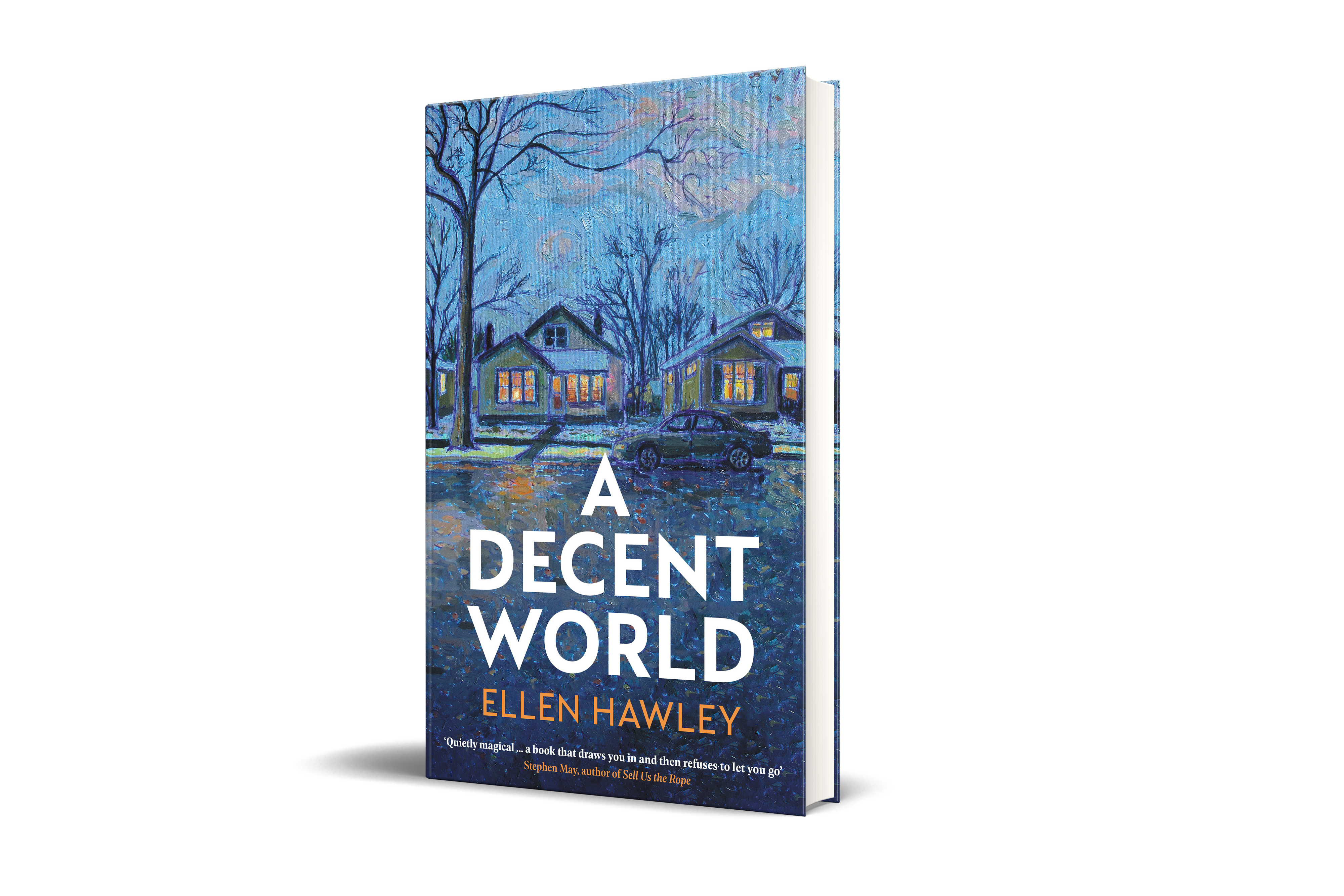
Summer Dawidowitz has spent the past year caring for her grandmother, Josie, a dedicated teacher and lifelong Communist. When Josie dies, everything that seemed solid in Summer’s life comes into question. What sort of relationship will she have with the mother who abandoned her? Will she meet with her great-uncle, who Josie exiled from the family? Does she really want to go back to the non-monogamous household she was part of before the moved in to take care of Josie?

And most importantly, does she still believe a committed group of ordinary citizens can change the world?

*

“Quietly magical . . . a book that draws you in and then refuses to let you go.”

–Stephen May, author of Sell Us the Rope

*

Order directly from the publisher or from whoever handles that stuff best where you are. Or borrow it from the library. Libraries are wonderful.

A quick note before you get to the most recent post 

Featured

We live in dark times, and it’s feeling stranger and stranger to write this blog without acknowledging that. As someone other than me has already said, whatever you think the German people should’ve done in the 1930s, this is the time to do it. We can’t all be heroes but we can be honorable people. Sometimes that alone is heroic. Do what whatever is in your power, my friends. We can’t know how long the chance will last.

Sewage, patents, and post-truth politics: it’s the news from Britain

In these days of post-truth politics, it shouldn’t surprise me that someone paid a polling company to ask what percent of the British public thinks one of our many former prime ministers, Boris Johnson, was telling the truth in his memoir. It shouldn’t surprise me but it does. Just when I think I’m cynical enough to keep up with reality, something like this comes along.

What did they learn? For the sake of simplicity, let’s focus on two questions: only 25% of the people polled believed Johnson’s claim that Buckingham Palace asked him to convince Prince Harry not to leave the UK and 31% believed his claim that Britain was able to get Covid vaccines faster because it had left the European Union. 

A baffling number of people gave answers that fell in the probably zone, saying a claim was probably true or probably false. I understand that they didn’t have inside information, and some of the questions asked what they believed Johnson believed, which leads us onto wobbly ground indeed. But come on, people. I wouldn’t believe the man if he told me today was Friday. 

In fact, as I write this, it’s not Friday. It will post on Friday, and you’ll read it on whatever day you damn well please, if at all. I’m typing it, though, on Monday and editing on Tuesday. You see how slippery truth can be? Muddy the waters enough and everyone will stop caring what’s true–or so the theory goes. Still, no matter what day of the week Johnson tells me it is, I’ll check my phone or today’s newspaper. 

Or possibly my phone and today’s newspaper. 

Irrelevant photo: An azalea blossom

If you get past the list of questions, the poll offers some hope for people’s political sanity: 72% of Britons describe Johnson as untrustworthy. True, that’s down from the 76% when he was just about to slither out of office, and I’m not sure Johnson would consider their low opinion a problem–he’s built a career out of convincing people that whatever he gets up to is cute–but it does let me think three-quarters of the population is paying some minimal attention.

I’d love to tell you who paid for the poll and why, but I have no idea. What I do know is that no poll–yea, no breath–gets taken without somebody paying for it.


Okay, we know politicians lie. Private companies tell us the truth, though, right?

Of course they do, dear. Now go to sleep or Santa won’t bring you any presents.

*

If the kids, having despaired of ever getting a straight answer, are asleep, let’s tell secrets: Britain’s privatized water companies cheated on thousands of pollution tests.

Did I mention that they got to monitor themselves on those tests? Because all that red tape we used to have was bad for us. 

How’d they rig the tests? They stopped the outflow of effluent–a polite name for liquid waste or sewage that gets discharged into rivers or seas–when they were about to test the outflow. And guess what: everything was fine! Isn’t that wonderful? Then they opened the taps and the sewage poured forth.

Britain has a serious water-pollution problem. To quote the BBC, “The amount of raw sewage spilling into England’s rivers and seas doubled in 2023, with 3.6 million hours of spills compared with 1.75 million hours the year before.”  A different BBC article says just 14% of Britain’s rivers are in good ecological health, and the problem comes not just from untreated waste (we have a lot of that) but also from sewage that’s only partially treated. The final stage of treatment, sand filtration, is optional. (See above for how red tape is bad for us.)

Meanwhile, in the 2021/22 financial year, water companies paid their shareholders a total of £965 million and their CEOs took home £16.5 million. Thames Water, the biggest of the water companies, was almost £15 billion in debt as of last March. In July, it asked the regulator to increase annual bills by 23% between 2025 and 2030. Since then, it’s said it needed to raise them by 53%. 

Pay up, folks. You get what you pay for–with sewage on top.

There’s talk of renationalizing Thames Water, but that will stick the government with its debt (it just got a £3 billion loan that will help it survive past Christmas), along with its other problems. I think I see why the government’s hesitating.


Yes, but what’s Britain really like?

Well, you can tell a lot about a country from its patent applications. Here are a few inventions Britons patented in 2023:

  • A flatpack coffin
  • A robot dog that vacuums and can go up and down stairs
  • A computer table that lets you lie under your desk and work looking up (it can also work as a conventional desk)
  • A plywood cow–useful if you want to practice lassooing cattle
  • Smart gloves that record a goalie’s performance data
  • Cheese made of potatoes
  • Shoes that can be worn on either the left or right foot 

and most practical of all

  • A machine that vibrates the mucus out of your nose

What does this tell us about Britain? I’m at a loss. You tell me.

England’s church ales

If you’ve brushed shoulders with medieval history, you’ll know the Catholic Church wasn’t shy about raising money, but you may have to brush a bit more than your shoulder to learn about church ales. 

They were a way for local churches to raise money and for local people to throw a party, because an ale could involve not just the obvious–ale–but also food, sports, games, music, dancing, and whatever else local tradition dictated. Some were linked to the church calendar–Whitsun ales were common, as were ales to celebrate the church’s patron saint–and others were held to raise money for specific thing. A bride’s ale, for example, would raise money for a poor couple who were getting married, or an ale might also be help to pay the parish clerk.

But they were more than a way to raise money. They were massive social occasions–the kind of events that hold small communities together. 

Irrelevant photo: toadflax

A couple of examples

Woodstock, in Oxfordshire, had a Whitsun ale every seven years. The years without a Whitsun ale were dedicated to sleeping off the hangover, because on the seventh year, look out: the ale began on Holy Thursday and roared on all week. 

Since Whitsun’s related to Easter, following it by a fair few weeks, and since Easter’s related to Passover, which is calculated on a lunar calendar, Whitsun’s a restless holiday that moves around the calendar, usually between May and June. But don’t look at the calendar: whatever the month was, Woodstock set up a maypole, and decked it out with ribbons and flowers. The Duke of Marlborough paid for it. 

Next to the maypole was the drinking booth, and opposite that a shed–okay, a shed some 50 feet long–decorated with evergreens. That was called the Bowery. Not Bowery as in New York’s old skid row. A bowery was a shady, leafy place. Or a dwelling. Or a lady’s bedroom. Or several vaguely related other things.  

Never mind. We’ll come back to this particular Bowery.

A lord and lady were chosen to preside over the ale, along with a waiting-man and a waiting maid and two men who carried a painted wooden horse. We’ll come back to the horse as well.

They’d go around the town in a procession, with the lord and lady offering a Whit cake for people to taste in return for a small payment. Whole cakes were also for sale.

The lady’s parrot and the lady’s nutcrackers were hung up in front of the bowery. These were an owl and a hawk in cages and a pair of threshing flails. Anyone who called them flails, owls, or hawks was fined a shilling. If they didn’t cough up, they were carried around the maypole on the wooden horse. If they still wouldn’t pay up, someone confiscated their hat.

Students from Oxford came over to ride the horse for the sheer hell of it and they frequently ended up fighting with the morris dancers when they wouldn’t pay the shilling.

Did we mention the morris dancers? Morris dancers show up everywhere.

*

In Reading, Berkshire, parishioners also elected a king to preside over Whitsun, and there was ale, morris dancing, and feasting in the churchyard.

If you’re not a fan of morris dancing, I’m sure it looks better after some ale.

At Hock Tide (also linked to Easter but not a religious festival), the women of the parish kidnapped the men on the first day of the festival and held them for ransom, with the money going into the parish funds. On the second day, the men kidnapped the women. 

According to a source on the festival, “In St Laurence’s, there may have been a division of the sexes for the feasting, with the accounts recording separately the ‘wyvis soper [supper]’ and the ‘bachelers soper.’ ”

In some parishes, the women were responsible for organizing the activities for an ale, and at least one set of parish records lists the expense of a supper to thank them for their work. For what it’s worth, in the village where I live, it tends to be women who organize local events, and the organizing itself, although not formally a way to socialize, still brings people together. 

*

In Crowcombe, Somerset, parish ales were held in a two-story house that had been built in 1515, in response to church authorities frowning on ales being held in the church nave. (Naves are where the congregation stood during church services; they didn’t have pews yet, so they were generally the largest open, indoor space in a village, and they were separated from the sanctuary by a screen, which–I’m speculating here–may have made them feel less like a religious space and more like a secular one.)

The house was given by the lords of two manors and the church was to pay rent for it. The goal was to meet the village’s needs for a community space.

Brewing and baking were done downstairs until the mid-1600s, and feasting and dancing were upstairs. Food and drink were carried up an outdoor staircase, in procession.


And then it all changed 

While we were paying attention to ales, the Church of England snuck in and replaced the Catholic Church. Some traditions continued seamlessly and others didn’t. Church ales were one of the things that carried over. 

But English Protestantism was made of multiple, conflicting strands, and church leaders gradually turned against ales–first against clerical involvement and later against the ales themselves. 

When the Commonwealth came along in 1649, it brought in an austere form of Protestantism. The monarchy was overthrown, the Church of England ceased to be the state church, and church ales were out.

Then the Commonwealth collapsed and the kings came back, bringing the Church of England with them, but not the ales. The church was happy enough not to revive them. Church rates were a more reliable way to raise money–and an easier one. 

Church rates? They were a tax that went to maintain the parish church, usually collected by churchwardens. The earliest known use of the phrase is from the mid-1600s. They were abolished in 1868–at least in England.    

Some ales were resurrected, both to raise money and to bring the community together. They never became as widespread as they had been, though. They were usually supported by local government or landowners. I’ve found a couple of contemporary ones. In July, Weymouth held a church ale and (yes indeed) teddy bear zipwire. And the parish church in St. Ives, Cambridgeshire, is holding (or just held–they’re less than forthcoming about the dates) a Booze in the Pews festival.

Adults are running Britain again, but there’s still fun to be had at the Tory leadership contest

Does good news ever comes without a bit of bad news to balance it out? The good news is that Britain has, at long last, put grownups in charge of the government and the country’s a more stable place. On the other hand, I’m not having half as much fun with the news. 

But don’ lose hope. The Conservative Party’s in the midst of a leadership contest

Why? Because tradition has it that a party leader who lost an election is no longer suited to be head of the party. You’d have thought fourteen years of running the country would’ve convinced the Conservatives that failure is no obstacle to leadership, but it hasn’t, so they’re looking for a new leader. 

What will the new leader need? First, the backing of 10 Members of Parliament–presumably from their own party, although I can imagine an MP from a rival party thinking it would be a great move to endorse–oh, say, whoever the British equivalent of JD Vance might be. 

But no, probably not. 

A rare relevant photo: This is Li’l Red Cat, a.k.a. Kitten Little, who still can’t figure out why some humans think childless cat lady is an insult.

MPs can only back one candidate, and once nominations close, the Conservative MPs will vote and the top four will go to the next stage. Those four will need to come up with £50,000. If they do, they get to sell their goods at the party convention in the fall. Their money will go toward paying for the convention. 

After the convention and a few dog-and-pony shows around the country, the party’s MPs will vote again, choosing the final two. 

Have you kept track of which shells are hiding the remaining peas, because I’m not sure I have? 

The remaining two candidates now need to come up with £150,000. Why? Because raising that much money is taken as a sign that a candidate is a good fundraiser. 

Being a good fundraiser is taken as a sign that the candidate is a good leader. This doesn’t entirely explain how things have gone so wrong for the party in the past fourteen years, but it could be part of the explanation.

The candidates aren’t allowed to spend more than £400,000 on their campaigns. That’s probably in total, at all stages, but I can’t swear to that. 

After all this spending and eliminating and moving the shells around, the party’s members choose between the two remaining candidates. 

And after that? The rest of us ask, What were you thinking?

*

One of the current crop of contenders, Tom Tugendhat, started his campaign with the slogan

Together we can, 

Unite the party. 

Rebuild trust. 

Defeat Labour.

The capitalization isn’t his (his was all caps), but the line breaks are. When someone noticed that the first letters in each line spell out TURD, the slogan was withdrawn.

Could I make this stuff up? I wish. 

*

And in late news from the election, Jacob Rees-Mogg not only lost his seat in the House of Commons, he had to stand next to a candidate wearing a baked bean balaclava to hear the vote count read. Barmy Brunch was a Monster Raving Loony Party candidate running on a platform of introducing a statutory brunch hour, when all workplaces would have toMake stop and serve brunch. His slogan in Make Brunch Great Again, which at least doesn’t spell out turd.

What (if you’re not British) you ask does that have to do with baked beans? One of the mysteries of British culture is people’s attachment to baked beans. They’re as essential to a full English (or Welsh, or Scottish, or I assume Northern Irish) breakfast as air is to life. So a statutory brunch hour? Yup, baked beans. 

No, I can’t explain it, but I can report that people also eat them on toast and on baked potatoes. Voluntarily. 

Mr. Brunch lost the £500 deposit every candidate has to pay to run in a general election. They get it back if they receive at least 5% of the vote. He got 211 out of 51,267. You’re welcome to figure out what percentage that is. I don’t dare, but it’s less than 5. I expect he’d tell us it was money well spent.

I’m indebted to Fraggle for sending me a link to this priceless piece of political news. I wouldn’t stand a chance of understanding British political culture without it.


Politics in the US

I’m originally from the US, but I’ve lived in Britain for the past seventeen years, which is one reason I don’t write much about US politics. The more powerful reason is that what’s happening over there scares me shitless and that makes it hard to keep my sense of humor functioning. 

However, JD Vance’s entry into the vice presidential race is luring me back. 

If you’re not following US politics, Vance is Donald Trump’s running mate, and one of his first contributions to the race was an attack on childless cat ladies who live miserable lives–and apparently run the Democratic Party, and through it, the country. 

As a childless cat lady, I’m honored to be on his enemies list. I haven’t noticed the Democratic Party taking my opinions to heart, but maybe it’s all too subtle for me to see how it works. Perhaps he could mansplain it to me.

Ever since his comment, cat ladies have been coming out of the woodwork, gleefully forming imaginary organizations along the lines of Childless Cat Ladies for Harris. Dog ladies and men of various descriptions–eaten with envy–are announcing similar groups but without getting the same traction as cat ladies. Sorry, folks, it’s just not the same. Social media’s awash in cat lady memes. The best of them urges people NOT to send used kitty litter to Vance at 37 West Broad Street, room 300, Columbus OH 43215.

Given the price of international mail, I wouldn’t dream of it. 

Among the childless people Vance has mentioned are Pete Buttigeig, who has two children, and Kamala Harris, who has two stepchildren. But then, Vance also thinks Britain is an Islamist country, so we shouldn’t expect him to have a close relationship to facts. Besides, Buttigeig is gay as a bedbug, so his kids don’t count. As for Harris, those are stepkids, so where does she get off caring about them?

Vance seems to have done as much to energize Democrats as Harris herself has. Welcome to the race, JD. 


Rewilding in Sussex

An effort to rewild an area of Sussex has recruited dog walkers–and more to the point, their dogs–to spread seeds. The theory behind this is that wolves–which have been extinct in Britain since 1760–used to roam, on an average, 20 km a night, getting wildflower and grass seeds stuck in their fur as they went, and dropping them somewhere further on. So dogs are being recruited as the new wolves.

Thank you wolves. The fairy tales that left us terrified of you never mentioned that, but then they were written by humans. Sorry. We all have our biases and we’re sorry about the extinction bit. Really, really sorry. 

The Sussex project is based on one in Chile, which regenerated an area that had been devastated by wildfires. 

Dog walkers in the Sussex wildlife area can pick up doggy backpacks that have been poked full of holes and hold seeds mixed with sand. The person walks on a path. The dog runs wherever it wants, and the seeds filter out as it goes. And the dog walker doesn’t have to feel guilty about letting the dog off the leash.

The sand not only makes the seed go further but lets the rewilders see where the dogs have been. 

The project’s seeing some success already, but since most of the seeds are perennials, they’ll take a few years to establish themselves. 

Odd stuff about Britain’s election

By the time you read this, Britain will have a new government, and if you want details on that you’re in the wrong place. I’m writing this on the day of the election (which is also the day before I post) and I’ll be snoring by the time the results come in.  

So what can I tell you about the election, then? 

Semi-relevant photo: A red flower. A peony in this case, not the red rose that Labour uses as its logo.

Forget the polls . . .  

. . . let’s turn to Etsy for a prediction.

  • Someone was selling a Tory Meltdown Wallchart (Tory is another name for the Conservatives). It divides candidates into ranks from “the inevitable” (bound to lose their seats) to “there is a God” (their loss would be a gift from the universe). 
  • Other people were selling bingo cards–two versions, both intended to help players enjoy Tory losses. The promo on one said, “Even if you lose the game, you win.” One was called Tory Wipeout Bingo.
  • You could also buy assorted games where you gain points by spotting things–a Labour majority of more than 100, say, or any mention of Boris Johnson.

As the votes were being counted, a website, Portillogeddon.com, went live. If Liz Truss lost her seat, a lettuce was programmed to fall from the sky.

The virtual sky, I assume. 

Why a lettuce? Because Truss’s prime minister-ship (Tory, of course–they’ve had 14 years in power) got into trouble so soon that an inspired website trained a camera on a head of lettuce to see if it would outlast her.

It did.

And Portillo? Wiktionary defines a Portillo moment as “an election loss for a prominent politician.” It comes from the surprise 1997 defeat of Conservative defence secretary Michael Portillo, who was even being talked about as a future leader of his party. His opponent was so sure he’d lose that he didn’t write a victory speech.

That was part of a Labour landslide that ended 18 years of Tory rule, and as you may have gathered, a lot of people have been watching for Portillo moments. Labour was expected to win a majority that falls somewhere between huge and groundbreaking, and by now the Conservatives might have succeeded in landing not in second place but in third. It’s going to be an interesting night. I’m going to bed. The news will all be there in the morning.

As for the voting itself . . .

. . . the British press are sworn to silence about the voting until 10 pm. That leaves reporters posting stories about tortoises at polling places, or horses, along with lots of dog photos. The BBC took a quick run through (I assume) its files to come up with odd election day stories, and since I’m going to bed instead of staying up to post details you can find out in more detail on some more sensible site, that leaves me posting odd election day stories. I’m indebted–as I often am–to the BBC.

In 2021, a chicken wandered into a polling station in Lancashire, unaccompanied by any human, voting age or otherwise. It was friendly and it stuck around so long that the people in charge took to saying, “Come in, don’t mind the chicken.”

When they couldn’t trace the owner, a local farm family offered to take it for the time being. That seemed like a good solution. Exit chicken, in the hands of the farmers.

Minutes later, a five-year-old showed up. The chicken was his pet and its name was Matilda.

Cue panic. Had they just given Matilda to heartless, chicken-eating farmers?

Well, no, they hadn’t. They were farmers, definitely, and chicken-eating, possibly. But heartless, no. The farmers put Matilda in a pen with other chickens, although that turned out to be a bad decision. The home-team chickens decided Matilda was what was wrong with their lives and all proceeded to peck her until her family swooped her up, took her home, and gave her a bath.

I’m going to assume that Matilda liked her baths, although I’m making that part up. 

A few hours later–presumably Matilda and her pet boy had recovered by then–the family came back to the polling station to say thanks, bringing chocolates and a tray of eggs. 

*

At a different polling station, a woman dropped her ballot into the box and her engagement ring followed it in. Her £40,000 engagement ring.

Could they open the box, please, so she could have it back?

Well, no, they could not. Ballot boxes stay sealed until the votes are counted, so the woman had to wait until the end of the day, then go where the votes were counted and wait until they got around to her particular box. That gave her all kinds of time to consider the wisdom of getting her ring resized.

Until 15 years ago, ballot boxes were closed with sealing wax, and if the wax got hot enough the wax would smolder, raising the possibility–however remote–that the ballots themselves would catch fire. And, of course, poll workers weren’t allowed to take the wax off. That would invalidate the ballots. 

The BBC says, “Polling station workers couldn’t open the box to put out the potential flames so instead had to find a way to get liquid into the box to put out the fire without causing too much damage to the votes.” 

Into the box? Wasn’t the wax on the outside? Almost surely, since no one’s small enough to seal the box from inside, then slither out. Let’s not worry about it, though. Let’s just enjoy the thought and not lose sleep over the mechanics.   

British voters struggle under wave of manifestos as election nears

You can’t have a parliamentary election in Britain without the political parties rushing in and publishing their manifestos–documents setting out what they’ll do if they get into office, or at least what they say they’ll do. 

English needs a word for a group of manifestos. A noise of manifestos? A wishfulness of manifestos? A scramble of manifestos? Nominations are open. No winner is likely to be chosen and any prize will have to be self-awarded, but please, don’t let that stop you from entering.

Like 99.7% of the population, I haven’t read any of them. I rely on newspaper summaries and I’ll confess to skimming most of those and skipping the minor ones entirely. But that won’t stop me from arguing that as a class manifestos range from the unreadable to the unreadable–unless, of course, it’s your job to read them, in which case, human ingenuity being the amazing thing it is, they open themselves before you and make a sort of sense. I know that because I used to work as an editor. Pay me money and it’s amazing how much sticky prose I can wade through.

Irrelevant photo: Wheee! Poppies.

But before parties issue their manifestos, they serve up bits of policy as appetizers, convinced they’ll make us hungry for the full meal. So we turn on the news one day to hear the Conservatives are going to cut taxes, the Liberal Democrats are going to save the National Health Service, and Labour’s going to put energy drinks off limits to people under 16. 

Then the next day dawns, as days will if you don’t keep an eye on them, and Labour’s going to get the NHS (that’s the National Health Service) back on its feet, the Lib Dems are going to create a minimum wage for carers (those are people taking care of a disabled partner/relative/whatever), and the Conservatives are going to cut taxes. The Greens will build new environmentally friendly housing and tax the wealthy.

Labour will also fix a million potholes. The Conservatives shoot back that they like cars more than Labour does but potholes build character. No nation with any backbone whatsoever would want them all filled.

You turn off the radio, but they’re on your TV. The Reform Party’s going to save the NHS. (Have you noticed a pattern here? Everybody’s going to save the NHS. The parties who had a large hand in its near-demise say nothing about why it needs saving.) The Lib Dems are going to bring down trade barriers. The Greens will go carbon neutral by 2040. Labour’s going to tax public schools, which in a bizarre twist of English history and language are actually private schools. The Conservatives are going to make sure every student studies English and math until they’re 18 and can explain why public schools are private. Students may need energy drinks to survive the beefed-up curriculum. 

The entire nation needs energy drinks to survive the election.

Reform is going to take Britain out of the European Union.

Wait. Britain already left the European Union. That was a stray page from a few years back. Fine, they’ll put Nigel Farage’s face on every TV screen every day. Policies don’t matter, personalities do, and he apparently has one, although I can’t bring myself to look at him long enough to verify that.

All the available parties agree to send toothbrushing squads to eligible homes but disagree on which homes should be eligible.

Eventually, all the parties publish their full manifestos and the drip-feed is over. The news shifts to the manifestos themselves.

How much does any of this mean? It’s not completely pointless. Voters can weigh the manifestos and calculate each party’s’ political tilt (in case it isn’t already obvious). They can look at the work of parties they don’t like and attack their weak points, which is why Labour has attack-proofed its manifesto so thoroughly that they haven’t left much for anyone to get excited over. Except for getting the Conservatives out of office, which after fourteen disastrous years I’m actually excited about.

But there’s another reason manifestos are useful: if a party promises something in its manifesto and gets into power and then follows through on that promise (that’s three ifs), the issue will carry a bit of extra political clout in the legislative process. 

But enough about manifestos. Let’s talk about the fun stuff–in other words, the Conservatives, because they’ve been such a gift to the cynical and the satirical. I can’t think what I’ll write about once they’re out of office. Let’s check in with a number of political departments.


The Department of Stupid Scandals

The Conservatives’ most damaging move hasn’t done any real-world damage, but it will help them lose the election: Rishi Sunak–that’s the prime minister–attended a D-day commemoration and left early while the leaders of other countries stayed in place and hid their boredom stoically. Cue outrage and offense.

The big scandals, like re-introducing nineteenth-century levels of poverty, don’t tend to lose elections. It’s the stupid stuff, like leaving a commemoration early. 

Ah, but there’s more to get outraged about: three days before the election was announced, Sunak’s top parliamentary aide (translation: he’s an aide and a member of parliament) got caught placing a £100 bet on the election’s date. No one’s saying whether or not he knew what the date would be, but at the very least he was in a position to take an educated guess. That could leave him in legal trouble for using confidential information to place a bet and in political trouble for damaging the reputation of the House of Commons. And since it’s the stupid scandals that bring politicians down, this one is rumbling on like low-grade thunder–distant but ongoing. The Gambling Commission has told bookmakers to comb through their records for others in the inner circle who might’ve placed substantial bets, because the betting odds on a July date shortened in the week before the announcement. And they’re finding them. 

On Thursday, the Conservative Party took down a social media post that said, “If you bet on Labour, you lose,” although I may not have the wording exactly right because, um,the post is gone. I’m sure someone in Conservative HQ is bellowing, “Okay, where’s the arsehole who wrote that?”

If the aide whose bet was first noticed had won, he would’ve made £500. He’s now looking at the possibility–remote but not out of the question–of not just a fine but two years in prison. But, you know, the bet was a sure thing.


The Department of We’re Not Really Members of our Party

Conservative candidate Robert Largan posted ads on social media that make him look like he’s running as a Labour candidate. And a Reform candidate. And a Lib Dem candidate.    

A Conservative member of the House of Lords has reposted tweets calling on people to back the Reform Party. One said that anyone who voted Conservative wasn’t patriotic.

And a Reform Party candidate, Grant StClair-Armstrong, was forced out of the party after an enterprising reporter dug up some 2010 tweets where he urged people to vote for the British National Party, which is variously described as fascist, ethnic nationalist, far right, anti-immigrant/anti-Muslim, and (by their own description) interested in making Britain a better place. 

His name will be on the ballot anyway. It’s too late to take it off. 


The Unseemly Ambition Department

With the election not yet lost and Sunak still head of his party, any number of Conservative MPs are hoping to replace Sunak. Three weeks before the election, campaigners were already on the receiving end of messages from them, saying, basically, Hey, remember me? I’m here and I’m thinking of you. Don’t forget my name when the time comes

But the front-runners need to do more than that if they want to lead the party after Suank’s demise. They have to be elected to Parliament, and this year that’s not guaranteed.

Not unconnected to those ambitions, for a while we heard rumblings from within the Conservative party that its right wing might publish a counter-manifesto if the official one didn’t grab hold of the electorate. As I’m writing this, no counter-manifesto’s appeared but let’s not write it off yet. There’s more fun to be had.


The Just Folks Department

An interviewer asked Sunak if he was in touch with the struggles of ordinary people and whether he went without anything as a child. Yes, he answered. Sky TV. The nation weeps for him still.

Never mind. He’s tough. He can try again, and did in Devon, where he got down on his haunches and tried to feed a flock of sheep. They ran away.

 Yeah, go on, follow the link. You know you want to.

The Department of Wild Popularity

At a political discussion show, Sunak blamed doctors’ strikes for long NHS waiting times. The audience booed–him, not the doctors. 

*

And finally, when the Conservatives launched their manifesto, the crowd was so thin that they sent minions scurrying around to fold up the chairs so nobody would notice. 

They noticed.