Spring flowers in January

Having lived in Minnesota, a state that’s in the middle of the US and hangs from the Canadian border by clinging to an icicle, I suspect that what my neighbors in Cornwall call winter is really spring. Here are a few flowers that bloomed not in January (the headline’s a lie) but in December.

Primroses on a neighbor’s lawn

Camellia, ourside a differnt neighbor’s house

Periwinkle–ours. It’s a good thing it’s pretty, because it’s trying to take over the yard.

Wishing you good weather, wherever you are. Apologies for the not-quite-convincing post. I need a bit of down time.

The Posh Report: class, culture, and snobbery in England

The English have a way of bringing almost anything back to class. Or maybe that’s not just the English but the British in general. Or–you know what? Let’s not worry about it. Let me give you an example to take our minds off the problem: I was walking dogs with a friend and when the time came to pick up after my pooch I tore a patterned plastic bag off a roll that was meant to fit inside a pickup pouch but had escaped.

“Very posh,” my friend said, and she showed me the greenish diaper bags she used, which at the time sold for–oh, I think it was 12p for hundreds of the things, or to put that another way, not much.

I explained that someone had given us (us being my partner and me) the pouch, along with the bags. Not having had kids–in this country or any other–I was a stranger to the greenish diaper bags and asked about them. I’ve used them ever since, although they left that 12p price tag in the dust long ago.

My point here is that this is a country that can even take dog shit and make it about class.

A rare relevant photo: a kind of hydrangea that someone once told me is posh. The more enthusiastic mopheaded kind are, apparently, just too much color for the delicate sensibilities of an aristocrat.

So what does posh mean

For the sake of my beloved fellow barbarians, let’s define posh. The Merriam-Webster Dictionary defines it as “elegant or fashionable.” The Collins Dictionary (enough with the links; you don’t really care, do you?) adds “expensive” and the Urban Dictionary tacks on “aristocratic.” People tell each other that the word stands for port out, starboard home, which was shorthand for the best cabins to have if a (posh) person was sailing from Britain to India and back again. They were the ones that get the morning sun and would be cooler in the evening.

The problem is, no one’s found any evidence to back up that origin story. The passenger line that’s supposed to have stamped P.O.S.H. on the more expensive tickets actually looked in its archives and came up with nothing. And cabins were numbered. They weren’t likely to have been identified as port and starboard. 

Another theory holds that it was university slang from the turn of the last century, which isn’t nearly as far in the past as it ought to be. That makes a kind of intuitive sense, since university educations were, with rare exceptions, reserved for the rich, but there’s no evidence for this origin story either. 

So let’s file them both in the Urban Myth folder and settle for the origin having been lost.


What do posh people do?

I’m not the person to know, thank all the gods I don’t believe in, but in 2017–which is nowhere near as long ago as the turn of the last century–Tatler came up with a list of phrases that it claimed posh people used. I’d quote them but they make me a little queasy and they sound suspiciously like a satire from the 1920s, so I can’t help but wonder if the magazine’s messing with our heads. You’ll have to look them up for yourself. 

Still, the fact that someone saw fit to make a list and the magazine saw fit to publish it, for whatever reasons, testifies to how important it is for the in group to create a code so they can spot the people who don’t belong.

I’m over here, guys, and yes, I am laughing at you. Furthermore, I use greenish diaper bags to pick up after my dog these days. So my reporting is distinctly third-hand. Take it for what it’s worth. But in 2019, Tatler published a list of what was in and out among the posh, and it turns out that the word posh is non-posh. Or as they’d put it, non-U. 

U? That stands for upper class, and I learned that from an undated BBC article that also tells me that latte (you know, the fancy coffee with warm milk) is non-posh, along with brand names and Americanisms. 

But let’s go back to Tatler’s do-and-don’t-do list, which is kind of boring, really. Posh people eat fried eggs. They eat bread. They say no. (Seriously. It’s on the list.) If those are the hints we get for telling the posh from the non-posh, they’re going to find themselves–horrors–melting into the herd. 

But not all hope is lost. What non-posh people do is more telling: They wear makeup outside of London. No gender’s specified, which takes us into a whole ‘nother set of groups and distinctions. Personally, I don’t wear makeup inside London either, but then I’m not the point here, am I? They use the word posh. They use (or maybe that’s talk about) iPads. They eat dips. They–well, maybe this isn’t about individuals here. It seems the entire southeast of England is non-posh, so I guess they go there or live there or acknowledge its existence.

All of France with the exception of Paris is non-posh.  

It’s almost too easy to make fun of this stuff, but the attitude behind it is real–and thoroughly horrifying. 

Politics, phones, and pandemics: or, normal life in Britain

Before we get going, could we have a brief moment of thanks to Britain’s recent governments? Through several recent prime ministers, their ongoing strength has been their ability to give satirists and unofficial wiseacres an endless supply of material.

[   ] 

Are we done being grateful? Good. Let’s get down to business.

Many and many a month ago. Boris Johnson set up a commission to look into how the government had handled the Covid epidemic. 

Why did he do that? Probably because it wouldn’t meet for a long time and wouldn’t report back for an even longer time, and meanwhile it would look like he’d done something, thereby allowing him to tell  those pesky relatives of the pandemic’s dead that he’d taken care of the problem. And also possibly because he was deluded enough to think the commission would give him an A+, or at least if he took the pandemic pass/fail, a passing grade.

Either way, the thing about long times is that eventually even the longest of them will end, and the commission is now in high gear and has demanded the unedited versions of Johnson’s notebooks and WhatsApp messages. Johnson, of course, is no longer prime minister–in fact (see below), since I started writing this, he’s put the lid on the trash can that was his career as an MP and is just some private schmuck of a citizen, like the rest of us–so it was the current government that responded to the demand.

No, the government told the commission, you can’t have the full versions. Too many irrelevancies to trouble your little brains. We’ll sort through them for you and give you edited versions. You’ll like them better. They’re shorter. 

To which the commission replied, Are you fuckin’ kidding us? 

The italics there are to show–in case you managed to wonder–that those aren’t actual quotes. Both sides have been more diplomatic and to have kept sober and serious faces when they said whatever it was they actually said.

Irrelevant photo: A lily. The name starts with a Z, but that’s as close as I can get.

The two sides tossed messages back and forth over the fence a few times until the commission changed tactics and threw over a subpoena and the government went to court to keep the commission–which its own party set up, remember–from getting its hands on what we can only assume is something juicy, since as soon as someone says you can’t see something, every last one of us thinks it’s worth seeing.

Before the courts had a chance to consider the issue, never mind rule on it, though, Johnson offered the commission his phone, complete with its unedited WhatsApp contents. 

Why would he do that? Could it be because he’s not the prime minister anymore and the person who now is helped trigger his downfall? 

Is anyone really that petty?

You bet your overworked word processing program that some-unspecified-one is.  

How much does Johnson’s offer mean? It’s hard to say. He had a different phone early in the pandemic, and it’s–um, I’ve lost track of who has it. Johnson? The government? The tooth fairy? Does it matter? It can’t be turned on because of security issues: because the phone number had been publicly available for years, it’s a security risk and can only be turned on in a secure location. Turn it on in the wrong place and children throughout the land will be told, inaccurately, that the tooth fairy does not, in any literal sense, exist.

The government also has Johnson’s notebooks (unless the tooth fairy’s grabbed them too) and isn’t anxious to release the full version of those either.

If Johnson’s willing to turn over his phone, why does our prime minister du jour, Rishi Sunak, have a problem with handing over the rest of it? Well, it sets a precedent, see. The commission might ask for his–that’s Mr. du Jour’s–notes and messages next. Besides, who knows what Johnson said about him? Or anyone and anything else. Johnson’s not known for his discretion. 

The more official argument is that ministers should be able to discuss policy freely, without the fear of being overheard. They need to say–as Johnson did–things like, “Let the bodies pile high in their thousands,” without worrying that they might offend the delicate sensibilities of people whose bodies might end up in those piles.


The Sunak part of the picture

It seems fair to guess that Sunak has no problem with the commission unraveling Johnson’s reputation (if he still has one) but doesn’t want his own tangled up with it. Sunak  likes to present himself as having heroically saved the economy during the pandemic. 

“I successfully helped 10 million people protect their jobs and the economy from Covid,” he said, apparently not noticing that he set up that sentence so he needed 10 million people to help him do that.  

Part of Sunak’s heroic effort was the Eat Out to Help Out program, which may well have given the virus a nice bump by tempting unmasked people into public spaces where they could share both appetizers and germs. That one thing (the bump in case numbers) follows another (the program) isn’t proof that the Thing 1 caused Thing 2, but it might make a person look at the possibility that it did. And the commission could just be moved to.

Should he have known at the time that the program was risky? I dunno. I spotted the problem, and I didn’t have his access to epidemiologists. I’m just some damn fool with a computer and an internet connection.

A deep dive into the unedited messages and notes may also show other ways Sunak–along with Johnson and the rest of the government–ignored scientific advice. And may not. At this point, for all we know they could show that the entire government was taken over by shape-shifting lizards bent on the destruction of the planet for reasons that we don’t need to make clear because we’re moving the plot along so fast no one will notice.

I think I stole that lizard thing from a Dr. Who episode, so don’t blame me if it’s not entirely convincing.


Johnson’s resignation

Now let’s come back to that MP business: Boris Johnson is not only no longer Britain’s prime minister, he’s no longer a Member of Parliament. He didn’t exactly leave of his own free will–an investigation (different investigation; if investigations were wheels, we could catch any bus we wanted right now)–

Where were we? Johnson saw the report of an investigation into whether he misled parliament about breaking the Covid regulations the rest of the country was expected to follow, and having seen it, he resigned. If he’d waited around, he’d have gotten pushed, so this wasn’t exactly a free choice. 

That will trigger a by-election–a local election to replace him–and that will give Rishi du Jour a pretty sharp headache, because numbers aren’t looking good for the Conservatives just now. 

A couple of Johnson supporters have also resigned as MPs, which will trigger more by-elections, but it’s hardly been a flood. In fact one of them, Schrodinger’s MP–having said she was stepping down with “immediate effect,” which means right this second, you hear me?–hasn’t officially stepped, at least not at the moment I’m writing this. It’s anyone’s guess whether she’ll bail out or not. Stalling like this makes life marginally more difficult for the prime minister, who’d like to clear all those nasty by-elections out of the way at once so he can go about Tthe business of convincing the country that he leads a marginally sane political party.

The tooth fairy was expected to step down but has made no statement as yet.


Politicians, government officials, and phones

All this raises the question of why politicians don’t set up their WhatsApp groups to delete messages after seven days, and if that’s a question (it’s not exactly, but let’s not quibble) it’s not one I can answer. Maybe they have an exaggerated sense of their own importance, and therefore of their messages’ importance. And of their phones’ importance, because they hold historic documents, after all. They mustn’t fall into the wrong hands, but heavens to an ice cream sundae, they do have to preserve those messages.

If we’ve established that, I’m about to cheat and tell you the story not of a politician but of an food inspector in India who was taking a selfie at a reservoir (he was on vacation, so he wasn’t doing this wasn’t on government time) and managed to drop his phone in the reservoir. 

It happens. I once dropped mine down the toilet. I wasn’t on a call at the time, so I missed my chance stick my head into the opening and yell, “Can you hear me now?”

The food inspector ordered the reservoir drained. Once enough water to irrigate 1,500 acres of land had been wasted during scorchingly hot weather, he got his phone back. 

It was unusable.

As soon as I’m done here, I’m going to see if he’s eligible to be our next prime minister. He’s in the wrong country, but I’m not sure that rules him out. See, we have this unwritten constitution here in Britain, so who knows what it actually says? 


But if we’re talking technology, what about chatbots?

They’re harder to drop down the toilet, being immaterial and all, but they can drop their users down the pan easily enough, which is what happened to a lawyer who asked ChatGPT to help him prepare a case. His client was suing an airline, and the chatbot cited Martinez v. Delta Air Lines, Zicherman v. Korean Air Lines and Varghese v. China Southern Airlines.

Are your sure those cases are real? the lawyer asked.

Oh, yeah, the chatbot said. Absolutely. It even cited a source.

Into the brief they went. 

The airline’s lawyers couldn’t find any trace of the decisions, though, and being on the opposing side they were less willing to take anyone’s word for their existence. 

Not one of them turned out to be real.


But back in Britain…

That was in New York, where the improbable happens every day, so let’s go back to Britain, where nothing improbable happens. Except possibly at the Gloucester Cheese Rolling, where this year someone won the race while unconscious. 

The race–actually, it’s a series of races–involves chasing a wheel of cheese down a very (very, very) steep hill. No one catches the cheese or is expected to. Cheeses don’t have any sense of self-preservation and humans aren’t round, so the winner is the first person who reaches the bottom after the cheese.

In this case, the winner tripped, went airborne, hit her head, and rolled out in front of the other runners while unconscious. She woke up in the medical tent, and is now the proud owner of a three-kilo wheel of cheese.

Don’t make fun of her for falling, because almost no one stays on their feet all the way down. The winner of a different race said, “I don’t think you can train for it, can you? It’s just being an idiot.” 

The race dates back to no one’s sure when and local authorities have (sensibly and unpopularly) been trying to shut it down for years. Six people ended up in the hospital this year, which may help you understand why, if a person’s job involves projecting some semblance of responsible judgment, it also involves disapproving. The problem is that the race is an unofficial event, and the organizers are unofficial organizers–well, it just sort of happens. Year after year. Magically. Even the cheese is a volunteer.

Police, fire, and ambulance services don’t attend the event–they’re afraid, I believe, of seeming to support it–but they are on standby.


Book banning and word unbanning

You’ve been reading about books being banned from US schools and libraries because someone thinks they’re not appropriate for kids, right? The books that’ve been given the boot include a lot ofL LGBTQ literature, a lot of Black and antiracist literature, and a lot of books about sexuality, grief, loss, poverty, puberty–you know, things kids wouldn’t have a clue about if those books hadn’t shoved their noses right up against the shop window.

How do you fight back against book banning? Well, in 2022 Utah passed a law banning “pornographic and indecent” books from the schools, and now some genius has challenged the Bible as having content inappropriate for young kids. It’s vulgar and violent, apparently. 

One school district has already pulled copies from its shelves.

This should be fun.

*

Meanwhile Apple has unbanned a word that its autocorrect used to change to “duck.” As Craig Federighi, Apple’s software chief explained, “In those moments where you just want to type a ducking word, well, the keyboard will learn it, too.” 

Users could always turn off autocorrect, and they could do it without having to drain the reservoir, but a lot of us, ahem, never get around to it and send out ridiculous texts because we don’t bother to proof them. 

A Guardian letter writer claims that her phone routinely changes angry to seagull, although it’s always let her type fuck as often as she wants. 

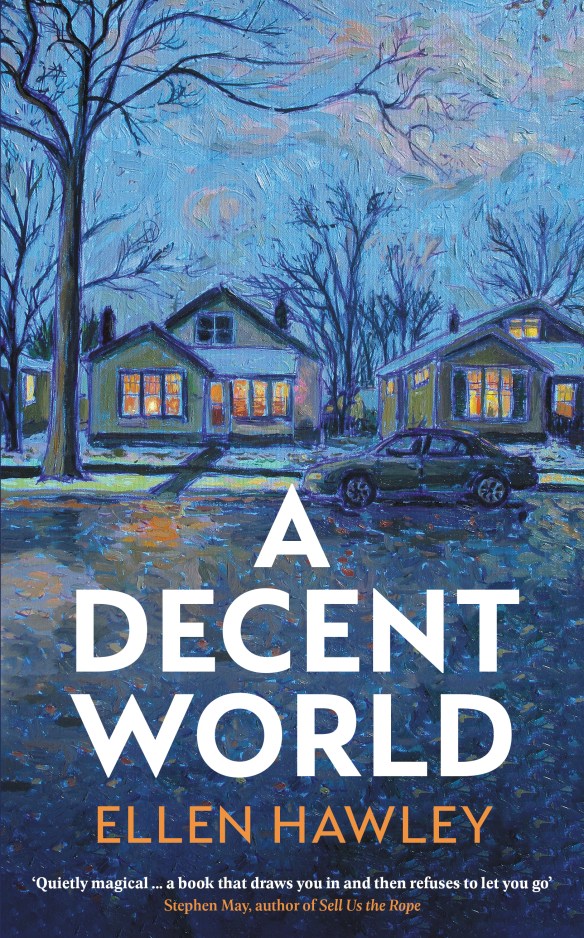
A Decent World

It’s time to announce a new novel.

(Sorry, did you want a regular post? Come back next week.)

A Decent World is the story of  Summer Dawidowitz, who’s spent the past year caring for her grandmother, Josie — a lifelong Communist, a dedicated teacher, and the founder of an organization that tutors schoolchildren. When Josie dies, everything that seemed solid in Summer’s life comes into question. What sort of relationship will she have with the mother who abandoned her? Will she meet with Josie’s brother, who Josie exiled from the family? Does she really want to go back to the non-monogamous household she was part of before she moved in to take care of Josie? And finally, does she still believe a small, committed group of citizens can change the world, and if so, how?

A Decent World is about grief, family, and love. It asks the broadest of questions about the form of society we live in. It will be in UK bookstores from June 15 or can be ordered now, in the UK or abroad, from Waterstones, Swift Press, or–inevitably–those folks I work hard to avoid, Amazon.


Archeology in Britain

Have you ever read about an archeological dig and wondered how history’s layers get buried? Is the planet stealing soil from someplace and using it to hide the past? Do we keep the same amount of soil but does the wind blow all those layers of dirt over the past’s leavings? And if it does, why doesn’t it unbury an equal amount of history someplace else?

A book I stumbled across recently–Digging Up Britain: a new history in ten extraordinary discoveries, by Mike Pitts–finally answered the question for me, at least in part. A city, Pitts tells us, accumulates people–people who weren’t born there; people who don’t live there. While they’re there, they work, they trade, they eat, they drink, they sleep, and they do much of that within walls if they can. 

Most of those activities involve physical objects, so the city brings in wood and stone for its buildings, and tiles, slates, or reeds for its roofs. It brings in food for its, um, food. Okay, the rhetorical pattern’s breaking down here. We’ll sneak away without anyone noticing. It brings in leather and metal and fabric (or the raw materials to weave fabric) and everything else that you can think of and I haven’t.  

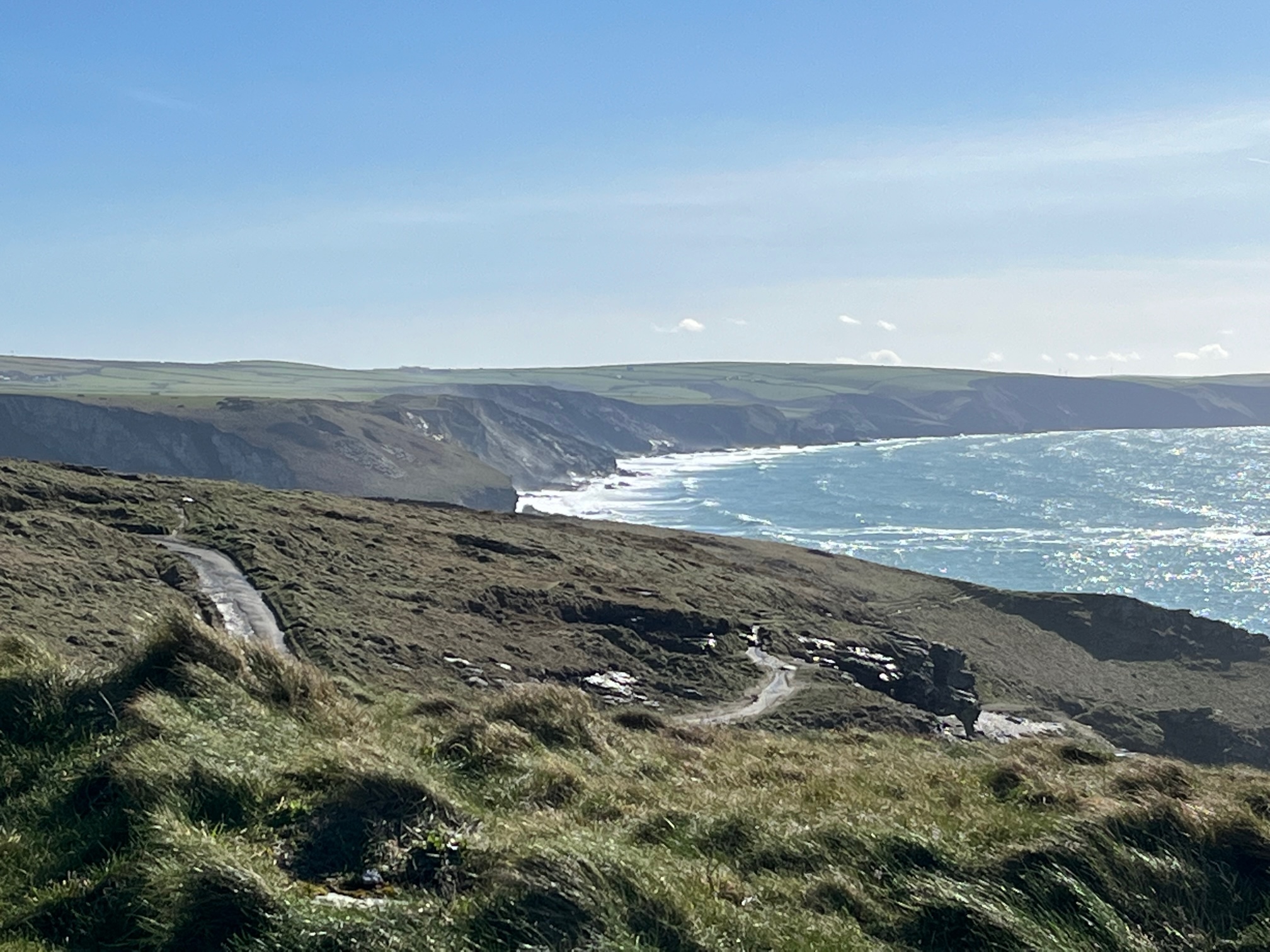
Irrelevant photo: The north Cornish coast

“Goods are also exported and people leave, but with time and decay, the city gains more than it loses. One generation’s walls become the rubble foundations for another’s. Every leather offcut, rusted nail, broken cup and lost penny finds its way into the teeming earth. Slowly, imperceptibly, the ground rises, covering the traces of the past.”

Well, yes, now that he’s planted the picture in my head, it’s a screamingly obvious one. The cause isn’t space dust. It’s people moving stuff from one place to another and wandering off without it. 


London

Pitts goes on to talk about some of London’s biggest ground-lifting events. Roman London had two fires that can still be spotted in layers of red earth. One of those would’ve been set during Boudica’s rebellion, when she burned London and two other cities to the ground. Then, when 1666’s Great Fire of London finally burned itself out and it was time to rebuild, stone was hauled in and a new city rose on the leveled remains of the destruction.

The biggest leveling of walls, though, was the blitz–the bombing of London during World War II–and when Pitts reaches this point, he focuses on a small area where two excavations found particularly rich Roman artifacts: On the night of May 10, 1941, bombing “disrupted” 8,000 streets, killing more than 4,000 people and seriously injuring 1,800. It wiped out most of the block he’s interested in, where there’d been 350 businesses “crammed into a warren of high Victorian terraces and narrow alleys.” They included cafes, a bookseller, a tailor, a dentist, accountants, and a postage stamp perforator.

Who knew there even were postage stamp perforators? I assumed that got done by some sort of machinery working where and when the stamps were printed. Or that someone with pointy little teeth came along and–

Never mind. Not much was left of the street, and in 1952, when it was redeveloped, the area was opened to archeologists just before an office building went up on the site. The digging had uncovered an underground temple to Mithras, and it was taken apart, and reconstructed (badly) above ground and facing the wrong way. And then in 2012, when the 1952 building was torn down and something newer and shinier was about to be built, archeologists got in there again, only with more time to do their job. What they found was “like a library of random news from across Roman London.” The area had been used as a dump, and archeologists love dumps. It turned out to be “the most productive single excavation of a British Roman site in modern times,” and included a horde of wood-and-wax tablets recording, for the most part, business transactions. It gave them a glimpse into the city before it had the grand public buildings we associate with Roman towns. This was a town in its early stages. 

The success of that second dig was made possible by a change in the relationship of archeologists and developers.


Archeologists and the construction industry

One of the major ways the past gets uncovered in Britain is that someone comes along with heavy-duty construction equipment and starts digging. They’re not hoping to find, say, a Roman villa or a Bronze Age settlement. In fact, they’re hoping not to. They want to build a parking ramp or a shopping mall. 

Until 1990, archeologists were dependent on the goodwill of the developers for access to their sites. Before that, if a developer stumbled into something of archeological importance, and if they didn’t sweep it under the metaphorical rug fast enough, archeologists had to rely on a mix of diplomacy, goodwill, and the public pressure set off by media coverage to get access. Because archeologists mean delays, and delays cost money.

In a showdown between history and national heritage on one side and money on the other, it’s not often that history and heritage win, but they did win when the foundations of Shakespeare’s Rose Theatre were discovered by accident. A media storm set off a celebrity storm, which in turn set off a wider public storm, and under that pressure a delay was organized and the new building eventually went up over the theater’s foundations, which are now covered in water to keep the ground from cracking.


Irrelevant but interesting bit of information 

Exploration of the theater’s foundations brought us the news that hazelnuts were the popcorn of Shakespeare’s day. The shells were everywhere. 


The relationship changes

After the battle to save the Rose, things changed, and it kills me to say anything good about Margaret Thatcher’s government but I’m going to have to: they’re the ones who introduced Planning Policy Guidance 16–Archaeology in Planning, called PPG16 by its friends and admirers. 

PPG16 is a guidance paper that requires anyone building anything that needs planning permission–and in Britain, that’s just about any building at all–to consider its  impact on archaeology. According to Heritage Daily, PPG16’s impact was unintentional, but lovely, so I don’t have to be particularly nice about Thatcher’s government: they didn’t mean to do something good; they were just trying to shut everybody up.

Heritage Daily  describes the events at the Rose as an omnishambles, with “leading actors, including Sir Ian Mckellen and Dame Peggy Ashcroft, facing down the developers’ bulldozers, standing alongside archaeologists, the general public and local children waving placards declaiming, ‘Don’t Doze the Rose.’

“Faced with this highly public demand that the historic site be protected, the Environment Department, under Secretary of State Nicholas Ridley, proved utterly incapable of formulating a coherent policy to dig the developer Imry Merchant and the Government out of the mire. “

In the end, they cobbled together a system that had local and national governments, developers, heritage professionals, and the public working together to preserve whatever could be preserved in place, and to record, and sometimes move, whatever couldn’t be. It didn’t make developers or free-market purists happy, but it did keep politically damaging incidents like the Rose from happening again. 


The impact on archeology

All this meant archeology had to change. The profession came into this period as a mix of local heritage organizations, professors, and museums. None of them were equipped to meet the schedules or use “the same language as the architects and developers whose plans the system was designed to facilitate,” Heritage Daily says. 

After PPG16, “Archaeology as a discipline found itself putting on a suit, becoming a profession and sitting down in planning meetings with architects and developers to discuss fitting in an excavation alongside the other building site preparation and ground works.”

“It’s not perfect, but . . . once PPG16 and the concept . . . was in place, pipeline surveys and large scale infrastructure projects like Heathrow Terminal 5 and HS1, the Channel Tunnel Rail Link, did offer the chance to develop practice and sample large transects of landscape to sometimes startling effect.”

Some years ago, not far from where I live, a new sewage line uncovered enough Cornish history that the archeologists involved organized a presentation in the village hall, and it was packed. That was my first hint of the working relationship between archeologists and the construction industry, and I was impressed.

One of the finds they talked about was a series of Christian and pre-Christian burials. You could tell them apart because the Christians were buried so that they’d be facing east when they rose on–what is it? Judgment day? Whichever. If it happens, I’m sure someone will have set an alarm clock, so I don’t need to worry. Anyway, they were supposed to rise from their graves and be facing east. The non-Christians, on the other hand, were buried with grave goods–things they’d used in life and would, presumably, want in the next one. Or maybe the goods were a way for the living to grieve and pay tribute. Who can know at this distance in time? Whatever the reason, that’s how they buried their dead. 

But the archeologists had found a few people who were hedging their bets–or at least whose descendants were. They were buried facing east but also with grave goods. Whichever way the afterlife played out, they’d be ready.

In Pitts’ last chapter, he mentions an enlargement of the A14 (that’s a road) near Cambridge that’s been a particular gift to archeology. They’ve uncovered ancient villages, industrial zones, religious monuments, 15 tones of bones and artifacts, pottery kilns, field layouts and more, all of which could so easily have been dug up, scattered, and lost to history.

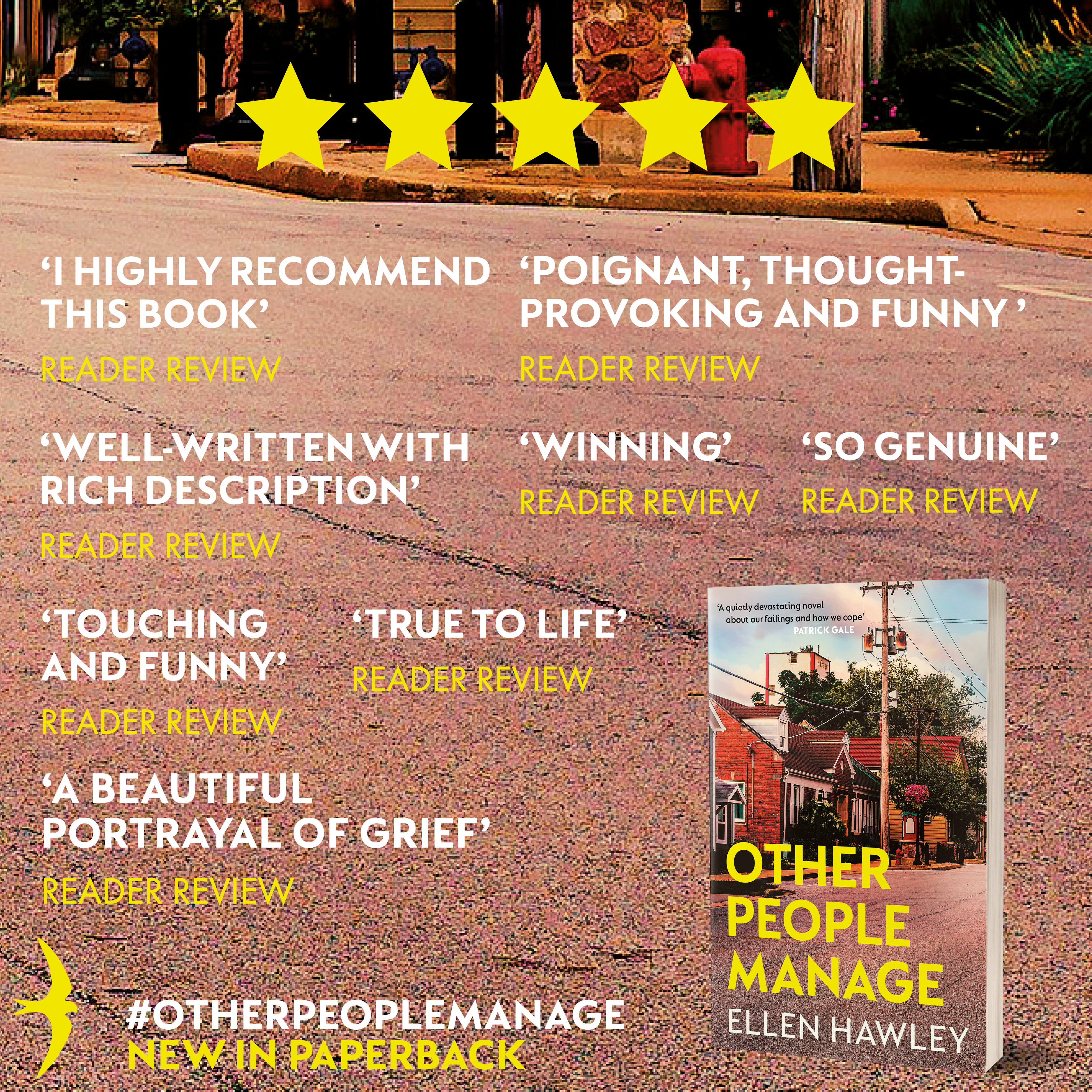
Other People Manage, now available in paperback

It’s out in paperback. You can find it here. Or here. Or elsewhere. Be creative.

“A tender and beautiful addition to the literary canon, and a mirror for LGBT readers.”
                                                                                                   – Joelle Taylor
 
“A story that is painful and difficult at the same time that it is deeply rewarding”
                                                                                            – David Huddle
 
“A quietly devastating novel about our failings and how we cope.”
                                                                                            – Patrick Gale
Other People Manage is a novel about hard-earned, everyday love. It’s about family, about loss, about the pain we all carry inside and the love that gets us through the day. It’s frequently funny, at times almost unbearably moving, and above all extraordinarily wise.* 
 
It begins in 1970s Minneapolis, with Marge and Peg meeting at the Women’s Coffeehouse. They stay together for decades but live in the shadow of a tragedy that struck early in their relationship. Then Peg dies, leaving Marge to work out what she has left in her life and if she still belongs in the family she’s adopted as her own.


  • I didn’t write that–I’m quoting–but however weird it is to hear someone call me wise, I do love it. E.H.

An update on Afghan artist Hafiza Qasimi

Back in August, I posted about Hafiza Qasimi, an artist whose work and studio had been destroyed by the Taliban and who was trying to escape so she could work again. Artists in Germany were raising the money Germany requires before they could even consider her for a visa. The full story is here.

Today–International Women’s Day as it happens–I learned that Qasimi has been granted her visa and could be in Germany as early as next week. To everyone who donated money, who would’ve donated money if they could have, who helped publicize her situation, and who wished her refuge and safety, thank you. She’s going to make it.

How Twitter banned a meteor: It’s the news from Britain

I don’t know if Twitter will still be twitting by the time you read this (or by the time I reach the end of the sentence), but back in the days when it was making gestures in the direction of policing its content it blocked an astronomer’s account because she’d posted a video of a meteor in the sky above Oxfordshire. She–or possibly the meteor–had somehow breached the guidelines on, ahem, intimate content. 

The ban went on for three months. She could’ve cut it down to twelve hours but she’d have had to delete the video and agree that she’d broken the rules, which she didn’t want to do. She did try contacting a human being at Twitter but couldn’t find one. 

As a gesture of support, other astronomers tweeted the video without getting banned. 

Irrelevant photo: A California poppy

Her account wasn’t unlocked until the BBC went public with the story.

Her experience isn’t unique. A US meteorologist was banned for posting intimate content– a video of combine harvesters working in a field at night. 

Is it something about scientists? Nope. A Facebook photo gallery got slammed for overtly sexual content in a series of pictures, including one of two cows standing some ten or fifteen feet apart in the field, one of ripples on a pond for selling adult products, and another of a high-rise office building.

Facebook did manage to apologize and put the gallery back online the next day.

Where the dead don’t just vote, they win elections

I know you’ve read entirely too much about the US elections, but this story hasn’t found the audience it deserves: 

Tony DeLuca, Pennsylvania’s longest-serving state representative, was re-elected in a landslide with more than 85% of the vote in spite of being dead. 

Okay, to report this responsibly: He died too close to the election to be replaced on the ballot and his election will trigger a special election. But the way politics are trending these days, voting for the dead may be a responsible political alternative.

From the Department of Inspiring Awards

I learned recently that obituary writers have an industry award called the Grimmy. The plural is the Grimmys. Yes, folks, in a bold and counter-to-everything-we-were-taught move, the Y doesn’t become an IE when they add an S. That in itself is worth an award. A Spelly? 

The Grimmys are awarded every two years by the Society of Professional Obituary Writers at their ObitCon. If you follow the link you’ll find a photo of the four most recent winners. Three of them have managed a smile.

Ever wanted to write a sentence that would echo through the ages?

The oldest known sentence in the oldest known alphabet was inscribed on a comb and says, ““May this tusk root out the lice of the hair and the beard.” 

How’s that for immortal prose?

From the Department of Vocabulary Expansion

Four new measurements have been added to the metric system. 

The first is the ronnagram, which carries 27 zeroes after the first digit. It’s big–a billion billion. If that doesn’t help you get a sense of its size, having words for it may at least give you the illusion that of understanding it. 

Until recently, you couldn’t go higher than the yottagram, which has a chintzy 24 zeroes. You can see why this was a problem.

The second measurement is the quettagram, which is even bigger. Its first digit trails 30 zeroes along behind it and it’s a thousand times bigger than the ronnagram. 

The earth weighs six of ronnagrams, although how you get it on the scales is beyond me, never mind where you find a counter to rest the scales on. Once you solve that problem, though, you’ll find that Jupiter weighs two quettagrams.

The third measurement is the rontogram. which has 27 zeroes after the decimal point. Once you come to the end of that string, they crash into the wall of a digit with a solid value. 

The fourth and final measurement is the quectogram, which has to slog past 30 zeroes before it finds a solid number. 

To anyone with even the least mathematical competence, I apologize for those last two descriptions. 

The telegram is not part of this conversation. Kindly stop kidding around about this. Mathematics is serious stuff.

How to enjoy British politics: Imaginary menu items, hard hats, and triple negatives

As Britain staggers unenthusiastically in the direction of its new prime minister, whoever that turns out to be, the two contenders are telling us how gloriously they’ll govern the country (if give the chance) while ignoring small things like the inflation crisis, the sewage crisis, the housing crisis, the drought crisis, the energy crisis, the environmental crisis, and the crisis crisis.

But one of them, Rishi Sunak, works harder at it. Because he’s ridiculously rich and people know it, he has to prove he could not only govern but is in touch with the real world. 

In pursuit of that image, he recently told the media that he likes McDonald’s breakfast wraps. Isn’t that the kind of thing the common people eat, after all? He and his daughter eat them regularly, he told the media.

Not anymore. Someone did some digging and found that McDonald’s hasn’t sold them for two years

His campaign team leapt to his defense by saying that, um, yeah, well, he ate them when they were on the menu but “he’s barely seen his kids in the last two and a half years.”

Thanks, folks. That really humanized your guy.

He’s also been spotted struggling to figure out how contactless card payments happen (he held the card in front of a barcode scanner) and filling up a car that turned out to be borrowed. His advisors must’ve told him common people do stuff like that. I don’t think he’s been spotted pretending to wash his clothes at a laundromat (called a launderette in Britain) or playing at being a food bank client, but there’s still time.

Irrelevant photo: a neighbor’s dahlia

*

The strain between Sunak and his former boss, the multi-vacationing prime minister Boris Johnson, brought us a headline I can’t help but admire, since it manages a triple negative: “PM Refuses to Deny He Is Not Taking Sunak’s Calls.”

In the interests of complete transparency, that’s from the print edition. Once it went online, the PM failed to deny, but it’s still a triple negative.

*

But let’s talk about hard hats, because politicians just love to put them on their heads and pose for the press. It makes them look like they’re doing something real. Or at least like they might at any moment.

Knowing that, I asked Lord Google about hard hats and politicians and he led me to a Buzzfeed article that’s well worth a visit: “21 Photos of Politicians in Hard Hats Pointing at Things.”

Call me naive, but I hadn’t noticed what they did after putting on the hats, but I will from now on. So go ahead, follow the link. You know you want to.

I’d tell you what Sunak and Truss are doing and proposing about real-world issues, but it’s all too depressing. And in case it sounds like I think Truss would be less evil or even less absurd, I don’t. I’m damned if I know which will be worse. Both. Either. Sunak just happens to have been funnier lately. I struggle to find a laugh in the Truss stories.


The politics of blood

Scotland’s the first country on the planet to provide free universal access to period products, which is a great thing to do, and in that spirit the Tay region appointed someone to promote the dignity of menstruation. 

Who’d they choose

A man. 

Why? 

Because of his long experience of monthly bleeding, of course. And his background in tobacco sales and as a personal trainer. 

The man in question defended his appointment by saying, “I think being a man will help me to break down barriers, reduce stigma, and encourage more open discussions.”

I have little doubt that it also helped him rise up the list of nominees. It happens so quietly and so often, and we’re so used to it, that we barely notice. Until suddenly something like this comes along and we wonder how that happened.


The politics of swans

Rumor has it that all swans in Britain belong to the queen, but as so often happens rumor has it wrong. Or partially wrong. She owns the swans that aren’t marked as belonging to someone else, and that gives her the title seigneur of the swans. 

Is seigneur a masculine noun? I’m reasonably sure it is. My French was never impressive, but maybe we’d want to make her the seigneuse of the swans. Or maybe, being a queen and all, she’s above gender. 

That’ll upset the anti-woke warriors. Don’t tell Liz Truss. 

The queen’s staff includes a swan warden.

The tradition of marking–or for that matter, owning–swans goes back to the middle ages, when they were a status symbol and aristocrats wanted to have a pair or three paddling on their rivers and on grand occasions carried onto their dinner tables (to be clear: that’s as food, not as guests), but the right to own them could only be granted by the king and only went to the most important landowners, who marked their ownership by nicking the birds’ beaks in distinctive patterns, which wouldn’t have been a lot of fun for the birds. Or the people doing the nicking.

Owning swans is so deeply embedded in the monarchy that it observes a yearly swan upping. Or maybe it does a swan upping. Or, well, I’m not sure, since I’ve never upped a swan. It sounds like some disreputable thing you’d do in a back alley, not on a river. But I do know that the staff does/observes/whatevers it, not the queen herself. And it does happen on a stretch of the water, since that’s where the birds are.

If you want to learn about swan upping you’ll find an article about it in the Smithsonian magazine. 


The politics of money

Britain’s fastening its frayed seat belt and bracing itself for inflation to hit 18% or so, and people who aren’t in Rishi Sunak’s tax bracket are feeling the pinch already, since prices are up 10% from a year ago.  

An assortment of pointing fingers blame the war in Ukraine, Brexit, Covid, the energy crisis, and workers demanding pay increases. If you read enough explanations, you’d be forgiven for thinking that they’re blaming our current inflation on inflation. What’s the cause of inflation? Higher prices on goods from abroad, they answer. Increased cost of supplies. A shortage of workers willing to take low-paid jobs, etc. 

In other words, inflation.

The government–such as it is until we have a new prime minister or the outgoing one comes back from vacation and is jolted awake by his wallpaper, causing him to remember that he’s still the prime minister and is expected to pretend he cares–

Where were we? The government and the contestants in the pre-prime ministerial boxing ring are making a show of pretending they can stop the inflationary cycle by blocking the pay increases unions are demanding, in response to which the unions that aren’t already on strike are making noises that hint they could be soon.  

Which is why a headline saying the average pay of chief executives for Britain’s 100 biggest companies drew my eye went up by 39% last year. That gives them, on average, a take home pay of £3.4 million. Per year. Which is 109 times what the average British worker makes. 

In 2020 it was a modest 79 times the average. 

I don’t believe that includes bonuses. Or perks. And we won’t get into what shareholders make.

But it’s okay, because that doesn’t contribute to the inflationary spiral. 

*

How does executive pay get set? Well, children, I’m glad you asked, because at least some of the time, and quite possibly all of it, the pay of one chief exec gets set by chief execs from other companies, who act as non-executive directors on the boards of companies where they’re not CEOs. And of course they get paid for that. 

This comes to light–bear with me while I take a step sideways–because Britain’s privatized water companies are in the news lately. We’re in a serious drought, drawing attention to the 3.2 billion liters of water that leak from the water companies’ pipes every day. That would fill 1,237 Olympic-sized swimming pools but first you’d have to convince the water to jump into them instead of running pointlessly down the nearest gutter.

The water companies have also been dumping raw sewage into the sea, winning the hearts of surfers and swimmers throughout this beshittened isle. Beaches do not have an exemption. So when, say, United Utilities, which is in charge of leaking northwest England’s water and sewage into places it’s not supposed to go, pays its CEO £3.2 million a year, that has a way of making headlines, and even more so when he also gets paid to sit on the remuneration committee at BAE systems. 

Other water company execs sit on other boards, and on the committees that set pay. One is paid £115,000 for sitting on the  International Airlines Group board and another a measly £93,000 for sitting on the Centrica board. 

Please be sympathetic. It’s not easy to live on just one CEO salary. A person needs those little extras.


What’s happening in the rest of the world?

The Japanese government wants people to drink more booze

That goes against the tide–most governments are discouraging drinking–but alcohol sales are linked to taxes, and taxes are linked to, um, you know, money. In 1980, alcohol accounted for 5% of tax income. In 2011, that was 3%, and in 2020, 1.7%.

Get out there and drink, people. It may not be good for you, but it’s patriotic.

*

In New Zealand, a seal used the cat flap to break into a marine biologist’s house, traumatizing the cat but otherwise doing no damage. The marine biologist wasn’t home, though, leaving his cat, his wife, and his kids to deal with the seal.

This is really the only family emergency where it would be useful to have a marine biologist in the house,” he said. 

The seal was returned to the sea. The cat is receiving therapy and multiple cat treats and is lobbying for one of those high-tech cat flaps that keeps out unchipped intruders.

*

Since we’re talking about water, let’s talk about the news that sponges sneeze.

No, not those plasticky things sold as sponges but the real ones that grow on the seabed. They clear their filtration systems of assorted gunk (sorry for the scientific terminology, but you’re tough; you can handle it), shooting it out through small pores called ostia. It takes anywhere between 20 and 50 minutes for a single sneeze, but what else has a sponge got to do with its time? It doesn’t have to punch a clock or catch a train, so why not luxuriate in a long, slow, cleansing sneeze.

The sponges coat the gunk in mucus before they expel it, which temps nearby fish to eat it, proving, in case you were even in doubt, that nature is disgusting.


Your heart-warming stories for the week

One: During the pandemic, a ransomware group called Maze promised not to attack health organizations. Sweet, right?

But between last April and the end of June, though, attacks on healthcare organizations rose by 90% compared to the same months the year before. Or I assume it’s the year before. A typo has that reading “compared to the same period in 2022.”

Somebody tell me this is still 2022, please. I’m starting to feel a little dizzy.

Anyway, that’s what you get for telling ransomware companies (and the rest of the population) that the pandemic’s over. They were playing nice for a while there. Really they were.

*

That didn’t quite warm your heart? Okay.

Two: The Patmos library in Jamestown, Michigan, was the focus of a year-long campaign by the Jamestown Conservative group, which wanted LGBTQ books taken off its shelves. The books made up, after all, a whopping .015% of the collection. As measured in number of titles, I assume, not weight or word count or font size.

As the Jamestown group explained its objection, “They are trying to groom our children to believe that it’s OK to have these sinful desires. . . . . It’s not a political issue, it’s a Biblical issue.”

The library refused to get rid of the books and in a recent election lost its funding.

Someone or other asked the board president if it was a wake-up call.

“A wake-up call to what? To take LGBTQ books off the shelf and then they will give us money? What do you call that? Ransom? We stand behind the fact that our community is made up of a very diverse group of individuals, and we as a library cater to the diversity of our community.”

Two Jamestown residents responded by starting GoFundMe pages, which in four days raised $59,000 and $2,900, making a total of, um, something larger than either number alone. 

Last I looked, the larger campaign had raised just short of $156,000 and the smaller one had raised over $6,000. 

The tax money the library lost came to $245,000, but the money that’s been raised should keep it open until it can work out a plan, which will probably involve getting tax support on the ballot in a second election. 

BookRiot–a large online site dedicated to books–is calling on readers and writers to support the campaigns and “send a strong message that these tactics don’t work — that they can backfire and provide the library with more support and more funding. And hopefully, next time a book banning group considers defunding the library, they’ll remember Patmos Library.”


And from the Department of Gastronomical Karma…

…comes the news that the US pizza chain Domino’s thought it could challenge Italian pizza makers on their home turf. The theory was that people will eat anything–even American pizza–if it’s delivered to their door. This turned out not to be true. All its Italian branches have now closed and the company that held the franchise is filing for bankruptcy.