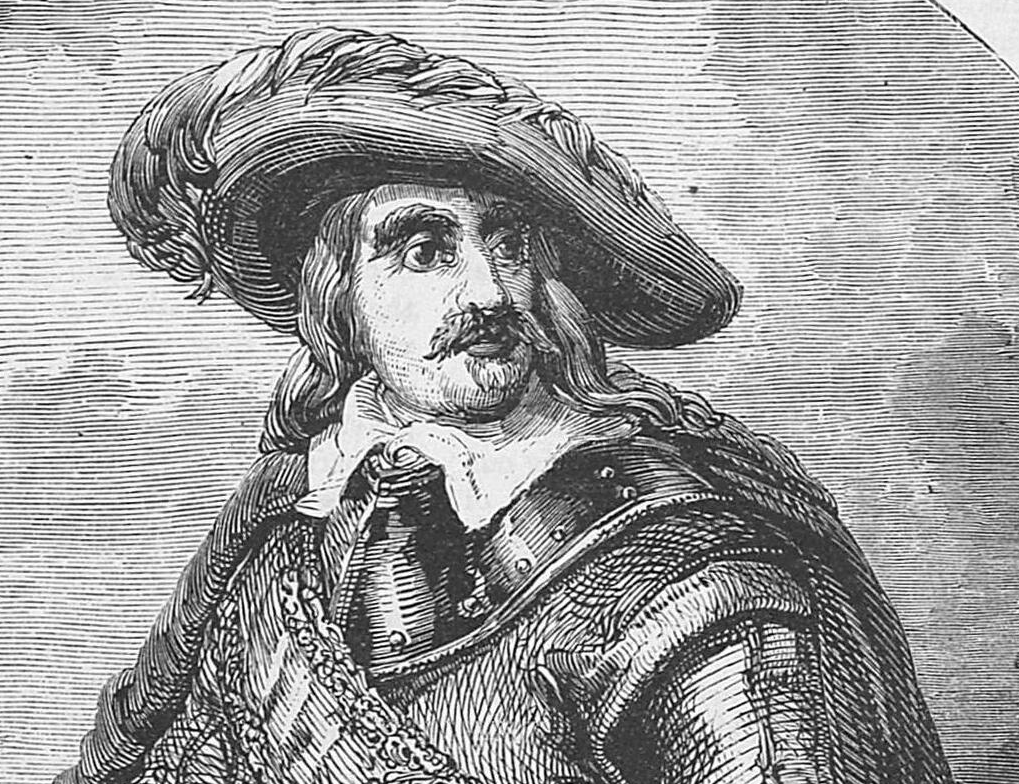
A prelude to the English Civil Wars

History’s headline events tend to grab our attention, blocking out the background, but let’s talk about what England looked like before the Civil Wars broke out. You won’t find many links here. I’m drawing heavily on an actual book (remember books? they’re made of paper), The Fiery Spirits, by John Rees.

Screamingly irrelevant and out of season photo: a lily of some sort. We weren’t introduced, so it doesn’t know my name either.

The economy

We’re talking about the early 17th century. Prices had gone up between 75% and 100% in the century before the Civil War started (which was in 1642; you’re welcome). That put pressure on a system that was already in flux, and flux is never easy to live with. Not only does it turn people’s lives upside down, it sounds like an unpleasant disease. 

What was fluxing? Feudalism was officially over (ask any historian) but the remnants were still breaking apart, leaving sharp edges. A few former peasants got rich. More, though, couldn’t support their families any longer. 

Landlords were changing the rules that governed rural life. One of those ways was to change what was called copy-hold tenancies into leasehold tenancies. We’ll skip the intricacies–they make my hair itch–but copy-hold, whatever its disadvantages to the holder, was stable. With leasehold, the peasant held the land for a fixed term, but after that the landlord could demand a higher payment.

Guess who that favored.

Many of the plots that peasants farmed had been subdivided beyond the point where they could sustain a family, making the family more dependant than before on common land. Common land was an inheritance from feudal law that had given generations of peasants the right to graze their animals, gather wood, fish, or do whatever local agreement allowed on a defined piece of land. But landlords were enclosing the common land–fencing it off so the tenants couldn’t use it and the landlord could. If we’d been around to ask, I’m sure some landlord or landlord’s representative would’ve told us they were using it more efficiently than the peasants ever had.

Some landlords pushed their tenants off the land entirely–the plots they’d farmed as well as the common land. 

And that, my friends, is a reasonably accurate miniaturization of the enclosure movement. You can still see its traces in the English countryside: all those beautiful hedged fields are a testament to a time of hunger and desperation.

By the time the Civil War started (and we won’t get that far here), the country was showing signs of strain. Uprisings were rising up around the country.


Disaforestation

The country’s biggest landlord was the king, who owned, among other things, what was then called forest. In a weird twist of the king’s English, though, forest didn’t necessarily mean land with trees. It was a legal thing meaning a certain category of land the king owned. Don’t expect it to make sense in the normal sort of way. 

Well, in that forest land lived people–furless bipeds; you may be familiar with them–who under the strange bit of law that made land into forest, regardless of whether it had trees, had some rights to common land. That gave them a bit of protection ordinary tenants didn’t have. In other words, from the king’s point of view, all that common land was going to waste when it could be growing money, and the king always needed money. It’s to be an affliction monarchs are genetically prone to.

So we can add the king to the list of landowners who wanted to enclose land. But to do that in his very own forest, he had to move it out from under the law governing forest land, and that was called disaforestation. It’s different than deforestation because it’s a bit of legal hooha and doesn’t necessarily involve chopping down trees.

Did I mention that business about feudalism’s remnants breaking down and something we’d recognize as the beginnings of capitalism are rising out of the ground like thistles? 

Between 1627 and 1630, the Crown raised £300,000 by selling disafforested land. That’d be something like £70,000,000 today, give or take a few pence.


The Western Rising

Enough with the background. Let’s talk about the Western Rising of 1626 to 1632. This isn’t a single revolt but a series of anti-enclosure and anti-disaforestation riots in the southwest that were serious enough to border on insurrection.

In 1626, in Gillingham Forest, peasants threatened to tear down enclosures erected by courtiers who were renting Crown land. Renting the king’s land was the sort of perk you got for hanging around the court and making yourself likeable. Courtiers also got titles that they and no doubt everyone else took seriously: groom of the stole; groom of the bedchamber. You can’t make this stuff up. 

It’s not clear, at least from my reading, what happened between the peasants threatening to tear down enclosures and the response, but something must’ve because 14 men and 12 women were hauled before the Court of the Star Chamber, and 6 men and 1 woman were tried for riot, with 4 of the men convicted.

In 1628, more rioting broke out. Messengers were sent from London to put a stop to it, and they were tied to a post and whipped. The documents they’d brought from the Lords and Star Chamber were burnt. 

What happened next is where it gets interesting: the soldiers billeted nearby not only refused to stop the riot but rescued rioters who’d been detained. The king sent orders for the sheriff of Dorset to sort the mess out and he reported that the rioters were “too strong and resolute to meddle with.” They were well armed and faced down his troops, and their rallying cry, according to a contemporary source, was that of people being displaced: “Here we were born and here we will die.”

The story’s patchy. All the stories are patchy but we have to work with what’s been passed down to us. The next year, enough order had been restored that 80 people were dragged before the Star Chamber, although not the leader, “Colonel” Henry Hoskins, who surfaced again in 1631, urging people to pull down “all the hedges and Fences made in the Forest.”

After that we run out of information and head to Selwood Forest in Wiltshire, where a court case between two landowners included a dispute about rights to common land. When the court gave landowner the other one’s hilltop farm as payment for a debt, the sheriff who was sent to claim it found it protected by “a multitude of base and desperate persons” with “arms and muskets.” 

The government ordered the local Trained Bands–think of them as militias–to take the farm, but a member of the local gentry who was called on to supply musketeers and pikemen said “he would willingly give the Sherriffe a meeting att some other time, butt he did nott much fancy that service.”

He was arrested himself. 

Eventually 20 musketeers and pikemen were mobilized instead of the 50 who’d been sent for in the mail, and a cannon was brought from Bristol. They called on the defenders to surrender, and when they didn’t it turned out that all the sheriff’s men had either powder or shot but only four of them had both. 

The sheriff knew when to retreat. 

They tried again, with a bigger cannon, which again had to be brought from Bristol. The gunner said, “The voice of the country was against the business” and refused his orders. 

They tried a third time and this time the gunners demanded promises that they wouldn’t be charged with murder if they killed anyone.

The Privy Council appointed a new sheriff and demanded that the lieutenants of the country turn out the Trained Bands. And then, sadly, the power went out, the computers lost all the data that hadn’t been saved, and we don’t know how the standoff ended. What did get saved, though, is the striking alliance of local gentry and the “lewd and desperate persons” in defiance of central government.


Lady Skimmington

That leads us to talk about central government. 

In 1631, King Charles (it doesn’t get more central than that) enclosed a royal forest and then rented it to a jeweler to pay off a $10,000 debt he’d run up. (Have you ever wondered why kings always seemed to be short on money?) This time, the commoners’ rebellion took the form of a skimmington, a traditional local way of shaming people who broke the accepted codes, usually around things like like adultery, remarrying too soon if you were a widow, exceeding the “acceptable amount of spousal abuse” (that apparently applied to either men or women.) 

In this revolt, the leaders dressed in women’s clothes and called themselves Lady Skimmington, threatening to pull down the “Greate Lodge and to kill me,” according to landlord’s representative who could be found, predictably, in the Greate Lodge. 

Again the Trained Banks were called out, and again the person whose job it was to call them refused. 

The protestors pulled down houses, shot at the under-sheriff and the royal messenger whose job was to squash everyone back into the box they’d come in. A second royal messenger was arrested, jailed, and beaten before being released. 

In the end, 126 skimmingtons, as the rebels (or rioters, or whatever you want to call them) came to be known, were arrested. They included what Rees calls “popular masses,” artisans, and substantial gentry. Special notice goes to a rector, gentleman landowners, some Puritans, and some women. 

The punishments handed out were harsh but they did wring some concessions from the king, who returned “substantial” amounts of land to the commoners.

The final piece of the Western Rising was in the Forest of Dean in 1631, and it was set off when a landowner started digging for coal on enclosed land. Five hundred people gathered, with drums, guns, and pikes, destroying ditching. In a second riot, another 500 people, armed the same way, threw down miles of ditching and threatened the landowner’s agent. On the same day, a “great company of rude people” did “great spoil,” although I’m damned if I know the exact nature of that spoil. 

All that was in March. By April, some thousands of rioters gathered. A preacher was later accused of taking part in a “rebellious tumult” and speaking “in maintenance of the doctrine of the equality of all mankind.” I mention that because a lot of that was going around at the time. The doctrine of equality wore religious clothes and I don’t have to share the religion to think it looked quite grand in them. 

To my eye, this looks like a specific local grievance sharing its precious bodily fluids with an overarching theory about politics, economics, religion, and hierarchy. 

Again the Trained Bands were called on, and this time they did manage to arrest the leader–or a leader anyway: “the most Principal Offender and Ringleader”–and hustled him to Newgate, far enough away from the uproar that he couldn’t be broken loose. 


Meanwhile, in other parts of the country

A series of riots took place near the Humber, where the issue was about draining the fens–marshy land where people had been making a living for generations. Again women played a visible part. We tend to get written out of history, so its interesting how visible women were in this tumult. They approached the drainage workers from one direction while the men stoned them from the other. (I know. The drainage workers would’ve been a bunch of poor schmucks trying to make a living. It was Charles I who stood to profit from the drainage. Still, Charles wasn’t around to throw stones at. You understand how that kind of thing happens.) In one outbreak, some 300 people, mainly “women boys servants and poor people whose names cannot be learned” took part.

That line “whose names cannot be learned” has a resonance. These were people who acted but in historical terms have lost their individuality. Women boys servants and poor people. A moment’s respect for the nameless, please.

Again, some of the local gentry took the side of the commoners against the monarchy and the assorted people positioned to make money from the drainage. We can pretty safely assume that their interests lay with the economic arrangements that were being erased. 

Women became briefly visible again in Essex, around Maldon, in 1629, where the issue was grain, not enclosure. The harvest had been bad and the cloth trade–a major source of employment–had fallen on hard times. Protesters armed with pikestaves and pitchforks stopped grain from being exported, took what they needed and sold the rest at what they considered a fair price. 

In another incident, some 100 to 140 women and children boarded a ship and forced the crew to fill their bonnets and aprons. Most were struggling artisans, not the poorest of the poor, but hard times left them face to face with hunger. 

The protests spread and were led by “Captain” Ann Carter, who was eventually executed, along with three men.

So there’s the run-up to the Civil War: an economy going through painful changes;  widespread uprisings by the people who’d been kicked aside by progress. The government put down rising after another, but even so it was playing Whack-a-Mole: it put down one riot and another popped up. Where people were dispossessed and hungry, what would you expect?

If that doesn’t sound unsettled enough, merchants were staging a tax strike and soldiers and sailors were getting riotously restless. And a segment of Parliament was demanding more power from the Crown. They’re the ones who’ll take center stage before long.

If all those strands of discontent sound like they were braiding neatly together, they weren’t. For all that the commoners’ rebellions got sympathy from some of the local gentry, those restless parliamentarians didn’t take up their cause the way they took up the merchants’ and the sailors’ and soldiers’. Their interests didn’t align. Take John Pym, a leader of the Parliamentarians challenging the king, as an example. He was an agent of enclosure. His interests, like those of his fellow MPs, lay on the opposite side. 

The Anarchy, or what happens when everyone’s named Matilda

The Empress Matilda–or Maud, if you like; she’s called both–was born in 1102. She was the granddaughter of William the Conqueror and formed one half of Henry I’s small clutch of legitimate children. That matters, so keep track of it. Henry had 22 illegitimate kids, so a busy boy was he, and that also matters, but in the spirit of the times, not as much.

If you ever wanted to be a princess, scrub that thought from your head. It wouldn’t have been all floofy little dresses and as many desserts as  you wanted. Matty was betrothed at 8 and married off at 12 (give or take a few months) to the Holy Roman Emperor, who just to confuse things was also named Henry. 

Did I mention that Matilda’s mother was also named Matilda? It’s beyond me how anybody know who anybody was talking about, or even who anybody was. 

We’ll skip over the marriage: the dispute with the pope, the excommunication, the arrests of people you’ll never keep track of anyway. Aren’t most marriages like that? He –that’s Henry-the-husband; her Henry–died, they had no kids, someone else became the Holy Smoke Emperor, and Matilda was shipped back to her father’s court in a UPS van. 

Irrelevant photo: apple blossoms–a photo I stole from last spring. I’d tell you it was to remind us all that spring is coming, but really it’s because I’m low on photos and who’ll notice?

What were the choices for a rich widow then? She could remarry or she could become a nun. During some part of the medieval period, a rich widow was pretty much the only woman who could own land and have a bit of power in her own right, but this may not have been that time. Or it may not have held true if you were a king’s daughter, which is to say a useful piece in dad’s game of checkers. One source I read claims those were her choices. We can trust it or we can treat it with caution. I’m short on reliable sources about Matilda. The solid ones–the BBC, Britannica, things like that–get to the point but don’t have much fun along the way. I’m not sure how far to trust the ones that are willing to dish the dirt.

Anyway, home Matty went. She was now in her early twenties and her brother–the legitimate one, the one who was Henry-the-father’s heir–had died in a drunken shipwreck (that’s the crew and passengers who were drunk, not the ship), leaving Henry-the-father with one official daughter, scores of illegitimate kids, and no heir who matched the qualifications listed in the job description. There was no precedent for either a woman or an illegitimate son to inherit the throne.

Except of course for William the Conqueror, a.k.a. William the Bastard, but he didn’t inherit his father’s throne–dad was a duke, not a king–he snatched one for himself, which is a whole ‘nother undertaking.

Henry chose his daughter as his heir (keeping open the possibility that he might yet have a legitimate son) and had his barons swear (more than once) that they’d support her. Then he married her off to a French count, who at least brought a new name to the story: Geoffrey.

The marriage didn’t sit well with either of them. Geoff was fifteen (or fourteen, or possibly thirteen; dating either events or people doesn’t seem to have been an exact science at the time) and a mere count. And after an emperor, who has time for a count?

But Geoff’s father’s lands–which were soon his–bordered Normandy, which belonged to Henry. So jump into bed, kids, and think of England (or Normandy, or Anjou), because that’s what matters here. The marriage, from Henry’s side, was all about protecting Normandy’s borders.

I’m not sure what Geoffrey’s objections to the marriage were, but he and Matty seem to have hated each other on sight. Matilda was said to be arrogant and hard to like, but I’m not sure how much to credit that. It’s often said about women in power when it wouldn’t be said about men who behaved the same way. On the other hand, a woman–especially in that period–who hoped to wield power would have had to come on much stronger than any man if she hoped to get heard. So she could easily have overshot the target.

On the third hand, she could also have been a nasty human being. It happens.

Whatever was behind it, she pissed people off. 

Matty’s new sister-in-law had been married to Matty’s brother–the brother who died. Her name was also Matilda, so we’ve got two Matildas who are sisters-in-law twice over. That has nothing to do with the story, but I thought that was worth mentioning.

But I’m taking too much time with this. Mattie and Geoff had kids, in spite of not liking each other. Henry-the-father died (a surfeit of lampreys, which his doctor had warned him not to eat; bad king; see what you’ve gone and done?). And now we get a second person with a new name: Stephen, cousin of Matty, who popped up with the claim that on his deathbed Henry had changed his mind and named him (Stephen) his (Henry’s) heir.

Are you with me?

All this happened in France, so everyone who hoped to claim the English throne had to rush back to England. Except Henry. Being dead excused him from that. 

Stephen, not being pregnant, got there first. Matty, being (a) pregnant and/or (b) along with her husband caught up in some fighting in Anjou, didn’t. Different sources cite different reasons for the delay. One mentions (c) Henry’s entourage having to take time to bury Henry. Take your pick. Or choose several. Stephen got there first and had himself crowned while Matty was still stuck in Normandy. 

Those were the first steps toward civil war. Scotland invaded, since the Scottish king just happened to be Matty’s cousin. Matty’s half-brother Robert rebelled, backing his sister’s claim to the throne. The Welsh rebelled. Parts of the southwest rebelled. 

This might be a good time to mention that Stephen’s wife was also Matilda–Queen Matilda, not to be confused with Empress Matilda or the empress’s mother Queen Matilda. 

Stephen sent Queen M.–that’s his Queen M., not the previous Queen M.–to face down the rebels in Kent. I mention this because a lot is made of women during the period not being able to lead armies, leaving Empress Matilda having to work through proxies. I don’t know that Queen M. she rode with the army, but she was in charge of it.

From here on, we’ll simplify things. Matty and Geoffrey held most of Normandy (which was in English hands, in case you’re not confused enough yet) and in 1139 they invaded England itself–only Geoff stayed home to keep Normandy safe and warm. It was Matty and brother Robert and whatever troops they had who invaded. 

Stephen besieged Matty in Arundel castle. Then, mysteriously, he let her go and had her and her knights escorted to  the southwest so she could join up with Robert. They built a power base across the southwest. 

Matilda captured Stephen and was on the verge of being crowned queen. Stephen released his subjects from their oath to him. But she demanded taxes and refused to negotiate and London rebelled.  Or maybe that’s not what happened at all. “Sources are vague,” one somewhat vague source says. And here we have a second long-delayed link. I should’ve put a few in earlier, but this paragraph’ll do. Just to prove I don’t make this stuff up.

Whatever happened, a rebellion broke out and Matty and her supporters barely got out of London in one piece.

Matilda was besieged twice more. Once she escaped across the frozen Thames, camouflaged in white. The second time, according to one source, she escaped disguised as a corpse. (“She was dressed in grave clothes and tied with ropes onto a bier, and carried thus as a corpse to the safety of Gloucester.”) I haven’t found another source to confirm that, so I’d recommend a grain of salt to go with it. 

In spite of the setbacks, barons defected to her side. They held land in both England and Normandy, and backing Matilda meant Geoffrey wouldn’t seize them. But don’t get excited about it. Lords changed sides multiple times as the war went on. 

Queen Matilda (that’s Stephen’s Matilda) led the forces against Empress Matilda, eventually capturing Robert-the-brother and trading him for Stephen-the-king and three baseball cards. 

Robert died. Matty’s son Henry (yes, really) got old enough to join the fighting and the war swung back and forth at varying levels of intensity, with lords used it to settle feuds of their own, just in case it wasn’t chaotic enough.

Eventually, Stephen recognized Matty’s son Henry as his successor, edging out his own son William. (Matty’s brother–the one who died–had also been a William.) 

Stephen died before anything could upset the arrangement.

The period’s known as the Anarchy. It lasted almost twenty years, from 1135 to 1154.

Let’s give the last word to the Anglo-Saxon Chronicle, whose description is more or less contemporary. It takes a minute to drop into the style, but it’s worth the bother, because gives a flavor of what it was like to live then.

“When King Stephen came to England he held his council at Oxford, and there he took Roger, bishop of Salisbury, and Alexander, bishop of Lincoln, and the chancellor Roger, his nephews, and put them all in prison till they surrendered their castles. When the traitors understood that he was a mild man, and gentle and good, and did not exact the full penalties of the law, they perpetrated every enormity. They had done him homage, and sworn oaths, but they kept no pledge; all of them were perjured and their pledges nullified, for every powerful man built his castles and held them against him and they filled the country full of castles.

“They oppressed the wretched people of the country severely with castle-building. When the castles were built, they filled them with devils and wicked men. Then, both by night and day they took those people that they thought had any goods – men and women – and put them in prison and tortured them with indescribable torture to extort gold and silver – for no martyrs were ever so tortured as they were. They were hung by the thumbs or by the head, and corselets were hung on their feet. Knotted ropes were put round their heads and twisted till they penetrated to the brains.

“They put them in prisons where there were adders and snakes and toads, and killed them like that. Some they put in a ‘torture-chamber’ – that is in a chest that was short, narrow and shallow, and they put sharp stones in it and pressed the man in it so that he had all his limbs broken. In many of the castles was a ‘noose-and-trap’ – consisting of chains of such a kind that two or three men had enough to do to carry one. It was so made that it was fastened to a beam, and they used to put a sharp iron around the man’s throat and his neck, so that he could not in any direction either sit or lie or sleep, but had to carry all that iron. Many thousands they killed by starvation.

“I have neither the ability nor the power to tell all the horrors nor all the torments they inflicted upon wretched people in this country; and that lasted the nineteen years while Stephen was king, and it was always going from bad to worse. They levied taxes on the villages every so often, and called it’ ‘protection money’. When the wretched people had no more to give, they robbed and burned the villages, so that you could easily go a whole day’s journey and never find anyone occupying a village, nor land tilled. Then corn was dear, and meat and butter and cheese, because there was none in the country. Wretched people died of starvation; some lived by begging for alms, who had once been rich men; some fled the country.

“There had never been till then greater misery in the country, nor had heathens ever done worse than they did. For contrary to custom, they respected neither church nor churchyard, but took all the property that was inside, and then burnt the church and everything together. Neither did they respect bishops’ land nor abbots’ nor priests’, but robbed monks and clerics, and everyone robbed somebody else if he had the greater power. If two or three men came riding to a village, all the villagers fled from them; they expected they would be robbers.

“The bishops and learned men were always excommunicating them, but they thought nothing of it, because they were all utterly accursed and perjured and doomed to perdition.

“Wherever cultivation was done, the ground produced no corn, because the land was all ruined by such doings, and they said openly that Christ and his saints were asleep. Such things too much for us to describe, we suffered nineteen years for our sins.”