
The English have a way of bringing almost anything back to class. Or maybe that’s not just the English but the British in general. Or–you know what? Let’s not worry about it. Let me give you an example to take our minds off the problem: I was walking dogs with a friend and when the time came to pick up after my pooch I tore a patterned plastic bag off a roll that was meant to fit inside a pickup pouch but had escaped.
“Very posh,” my friend said, and she showed me the greenish diaper bags she used, which at the time sold for–oh, I think it was 12p for hundreds of the things, or to put that another way, not much.
I explained that someone had given us (us being my partner and me) the pouch, along with the bags. Not having had kids–in this country or any other–I was a stranger to the greenish diaper bags and asked about them. I’ve used them ever since, although they left that 12p price tag in the dust long ago.
My point here is that this is a country that can even take dog shit and make it about class.
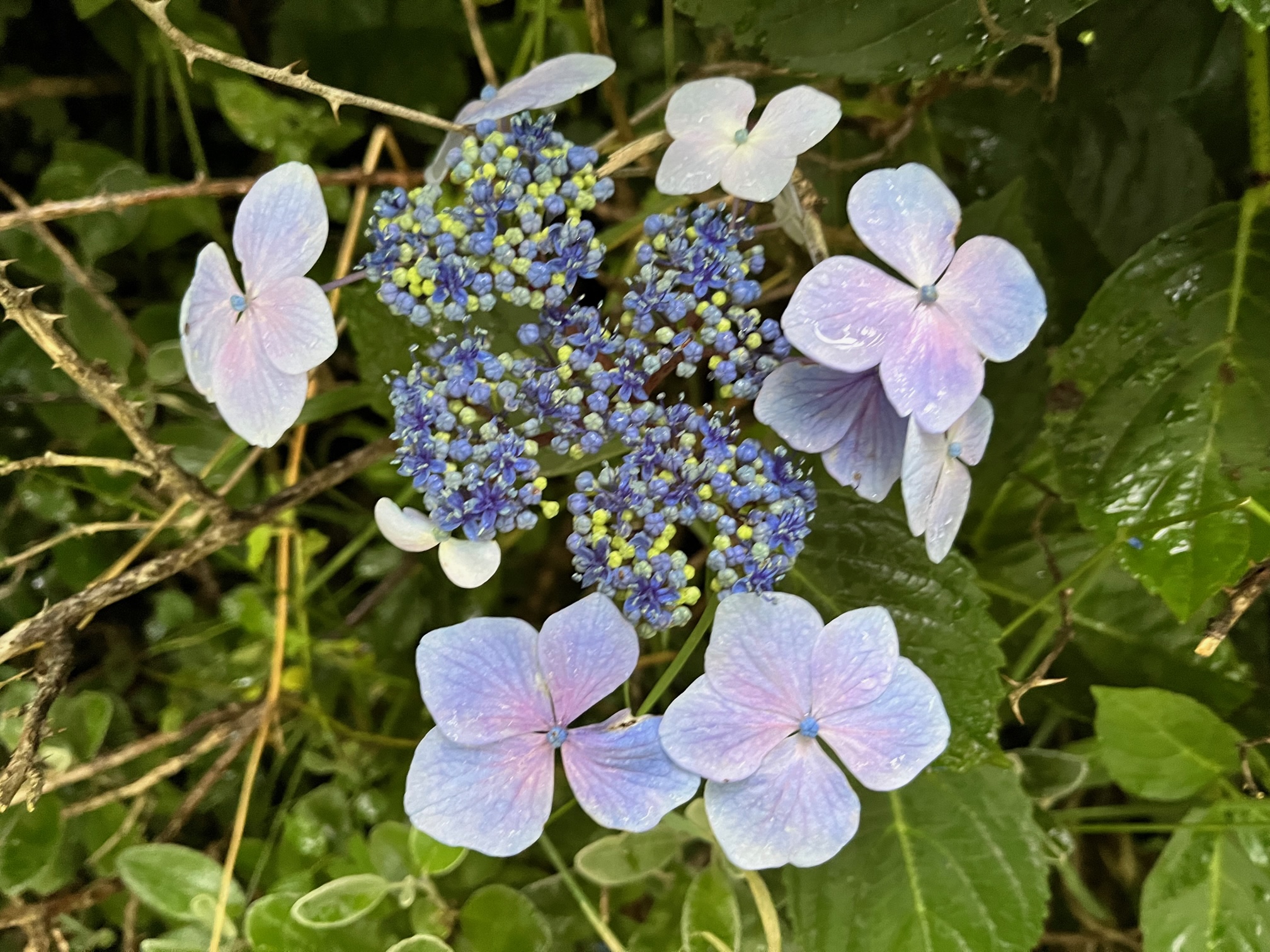
A rare relevant photo: a kind of hydrangea that someone once told me is posh. The more enthusiastic mopheaded kind are, apparently, just too much color for the delicate sensibilities of an aristocrat.
So what does posh mean
For the sake of my beloved fellow barbarians, let’s define posh. The Merriam-Webster Dictionary defines it as “elegant or fashionable.” The Collins Dictionary (enough with the links; you don’t really care, do you?) adds “expensive” and the Urban Dictionary tacks on “aristocratic.” People tell each other that the word stands for port out, starboard home, which was shorthand for the best cabins to have if a (posh) person was sailing from Britain to India and back again. They were the ones that get the morning sun and would be cooler in the evening.
The problem is, no one’s found any evidence to back up that origin story. The passenger line that’s supposed to have stamped P.O.S.H. on the more expensive tickets actually looked in its archives and came up with nothing. And cabins were numbered. They weren’t likely to have been identified as port and starboard.
Another theory holds that it was university slang from the turn of the last century, which isn’t nearly as far in the past as it ought to be. That makes a kind of intuitive sense, since university educations were, with rare exceptions, reserved for the rich, but there’s no evidence for this origin story either.
So let’s file them both in the Urban Myth folder and settle for the origin having been lost.
What do posh people do?
I’m not the person to know, thank all the gods I don’t believe in, but in 2017–which is nowhere near as long ago as the turn of the last century–Tatler came up with a list of phrases that it claimed posh people used. I’d quote them but they make me a little queasy and they sound suspiciously like a satire from the 1920s, so I can’t help but wonder if the magazine’s messing with our heads. You’ll have to look them up for yourself.
Still, the fact that someone saw fit to make a list and the magazine saw fit to publish it, for whatever reasons, testifies to how important it is for the in group to create a code so they can spot the people who don’t belong.
I’m over here, guys, and yes, I am laughing at you. Furthermore, I use greenish diaper bags to pick up after my dog these days. So my reporting is distinctly third-hand. Take it for what it’s worth. But in 2019, Tatler published a list of what was in and out among the posh, and it turns out that the word posh is non-posh. Or as they’d put it, non-U.
U? That stands for upper class, and I learned that from an undated BBC article that also tells me that latte (you know, the fancy coffee with warm milk) is non-posh, along with brand names and Americanisms.
But let’s go back to Tatler’s do-and-don’t-do list, which is kind of boring, really. Posh people eat fried eggs. They eat bread. They say no. (Seriously. It’s on the list.) If those are the hints we get for telling the posh from the non-posh, they’re going to find themselves–horrors–melting into the herd.
But not all hope is lost. What non-posh people do is more telling: They wear makeup outside of London. No gender’s specified, which takes us into a whole ‘nother set of groups and distinctions. Personally, I don’t wear makeup inside London either, but then I’m not the point here, am I? They use the word posh. They use (or maybe that’s talk about) iPads. They eat dips. They–well, maybe this isn’t about individuals here. It seems the entire southeast of England is non-posh, so I guess they go there or live there or acknowledge its existence.
All of France with the exception of Paris is non-posh.
It’s almost too easy to make fun of this stuff, but the attitude behind it is real–and thoroughly horrifying.
 Notes from the U.K.