What tea bag makes the best cup of tea, and other British dilemmas

Every year, Britain’s consumer champion, the oddly named Which?, does a blind test of the nation’s teabags and picks a winner. Because, folks, this is important. You’re a consumer. You need the experts’ opinion on this before you wander cluelessly into a supermarket and buy the tea you, in your ignorance, think you like.

Besides, Which? gets some free publicity out of it. 

This year, in what one headline called a “shock result,” a budget tea, Asda’s Everyday–the cheapest of the contestants–came in first. The high-end Twinings was in joint last place with it doesn’t matter who. What does matter is that Twinings’ tea bags cost four times more than Asda’s. 

My favorite, Yorkshire, wandered in somewhere between the two. 

What qualities do the experts judge tea on? Color. Aroma, Appearance. Taste’s on the list somewhere. Ability to boot you into consciousness first thing in the morning isn’t.
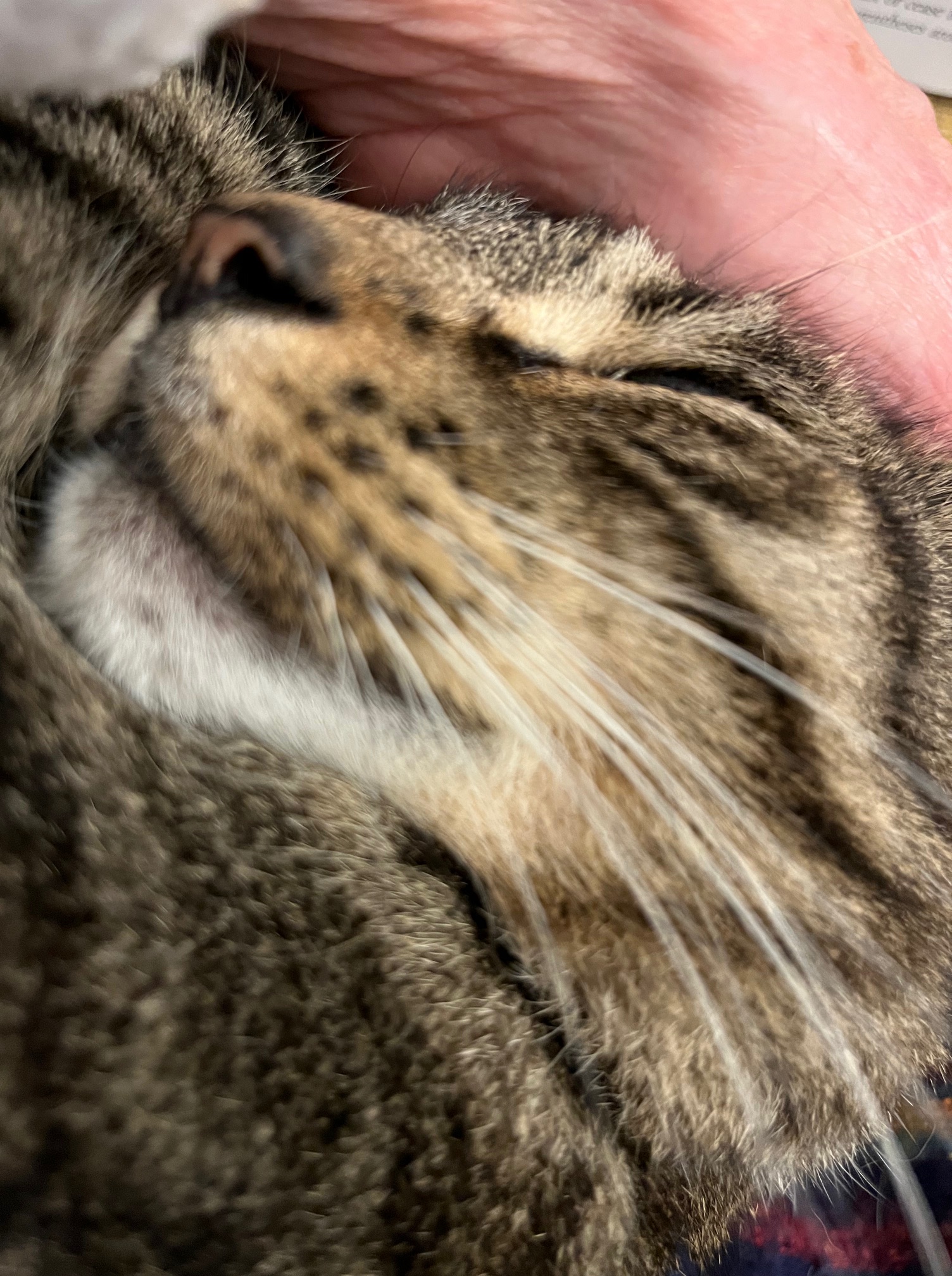
Irrelevant photo: Last week’s post also had an irrelevant picture of Fast Eddie, but surely it’s not possible for a childless cat lady (who’re you calling a lady, asshole?) to post too many cat pictures. So here’s Fast Eddie in slow mode.

The advice column

If you’re in the market for free advice, allow me to offer you this: never try to communicate in an accent or dialect you didn’t come by honestly. I mention this because a local council–in non-British English, that’s a governmental body–tried to use the local dialect for an anti-littering campaign and got it wrong. In very large type.

The North Yorkshire Council put up signs–hundreds of the beasts–urging people to “Gerrit in’t bin’” 

Oops. That should’ve been “Gerrit in t’bin.”

What’s with the “t’”? It’s short for the and it’s a Yorkshire thing. 

Why? 

Why not? There’s no arguing with accents or dialects. They are what they are and they do what they do. 

But let’s not take anything for granted: “gerrit” means get it. “Bin”? It’s what I grew up called the garbage can–that thing you throw trash in. But that’s a Britishism, not Yorkshire’s own invention

To be fair to the council, I don’t know that they’re not from Yorkshire. They may just be people who had some apostrophes to spare and got caught dropping one in the wrong place. As I understand the apostrophe process, we’re born with a certain number and the instructions about how to use them were written by Ikea. So as the years go by, some people get desperate, and they drop theirs in any spot that looks likely. Or if not likely, possible.

It’s not entirely their fault.

A lot of the posters were put up in tourist sites on the theory, no doubt, that visitors would be charmed by a bit of local color, but whether the visitors are looking at the original version or the corrected one, 76.3% are locked in place while they try to unscramble the letters and think, What????


The ghost of prime ministers past

Fifty-six days after he became Britain’s prime minister and moved into his new office, Keir Starmer had a portrait of a former prime minister, Margaret Thatcher, moved out. Apparently short of things to get outraged about, Conservative Party leaders pitched a fit.

But since I’ve been making fun of people’s apostrophe use, I should be careful about this: if multiple people do that thing I just mentioned, do they pitch a single collective fit or multiple individual ones?

Either way, they accused Starmer of being vindictive and petty, of spending his time rearranging the furniture instead of governing, and of appeasing the left wing of his party. 

To which the left wing of his party said, “If only.

That kept the news cycle fed for nearly a day, but when the nation failed to rise up in arms the outrage machine went into sleep mode, during which it appears to be doing nothing but is in fact searching the internet for new and surely more popular sources of potential outrage.


The Ig Nobels

A winner of this year’s Ig Nobel Awards, Saul Justin Newman, from University College Lonon, reports that the claims about extreme aging–living past 110–are, to be scientific about it, mostly bullshit

I’ve tracked down 80% of the people aged over 110 in the world,” he said. “(The other 20% are from countries you can’t meaningfully analyse). Of those, almost none have a birth certificate. In the US there are over 500 of these people; seven have a birth certificate. Even worse, only about 10% have a death certificate.”

To be clear: he only looked for death certificates for the people believed to be dead. The ones who were still alive? It’s pretty much expected that they wouldn’t have one yet.

A lot of the over-110s are concentrated in blue zones, where a startling number people are said to live past 100. “For almost 20 years, they have been marketed to the public. They’re the subject of tons of scientific work, a popular Netflix documentary, tons of cookbooks about things like the Mediterranean diet, and so on.”

But in a 2010 review by the Japanese government, “82% of the people aged over 100 in Japan turned out to be dead. The secret to living to 110 was, don’t register your death.”

Don’t have anyone else register it either.

Okinawa, which was supposed to be a hotspot of extreme aging, turned out to have the worst health in Japan. The best way to find concentrations of super-agers in Okinawa super-agers is to figure out where the halls of records were bombed during World War II. 

“If the person dies [in the bombing], they stay on the books of some other national registry, which hasn’t confirmed their death. Or if they live, they go to an occupying government that doesn’t speak their language, works on a different calendar and screws up their age.”

As for hotspots in Italy and Greece, “By my estimates at least 72% of centenarians were dead, missing or essentially pension-fraud cases. . . . [In Greece], over 9,000 people over the age of 100 are dead and collecting a pension at the same time. In Italy, some 30,000 ‘living’ pension recipients were found to be dead in 1997.”

In England, several low-income areas–”the worst places to be an old person”–have a high number of people over 100 but surprisingly few 90-year-olds. Unfortunately, if you’re going to live to 100, one of the requirements is that you have to live through your 90s first, even if there’s no glory in it.

So will getting an Ig Nobel get people to take his research seriously? 

“I hope so. But even if not, at least the general public will laugh and think about it, even if the scientific community is still a bit prickly and defensive. If they don’t acknowledge their errors in my lifetime, I guess I’ll just get someone to pretend I’m still alive until that changes.”

Everything you need to know about Britain’s upcoming election

At long last, Britain has a date for its next election: July 4. We’ll get a new parliament, a new can of paint to splash over our problems, and if the polls are anything close to correct, a new prime minister. After much speculation and many rumors involving earlier (and later) dates, the announcement came on May 22. 

Why then? Well, it had to happen sooner or later. Every British government has a use-by date, and this particular government shows signs of curdling. The use-by date (to switch metaphors; sorry) has been lumbering toward us like some drunken Tory uncle. So Rishi Sunak, our prime minister du jour couldn’t put it off forever. And May 22 was a pretty good day to stand outside 10 Downing Street and make the announcement. 

Why? you ask ever so helpfully. (Thank you. You’re a wonderful audience.) Because it was raining, and what’s more British than standing in the rain and pretending you’re fine with it–in fact, you barely notice it. You don’t even bother with a raincoat. 

Irrelevant photo: A nifty program on my phone tells me this is a daisybush. Mt eyes, however, tell me that in real life it’s more of a vibrant pink than a lavender. Ah, well, it’s only here for filler.

At least that strikes me as very British, but then I’m not really British, I only pretend to be when I’m near a keyboard, so correct me if I’m wrong. Assuming, of course, that you actually know something on the subject. If you’re even less British than I am, do jump in but don’t expect to be taken seriously.

And if you’re entirely British? I still can’t promise to take you seriously. Them’s the risks. The choice is yours.

But back to Mr. du Jour. He might’ve gone over the top with that no-raincoat thing. Most of the people I know in Britain wear raincoats when it rains, or at least use umbrellas. Some wear raincoats when it doesn’t rain, because the weather might change its mind and start hurling water out of the sky at any minute. It’s Americans who don’t wear raincoats. Based on a sample of people who’ve come to visit us, Americans don’t own raincoats. When it rains, they wear cars.

I think something more lies behind Sunak’s timing, though. I believe he looked out the window, saw the rain, and like some Roman senator asking a priest what the insides of a poor dead chicken said about the future, he turned to a consultant or three and asked if rain meant it was an auspicious day to call an election.

Sure, they said, since he pays their invoices. Absolutely.

So out he went, into the rain, and someone blasted the song “Things Can Only Get Better” throughout his press conference. It’s the song Labour used in its 1997 campaign. 

*

For the record, Mr. du Jour didn’t have to stand in the rain. He has access to dry, indoor spaces, known as rooms, where press conferences can be held. Just after his announcement, the opposition leader, Keir Starmer, held a press conference in exactly such a space, silently making the point that his party has enough sense to come in out of the rain. 

Reporters have had fun with Sunak’s choices, which is probably their revenge for having had to stand in the rain with him while he struggled to be heard over the music. Even the papers you’d expect to be friendly ran headlines like “10 Drowning Street.” The hostile ones quoted members of Mr. du Jour’s own party who (usually anonymously) said things like, “I just don’t understand” the timing of the election, and, “This is madness.”

What they meant was, If we’d waited until the last possible moment, surely things could have only gotten better.


What the polls tell us

The polls, the tea leaves, and the chicken entrails all predict a wipeout for the Conservatives, but if you read them carefully they also say that people aren’t giddy about the Labour Party either. Or, presumably, anyone else, but Labour’s the biggest of the opposition parties, so let’s stay with them. 

Labour’s 20 points ahead of the Conservatives (actual numbers may vary depending on polling methods and timing) but, surprisingly, it isn’t any more popular or trusted than it was in 2015, when the Conservatives won a big majority. Even fewer people think it has a good group of leaders or understands the country’s problems. Keir Starmer’s popularity is right up there–or down there–with last week’s bacon sandwich. You know the one: you wrapped it in a paper napkin and put it in the refrigerator, knowing you’d never eat it but convinced that if you waited until it was inedible you wouldn’t be wasting perfectly good food.

Okay, the polls didn’t mention the bacon sandwich, but the head of Ipsos, one of the main polling agencies, said, “Starmer’s personal ratings are the lowest Ipsos has eve rseen for an opposition leader who’s so far ahead in the overall voting intention. It is more disgust at the Tories [that’s another name for the Conservatives–you’re welcome] than delight at what Labour offer that is driving politics.” 


So how’s the campaign going?

Things have indeed gotten  better, at least for anyone who appreciates absurdity. Mr. du Jour made a campaign stop in Northern Ireland’s Titanic Quarter, and until social media went batshit, nobody on his staff seemed to notice that the symbolism wasn’t what they’d hoped for.

But politics isn’t made by sinking ships alone, so Mr du Jour added a new policy to the doormat of unfulfilled old promises: elect us, he said, and we’ll reinstate national service (that’s a polite term for the draft). Eighteen-year-olds will have to either serve a year in the military or find a charity willing to put up with them for a year’s worth of weekends. Or something along those lines. Details to be worked out later. Or not, since his party is unlikely to get re-elected.

It’s all pretty sketchy–he didn’t announce it until he couldn’t be expected to follow through  –but the sketch has been enough to set people screaming. And by people I don’t mean people I happen to know and agree with. A former chief of the naval staff–who, to be clear, I don’t hang out with–called the plan “bonkers.” Defence needs more money, he said, and this would suck money out. A former chief of the general staff called it “electoral opportunism.” And a former Tory defence minister said, “I very much doubt whether it’s been thought through.”

That’s not unlikely. Just two days before the plan was announced, the current defence minister said the government wasn’t planning to reinstate national service in any form. It “could damage morale, recruitment and retention, and would consume professional military and naval resources.” And if that wouldn’t be enough of a deterrent, it “would be difficult to find a proper and meaningful role for” the draftees.

I’m sure if you asked him today, he’d tell you it’s a great plan.


Meanwhile, in other electoral news

Back in early May, which now seems like a lifetime ago, London was electing a mayor, and one candidate, Count Binface, got more votes than the hard right Britain First Party. 

Count Binface? He’s a guy who runs for office periodically, appearing in a costume that includes a garbage bin that goes on his head. It’s worth following the link to see a picture. I’m sure his candidacy explains a lot about British politics, although I can’t figure out what, so let’s stick with fact: he more or less replaces the late, lamented Screaming Lord Sutch, of the Monster Raving Loony Party, who was a hard act to follow, having bagged the all-time best name.

The count does his best, however. On his website, he not only brags about beating Britain First, he also claims (accurately if not entirely fairly) to have gotten more votes for mayor of London than Rishi Sunak got for prime minister. The reason it’s not quite fair is that Sunak didn’t run for prime minister. That takes his vote count down to zero. One of the many quirks of the British political system is that if a party with a large enough parliamentary majority dethrones or otherwise mislays its prime minister, it can choose a new one without holding an election or in any other way consulting the electorate. All they have to do is follow their own rules to slip one into place. So our last two prime ministers, Rishi Sunak and Liz Tress, were chosen by the small number of people who voluntarily and inexplicably made themselves members of the Conservative Party.


But life in Britain isn’t all about politics 

I’d call this light relief, but maybe the election’s light relief and this is the sober stuff. Your call.

In Cheshire, someone brought a closed box into an animal hospital and explained that she’d rescued a baby hedgehog from the roadside but was worried about it, because it wasn’t touching the cat food she’d set in there for it. To keep from stressing it, she hadn’t touched it when she picked it up, just scooped it into the box, and she’d barely allowed herself to peek in, but she’d seen enough to be worried: it hadn’t “moved or pooped all night.”

The veterinarians boldly opened the box and found the bobble top from a gray knit cap. It was, as described, not eating, moving, or pooping, and they were unable to revive it, but somebody involved did leak the story to the press.