The point in the English Civil Wars when ordinary people got involved

A fair number of this winter’s posts have been about the English Civil Wars and the economic shifts, uprisings, and political maneuvering that led up to them. But politics was still a game for the wealthy. (Gee, how things have changed.) Only substantial property owners could vote, never mind run for the House of Commons. So when ordinary people’s grievances broke into the open, they tended to take the form of riots or uprisings. 

Listen, when no other channels are open–

But we’ve reached the moment when those unruly common people started to push their way into the parliamentary process. We owe them our attention. 


Root and Branch Petition

Let’s start in the winter of 1640 – 1641, when a group of Londoners delivered the Root and Branch Petition to Parliament. It called for the Church of England’s bishops “with all their dependences, rootes and branches [to] be abolished.” And for the church to stop pushing out dissenting ministers and shed all the high-church ceremonies and iconography, which more Protestantly Protestants considered superstitious and very nearly–deep shudder here, please–Catholic. 

There was more to it than that, but you get the flavor: it was religious and it was also deeply political. You’d have been hard put to draw a line between the two back then. It was also radical, uncompromising stuff. Dangerous stuff. But it’s not the substance I want to talk about: the petition was the result of a well organized effort, and a substantial number of ordinary people were bold enough to put their names to it. That was also radical. The dissenting churches and gatherings would have provided a readymade network for this. 

The way history’s taught leaves us with the habit of following big-name players, the ones who make speeches, wield power, have money, and get their names in the history books. (The book I’m drawing on heavily, Fiery Sprits, by John Rees, has so many important names I’d need a card file to keep track of them all.) But a lot of history’s important work is done out of sight, by people whose names never get recorded or are quickly lost. In this period, those people might’ve delivered pamphlets, which were the hot new method of communication–the social media channel of their day. They might’ve carried copies of the petition to people they trusted. 

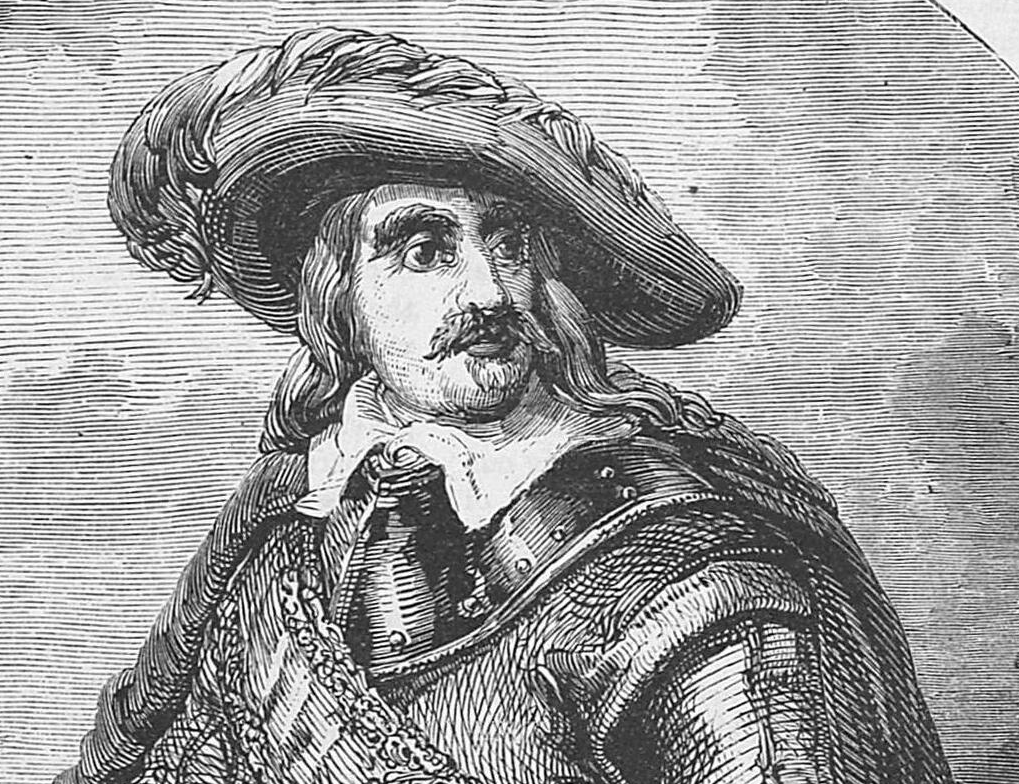
Oliver Cromwell, with thanks to Wikimedia Commons. If you look closely, I think you’ll see a bit of lace on his collar, but if you don’t you’ll still have to admit that he’s got one hell of a pair of eyebrows.

The estimates of how many people signed the Root and Branch Petition range from 10,000 to 20,000, and its presentation was backed by a demonstration of 5,000 people. Or 1,500. Or possibly a few hundred. Let’s not get lost in the numbers. What matters is that enough people showed up outside Parliament to give conservative MPs (that’s Members of Parliament; you’re welcome) the heebie jeebies. 

Heebie jeebies? They’re kind of like the fantods. The screaming meemies. The, um, state of being upset.

Before they settled into a long debate over the substance of the petitions, MPs argued over the substance of the people who signed it–whether they were “persons of quality and worth” or “mean” ones. Because one way to attack the petition was to say that people who had no business in politics (translation: people with no money; people MPs didn’t need to listen to) were sticking their noses where they didn’t belong. 


Strafford

A similar thing happened when MPs were maneuvering to have the king’s favorite, the Earl of Strafford, either executed or saved. From outside Parliament came a petition with 20,000 signatures not only calling for Strafford’s conviction but criticizing the government’s handling of finances and its conduct of the war du jour. A few days later, a crowd of 15,000 headed for Parliament, “weapons and battonones in their hands.” 

Treat that number as gently as you treat the spelling. They’re likely to change shape or leak at any moment.

According to an observer, “all the rabble cryed aloud with one voice Justice and Execution.” When the lords arrived in their coaches, the “rabble” formed a lane for the coaches to pass through, demanding justice and execution but also saying “they could scarce get bread to maintain their families.”

The demonstrations grew and were joined by what Rees calls “artisans and the poor, joining with the middling sort, armed with swords and clubs.”

Parliament voted to condemn Strafford and the king was rattled enough by all these nobodies showing up outside the halls of government that he not only consented to Strafford being executed but to a bill that said Parliament could only be dissolved by its own action, not by his, which was an important shift of power from king to Parliament. 

But that wasn’t the only shift: the political battle wasn’t being played out only between king and parliament anymore. A third player, the populace, including the people who had no vote, was now a third force. 


The Grand Remonstrance

This wasn’t a petition from outside Parliament, it was a document from the Commons addressed to the king, and it started out with the requisite groveling: “We, your most humble and obedient subjects, do with all faithfulness and humility, beseech your Majesty.” 

Ho hum, right? Nothing new until you get to the substance of the thing, which was a list of more than 200 abuses of power, including “a malignant and pernicious design of subverting the fundamental laws and principles of government.”

Ouch. But again, let’s not get lost in the substance, let’s focus on something more radical: the decision to publish it and circulate it to that rowdy populace we were talking about. They were playing to a new audience. 

Parliament, remember, was bitterly divided between the king’s supporters and opponents, and the king’s opponents were looking outside of Parliament to win the arguments and seem to have been in control of their involvement. Some MPs apparently sent out messages calling for men to assemble outside Parliament, armed with swords and staves.

From here on, demonstrations outside Parliament seem to become more common. One observer described them as “Great Numbers of People gathered together in a tumultuous, unusual, and disorderly Manner about the Houses of Parliament.” Another crowd is described as, “armed with swords and staves, as if they came to besiege the Parliament house.” 


London’s apprentices

After the king appointed the unpopular Thomas Lunsford as lieutenant of the Tower of London, London’s apprentices became visible as a political force. 

Why did anybody care about the tower? These days, it’s a tourist attraction. Back then, it was an arsenal, a garrison, and an important part of the king’s defenses. It was also a safe place for London’s merchants to stash their wealth and it was where the country’s coins were minted. So it mattered who was in charge.

The apprentices weren’t alone in their opposition, but they were young and they were strong, and let’s assume at least some of them were hot-headed. They had delivered a petition with 30,000 signatures. 

In London, a newsletter talked about getting weapons, muskets, powder, and shot. Rumors circulated that the apprentices were rising. Or were about to rise.

Charles–that’s the king; remember him?–dumped Lunsford. 

Everything settled down, right?

Wrong. More demonstrations happened outside Westminster–that’s where Parliament met–and the crowds were armed and formed lanes the MPs had to pass through.

Enough. You get the point. People locked outside of the workings of government were showing up at its door, bringing their anger, their opinions, and sometimes their weapons. And the change wasn’t just about where they showed up: they knew what the issues were and their demands were well focused.

We can attribute part of that to that hot new medium I mentioned: pamphlets, and maybe the occasional leaflet. Printing was the internet of its day. Or the Tiktok, the Instagram, the–I don’t know, choose your comparison. I’m too damn old to get that one right. The government had lost control of what could be printed and what was getting printed was setting people’s minds alight.


The Levellers and the army

We’ll skip a few protests here, along with several fights, a multitude of accusations, and a wheelbarrowful of quaint spellings. Where the story bumps up a notch is when the Levellers walk on stage.

The Levellers? They were a political movement–political parties hadn’t been invented yet–that preached equality, religious tolerance, and not quite universal suffrage but wildly expanded. They had the radical idea that the Commons was there to represent the people. All that would’ve been damn near unthinkable not long before and was still radical enough to scare the lace off the MPs’ collars, even that of many who opposed the king.

Any number of Levellers were imprisoned at various points. You wouldn’t become a Leveller on a lark or because it looked like a smart career move. This was dangerous stuff.

By this time, king and Parliament had gone to war with each other, Parliament had formed the New Model Army, and the Levellers were systematically distributing their publications among the soldiers. My best guess is that it took a wild-eyed radical to imagine that ordinary soldiers not only could think but would be eager to. 

The pamphlets found an eager audience. One disapproving writer estimated that 1 soldier in 20 had become a “hotheaded sectarie.” That doesn’t say that all hotheaded sectaries were Levellers, but since we’re not talking about a party with dues and membership cards, just a movement– Let’s just say that many of them would’ve been. 


Parliament loses its central spot

Parliament was now being pushed by outside forces, and the most important of those was the army. 

What did that mean in practical terms? Well, kids, when Parliament made moves in the direction of disbanding the army, which it hadn’t paid–that’s never a wise move–or in the direction of sending it to fight in Ireland under officers the soldiers didn’t accept, a petition circulated in the ranks, and when the officers of one regiment tried to suppress it they were shouted down. 

As the conflict between Parliament and its soldiers continued, the soldiers decided to elect two men from each troop, called agitators, to take the petition to Parliament. The position of agitator was a powerful one. When regiments marched toward the coast, where they were to set sail to Ireland, the agitators overrode the officers’ commands and recalled them. If a regiment didn’t like its officer, the soldiers swept him aside. If they didn’t like Parliament’s orders, they followed their own, which included taking the king prisoner. 

When a parliamentary commissioner told Cornet Geroge Joyce, the soldier leading the troop that took the king captive, “that he deserved’d to lose his Head for what he had done,” Joyce answered, “May it please your Majesty . . . let it be drawn to a Rendezvous [a meeting of the soldiers], let me appear there before them, and let the Question be put, whether they approve of my Action in removing His Majesty from Holmby, if three or four Parts of the Army do not approve what I have said, I will be content to to be hanged at the Head of the Army.” 

Parliament was no longer running the show, and it was no longer the forum where crucial decisions were made. It mattered enough for outside forces to fight over it, though. As a Royalist letter of intelligence put it, “all of them, especially the great Lords, doe feare the power of the Army.”

Or as a different letter had it, “The King . . . made a Parliament he could not rule, the Parliament raised an Army it could not rule, the Army made Agitators they cannot rule, and the Agitators are calling up the people whom they will be as little able to rule.”

So few things go the way you expect. But at least they didn’t start a war with Iran.

English history: how heavy was the Norman yoke?

In the years before 1066, English history was chugging along very nicely, thanks, with the Anglo-Saxon and Norse royal houses at each other’s throats, as they had been for long enough that everyone thought, Well, families, you know. They’re like that. Because by then they were family, and that was part of the problem. They’d intermarried enough that it wasn’t always clear who was supposed to inherit the chairs, the dishes, the crown. 

It wasn’t what you’d call peace, but at least everyone knew more or less what to expect. 

Then the Normans invaded. In no time at all (as history measures these things) the family broke apart. The Norse became distant relatives who the Anglo-Saxon didn’t see anymore–except, of course, for the ones who’d settled in England. A lot of them had done that in the north, and the Anglo-Saxons saw them all the time but they didn’t seem quite as Norse as they once had, what with the Normans stomping through. By comparison, they seemed positively–English.

Or so I like to think. You won’t find that in any of the history books. 

Just something to break up the text. It has nothing to do with anything.

Irrelevant photo: erigeron

The new outsiders, the Normans, replaced England’s governing class (with themselves, you’ll be surprised to learn), along with its language (sort of; it’s complicated and we’ll leave it alone for now) and its social structure (mostly; everything’s complicated when you give it enough thought). People who’d once been free became serfs–tied to the land and subject to the lord of the manor and his whims. 

See the end of the post for the grain of salt that goes with that last sentence.

Some 600 years later, during England’s Civil War, people who wanted to level out the country’s massive inequalities (called, surprisingly enough, the Levellers) talked nostalgically about the time before the Norman yoke was imposed on free Anglo-Saxon England. That was what they wanted–the freedom the land and its people had once known.

So just how free was Anglo-Saxon society?

Well, it depended on who you were. Free men were free. Free women were freer than they’d be again for many a century, or at least free women upper-class women were. Less is known about free women further down the social ladder. Slaves, though, were anything but free, and although the poorest peasants weren’t slaves, their situation sounds a lot like serfdom, which is somewhere between slavery and freedom.

Let’s work our way through it–or at least as much as I’ve been able to wring out of the internet and the books I have at hand. It won’t be a full picture. So much about Anglo-Saxon England has been lost.

Slavery

In Anglo-Saxon England, people could be born into slavery or they could be enslaved as a penalty for some crime. They could be captured in war, and capturing slaves was as important a reason to go to war as capturing land was. Finally, children could be sold into slavery by their parents and adults could make themselves into slaves. Both of those were probably desperate steps that people took in the face of famine.

There was a well-established slave trade, both within England and to other countries. So slavery’s roots reached deep into the economy. Bristol was a slave port, trading with the Viking merchants based in Ireland.

Slavery wasn’t necessarily a permanent condition, although it could be. Slaves could buy their way out; they could marry out of slavery; or they could be freed by their owners. It wasn’t uncommon for people to free a few slaves in their wills. Sally Crawford, in Daily Life in Anglo-Saxon England, speculates that people freeing slaves in their wills could, at times, have been done it with an eye toward not imposing the liability an older, unproductive slave on their heirs. She doesn’t offer any hard evidence for that, just raises the possibility. Either way, freeing a slave seems to have been considered a pious act. 

Not that Christianity pitted itself against slavery. Toward the end of the Anglo-Saxon period, ecclesiastical landowners had more slaves than lay people did. 

What did slaves do? They were plowmen, stockmen, beekeepers, dairymaids, swineherds, seamstresses, weavers, domestic servants, concubines, cooks, millers, and priests. 

I’m not sure what to make of priests being on that list, but it’s very much a part of the picture.  

Crawford writes about Anglo-Saxon slave owners having reciprocal obligations to their slaves–primarily to keep them fed and clothed, but also, possibly, to train some of them for skilled jobs. They also had the power to beat their slaves–not, she says, because slaves were considered a lower form of human but because Anglo-Saxon law punished transgressions with fines, and they couldn’t fine someone who couldn’t pay, so they fell back on physical punishment. 

Is she right about the reciprocal nature of Anglo-Saxon slavery? I’d have to hear it from the slaves before I’d be convinced, but they left no record. 

HIstory Today paints a less forgiving picture. “As Old English law codes make clear, slaves could be treated like animals: branded or castrated as a matter of routine and punished by mutilation or death; stoned to death by other slaves if they were male, burned to death if they were female.” 

According to Robert Lacey and Danny Danziger in The Year 1000: What Life Was Like at the Turn of the First Millennium, no line clearly divided slaves from the “other members of the labouring classes.” They wouldn’t have lived separately, and “almost everyone was beholden to someone more powerful than themselves.”

As the years ticked away and we come closer to the Norman invasion, Crawford says, slavery became less widespread. Free labor was available to do the same work and slaves had become an economic liability. The Domesday Book, which counted every chicken feather in England so that the new Norman king would know just how many chicken feathers he’d amassed in his conquest, counted slaves as 12% of the population. 

History Today isn’t convinced that slavery was on the wane and estimates that slaves made up 20% to 30% of the population. 

I’m staying out of this. Can we say that slaves made up a significant portion of the population and stop squabbling, please? 

Non-slavery

Just above the slaves on the social ladder were people who owed service to their lords. Most of them were serfs. 

Cottars were one step up from slaves and many of them might have been freed slaves. (You notice how hazy that got? “Many”; “might have been.” We can’t know, so let’s not pretend we do.) They worked on the lords’ estates in exchange for some land they could work for themselves. It was often marginal land. 

Above them came bordars, or geburs, who are in italics because the word’s Old English (it means tenant farmer) and Old English is foreign enough to a modern English speaker’s ear that we treat it like a foreign language and use funny-looking letters. Bordars don’t come in italics because the word crept into Norman usage, although most of us won’t recognize it. 

Look, don’t ask me to explain it. I’m following Crawford’s system of italics and inventing explanations as I go. You shouldn’t trust me too far on this. 

Have we gone off topic? Of course we’ve gone off topic. It’s what we do here.

The  bordars/geburs weren’t as poor as cottars but still owed work to the lord. Some were brewers or bakers. 

Above them came the coerls–small freeholders. They paid taxes, sat on juries, and owed public service, all of which marked them as free, but they also owed service to a lord. They may or may not have been armed and may or may not have fought with their lord when called on. It’s not clear. 

The word coerl comes into modern English as churl–a peasant; someone who’s rude or mean spirited, probably because from the Norman point of view, all Anglo-Saxons working the land looked alike and sounded alike. And were inherently rude and mean spirited, not to mention muddy, and so they could all be treated like dirt.

Coerl didn’t bring any italics with it. I’m only using them here to talk about it as a word, the same way I italicized churl.

And that, my friends, has nothing to do with our topic. Don’t you just love the way I keep us focused?

Under Alfred the Great’s version of Anglo-Saxon law, you couldn’t treat a free person like a slave–couldn’t whip him or her, say, or put him or her in the stocks. If you did, you’d be fined. You also couldn’t cut his hair–and here we’re only talking only about his hair, not hers–“in such a way as to spoil his looks” or to leave him looking like a priest. You also couldn’t cut off his beard, which is one of the things that convinces me that his really does mean his here. 

Anglo-Saxon pronouns were gender neutral. Without the beard, you can’t tell a his from a hers.

The point of the law, apparently, was to keep a lord from forcing a free person into the ranks of slaves, because the hair and beard were marks of a free man. 

Free boys, when they turned twelve, had to swear an oath to the king–at least from the time of Athelstan onward–and the king’s shire reeve visited every community once a year to hear them swear.

What they swore wasn’t just loyalty, but to favor what the lord favored, to discountenance what he discountenanced–and to turn in anyone who didn’t. “No one shall conceal the breach of it on the part of a brother or family relation, any more than a stranger.”

So that’s what freedom looked like.

The Norman conquest

Crawford’s reading of the transition from Anglo-Saxon to Norman society was that the lives of serfs and slaves might not have changed much. Rural life still focused on the manor and the lord, even though the manor would have been owned by a new lord, who’d have spoken Norman French. I can’t help imagining that those new lords, given a huge amount of power and surrounded by a language and a culture that frustrated them and made no sense to them, would have been ruder than the old ones–more churlish, if you like irony. They were conquerors, and conquerors do tend to act that way.

I said earlier that people who’d once been free became serfs after the conquest, and that seems to be the general belief, but I can’t document it. Lots of things from that time can’t be documented. Be cautious about how much belief you pour into that particular juice glass. If I had to guess–and I don’t but I will anyway–I’d guess that it was the coerls who dropped down the scale into serfdom. If that’s true, it would have been a loss of both freedom and status.

As for the Anglo-Saxon elite, they lost their lands and their status, and many fled abroad. Some lost their lives in various rebellions. I haven’t seen anything that says they became either serfs or slaves. Aristocrats recognized other aristocrats, even those who were their enemies.

The lives of both the poor and the rich were massively disrupted–or ended–by the harrying of the north, the Norman response to a rebellion. The Domesday Book lists land in northern village after northern village as waste–valueless and unoccupied. But we’re not talking about whether the transition to Norman rule was brutal–it was–only about whether life, once things settled down, became less free than it had been before they came. 

To weigh against any losses of freedom, it was under the Normans that slavery gradually died out. 

If people ceased to be slaves and became serfs, did their lives improve? Possibly. Probably. But again, they left us no documents. We can’t know.

So although my heart’s with the Levellers, I’d have to say that the picture of Anglo-Saxon freedom and Norman oppression was photo-shopped.