
A fair number of this winter’s posts have been about the English Civil Wars and the economic shifts, uprisings, and political maneuvering that led up to them. But politics was still a game for the wealthy. (Gee, how things have changed.) Only substantial property owners could vote, never mind run for the House of Commons. So when ordinary people’s grievances broke into the open, they tended to take the form of riots or uprisings.
Listen, when no other channels are open–
But we’ve reached the moment when those unruly common people started to push their way into the parliamentary process. We owe them our attention.
Root and Branch Petition
Let’s start in the winter of 1640 – 1641, when a group of Londoners delivered the Root and Branch Petition to Parliament. It called for the Church of England’s bishops “with all their dependences, rootes and branches [to] be abolished.” And for the church to stop pushing out dissenting ministers and shed all the high-church ceremonies and iconography, which more Protestantly Protestants considered superstitious and very nearly–deep shudder here, please–Catholic.
There was more to it than that, but you get the flavor: it was religious and it was also deeply political. You’d have been hard put to draw a line between the two back then. It was also radical, uncompromising stuff. Dangerous stuff. But it’s not the substance I want to talk about: the petition was the result of a well organized effort, and a substantial number of ordinary people were bold enough to put their names to it. That was also radical. The dissenting churches and gatherings would have provided a readymade network for this.
The way history’s taught leaves us with the habit of following big-name players, the ones who make speeches, wield power, have money, and get their names in the history books. (The book I’m drawing on heavily, Fiery Sprits, by John Rees, has so many important names I’d need a card file to keep track of them all.) But a lot of history’s important work is done out of sight, by people whose names never get recorded or are quickly lost. In this period, those people might’ve delivered pamphlets, which were the hot new method of communication–the social media channel of their day. They might’ve carried copies of the petition to people they trusted.
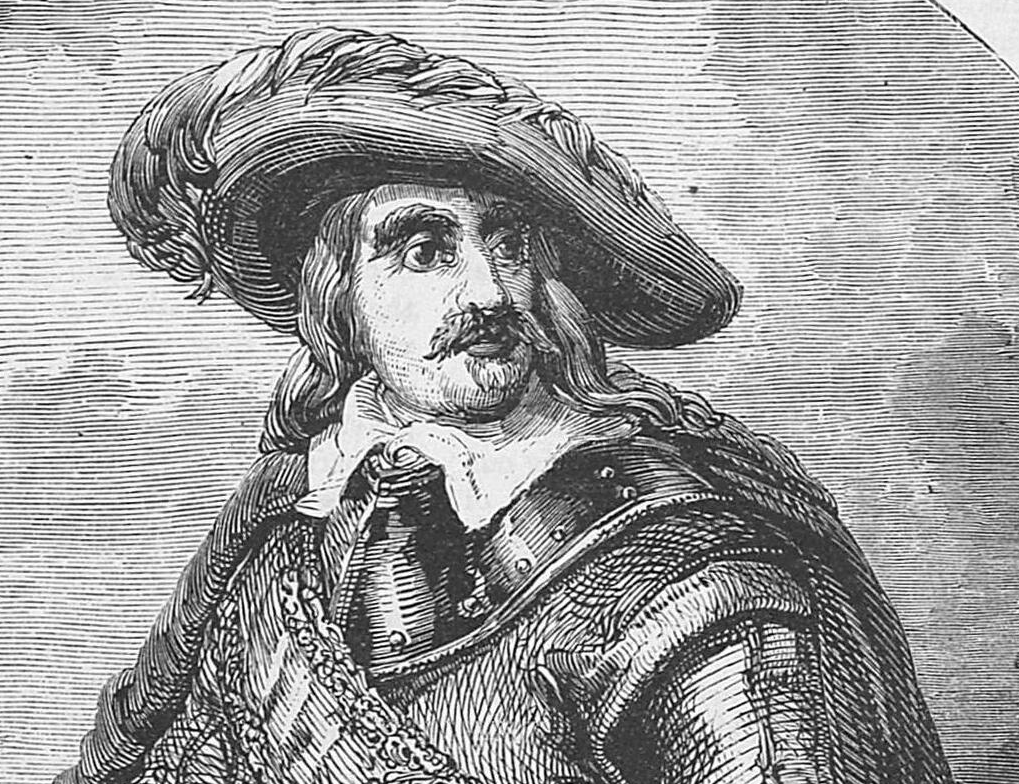
Oliver Cromwell, with thanks to Wikimedia Commons. If you look closely, I think you’ll see a bit of lace on his collar, but if you don’t you’ll still have to admit that he’s got one hell of a pair of eyebrows.
The estimates of how many people signed the Root and Branch Petition range from 10,000 to 20,000, and its presentation was backed by a demonstration of 5,000 people. Or 1,500. Or possibly a few hundred. Let’s not get lost in the numbers. What matters is that enough people showed up outside Parliament to give conservative MPs (that’s Members of Parliament; you’re welcome) the heebie jeebies.
Heebie jeebies? They’re kind of like the fantods. The screaming meemies. The, um, state of being upset.
Before they settled into a long debate over the substance of the petitions, MPs argued over the substance of the people who signed it–whether they were “persons of quality and worth” or “mean” ones. Because one way to attack the petition was to say that people who had no business in politics (translation: people with no money; people MPs didn’t need to listen to) were sticking their noses where they didn’t belong.
Strafford
A similar thing happened when MPs were maneuvering to have the king’s favorite, the Earl of Strafford, either executed or saved. From outside Parliament came a petition with 20,000 signatures not only calling for Strafford’s conviction but criticizing the government’s handling of finances and its conduct of the war du jour. A few days later, a crowd of 15,000 headed for Parliament, “weapons and battonones in their hands.”
Treat that number as gently as you treat the spelling. They’re likely to change shape or leak at any moment.
According to an observer, “all the rabble cryed aloud with one voice Justice and Execution.” When the lords arrived in their coaches, the “rabble” formed a lane for the coaches to pass through, demanding justice and execution but also saying “they could scarce get bread to maintain their families.”
The demonstrations grew and were joined by what Rees calls “artisans and the poor, joining with the middling sort, armed with swords and clubs.”
Parliament voted to condemn Strafford and the king was rattled enough by all these nobodies showing up outside the halls of government that he not only consented to Strafford being executed but to a bill that said Parliament could only be dissolved by its own action, not by his, which was an important shift of power from king to Parliament.
But that wasn’t the only shift: the political battle wasn’t being played out only between king and parliament anymore. A third player, the populace, including the people who had no vote, was now a third force.
The Grand Remonstrance
This wasn’t a petition from outside Parliament, it was a document from the Commons addressed to the king, and it started out with the requisite groveling: “We, your most humble and obedient subjects, do with all faithfulness and humility, beseech your Majesty.”
Ho hum, right? Nothing new until you get to the substance of the thing, which was a list of more than 200 abuses of power, including “a malignant and pernicious design of subverting the fundamental laws and principles of government.”
Ouch. But again, let’s not get lost in the substance, let’s focus on something more radical: the decision to publish it and circulate it to that rowdy populace we were talking about. They were playing to a new audience.
Parliament, remember, was bitterly divided between the king’s supporters and opponents, and the king’s opponents were looking outside of Parliament to win the arguments and seem to have been in control of their involvement. Some MPs apparently sent out messages calling for men to assemble outside Parliament, armed with swords and staves.
From here on, demonstrations outside Parliament seem to become more common. One observer described them as “Great Numbers of People gathered together in a tumultuous, unusual, and disorderly Manner about the Houses of Parliament.” Another crowd is described as, “armed with swords and staves, as if they came to besiege the Parliament house.”
London’s apprentices
After the king appointed the unpopular Thomas Lunsford as lieutenant of the Tower of London, London’s apprentices became visible as a political force.
Why did anybody care about the tower? These days, it’s a tourist attraction. Back then, it was an arsenal, a garrison, and an important part of the king’s defenses. It was also a safe place for London’s merchants to stash their wealth and it was where the country’s coins were minted. So it mattered who was in charge.
The apprentices weren’t alone in their opposition, but they were young and they were strong, and let’s assume at least some of them were hot-headed. They had delivered a petition with 30,000 signatures.
In London, a newsletter talked about getting weapons, muskets, powder, and shot. Rumors circulated that the apprentices were rising. Or were about to rise.
Charles–that’s the king; remember him?–dumped Lunsford.
Everything settled down, right?
Wrong. More demonstrations happened outside Westminster–that’s where Parliament met–and the crowds were armed and formed lanes the MPs had to pass through.
Enough. You get the point. People locked outside of the workings of government were showing up at its door, bringing their anger, their opinions, and sometimes their weapons. And the change wasn’t just about where they showed up: they knew what the issues were and their demands were well focused.
We can attribute part of that to that hot new medium I mentioned: pamphlets, and maybe the occasional leaflet. Printing was the internet of its day. Or the Tiktok, the Instagram, the–I don’t know, choose your comparison. I’m too damn old to get that one right. The government had lost control of what could be printed and what was getting printed was setting people’s minds alight.
The Levellers and the army
We’ll skip a few protests here, along with several fights, a multitude of accusations, and a wheelbarrowful of quaint spellings. Where the story bumps up a notch is when the Levellers walk on stage.
The Levellers? They were a political movement–political parties hadn’t been invented yet–that preached equality, religious tolerance, and not quite universal suffrage but wildly expanded. They had the radical idea that the Commons was there to represent the people. All that would’ve been damn near unthinkable not long before and was still radical enough to scare the lace off the MPs’ collars, even that of many who opposed the king.
Any number of Levellers were imprisoned at various points. You wouldn’t become a Leveller on a lark or because it looked like a smart career move. This was dangerous stuff.
By this time, king and Parliament had gone to war with each other, Parliament had formed the New Model Army, and the Levellers were systematically distributing their publications among the soldiers. My best guess is that it took a wild-eyed radical to imagine that ordinary soldiers not only could think but would be eager to.
The pamphlets found an eager audience. One disapproving writer estimated that 1 soldier in 20 had become a “hotheaded sectarie.” That doesn’t say that all hotheaded sectaries were Levellers, but since we’re not talking about a party with dues and membership cards, just a movement– Let’s just say that many of them would’ve been.
Parliament loses its central spot
Parliament was now being pushed by outside forces, and the most important of those was the army.
What did that mean in practical terms? Well, kids, when Parliament made moves in the direction of disbanding the army, which it hadn’t paid–that’s never a wise move–or in the direction of sending it to fight in Ireland under officers the soldiers didn’t accept, a petition circulated in the ranks, and when the officers of one regiment tried to suppress it they were shouted down.
As the conflict between Parliament and its soldiers continued, the soldiers decided to elect two men from each troop, called agitators, to take the petition to Parliament. The position of agitator was a powerful one. When regiments marched toward the coast, where they were to set sail to Ireland, the agitators overrode the officers’ commands and recalled them. If a regiment didn’t like its officer, the soldiers swept him aside. If they didn’t like Parliament’s orders, they followed their own, which included taking the king prisoner.
When a parliamentary commissioner told Cornet Geroge Joyce, the soldier leading the troop that took the king captive, “that he deserved’d to lose his Head for what he had done,” Joyce answered, “May it please your Majesty . . . let it be drawn to a Rendezvous [a meeting of the soldiers], let me appear there before them, and let the Question be put, whether they approve of my Action in removing His Majesty from Holmby, if three or four Parts of the Army do not approve what I have said, I will be content to to be hanged at the Head of the Army.”
Parliament was no longer running the show, and it was no longer the forum where crucial decisions were made. It mattered enough for outside forces to fight over it, though. As a Royalist letter of intelligence put it, “all of them, especially the great Lords, doe feare the power of the Army.”
Or as a different letter had it, “The King . . . made a Parliament he could not rule, the Parliament raised an Army it could not rule, the Army made Agitators they cannot rule, and the Agitators are calling up the people whom they will be as little able to rule.”
So few things go the way you expect. But at least they didn’t start a war with Iran.
 Notes from the U.K.