Surfers, Black Lives Matter, and the Star Count: It’s the news roundup from Britain

Let’s start with the star count: Back in the winter sometime, I posted information about an effort to study light pollution by asking people to count the stars they could see inside the constellation Orion. If you’d like to see the map that compiled from that study, here’s the link.

*

I know I said the news was from Britain, but what the hell, I’m sitting in Britain and I’m typing this, so this comes from Britain, even if the news is from the U.S. It’s too good to miss: Someone from Nebraska is suing every gay person on the planet. In federal court.

She’s not claiming gay people have broken any laws. In fact, her hand-written, seven-page statement doesn’t talk about law. She quotes the Bible and she quotes a dictionary.

Now, I’ll admit to having misspelled a word or two in my time–possibly more than two. And ignorance of the law is no defense, so I might be worth suing, although first we should establish that a lawsuit is the appropriate remedy.

But the Bible–. Folks, it’s time we all sat down and had a serious discussion about whether people have to follow the rules of religions they don’t belong to. And if the answer turns out to be yes, we need to talk about which religion’s rules to follow. Because the world’s full of religions, and they have different rules. We’ll find a few areas of overlap, but that’s not going to be enough.

I predict a messy, uncomfortable discussion.

It probably won’t surprise you to learn that the woman bringing the lawsuit is representing herself in court.

*

Relevant photo (it happens sometimes): A Black Lives Matter demonstration in Camelford, Cornwall.

Enough of that. Let’s go back to Britain:

After a slave trader’s statue was toppled into the Bristol harbor, British conversations about black lives matter have focused heavily on the symbolic. In other words, on statues. So a group of white, far-right activists felt called upon to gather in London so they could protect its historic statues.

To avoid violence, Black Lives Matter called off the protest it had scheduled for that day, although other groups didn’t.

The far-right activists drank; threw bottles, smoke grenades, and flares at the cops,; gave the Nazi salute: took off their shirts; and pissed on statues, possibly on the theory that they need liquid to grow.

To be fair, not all of them did all those things. That’s a collective portrait.

A hundred people were arrested.

They made a point of claiming Winston Churchill as one of their own, possibly because someone had painted, “Was a racist” below his statue. I’ll let a tweet from @dannywallace sum the situation up:

“-  Police are protecting a statue from people who want to protect it from people who don’t seem to be there.

“- Meanwhile the man who stopped us all from having to salute like a Nazi is celebrated by men doing Nazi salutes.”

A group called the Football Lads Alliance took part. It’s a British thing, going to a football game in order to get in a fight. Not everyone who likes the game does that, but for some people it’s the whole point. And it does seem to be linked to racism.

I’m not even going to try to explain it. I don’t think it’s anything an outsider is likely to understand..

*

At a point where a group of far right demonstrators (let’s call them FRs) clashed with a group of Black Lives Matter demonstrators (let’s call them BLMs), one FR was left by his friends and was curled on the ground, surrounded by the group of BLMs they’d been fighting with. Patrick Hutchinson, a personal trainer who’d come with some friends in order to de-escalate clashes, waded in, heaved the FR over his shoulder, and with his friends in formation around him, carried him out.

The photo–a black guy carrying a white FR demonstrator to safety–went viral.

“If the other three police officers who were standing around when George Floyd was murdered had thought about intervening like what we did, George Floyd would be alive today,” he said.

*

Near where I live, in mostly white, very rural Cornwall, thirty people held a one-hour Black Lives Matter demonstration in the small market town of Camelford. We were masked and distanced and it took some of us most of the hour to work out that we already knew half of the people we were standing with.

I’d posted the event on our village Facebook page (having a village Facebook page is a tradition that dates back to the middle ages), and the response was a long argument about statues and whether responding to black lives matter by saying “all lives matter” is like saying responding to someone saying, “Save the Amazon,” by saying “all trees matter.”

The argument went on for over 200 comments.

*

Further down west (as people say around here), in Porthleven, surfers paddled into the harbor in support of black lives matter.

*

On a totally different note, in Italy, a group of drug dealers knew they were being watched by the police and wanted someplace safe to stash their stash until the cops got bored, so they did what any sensible, adult drug dealer would do: They hid $22,000 worth of cocaine in the forest. Where a pack of wild boars found it, tore open the packaging, and spread it all over the forest floor.

It’s not at all clear whether the boars inhaled.

The article I got this from called the boars a horde, which made me realize that I don’t know what you call a group of wild boars. I’ve (arbitrarily–it’s the privilege of the chair to be arbitrary) called them a pack, ruling horde out of order, along with mob, herd, and flock. I haven’t ruled out committee.

A committee of cocaine-fueled wild boars . . .

If you’re a fan of short story prompts, you’re welcome to use that as an opening line. In the story I won’t bother to write, they end up running the country.

It may or may not be fiction.

Britain’s chimneys and chimney sweeps

Britain’s earliest chimneys were strictly for the rich, and in the Tudor era, they were the must-have accessory. The aristocracy’s news feeds were clogged with targeted ads saying, Heat Your Castle the Modern Way

Heat Your Hovel ads didn’t show up for many a year. 

Hovel-dwellers didn’t have news feeds anyway.

Hovel-dwellers lived in single-story houses with a central fire whose smoke worked its way out through the roof (thatch is good that way, and I’ve heard that slates aren’t bad) or through a hole in the roof. If you were clever about covering the hole, you could let the smoke out and keep the rain from pouring in, all in one go, but no matter how clever you were, above a certain height these houses were smoky.  

Irrelevant photo: osteospermum, with a bit of valerian getting ready to bloom.

With the introduction of the chimney, though, at least some of the the smoke went politely up and out, changing the residents’ lives and lungs. On the other hand, a good bit of the fire’s warmth was polite enough to follow the smoke, so the change wasn’t all about gain.

If you have a third hand, balance this on it: Chimneys also meant you could heat a second story. You could even add heat to rooms that didn’t have fireplaces. All they had to do was cuddle up against the back of the chimney and suck up a bit of warmth. 

By the seventeenth century, enough chimneys had been built around the country that they were worth taxing. Enter the hearth tax, which was based on the size of the house and, most importantly, the number of chimneys it had. 

So what did the rich do? To minimize taxes, they started running the flues of multiple fireplaces up a single chimney.  Many fireplaces, many flues, fewer chimneys. In a big house, they’d still end up with more than one chimney, but nowhere near as many as they had fireplaces.

What innocents they were back then. Today, they’d just build the chimney in a tax haven and have as many as they wanted. So what if it cost more to build them there and import the heat? They’d still be saving on taxes, and the point of the game, once you have that kind of money, is to pay as little in taxes as possible and then yell, “I win!”

Nothing I’ve read tells me how people first discovered that chimneys had to be cleaned, but I’m reasonably sure the realization took the form of chimney fires, complete with the neighbors standing around saying, “I could’ve told them this would happen.” Or whatever the era-appropriate version of withering scorn was.

That’s how the occupation of the chimney sweep  was born, and when the country’s primary fuel shifted from wood to coal, which lines chimneys with creosote, it became even more important.

I’d love to pinpoint the moment when children were first used as sweeps, but I can’t find any information on it. My best guess is that children working in dirty and dangerous occupations was so much a part of life that for a long time it was barely worth mentioning. Kids worked in mines and quarries and everywhere else. In slate quarrying country, where I live, they’d send boys over the cliffs in baskets to set the explosives. It only made sense: They were lighter than the adults. 

A website maintained by a chimney sweeping outfit in Hartford, Connecticut, doesn’t give a start date but does say that kids were used most heavily as sweeps during the two hundred years between with the Great Fire of London (that’s 1666) and the mid-nineteenth century, when Britain outlawed them. I can’t vouch for its accuracy, but any number of chimney sweepers’ sites include some history of the trade, and they’re reasonably consistent.

So let’s talk about those kids. The apprentices to master sweeps were usually boys but sometimes girls, and they were generally paupers or orphans. Anyone who had choices in life would look somewhere else for their kid’s apprenticeship. 

How old were they? Well, they had to be strong enough to be useful but small enough to climb up the inside of a chimney. And since narrow flues created a better draft, you’d be talking about a very small kid–usually around six, but they could (rarely) be as young as four.

And here we circle back to all those flues running up a single chimney. Remember them? The flues made sharp turns and had awkward angles, making them that much harder to get through and putting even more of a premium on smallness.

The kids worked their way up the chimneys using their backs, elbows, and knees, knocking the soot loose with a brush as they went, so it fell on and past them.

According to some sources, the apprenticeships were for seven years and according to others until the apprentice was an adult, although reaching adulthood wasn’t guaranteed. The dangers of sweeping chimneys included getting stuck, suffocating, and breathing the carcinogenic soot (one form of cancer was common enough to be called chimney sweep cancer). The kids also lived in the soot, because we’re talking about people who had minimal chances to wash and who generally slept on the sacks of soot that they collected and the master sweep sold. They grew up stunted and deformed and were prone not just to cancer but to lung problems. 

So yes,it was just like in Mary Poppins, all singing and dancing along the rooftops.

They also had to contend with hot chimneys and rough brick on their knees, elbows, and backs.

Their conditions horrified a fair number of respectable people, and many attempts were made to improve their conditions, mostly without changing anything substantial, although over time the pressure did grow. The turning point came when a twelve-year-old, George Brewster, got stuck in a chimney. A wall was pulled down and he was gotten out, but he died not long after. After that, child sweeps were finally banned.

The sweeps were replaced with brushes on long, long handles, which an adult could work up a chimney.

The bright spot in sweeps’ lives was their one yearly holiday, May Day, which coincided with local celebrations that predated chimneys and sweeps–and Christianity, for that matter. In a few places, May Day is officially a sweeps’ festival. 

Why that day? No idea. We just have to accept that it is and go with it.

I’ll leave you with a link to William Blake’s poem about a child chimney sweep. He wrote two versions. This strikes me as the stronger of them.

The pandemic update, in which Britain tries to beat the world

Let’s start in France instead of Britain:

Because of the coronavirus and the lockdown, wine sales have been down. Bar and restaurant closures hit the industry hard, and if that wasn’t enough, Donald Trump got mad at the whole damn country and slapped a 25% tariff on French wine. 

What’s a wine-producing country to do?

Make hand sanitizer. Some 200 million liters of unsold wine will be–or possibly already has been; it’s hard to know how to read this–made into hand sanitizing gel. That will free up space in the wine caves for this year’s vintage. 

The gel will not sport its vintage on the label, although up-market wines were hit particularly hard, so you could be rubbing your hands with some really great wines. Or at least some really expensive ones. 

You can’t turn it back into wine, though, no matter how hard you try. 

Sorry.

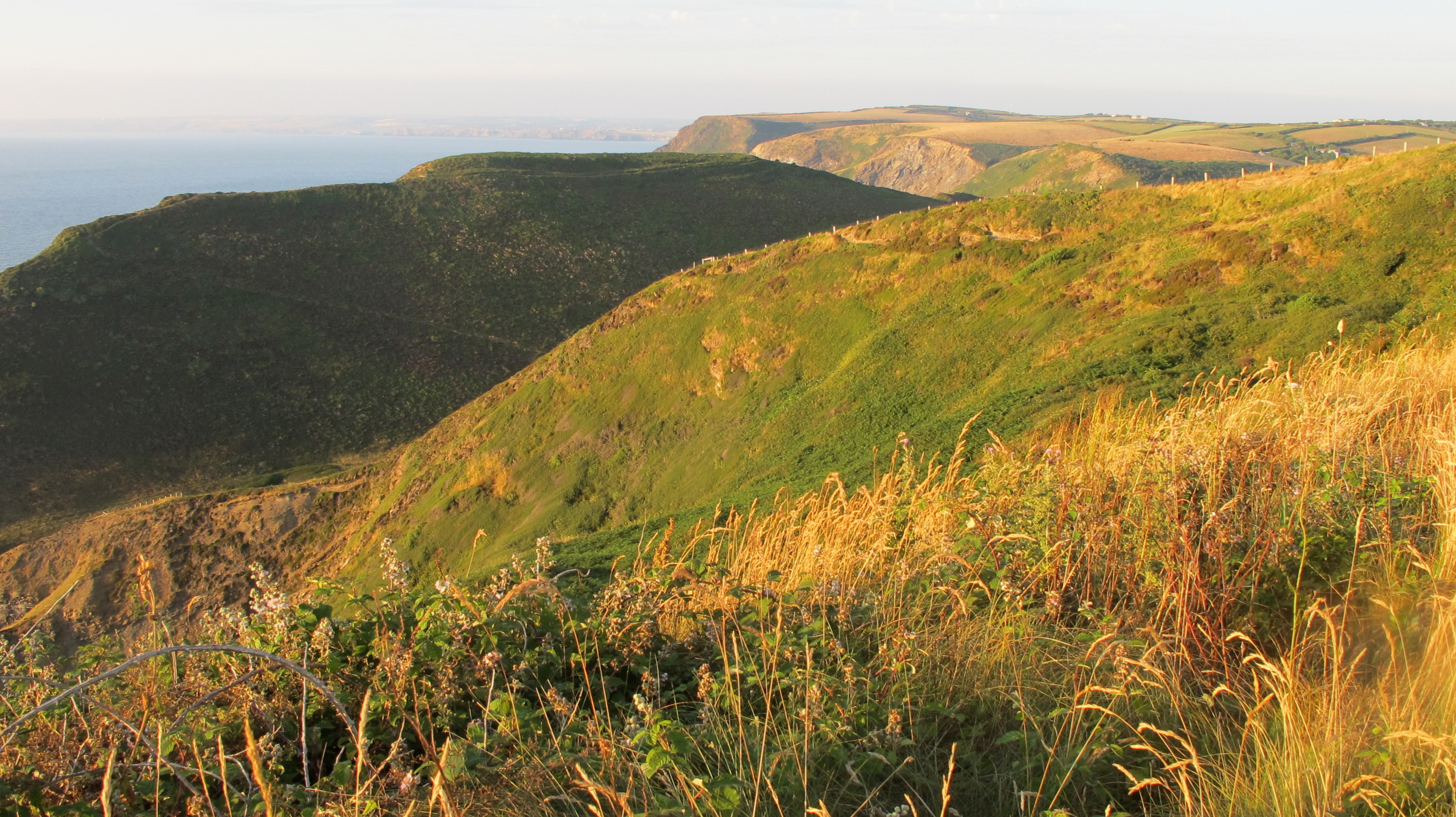
Irrelevant photo: The Cornish coastline.

*

In Britain, shutting down the pubs–and also opening them back up, which will happen eventually–is all about beer, and beer (I’ve just learned) doesn’t last forever

So how do you get rid of it? You can’t just dump it down the drain. You have to talk to the water board. You have to record everything and verify everything, because you’re going to want to get your beer duty back from the brewers. 

Beer duty? You don’t want to know. It’s a tax. And you have to  submit a Beer Duty (in caps) form by the fifteenth day of the month after your accounting period. 

After you do all that, presumably, you can dump it down the drain.

*

New Zealand is now free of Covid-19. You probably already heard that, but good news is hard to come by and I can’t let it go to waste: New Zealand. Covid free.

If you’re not New Zealandish, though, you can’t go there. They’re keeping tight control of the borders, and even incoming New Zealanders will be quarantined–by which I don’t mean the mythical quarantine Britain’s imposed (ride public transportation, go shopping, lick a few door handles, then stay kind of vaguely inside, mostly, unless you need something), but the real kind, where you don’t breathe on people or touch them or lick their door handles.

*

With that out of the way, let’s talk about the world-beating track and trace system that Prime Minister Boris Johnson promised us. 

Why do we want to beat the world on this? Because we’re coming second in our official count of coronavirus deaths (the US is ahead, the wretches, and Brazil’s rushing up the charts just behind us). Well, by gum, that’s not good enough. We need to beat someone at something. 

How are we doing at beating the world with our track and trace system, then? 

Um. 

Our custom-built track and trace app should be ready next month, the government says. It was supposed to be ready last month, but never mind. One month is a lot like another when you’re in lockdown. And the calling system that’s supposed to back it up, or possibly substitute for it until it’s working, is a privatized shambles. 

An independent science advisory group, formed by the government’s former chief non-independent science advisor, Sir David King, says the system isn’t–in that very British phrase–fit for purpose. To prevent the infection rate rising, he says, it needs to detect 80% of an infected person’s contacts, and it won’t. He’s called for it to be scrapped.

“This is the critical moment for the government to act now or risk further spikes. We believe that a new approach is required, one that moves away from a centralised system that utilises a local-first approach. We are calling on the government to urgently rethink their course to ensure that we have a system in place that will help and not hinder the country’s recovery.”

Why’s the government stuck on the idea of a centralized system? My best guess is because there’s money to be made that way, and contracts to be handed out, and the god of privatization to be placated with large offerings.

One contactor in the tracing program is Serco, which has an impressive record of disaster. A few months back, it was fined £1 million for failures on a contract.

And £3 million for messing up another contract

And £122.9 million (plus repaying £68.5 million) for another. That’s for the contract that saw them billing the government for all the work involved in monitoring the movements of the dead.

No, that’s not a joke. They really did that.

Anyway, they’re working on the contact tracing program. We’re in good hands here.

The junior health minister, Edward Argar, is a former Serco lobbyist. Which has nothing to do with anything. Don’t give it a minute’s thought. I only mentioned it because I’m biased.

*

A small pest-control company–small as in 16 staff members and £18,000 in assets–was awarded a £108 million Department of Health contract, making it the government’s largest supplier of protective equipment. 

A coffee, tea, and spice wholesaler got a £2.15 million contract to supply medical and surgical face masks. 

All told, £340 million in contracts were signed in April, most of them without a competitive process. Some of the companies may be doing exactly what they’re being paid to do. Others–. Well, you do get the sense that a lot of money was spent without adult supervision.

I was going to give you a link to Pest Magazine for this story, because how many times in a life does a person get a chance to link to Pest Magazine. Unfortunately, it’s not much of an article. I only added the paragraph to justify the link.

*

But we don’t need to go to a pest control company to buy a mask. A full-page newspaper ad tells me that we can all order our own, and since they’re not the kind the NHS uses, we’re not taking anything they need. The masks come in packs of three, they’re reusable, and the ad doesn’t say how much they cost.

But no mask is complete without face mask sanitizing spray, which is designed to “eliminate and reduce the spread of harmful germs and viruses.” So first we eliminate the little bastards and then, in case that isn’t enough, we reduce them. And it all comes with a 100% money back guarantee. The fine print is too small for human eyes, but I think it says that if you die from the virus, you get your money back.

*

But we were talking about Britain beating the world, and it still could. Or at least it could lead the world’s major economies in being hardest hit by the pandemic, according to the Organisation for Economic Co-operation and Development.

Go, us!

The current guess is that we’ll be looking at an 11.5% fall. 

And even better, the Covid Crash should hide whatever disasters a no-deal or last-minute-deal Brexit brings us.

The black lives matter update from Britain

The black lives matter movement is sweeping through Britain, with demonstrations in London and many smaller cities. The biggest flap is over the demonstration in Bristol, which toppled the statue of a slave trader, Edward Colston, and dumped it in the harbor. 

Cue outrage, first over people wanting to erase history, then over illegal acts and general thuggery. To explain why the statue was toppled, I’m going to quote that political sage Larry the Cat (@Number10cat), who tweeted (yes, of course he does his own tweets), “Simple questions: What mechanism is there for people anywhere in the UK to request a statue be removed? When was any statue in the UK last removed using such a mechanism?

“Unless you have simple answers, don’t be surprised by today‘s events.”

Since Larry the Cat gets a mention here, it seems only right for Fast Eddie to get a walk-on part. He has no lines and can sleep through the rehearsals.

Larry lives in 10 Downing Street but is not responsible for the political decisions made there, only for keeping the mouse population in check. He’s independent of all political parties.

I can’t help wondering how many people who worry about erasing history mentioned it when statues of Lenin and Sadam Hussein were pulled down. I do remember it being mentioned when Confederate generals fell in the U.S.

The pandemic update from Britain, with half-dressed politicians and questionable databases

The European Parliament–unlike the British one–is meeting virtually, and an Irish member, Luke Flanagan (called Ming, after a character out of Flash Gordon) discussed agricultural policy, live and beamed to an unwilling world, while wearing a dark shirt and possibly underwear but nothing more than that. 

We know this because he set his iPad to portrait instead of landscape. And I understand that tastes differ, but I’m reasonably sure this isn’t the portrait you want hanging over your mantle. 

The EU’s translators could be heard fighting not to laugh as they (heroically) went on translating what he said into all the EU’s many languages. 

He now calls himself Ming the Trouserless. 

Irrelevant photo to give you some relief from the pandemic: a field with corn marigolds.

*

Possibly for fear of an online dress-code rebellion, Boris Johnson backed down and will now allow Britain’s members of parliament to vote remotely if they have medical conditions that would make attending in person dangerous or if they have family members who etc. and so on and so on. 

As far as I can tell, that doesn’t include MPs who in spite of the virus have to travel from way to hell and gone to get to Westminster, and it’s anyone guess whether it includes black, Asian, or minority ethnic MPS, who are at higher risk from the virus than whites, for reasons that haven’t been figured out yet. 

*

Since the MPs have come home to roost, chickenlike, in Westminster, the union that represent parliament’s staff is threatening to strike over conditions they consider unsafe. They haven’t been able to keep a safe distance from the MPs, they say. But (they didn’t say) they’re all dressed very nicely–not to mention from top to (and this is very important) bottom.

*

Starting in mid-June, all hospital visitors and outpatients will have to wear masks, and all staff will have to wear surgical masks, the government announced. To which the National Health Service said, “Gee, it would’ve been nice if you’d talked to us about this beforehand, because it’s going to take a little planning.”

“Planning?” the Department of Impulsive Thinking said. “What’s that?”

The government also announced that a limited number of visitors will be allowed into hospitals, and I haven’t a clue if the hospitals were told about that in advance. Possibly, since they haven’t been heard to scream, “You want what?” in public. 

*

A leaked email from the Department of Grinding Slowly has announced that Britain’s world-beating system of testing people for the coronavirus and tracing their contacts won’t be fully operational until September. Or possibly October.

It hasn’t ruled out the possibility of postponing September and October for up to 90 days so that it can make its target. 

But don’t worry, we’ll all be fine. Car showrooms are reopening. In no time at all, we’ll be able to get haircuts. (I’ve cut my partner’s hair twice now and we’re still together. She wanted to cut mine, but after what she did to the dog I thought maybe I’d let it grow.) You can meet people who are over 5’6” on Thursdays as long as you’re out of doors and the wind’s from the west. If they stand on your left. Children with birthmarks have returned to school. Children without birthmarks will have to wait until next month. 

That report is from the Department of You’ll Never Keep Track of It Anyway. 

Those of us who were born with a sunny disposition, along with any number of scientists, are waiting for a second spike in coronavirus cases. In fact, a group of scientists and medics have called for a public inquiry to prepare for it. 

Anyone want to place bets on whether they’ll be listened to?

*

You might want to sit down before you read this next piece. Not because it’s shocking but because it made me dizzy, and I do have a habit of mixing me up with you, so I just assume you’ll have the same problem.

First we (and by we, of course, I mean I) learned from the Guardian that a small US company, Surgisphere, provided the data behind a couple of articles published in reputable medical journals that claimed Covid-19 patients taking hydroxychloroquine (I hate typing that word) were dying at higher rates than people who weren’t taking it. 

That led to tests of the drug ending early. It was too dangerous.  

But Surgisphere’s extensive database, from which the data was drawn, looked–

Is shaky a polite enough word? Questionable. Let’s settle for questionable. And possibly imaginary.

And Surgisphere, which had listed six employees before the story broke, suddenly listed only three. Some of them have no visible medical, scientific, or data background. The science editor seems to be a science fiction writer and fantasy artist. The marketing executive is an adult model and events hostess. 

An adult model? I’m not sure. It probably just means she’s over eighteen, although maybe she makes a living as a role model for adults. Or appears by video link in front of the European Parliament in her not-quite-altogether. 

Next we learned that the respectable medical publications withdrew the articles because the authors were no longer sure of their data. There were plans to resume the canceled trials of that drug whose name I hate to type. 

But wait: Before anyone had time to check my spelling, we learned that a randomized trial reported that the stuff is useless against Covid-19 and we can all forget about it.

May I never have to type its name again.

*

If you’ve gotten this far, you’ve earned the right to whatever good news I can scrape together, and I did find some. Astra-Zeneca is going into high gear producing a vaccine before its effectiveness has been proven. It’s a gamble. If it works, they’ll have 300 million doses ready to go before the end of the year. If it doesn’t, they’ll have set fire to a significant amount of money. 

This involves partnerships with a range of groups that I won’t list, and it also involves a commitment to make 1 billion doses available to low- and middle-income countries.

*

And finally, a Dutch study raises the hope that vitamin K might protect people against the worst forms of Covid-19. So eat your spinach, kids, along with eggs, blue cheese, and hard cheeses. You can put them together into a very nice omelette, and if you’ve been here for a while you know better than to ask me for a recipe.

Censorship and freedom of the press in England: a quick history

Let’s talk about freedom of the press in England.

Why not in Britain? Because we’ll start before Britain became a country and because English law doesn’t apply to all of Britain. It’s enough to make a non-Briton dizzy. Don’t think about it and you’ll be fine.

We’ll start in 1403, before the printing press was brought to England. Before, in fact, it was invented. That’s when the Guild of Stationers was recognized by London, and it’s an important part of the story, so stay with me. The guild’s members were text writers, book illuminators, booksellers, bookbinders, and suppliers of parchment, pens, and paper. Just to confuse things it’s also called the Stationers’ Company.

They were called stationers because they set up stations–what we’d be more likely to call stalls–around St. Paul’s Cathedral. So there’s one mystery solved. 

Irrelevant photo: St. John’s wort, getting ready to bloom.

Then the printing press came to England and printers joined the guild. 

Printing was the hot technology of the day, so what would any sensible government do but restrict it? When William Tyndale translated the Bible into English–both Henry VIII and England were still Catholic at this point–he played hide and seek with government agents in print shops all across Europe, where he’d fled. Copies of his translation were printed in Germany and smuggled into England.

In England, though, printing could be done only by English citizens, and anything that was going to be printed had to be approved by the privy council. 

Eventually Mary Tudor became the queen and the Guild of Stationers got a royal charter. That gave them a monopoly on printing, so members didn’t face competition from outside the guild. They could only have seen that as a good thing. They also had to settle disagreements over who owned what works within the group, and that led to the invention of copyright. 

We won’t go down that rabbithole today. 

The royal charter also meant that the guild had the power–and presumably the responsibility–to search out seditious and heretical books. Or, as its preamble puts it, “seditious and heretical books rhymes and treatises [that] are daily published and printed by divers scandalous malicious schismatical and heretical persons”.

The heresy du jour  was Protestantism, but after Mary died the heresy du jour was Catholicism, along with more Protestant forms of Protestantism than the approved form of Protestantism. 

So the content of sedition and heresy changed but the concept itself didn’t. 

Isn’t the world a strange place?

In their search for heresy etc., the stationers had to power search, seize, and destroy

Didn’t they get to have all the fun? 

This wasn’t exactly state censorship. It was censorship by a body chartered by the state but working in response to its own interests. I’m speculating here, but you might have been safe enough printing heretical pamphlets on the quiet if you kept on the good side of the guild’s more powerful members. And you might have found some surprising pamphlets stashed in a quiet corner of your workshop if you pissed off the wrong person.

We won’t slog through the period Tudor by Tudor. Let’s just acknowledge that each of them had an interest in stamping out sedition and heresy, in all its alternating forms. Freedom of the press was the next-door neighbor of sedition and would’ve been a dangerous concept to defend in public. If you had nothing to hide, you wouldn’t have any problem showing it to the privy council. 

During the Civil War and under the Commonwealth–that brief period when England was a republic–religious and political thinking went in directions no one could have predicted and no one could control, and print, being the social media of the day, was what all that intellectual ferment poured itself into. 

Given that this was during and just after a civil war, if you’d wanted to argue that freedom of the press and anarchy went together, you’d have found a good stack of evidence for your argument.

Then Cromwell died and Charles II took the throne, and he needed to put all that debate and argument and printing back in the box. The government passed the Licensing Act of 1662. Anything printed now had to carry the name of its printer and its author, and it had to be submitted to a licenser–that was a government official–before it could be printed. 

The licenser kept a copy to check against the printed version, just in case some sly devil inserted a disparaging paragraph about the size of Charles’s wig.

If the text was approved, then it had to be registered with–they’re back again–the stationers. 

The act was meant to be temporary–a placeholder until something better could be pieced together–so it came with an end date, but when nothing better appeared it was renewed. Until 1679, when everyone important got into a tizzy because of Titus Oates’ fantasies about a popish plot, and the act lapsed.

Newspapers moved into the empty space where censorship had once been.

Six years later, the act was reinstated, but the fun had gone out of it, somehow. Licensing print didn’t have the appeal it had once had. It had grown a pot belly and a chicken neck, some mornings it didn’t bother to shave, and heads didn’t turn anymore when it walked down the street. 

But guess what: The government found it could still punish treason, seditious libel, and blasphemy, and it could keep the press in line pretty well that way. And it was all so much more efficient.

A Jacobite printer was executed to prove the point. 

The threat of prosecution was enough to keep most publishers well back from the political edges. And those didn’t stay back? Some were fined. Some were jailed. Some fled abroad. Most played nice.

Before long, London had multiple newspapers and towns around the country had their own papers. The newspaper had become an integral part of the political landscape and that’s glorious but a lot less interesting.

English defamation law has worked at times to limit freedom of the press, since it puts the burden of proof on the defendant, not the plaintiff. In other words, if someone wants to shut you up, unless you have enough money and sheer cussed energy to defend yourself in court, you might just consider shutting up. 

And there are specified limits on freedom of expression. They include making threats, harassment, glorifying terrorism, incitement to racial hatred, or–oh, hell–calling for the abolition of the monarchy. Or imagining overthrowing the monarchy.

That last one carries a life sentence, although the law hasn’t been enforced since 1879. The Guardian challenged it in court and lost on the grounds that the law was a relic of a bygone age and that any change was unnecessary.  

And with that, we’ve come to the present day, so let’s check in with the Stationers’ Company and see what they’ve become now that they can’t stamp out heresy and search other people’s premises. The organization says it has almost a thousand members and sounds deeply snoozeworthy. Most members are “senior executives in the complete range of trades within the Communications and Content industries.” That’s so dull I had to copy it and paste it into place. I tried typing the words but kept passing out.

One of the group’s goals is to create a broad balance of membership. Toward what end? Why, so it can maintain balance, of course. In its membership. 

Listen, don’t ask me these things. They have a hall. You can rent it if the pandemic ever ends.

A quick pandemic update from Britain: from the Department of We Told You So

The Department of We Told You So has sent the government a bill for services rendered: 

Tuesday. The House of Commons begins meeting in person again. Its leader, Jacob Rees Mogg, wants it to set an example. 

Cue warnings about Covid-19 contagion and the impossibility of keeping a decent distance in that rabbit warren of a building. But Britons are made of sterner stuff and a majority votes to continue meeting in person.

Wednesday. Business Secretary Alok Sharma becomes visibly ill during a debate. He’s tested for Covid-19 and goes home. Possibly to isolate himself but possibly to take a 260-mile drive so he can test his vision and have a cup of coffee with Dominic Cummings in some scenic town. 

Thursday. Your guess is as good as mine. I’m posting this at 8:30 a.m. and have no idea what’ll happen next. 

If you put this in a novel, I’d tell you not to be so predictable. 

The pandemic update from Britain: Downing Street plays musical chairs

Boris Johnson has instituted a shakeup in Number 10 Downing Street. According to a senior Conservative source, it’s to “bring some order” to the decision making process. Here’s how it’s going to work:

Johnson will chair a strategy committee, called CS, because committees work best when their initials run in one direction and their names run in the other. Michael Gove will chair on operations committee, called CO, because ditto. Then someone will put on a piece of music and four ministerial groups that were set up to deal with Covid-19, along with the regular Covid-19 morning meeting will all run down the hall screaming. When the music stops–which will happen at some unpredictable time, well before the song reaches its natural conclusion–whoever’s left without an office will be returned to parliament, postage due. 

This may, it’s rumored, curb Dominic Cummings’ influence, although I’d be inclined to try exorcism myself. 

Except for the business about the hallway, the music, and the exorcism, this is real. 

Oh. And the postage due.

Irrelevant photo: A gerbera daisy.

*

In a stunning display of pointless determination, the House of Commons took 46 minutes to vote on a single measure on Tuesday. Or possibly 1 hour and 23 minutes. It depends on your source. And possibly on which measure they were timing.

However long it took, the time didn’t include the debate. It was just for Members of Parliament to cast their votes–something that would normally take 15 minutes.

They were kept the proper distance apart while they waited by an airport-style system that channeled them into a kilometer-long, snaking line. Cleverer writers than me (and also than I) have said that it looked like the world’s most boring theme park. In the photos I’ve seen, somewhere between none of the MPs and very few of them were wearing masks. Because, what the hell, they’ve given up all hope of escaping the virus. 

Since the middle of April, parliament’s been operating on a hybrid system that allowed some MPs to show up in person and others to vote and debate remotely. But the leader of the House of Commons, Jacob Rees-Mogg, scrapped the hybrid system, forcing MPs to show up in person if they wanted to vote.

Why does R-M want them all back? To set an example. 

Of what? I don’t think he’s said. Certainly not of following government advice to minimize contact with people outside your household, work from home if at all possible, and only meet people out of doors in groups of no more than I don’t remember how many. 

I’ll admit, though, that they’re setting an example of the British stiff upper lip. As one MP said, “If I haven’t already had Covid, I’m now resigned to the fact that I definitely will.” 

R-M also said everyone had to come back because it will make democracy “once again flourish.” 

I don’t think he’s explained that either.

MPs who, for medical reasons, can’t come back will be able to take part in some debates remotely but they won’t be able to vote. Because, hey, if they’d had any foresight they wouldn’t have gotten themselves into this situation. To compensate for that, there may be pairing arrangements. That means that if an MP from one party can’t vote a paired MP from the opposing party is taken out and shot so they can’t vote either.

Okay, that’s not the exact wording of the proposal. Maybe they just put a bag over the sacrificial MPs head and lead him or her into a nice dark closet until the voting’s over. Which may take a while. 

Given that there are more than two parties, which  party do they pull the sacrificial paired MP from? Do they ask the non-attending MP, “Who do you hate most? We’ll keep them from voting”? Or do they take one MP from each party? 

But that’s only for MPs with medical reasons not to attend. What happens to MPs who live hours’ away from London at a time when travel’s limited? That’s up from grabs. They too should probably have thought their lives through before they got into that position.

Predictably, opposition MPs voted against the recall, but they were joined by a number of Conservatives–especially the ones who need to keep themselves out of the virii’s path because of age or disability or because someone in their family is particularly vulnerable. 

I don’t even begin to understand British law, but even so I seem to catch the scent of a lawsuit in the wind–from disenfranchised constituents or from older and disabled MPs or from both.

I’m not directly affected by this. I’m not an MP and I’d be happy enough to see my MP blocked of voting for almost any reason, but if I got a chance I’d join the lawsuit anyway.

*

The head of the UK Statistics Authority, David Norgrove (Sir David Norgrove to his friends), criticized Health Secretary Matt Hancock’s use of statistics on coronavirus testing, saying they’re “still far from complete and comprehensible.”

“Statistics on testing perhaps serve two main purposes.

“The first is to help us understand the epidemic . . . showing us how many people are infected, or not, and their relevant characteristics.

“The second purpose is to help manage the test programme, to ensure there are enough tests, that they are carried out or sent where they are needed and that they are being used as effectively as possible.”

However, the aim of the statistics Hancock throws around in his briefings, he said, “seems to be to show the largest possible number of tests, even at the expense of understanding.”

*

A couple of unpublished pages of Isaac Newton’s notes are up for auction, and one of them has a remedy for the plague. It involves making toad vomit and making both the vomit and the unhappy toad itself into lozenges. 

Believe me, you don’t want to know how they got the toad to vomit. And it was a different plague, so I wouldn’t bother trying it for this one.

The pandemic update from Britain: numbers, alcohol, and ice cream

Somebody enjoyed Britain’s lockdown: Looking at all those empty roads, a handful of drivers said, “Wheee,” or whatever the British equivalent is if that’s an Americanism. I can’t remember hearing anyone British say it, but at 107 years old I don’t find myself in as many whee-like situations as I used to. 

No, I can’t explain it either.

Around the country, a few drivers dedicated themselves to finding out if the high numbers on their speedometers were only there for decoration or if their cars would really go that fast. On mine, anything over 70 is decorative unless we’re going downhill, but that’s okay because they do look very nice. 

The record was set by someone driving 163 miles an hour on a London motorway, which in American is a highway. That’s a meer 93 miles an hour over the speed limit. But the winner (and I can’t be entirely objective in how I award the prizes here) was someone driving 134 miles an hour in a 40 mile an hour zone. 


*


Screamingly irrelevant photo: a geranium.

As lockdown eases, we’re all being profoundly sensible. In Accrington (wherever that may be), a birthday party turned into a fight and three people were arrested after an enthusiastic exchange of germs. I’m not sure how many people were at the party, but that’s okay because by now I’ve forgotten how many people are allowed to meet up. I do remember that they’re supposed to be out of doors, which (in a startling break with protocol) makes sense, but the number is arbitrary, so why remember it? However many it’s supposed to be, let’s assume they had more.

The evening news showed photos of mobbed beaches here in the southwest, with people packed especially tightly on a path leading to a beach. And to celebrate the chance to enjoy nature at its best, people left their litter when they went home, knowing that it would go on celebrating without them.

*

And from the department of non-snarky reporting, a bakery in Liverpool was offering a free coffee or ice cream to anyone people who’d helped clean up the local parks. All they had to do was dump their bag of litter in the bin outside the shop.

Liverpool’s too far from Cornwall for a free ice cream to be worth the trip, but I did give it some thought.

*

We’re getting details of Britain’s proposed quarantine for international visitors and it’s a masterstroke of pointlessness. It puts travelers in quarantine for two weeks, but it’s an imaginary quarantine. They’ll be asked to self-isolate, and about a fifth of them will be spot checked. But they can go out to shop for food and medicine. They can move from one residence to another. And they can take public transportation to get to wherever the hell they’re staying. And they can breathe both in and out while they do all of the above.

Oh, and they’ll be advised to download the contact tracing app when it’s available. If it ever is available. 

Predictably, no one’s happy with the plan. People who want travelers and business, not to mention the money they bring, want no quarantine.  And people who do want a quarantine want the kind of quarantine that quarantines people. 

*

A report published in the Lancet reports that–

Well, what it reports depends on what newspaper you read. According to the Guardian, the Independent, and the Irish Times, if instead of keeping 2 meters from other people we keep 1 meter away, we’ll double the risk of Covid-19 infection. 

According to the Mail, however, keeping 1 meter apart “slashes” the risk of infection by  80 percent. “Researchers found there was roughly a 1.3 per cent chance of contracting the virus when two metres from an infected patient. But halving this gap raised the risk to only 2.6 per cent.” 

According to the Sun, “Keeping 1 metre apart IS enough to cut risk of virus.” But only if you put your VERBS in ALL CAPS. 

All three are technically accurate, they just use the numbers differently and make the report’s information sound very different. 

*

In the meantime, almost half of all drinkers in Britain are starting to drink earlier in the day during the pandemic. We’ll use a Guardian link for that, because if we go to the Mail, we learn that  “Nearly HALF of Britons” end up in all caps. 

And with that we end our comparative survey of the British press.

*

British hospitals will run five drug trials to see if they work against Covid-19. They range from heparin (already in use as a blood thinner but will be tried in nebulized form to see if it works as an anti-inflammatory and protects cells against the virus) to Bemcentinib (used to treat blood disorders but carrying an antiviral effect). 

Okay, I kind of lied about ending our survey of the British press, because it seems worth noticing that the Guardian, the Mail, and the Sun all pretty much agree on that. So to keep myself kind of honest, I’ll  give you a link from the Post Courier, from Papua New Guinea.

*

A study from McMaster University shows that cloth masks do keep the droplets and aerosols that we breathe out from spraying into the world around us. And that may reduced the odds of spreading the virus.

For droplets and aerosols,  if you want, you can substitute the words spit and micro-spit.

“The point is not that some particles can penetrate the mask, but that some particles are stopped, particularly outwardly, from the wearer,” said Catherine Clase, the paper’s first author.

First author? That’s the big name on the paper. The one who’d get ALL CAPS if she were a Sun or Mail headline.

The mask’s effectiveness, predictably enough, depends on what it’s made of. A commercial mask made with four layers of cotton muslin reduces particles by 99%. A scarf, sweatshirt, or T-shirt could reduce them by 10% to 40%. 

I’ve seen a pattern for a crocheted mask that would reduce transmission by 0%, because the nature of crocheting is that it’s full of holes. It was on someone’s blog. I was too floored to leave a comment. Someone’s probably out there somewhere, wearing one.