Unknown's avatar

About Ellen Hawley

Fiction writer and blogger, living in Cornwall.

The origins of England’s parliament

You can trace the origins of England’s parliament’s back as far back as the Anglo-Saxon witan if you have nothing better to do with your life. Clearly, I don’t. 


The Anglo-Saxon witan

The witan wasn’t an elected body, but then neither were the earliest English parliaments. It was a council of the country’s nobles and top clergy, and it advised the king on whatever topic he wanted to be advised on. It consented to the laws he proposed and did an assortment of other things that kept the wheels of government creaking onward. 

And since it was his council, he set its agenda, chose its membership, and summoned it when he wanted its help. If it sounds a bit like his collie, to an extent it was. The king whistled and it came. If he didn’t whistle, he could take action anyway. He didn’t need its approval. 

But the collie also had some power. The king needed the support of the nobles and clergy if he was going to govern. Or to stick with the image we’ve got, the collie could either round up all his sheep or miss a few, so it paid to keep it happy and working hard. 

If you’re in the mood, you can call the witan the Witenagemot, which means meeting of the wise men. 

Don’t you just love it when people offer you meaningless choices? 

Irrelevant photo: The last of the begonias, from October.

Lower down the governmental ladder, each shire held a regular meeting, the shire moot. (A moot was a meeting.) It would’ve involved the local lords, the bishops, the sheriff, and village representatives.  Think of it as a collision of a court session and an administrative meeting, because the two weren’t separate at this point. 

Lower down still, moots were also held at the town and village level, and the local freemen would’ve attended.


The Normans 

Then the Normans invaded and they established something very much like the witan (and not unlike a structure they were familiar with in Normandy). They called it the commune concilium–Latin for general council, because, hey, they were Normans, they spoke Normish. Or French, actually. And Latin–or enough Latin to get by. 

The concilium was made up of the king’s chief tenants–in other words, the top layer of the aristocracy. It was a smaller group than the witan, but it was a permanent one.

In case you’re in need of confusion, though, I’ll be happy to provide it, and this is as good a place as any to toss it in. The commune concilium also seems to have been called the curia regis (the king’s court), or the aula regis. Unless, of course, Lord Google and the entire damn internet are messing with me.

I asked Lord G. to translate aula for me. Court seems to be the best match, but it also means inner court, palace, courtyard, his (confusingly), and (even more confusingly) aula. So aula means aula. It’s hard to argue with that, even if it doesn’t tell us much.

Translation programs are strange beasts. But let’s stick with curia regis, since we have a reliable translation for it. To quote one of the sources I ran to in search of some elusive clarity, “It is difficult to define the curia regis with precision.” So I may be slurring together some things that aren’t exactly the same, but if I am it’s not just me who’s short on precision. Blame history. Blame the Normans. Blame Lord Google.

Hell, blame Boris Johnson. Blame Theresa May. She didn’t say aula means aula, but she did say Brexit means Brexit, which was just about as helpful.

I know. Brexit’s just about upon us. It makes it appealing to write about thousand-year-old chaos.

It seems safe to say that the concilium/curia/aula changed over time. So we’ll say that, then sneak out the door and pretend we were never here.

For the sake of more confusion, though, every so often the king would call together a larger circle, the magnum concilium, or great council, adding earls and abbots, bishops and barons to the smaller group. Also priors, but I can’t find a category that makes a neat a counterweight for them. If I said “priors and pigeons,” you’d understand that the Norman kings didn’t really seek advice from pigeons, wouldn’t you? 

The great council was called together when the king needed them to approve his decisions, especially when those decisions involved taxes, because money was  always a sore point and he’d need to get the nobles on his side if that was in any way possible.

In the time of Henry I (that’s 1100 to 1135), a smaller council began to serve, unofficially, as a committee of the larger council. It was made up of the royal household’s officials plus the king’s attendants along with all the king’s horses and all the king’s friends. Its authority was as vaguely defined as the king’s, but it took on some financial responsibilities and gradually grew into the court of exchequer. We’ll skip the Latin for that if it’s okay with you.

Its members were called justices, and when the king wasn’t around, the chief justiciar presided over the court. 

However vaguely defined, this was turning into a powerful body.


The non-Normans

Now let’s leave the Normans behind and skip to Henry II, who was a Plantagenet. In 1178, he took five members of the curia, stirred vigorously, sprinkled dried fruit over the top, and turned them into a special court of justice. Unlike the rest of the curia, they stayed in one place instead of traipsing around the country after him. 

Kings (in case you didn’t know this–and if you did, surely someone out there didn’t) traveled a lot of the time, which allowed them to saddle their nobles with the cost of feeding and entertaining their huge and kingly households. It also kept them in touch with their kingdoms at a time when the internet was down.

Other bits and pieces of the original council spun off at different times until the country had the court of king’s bench, the chancery, and the king’s secret council (which eventually became the privy council).

The larger and smaller versions of the curia became clearly separate bodies, and the larger one was first called a parliament in 1236. Parliament’s website (which has some odd and interesting corners) considers the great council the forerunner of the House of Lords.

In 1254, the king (by now we’re up to Henry III) added representatives of the counties to Parliament. You can call them knights of the shire if you like. One site I found does, and it gives you a sense of the layer of society the representatives were drawn from. 

Do you have any idea how hard it is not to type “knights of the shirt”? 

The next addition came in 1265 (it’s still Henry III who’s plonked on the throne): Representatives of the boroughs (called town burgesses) were poured into the mix.

What was a borough? A town with a charter from the king. The charter allowed it to govern itself and go to the candy store without supervision–sometimes without even asking permission. 

Okay, like most things, the charters varied, but that’ll get us close enough.

And what’s a burgess? An inhabitant of a town who had full citizenship rights. You’ll notice, if you peer into the cracks of that definition, that not everyone who lived in a town did have citizenship rights, and that those who did were citizens of the town, not the country. It would make an interesting post.

As usual, Henry needed the burgesses to consent to taxation. 

That was always the king’s weakness. Not just Henry’s. Any king’s. Kings needed money, especially if they wanted to fight a way, and to get it they needed–well, I was tempted to say the consent of the governed, but at this point we’re still talking about the consent, or at least semblance of cooperation, of a very thin but powerful layer of people just below the king. The rest of the governed had to either put up with things or rebel. In between those two choices, they didn’t have a lot of space to maneuver.


Voting comes into the picture

From 1290 onward, representatives of the counties were summoned to parliament regularly, and a bit later on borough representatives were as well. Each county and borough generally sent two members. And at this point, I suppose I have to break down and capitalize that: two Members, as in Members of Parliament.

In 1295, voting comes into clear focus with the Model Parliament summoned by Edward I. It included two knights from each country, two burgesses from (almost) each borough, and two citizens from each city–all of them elected instead of nominated. 

Why “(almost) each borough”? 

A House of Commons research paper says, “There was no single definition of or agreement on what constituted a borough in this period. The issuing of a writ was a royal prerogative and those boroughs that became Parliamentary boroughs were usually the county town of each ancient county and a number of other important boroughs. The actual number of Parliamentary boroughs in early Parliaments fluctuated.”

Did you follow that? 

Don’t worry about it.

So who got to vote?

Not everybody. In fact, not a whole lot of people. But, like most elements in this tale, it was hazy.

Everywhere, only men could vote, but that was by custom, not by law. This is a country with an unwritten constitution, remember, so that sort of haziness feels like home and family. In practice, women who met the qualifications sometimes transferred their right to vote to a male, who’d vote for them. 

In the counties, voters were people with a property freehold worth 40 shillings, and that wasn’t restricted to land. If you’re not sure what that means, it’s enough to know that if you didn’t have a fair chunk of property, you didn’t vote.

In the boroughs, though, it varied from one to the next but usually depended on residence, on owning property, on being a freeman, or on some combination of those. In some it was restricted to members of the corporation running the borough. Again, if the details are slipping through your fingers, don’t worry about it. Same as above: The vote was restricted by wealth and status.

Oxford and Cambridge universities each sent two Members to Parliament, and they were elected by the senates of each university. 

What about the other universities? 

Trick question. They didn’t exist yet.

In 1341 (Edward III’s on the throne by now), the Commons (knights, burgesses, and citizens) and the Lords (barons and clergy) began to meet separately. 


More about the vote

Who got to vote was one issue, but it wasn’t the only one. The king’s writ required sheriffs to hold free elections for county representatives, but sheriffs sometimes skipped the election part and declared themselves the winners.

It’s a system I’m sure some modern politicians would envy.

In 1406, a statute specified that county elections had to be held in full view of the participants. My largely useless high school classes taught me that the secret ballot was the standard by which you could measure a fair election. Ha. At this stage, having people cast their vote in public was an attempt to prevent corruption. If you held the election in public, everyone would at least know it happened.

Elections could be raucous, with feuds and factions, and in 1429, the Commons petitioned the king to restrict the vote further, saying elections involved “too great and excessive number of people . . . of whom the greater part are by people of little or no means” and that these people “pretend[ed] to have an equivalent voice . . . as the most worthy knights or esquires dwelling in the same counties.” 

In response, in 1430 leaseholders lost the right to vote, no matter how much the land they leased was worth. The franchise was now limited to what one paper calls “40 shilling resident freeholders,” and I’m quoting because if I mess around with the wording so that it sounds more accessible I’m afraid I’ll change the meaning. What they’re saying, I think, is that you had to own the property, not just rent it.

This was the first time the rules for who could vote in the counties was formalized, and they stayed fixed–more or less–until the Reform Act of 1832. For a bit about the Reform Act, allow me to refer you to that noted non-historian, me. If you follow the link, it’s toward the end of the post.

Under Oliver Cromwell (he was Lord Protector–which is to kingship as margarine is to butter–from 1653 to 1658, and for the time he was in power you can add a few years to allow for a Civil War and assorted chaos if you like)–

Can we start that over? Under Cromwell, they tinkered with the rules on who could vote, but the changes were reversed when he died and the monarchy was restored, so we’ll skip them.

In the seventeenth century, someone came up with a nifty way to game the system. They subdivided large landholdings into smaller ones worth 40 shillings each, creating groups of people who’d vote the way the primary landowners wanted them to. The smaller landowners were called faggot votes. 

No, I’m not sure either. It’s a word with an odd history, and in modern Britain it doesn’t have anything to do with insulting a gay man. A faggot’s a sausage. And no again: As far as I know any relationship is purely accidental.

At the end of the seventeenth century, Church of England clergymen got the vote. 

In 1831, just before the Reform Act of 1832, an estimated 1.35% of the English population could vote, although the percentage would have varied from county to county. In Herefordshire, it was an estimated 3.6%, but in Middlesex it was 0.22%.

And with that in place, next week we go to another post about the history of British voting rights, the Peterloo Massacre. I’ve been threatening to write about it for a while, and it’s now in the queue. Sorry this one ran so long, and if you got this far, thanks for your patience.

Long Covid, vaccine safety, and ferrets: it’s the pandemic news from Britain

A drug that’s still in the experimental stage promises to stop Covid transmission. So far, we know it works in ferrets. If you’re a ferret, you probably don’t care about this because ferrets are like young adults: They have fur and like to eat raw meat.

The similarity’s struck you before now, hasn’t it?

They also become infected with Covid and can pass the infection on, but they don’t get sick. 

Strictly and importantly speaking, that’s true of ferrets but not true of young adults (see below), because some young adults get mildly sick and then get long Covid, which is a particularly nasty kick in the head. And some are hospitalized. In fact, some die, although nowhere near as many as older adults, which is where the myth of young adult immunity comes from. 

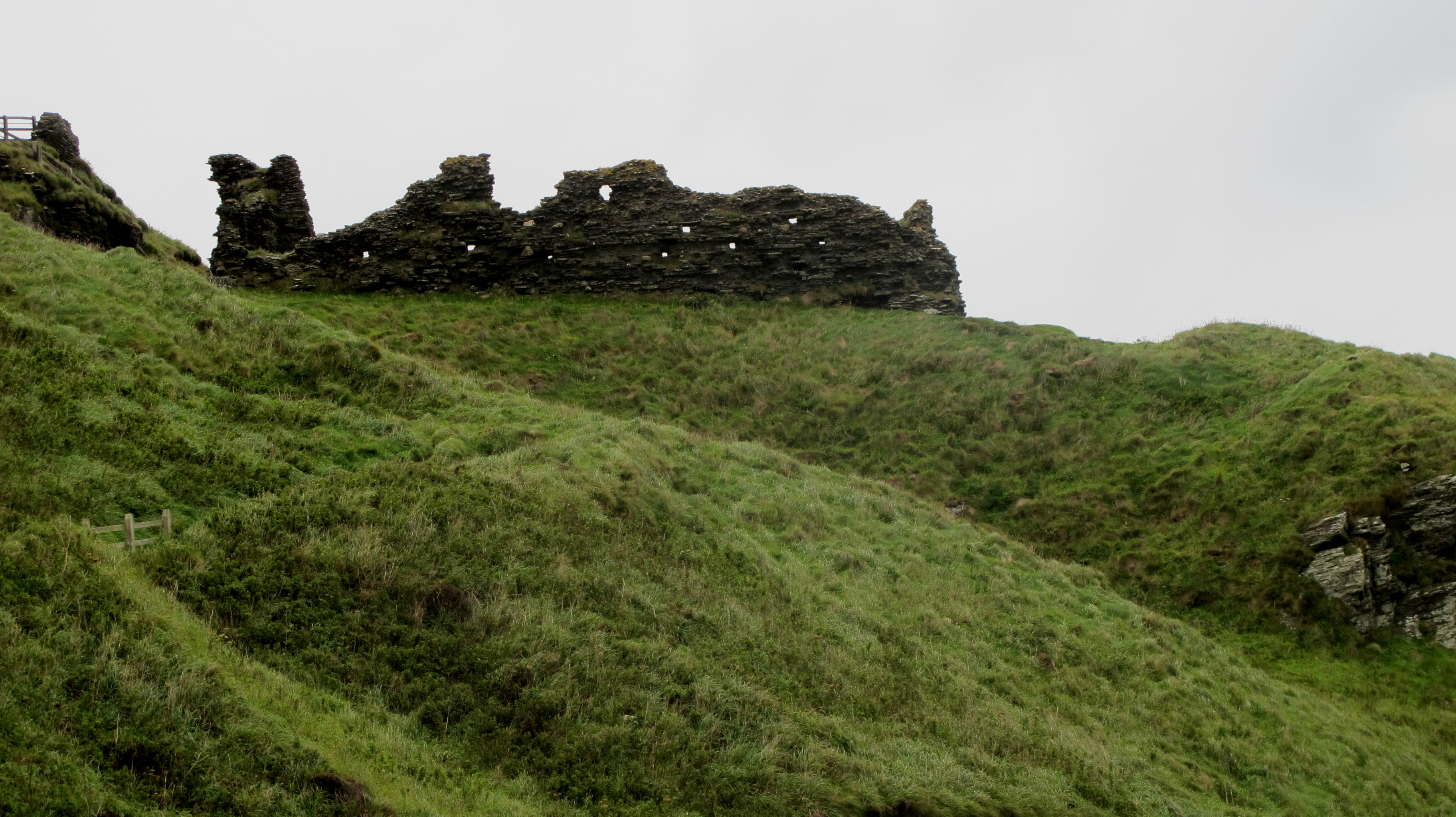
Irrelevant photo: Tintagel Castle. Or part of it. This bit was left on the mainland when the land bridge to the island collapsed. 

So let’s say that most young adults are like ferrets, and I’m told they make excellent pets and can be quite affectionate. They’re intelligent, energetic, and shouldn’t be left in cages.

If I’ve driven that joke into the ground, we’ll move on. 

How long will it be before the drug is available for humans? Well, they’ll probably want to test it in something furless before it gets to the market. I’ve read, and I’ve often written here, about all sorts of promising drugs. And that’s the last we hear about most of them. Or at least the last I hear of them. I don’t really know what you hear, do I?

I keep promising myself that I won’t write about any more early-stage drugs, but then I read about one that I can’t pass up and I break my promise. You should know better than to trust me with promises, so you have no one to blame but yourself. 

This one, I think, is worth breaking a promise for. It not only stops Covid transmission, it also stops the progression of the disease. And works against the flu.

Let us all become ferrets, friends, and put an end to this plague. 

*

The news about the Moderna vaccine is that it gives people (at least the 94% it works in) an immune response that lasts at least three months. That’s from a study run by NIAID, which is not a Greek goddess of springs, rivers, fountains, and lakes (you’ll need change the vowels a bit if you’re calling the goddess) but (more helpfully at this moment in history) the National Institute for Allergies and Infectious Diseases. 

Immunity may last longer, but that’s as many pages as they’ve had time to read.

*

How has it been possible to develop the Covid vaccines so fast? Several factors came together.

Once the virus’s genome was decoded, it was shared immediately with the world’s scientific community. Chinese scientists published a draft of the genome of January 11. No one had to waste time repeating work that had already been done. 

After that, the world’s bad luck was put to good use: With the hounds of hell nipping at their heels, governments were willing to pour immense amounts of money into research. That translated to equipment and researchers. 

Next, it was easy for researchers to recruit participants for both the early and the later tests. That usually takes time, but people were motivated and anxious to sign up.

It usually takes a good long time before enough of the test subjects become infected to prove or disprove the vaccine’s effectiveness. But because Covid was so widespread, people got sick quickly. That comes to us compliments of the Department of Silver Linings.

On top of that, the pandemic hit just as scientists worked the kinks out of the mRNA vaccine process. I’m not going to try to explain that, but if you follow the link a few paragraphs back, someone who knows what they’re talking about will. 

Finally, a good bit of research that had already been done gave Covid research a running start: into creating  new flu vaccine; into SARS and MERS, both of which threatened to turn epidemic but didn’t; and into Zika.

Experts say no steps were missed in checking the safety and effectiveness of the Covid vaccines. I respect the well-honed skepticism that develops in a population that’s been lied to a lot, but I haven’t read any solid evidence that would lead me to wait when I’m offered a vaccine. I’m running around with one sleeve already rolled up.

*

The Serum Institute of India has asked for fast-track approval of the Oxford/Astra-Zeneca vaccine, which doesn’t need refrigeration and which–if it gets approval–it will sell in India for something in the neighborhood of $3 a dose.

India is the second hardest hit country in the world’s Covid disaster race. Or the third. I’ve seen it listed both ways. It probably depends on what you count and how.

*

A British trial will play around with mixing Covid vaccines to see if a mix creates a stronger immune response than two doses of a single vaccine. It’s due to start in January.

*

Less encouragingly (but entirely realistically), the World Health Organization warns that the introduction of vaccines doesn’t mean an end to the Covid crisis. The logistics and economics of getting the world’s population vaccinated are massive, especially since two of the early vaccines need super-cold storage. 

And that doesn’t touch on the issue of how many people will be willing to accept vaccination or whether the vaccine will continue to circulated in spite of vaccinations.

In the meantime:

  • Wear a mask
  • Be careful
  • Grow fur 

*

A small study (40 people, with a control group of 58) from the University of Dayton shows that 51% of young adults who are diagnosed with mild to moderate Covid had complications (chest pain, breathing difficulty, headaches, exhaustion, brain fog, diarrhea, loss of smell or taste, etc.) for more than 28 days afterward, and 30% had complications for more than 50 days.

The lead researcher, Julie Walsh-Messinger, said, “The common belief in the U.S. is that COVID-19 is benign or short-lived in young adults. Our study, which we believe is the first to report on post-COVID syndrome in college students, almost exclusively between 18 and 21 years of age, suggests otherwise. More research needs to be done to confirm these findings, but until then, we urge the medical and scientific community to consider young adults vulnerable to post-COVID syndrome.”

For a brief description of what long Covid is like, this is a good place to start, although from what I’ve read it can get far worse. 

*

Like ferrets, cars don’t contract Covid. Unlike ferrets, they’re inanimate. But they can spread it. They’re like schoolrooms, like bars, like supermarkets: They depend on breathing humans to help them with their work.

A study at Brown University shows that opening car windows reduces Covid transmission. This probably won’t surprise you, given what’s known about air, breath, wind, cars, and Covid. But scientists have this pesky habit of wanting to prove things instead of just asserting them. They’re the kind of people who want to know how cold it is and how long it’s been how cold before they drive the car out on the frozen lake. They’ll want to calculate the depth of the ice and find out if the lake has currents where the ice will be thinner. They can be absolute mood-killers, but if you’re driving across a frozen lake they’re the people you want to ride with. 

Speaking just for myself (as if I had a choice), I appreciate them.

Asimanshu Das, co-lead author of the car window research, said, “Driving around with the windows up and the air conditioning or heat on is definitely the worst scenario, according to our computer simulations. The best scenario we found was having all four windows open, but even having one or two open was far better than having them all closed.”

But even with all the windows open and the roof sawed off, everybody should wear masks.

The article’s full of drawings and arrows. I’m not sure what they demonstrate, but they impressed the hell out of me.

*

Semi-relevantly, researchers at Mount Sinai Hospital are working on a vaccine for a wide range of influenza strains. Early-stage clinical trials indicate that it could give a long-lasting immunity, eliminating the need for yearly updates. 

But it’s in the early stages. In the meantime, we’re all supposed to keep downloading our yearly flu shots. Or, in British, jabs.

*

And, completely irrelevantly, an experimental drug can reverse age-related memory loss within days. So far, unfortunately, that only applies to mice, but it may work its way up to ferrets and eventually to us. 

It’s called ISRIB and it also works on traumatic injuries, noise-related hearing loss, and cognitive impairment in Down Syndrome. Yes, mice can have Down syndrome-like characteristics. I didn’t know either.

It also fights certain kinds of prostate cancer and enhances cognition in healthy animals.

And it makes coffee, but it’s pretty bad. I wouldn’t recommend drinking it.  

How the pandemic tempts us into insults and sports metaphors

Britain has approved the first Covid vaccine, thereby starting a robust exchange of insults with a random sampling of other countries, and in case that didn’t bring enough joy to the world, setting off another round of the sort of chaos that allows us to recognize Boris Johnson’s government even when we’re blindfolded in the woods on a moonless night. 

I look at each day’s news with a mixture of dread and glee.

The insult exchange

It started with Gavin Williamson, the education secretary, who you might think (being the education secretary and all) would know better but, hey, silly you.

Williamson went on the radio and said Britain was the first country to approve the vaccine because “we’ve got the very best people in this country and we’ve obviously got the best medical regulator, much better than the French have, much better than the Belgians have, much better than the Americans have.

“That doesn’t surprise me at all, because we’re a much better country than every single one of them.”

Several winces later, Conservative peer Michael Forsyth (his friends and family call him Lord Forsyth; you can call him Mikey) tweeted, “Frankly, [that’s]  just unseemly.” 

European Commission spokesperson Eric Mamer pointed vaguely in the direction of the high road and said, “This is not a football competition.”


Irrelevant photo: erigeron

Anthony Fauci, on the other hand,  ignored all of that, but he was critical of how quick Britain was to approve the vaccine, saying the UK hadn’t reviewed it “as carefully” as US health regulators.

The next day he backtracked, saying, “I have a great deal of confidence in what the UK does both scientifically and from a regulator standpoint” and on top of that, “I did not mean to imply any sloppiness.”

The difference in speed is because the US regulator often goes back to the raw test data while both UK and European Union regulators work from the reports the companies assemble. 

A few people have commented not that the slower approval process would be any safer but that people might have more confidence that it was safe. It could be a valid point, but where’s the fun in that?


The Brexit connection

Unable to see a flap going on and not jump into the middle of it, prominent Brexiteers in the government waded in and claimed that Brexit was the reason Britain had been able to approve the vaccine so quickly. 

“Prominent Brexiteers” describes pretty much the whole government, but this was only a couple of them, Matt Hancock and Jacob Rees-Mogg. Their quotes, sadly, are as boring as they’ve turned out to be inaccurate, so we’ll skip them, but you can follow the link if you want all the Ts dotted and the Is crossed.

The inaccuracy, though? EU law allows individual countries to distribute a vaccine in an emergency. They don’t have to wait for the European Medicines Agency to approve it. In fact, since Britain’s in a transition period until the end of the year, we’re still running on EU law and yes, that’s what we’ve done.


The chaos

Having approved the vaccine so quickly, we’re kind of like the kid who snatched the first potato out of the oven. Yes, he made sure he got the big one, and yes he gets to boast to everyone else about that, but he might’ve been smart to grab a potholder first. It would only have taken a few seconds.

In other words, as far as I can tell, from my vantage point on the couch, we’re having trouble figuring out what to do with the vaccine now that we have it. Because it all happened so fast and we haven’t exactly been (I know this’ll surprise you) planning for it. 

I seem to remember some loose talk, oh, maybe last week sometime, about frontline staff being a top priority for the vaccine, although I don’t remember hearing a definition of frontline staff. There was equally loose talk about NHS staff being at the top of the list. Whether those two were the same thing or not is anyone’s guess. 

During the first lockdown, we were all governmentally cranked up to respect the underpaid people who kept the buses and trains running, the stores stocked, the cash registers registering, the packages delivered, the food produced, and the cabs zipping around our towns. They put their lives on the line, we were reminded, and if they didn’t get the pay they deserve and need, they did at least get a bit of recognition.

Now that a vaccine’s imminent, are they still frontline staff? 

Well, um, it doesn’t look like it.

The government’s circulated (and the newspapers have duly published) a priority list with nine categories, starting with care home residents and the people who take care of them and working its way down to people over fifty. The list has some oddities, including putting frontline medical (and only medical) staff in the second category instead of the first and not bringing in the clinically vulnerable until the fourth category, where they keep company with the over-seventies. The Black and minority ethnic people (it’s a category in Britain, however vague it may seem to me as a foreigner) who are statistically at higher risk are mentioned nowhere. It also leaves out teachers and people who work in public transportation and food processing and retail the many other jobs that put people at risk. You know, all those people we appreciated so much the first time around and have now forgotten.

Then, after the list had been circulated, it somehow looked like care home residents and their carers might have to wait, because the vaccine has to be stored at the temperature of dry ice and you can’t just toss it in your back seat and drive it to the nearest care home. But hospital inpatients and outpatients who are over eighty might just skip to the top of the list because they’re easy to find. 

I have a picture of NHS staff running down hospital corridors vaccinating any random person who looks old enough. Whether they’ll find them again when it’s time for their booster shot is a whole different problem. But we have weeks  before we have to solve that one.

What we do know is that the first batch of the vaccine has arrived in the UK and that it will be distributed to hubs–places selected because they have the equipment to keep it cold enough. 

How many doses do we have? 

Um. Dunno. The business secretary, Alok Sharma, said that by next week, when vaccinations are supposed to start, the government’s “absolutely confident” that it will have 800,000 of them. 

I wasn’t worried until I saw that “absolutely confident.” 

Are they going to divide those 800,000 doses so they cover 400,000 people at two doses each? Or is the plan is to give one each to 800,000 people and trust that the second dose will be available when it’s needed? More doses are expected before the end of the year, but Sharma couldn’t say how many and NHS Providers said the UK would have to assume that more doses might not arrive “for some time.”

Sober-sounding voices on the radio advise us not to try to book a vaccination. The NHS will contact people to let them know their vaccination category is open and tell them how to register. But the NHS generally communicates with patients by letter. You know letters? Those paper things that appear in your mailbox or fall through a slot in your door? They take time to write, to print, to seal into envelopes, to move from wherever they started to wherever they’re going.

In theory, the vaccination program begins on Tuesday.

Independent of all this, I’ve read that it may be April before everyone in the nine at-risk categories is vaccinated. 


Mass testing

In the meantime, we have lots of twenty-minute Covid tests, which are also called lateral flow tests, in case it makes your life better to know that. They were supposed to be game changing, but the government’s announced so many game changers since the start of the pandemic that I’m not sure if I’m supposed to be running around with a tennis racket or a pool cue. 

The tests were rolled out on a mass scale in Liverpool, which has a high infection rate, and Dr. Angela Raffle, a consultant in public health and an honorary senior lecturer at the University of Bristol, said, “The infection rate in Liverpool has come down no quicker than in many other places that haven’t got mass testing and we haven’t yet seen a proper evaluation report from Liverpool.”

I read elsewhere else that mass testing alone isn’t a solution. You have to do something useful with the results if testing’s going to bring down the infection rate, and we seem to have missed that part of the plan. Possibly because it involves different sports equipment, which is stuck in the government’s Warehouse of Sports Metaphors. We filed forms that will let us get our hands on it long ago, but they’re still waiting for approval.

The NHS test and trace program, which is the key to doing something useful with the test results, usually hits the headlines because it misses some absurd percentage of people (4 out of 10 a month ago, which is–holy shit–almost half), but recently it improved its contact rate. 

How’d it do it? 

It changed the way it reports its data. I’d love to give you a link on that, but I heard that on the radio and I can’t find the right combination of words to coax the information out of Lord Google. But it was the BBC, and whatever complaints everyone from all sides has about, it isn’t known for making up its facts.

The rapid tests are also being used to allow relatives to visit people in care homes and do what I’m old enough to remember once seemed natural: hug them. But because the rapid tests miss some problematic percentage of infections, the BBC writes that “there has . . . been concern in some parts of the care home sector over the use of the tests, with homes in Greater Manchester reportedly urged not to use them to allow visits.” 

Some homes report not having received tests, in spite of a government announcement that everything was in place and reunions were possible. Others say they have the tests but not the training to use them

And there I have to leave you. A masked delivery driver is at the door and I hope he’s brought my sports metaphor delivery. 

He’s not on the list of priorities for a vaccination and he’s working on a zero-hours contract.

Turning the Devil’s Stone: One of Those Strange English Traditions

Every November 5, when the rest of England is lighting bonfires and pretending to burn a long-dead Catholic rebel, at 8 p.m. the bellringers of Shebbear, in Devon, go to the village green and turn the Devil’s Stone. 

Because that’s what you do in Shebbear on November 5 if you’re a bellringer.

But first they ring a discordant peal of bells and listen to the minister either tell the tale of the Devil’s Stone or say a short prayer, depending on who you want to believe (or possibly who the minister is that year). 

Then they turn the stone. 

Some time before all that, someone lets the morris dancers loose, although they’re not part of the ceremony. They’re–oh, think of them as the frosting instead of the cake. They’re decorative but not essential.

Irrelevant photo: We’ve forgotten what these are, but they have berries at this time of year. I’m running low of flowers.

Actually, only one website mentions morris dancers. That could be because they’ve gone invisible to everybody else. Hold a festival and the odds of morris dancers showing up are high. Hold an odd one and the odds rise to 106-odd %. After a while, people just stop seeing them.

But that’s fine. You can tell you’re deep into folklore when every source contradicts some other source. In fact, in The English Year Steve Roud says that local people also call the stone the Shebbear Stone. He could be right, but the village website calls it the Devil’s Stone and says it’s also called the Devil’s Boulder. It doesn’t mention the Shebbear Stone.

Be happy with this. Everything is as it should be in this best of all possible worlds. 

And I am the queen of Romania. **

Why do they do it?

Because if they don’t, bad things will happen. During World War I and again during World War II, when people had other things on their minds and the village’s hefty young guys were running around in other countries carrying guns, the village let the date pass without turning the stone and bad things happened.

What bad things? No one I’ve found is specific about World War I, but during World War II one source says the war news got so bad that after a few days of bad news some people flipped the stone anyway. They were late, but at least they got the job done, the Allies won the war, and the world has continued on its erratic and weary course. Thank you, Shebbear, for saving us all.

According to another explanation of the ritual, they do it to keep the devil away. Maybe that’s the same thing as keeping bad things from happening. A biblical scholar I’m not. On the Calendar Customs website, someone named Sam left a comment to say, “Your all blooming mad none of this is in the bible….. your all off your trolley.”

Sam is probably not the ritual’s target audience. 

Methodists, alcohol, and folk traditions

As far as I can tell–and remember, I’m an immigrant here, so I’m bound to (almost obliged to) get a lot of this stuff wrong–this is the only ancient festival in Britain that doesn’t involve heavy drinking, although I did find a comment involving rain diluting a spectator’s pint, so you can be assured that (a) it rains a fair percentage of the time, as it should, and (b) drinking is accepted as a peripheral activity. Still, even though the stone is between the church and the pub, and even though the pub is called the Devil’s Stone, nothing I’ve read about the event mentions it either starting or ending at the pub. The closest I’ve found is a mention of the pub selling refreshments, but it does that every day of the year, unless a pandemic gets in the way.

Carrying on like that could get a festival kicked out of the Folkloric Society.

It might be relevant that John Wesley–the founder of Methodism–came through Shebbear and that Methodists don’t drink. Or it might not be relevant. The church the bellringers belong to isn’t Methodist, it’s Church of England. 

For whatever it’s worth, though, the village had the second oldest Methodist school in the country, founded in 1829 to train boys as ministers. It’s possible that before John Wesley showed up, turning the stone involved getting pie-eyed, but that’s pure speculation. It doesn’t seem to now. 

Roud mentions a website that called this the “oldest folk custom in Europe” but he says there’s no evidence of it earlier than the twentieth century. That’s not proof that it doesn’t go back many centuries, it just says there’s no record of it. But he does speculate that it could have started as a prank by bellringers, “or even that it was the result of a drunken conversation in the pub.”

If he’s right, Shebbear can hold its head up at the next meeting of the nonexistent Folkloric Society. The pub will have elbowed its way into the tale.

If you ask Lord Google, he’ll tell you that a Folklore Society does exist, and that it’s a learned society. But since I made up the Folkloric Society, I can assure you that it’s not learned. It involves heavy drinking, some morris dancing, obscure traditions, and disagreements about almost everything.


Why this particular stone?

The stone is notable because it doesn’t match the local stone. Depending on who you want to believe:

  • The devil dropped it out of his pocket when he fell from Heaven to Hell.
  • The devil dropped it when he was fighting with god and it fell on him and flattened him. 
  • The devil’s imprisoned underneath it. If you actually believe in the devil, that might make you think twice about turning it, but what do I know? 
  • St. Michael dropped the stone on the devil.
  • The stone was an altar stone belonging to a pre-Christian religion.
  • The stone was quarried for the foundation stone of Hanscott Church, which is nearby, and the Devil moved it to Shebbear. Every time someone moved it back to the church, it turned up at Shebbear again.
  • The devil threw the stone and the church and missed.
  • The stone’s a glacial erratic–something the glaciers picked up in one place and dropped in another. Glaciers were known for their sense of humor. The one carrying the stone said to another glacier, “Watch this. I’m going to set this thing down right here, then we’ll check back in thousands of years. I bet those annoying little hairless creatures will be worshiping it.”

According to various edges of the internet run by people who I suspect know as much about stones  as I do, the stone is granite, the stone is quartz, and the stone is “of a composition unknown anywhere in Europe.” 

No one claims that it’s of a composition unknown anywhere on this planet and everyone agrees that it weighs about a ton. 


Important information

Shebbear is pronounced SHEBBeer. I mention that because with English place names you can’t take anything for granted. They’re all glacial erratics–they got picked up in one place and dropped someplace else, and there’s no explaining why they’re either pronounced or spelled the way they are.

My thanks to Bear Humphries for reminding me of the Devil’s Stone, which is more or less local to us both.


** Adapted–or stolen–from a poem by Dorothy Parker:

Comment

Oh, life is a glorious cycle of song,
A medley of extemporanea;
And love is a thing that can never go wrong;
And I am Marie of Roumania.

Bunnies, scotch eggs, and religions: England greets the pandemic

No set of guidelines is so perfect that someone, somewhere won’t see a loophole and someone else won’t see a joke. A bar in Nottingham sees both. 

As usual, we need some background before we go on. Remember how Julius Caesar divided all of Gaul into three parts? No? Well, I was kind of young back then, but I swear no one talked about anything else for months. And here we are a couple of thousand years later with all Britain divided three tiers.

It’s so exciting. We’re following the example of the Roman Empire. We haven’t elected a horse to Parliament yet, so we may not follow every detail, but we haven’t ruled it out yet.

But back to the bar: Britain’s just come out of a lockdown and the tiers are about how many Covid cases each area has. If you have more cases, you have more restrictions, and if you have more restrictions, you have a higher tier number.

Nottingham is in tier three. That means that bars, pubs, cafes, restaurants, and social clubs are closed “except for takeaway, delivery and click and collect services.”

Bowling alleys, casinos, and movies (not being able to do click and collect) are also closed, along with everything else you can think of that’s fun (or that someone you know thinks is fun even if  you don’t) and indoors and a handy place to trade viruses. So are some things that are outdoors, and I have no idea what the logic there is.

Irrelevant photo: A something plant. We got it last year and whatever is it, it survived the last winter. I’m hoping it’ll make it through another.

Places of worship are open, along with hairdressers, massage parlors, tattoo parlors, gyms, and a few other things that don’t like to be seen rubbing shoulders in a single category.

So what’s an enterprising bar to do? A tequila and mezcal bar called 400 Rabbits has applied to be recognized as the Church of the 400 Rabbits. Its website says:

“Join us as we begin our journey to answer absolutely none of life’s big questions. Such questions as why are we here, what’s the meaning of life, why didn’t they just fly the eagles to mordor and why did dominos stop making the double decadence pizza base?!

“Our aim is simple, to offer a place of worship to our deity the mezcal bunny. A place where you can drink mezcal without having to order a carvery dinner alongside it, a place where you aren’t kicked out into the cold heartless night at 10pm, a place where you can get away from the busy gyms, supermarkets, shops, beauty salons, massage parlours, cinemas, theatres, sports venues, xmas markets, schools, universities, betting shops and literally everywhere else that will be allowed to remain open while pubs and bars will remain shut.”

[I think their list’s of what’s allowed to stay open is off a bit, but let’s not quibble.]

“Our application to be recognised as an official place of worship and open our doors has been submitted to the registrar general. You can support our application by joining our congregation. Choose to be a ‘Bunny Believer’ or become ordained as a ‘Reverend of the Righteous Rabbits’ by signing up below.”

Membership costs £10 and gets you a T-shirt and an invitation to attend worship “if our application is granted (it definitely won’t be).”

The money will go to the Emmanuel House Support Centre, which works with the homeless.

How do you become recognized as a religion in Britain? It’s not easy, because England doesn’t have a central register of religions or any way to formally recognize one. (I think that’s true of the rest of the country but I’m not sure–sorry.)

What it does have, though, is a handy Form for Certifying a Place of Meeting for Religious Worship under the Places of Worship Registration Act 1855, and that’s what the bar owner is working with. The form asks about the building you’ll be using, the faith and denomination of the congregation, and whether it meets regularly for worship (“daily until late,” the 400 Rabbits wrote). That seems to be about it.

Given that the government hasn’t put itself in the business of deciding on any religion’s legitimacy, I don’t know if they’ll have any grounds to turn down the Church of the 400 Rabbits. 

The church is also on Facebook, and its page says, “We’ve had an absoloutely [nobody ever claimed rabbits could spell] overwhelming response to the church with hundreds of sign ups to the congregation from all over the world, from Kazakhstan to New Zealand, Russia and the USA and of course right here at home. And that’s before we’ve even officially launched the site!

“. . . Thanks to everyone for showing your support and helping us highlight the plight of hospitality businesses under the government’s batshit new tier restrictions!

“Now i’m off to have a hearty scotch egg for dinner!

“Praise be the bunnies.

I’m pretty sure I’d disagree with the owner–James Aspell–about opening bars in the middle of a pandemic, but he’s damn funny. Even if he and his rabbits can’t spell. 


What’s this about scotch eggs?

I wrote about this before, but hey, this is important, so let’s come back to it. The government’s tying itself in knots over scotch eggs (which, it turns out, don’t take a capital S) and the definition of a substantial meal. The definition matters because a pub can sell alcohol to anyone buying a substantial meal. But all a government has to do is tell that to the press (or the pubs) and they’ll start asking what a substantial meal is. Is it a scotch egg? A ham sandwich? A sausage roll?

The environment secretary said a scotch egg would qualify if the pub had table service. 

Then the prime minister’s spokesperson said the government wasn’t going to get into the definition of every possible meal.

Then the minister for the cabinet office, Michael Gove, said scotch eggs would make a starter but not a meal, and after that he backtracked and said they were a substantial meal. He also said the government was relying on people’s common sense.

That’s safe enough. They’re not using much, so there’s plenty left for the rest of the country.

This came up before, in October, when the housing secretary said a pasty was a substantial meal if it came with side dishes, and also when the Manchester police stopped a pizzeria called Common from selling single slices, although Common argued that the slices were “f*****ng massive.”

Full disclosure: That may have been the Manchester Evening News, not the restaurant, being coy about spelling out fucking. Or it could have been the rabbits, although I wouldn’t expect them to be coy about that.

The police, someone from Common said, told them the slices “don’t fit the substantial food brief,” but ”couldn’t tell [them] what substantial food was.”

All this matters because businesses face a £10,000 fine if they sell someone alcohol without a substantial meal. That’s enough money to focus your attention on exactly what a substantial meal is. Common is now serving only whole pizzas. To the best of my knowledge, they haven’t started a religion, although I just might join one that prayed for pizza.


How England defines a substantial meal during a pandemic

Before we get to the meal, can we start with a small scandal? 

Oh, let’s, even though I’m probably the only person scandalized anymore. It’s like living in a patch of crushed garlic. At a certain point you stop treating it as if it was strange. And you stop talking about it. How many ways can you find to say that everything smells like garlic?

Forgive me, though, if I point out the latest political eau de garlique

The Scandal

The former owner of a pub that the current health secretary, Matt Hancock, used to frequent now has a contract to supply the National Health Service. He got in touch with Hancock via WhatsApp, saying, “Hello, it’s Alex Bourne from Thurlow.”

Well, hello, Alex. Smelled any garlic lately?

Alex’s post-pub company had no experience making medical supplies–it made food cartons. You know, the kind of thing you’d use to carry home a nice jacket potato with baked beans. 

Irrelevant photo: This is a flower. It’s blue. What’s worse, I’ve used it before.

But I have interrupt myself so I can explain that to the non-British among us. A jacket potato is a potato that’s been baked. So far, so noncontroversial. The British use jacket potatoes as the base for all sorts of interesting fillings, including, unfortunately, baked beans. You have to be British to understand the combination, but in case you’re not–

How am I going to explain this? 

Let’s try this: The British will put baked beans on anything except ice cream. And be happy about it. 

I’m not British and I’ll never really understand the baked beans thing, But if I were and I did, and if I couldn’t make myself a jacket potato with baked beans at home, I could buy one somewhere and carry it home in exactly the kind of box that Alex’s company used to make.

You knew I’d get back to that eventually, didn’t you?

Now Alex’s company’s making millions of the vials for Covid tests. I’m not sure how much it’s getting paid for that, but Bourne says his contact with Hancock had nothing to do with getting the contract.

The National Audit Office, on the other hand, says that people (in general; it’s not talking about him in particular) with political connections who offered to supply protective medical gear were poured into a high priority channel and were ten times more likely to get government contracts than the poor schmucks without contacts.

That could, however, be a complete coincidence. 

Alex’s lawyers said, “To suggest that our client has had political, indeed ministerial, help is to betray a deeply regrettable lack of understanding of how the supply chain works.” 

I never did understand how the supply chain works. You probably don’t either. And I do feel regret about that. Deep regret.

Alex, it turns out, offered his services from  “sense of duty and willingness to serve.”

Thank you for your service, Alex.

*

Just so we’re clear about this: I like garlic. It’s just that from time to time I’d like to smell something else.


The Tier System and the Substantial Meal

Britain will be coming out of its national lockdown on December 2 and England, as least, is going into a set of tiered restrictions. Scotland, Wales, and Northern Ireland will handle this according to their own sets of rules.

Tier one has the fewest restrictions and applies in the places with the fewest Covid cases per 100,000 people. It also applies in the fewest places–basically, Cornwall and a handful of small islands. 

Tier two covers the largest area, and tier three, now that you mention it, also covers a pretty hefty chunk of geography.

We’ll skip the details–anyone who genuinely needs to know this should go someplace sensible–and focus on the built-in absurdities, some of which are inevitable in any system and some of which are hand-crafted by a skilled absurdity designer.

The system has to break the nation into chunks one way or another, and some lunacy will inevitably creep into that. 

Tier one

As a county, Cornwall has very few cases, but it does have some hotspots. Devon–the county next door–has more cases over all but has some coldspots. So someone in a Devon town with almost no cases is in tier two while Bude, on the Cornish side of the border, has a cluster of cases but is in tier one. And the two aren’t necessarily far apart. They could easily shop at the same stores and work at the same places.

This is, predictably, pissing off the people on the Devon side of the border. And making me, on the Bude side, nervous about whether our local hotspot will cook down with the milder restrictions.

Tier two

In tier two, pubs can stay open but only if they’re selling “substantial meals.”

What’s a substantial meal? Everyone important is ducking that question. Environment Secretary George Eustice, demonstrating how unimportant he is, told radio listeners that a Scotch egg would be a substantial meal. But there’s a catch: It would be a substantial meal “if there were table service.” 

Would you like a beer with that? 

If you get it from the bar, though, sorry, mate, it’s a snack. 

No beer.

What’s a Scotch egg? A boiled egg wrapped in sausage, rolled in flour and breadcrumbs, then fried and at least theoretically edible. 

Sorry, it’s like asking me about the baked beans thing. I’m not the best person to explain it, especially since I’ve never eaten one and had to look up the ingredients. But I can report back that the egg can be either hard boiled or soft. And George Eustice didn’t say whether it had to be a large egg or whether a medium is acceptable.

A spokesperson for the prime minister said,  “I’m obviously not going to get into the detail of every possible meal.

“But we’ve been clear: bar snacks do not count as a substantial meal but it’s well established practice in the hospitality industry what does.”

It is indeed. Which is why a friend was able to post a pub photo on Facebook. The pub had replaced a beer’s brand sign–the kind that, in Cornwall, might say Doom Bar or Rattler–with one that read, “Substantial Meal. Made up Brewery.” 

So you can order a Substantial Meal and be perfectly legal. 

Back before the current lockdown, the communities secretary, Rober Jenrick, also demonstrated his unimportance by wading into the substantial meal debate (yes, it came up in the last tier system too) and saying that a pasty alone wouldn’t be a substantial meal but if it came with a salad or a side of fries–sorry, chips–it would be.

So basically, if you wave a lettuce leaf over it, it’s a meal. Ditto if you add potatoes to a meal that’s already heavy on the potatoes (you’ll find them inside the pasty’s pastry wrapping), that also makes it a meal.

What if you add potato chips, which the British call crisps? For that we’d have to consult King Solomon, because no one’s unimportant enough to have gone on the record about that. 

Under the old tier system, “a table meal is a meal eaten by a person seated at a table, or at a counter or other structure which serves the purposes of a table.”

What other kind of structure serves the purposes of a table?

Stop splitting hairs. Somebody worked hard to put that together.

The Local Government Association, though, said it was “open to interpretation” and had a “a degree of flexibility.” Neither of which–just to be clear–was a good thing.

“It would be difficult to argue that a single sausage roll or a snack pork pie constitutes a main meal, whereas if it was served plated with accompaniments such as vegetables, salad, potatoes it could be considered substantial.”

But that was the old rules. Under the new ones, a Scotch egg, might be substantial if it’s served at a table-like structure. At least until someone comes along and contradicts that.

Tens, possibly hundreds, of hours were invested in defining all those variables: a table, a meal, an egg, how many people could share a plated meal before it turned from substantial to insubstantial. But, of course, that was under the old guidelines. With the new ones, we’ll have to start all over. 

We’re not done yet, though. Can a customer keep drinking after they’ve had their substantial meal? For a few minutes it looked like they could, but nope, once they’re done eating, out they go.

Any day now, we’ll have guidance to help pubs figure out when customers are actively eating and when they’re playing with their food so they can order another pint of Substantial Meal. 

It’s being worked on by the parents of toddlers. 

All this reminds me of the opening Isaac Bashevis Singer’s novel, Shosha

“I was brought up on three dead languages–Hebrew, Aramaic, and Yiddish. . . . I studied not arithmetic, geography, physics, chemistry, or history, but the laws governing an egg laid on a holiday and sacrifices made in a temple destroyed two thousand years ago.”

Tier three

In tier three, pubs can only sell takeaways. In boxes that Alex’s company may or may not still make. It does simplify things.

The rotten borough and the history of British voting rights

The history of British democracy (or semi-democracy, as you’ll see) is long and convoluted, so let’s hack off a small piece to talk about here: the rotten borough. This was an electoral district that had lost most of its population but still sent an MP–that’s a Member of Parliament–to the House of Commons. Or sometimes more than one MP. 

Just before the picture changed with the Reform Act of 1832, 140 MPs represented (if that’s the right word) rotten boroughs. That’s 140 out of 658 Members of Parliament. Fifty of those boroughs had fewer than fifty voters. 

Meanwhile, major industrial cities like Leeds, Birmingham, and Manchester had no MPs at all.  What was a rotten borough like? Gatton, in Surry, had twenty voters when the monarchy was restored (that was in 1660, and yes, I had to look it up) and a hundred years later it was down to two. Old Sarum had one farm house, some fields, and a lot of sheep. Both sent MPs to parliament. The former port of Dunwich had crumbled into the sea and only 32 people were left above the water line. It didn’t just send one MP to parliament but two.

Irrelevant photo: A murmuration of starlings (along with some sheep) on Bodmin Moor. Photo by Ida Swearingen.

So who got to vote?

You might want to notice that those examples don’t use parallel categories. For Dunwich, we have the number of residents. For Gatton, though, we have the number of voters. For Old Sarum, we have the number of houses and a vague gesture in the direction of the sheep. What’s worse, I haven’t necessarily given you dates. 

But to hell with it, it gives you enough to work with–as much (if your mind’s at all like mine) as you’ll remember anyway.  

The shifting categories point to a central issue, though: Not many people could vote, so residents form a very different category from voters. Women? Don’t be silly. Who’d trust ‘em with anything as serious as the vote. Men? Well, only the ones who mattered, which is another of saying men of property. How much property varied from place to place, but the requirements everywhere involved (a) being male and (b) owning property.

During the Civil War (that’s from 1642 to 1651), when the Levellers, serving as soldiers in the Parliamentary Army, argued for (nearly) universal male suffrage, their officers defended limiting the vote on the grounds that only people who had a stake in society could be trusted to take part in politics. And by having a stake, they meant owning some part of it.

The Levellers were naive enough to think that risking their lives for a new form of government might prove they had a stake in their country’s political future. They were wrong, and it was centuries before their demands were met. The conviction that owning property qualified a man to vote dominated political thought until the next paragraph, where suddenly it’s 1780.


It’s 1780 and we shift to the present tense

Look! It’s 1780. What a surprise. In England and Wales, about 214,000 people have the right to vote. That’s less than 3% of the total population. In Scotland the electorate’s even smaller. 

Now that we’ve pegged those numbers into the ground we can leave 1780 and toss a second element into the discussion of voting: It’s not done by secret ballot. That makes it easy for an ambitious politician–or a would-be politician–to buy votes. Because the electorate’s small, he doesn’t have to buy that many and because voting is public he can see whether the people whose votes he bought are honest enough to stay bought.

In some constituencies, however, this won’t work. Not because the electorate’s above that sort of thing but because whoever holds the power locally controls the process, selecting the MP and tells his people to vote for him. Get his approval and you’re as good as elected. Don’t get it and your chances are thin.

Did you notice how gracefully we slid into the present tense there? It’s going to get in the way eventually, though, so we’ll slip back into the past tense, where we belong. 

I know. When I write anything sane, I comb through and straighten out that sort of thing. Blogs make no commitment to sanity, however, and I enjoy the freedom to screw up so openly.

Buying off the electorate was done as openly as I just shifted tenses. You can even find a few statistics on who spent how much in what year buying which constituency. Approaching a powerful lord if you wanted a seat in parliament was done just as openly. That was democracy in action.


That pesky middle class

Pressure to change the system was growing, though. The middle class was getting larger and richer. 

And here I have to interrupt myself: I just hate it when I have to talk about the middle class. It means I have to define it, and it’s a baggy old piece of clothing. It’s easy enough to say that the middle class was made up of people who weren’t poor but weren’t aristocrats, but that’s a hell of a range and tells you less than it seems to. It includes everyone from the most marginal professional or shopkeeper to the richest industrialist. Not only did their incomes range all over the place, so did their interests.

We could probably pick that definition to pieces but I’m going to move on before we get a chance.

A middle class person who was rich enough could vote, but because of the way constituencies were drawn that didn’t mean they’d be in a position to influence an MP. The richest members of the middle class wanted political power that would match their economic power. 

At this point, a couple of little things happened, like the French and American revolutions, and they spoke to people lower down on the economic food chain. Things that had once looked unchangeable had been shaken to pieces. By the end of the eighteenth century, corresponding societies that pushed for universal manhood suffrage had come into existence.


Reform vs. revolution

In 1819, a public meeting calling for universal manhood suffrage was attacked and eleven people were killed. It’s known as the Peterloo Massacre. I keep promising to write about it and eventually I will. For the moment, take it as a visible sign that the demand for change was flowing outside the established political channels.

People in power gradually began to acknowledge the need for reform, and the rotten boroughs were high on the list of changes that needed to be made. But that was some people in power, not all of them.

By way of an example, take Arthur Wellesley, the Duke of Wellington and in 1830 the Tory prime minister. In an 1831 letter, he defended the rotten borough system, writing, “I confess that I see in thirty members for rotten boroughs, thirty men, I don’t care of what party, who would preserve the state of property as it is; who would maintain by their votes the Church of England, its possessions, its churches and universities. I don’t think that we could spare thirty or forty of these representatives, or with advantage exchange them for thirty or forty members elected for the great towns by any new system.”

That does have the virtue of honesty.

But in 1830 the Tories lost power and a Whig government, headed by Earl Grey, supported reform, which it counted on “to prevent the necessity of revolution.” Toward that end, the House of Commons passed a reform bill in 1831 but it was defeated in Tory-dominated Hour of Lords. 

In response, all hell broke loose, taking the form of riots and “serious disturbances.” You know what serious disturbances are. They’re sub-riots. They’re earnest young riots-in-training. They broke out in London, Birmingham, Derby, Nottingham, Leicester, Bristol, and other places that we’ll skip over. In Bristol, people set fire to public buildings and houses, doing more than £300,000 worth of damage, which was a hell of a lot more money then than it is now. Twelve people died, 102 were arrested, and 31 sentenced to death.

France had just had another revolution–the 1830 one, which tossed out a Charles and installed a Louis-Philippe. It was enough to make a British king nervous, and William IV agreed to pack the House of Lords with some Whigs so that when another Reform Bill passed the Commons, it could go on to pass the Lords, becoming the Reform Act of 1832. 

As far as I understand British politics, packing the House of Commons is a no-no, or at least getting caught at it is. Packing the House of Lords, though? That’s business as usual.


The Reform Act

Fifty-six rotten boroughs disappeared in the Reform Act of 1832 and sixty-seven new constituencies were created, although constituencies still weren’t of remotely even sizes. 

In the countryside the franchise was extended to include small landowners, tenant farmers, and shopkeepers. In towns, men who paid a yearly rent of £10 or more could vote, along with some lodgers, even if they didn’t own the property. If they could afford to rent someplace expensive enough, they could be trusted to vote responsibly.

That left out working class men. In fact, it left out six men out of every seven. 

And for the first time, women were specifically excluded from the franchise. Before that, women’s exclusion was a matter of custom, not law, and in a few rare instances women had voted.

Yeah, progress. It’s a wonderful thing. 

The Oxford vaccine: a quick update

Thanksgiving brings less than great news on the Oxford vaccine: Its tests used control groups that weren’t comparable, and its initial report kind of glossed over that by averaging the two together. One group got two equal doses of the vaccine. The other got an initial half dose, then a second full dose, and it responded better than the first.

But that second group also had a top age of 55 and the other group included older people. So what was responsible for the difference, age or dosage? 

The control groups in the two different tests–those are the people who didn’t get the real vaccine–also got different placebos, which may or may not make a difference.

That initial half dose wasn’t a deliberate decision but a manufacturing mistake that seems to have paid off. Regulators were told about it at the time.

I’m not sure how much of a problem any of this is. An article in Wired makes it sound damn near skulldugerous. One in the Financial Times is more ho-hum about it. At this point, it’s worth knowing while we wait and see what the experts have to say.


What stolen science tells us about the pandemic

Remember when we used to hear that kids don’t spread Covid? Remember when we used to hear that the earth was flat? 

Yeah, I really am that old.

New research tells us that opening the schools has helped drive second waves of the virus, because yes, kids do spread the virus. Even those cute little younger ones who are unlikely to get sick themselves–they can spread the virus too. They’re high-minded little creatures, and they like to share.

It’s our own fault. We taught them sharing was good.

A study in Germany found that in the majority of cases, kids’ infections hadn’t been spotted because they’d been asymptomatic. Or to put that another way, you find a lot more cases if you test for them. 

A different study, this one in Australia, showed that the majority of kids don’t transmit the disease to anyone. But that doesn’t let kids off the hook. The same thing’s true of adults: Just 10% of infected people are responsible for 80% of infections.

At a minimum, the article I stole my statistics from recommends that staff and students (including primary school students) should wear masks, school buildings should be well ventilated, and class sizes should be reduced.

*

Again contrary to the standard wisdom from the early days of the pandemic, a study of masks shows that they protect both the wearer and people near the wearer. 

The reason they were thought not to protect the wearer is that the virus is tiny–about 0.1 microns. (Why 0.1 gets a plural is beyond me–it’s less than singular–but try it with a singular and your ear will scream explain how wrong it is. The English language doesn’t come armed for less-than-singular.) 

Small the virus may be, but according to airborne disease transmission expert Linsey Marr, the virusdoesn’t come out of us naked.” It clothes itself in the beautiful respiratory droplets known as aerosols, which contain salts, proteins, and organic compounds. With all that wrapped around its shoulders, the virus ends up looking like that portrait of Henry VIII and can be up to 100,000 times larger than the virus is without clothes. 

Irrelevant photo: An azalea starting to blossom indoors. It should really be a picture of Henry VIII, but he died before cameras were invented.

If you want a breakdown of fabrics and what percentage of aerosols they filter out, you’ll have to click the link. You can’t trust me with that level of detail. In the meantime, though, walk outside feeling confident that your mask isn’t just protecting others, it’s also protecting your own good self.

*

The bad news about masks is that they deteriorate over time. The elastic stretches, the loops fall out of love with your ears, and the fibers get thin. The Centers for Disease Control recommends replacing them periodically. 

Phooey.

*

A study from the University of Colorado and Harvard says that frequent fast testing–even with less-than-ideally-accurate tests–could stomp the virus into the ground. People who tested positive could get personalized stay-at-home orders and, at least in theory, bars, restaurants, stores, and schools could stay open.

The important thing, according to the calculations, is to test a population often–as much as twice a week–and get the results back quickly. 

The quick tests can cost as little as $1 each. One of the researchers said, “Less than .1% of the current cost of this virus would enable frequent testing for the whole of the U.S. population for a year.”

*

Boris Johnson is promising England (or possibly Britain–it gets hazy, or I do) a mass testing program. I’m not sure what the details are, but until proven otherwise I’ll expect the usual competence we see from his government–in other words, a shambles. 

I’d love to be wrong on that, but the thing is, a testing program only works if you do something sensible with the information. 

In the meantime, the plans for Christmas are to declare a five-day truce so that families–up to three households–can get together, trade presents, overeat, and let long-buried family tensions surface festively. 

Cynic? Me?

Christmas truce negotiations with the virus are ongoing and look as hopeful as the Brexit negotiations. 

*

I’m still wiping down my groceries and feeling like a bit of a maniac, since there’s been no evidence that in the real world Covid is spread by touching contaminated surfaces. Now there’s–well, something vaguely related to evidence:

An outbreak in Shanghai has been traced back to a couple of cargo handlers and who were sent to clean a contaminated container from North America. The container was damp and closed while they cleaned it, and neither was wearing a mask. The virus likes sealed, damp environments. 

Neither of them was taking groceries out of a shopping bag and they may well have caught it from airborne particles, so it’s not at all the same thing, but what can wiping down the groceries hurt? It gives me the illusion that I have some control over how this mess affects me.

*

France’s current lockdown rules demands that people who are out carry a note, an attestation, with their name and address, the time they left home, and the reason for their trip. 

It’s been interesting.

When the police stopped one man who was hiding behind a car and looking suspicious, he was carrying a meticulously filled-our attestation: name, address, time.

Why had he left home? 

“To smash a guy’s face in.”

“We told him his reason for going out was not valid,” the local police chief said.

In either this lockdown or the last one, a man told the police he was going to see his grandmother. 

What was her name?

He couldn’t remember.