Driving in Cornwall: When Good Technology Turns Bad

My spies tell me that sat navs are called GPSes in the States, but in spite of my last post about keeping my American vocabulary pure I’m going to write about them as sat navs, because I’m writing about the way they work here. And also because the idea of purity in language is complete and total bullshit and I don’t want to take myself too seriously on this subject.

I needed a spy network to pin down the word GPS because I never needed one when I lived in the U.S. Or, well, yes, I could have used one during the five years that I drove cab, but they didn’t exist yet, so the thought I need that couldn’t exist either.

Not that I’d have spent the money on one.

I’m a technophobe. I’m a techno-I-don’t-need-it, but even I have conceded that in Cornwall I need a sat nav. Or, to be entirely accurate, I don’t need one myself but will steal Wild Thing’s now and then. She’s a major prophet of the Church of We Need All the Techno We Can Get, so this seems (to me) like a reasonable arrangement.

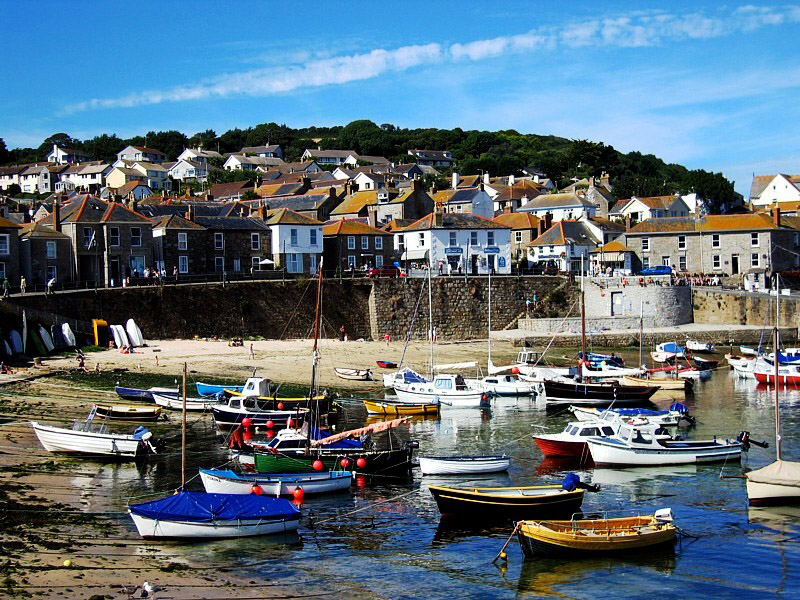
Irrelevant Photo: Boscastle, Evening.

Irrelevant Photo: Boscastle, Evening.

Now in Cornwall, and probably in the rest of Britain, before the invention of sat navs, people would leave home with a set of directions to a place they’d never been before and 70% of them were never seen again. On a dark night, you can see the faint gleam of their headlights passing like ghosts, still looking for a house called Craggy Bottom, which was supposed to be on an unmarked road somewhere off the A39.

The incident that made me a sat nav user was looking up directions to a meeting on MapQuest or Google Maps or something like that and reading, “Turn right on unmarked road.” Which unmarked road? They couldn’t tell me. Because that’s the thing about unmarked roads: They’re unmarked. It’s one thing if a friend says, “Turn after you pass the bungalow with the brown egg box out front,” but internet directions won’t give you that level of detail.

But sat navs have their own problems. First, you become dependent on them. They tell you to cross the roundabout, third exit, and you cross the roundabout, third exit. The next time you come the same way, do you remember that? Hell no. You need the sat nav again.

But the second problem’s more serious. In parts of Cornwall, they don’t work. Some years ago, Wild Thing and I were walking the dog past a ford and waved down a guy in a delivery van as he was about to leave a paved (and unmarked) road and go up an unpaved, washed out axle-breaker of a vague memory of a former road.

“You can’t get up that,” we told him.

“The sat nav says.”

I don’t think he quite finished the sentence. He had that blank, terrified look of someone who wasn’t taking in anything we said. Part of it would have been our accents—we couldn’t seem any less local if we carried signs saying “We’re not from around here”—and part of it would have been sat nav dependence. The rest, though? When a man doesn’t take in what a woman’s saying, it’s hard not to go back to the words man and woman and think, hmmm.

But never mind. We told him only a four-by-four could handle the hill he was about to go up. We told him he’d wreck the van. He told us the sat nav said.

We shrugged and watched him cross the ford and start up the hill. If a van can look fatalistic, I tell you, his did.

He was lucky. It was a rainy year and the mud was slick, so he didn’t get far enough up the hill to wreck an axle. He slid back, still looking blank and terrified, and he drove back the way he’d come. On foggy nights, I’ve seen his headlights pass me like ghosts, still following directions from his sat nav.

This kind of thing happens all over the country. Sat navs send massive damn trucks down streets that are so narrow they get stuck.  Really they do. They send cars down stairs. Some of the problems you couldn’t predict, but some of them—well, the truly crazy thing is that people do what they’re told. And yeah, I know I shouldn’t laugh but when I see some of the pictures I laugh anyway. It’s the oldest joke humanity knows: Somebody falls down. Follow the link and see if you don’t do the same.

We’re not, all told, a very nice species.

And maybe our sat navs know that, because with the detached serenity of gurus, they’ll spend hours talking us through the mazes we’ve laid down on the surface of the earth and call roads, and then, with no warning, they turn on us. Wild Thing’s first one did it in the middle of the Tamar Bridge—a long, high bridge connecting Devon and Cornwall.

“Turn left,” it commanded.

We came out of our sat nav trance and decided maybe that wouldn’t be a good idea, so she escalated.

“Turn left immediately.”

There really is a lot of water under the Tamar Bridge. And I’m not much good with either heights or water. We turned the sat nav off. It already had a history of going wild when we crossed the moors. If you’ve read the Brontes, you probably know about the moors as a metaphor for something wild and free and frightening, and our sat nav was in tune with all that. It would tell us, “In 18 yards [and it was always 18 yards], turn right.” Or left. In 18 yards, though, there was no road, only hedge. It had an image of us, I guess, breaking loose and driving wild and free across the fields.

Wild Thing retired it and bought a new one whose quirks are more predictable. But even so, near Scorrier both our new sat nav and everybody else’s try to kill people so consistently that the county’s put up a sign, in a panicky set of colors that they use for nothing else, saying, “Turn off sat nav.” The highway entrances were rerouted at some point and sat navs seize the opportunity to send cars the wrong way down exit ramps onto the wrong side of the highway.

So yeah, you need one around here. And you never turn your back on it.
A Clash of Words: Keeping My Vocabulary Pure

What does it take to keep my American vocabulary pristine here in the U.K.? Well, let me tell you a tale.

I was working on a post about those thingies people keep in their cars to tell them how to get where they want to go.

You’ll notice that I’m using technical language here: thingies. They’re called sat-navs here, and since I’m hell bent to maintain the purity of my American vocabulary, I wanted to know what they’re called in the U.S. so I could slip the word casually into my post.

Now, I admit that in the Wasting Your Time Sweepstakes, keeping a language or culture pure runs neck and neck with keeping white jeans clean. And for the record, I also admit that the belief that you can keep dirt off white jeans has done a lot less damage in the world than the notion of cultural purity. But I’m not claiming that any one set of words is better than any other, it’s just that I’m a writer and I need a matching set of words.

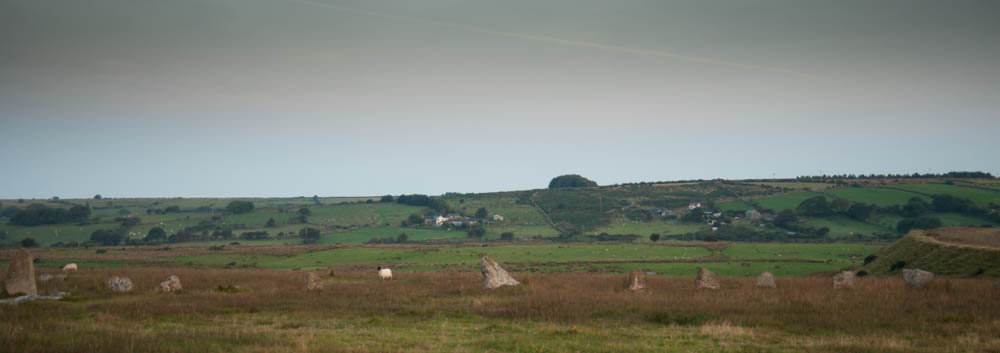
Irrelevant Photo: Stannon Stone Circle, by Ida Swearingen

Irrelevant Photo: Stannon Stone Circle, by Ida Swearingen

But we were talking about directional thingies. I seemed to remember that they’re called GPSes in the States, but I didn’t own one when I lived there, so I never called them anything. Who needed to? When you don’t talk about something, you don’t need a word for it.

But as I’m sure I need to remind you, we live in the age of the Internet, so I googled a bunch of terms that seemed vaguely relevant, and Google, in its wisdom, sent me to U.K. sites, even when I added U.S. to my search terms.

It’s great to have a browser that knows what I want better than I do. I remember reading an essay arguing that this is one reason the U.S. is so politically and culturally polarized: You can go online and never encounter a single opinion that you don’t already hold, because search engines only show you what they think you want to know. I won’t go as far as calling that a cause, but I doubt it’s helping much.

After getting diverted one too many times, I gave up and emailed T.—a virtual colleague from my days as a freelance copy editor—because only a fellow copy editor would understand why I cared.

She wrote back, “I usually refer to it as a GPS unit–but I’m low-tech when it comes to finding addresses and will often use a paper map in the car as our portable GPS is usually collecting dust in my husband’s office.”

I sympathized.

She also went online and checked the Best Buy website, which, just to be helpful used both names, but what I really trust is what she instinctively calls it: a GPS unit.

And with that, I can pretend my vocabulary hasn’t budged one inch in the eight plus years that I’ve lived here, when in fact it’s floating in the New York harbor and drifting west.

Measuring Butter in a Cornish Kitchen

I made a pound cake a few years ago and a friend asked for the recipe. I copied it for her, and a day or two later, she called up.

“What’s a stick of butter?” she asked.

I was afraid she understood it as a verb: Stick that butter where? The thought threw me enough that it took a bit of back and forth in my head before I got stick of butter translated.

“A quarter of a pound? Four ounces? Eight tablespoons?”

Irrelevant Photo: Cows.

Irrelevant Photo: Cows. They never heard of a stick of butter.

Butter here isn’t sold by the pound, and no one over a certain age thinks in ounces. But when the U.S.—or what later became the U.S.—was young and impressionable, Britain convinced its population to use a completely batty system of measurements: 8 ounces to a cup, 2 cups to a pint, 2 pints to a quart, 4 quarts to a gallon, but look out because ounces are both a measure of weight and a measure of volume but they’re not interchangeable, you just sort of have to know which one the recipe means. Sixteen ounces in a pound. We’re not going to get into bushels and hogsheads and their even more obscure friends and relatives, and I have no idea how many feet to the mile but, for no apparent reason, there are three to the yard. Then the British gave the system up and adopted the completely logical metric system. (Mostly. Car-related distances and speeds are still measured in miles. Go figure.) There was a predictable backlash from people convinced civilization was coming to an end, but by that’s faded away now, leaving us with no quarter pound and no ounces, although they do still use teaspoons and tablespoons sometimes. (Three teaspoons to a tablespoon, in case anyone asks.)

Even I’ve adapted. I stopped asking for a pound of lunchmeat at the deli counter, because even though they’re theoretically bilingual they always thought I was talking about currency—a pound’s worth. Which these days isn’t much. And since no one says half a kilo, I ask for 500 grams.

And I’m a vegetarian.

What does this have to do with butter? When you buy butter here, it doesn’t come marked into tablespoons because you subdivide it by the gram, which unlike the ounce is a measure of weight and only of weight. The packages are close enough to half a pound that I still think of them that way, but they’re not cut into sticks, the way god also intended, they’re sort of flattish and clunky. Hence my friend’s confusion. No one talks about a stick of butter here because there are no sticks of butter.

Sad, isn’t it?

If you plan to bake over here, you need kitchen scales—not just for butter, but for most ingredients, because they’re measured by weight. Of course, a few gifted cooks just know how much of an ingredient they need without having to measure. I knew a woman like that back in Minnesota. I asked her for her pancake recipe once.

“You start with enough milk for pancakes,” she said.

“Edith,” I said. “Never mind.”

British English and American English

If you browse the expat blogs, you’ll find gleeful posts tracking the dividing line between British and American English. And a wandering line it is. Are pants those things you wear under your jeans or are jeans one kind of pants? Is the fanny pack a bizarre medical procedure or a practical but geeky accessory? When you live your life in a semi-foreign language, all that stuff becomes important.

It also cues the kind of giggles you get when an eight-year-old has a chance to say “fart.”

Irrelevant Photo: Rocks near Minions, eroded by the wind. By Ida Swearingen

Irrelevant Photo: Rocks near Minions, eroded by the wind. By Ida Swearingen

But pants and fanny aren’t even on the real dividing line. Only I know what really divides the Englishes: It’s the use of that and which.

I know: Speaking of geeky. Only someone who’s worked as a copy editor even notices, never mind cares.

I have worked as a copy editor, though, and I do. American publishing follows Strunk and White’s Elements of Style, and British publishing doesn’t. The distinction has to do with lawnmowers. You never thought of lawnmowers as a grammatical concept? See what you missed out on? Example A: The lawnmower, which is in the garage, is broken. This means we have one lawnmower. Example B: The lawnmower that is in the garage is broken. This means we have more than one, so use the other. I left it on the dining room table.

British publishing doesn’t care about lawnmowers. This—to a recovering American copy editor—is as shocking as wearing your pants inside your trousers.

It all has to do with restrictive and non-restrictive clauses and is too obscure to bother explaining. Which is lucky, since I don’t trust myself to get it right. And (she said defensively) you can be a perfectly competent copy editor and not be able to explain any of it. All you have to be able to do is apply it. It’s like not being able to explain electricity but knowing how to charge your phone.

Legend has it that Strunk and White introduced the that/which division because they thought it would be useful, if only it could be pounded into millions of recalcitrant little heads. In other words, they weren’t telling us about something that already existed, and so the aforesaid heads resisted the distinction because it wasn’t native to the language. But the owners of those heads still manage to mow their lawns and figure out, when and if it matters, how many lawnmowers they have.

So the that/which distinction is arbitrary and unnecessary, and in the long run the spoken language will always win out against the silly twits who tell us what’s wrong with the way we speak. But having made a career—such as it was—out of knowing this sort of stuff, it’s painful to watch as entire country consign it to the dustbin of irrelevant grammar. Even if it belongs there.

On an emotional and philosophical level, I’m on the side of spoken English, in all its barbaric glory. I’m not impressed with formal writing, for the most part. I believe that the language gains its power from use and that the hair-splitters are fighting a rear-guard action. If you break the rules of grammar idiomatically and well, the force is with you. And, in case you care, so am I.

On the other hand, I’ve read enough tin-eared writing to value the rules of grammar. Not because they keep us from barbarism and illiteracy, but because they keep us from incoherence. So I’m passionately on both sides of this battle, and if it ever turns violent both sides will call on me to shoot myself as a traitor.

Pronunciation and British Geography

Let’s start out by all agreeing that English spelling is an invention of the devil—a being whose existence can only be confirmed by studying the way English is written.  The experts tell us that English spelling was systemized at a time when the pronunciation was still changing, so it’s correct enough for the way words were pronounced at the time. And I’m sure that’s true (sort of—it doesn’t allow for regional variations, but let’s keep this simple), but honestly, did we ever a letter like C when either an S or a K would have done just fine? If we needed it to spell chunk, couldn’t we have assigned it the CH sound and saved it for that alone?

Mousehole02

Mousehole, in Devon. Photo by Waterborough


So let’s agree that the spelling of a word isn’t a trustworthy guide to its pronunciation. Place names, though, are the real killers. Along the north Cornish coast is a town called Widemouth Bay, pronounced WIDmuth. Drive northeast and you come to Sandymouth and think, Right, that’s SANdimuth. Wrong. That’s SANdymouth. Go figure. (That’s an Americanism, by the way—something I found out only recently, when I used it and was met with a blank look.) Keep driving and you come to Woolfardisworthy, which has gone so far out of whack that the road sign actually gives the pronunciation: WOOLsery, only they don’t capitalize the accented syllable, so presumably you could think it was WoolSERRy. Or WoolserrEE. It makes as much sense as anything else. Go to the south coast and you’ll find Mousehole, pronounced MOWZul. A couple of years ago, I drove through a town called Towster (we’re not in Cornwall anymore, Toto, but the pronunciation problems carry over), which is pronounced TOASTer. Yes, the spelling and the pronunciation both make sense, in an English-language, devilish sort of way, but that only points out how little sense the spelling of toaster makes.

I expected to reach Coffee Pot in a few miles.

No one thought a town called Towster was funny except me. I was grief-stricken to be left alone with the joke.

Turn the British loose on American place names and they fall victim to their own language. Michigan becomes MITCHigan. (For all you non-U.S. readers, it’s MISHigun.) Houston becomes HOOSton. (It should be HYOUSton.)

Guys, you have no one to blame but yourselves.