Planning Thanksgiving in Cornwall

We’ve started planning our Thanksgiving party. The guest list is limited by the size of our house, which is a shame because we’d love to add more people. And since there’s no competition—no one says, sorry, but I have to go to my brother’s this year—almost everyone we invite is available. And it’s an American holiday, which gives it an element of cool here.

Our tradition, both here and back in Minnesota, is that we cook the turkey, cranberries, sweet potatoes, and pumpkin pie (usually; back in Minnesota, as D. got older he became a very good cook and he brought the pies), and we ask everyone to bring something. Which is where it gets interesting.

Pumpkin pie--with a neater crust than I make. Photo by the Culinary Geek from Chicago, courtesy of WikiMedia

Pumpkin pie–with a neater crust than I make. Photo by the Culinary Geek from Chicago, courtesy of WikiMedia

The first time we invited we invited M. and J. to our Thanksgiving in Minnesota, was the first time I understood how rigid the traditions are. J. isn’t from the U.S. but she was the cook in the family, and as they told the tale later, M. said “No, you can’t bring that” to everything J. suggested. Macaroni and cheese? No, you can’t bring that. Chocolate cake? No, etc.

So this year, a different J.—an American—told me she’d have to explain to P. that just because root beer floats are American doesn’t mean you can have them at Thanksgiving. I looked at the list of what people were bringing: leek gratin, cauliflower cheese, quiche. Don’t bother, I said. We’ve given up the battle.

The only traditional elements of the meal are the ones we make—turkey, cranberries, sweet potatoes, and pumpkin pie. And baking powder biscuits, which weren’t traditional in my family, but Wild Thing’s from Texas and will never say no to biscuits. The rest is all stuff that would get us all deported if we tried it in the U.S.

So we’ve evolved our own traditions, one of which is the meal isn’t traditional. A second involves me, the vegetarian, cooking a dead bird. Which hardly even strikes me as strange anymore. A third—one we’re trying to break—is that I make cranberry sauce and forget to set it out. A fourth is that we have to have at least one dessert that isn’t pumpkin pie, because although pumpkins grow here they’re considered a squash and people are, um, let’s say hesitant about eating it as a sweet. But we do have to have it. That’s tradition for you. Besides, a few of us like it.

Further Adventures in British English: The Letter U

The British love the letter U. They use it at every possible opportunity (neighbour, colour, flavour, savoury), and it drives some of my friends insane that Americans don’t. It’s one of those things: If you let it get to you, it will. Gleefully. If I have to write something in British, I assign myself a handful of U’s and I don’t stop writing until I’ve used them all. When I write in American, I now see tiny gaps in neighbor and color where the U isn’t: colo’r; neighbo’r.

He's been here before, but I can now offer some advice: Make your your spell check is set to the right language.

He’s been here before, but I can now offer some advice: Make your your spellcheck is set to the right language.

And no matter which country I’m writing for, my spell check is set to the other. To my embarrassment, it snuck a U into neighbor a while back, and I posted it on the blog, which T. (copy editor that she is, down to the bone) pointed out diplomatically. I felt like the carrier of an, admittedly mild, disease—U-itis. I don’t have the bug myself, but I did spread it.

Trying to Count the Cornish Wildflowers

Wild Thing and I hadn’t really seen the Cornish countryside until we discovered the footpaths, and the wildflowers bowled me over. I was living in Minnesota then, and when it isn’t frozen solid and buried under snow Minnesota is green and beautiful and all that, but you wouldn’t be tempted to call it lush. It’s too cold for too much of the year. What wildflowers grow there always struck me as self-effacing, somehow, as if they didn’t want call attention to themselves.

A lot the people are like that too.

T. and S., whose roots are in western Minnesota, swear there were more wildflowers when the farmers didn’t use pesticides as enthusiastically as they do these days, and I’m sure that’s true, but still, Minnesota’s a bit like the Puritans were: It’s never going to encourage a wild profusion of stuff it doesn’t absolutely need.

Montbretia, pronounced mombresia. Or something like that. Considered not just a weed but a thug. Isn't it gorgeous?

Montbretia, pronounced mombresia. Or something like that. Considered not just a weed but a thug. Isn’t it gorgeous?

So, while I was on parole from Minnesota, I’d walk along the footpaths in Cornwall and try to count how many kinds of wildflowers were in bloom. To understand what a misguided undertaking this was, you have to know that numbers and I are not on good terms. Ask me to remember the number 3 for more than a minute and I’ll need to check my notes. Ask me to solve a word problem (Train A left station B at 3:44….) and I’ll weep. Or at least I’ll want to. So voluntarily counting anything indicates an extreme state of mind. In this case, it was extreme happiness. So much color. So much life pushing up out of the ground. I’m tempted to say so much unnecessary beauty, but yeah, the ecosystem, the necessity of so many things we humans don’t think are necessary because we can’t make any immediate use of them. All of that. Still, you can see what I’m getting at.

The problem with counting wildflowers was that first, if I’m distracted at all, I can’t reliably count from 1 to 70 without losing my way. Did I say 70? Make that 10. But second, and more to the point, I couldn’t keep track of which flowers I’d already counted. If you don’t have names for things, it turns out, it’s hard to remember them. Little yellow flower, bigger yellow flower, little yellow flower that isn’t like the first yellow flower because it has four petals, although maybe the first one did too because I wasn’t noticing petals, only color and size at that point. Little yellow flower that also has four petals but they’re pointy. Little yellow flower that I might have counted already but I don’t think so.

I often wonder how animals remember in the absence of words. Of course, as far as I know they’re not counting, but they do other complex things, like remembering smells and places and long routes. It’s not all looking at a plant and thinking either yumm or bleah, that tastes foul.

Anyway, I bought the first of my wildflower books and began attaching names to what I was seeing. And the odd thing is that this allowed me to see them better—to notice and then remember petal shapes, leaf shapes, the ways leaves grew on the stem, and from there stem shapes and whether the leaf or stem was hairy or smooth. I’m still useless with some of it. Talk of sepals sends me into a panic. Heights given in centimeters might as well be written in an alphabet whose origins aren’t on this planet for all the good they do me.

That first book led to the next book, which was organized differently and promised more, better, deeper. And another book after that. One that had photographs. Another that had drawings. Each one had advantages and drawbacks. Then one organized by color, which I’d always thought would be simpler but still leaves me flipping through page after page, looking for a match for something new that I’ve brought home. Or something that isn’t new—I know I’ve seen it before—but I’ve forgotten its name since last year at this time.

I’m still a barbarian about it all. One of my books (and I pulled it out of the shelf at random) lists 15 kinds of violet, including common dog, early dog, pale dog, heath dog, hairy, sweet, and dame’s. And speedwell? Alpine, blue ivy-leaved, fingered, germander, marsh, spiked, thyme-leaved, wall, water, wood, and on until you reach 25 of them. I’ve tried to see the differences, really I have, but I’ve decided to be happy to look at the damn plant and say, “Violet; speedwell; close enough.”

Although I do love being able to identify the ivy-leaved toadflax.

No matter how many I learn, though (and I haven’t learned that many), there are always more.

If this sounds geeky, that’s because it is geeky, but it’s not about checking off how many flowers I’ve seen or how many names I can recite. By learning the flowers, I’ve learned a new way to watch the seasons roll past. The first wild primroses come into bloom when it’s still winter, and they tell me spring’s coming. Then the celandine comes out. It’s a low-growing yellow flower. Spring progresses with each new flower, and I think of it as a yellow season.

Damn, it’s beautiful here.

Mrs. Baggit Struggles to Keep Britain Tidy

The first time Wild Thing and I visited the U.K., Maggie Thatcher was the prime minister and whatever ministry was in charge of roadsides had planted them with metal signs saying, “Mrs. Baggit Says, ‘Keep Britain Tidy.’”

That bit of brilliant public relations was finished off with a picture of a tied-off bag with a face—Mrs. Baggit’s, presumably, happily stuffed with garbage. It was impossible not to connect her image with Mrs. Thatcher’s, and some small part of my brain continues to insist, in spite of all evidence to the contrary, that Thatcher’s real name was Maggie Baggit.

Irrelevant Photo: Rose Behind Bars, by Ida Swearingen

irrelevant Photo: Rose Behind Bars, by Ida Swearingen

We did a lot of driving on that trip, so we spent a lot of time looking at the signs and finding funny voices to quote them in.

“Mrs. Baggit says…”

Mrs. Baggit had a lot to say on that trip, all of it scold-y, although I can’t remember exactly what it was anymore. Except, of course, for “Keep Britain Tidy.”

To understand why that kept us amused, you need to know that tidy sounds different to an American ear than to a British one. To me, tidy is fussy. It’s small. All I have to do is think about it and I want to make bitsy motions with my fingertips, as if I’m cleaning up a dollhouse. As far as I can tell, none of that is true in the U.K. It’s just a word here. It means neat and doesn’t make your fingers do funny things in the empty air, although H. tells me the Mrs. Baggit part sounds fussy.

I should stop here and admit that when I started that last paragraph I was going to speak for an entire nation: For us (us here being all Americans—every last differentiated, argumentative one of us) tidy is fussy. Then some minimal sense of modesty (not to mention accuracy) caught up with me and I thought it might be nice if I didn’t mistake my mind for the mind of an entire, not to mention large and varied, country, even if I did grow up and live most of my life there. So I’ve backed off a bit. But I still hold that it has different overtones to an American ear than to a British one. That much, I think, is fair.

Language is like that. We think of it as a solid, but it’s not. It’s one of those slow liquids, like Silly Putty, that changes shape depending on what holds it, or who.

So how successful was the campaign? I never saw British roadsides before it started, so I can’t make a comparison, but I know this much: If you look for litter here, you’ll find it. And if you don’t look for it, you’ll find it anyway. I’ve seen places with more, but Mrs. Baggit hasn’t stopped the litterbugs mid-throw.

And who in their right mind thought she would?

Spider Season in Cornwall

Spiders have moved into M.’s house, something he’s mentioned because he’s phobic about spiders and even with what he calls the arachnavac he still feels at a disadvantage. Even though he’s in the neighbourhood of six feet tall and none of them even come close. But being in possession of a phobia or two myself, I won’t try to make too much sense out of his. These fears don’t follow the rules of logic, they simply are.

But back to spiders: They’re moving into our house as well as his.

A Spider–Not One of Ours. Photo by Stefan-Xp

On an expat forum, I read a comment by an American asking, more or less, “What is it with all these spiders in the shower?” He was in some other part of the U.K., so based on that small and unscientific sample, I’m going to be reckless and say this is a nationwide issue.

A few years ago, I read that if you put a horse chestnut in every corner of a room, they’ll keep spiders out. This struck me a vaguely reasonable, since I happen to know that chestnut wood was used in the beams of at least one French chateau because it was thought to deter spiders from building webs.

Notice the weasel-word “thought” in that sentence. I didn’t notice it myself when I heard about the beams. I also didn’t—and still don’t—know how closely related the chestnut is to the horse chestnut. Still, when a catalogue slid through my door offering a horse-chestnut scented, spider-deterring spray, I bought a can. And sprayed around the windows most of that summer—or for as long as I remembered and could be bothered, whichever came first, and you can pretty well guess which that was.

I spent the rest of the summer sweeping cobwebs off the windows, just as I have every summer since I moved here. But I hadn’t been meticulous about using the spray, so I couldn’t have sworn the it didn’t work.

The next fall, Wild Thing and I were in Derbyshire (which in case you’re not British you’ll never guess is pronounced Darbysheer, but that belongs in another post), and horse chestnuts lay around for the taking. And take I did—enough for our house and a different M.’s as well, since she also has a thing about spiders. I didn’t know about the other M.’s spider phobia at the time or I’d have brought home all the horse chestnuts in Derbyshire.

Back in Cornwall, I set horse chestnuts in every corner of damn near every room, and M. did the same. It was late fall by then, and the spiders had already moved in, so it was hard to tell if the horse chestnuts worked. Winter came. A mouse came. The mouse found a horse chestnut and thought it had moved into the promised land.

The mouse got tossed back outside, without its prize horse chestnut.

The horse chestnuts waited for spring, and then for summer, and then for fall, when the spiders get serious about moving in.

I wish to report that horse chestnuts do not keep spiders away, and since they make mice very happy I’ve thrown ours out.

Every few days, I run around with a long-handled duster and dislodge as many spiders as I can from the ceiling and walls and, when I can, I carry them outside. Where for all I know they die of cold, but I’m not in charge of nature’s plan. At a certain point in this world of ours, you just have to turn off the empathy spigot. The trick is not to turn it off too soon and not to send yourself into meltdown by keeping it funning at full force every moment of every day. Sometimes I’m reduced to smashing the little bastards with my hand, which for all I know is kinder than letting them die of cold. Or quite possibly not. A certain number of them, though, hunker down in corners where I can’t get them out with a duster, and where the arachnavac won’t even get them loose. (Yes, I have arachnavacced. It strikes me as a miserable way for a creature to die, but I’ve done it.)

One particularly big spider lives down a duct that covers a heating pipe, and last winter I got serious about trying to get rid of it and thought I had, but I saw it again last week. Unless it’s another one. If I were arachnophobic, I’d be pretty well phobed out by it.

When I lived in the U.S., we never had spider season, and I don’t know if that’s because I always lived in cities (I’m way out in the country these days) or because the parts of the country I lived in didn’t have as many spiders or if the U.K. is some sort of spider capital to the world. If you’re in the mood to comment, I’d love to hear about what it’s like where you are. Do you have spiders moving in with you in the fall? Does it happen in cities or only in the countryside? Have you found a way to keep them out?

A Clash of Words: Keeping My Vocabulary Pure

What does it take to keep my American vocabulary pristine here in the U.K.? Well, let me tell you a tale.

I was working on a post about those thingies people keep in their cars to tell them how to get where they want to go.

You’ll notice that I’m using technical language here: thingies. They’re called sat-navs here, and since I’m hell bent to maintain the purity of my American vocabulary, I wanted to know what they’re called in the U.S. so I could slip the word casually into my post.

Now, I admit that in the Wasting Your Time Sweepstakes, keeping a language or culture pure runs neck and neck with keeping white jeans clean. And for the record, I also admit that the belief that you can keep dirt off white jeans has done a lot less damage in the world than the notion of cultural purity. But I’m not claiming that any one set of words is better than any other, it’s just that I’m a writer and I need a matching set of words.

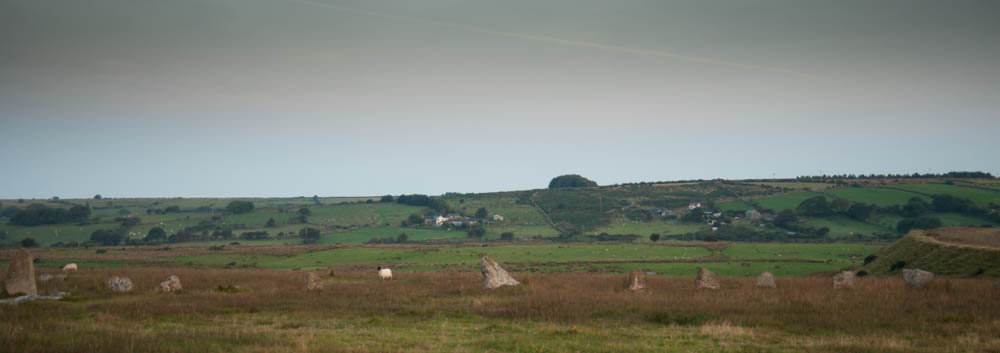
Irrelevant Photo: Stannon Stone Circle, by Ida Swearingen

Irrelevant Photo: Stannon Stone Circle, by Ida Swearingen

But we were talking about directional thingies. I seemed to remember that they’re called GPSes in the States, but I didn’t own one when I lived there, so I never called them anything. Who needed to? When you don’t talk about something, you don’t need a word for it.

But as I’m sure I need to remind you, we live in the age of the Internet, so I googled a bunch of terms that seemed vaguely relevant, and Google, in its wisdom, sent me to U.K. sites, even when I added U.S. to my search terms.

It’s great to have a browser that knows what I want better than I do. I remember reading an essay arguing that this is one reason the U.S. is so politically and culturally polarized: You can go online and never encounter a single opinion that you don’t already hold, because search engines only show you what they think you want to know. I won’t go as far as calling that a cause, but I doubt it’s helping much.

After getting diverted one too many times, I gave up and emailed T.—a virtual colleague from my days as a freelance copy editor—because only a fellow copy editor would understand why I cared.

She wrote back, “I usually refer to it as a GPS unit–but I’m low-tech when it comes to finding addresses and will often use a paper map in the car as our portable GPS is usually collecting dust in my husband’s office.”

I sympathized.

She also went online and checked the Best Buy website, which, just to be helpful used both names, but what I really trust is what she instinctively calls it: a GPS unit.

And with that, I can pretend my vocabulary hasn’t budged one inch in the eight plus years that I’ve lived here, when in fact it’s floating in the New York harbor and drifting west.

Measuring Butter in a Cornish Kitchen

I made a pound cake a few years ago and a friend asked for the recipe. I copied it for her, and a day or two later, she called up.

“What’s a stick of butter?” she asked.

I was afraid she understood it as a verb: Stick that butter where? The thought threw me enough that it took a bit of back and forth in my head before I got stick of butter translated.

“A quarter of a pound? Four ounces? Eight tablespoons?”

Irrelevant Photo: Cows.

Irrelevant Photo: Cows. They never heard of a stick of butter.

Butter here isn’t sold by the pound, and no one over a certain age thinks in ounces. But when the U.S.—or what later became the U.S.—was young and impressionable, Britain convinced its population to use a completely batty system of measurements: 8 ounces to a cup, 2 cups to a pint, 2 pints to a quart, 4 quarts to a gallon, but look out because ounces are both a measure of weight and a measure of volume but they’re not interchangeable, you just sort of have to know which one the recipe means. Sixteen ounces in a pound. We’re not going to get into bushels and hogsheads and their even more obscure friends and relatives, and I have no idea how many feet to the mile but, for no apparent reason, there are three to the yard. Then the British gave the system up and adopted the completely logical metric system. (Mostly. Car-related distances and speeds are still measured in miles. Go figure.) There was a predictable backlash from people convinced civilization was coming to an end, but by that’s faded away now, leaving us with no quarter pound and no ounces, although they do still use teaspoons and tablespoons sometimes. (Three teaspoons to a tablespoon, in case anyone asks.)

Even I’ve adapted. I stopped asking for a pound of lunchmeat at the deli counter, because even though they’re theoretically bilingual they always thought I was talking about currency—a pound’s worth. Which these days isn’t much. And since no one says half a kilo, I ask for 500 grams.

And I’m a vegetarian.

What does this have to do with butter? When you buy butter here, it doesn’t come marked into tablespoons because you subdivide it by the gram, which unlike the ounce is a measure of weight and only of weight. The packages are close enough to half a pound that I still think of them that way, but they’re not cut into sticks, the way god also intended, they’re sort of flattish and clunky. Hence my friend’s confusion. No one talks about a stick of butter here because there are no sticks of butter.

Sad, isn’t it?

If you plan to bake over here, you need kitchen scales—not just for butter, but for most ingredients, because they’re measured by weight. Of course, a few gifted cooks just know how much of an ingredient they need without having to measure. I knew a woman like that back in Minnesota. I asked her for her pancake recipe once.

“You start with enough milk for pancakes,” she said.

“Edith,” I said. “Never mind.”

British English and American English

If you browse the expat blogs, you’ll find gleeful posts tracking the dividing line between British and American English. And a wandering line it is. Are pants those things you wear under your jeans or are jeans one kind of pants? Is the fanny pack a bizarre medical procedure or a practical but geeky accessory? When you live your life in a semi-foreign language, all that stuff becomes important.

It also cues the kind of giggles you get when an eight-year-old has a chance to say “fart.”

Irrelevant Photo: Rocks near Minions, eroded by the wind. By Ida Swearingen

Irrelevant Photo: Rocks near Minions, eroded by the wind. By Ida Swearingen

But pants and fanny aren’t even on the real dividing line. Only I know what really divides the Englishes: It’s the use of that and which.

I know: Speaking of geeky. Only someone who’s worked as a copy editor even notices, never mind cares.

I have worked as a copy editor, though, and I do. American publishing follows Strunk and White’s Elements of Style, and British publishing doesn’t. The distinction has to do with lawnmowers. You never thought of lawnmowers as a grammatical concept? See what you missed out on? Example A: The lawnmower, which is in the garage, is broken. This means we have one lawnmower. Example B: The lawnmower that is in the garage is broken. This means we have more than one, so use the other. I left it on the dining room table.

British publishing doesn’t care about lawnmowers. This—to a recovering American copy editor—is as shocking as wearing your pants inside your trousers.

It all has to do with restrictive and non-restrictive clauses and is too obscure to bother explaining. Which is lucky, since I don’t trust myself to get it right. And (she said defensively) you can be a perfectly competent copy editor and not be able to explain any of it. All you have to be able to do is apply it. It’s like not being able to explain electricity but knowing how to charge your phone.

Legend has it that Strunk and White introduced the that/which division because they thought it would be useful, if only it could be pounded into millions of recalcitrant little heads. In other words, they weren’t telling us about something that already existed, and so the aforesaid heads resisted the distinction because it wasn’t native to the language. But the owners of those heads still manage to mow their lawns and figure out, when and if it matters, how many lawnmowers they have.

So the that/which distinction is arbitrary and unnecessary, and in the long run the spoken language will always win out against the silly twits who tell us what’s wrong with the way we speak. But having made a career—such as it was—out of knowing this sort of stuff, it’s painful to watch as entire country consign it to the dustbin of irrelevant grammar. Even if it belongs there.

On an emotional and philosophical level, I’m on the side of spoken English, in all its barbaric glory. I’m not impressed with formal writing, for the most part. I believe that the language gains its power from use and that the hair-splitters are fighting a rear-guard action. If you break the rules of grammar idiomatically and well, the force is with you. And, in case you care, so am I.

On the other hand, I’ve read enough tin-eared writing to value the rules of grammar. Not because they keep us from barbarism and illiteracy, but because they keep us from incoherence. So I’m passionately on both sides of this battle, and if it ever turns violent both sides will call on me to shoot myself as a traitor.

True Confessions: I Misread My Tax Disc

The is a P.S. to my last post, which was on bureaucracy and trying to pay the tax on my car. Just after I posted it, I gathered up every vaguely relevant piece of paper I could get my paws on and presented myself at the post office, hoping to convince an actual human being that my car was real.

For anyone who doesn’t live in the U.K., I should explain: The post office isn’t just a post office. And it’s capitalized—the Post Office. Sorry. I’m just a lower-case sort of person. The Post Office is also a bank and a place to pay some of your bills and some of your taxes. In a village, it’s not a bad place to get gossip, two onions, and a container of milk, because it’s also a small store. So going to the Post Office wasn’t a measure of how far around the bend I’d gone but (at least in my mind) a clever attempt to outwit computerized insanity.

But I had to go to a larger, non-onion, non-gossip Post Office, because our local sub-Post Office can’t handle car taxes anymore. I’m sure that makes sense to someone and I doubt it would to me if they explained it.

Irrelevant Photo: The Cornish Coast

Irrelevant Photo: The Cornish Coast

I talked with a very nice woman, who scanned my eleven-digit number, told me—with just the slightest air of panic, as if I might get dangerous any moment—that she didn’t need the rest of the papers I was toting, and began the process of registering my car.

I’d promised myself that I wouldn’t tell her the tale about how the computer wouldn’t recognize my car, but it took less than a minute before the words were out of my mouth. You know how that works. I know you do. She didn’t refuse to go any further, though. She laughed. Maybe that was the point where she decided I was safe to have around.

Or at least entertaining. There was no one on line behind me.

She called someone else over, and they looked at the screen together.

“When does your tax run out?” she asked.

“On the twelfth.”

I’ll summarize, because the conversation was long and I don’t remember most of it anyway: Car taxes can’t run out on the twelfth. They run out at the end of the month. Any month. Whatever month. If I saw a twelve on the disc, it must run out in December.

I was fairly sure it didn’t, but—in that strange way that you can believe two opposing things at once—I also believed it must. Otherwise how did twelve come into the conversation?

Have I mentioned that there’s nothing involving numbers that I can’t screw up?

I could, she told me, go ahead and pay the tax, but if there was an overlap I’d be paying double for those months. For a fleeting moment, the idea appealed to me. It would be done. Even if I paid double for eleven months, I wouldn’t have to think about it again until—well, whatever September plus eleven comes to.

Or twelve. Wouldn’t that be twelve?

I asked her something—I can’t remember what—that she could only answer if the second person came back from doing whatever he was doing, which involved another window, Canadian dollars, U.S. dollars, and time.

We waited. She looked at her screen. A line was building up behind me.

“It’s not showing up as expired,” she said.

I think she told me that in a couple of different ways before I understood: At the very least, the car’s okay until the end of this month. It hasn’t expired. It can’t expire on the twelfth.

“They’ll send you a letter,” she said.

“They still do that?”

She said they do. I’m not sure I believe her, but it would be very sensible if she turned out to be right.

“Why don’t I wait, then?” I said.

She handed me back the one bit of paper she’d actually needed and I moved aside to fit it back into my folder, thanking her as I went. Recalcitrant bits of paper were trying to escape and make their way back to her window, but I wrestled them down, then turned to everyone still in line and apologized for holding them up. It was—for reasons I can’t define—a very un-British moment and I had an odd glimpse of myself as a street entertainer. I had to stop myself from taking a bow.

No one had yet moved up to the window I’d vacated. They were waiting.

“Can I help who’s next?” she said.

I finally got to my car and looked at my tax disc. They’d shown me how to read it, so it almost made sense this time. It expires at the end of September. There isn’t a twelve to be seen.

Bureaucracy, U.K. Style vs. U.S. Style

I do love bureaucracy. Wild Thing swears that customer service in general and web sites in particular are worse in the U.K. than in the U.S., but I’m not sure she’s right. If anyone wants to weigh in with an opinion, I’d love to hear it.

My senior rail card runs out in not so many days, and I’ve been trying to renew it. Online. On the phone. By intense psychic messages. Quick, because if I can’t get this done before it expires I have to drive 40 minutes to renew it in person by presenting proof of my existence, my age, and my warm feelings toward Network Rail.

I begin online. I still believe this will be easy, and I answer their questions.

Password? I get that on the second try.

Renew? Yes.

One year? Three years? A thousand years? Oh, a thousand. Think of the discount.

 

Irrelevant Photo: Boat. Photo by Ida Swearingen

Irrelevant Photo: Boat. By Ida Swearingen

“We save your details at every step,” the second or third page chirps at me. “Just log back in to pick up where you left off.”

It doesn’t tell me this, but I’ll damn well need to pick up where I left off because I won’t be able to finish on this visit. I’ll be coming back and picking up where I left off until I’m so old I qualify for a SuperSenior Rail Card. Which doesn’t exist yet. They’ll introduce it just for me.

But I don’t know that yet. In all innocence, I move to the next page, fill in my credit card details, and hit the Irretrievable Commitment button. The internet takes a few moments to contemplate the obesity of the universe and comes back with a message saying my card’s been rejected.

Well, that card’s difficult. Sometimes I want to buy things that the issuing bank doesn’t think I need. It’s the strict parent. But I have another card—the indulgent parent—and I enter that one.

It won’t take that either.

I call and we go through all the same details. When we run out of details, the guy I’m talking to says their payment system’s down. But he can give me a number so we can pick up right where we left off.

He couldn’t tell me this at the beginning of the call?

I write the number down on a shred of paper in the morass I call a desk. I keep a pad on the desk—for all I know, I keep several—but it sank to the bottom months ago, so a shred will have to do. He tells me to call back in an hour.

But I’m no longer the sugar-fed fooI I was at the beginning of the process. I wait a full day, then go back to the web site. Most of my information really is still there. I fill in what’s missing and hit Buy Rail Card.

I get a message saying I already have one. I don’t, but there’s no one to argue with and I’m locked out of the payment page.

I call and, in a rare moment of good organization, find my transaction number and read it out. Just to confirm that I am who I say I am, the man I’m talking asks for my name, my address, my date of birth, and everything the first guy asked. But it’s okay because we’re saving time here and it’s much more convenient.

Then he tells me the payment system’s down—either again or still, I don’t have the heart to ask which. I can call back in 45 minutes.

I wait another day and try the computer. When I get to the message saying I already have a Senior Rail Card, it suddenly hits me that maybe I really do. Maybe my transaction of two days ago went through. Maybe my transaction from two days ago went through twice, once on each card. I may now have two rail cards. I may have to prove I’m over 120. This worries me, as does the possibility of being charged twice for my, ahem, discount card.

I don’t call. I’ve lost the magic number that saved me eons of time, besides which I lack the moral fortitude. Besides, I may really have a rail card so I should wait to see if it comes in the mail.

The next morning, for a change of pace, I go online to renew the tax disc on my car. In the past, we’ve been able to do this at the post office, but come October this has to be done online and we won’t get an actual physical disc to put in the car windshield, it’ll all be tracked by computer, because computes are infallible. If we fail to register our cars, we’ll be fined £1,000 pounds and hung by the neck until very, very sorry.

It’s not October yet, so I could still go to the post office, but as far as I understand it—which is not very far—I’ll have to register online by October anyway, so why not get it all done at once?

Under the old system, every car owner has gotten a reminder letter, but to save money in this age of budget cuts these are being stopped, and the only warning has been a bare few back-page newspaper articles and whatever gossip we’re lucky enough to pick up. And the newspaper articles weren’t all that helpful. Exactly what were we supposed to do and how? They didn’t say. They probably don’t understand it either. But we are all going to be in a lot of trouble if we don’t do it. In other words, the new system is being introduced with all the competence I’ve come to expect of the current government.

Just the day before, I asked at our repair shop, figuring, you know, cars, registration, they’d know this stuff. They hadn’t a clue and of the two women at the counter, one’s registration was about to run out and she was catching that first panicky whiff of trouble herself. It smelled like the burning-rubber-on-the-highway scent that tells you your car’s about to do something unfriendly, like catch fire maybe.

So they couldn’t help me. I can count only on myself this sunny morning. After googling several wrong terms, I find the right section of the right department of the right government website and I enter the eleven digit number from my log book.

The web site would have also accepted a different number, I think it was thirteen digits, from the letter they didn’t send me, but since they didn’t send it this year—well, just because they didn’t send it doesn’t mean they have to stop asking, does it?

I entered my information. The website reported that my car doesn’t exist. But it’s okay, because they have a phone number.

I dial. The system is automated and I punch in my eleven-digit number. I’m told that my car doesn’t exist but that I may have punched the numbers in wrong. I didn’t, but there’s nothing involving numbers that I can’t screw up, so I try again, checking each digit as I add it. Nope. I try a third time. At the end, surely  they’ll have pity and let me talk to a human being. But in these days of budget cuts, human beings are like my car: They don’t exist. I’m no longer the system’s problem. Goodbye. I have a non-existent car. I have a tax disc that’s about to go out of date. I have a phone and a computer and neither of them will do me any good.

The Department of Non-Existent Car Registration is going to hang me by the neck until very, very sorry.

Your honor, I’m already sorry. Very extremely sorry. And I have a magic number, somewhere, from Network Rail. Couldn’t I read that out and save us all some time and trouble?

I need a break, and since the letter carrier’s come and gone without bringing my imaginary rail card, I dial the rail card line. I wait for it to ring and go blank about what I’m trying to renew. I gaze at the shreds of paper on my desk. Call Simon, one says. Write Emily piece, another advises.

I understand these, but I still can’t remember who I’m calling.

An automated voice says something about rail cards. Yes! Rail cards! I need a rail card! I punch 5 without waiting to hear my choices. That’s how well I know rail cards. A man answers and I ask if the payment system’s working.

“As far as I know,” he says.

I’d kind of hoped for a yes, but I read out my magic number, which has resurfaced, and he asks for my name, my address, my date of birth. We save more and more time. I give him my credit card number. He tells me my card will arrive in three to five days. By which time I may have found a way to convince someone that my car’s real. Or that I don’t have a neck and am therefore exempt from punishment.

Tomorrow I have to do something about my U.S. voter registration. I sent the form in, but I just checked online and I’m not listed.