
Before we get going, could we have a brief moment of thanks to Britain’s recent governments? Through several recent prime ministers, their ongoing strength has been their ability to give satirists and unofficial wiseacres an endless supply of material.
[ ]
Are we done being grateful? Good. Let’s get down to business.
Many and many a month ago. Boris Johnson set up a commission to look into how the government had handled the Covid epidemic.
Why did he do that? Probably because it wouldn’t meet for a long time and wouldn’t report back for an even longer time, and meanwhile it would look like he’d done something, thereby allowing him to tell those pesky relatives of the pandemic’s dead that he’d taken care of the problem. And also possibly because he was deluded enough to think the commission would give him an A+, or at least if he took the pandemic pass/fail, a passing grade.
Either way, the thing about long times is that eventually even the longest of them will end, and the commission is now in high gear and has demanded the unedited versions of Johnson’s notebooks and WhatsApp messages. Johnson, of course, is no longer prime minister–in fact (see below), since I started writing this, he’s put the lid on the trash can that was his career as an MP and is just some private schmuck of a citizen, like the rest of us–so it was the current government that responded to the demand.
No, the government told the commission, you can’t have the full versions. Too many irrelevancies to trouble your little brains. We’ll sort through them for you and give you edited versions. You’ll like them better. They’re shorter.
To which the commission replied, Are you fuckin’ kidding us?
The italics there are to show–in case you managed to wonder–that those aren’t actual quotes. Both sides have been more diplomatic and to have kept sober and serious faces when they said whatever it was they actually said.

Irrelevant photo: A lily. The name starts with a Z, but that’s as close as I can get.
The two sides tossed messages back and forth over the fence a few times until the commission changed tactics and threw over a subpoena and the government went to court to keep the commission–which its own party set up, remember–from getting its hands on what we can only assume is something juicy, since as soon as someone says you can’t see something, every last one of us thinks it’s worth seeing.
Before the courts had a chance to consider the issue, never mind rule on it, though, Johnson offered the commission his phone, complete with its unedited WhatsApp contents.
Why would he do that? Could it be because he’s not the prime minister anymore and the person who now is helped trigger his downfall?
Is anyone really that petty?
You bet your overworked word processing program that some-unspecified-one is.
How much does Johnson’s offer mean? It’s hard to say. He had a different phone early in the pandemic, and it’s–um, I’ve lost track of who has it. Johnson? The government? The tooth fairy? Does it matter? It can’t be turned on because of security issues: because the phone number had been publicly available for years, it’s a security risk and can only be turned on in a secure location. Turn it on in the wrong place and children throughout the land will be told, inaccurately, that the tooth fairy does not, in any literal sense, exist.
The government also has Johnson’s notebooks (unless the tooth fairy’s grabbed them too) and isn’t anxious to release the full version of those either.
If Johnson’s willing to turn over his phone, why does our prime minister du jour, Rishi Sunak, have a problem with handing over the rest of it? Well, it sets a precedent, see. The commission might ask for his–that’s Mr. du Jour’s–notes and messages next. Besides, who knows what Johnson said about him? Or anyone and anything else. Johnson’s not known for his discretion.
The more official argument is that ministers should be able to discuss policy freely, without the fear of being overheard. They need to say–as Johnson did–things like, “Let the bodies pile high in their thousands,” without worrying that they might offend the delicate sensibilities of people whose bodies might end up in those piles.
The Sunak part of the picture
It seems fair to guess that Sunak has no problem with the commission unraveling Johnson’s reputation (if he still has one) but doesn’t want his own tangled up with it. Sunak likes to present himself as having heroically saved the economy during the pandemic.
“I successfully helped 10 million people protect their jobs and the economy from Covid,” he said, apparently not noticing that he set up that sentence so he needed 10 million people to help him do that.
Part of Sunak’s heroic effort was the Eat Out to Help Out program, which may well have given the virus a nice bump by tempting unmasked people into public spaces where they could share both appetizers and germs. That one thing (the bump in case numbers) follows another (the program) isn’t proof that the Thing 1 caused Thing 2, but it might make a person look at the possibility that it did. And the commission could just be moved to.
Should he have known at the time that the program was risky? I dunno. I spotted the problem, and I didn’t have his access to epidemiologists. I’m just some damn fool with a computer and an internet connection.
A deep dive into the unedited messages and notes may also show other ways Sunak–along with Johnson and the rest of the government–ignored scientific advice. And may not. At this point, for all we know they could show that the entire government was taken over by shape-shifting lizards bent on the destruction of the planet for reasons that we don’t need to make clear because we’re moving the plot along so fast no one will notice.
I think I stole that lizard thing from a Dr. Who episode, so don’t blame me if it’s not entirely convincing.
Johnson’s resignation
Now let’s come back to that MP business: Boris Johnson is not only no longer Britain’s prime minister, he’s no longer a Member of Parliament. He didn’t exactly leave of his own free will–an investigation (different investigation; if investigations were wheels, we could catch any bus we wanted right now)–
Where were we? Johnson saw the report of an investigation into whether he misled parliament about breaking the Covid regulations the rest of the country was expected to follow, and having seen it, he resigned. If he’d waited around, he’d have gotten pushed, so this wasn’t exactly a free choice.
That will trigger a by-election–a local election to replace him–and that will give Rishi du Jour a pretty sharp headache, because numbers aren’t looking good for the Conservatives just now.
A couple of Johnson supporters have also resigned as MPs, which will trigger more by-elections, but it’s hardly been a flood. In fact one of them, Schrodinger’s MP–having said she was stepping down with “immediate effect,” which means right this second, you hear me?–hasn’t officially stepped, at least not at the moment I’m writing this. It’s anyone’s guess whether she’ll bail out or not. Stalling like this makes life marginally more difficult for the prime minister, who’d like to clear all those nasty by-elections out of the way at once so he can go about Tthe business of convincing the country that he leads a marginally sane political party.
The tooth fairy was expected to step down but has made no statement as yet.
Politicians, government officials, and phones
All this raises the question of why politicians don’t set up their WhatsApp groups to delete messages after seven days, and if that’s a question (it’s not exactly, but let’s not quibble) it’s not one I can answer. Maybe they have an exaggerated sense of their own importance, and therefore of their messages’ importance. And of their phones’ importance, because they hold historic documents, after all. They mustn’t fall into the wrong hands, but heavens to an ice cream sundae, they do have to preserve those messages.
If we’ve established that, I’m about to cheat and tell you the story not of a politician but of an food inspector in India who was taking a selfie at a reservoir (he was on vacation, so he wasn’t doing this wasn’t on government time) and managed to drop his phone in the reservoir.
It happens. I once dropped mine down the toilet. I wasn’t on a call at the time, so I missed my chance stick my head into the opening and yell, “Can you hear me now?”
The food inspector ordered the reservoir drained. Once enough water to irrigate 1,500 acres of land had been wasted during scorchingly hot weather, he got his phone back.
It was unusable.
As soon as I’m done here, I’m going to see if he’s eligible to be our next prime minister. He’s in the wrong country, but I’m not sure that rules him out. See, we have this unwritten constitution here in Britain, so who knows what it actually says?
But if we’re talking technology, what about chatbots?
They’re harder to drop down the toilet, being immaterial and all, but they can drop their users down the pan easily enough, which is what happened to a lawyer who asked ChatGPT to help him prepare a case. His client was suing an airline, and the chatbot cited Martinez v. Delta Air Lines, Zicherman v. Korean Air Lines and Varghese v. China Southern Airlines.
Are your sure those cases are real? the lawyer asked.
Oh, yeah, the chatbot said. Absolutely. It even cited a source.
Into the brief they went.
The airline’s lawyers couldn’t find any trace of the decisions, though, and being on the opposing side they were less willing to take anyone’s word for their existence.
Not one of them turned out to be real.
But back in Britain…
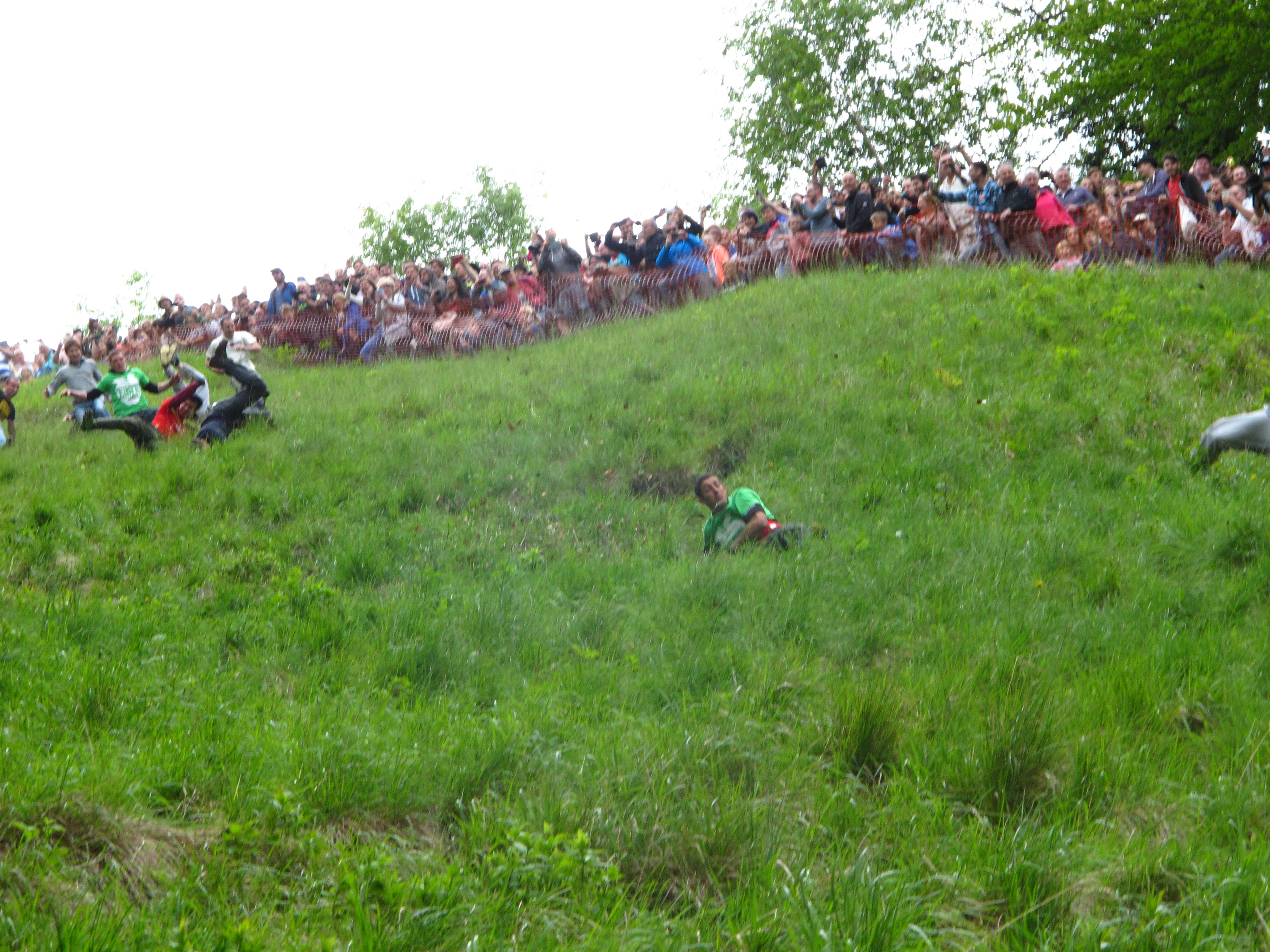
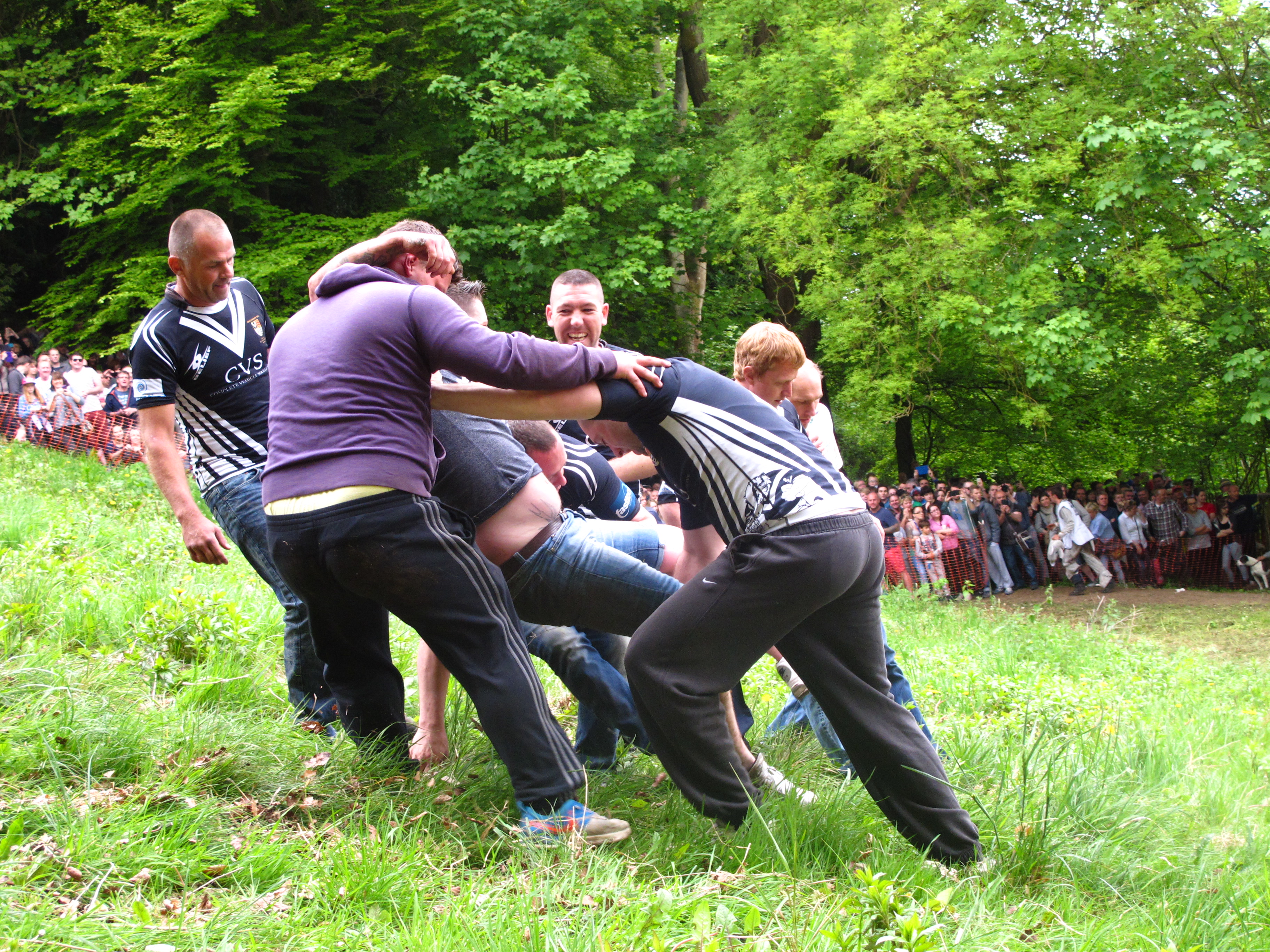
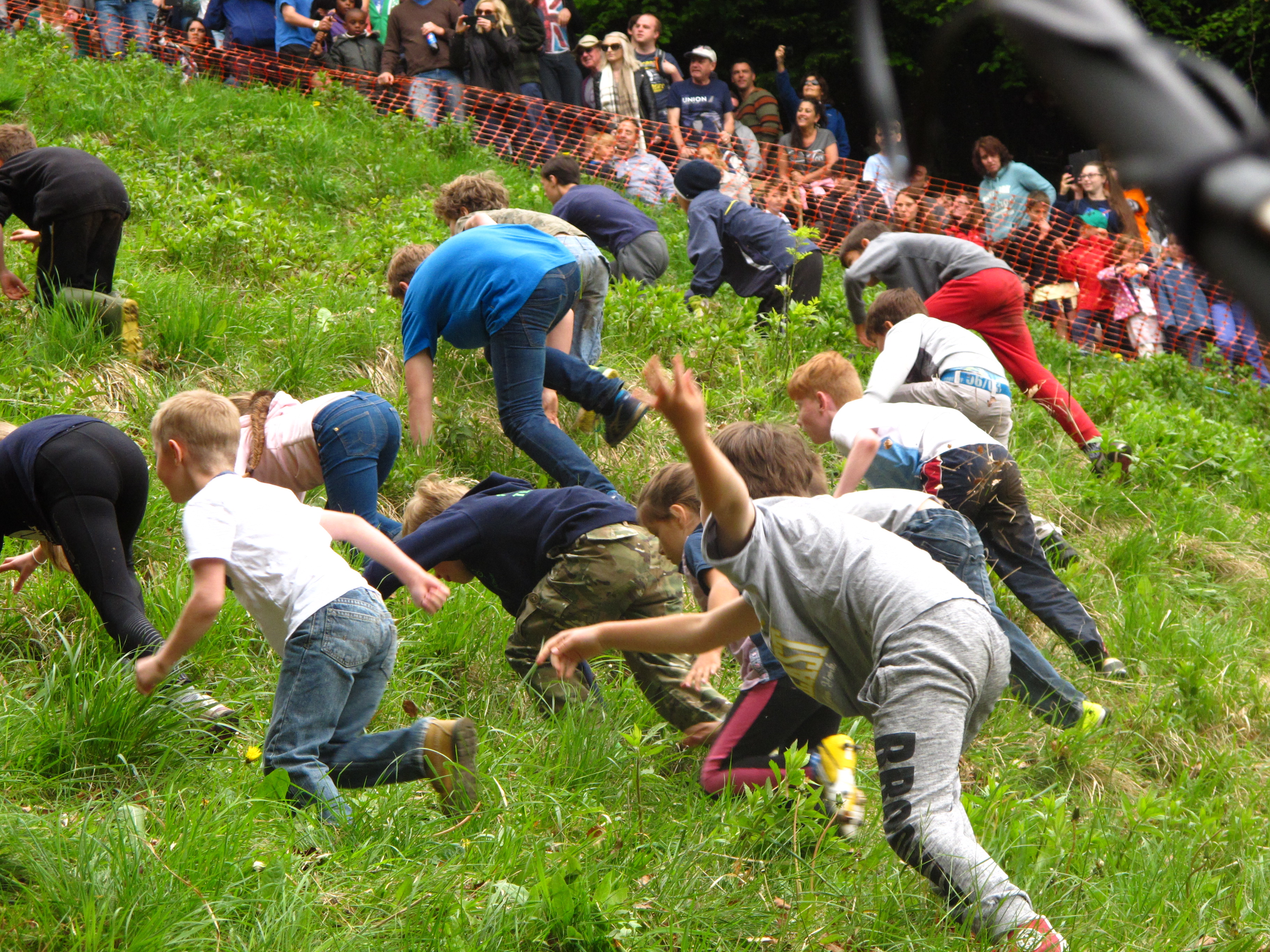
That was in New York, where the improbable happens every day, so let’s go back to Britain, where nothing improbable happens. Except possibly at the Gloucester Cheese Rolling, where this year someone won the race while unconscious.
The race–actually, it’s a series of races–involves chasing a wheel of cheese down a very (very, very) steep hill. No one catches the cheese or is expected to. Cheeses don’t have any sense of self-preservation and humans aren’t round, so the winner is the first person who reaches the bottom after the cheese.
In this case, the winner tripped, went airborne, hit her head, and rolled out in front of the other runners while unconscious. She woke up in the medical tent, and is now the proud owner of a three-kilo wheel of cheese.
Don’t make fun of her for falling, because almost no one stays on their feet all the way down. The winner of a different race said, “I don’t think you can train for it, can you? It’s just being an idiot.”
The race dates back to no one’s sure when and local authorities have (sensibly and unpopularly) been trying to shut it down for years. Six people ended up in the hospital this year, which may help you understand why, if a person’s job involves projecting some semblance of responsible judgment, it also involves disapproving. The problem is that the race is an unofficial event, and the organizers are unofficial organizers–well, it just sort of happens. Year after year. Magically. Even the cheese is a volunteer.
Police, fire, and ambulance services don’t attend the event–they’re afraid, I believe, of seeming to support it–but they are on standby.
Book banning and word unbanning
You’ve been reading about books being banned from US schools and libraries because someone thinks they’re not appropriate for kids, right? The books that’ve been given the boot include a lot ofL LGBTQ literature, a lot of Black and antiracist literature, and a lot of books about sexuality, grief, loss, poverty, puberty–you know, things kids wouldn’t have a clue about if those books hadn’t shoved their noses right up against the shop window.
How do you fight back against book banning? Well, in 2022 Utah passed a law banning “pornographic and indecent” books from the schools, and now some genius has challenged the Bible as having content inappropriate for young kids. It’s vulgar and violent, apparently.
One school district has already pulled copies from its shelves.
This should be fun.
*
Meanwhile Apple has unbanned a word that its autocorrect used to change to “duck.” As Craig Federighi, Apple’s software chief explained, “In those moments where you just want to type a ducking word, well, the keyboard will learn it, too.”
Users could always turn off autocorrect, and they could do it without having to drain the reservoir, but a lot of us, ahem, never get around to it and send out ridiculous texts because we don’t bother to proof them.
A Guardian letter writer claims that her phone routinely changes angry to seagull, although it’s always let her type fuck as often as she wants.

 Notes from the U.K.