Accents: Brits sorting Americans from Australians

A while back, I mentioned that I’m sometimes asked if I’m Canadian. When your accent stands out, people feel free to ask questions. Sometimes I’m fine with it, sometimes I’m tired of it, and sometimes when no one comments I wonder why they haven’t noticed. I mean, here I am talking in this improbable accent that I have and nobody’s saying a word about it. I might as well be giving an impassioned political speech wearing a rabbit costume.

Which I should probably try some day.

Sometimes, though, the comments get strange.

Gloucester

Irrelevant photo: A view of Gloucester, from the path to the Cheese Rolling.

Wild Thing was in a store, winding up whatever business they’d transacted, and as she got ready to leave the kid working there said, “Say it.”

“Say it?”

“Go on, say it.”

He was almost begging.

“Say what?”

“G’day.”

So she said, “G’day?” Complete with the question mark, because how could she leave it out. It stood in for, “You do know that’s Australian, right?” as well as “You do understand that this isn’t an Australian accent, don’t you?”

“Brilliant,” he said. Which the American side of my brain still misunderstands as gee, you’re smart, even though the side that tracks British usage knows it’s just an indication that the speaker’s happy.

He was happy. Ill informed, but happy. Why interfere?

*

And in case you wondered why I posted two pieces at almost the same second on Tuesday, it’s because I screwed up. I’d scheduled one in case I didn’t finish the Cheese Rolling post on time. When I did finish it, I rescheduled my backup post, or I thought I did, but clearly I was wrong. Apologies. I do know most of you have other things to do in the course of a day other than read me. Although I can’t think why.

Strange stuff non-Brits want to know about Britain

Two stray questions about Britain that people have asked me to address, which I’ll group together because they’re 600% unrelated: kinky sex and the letter U.


Are the English particularly kinky?

Katie Powell wrote, “I want to know why English folks are so kinky.” I asked her to be more specific and she answered, “The Brits exude this very staid exterior, but then there is the underbelly of kinky sex — maybe the kinkiest in the world? Not violent or dangerous, just kinky . . . .”

Sadly, I’m not willing to do any original research on the topic. Nope, not even for my blog. A few other things I won’t do, in case you need to know about them: I will not eat haggis in order to tell you what it tastes like. Not particularly because it’s haggis but because it involves meat. You can get vegetarian haggis, but that’s like vegetarian bacon—it is vegetarian but it’s not bacon, so it’s not much use if you’re trying to report on bacon. I also won’t get stinking drunk so I can find out if the tendency of drunks in this country to sing is cultural or due to some mysterious influence of the geography. So, sex in the British Isles? It does go on. I’m sure of that. But Wild Thing and I have been together for—wait, let me wrestle with a few numbers—38 years now. That’s long enough, really, for a person to make a commitment to a relationship. To get comfortable in it, and not want to wreck it. And then there are my own tastes to consider (which, forget it, you don’t need to know about, and very probably don’t want to).

cut kitten picture

Screamingly irrelevant photo: Fast Eddie and the laundry

I can report that back in the Stone Ages, when phone booths were the kind of thing you found on any city street, lots of London phone booths were plastered with stickers advertising sexual services designed for specific tastes–mostly S&M, at least as I remember it. I’d never seen the sex trade advertised that way. Does that mean the tastes of actual people here are kinkier than they are anywhere else? I haven’t a clue. Maybe they’re just out in the open more—although I’ve known some Americans whose interests were far from white bread and who had a lot more to say about them than I, for one, wanted to hear. They didn’t plaster them on phone booths, but then they weren’t in business, so they had no reason to.

So this separates into two question: Is there a difference in kink level? Do different cultures channel their kinks in different directions? It’s also possible that the definition of kinky is worth some thought. It assumes there’s a standard practice out there, and I wonder how standard anyone really is. I haven’t a clue, but I’ll leave you with that thought and move on to a question where I can be more useful.


History of the letter U in British and American English

Once upon a time I knew who asked me about this, but I didn’t paste either the name or the link into my notes, and although I swam back through the comments trying to find where it came from it, it was too far and I sank. That’s me you’ll notice on the bottom of all your insightful, hysterical, wonderful comment threads, blowing the last electronic bubbles out of my lungs.

Bad blogger.

So I’m going to be rude and not acknowledge the source of the question.

However. Someone asked me to write about the history of the letter U in British and American usage, and if you’ll let me know who you are I’ll provide a link to your blog. In the meantime, the tale takes us back to two of the most influential compilers of early dictionaries.

When the British first settled in North America, English spelling was still fluid. You went to school, you were issued a toolkit with 26 letters, and as long as another person in possession of that same basic toolkit could figure out what you meant, you were free to spell a word any old which way you wanted. I may exaggerate a bit, but not much.

It was Samuel Johnson, in the eighteenth century, who’s usually credited with (or blamed for) standardizing English spelling, although—as is usual with this kind of thing—there was a general movement in that direction and rather than creating the momentum himself he rode in on its tide. But still, if you don’t like the U in British spellings of words like favour and honour, Old Sam Johnson’s your bad guy. Up until then, English had used  -our interchangeably with -or.  According to an article in Bartleby Johnson “established the position of the u in the –our words. . . . Other lexicographers before him were divided and uncertain; Johnson declared for the u, and though his reasons were very shaky and he often neglected his own precept, his authority was sufficient to set up a usage which still defies attack in England.”

He was so knocked out by the U (which I’m capitalizing and the Bartleby entry doesn’t) that he tried to introduce translatour, emperour, oratour and horrour. Oddly enough, although he kept exterior U-less, its opposite was interiour.

Johnson’s reasoning was that the -our form acknowledged modern English’s French roots. If you know any French, you’ll have noticed that the argument’s shaky. French uses -eur, not -our: honeur; faveur. But never mind, an argument doesn’t have to make sense to be effective. British English is firmly committed to sticking a U into any word it possibly can. And, hell, they’re free, so why not?

If Johnson’s usually credited with standardizing English spelling, Noah Webster’s usually credited with divorcing American spelling from its British ex, although here too other people were already agitating for that and he too rode a tide he didn’t create. The United States was a new nation. It wanted a new culture. You know what it’s like: You have a revolution, you rename the streets, tear down the political statues, replace the schoolbooks.

Webster came down heavily on the side of simplified spellings, and his early books deleted a lot of the language’s silent letters: the B in thumb, the O in leopard, the A in thread. You could cut a 300-page book down to 150 pages if you kept that up. Also the K that was then in frolick, the spare L in traveller and jeweller. He transposed the -RE in words like centre.

“Those people spell best who do not know how to spell,” he said. Or quite possibly wrote. But let’s not split hairs. The point is that they were spelling phonetically and logically, and he set out to follow their lead with spellings like wimmin, tung, porpess, and fantom.

They didn’t all catch on, and as a result generations of schoolchildren toddle home with spelling lists to memorize for no better reason than that they’ll look ignorant if they don’t spell the words in the approved way. Think what they might have time to learn instead if our language made sense.

George Bernard Shaw, in demonstrating the need for rationalized English spelling, is said to have argued that, given the rules of the English language, you should be able to spell fish ghoti: GH as in tough, O as in women, TI and in nation.

Don’t use that on your standardized exams, kids. The people who mark them won’t be impressed.

English place names: where did the missing syllables go?

barbtaub asked why some English place names have “whole syllables missing? How could Worcester only have two syllables? Where do the L and the W go when you say Alnwick out loud?

Well, I’m here to enlighten. The L and W go out for a pint, and after that, y’know, you just can’t count on them so it’s better to pronounce the word as if they’d never been there at all.

Now the R, C, and E—that’s a whole ‘nother story. They’re tea drinkers, and they’d come back if they were invited, but no one thought to so there they sit, with their cooling cups of tea, waiting for someone to remember them. It’s all very sad.

Why tea instead of beer? If they’d dropped out of Cornwall, I’d guess they were Methodists—Cornwall is historically Methodist country and the Methodists are serious teetotalers—but since we’re dealing with Worcester I won’t risk a guess. It just is that way. Some people want a pint, others want a cuppa.

Camel Estuary. Padstow. North Cornwall.

Irrelevant photo: the Camel Estuary.

What I can tell you is that the letters in English place names are unreliable. I expect that’s a cultural inheritance from French. You know, 1066, the Norman invasion, all that French influence pouring into what was until then a Germanic language. Whether you could count on the spelling of Old English to be even vaguely sensible I don’t know, but I do know that French is wasteful with its letters, not just in place names but in everything. It tosses in handfuls it has no intention of pronouncing as if to say, “See how rich we are? We have so many of these we can afford to throw them away.”

When you treat letters like that, why should they stick around? They’re not needed, so of course they seek solace in the pub or the café. Who wouldn’t?

Now that Britain’s in an age of artificially induced austerity, you’d think the government would want to claw some of those wasted letters back. I mean, at one point, the government considered selling off nationally owned woodlands, which were being used and weren’t in the pub, and it only backed off because the proposal caused an uproar. I’ve read speculation that they’ll sell off property owned by the National Health Service soon. You know—balance the books in the short term, even if it impoverishes the nation in the long term. What the hell: by the time the problems show up, some other government will be in power, so who cares? It’ll all be their problem to solve.

What I’m thinking is that they could easily sell off those vowels and consonants that no one’s using. A prime example lies up the coast from us: Woolfardisworthy is pronounced Woolsery, and the spelling’s so out of whack with the pronunciation that the road sign (in a rare moment of linguistic sanity) gives both spellings. So we could not only save on letters, we could have a smaller road sign.

Not all place names present as clear a case. The town of Launceston has three pronunciations: LANson (that’s the Cornish version), LAWNston (I’m not sure who pronounces it that way), and LAWNson (I think of this as the compromise version and it’s the one I use; with my accent, LANson sounds too strange). The only pronunciation that’s wrong is lawnCESSton—the one that uses all the letters. With three pronunciations, it’s not clear what letters we should sell off, but that doesn’t have to stop the program. Sacrifices must be made.

For what it’s worth, I’ve read that over centuries the sandpaper of time tend to wear away at difficult pronunciations. I’m still waiting for it to smooth out the pronunciation of sixth. Try saying that quickly three times. Still, the theory would explain the bizarre spellings of place names. English spelling was codified when the pronunciation was still changing rapidly, and it reflects (or so they say) pronunciations we no longer use. So place names were frozen even as the residents went about the natural business of simplifying the pronunciation, leaving us to wonder, What were they thinking?

Aren’t you glad you asked, barbtaub?

British and American English: The Easter update

The Methodist Church in our village has its annual egg roll at this time of year, and you need to understand that this is an event, not something to eat. If it was something to eat and if we were speaking British, it would be an egg on a roll. If we were speaking American, it would be a deep-fried appetizer from a Chinese restaurant—what the British call a spring roll. But no, this is more along the lines of the Gloucester Cheese Roll, only without insanely steep hill and the ambulances. And the cheese. It’s a bunch of kids rolling eggs down a hill. The one who reaches the bottom first (or at all, since chickens never designed their eggs for racing) wins. I’m not sure what the prize is. A deep-fried appetizer from a Chinese restaurant? An egg sandwich? A chocolate bunny?

I’ve never gone to the event, but I was specifically invited the year A. was a judge. Unfortunately, I got sick and stayed home, and that left me free to imagine it any way I want. What I imagine is that Easter in Britain is about rolling an egg down a hill.

Irrelevant photo: A tiny waterfall. Looking at this, you can almost believe the legends of fairies and little people.

Irrelevant photo: A tiny waterfall. Looking at this, you can almost believe the legends of fairies and little people.

In its more commercial form, Easter’s also about chocolate eggs, and these are massive things—not American football size, but moving in that direction. All your childhood dreams of greed, shaped like an egg. The Guardian (that’s a newspaper, in case you need to know) likes to compare the prices and qualities of different brands of food, and this year’s chocolate Easter egg comparison shows that some of them get into silly money territory. Hotel Chocolat? £27, and it’s filled with smaller chocolates.Harrods? £29.95. The paper recommends that one for Russian oligarchs, who aren’t known for their sense of humor so let’s assume the paper’s not making fun of them, and for safety’s sake neither am I. Marks & Spencer has one for £40 and that kind of money buys it its very own link. (FYI: Links here are not for sale unless I’m making fun of something at the other end, in which case no one’s likely to offer me money. I am so pure I’m almost invisible.) M & S’s egg is a “giant golden lattice egg with a delicate show-stopping small egg perched inside. . . . Because they’re so special, we’ve only made 7,500 eggs, each one numbered on the presentation box for an extra touch of luxury.” And then you eat the sucker and it’s gone, leaving you with nothing but that numbered presentation box and a bunch of adjectives. Spend enough money and you get a lot of adjectives. The original copy had even more, but I’m still an editor at heart and just had to cut some. And in case you’re worried, the gold is edible. Which is another adjective but an important one The Guardian doesn’t specifically recommend this particular egg for Russian oligarchs. I’m not sure why.

Back in the land of the sane, you can find chocolate eggs in supermarkets for £5, or for £2.99.

And we still haven’t gotten to chocolate bunnies. I’ve seen these in two sizes: nestle in your palm size and coffee mug size. I brought a small one home from a grocery shopping trip and Wild Thing reports that they’re good.

In the U.S., you can’t make your way through a store in the weeks before Easter without tripping over egg-dying kits. Or—well, I assume that’s still true. It’s been a long time since I’ve been around, never mind at Easter. In Britain, though, making Easter eggs from actual eggs don’t seem to be a big thing.

And this seems to be a leap, but it’s not: When I first started to write fiction, I wrote a transparently autobiographical story about my Jewish atheist family that included the sentence, “We celebrated Easter.”

My father read it.

“We never celebrated Easter,” he said.

I think that, in his quiet way he was scandalized. He was also, in my opinion, wrong.

It’s true that we didn’t celebrate it in a religious way. But we dyed eggs every year, and found people to give them to (who may have wondered about them but were kind enough not to ask). My brother and I woke up to Easter baskets—jellybeans, a chocolate rabbit (in my memory, they were huge), a panorama egg with a sugar shell and little cut-out figures inside, small chocolate eggs in foil wrappers, all of them nestled in fake grass.

Give a kid candy like that and she’ll think it’s a celebration. Add dyed eggs and, yes, you have a holiday. Sorry, Dad.

It didn’t turn me religious, but it did leave me with a fondness for chocolate bunnies, even though I don’t eat them anymore. I worked in a candy factory when I was in my twenties, and it left me immune to candy’s lures. The one exception is good, and very plain, dark chocolate. But I do like to see chocolate bunnies in their gorgeous foil wrappers.

I can even get sentimental about jellybeans. They never did taste good, but I ate them anyway. Like Everest, they were there. How could I not?

So if you celebrate Easter, happy Easter. And if you don’t, I can still recommend the chocolate bunnies. They don’t care what you believe.

Comparative swearing: U.S. vs. U.K.

In a comment on “More about manners in the U.S. and U.K.,” Karen at Fill Your Own Glass [sorry, everybody; that’s almost the end of the links] wrote, “My impressions have been created solely by movies, but I have believed that people in the U.K. are less inhibited when it comes to cursing and talking about sex.” (She went on to say that it was an insightful post, but I wouldn’t want you to think I’m the kind of person who’d mention that.)

I haven’t a clue whether her impressions are true. What fascinates me about the comment is how you’d measure either.

late winter 002

Near Minions

Let’s say we want to compare how inhibited or uninhibited people are in talking about sex. I mean, I want to be scientific here. How do we compare passing references to serious what-I-did, what-I-didn’t-do, and how-I-feel-about-it conversations? Do we measure in frequency, in length, or in depth?

No puns, please. We’re being scientific here, so settle down in the back row.

If we’re talking about a serious cross-cultural comparison of swearing, how do we balance frequency against intensity? How do we measure the weight do various swear words carry?

People I know here (and it’s entirely possible that my friends swear more than the average Brit) say “bloody” fairly often. How often? Oh, you know, often enough. (You can see why I never became a scientist, right?) But how intense a swear word is bloody? I’d always heard that it’s religious—actually, sacrilegious—in origin and assumed that it packed quite a punch. But a Wikipedia entry raises several milder and way less interesting possibilities. My Dictionary of British Slang and Colloquial Expressions calls it simply “an intensifier,” which makes it sound mild to the point of insipidity. Of course, I once heard a linguist talk dispassionately about the way Americans use the word fucking as an insertion. In fact, he called it “the fucking insertion,” which both illustrated how it was used and cracked me up for weeks afterwards. From this I gather that linguists, like all scientists, whatever their passions, prefer to present a dispassionate surface.

I’ve heard bloody said often enough that it’s made itself a home in my head, and it’s trying to push its way into my speech. It wants to be said, and I want not to say it. Not because I don’t swear—I do, and without being immodest here, I do it well—but because I don’t have a sense of its proportion, its weight, its impact. I don’t like to throw things until I can gauge their impact.

Besides, with my accent it’ll sound very odd.

So there you are, folks. Comparative swearing. I look forward to hearing what you have to say on the subject.

About inconsistency: US and UK headline style

If you’re a regular here, you may have already read that I’ve worked as an editor and copy editor. And if you’ve worked as either one and scrolled through the site, what will jump out at you are not my screamingly irrelevant photos but my screamingly inconsistent headline style. Not to mention the editorial sins I commit in a smaller typeface.

What’s going on? I retired, that’s what. I turned in my Chicago Manual of Style. Really. I no longer own a copy, either current or out of date. That’s the bookcase equivalent of saying, “Screw it.”

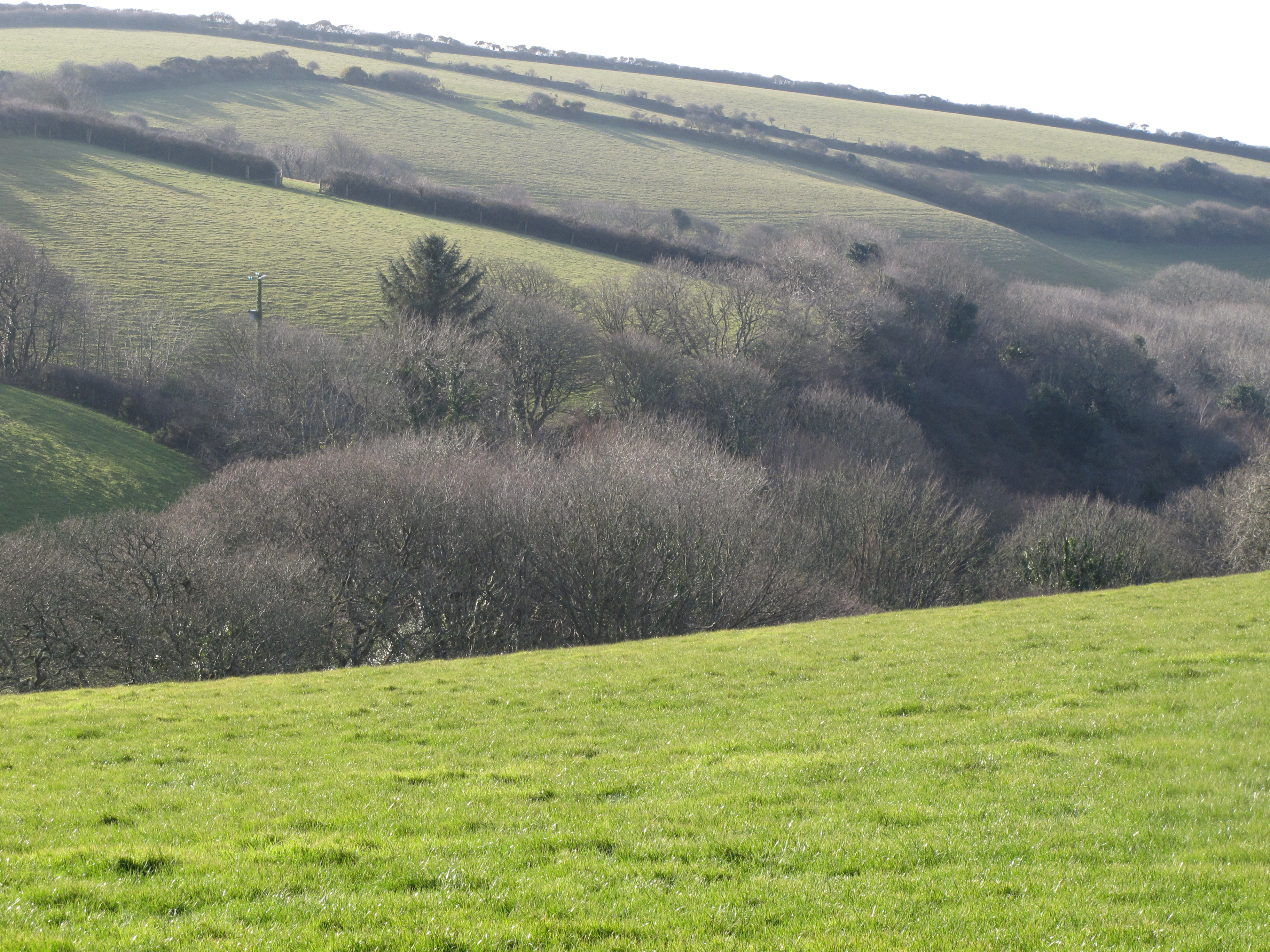
Irrelevant photo: Late winter landscape. Yes, that's grass. It's been sitting there, green, all winter.

Irrelevant photo: Late winter landscape. Yes, that’s grass. It’s been sitting there, green, all winter.

So where do I go to check my style decisions? Nowhere. On some days when I’m writing a headline I capitalize the first word after the colon and on other days I decide not to. For the most part, I’ve stopped using the American style, which capitalizes all the words in a headline except for the ones that never get capitalized because the rules are complex and copy editors need to prove we know something the rest of you don’t or why else would anyone hire us? The British headline style is simpler. As far as I’ve decoded it, it treats the headline like a sentence, which is great because you don’t have to worry about all those American exceptions: Everything but the first word and the proper nouns is lower case.

Ah, but what about the first word after a colon? I’ll break down and confess: I haven’t checked whether it’s capped or lower case because—cue maniacal laughter—I’m retired and I don’t have to.

It’s not that I don’t notice the inconsistencies in my headlines, and it’s not exactly that I don’t have a headline style, it’s just that on any given day I’m likely to decide that I don’t like the style I was using so why don’t I change it—without going back and changing the old ones so they conform?

Of course, once fussbudgetty editorial thinking lodges in your head, it doesn’t vacate willingly, so I haven’t danced unthinkingly off into inconsistency. I’ve danced off while throwing explanations and disguised apologies over my shoulder. So, sorry folks. I am thinking. I am noticing. I just don’t care enough anymore.

Measuring time in the US and UK

When I was fielding comments about the insanities involved in figuring out what I weigh in the U.K., I caught myself just before I wrote that at least we all measure time the same way.

Are you sure? I asked my more-than-usually bewildered self. I imagined someone jumping out the magic surge of the internet to tell me that yes, the hour has sixty minutes everywhere but the minutes are longer in the U.S. Why there? Because everything’s bigger in the U.S. Or that’s what people in Britain tell me. Houses, rooms, scones, the spaces in our parking lots. People. So wouldn’t it be just like us to want a longer minute?

It might, but as far as I know the minute really is the same everywhere. And no, Americans don’t all live in mansions any more than the British all live in castles, although the scones and the parking spaces really are bigger. And some of the rooms and houses. I’m not sure about the people.

Irrelevant photo: freezing fog on Davidstow Moor.

Irrelevant photo: freezing fog on Davidstow Moor.

What were we talking about?

My point about time is that we may measure it the same way, but someone always finds a way to complicate things. Usually me. A few years ago, I was working out a time to pick up M. for—I think—a movie.

“A quarter of,” I suggested.

“What does that even mean?” he said.

“A quarter of six.”

Then I realized he wasn’t asking about the hour, he was asking about the quarter of part. I tried translations.

“Five forty-five? A quarter to? Fifteen minutes to six?”

He shook his head.

“But what, grammatically, does it even mean?”

Well, it means a quarter of, obviously, and I had to say the phrase one more time to realize that it doesn’t, but any sort of logic, mean a thing. A quarter of what? Of nothing. It’s just what we say. We know what it means, so what’s your problem?

On the other hand, the British say “half six.” That’s three, right? No, that’s six-thirty. What, grammatically, does that even mean? About as much as a quarter of. But if you’ve grown up with it, it makes all kinds of sense.

Mercifully, no one’s come along to divide the traditional clock into a more rational system—ten hours, 100 minutes. You know, something easier to calculate with. Because some of us would convert to the new system and some of us wouldn’t and we’d all fight about it, and we’re having enough trouble as it is.

British and American English: Talking about tea

Tea isn’t just a drink here, it’s a meal and a marker of class. (You’ll find lots of those if you know how to look.) If you’re working class, tea is the evening meal and dinner is lunch. If you’re upper class, the evening meal is supper. Are you still with me? You won’t be for long, because A. adds, “But we all say supper now.”

Who’s “we”?

Sorry, you’re on your own there.

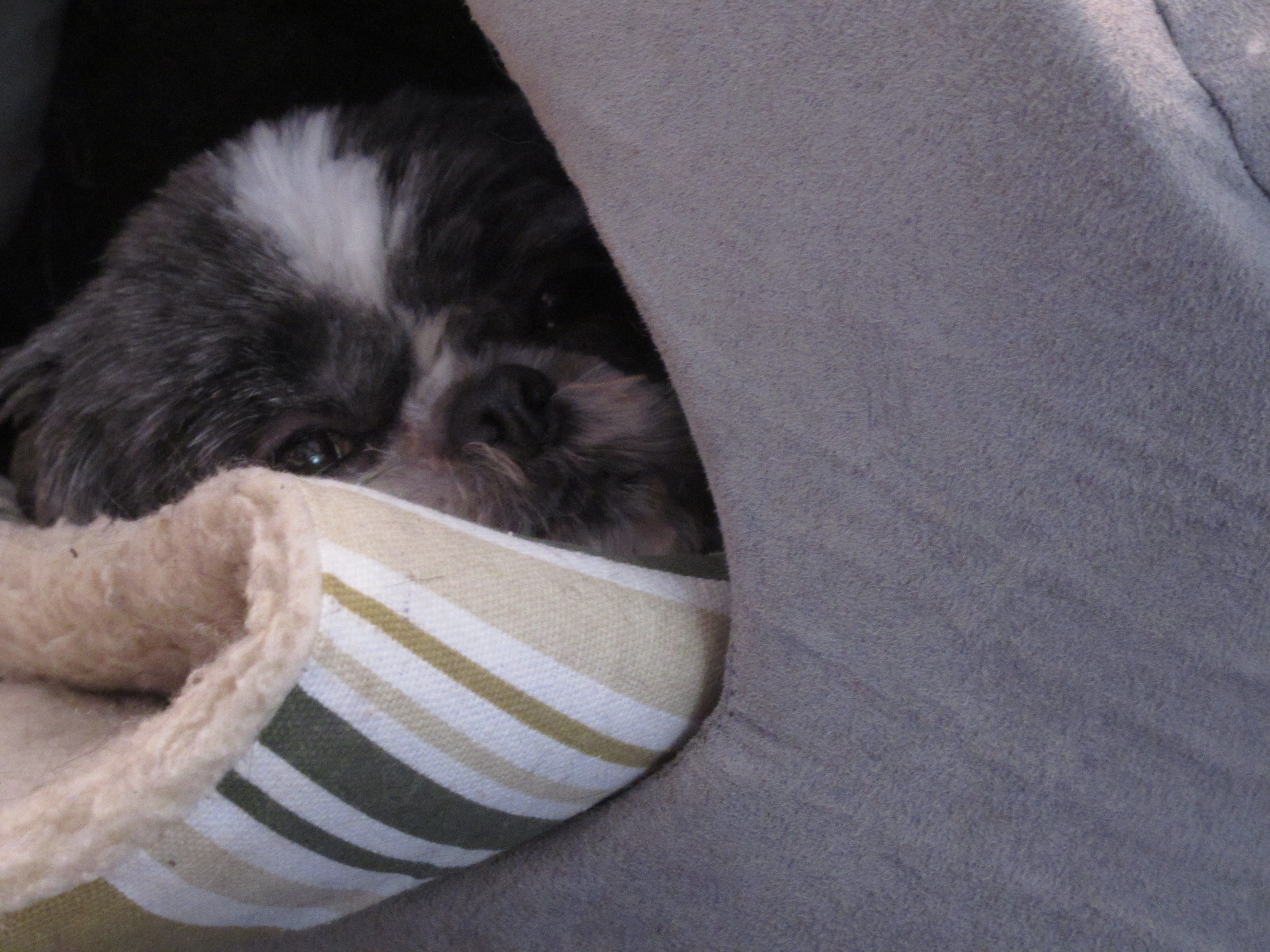
Screamingly irrelevant photo. He doesn’t care what the meal’s called.

And in case this isn’t confusing enough, I’ve read that all this turns into its opposite in other parts of the country, so you have to know where someone’s from to know what they’re eating. Or drinking. Or talking about.

Wild thing was on the phone with H. and invited her to stop by for tea after something they were doing together. H. told us later that she hung up the phone and thought, I wonder what I just got invited for? Because Wild Thing and I don’t play by the same rules as anyone else does, so who knows what we mean when we say “tea”?

We sure as hell don’t.

Everyone seems to agree that afternoon tea (as opposed to just plain old tea) is afternoon tea—you know: a cup of tea and a little something—but if you want that little something in the morning it’s either morning coffee or elevensies. Morning tea? Sorry, there is no such thing. It’s morning coffee. And if you don’t drink coffee? No problem. You can get tea. But it’s still not called tea.

British and American accents: Talking trash to an I-Pad

M. and Wild Thing and I were trying to figure out what time it was in Singapore. You know how sometimes you just need to know that kind of thing? So Wild Thing grabbed the I-Pad she bought last week and said, “Hey, Siri.”

“What?” M. asked.

“She has an imaginary friend,” I said.

“I’m talking to Siri,” Wild Thing said.

My point exactly.

In extended and increasingly colorful ways, M. and I said, “Sure you are.”

Irrelevant photo: Our dog, who's real, even if she looks like a windup toy

Irrelevant photo: Our dog, who’s real, even if she looks like a windup toy

“Siri?” Wild Thing repeated to her I-Pad.

She might as well have been talking to the teapot. So while M. and I discussed the nature and uses of imaginary friends (in increasingly colorful and bizarre ways), Wild Thing—in the bits of air time she managed to snatch from us—explained that she’d set Siri up to have a woman’s voice and an American accent but that she’d reverted to being a British male—and a posh one at that.

Trust Wild Thing to have an imaginary friend with a sex change and an ambiguous national identity.

Because of the new accent, Wild Thing said, Siri couldn’t understand her, and that was why she wasn’t answering.

Unless he wasn’t answering. I don’t want to be insensitive, but this sex change business gets confusing when you’re dealing with invisible friends and virtual beings.

But forget about gender—it’s simple compared to accent. To what extent is an invisible British friend able to understand an American accent? I mean, just how parochial is she or he? And if the American accent’s a problem, is he or she (or, well, whatever) able to understand a working class British accent? Or a Welsh one? Or—well, you get the point: How narrow a range of tolerance are we talking about here? What happens if you have, let’s say, an Iranian accent in your English? Do you have to, and for that matter can you, set up your invisible friend to have her (or his, or whatever’s) very own Iranian accent in English?

I haven’t been impressed with the breadth of understanding demonstrated by virtual voices. We were in New Zealand once, and Wild Thing was on the phone with a computerized system.

“Yes,” she said in response to it doesn’t matter what question.

“I’m sorry,” the computer said, “but I didn’t understand that. Did you say ‘address’?”

“No, I said ‘yes.’”

“Did you say ‘guess’?”

And so forth until Wild Thing pinched her nose and, in her best imitation of a kiwi accent, said, “Yiss.”

“Thank you,” the computer said. (And sent a dress to the wrong address. Not that the address mattered. The last time Wild Thing wore a dress, splinters hadn’t been invented yet. And no, we’re not going to discuss how long it’s been since I wore one. It’s enough to say that I may still remember which end faces the feed.)

But back to that New Zealand virtual voice: What happens if you have a lisp and your yiss sounds like yith? You can’t order 80 kilos of chocolate covered Turkish delight by phone, that’s what, because you can’t confirm your order. You can’t call for a cab. You can’t let the bank know that your credit card just wandered off without you. Because the voice is set to the local accent—one local accent, and if it doesn’t happen to be the one you have, you’re skunked.

Or that’s my, admittedly limited, experience.

Apply this to invisible friends and you have to wonder, How much do they have to be mirror images of ourselves in order to understand us, or in order for us to accept them? If the posh, imaginary British man can’t understand (or be accepted by) the un-posh but entirely real American woman who’s talking into her teapot, what chance do the flesh and blood inhabitants of this planet to have to work out our differences?

M. and Wild Thing and I didn’t have time to explore that question, although no doubt the world would be a better place by now if we had. M. was heading home and we were out of time, not to mention cookies.

Wild Thing had addressed her I-Pad multiple times by then and swore Siri had answered her. Me, though? I didn’t hear a thing. And I’m prepared to speak for M. as well: She didn’t either.