Archeology in Britain: a roundup

Sink a shovel into the soil anywhere in Britain and–

No, I’m about to exaggerate. You won’t necessarily find an ancient artifact, you’ll probably find good old fashioned dirt, but if you scan the papers for archeological news it’s easy to believe you’ll find treasure. Let’s review a few finds:


The Galloway Hoard

This was found by a metal detectorist in 2014, in a plowed field in Scotland. It’s one of the richest collections of Viking-age treasure found in Britain so far. The finder was paid something in the neighborhood of £2 million, which ain’t bad for a day’s work. Even if you count all those other days, when he found nothing except the tabs from soda cans, it still ain’t bad.  

The reason finds like this are known instead of being quietly sold to rich collectors is that British laws require detectorists to report their finds to a government body, which works out the cash value and the museum that should receive it if they can raise the money. So the finder benefits. Under English law, the landowner also benefits. Scottish law leaves the landowner out. I’m not sure about Northern Ireland. Either way, though, blank spots in the nation’s history get filled in.
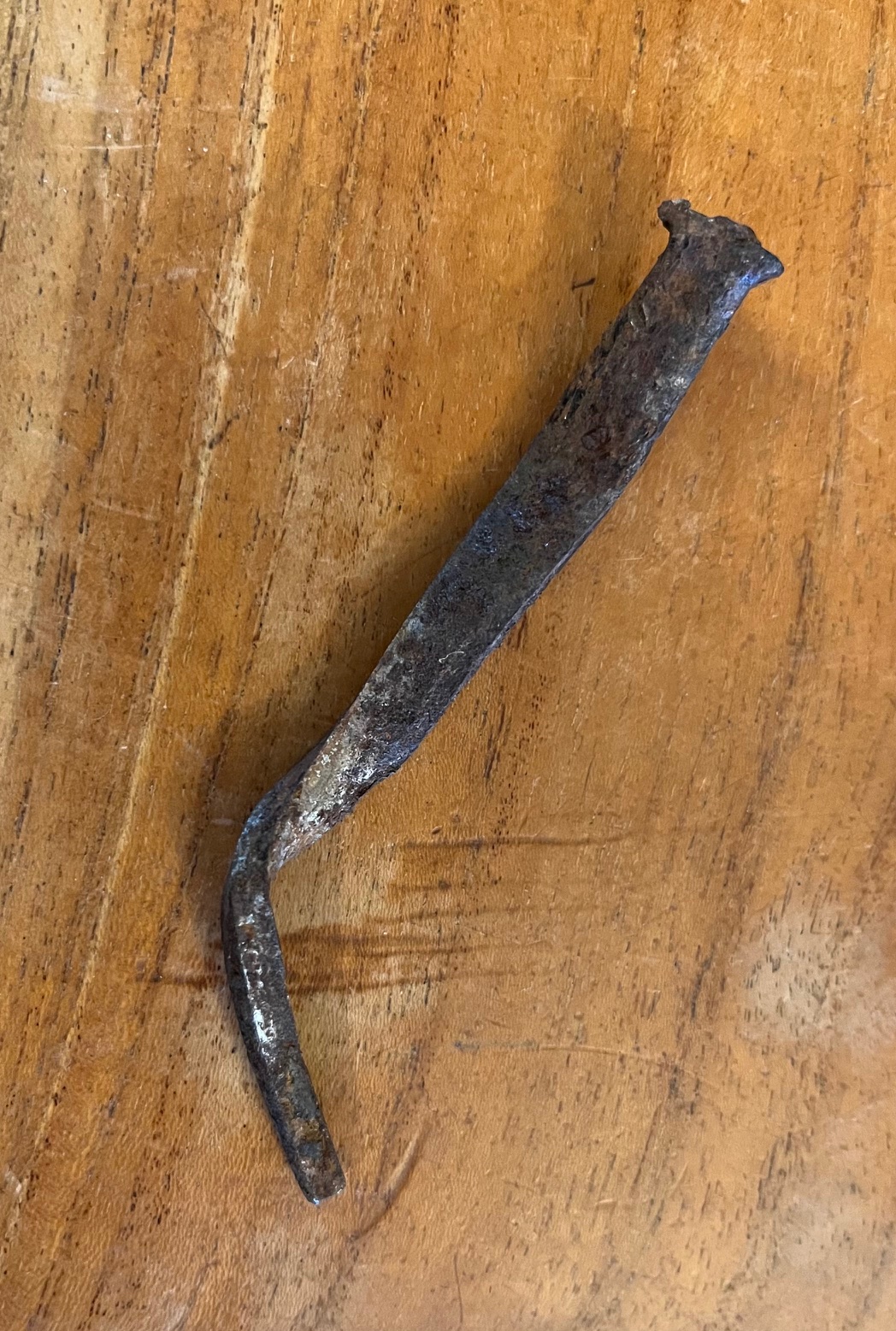
A hand-crafted nail. No idea how old it is, but I didn’t have to stick a shovel in the ground to find it. There’s been quite a bit of construction in the neighborhood and I’d guess someone else dug it up. All I did was walk past and kick it. It has an odd bend (I’ve bent a lot of nails in my time but never that way), and one person who looked at it figured it had been in a fire. All theories–even knowledgeable ones–will be gratefully entertained.

Experts have been working their way through the Galloway Hoard since it was found and in 2024 reported that the metal from a silver cup–okay, a silver vessel–was mined in what’s now Iran and that the vessel itself was probably made for royalty of the Sasanian empire–the last Persian empire before the Muslim conquest. They were Zoroastrian. So it traveled halfway around the known world to get buried in a Scottish field in 900 CE.

Follow the link for damn some good photos of the hoard.

Why did anyone bury it, though, and who did it belong to? An answer to the second question comes from an inscription on a decorated arm ring. (Follow this link as well for photos.)

But before I get to the inscription, let me tell you a few other things: The stash included four arm rings with runic writing. Three had what are described as elements of Old English names, presumably the original owners of the rings. But the experts all stubbed their toes on the fourth arm ring. It didn’t match any known language from early medieval Britain or Ireland. 

Then someone had an inspiration and I’d explain it to you in detail but halfway through the explanation I sank, and I’m here to protect you from that fate, so let’s just say that they made an educated mental leap and realized they might be looking at a shortened or phonetic spelling. That led them to a translation: “This is the community’s wealth,” using a word that specifically meant a religious community.

Which takes us back to the other question: Why did a religious community bury all this wealth? Possibly to keep it safe from Viking raids. Christian monastic communities were full of expensive bling and the Vikings were wise to them. They were an easy target and a rewarding one.

Why didn’t the community dig it up? That’s the problem with history. It’s so full of things we’ll never know. 


The Chew Valley Hoard

In 2019, seven detectorists in Somerset set out to mess around with someone’s new metal detector. They’d do a little detecting, get rained on, give the dog some exercise, have a few beers– You know. 

They ended up unearthing 2,584 silver pennies that date back to the time of the Norman Conquest. (1066; you’re welcome.) The best guess is that they were buried for safekeeping during an early rebellion against Norman rule. 

According to Lisa Grace, one of the finders and an expert in cataloguing antiquities, “The hoard may have been the result of looting or maybe the result of somebody hiding their money away because of the revolt.”

The coins have been valued at £4.3 million. Half goes to the landowner and the group will split the rest. I don’t know what the dog gets. 


Stone circles

The southwest is full of ancient monuments, and most of them are just sitting out in fields, where you can walk in, lean against them, and feel blown away by their age and mystery, all without paying a fee or worrying about opening and closing hours. You do sometimes have to share them with sheep, cattle, and the occasional wild pony (as well as their droppings), but if you don’t mind, they don’t either. 

A couple of Neolithic stone circles have recently been found on Dartmoor, and at least one of them adds weight to the finder’s theory that there was a circle of stone circles on the moor, which he calls a sacred arc. So far, he’s locate about half of the presumed circle.

One of the newly found circles had a ditch around it, as Stonehenge does, and they were built in roughly the same period.

If the theory’s correct, the other half of the arc is still out there, waiting to be found.


Dead bodies

Sorry to get gruesome on you, but when you’ve been dead long enough you stop being the much-missed Aunt Sadie or Uncle Marv and turn into archeology. In other words, your body isn’t gruesome anymore, it’s a clue to history.

People who try to piece together the details of what used to be called the dark ages and is now more respectably called the early medieval period lean heavily on clues from archeology because written records are sparse. Some were destroyed and others–um, yeah, they were never written, which makes them hard to read. 

What’s more, where written records do exist it makes sense to ask how reliable they are. Historians of the time didn’t play by the rules of our era.

With that tucked under our belts, let’s go to Norway, which I admit isn’t in Britain but does have an interesting story to tell: an Icelandic saga from 1197 tells of the siege of Sverresborg Castle. The besiegers broke into the castle and “burned every single house that was there. . . . They took a dead man, and cast him headfirst into the well. Then they piled stones into it until it was full.”

Fast forward a few centuries until 1938, when archeologists found a skeleton in a well, buried by a layer of stones. Aha! Significant! But World War II intervened, the Nazis occupied the area, and suddenly everyone had other things on their minds. The body stayed where it was. It wasn’t until 2014 that anyone got it out and identified it as belonging to a man who was somewhere between 30 and 40 years old. He’d been hit over the head before he died and was injured in assorted other ways as well. Radiocarbon dating put his death in roughly the right period for the siege, and a DNA comparison to modern Norwegians hints that he might have come from southern Norway–the home of the besiegers, not the defenders. Which says they may have thrown their own guy in the well. 


So much for history. Do we know anything about the recent past?

Here we’re going to abandon archeology. We can learn about our culture from the papers: in 1977, garden gnomes began disappearing from a town in England. 

You know garden gnomes: those painted plaster statues so beloved of British homeowners that even the people who hate them love to hate them. In place of the missing gnomes, the bereft homeowners found ransom notes. By way of example, one read, “Listen, your gnome has seven hours to live unless you wrap 25 pence and leave it at the car park at Safeways near the bowling green. This is no hoax.”

Time passed. No dead gnomes were spotted, and a few days later, 8 gnomes appeared, as alive as they’d ever been, at a roundabout, draining all the tension out of the story.

A roundabout? That’s an ingenious way of handling traffic without using traffic lights. It either works like a charm or backs traffic up for months, depending on time, place, and circumstance. And luck.

The 8 gnomes were accompanied by three frogs, two squirrels, two toadstools, one peacock, one rabbit, and a Snow White. The statues’ owners reclaimed them, made them a nice cup of tea, and set them back in their gardens without checking them for PTSD because the diagnosis wasn’t widely known yet. 

The perpetrator became known as the Phantom Gnome Snatcher of Formby.

And now, damn near 50 years later, the Phantom has identified himself. Sort of. His name’s Arthur, he’s 62, and he was 15 when he gnome-snatched, with the help of his 5-year-old brother. The two of them scoped out the neighborhood gnomes one night and went back the next night to collect them and leave ransom notes. They did check the locations they’d given in the notes–a phone box; a park bench–and found nothing. 

Yeah, Formby was filled with hard-hearted cheapskates who were willing to let their gnomes die terrible deaths.

“So three nights later we put them all back and thought absolutely nothing of it,” Arthur said.

Arthur was outed–sort of–by a cousin, who didn’t give his name but said on radio, “I know the culprit. . . . He tells that story most Boxing Days and each time he gets a little bit wearier, you can see the weight of his conscience on his shoulders.” 

That led Arthur to call Radio 2 and out himself–minus his last name. 

“It’s been on my conscience that I did this terrible thing,” he said. “I would like to beg forgiveness from all the families that I have caused grief to.”

If that was the worst thing any of us had done–


And that brings us to the present day 

Lupa Pizza in Norwich has bowed to pressure and is offering a pizza with a pineapple topping, but there’s a snag: It’ll cost you £100. (If you work in US dollars, that’s $123, give or take a bit, but you’ll have to get there, which ain’t cheap.) 

I know that says something deep and meaningful about the culture, which means it connects perfectly to the archeology theme we’re following here, but I’ll leave it up to you to figure out what the connection is.


A few Irrelevancies

On a totally irrelevant (to this post, but not to the real world) topic, 200,000 Danes have signed a petition to buy California from the US. It reads, in part:

“Have you ever looked at a map and thought, ‘You know what Denmark needs? More sunshine, palm trees, and roller skates.’ Well, we have a once-in-a-lifetime opportunity to make that dream a reality. . . . We’ll bring hygge to Hollywood, bike lanes to Beverly Hills and organic smørrebrød to every street corner. Rule of law, universal healthcare and fact-based politics might apply.”

The petition’s website includes a call to “Måke Califørnia Great Ægain.”

*

Okay, this has nothing to do with archeology either. A breeding program trying to keep the northern spotted owl from going extinct had a pre-Valentine’s Day offer: for 5 Canadian dollars, you could name a dead rat after an ex–any ex–and get a photo of the rat. And the owl. The deal ended on February 13, but I’m sure they’re still accepting donations. And you could probably talk them into extending the offer just for you. And your ex. 

*

In my last post, I wrote about the problem of telling native from non-native plants. 

“Actually,” I said, to quote my own silly self, “what does native mean? How far back do you want to go? Think about it long enough and your mind will melt.”

To keep my mind from melting, my friend Helen sent me a link to a Botanical Society of Britain and Ireland website, which explains how far back to go.  

Basically, if something was introduced by humans, either deliberately or by accident, and became naturalized between the beginning of the Neolithic period and 1500 CE, then it’s an archeophyte–a fancy way of saying an old plant.

Most of them arrived in the late Bronze Age, the Iron Age, and the Roman and Medieval periods. Some were hitchhikers that snuck in with crops, others started out in gardens, where they were grown for food or medicine but liked the conditions and jumped the garden to go wild. 

You can break the category down into denizens, colonists, and cultivated crops if you like, but let’s leave that to the experts. Amateurs get hurt messing around with these things. 

After 1500, when Europe and the Americas were in contact–eagerly on one side, reluctantly on the other–all sorts of new plants were introduced: for food, for medicine, for forestry, or because they were pretty. Farming, demographics, trade, and industry changed. All that makes 1500 a handy place to draw a line: Anything introduced after that date is a modern introduction: a neophyte. 

A native plant is one that showed up without human assistance after the last ice age ended or got here before it and somehow survived. It sounds as if the date doesn’t matter, only whether it got here on its own. 
Orkney: a bit of history

Orkney isn’t the first place that comes to mind if you’re looking for the center of Britain. It’s small, it’s an island, and it’s way the hell up north in a country whose political and cultural center is way the hell down south. What’s more, it’s sitting in the middle of a lot of water, which is what islands like to do, and the currents around it are fierce. But in Neolithic times, it was a center–maybe the center. It originated a type of pottery called grooved ware that spread across Britain and was the must-have thing of the late stone age. It built the first henges–those stone rings with ditches around them that dot the British landscape–and they also spread south. And yes, they did that before Stonehenge.


The Neolithic

Who were the people behind all that? They arrived, who knows why, from mainland Scotland, bringing their domesticated animals, their grain, and their knowledge of how to farm. Like any early farmers, they would’ve supplemented their diet with whatever they could gather, hunt, or fish. They replaced (or possibly absorbed; I don’t know) a small population of hunter-gatherers who’d reached the Orkneys first, and they set up a society successful enough to last through 60 or 70 generations and to build monuments that are still impressive today. 

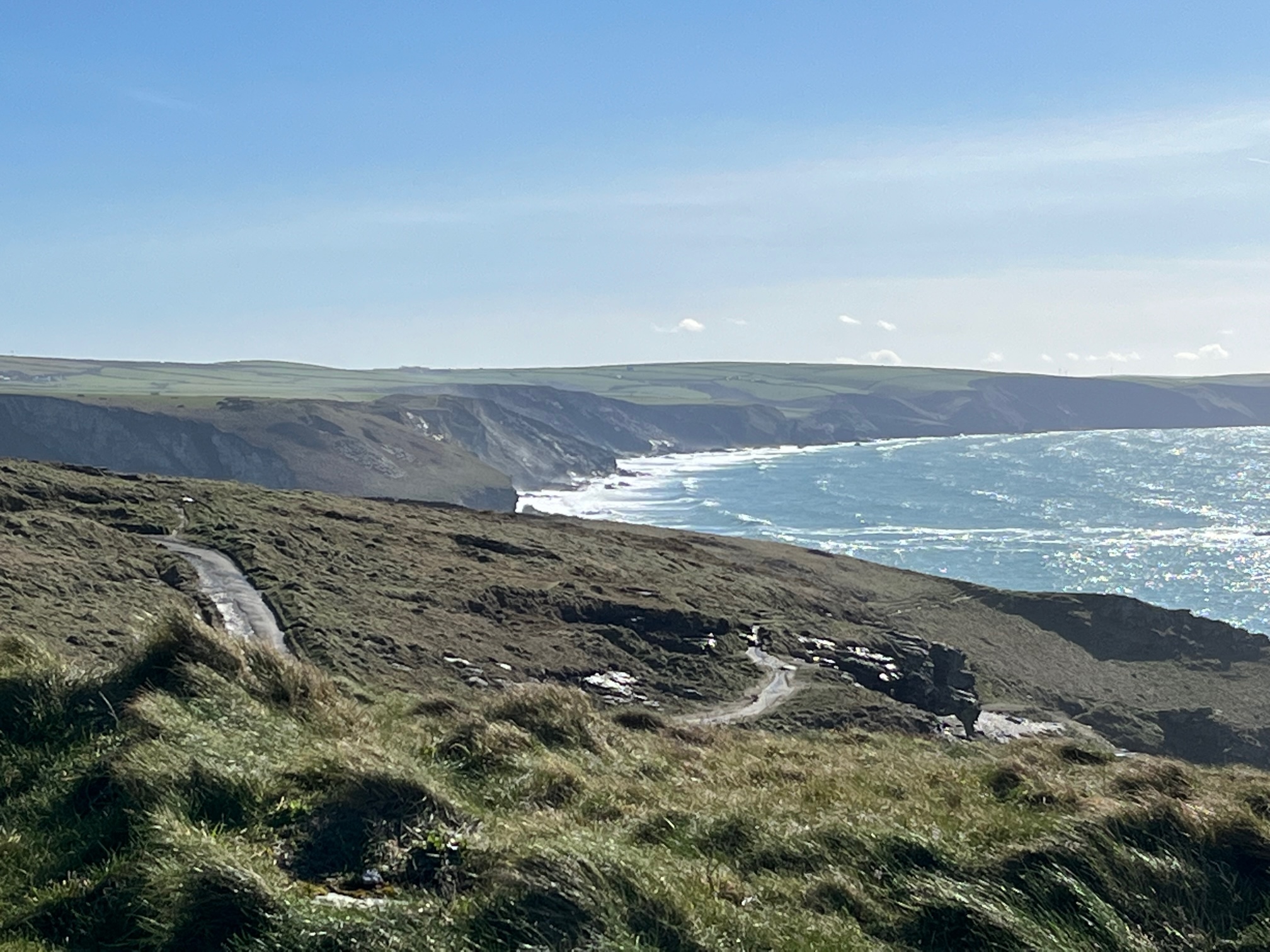
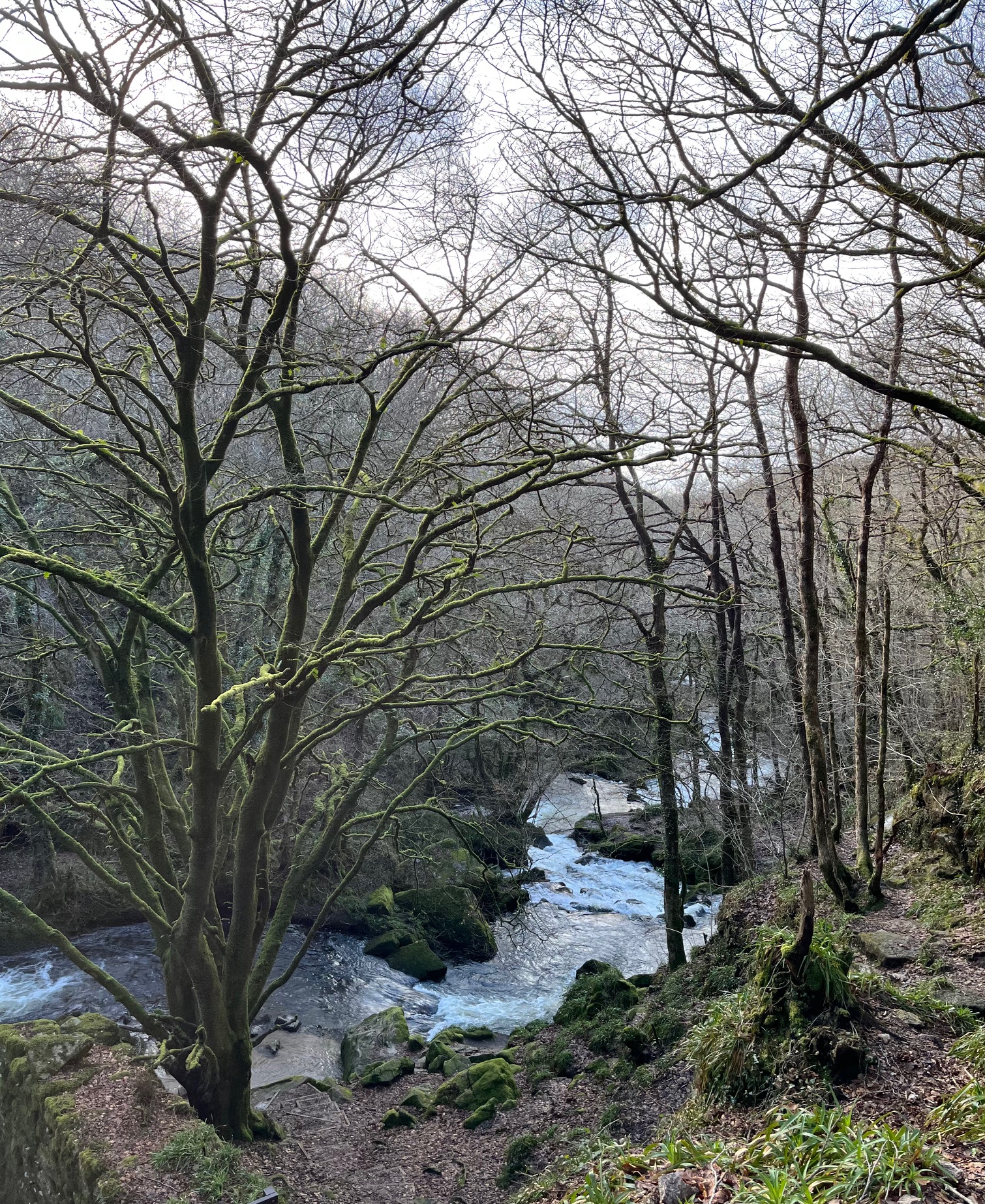
Deceptive photo: This isn’t from Orkney. It’s from Cornwall–the opposite end of the country. Sorry. I’d rather cheat than steal other people’s photos.

Their lives wouldn’t have been easy. Most people who survived childhood died in their 30s and few lived to be 50, but somehow or other this relatively small group of people found time to build massive henges and tombs as well as make that elegant pottery. 

Initially they lived in isolated farmsteads but grew into a tribal society, possibly with an elite ruling class, but that implies the possibility that they might’ve lived without one. Until we hear something definite, it’s your choice. Personally, I’ve had it with ruling elites and I’m going for an egalitarian structure. 

We know a lot of this because for the past 20 years archeologists have been excavating the Ness of Brodgar, an Orkney site that was used by those 60 to 70 generations of late Stone Age residents that I mentioned a paragraph or three back. Or if it makes them sound more modern, Neolithic residents. Now the archeologists are about to rebury everything they dug up so painstakingly, and eventually I’ll get around to explaining that, but first, how long does it take to get through 60 or 70 generations? 

About as long as it took to get from the Norman Invasion of England to last Monday afternoon. So offhand I’d say they were more reliable than we are today.


The Ness

The Ness of Brodgar–that bit that’s been explored–covers six acres and only the top level has been excavated. It may be 5 meters deep in places, with newer structures on top of older ones. Tempting as it must be to find out what’s underneath, the only way to do it would be to destroy the top layer and the archeologists have held back. By covering it up, they’ll leave it to later generations of archeologists who, with luck, will have the tools to explore it without wrecking what’s on top. 

There’s another reason to cover it up: the kind of stone it was built with erodes with long exposure to air. 

In the layer they have excavated they’ve found dozens of buildings, including  temples, outbuildings, and kitchens, all linked by paved paths and surrounded by a wall. It’s built on a narrow bridge of land, so you wouldn’t have been able to go around it. You either went in or you turned back.   

Some of the stones, although not whole walls, were painted.

Did I mention that it rubs elbows with two impressive stone circles, the Ring of Brodgar and the Stones of Stenness? Impressive as they are, though, archeologists talk about them as peripheral. The temple complex–the Ness itself–was the most important piece of work. Or as one archeologist put it, “By comparison, everything else in the area looks like a shanty town.”

Archeologist Colin Richards describes it this way: “The walls were dead straight. Little slivers of stones had even been slipped between the main slabs to keep the facing perfect. This quality of workmanship would not be seen again on Orkney for thousands of years.”

Fans of the Ness say it rivals Hadrian’s Wall and Sutton Hoo for for both size and sophistication. Archaeologist Nick Card warns us never to “underestimate our Neolithic ancestors and what they were capable of.”

The Ness doesn’t seem to have been a settlement. It was a gathering place–a ceremonial center–for people from across the Orkneys.

How come Orkney just turned into a plural? It’s made up of some 70 islands. About 20 of them are inhabited these days. So we’re talking about a group of scattered people who would have come to the Ness to exchange ideas and objects, to hold rituals and ceremonies (no one has a clue what their belief system was), and to celebrate. Or as one article put it, to party.


And what happened next?

A lot of stuff, but since this is prehistory we don’t know most of  it. Around 2,300 BCE, some thousand years after building began, the place was abandoned, apparently after a big feast–more than 600 cattle were slaughtered–and the Ness hung out a Closed sign. 

Did a new religion take the old one’s place? Did power shift, drawing everyone’s attention to some other location? Can I think of a third possibility to round out the rhythm of the paragraph? Dunno, dunno, and no.

By the late Iron Age, the Orkneys had become part of the Pictish kingdom, and by the close of the Pictish era Celtic Christian missionaries began to show up. Then the Vikings came and, as WikiWhosia has it, “The nature of this transition is controversial, and theories range from peaceful integration to enslavement and genocide.” Which is one hell of a range.  

Whatever happened, Norwegians–or Vikings if that’s a more familiar way to think of them–settled in the Orkneys and farmed and pretty much took over. Christianity packed its bags and left. Harald Hårfagre–Harald Fairhair–annexed both the Orkneys and Shetland, making them an earldom. We’re going to dance through this lightly and get out fast, but we can probably learn a lot about the culture from the names of a couple of rulers: Thorfinn Skull-splitter; Eric Bloodaxe.

See why we’re leaving?

According to the Orkneyinga Saga, the islands became Christian in 995, when Olaf Tryggvasson summoned the earl, Sigurd the Stout, and said, “I order you and all your subjects to be baptised. If you refuse, I’ll have you killed on the spot and I swear I will ravage every island with fire and steel.”  

So Sigurd said, “Yeah, what the hell, I always wanted a bit of water sloshed on my head. What do we eat when we’re Christians?” and that was that. Or to tell the story a different way, details about the islands’ conversion to Christianity are elusive. 

Fast forward to the fifteenth century, when the king of Norway, Denmark, and Sweden (we’ll call him King I) used Orkney as a guarantee that he’d pay his daughter’s dowry when she married the king of Scotland (that’s King II). So far, so good, but despite being the king of three countries and a whole raft of islands, King I was broke and he didn’t pay, so presto change-o, King II got the Orkneys, which became Scottish. 

That’s feudalism for you. The rich play chess, using the land and its people as game pieces.

You see what I mean about ruling elites?

The shift brought an influx of Scottish settlers and the islands are Scottish to this day, but have retained a lot of Scandinavian influence.

Britain’s Amateur Archeologists

Let’s take a moment to appreciate Britain’s amateur archeologists–the people who do grunt work for real archeologists, who wave metal detectors over unpromising ground to see what turns up, who follow local legends and either find something ancient or go to the pub and decide when to try again. 

Okay, I can’t tell how fully appreciative you just were, so I’ll take us through a few things amateurs have done lately and see if we can’t push the appreci-ometer upwards a bit.

Irrelevant photo: St. John’s wort, a.k.a. rose of sharon

The Palace of Collyweston

Collyweston was home to Margaret Beaufort, Henry VII’s mother, but by the modern era the palace had disappeared so thoroughly that efforts to find it in the 1980s and 1990s came up with nothing. 

Enter the Collyweston Historical and Preservation Society. It had three things going for it when it decided to look: a group of amateurs, ranging in age from their teens to their 80s; local legend; and ground-penetrating radar. 

Yeah, that last thing was important. Equally important, I suspect, was a fourth thing: local people, some of whom had grown up hearing about the palace. It was out there and they damn well wanted to find it.

“We had no money, no expertise, no plans, no artist impressions to go off,”  the society’s chair said, “and nothing remaining of the palace. It’s naivety and just hard work that has led us to it.”

They used “local folktales and hearsay” to narrow down their search, then they brought in the radar and got permission to dig in people’s gardens, where they found stone mouldings–the remains of the castle. Historians from the University of York will verify their findings, plan the next moves, and preserve what’s been found. 

It’s got to be exciting, seeing a castle emerge from your compost heap, your veg bed, or your kids’ sandbox. 


A Bronze-Age Hoard in Dorset

A retired pensions consultant paid £20 to join a group of metal detectorists working on private farmland in Dorset, but he managed to get himself lost and ended up with what he called the find of a lifetime. About 8 inches below ground, he found a sword from the middle Bronze Age, a bronze ax head, and what the paper’s calling “a decorative arm bangle.” Before I moved to Britain, I read about bangles and wondered what they were. Allow me to translate in case you’re as clueless as I was: a bangle is a “stiff usually ornamental bracelet or anklet slipped or clasped on.” So, basically a bracelet. Unless of course it’s on an ankle, but let’s not complicate things. 

You feel much wiser now, right? 

The director of collections at the Dorset Museum said, “This hoard is incredibly special. The rapier sword is unusual because of the cast bronze handle. The bracelet decoration was quite unusual as well. . . . Finds like this tell us about how people were traveling, meeting, and exchanging ideas with others on the continent in the centuries before the Roman invasion. 

“There was a farming community here and people generated enough wealth to be able to barter for or exchange objects others had made.”

And since nothing matters in our culture unless it can be measured in money, let’s give it a price: the museum raised £17,000 to buy the finds. That was divided between the finder and the landowner.


Deep Time

This is a project that had some thousand people looking through high-resolution satellite images and I have no idea what else to find hints of archeological sites. They covered some 200 square miles of ground in Derbyshire, Yorkshire, Northumberland, and Dorset, finding Bronze Age burial mounds, Roman roads, abandoned medieval villages, and some 13,000 other old places. 

Okay, potentially old places. The next step is to go out in the field and decide which sites to excavate. 


And in General . . .

. . . amateur archeologists are having a moment. A long moment. 

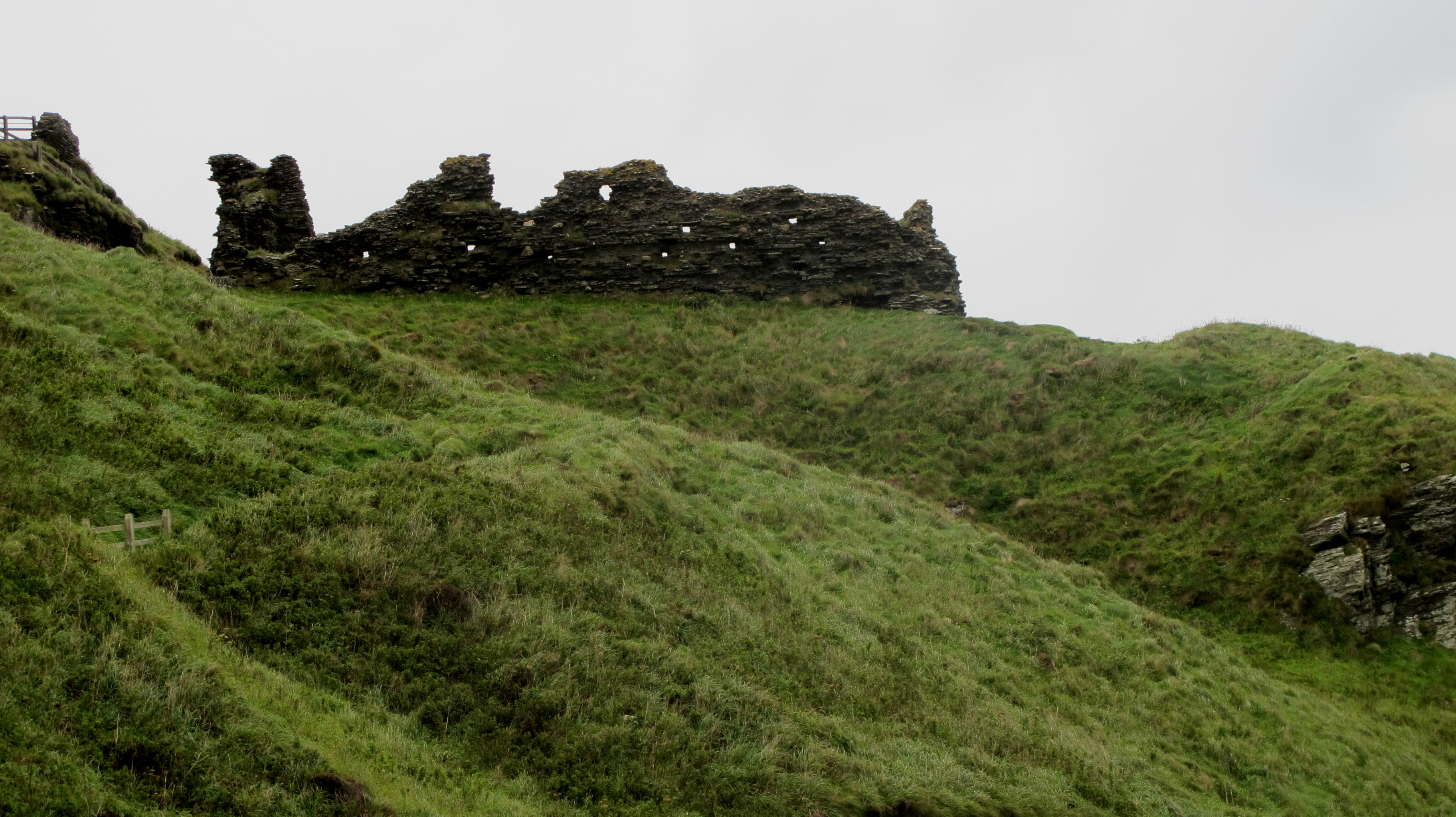
Back before the pandemic (remember a time when you didn’t know the word pandemic?), my partner and I joined some other volunteers at Tintagel Castle, in Cornwall. The glamorous work involves uncovering stuff, in this case the foundations of several early medieval buildings on a headland surrounded by the Atlantic on three sides. 

We joined the crew that came along to rebury what the first crew had uncovered. The idea is uncover, document, and then rebury in order to preserve. It’s less glamorous than finding, but it left us with a strong sense of connection to the site. And working in dust and a wet, salty wind, left us dirtier than I’d thought it was possible to be. Salt, it turns out, binds dirt to the human skin in ways that no one has yet explained to me.

More recently, schoolkids have unearthed what’s being called a 1,400-year-old possible temple near Sutton Hoo. (Sutton Hoo itself is an over-the-top medieval burial involving an entire ship and a shipload of treasure.)

More schoolkids helped unearth a Bronze Age hillfort in Wales. Injured ex-servicemen helped with excavations in the Salisbury Plains, and in Greenwich Park (that’s Greenwich as in Greenwich Mean Time) volunteers have uncovered Charles II’s steps, a swallow brooch, clay pipes, coins, the lens of a sextant, and a Sony mobile phone “that was buried pretty deep.” 

Earlier community excavations in Greenwich found a World War II air-raid shelter and a Saxon burial mound. 

A TV show, The Great British Dig: History in Your Back Garden has encouraged people to find out what they’re living on top of. Its presenter–an archeologist–talks about Britain as having been densely populated, which increases the odds of an amateur finding something. Put a shovel in the earth and who knows what will come up. In our very own back yard, I found a small plastic toy spawned, no doubt, by a TV show I’m not familiar with. I reburied it–uncover, document, rebury in order to preserve. It will be a golden find for some future archeologist. 

Lord Google, who’s always anxious to help, thought I’d want to know about ways a person can volunteer on a dig and led me to the Council for British Archaeology. (Please note the stray A wandering around the word archeology. It’s presence is what tells you the organization is genuinely British, not some American knock-off.) 

Yes, you can volunteer on a dig. You can be a Casework Input volunteer and help plow through applications involving historic buildings in England and Wales. You can join a local group. You can “inspire young people.”

Sorry, at that point they got too upbeat for an old cynic like me and I closed the tab. But never mind. You can sign up to help on a dig, although some digs will cost you, because volunteering ain’t necessarily free.

Archeology in Britain

Have you ever read about an archeological dig and wondered how history’s layers get buried? Is the planet stealing soil from someplace and using it to hide the past? Do we keep the same amount of soil but does the wind blow all those layers of dirt over the past’s leavings? And if it does, why doesn’t it unbury an equal amount of history someplace else?

A book I stumbled across recently–Digging Up Britain: a new history in ten extraordinary discoveries, by Mike Pitts–finally answered the question for me, at least in part. A city, Pitts tells us, accumulates people–people who weren’t born there; people who don’t live there. While they’re there, they work, they trade, they eat, they drink, they sleep, and they do much of that within walls if they can. 

Most of those activities involve physical objects, so the city brings in wood and stone for its buildings, and tiles, slates, or reeds for its roofs. It brings in food for its, um, food. Okay, the rhetorical pattern’s breaking down here. We’ll sneak away without anyone noticing. It brings in leather and metal and fabric (or the raw materials to weave fabric) and everything else that you can think of and I haven’t.  

Irrelevant photo: The north Cornish coast

“Goods are also exported and people leave, but with time and decay, the city gains more than it loses. One generation’s walls become the rubble foundations for another’s. Every leather offcut, rusted nail, broken cup and lost penny finds its way into the teeming earth. Slowly, imperceptibly, the ground rises, covering the traces of the past.”

Well, yes, now that he’s planted the picture in my head, it’s a screamingly obvious one. The cause isn’t space dust. It’s people moving stuff from one place to another and wandering off without it. 


London

Pitts goes on to talk about some of London’s biggest ground-lifting events. Roman London had two fires that can still be spotted in layers of red earth. One of those would’ve been set during Boudica’s rebellion, when she burned London and two other cities to the ground. Then, when 1666’s Great Fire of London finally burned itself out and it was time to rebuild, stone was hauled in and a new city rose on the leveled remains of the destruction.

The biggest leveling of walls, though, was the blitz–the bombing of London during World War II–and when Pitts reaches this point, he focuses on a small area where two excavations found particularly rich Roman artifacts: On the night of May 10, 1941, bombing “disrupted” 8,000 streets, killing more than 4,000 people and seriously injuring 1,800. It wiped out most of the block he’s interested in, where there’d been 350 businesses “crammed into a warren of high Victorian terraces and narrow alleys.” They included cafes, a bookseller, a tailor, a dentist, accountants, and a postage stamp perforator.

Who knew there even were postage stamp perforators? I assumed that got done by some sort of machinery working where and when the stamps were printed. Or that someone with pointy little teeth came along and–

Never mind. Not much was left of the street, and in 1952, when it was redeveloped, the area was opened to archeologists just before an office building went up on the site. The digging had uncovered an underground temple to Mithras, and it was taken apart, and reconstructed (badly) above ground and facing the wrong way. And then in 2012, when the 1952 building was torn down and something newer and shinier was about to be built, archeologists got in there again, only with more time to do their job. What they found was “like a library of random news from across Roman London.” The area had been used as a dump, and archeologists love dumps. It turned out to be “the most productive single excavation of a British Roman site in modern times,” and included a horde of wood-and-wax tablets recording, for the most part, business transactions. It gave them a glimpse into the city before it had the grand public buildings we associate with Roman towns. This was a town in its early stages. 

The success of that second dig was made possible by a change in the relationship of archeologists and developers.


Archeologists and the construction industry

One of the major ways the past gets uncovered in Britain is that someone comes along with heavy-duty construction equipment and starts digging. They’re not hoping to find, say, a Roman villa or a Bronze Age settlement. In fact, they’re hoping not to. They want to build a parking ramp or a shopping mall. 

Until 1990, archeologists were dependent on the goodwill of the developers for access to their sites. Before that, if a developer stumbled into something of archeological importance, and if they didn’t sweep it under the metaphorical rug fast enough, archeologists had to rely on a mix of diplomacy, goodwill, and the public pressure set off by media coverage to get access. Because archeologists mean delays, and delays cost money.

In a showdown between history and national heritage on one side and money on the other, it’s not often that history and heritage win, but they did win when the foundations of Shakespeare’s Rose Theatre were discovered by accident. A media storm set off a celebrity storm, which in turn set off a wider public storm, and under that pressure a delay was organized and the new building eventually went up over the theater’s foundations, which are now covered in water to keep the ground from cracking.


Irrelevant but interesting bit of information 

Exploration of the theater’s foundations brought us the news that hazelnuts were the popcorn of Shakespeare’s day. The shells were everywhere. 


The relationship changes

After the battle to save the Rose, things changed, and it kills me to say anything good about Margaret Thatcher’s government but I’m going to have to: they’re the ones who introduced Planning Policy Guidance 16–Archaeology in Planning, called PPG16 by its friends and admirers. 

PPG16 is a guidance paper that requires anyone building anything that needs planning permission–and in Britain, that’s just about any building at all–to consider its  impact on archaeology. According to Heritage Daily, PPG16’s impact was unintentional, but lovely, so I don’t have to be particularly nice about Thatcher’s government: they didn’t mean to do something good; they were just trying to shut everybody up.

Heritage Daily  describes the events at the Rose as an omnishambles, with “leading actors, including Sir Ian Mckellen and Dame Peggy Ashcroft, facing down the developers’ bulldozers, standing alongside archaeologists, the general public and local children waving placards declaiming, ‘Don’t Doze the Rose.’

“Faced with this highly public demand that the historic site be protected, the Environment Department, under Secretary of State Nicholas Ridley, proved utterly incapable of formulating a coherent policy to dig the developer Imry Merchant and the Government out of the mire. “

In the end, they cobbled together a system that had local and national governments, developers, heritage professionals, and the public working together to preserve whatever could be preserved in place, and to record, and sometimes move, whatever couldn’t be. It didn’t make developers or free-market purists happy, but it did keep politically damaging incidents like the Rose from happening again. 


The impact on archeology

All this meant archeology had to change. The profession came into this period as a mix of local heritage organizations, professors, and museums. None of them were equipped to meet the schedules or use “the same language as the architects and developers whose plans the system was designed to facilitate,” Heritage Daily says. 

After PPG16, “Archaeology as a discipline found itself putting on a suit, becoming a profession and sitting down in planning meetings with architects and developers to discuss fitting in an excavation alongside the other building site preparation and ground works.”

“It’s not perfect, but . . . once PPG16 and the concept . . . was in place, pipeline surveys and large scale infrastructure projects like Heathrow Terminal 5 and HS1, the Channel Tunnel Rail Link, did offer the chance to develop practice and sample large transects of landscape to sometimes startling effect.”

Some years ago, not far from where I live, a new sewage line uncovered enough Cornish history that the archeologists involved organized a presentation in the village hall, and it was packed. That was my first hint of the working relationship between archeologists and the construction industry, and I was impressed.

One of the finds they talked about was a series of Christian and pre-Christian burials. You could tell them apart because the Christians were buried so that they’d be facing east when they rose on–what is it? Judgment day? Whichever. If it happens, I’m sure someone will have set an alarm clock, so I don’t need to worry. Anyway, they were supposed to rise from their graves and be facing east. The non-Christians, on the other hand, were buried with grave goods–things they’d used in life and would, presumably, want in the next one. Or maybe the goods were a way for the living to grieve and pay tribute. Who can know at this distance in time? Whatever the reason, that’s how they buried their dead. 

But the archeologists had found a few people who were hedging their bets–or at least whose descendants were. They were buried facing east but also with grave goods. Whichever way the afterlife played out, they’d be ready.

In Pitts’ last chapter, he mentions an enlargement of the A14 (that’s a road) near Cambridge that’s been a particular gift to archeology. They’ve uncovered ancient villages, industrial zones, religious monuments, 15 tones of bones and artifacts, pottery kilns, field layouts and more, all of which could so easily have been dug up, scattered, and lost to history.

Who lived in early medieval England? 

We’re programmed to imagine early medieval England as a land of straw-haired Anglo-Saxons–so much so that an article debunking that belief is illustrated by (you guessed it) a picture of a straw-haired young woman wearing a leather headband and gazing soulfully up at the clouds. 

But before I go on, let’s define the early medieval period. English Heritage opens the doors at around the year 410 and tossing the drinkers out onto the street in 1066, which means it runs from the end of Roman rule to the Norman invasion. You could call it the Anglo-Saxon period without losing too many points on your essay, even though what you’re about to read messes with the standing assumptions about Anglo-Saxon England. You could also call it the Dark Ages, but you’ll lose points. It’s got more zing but it’s gone out of fashion. 

Irrelevant photo: hellebore


That straw-haired image

The stereotype we bought into–and forgive me if I pretend I can talk for all of us–grows out of having read that the Anglo-Saxons invaded that big central chunk of Britain we call England, pushing its earlier residents, the Celts, to the margins.

The margins? That’d be Scotland, Wales, and Cornwall. 

Since the Anglo-Saxons were Germanic tribes, we can call Central Casting and tell them we need blonds–lots of tall, warrior types and a few wistful maidens.

Why the gender imbalance? Because we were taught the Anglo-Saxons came as warriors–big, blond guys with big, blond swords.

The archeologists who gave us that story did it in good faith. They were working with the tools they had. They’d dig up an early medieval village or graveyard, find Anglo-Saxon artifacts, and not unreasonably deduce that Anglo-Saxons lived there. But turn a few calendar pages and before we know what hit us, science has given them new toys to work with. In other words, the next generation of archeologists could work over the same ground but now sequence DNA and read tooth enamel well enough to identify people’s tribes and know where the tooth enamel- wearer had grown up, and that’s made the picture of early medieval England and the Anglo-Saxons more complicated. 

The article that pushed me down the road toward this blog post opens (once you get past that blond-haired maiden) by questioning the assumption that everyone in early medieval English villages looked alike or talked the same way. It’s based on a DNA study of 460 people from sites across northern Europe, 278 of them from the southern and eastern English coasts. 

The Anglo-Saxons and the Celts

The first change to the traditional story is that the Anglo-Saxons (or the incomers, anyway, whatever we’re going to call them) don’t seem to have driven the Celts out. Instead, the two groups settled down alongside them and played house: Many people in these settlements were of mixed heritage. 

The study did find evidence of mass migration into the British Isles after Roman government ended, but it wasn’t a migration of warriors. These were families.

Now let’s shift to a different article. It’s about the same study but juggles a few different details. It doesn’t talk about Celts and Anglo-Saxons but people of WBI (western British and Irish) and CNE (continental northern European) heritage. If you want the percentages from various communities, that’s where you’ll find it. I hope you know better than to look to me for numbers when they’re avoidable.

But the genetic makeup of the communities wasn’t limited to Celts and northern Europeans. One skeleton–a girl of about eleven, found in Updown (yes, seriously), in Kent–had two-thirds CNE ancestry and one-third West African ancestry. The modern grouping most closely related to her African ancestors would be the Esan and Yoruba peoples in southern Nigeria. 

How’d they show up there? Trade, probably. Early medieval England wasn’t an isolated place, ad traders often exchange more than just the goods they’re selling. They exchange culture, language, DNA.

Updown Girl was buried with her family members and with grave goods similar to theirs, like any other village girl, since that’s what she was, in a manner we still call Anglo-Saxon for lack of a better term. 

Why am I looking for a better term? Because the culture we still think of as Anglo-Saxon and that we used to assume was brought over whole by the Anglo-Saxon tribes seems to have belonged to a hybrid culture–the kind that grows up when cultures meet and mix. We don’t know what that mixing was like; we can only infer it from DNA, tooth enamel, and the goods people were buried with.

Grave goods and social patterns

The second article says, “Grave goods seem to have played only a very limited role in the signalling of different ancestries–assuming that was what was intended–and where it is seen, that signalling was dependent on biological sex.” In other words, you can’t tell from the goods people were buried with who was of primarily CNE (or Anglo-Saxon) ancestry and who was primarily WBI (or Celtic), although men whose ancestry was primarily WBI–what we’d call mostly Celtic–were more likely to have been buried with grave goods primarily WBI than women were.

How come? Dunno. Any answer will be wild speculation. If I was writing historical fiction, I could have fun with that, although someone somewhere would inevitably think it was fact.

The archeologists found that the two groups–the WBI and the CNE–didn’t generally keep themselves separate and people soon had mixed ancestry. The patterns varied from settlement to settlement, but all of them change our assumptions of what Anglo-Saxon means. It’s beginning to look like a culture adopted by a group of genetically mixed people rather than something brought over whole by invading tribesmen.

As the first article–the one with the straw-haired maiden–puts it, “Early Anglo-Saxon culture was a mixing pot of ideas, intermarriage and movement. This genetic coalescing and cultural diversity created something new in the south and east of England after the Roman empire ended.”

For people who believe in racial purity, the science of DNA must be a real pain in the backside.

Archeological finds and treasure from a country knee deep in history

The last few years have been good ones for British detectorists.

For British whats?

Detectorists. Those people who wander around with glazed eyes, waving metal detectors above the ground and listening to them beep. They’re looking for buried treasure. Or the tops that people break off aluminum cans. The metal detectors, as opposed to the detectorists who wave them, aren’t discriminating. They’re like gun dogs that point not just at game birds but also at feathered hats, feather dusters, and feathers tattooed on people’s arms. Metal is metal. Let the humans sort it out.

Irrelevant photo: camellia buds.

More people have turned to metal detecting in recent years and they’re uncovering some serious archeological finds, which are making their way into museums. The increasing interest is due in part to–of course–a sitcom. Reality limps along behind the representation of reality. And that, my friends, is what passes for real life. 

In 2018, 96% of the treasure dug out of the British earth was found by people with glazed eyes and metal detectors.

Okay, they don’t necessarily have glazed eyes. It just sounds better that way. And treasure has a narrow official definition–coins; precious metals; that sort of stuff–so archeologists have found plenty of other stuff, but it appears in a different column on the sreadsheet.

A 1996 law that required finders to report treasure also allowed them to split any profits with the landowner, and that’s meant that they’re likely to actually report their finds instead of squirreling them away somewhere or selling them through shady antiquities dealers in back alleys.

Sorry. I don’t know any antiquities dealers, shady or otherwise, so I’m falling back on cheesy stereotypes there.

So when we count up the reasons new people are being drawn to metal detecting, the sitcom isn’t the only one. We can add potential profit. 

A very small and random selection of what’s been found lately: 

  • More than a thousand silver coins in a field behind a pub in Suffolk. The best guess is that they were buried there during the Civil War. 
  • And 69,347 Iron Age coins in a field in Jersey. They date back to 50 B.C., give or take a few months. 

But enough about treasure. It’s the smaller part of the historical riches waiting to be discovered. Let’s talk about archeology.


The neolithic era

In Yorkshire, archeologists have uncovered a saltern–an industrial-scale salt-making site–that dates back 6,000 years. Or to put that another way, it predates Stonehenge. It’s the earliest one that’s been found in Britain.

The pottery that’s been found there shows traces of milk, indicating that the people who built it were settled, growing crops and raising animals. And the scale of the saltern says that they were selling salt, not just making it for themselves. 

“It changes how these people are seen,” said Steve Sherlock, the archeologist who led the dig. They were “people who are undertaking a level of industrial processing and distributing.” 

Because of salt’s use in preserving food, the people who produced and distributed it would have been among the wealthier groups of their time. 

Neolithic salterns have been found in Europe–especially Poland and the Balkans–but this is the first found neolithic one found in Britain, possibly because rising sea levels and coastal erosion have swallowed the others. They have a habit of being coastal, since seawater has a habit of being salty.

The pottery found at the site matches a type introduced by people who migrated from what’s now northern France at around 4000 BC. The saltern technology may well have come with them.


The bronze age

With the old stuff out of the way, let’s move south to Stonehenge

A major road, the A303, runs alongside Stonehenge, and for years there’s been a fight over whether to dig a two-mile tunnel and run the road through it. Opponents argue that it will do lasting damage to a world heritage site and that millions of artifacts will be lost. On the other hand, once the tunnel’s built, you’ll be able to take a selfie at Stonehenge without a big red bread truck showing up in the background. Which makes it all worthwhile.

After an assortment of court challenges and the use of a lot of newsprint, the opponents lost and the work’s been started. The current stage involves 1,800 test pits, 400 trial trenches, 150 archeologists, 18 months, and some uncounted amount of mud. Construction on the tunnel itself won’t start until 2023. 

Is the tunnel a good idea? Probably not, but what do I know? As long as they’re digging, though, they’re finding some interesting stuff. Let’s not ignore it just because we’re sulking. They’ve found graves, pottery, burnt flint that suggests metal or leather working. (No, I don’t know what the connection is either.) It’s probably too early to know what this tells them about the site or the people. 


The iron age and the Roman era

In Oxfordshire, the excavation of a hillfort turned up an iron age settlement that dates from 400 to 100 BCE, not to mention a Roman villa built at the end of the third century CE or the beginning of the fourth. They were found when the Earth Trust, which cares for the hillfort, decided to redevelop its visitor center.

Because no place that welcomes visitors is complete without a visitor center. Where else will people spend their money?

The site was occupied from the bronze age through the Roman era, so the trust hadn’t just planned to just plow through with heavy equipment–they figured they’d find something interesting–but they also hadn’t expected anything quite so rich. What they found included well-preserved iron age pots, Roman bone combs, surgical instruments, and lots of pottery shards. It seems like pottery shards are always in there somewhere.

Chris Casswell, the dig’s head, said, “It’s a substantial iron age settlement. It’s probably no surprise because we’re right at the foot of Wittenham Clumps, an enormous hillfort. The settlement probably continues well into the landscape beyond where we’ve looked.

“Normally we go out and do geophysics, which gives an image of what might be under the ground. But on this site, it didn’t show up any of this. . . . So it’s completely unexpected.”

The Roman villa is still partially buried, and there are at least two Roman cemeteries and stone-built ovens for drying grain.

And in case you’re wondering, the bronze age came before the iron age because copper and tin, which make bronze, melt at lower temperatures than iron. It took humans a while to pull together the technology to melt iron. I had to look it up too.


The medieval period

King’s College in Cambridge tore down some 1930s-era student housing and found an early medieval graveyard

According to Bede’s Ecclessiastical History, which was written in the eighth century, Cambridge was abandoned in the fifth century, when the Romans left. A lot of Roman towns were. But take that with a grain of salt. Dr. Caroline Goodson, a professor of medieval history, said, “We already know that Cambridge wasn’t fully abandoned. But what we’re seeing now is a greater and clearer picture of life in the post-Roman settlements.” 

They’re finding lots of goodies in the graves: bead necklaces, swords, pottery, glass, bronze brooches, short blades, mostly from the early Anglo-Saxon period–say 400 to 650 C.E. And because the soil’s alkaline, the bodies are well preserved, so they may be able to extract information about people’s diets and DNA, which should give them information on migration patterns. 

Goodson’s best guess at the moment is that the people were the descendants of Roman Britons along with more recent migrants from Europe. 

“They are no longer living as the Romans did,” she said. “They’re eating differently, dressing differently, and finding different ways of exploiting the land.”

Non-pandemic news from Britain: wallabies, archeology, and poetry

Let’s take a break from the pandemic. An island in Loch Lomond is for sale, and it comes complete with woods, rocks, and a mob of wallabies.

Yes, the collective noun for wallabies does seem to be mob. Or possibly a troupe. Or a court. They were brought there by Lady Someoneorother–Arran: Lady Arran; I have a British passport now and I’m supposed to take this stuff seriously–in the 1920s (or ‘40s, depending on who you want to believe) from the family’s estate in southern England. Where, you may have guessed, they also weren’t a native species. 

The place is a steal at £500,000. Such a deal that you might want to buy two. The catch? The only building is a 1920s ruin and anyone living there is limited to sixty days a year. 

Buyer must like wallabies.

*

Irrelevant photo. This, dear friends, is a flower.

Bristol’s science and culture center asked city residents what questions they really, really wanted answered. The plan is to pick seven questions and address them in an exhibition. They got more than 10,000 questions, including a predictable amount about “poo and wee,” but others that ranged from the nature of time and the universe to whether god lives “in heaven because he’s scared of what he’d created.”

The science and cultural center doesn’t wander through the world without capital letters. Its real name is We The Curious, although I’d have gone for a lower case T.

Just sayin’, guys, in case you want to reconsider. Or explore that in an exhibition.

*

A four-year-old has gotten a book contract for his poems. I mention this in case you’d managed not to feel bad about your own writing career (assuming, of course, that you’re a writer). The particularly annoying thing about it is that they’re definitely a kid’s poems, but they aren’t easy to dismiss.

One that was quoted runs:

   Take our gloves off.

   Take our shoes off.

   Put them where they’re supposed to go.

   You take off your brave feelings

   Because there’s nothing

   To be scared of in the house.

His name is Nadim Shamma-Sourgen and he dictates his poetry to his mother. He’s still learning to read. 

How has he responded to the fuss being made over his poetry? 

“When my poems are in a book,” he said, “can I please have a copy?”

And what has he learned?

“Don’t put your finger up your nose on live telly.”

Would that all writers were so wise.

*

Okay, we can’t ignore the pandemic completely. Lockdown drove a lot of Britons to work in their gardens, and Britain having a long history of lost stuff, they’ve been finding things: A medieval silver coin. A medieval belt hook shaped like a snake. A rock with writing on it, probably from the fourth century. Roman pottery. 

It reinforces my belief that anywhere you put a shovel into British soil (except outside our house) you can find something of historical significance. 

All we find at our house is slate. And a couple of plastic toys left by the last owner’s kids.

*

An archeological find in a cave in Mexico may end up changing the theory of when humans first reached the Americas. The going theory is that they arrived 13,500 years ago. The new finds argue that they may have arrived 30,000 years ago. That would have been before the last ice age ended, when the area would’ve had a climate a bit like Oregon or British Columbia.

Now get out of the way, because the archeologists are going to argue about it. Probably for a long time. 

*

And one more pandemic story: Just after masks became compulsory in England, a man strolled down London’s Oxford Street wearing one. This is news because that’s all he was wearing, although it wasn’t covering his face.

If he was making a political point, no one cared what it was.

All the news that fits

Driving Hazards

A driver in Devon was found upside down in a ditch in February. To be clear, that’s both the driver and the car. The driver explained that he’d swerved to avoid an octopus.

The road’s five kilometers from the coast. Call that two and a half miles. You’ll be wrong if you do, but you’ll be within driving distance of the right answer.

The driver was arrested “on suspicion of driving while unfit through drugs or drink” and will have to attend a class on thinking up credible excuses and another one on enjoying your hallucinations.

He gets time off for trying to save the octopus.

Apologies

The British Council has apologized to George Orwell for refusing the publish an essay on British food that it had commissioned from him. Several things make this odd. First, the council had paid him for the article, so whatever hard feelings they caused could have been much harder. Second, the rejection happened in 1946, which is by any standard a long time to delay an apology. Third and most important, Orwell died in 1950 and has nothing to gain from publication anymore.

But what the hell, let’s talk about it anyway.

Irrelevant photo: A violet–one of the first spring flowers. Or winter flowers if you believe my neighbors. If flowers bloom, I think it’s spring.

The article involved was supposed to convince Europeans that British food wasn’t as bad as they thought. Based on the quotes I’ve seen, the council had a good argument for not publishing it. The British, Orwell said, eat “a simple, rather heavy, perhaps slightly barbarous diet.” He also said the coffee was nasty and that vegetables seldom get the treatment they deserved.

In fairness, Britain was still rationing food in the wake of World War II, and his description was probably accurate but not what he was being paid to say.

And then there was his marmalade recipe. The council says, in hindsight, that it was wrong to reject the essay but that the marmalade recipe’s still wrong–too much sugar and too much water. “It would have turned out far too watery,” they said.

Did Orwell actually know anything about cooking or did he just beg or steal recipes from people who did and hope they weren’t messing with him? I don’t know. What I can tell you is that in addition to getting his marmalade wrong (and I’m going to have to take other people’s word that he did; I’ve never made the stuff), he also says crumpets are made “by a process that is known to very few people.”

If that’s true, I belong to an elite secret society. And if you’ll follow the link, so will you.

Language

Translation Issues: Ariana Grande went to the tattoo store, as so many people do, meaning to pick up a simple tattoo–in this case, one with the title of her song “Seven Rings.” In Japanese.

Why Japanese? One of the unpredicted results of globalization is that people want tattoos in languages they don’t know but think are cool. It’s less harmful than a lot of the other, more predictable, results have been.

It (that’s the tattoo, not globalization) went wrong when she found out that the damned thing hurt and she asked the artist leave out some characters.

So what does it say? “Shichirin,” which is a small charcoal grill. An earthen one, in case that helps us understand the situation better.

Which wasn’t what she wanted, and since she’s a public figure folks started making fun of her, so she got it fixed. At last sighting (by me, and I make no effort to stay up to date with this stuff) it read, “Japanese barbecue finger.” Or maybe that’s “small earthen charcoal grill finger.” It’s up to you, because translation’s not an exact science. It leaves a good bit of room for interpretation.

I’m now going to give you some advice, because I think every last one of you needs to hear (or read) it: Do not get tattoos in languages you can’t read.

Language and Work: The Oxford English Dictionary is asking the public to tell them about professional jargon and work slang. You can submit your entries here.

The articles about this that I’ve seen give several examples of the kind of words or phrases they’re looking for but the one getting the most play is DTSO. When a vet uses it, it means dog smarter than owner.

Archeology

Oops. A Scottish stone circle that was thought to be thousands of years old turns out to have been built in the 1990s.

Yeah, archeologists had noticed that it was unusual. The stones were small. The diameter was small. But stone circles are sneaky bastards, and they’re hard to date.

That’s not date as in going to a movie and get all romantic with but as in figure out how old they are.

Those aren’t unrelated, though. Before you get into that romantic stuff, you should know how old they are. Personally, I’ve gone to movies with people who made going out with stones look enticing.

But we’re not here to talk about me. The stone circle was a good replica, and the guy who built it came forward when the stones were being tested, saving everyone involved any further embarrassment.

Roadworks: Archeologists exploring an area that’s being dug up for roadworks near Cambridge found what they think is the earliest evidence of beer brewing in Britain. What I love about this story isn’t that it involves beer (trust beer to steal the headline, though) but that it involves archeologists playing in the mud of construction zones.  

Large-scale British construction has to take the country’s historic environment into account, which often means that archeologists follow along and find all sorts of neat stuff. Here in Cornwall, they followed the digging for a new sewage line and found, among other things, some burials that combined early Christian burial style (laid out so the person could be resurrected with a view of the sunrise) with pre-Christian burial (with put the body in the ground with stuff they might want in the afterlife). Presumably, they were hedging their bets. The people who buried them hadn’t made up their minds about how things worked after death and wanted the person to prepared for anything.

How’d I find that out? The archeologists held a public meeting to talk about what they’d found and had a great turnout.  

The construction industry considers important archeological finds a risk–they hold up the work. Archeologists, I’m sure, have their own opinions of the construction industry, which is always pressing on them to hurry up so they can go ahead with what they consider the important stuff.

The 21-mile construction project that found the brewing site found remains dating from the neolithic period to the medieval–a stretch of 4,000 years.

Money

Money and Coffee: A new company plans to roast coffee beans by shooting them into space in a spacecraft called the Coffee Roasting Capsule. It could be launched as early as next year. Or it could not, depending on multiple factors that you can make up as well as I can. The idea is that, outside of gravity, the beans will (a) float and (b) get heated by the capsule’s re-entry into earth’s atmosphere. Here on earth, inconveniently, beans tumble as they roast. They break apart. They scorch.

Gravity’s an inconsiderate beast.

I haven’t found any estimates on how much a cup of space-roasted coffee’s likely to cost. And the whole thing may never happen anyway. The article notes at the end that the company didn’t return the paper’s calls and emails. 

No, I won’t sink low enough to make the obvious pun about them being too spaced out to bother. 

Money and Money: The world’s 26 richest people own as much as the poorest 50%. There is nothing I can add to that.

Money and Cake: A British judge had to decide whether a health-food brownie is a cake or not a cake. If it is a cake, it can be sold without without VAT–a hefty sales tax. If it’s not a cake, then it would be considered confectionery (a fancy word for candy) and taxed.

Why the difference? Foods that are part of a healthy diet–foods like cake–don’t get taxed. Or if not exactly a healthy diet, a basic diet. Non-basic frivolities get taxed. 

So someone somewhere had to decide that cakes and biscuits (which if you’re American are cookies) are basics but candy (a.k.a. confectionery) isn’t. Unless the biscuits have chocolate on top, in which case they’re a luxury item and get taxed.

You didn’t really follow that, did you? Let’s give an example. It won’t help but it’ll make me feel like I’ve done my job.

A chocolate cake covered with chocolate is not taxed. Chocolate cake with frosting is an essential part of the basic diet that’s good enough for people whose spending we (let’s duck the issue of who “we” are for now) scrutinize, which is to say people who earn less than us and who we suspect are frivoling away their money on chocolate-covered biscuits when plain biscuits are good enough for the likes of them. 

They’re probably also wasting it on rent and laundry soap.

It cheers me up to know that someone somewhere is bringing rational thought to important questions like what low-income people are allowed to eat without (a) paying tax on it and (b) intruding tax-free on the baked goods of their betters.

No, no. I’m completely objective about this stuff. You should hear me when I have an opinion. 

When I got out my magnifying glass and looked between the lines of the newspaper articles about this, it sounded a lot like the judge had to taste not just the health-food brownie (made of dates, brown rice bran, and finely chopped Birkenstock sandals) but also a French Fancy (don’t ask for it at Victoria’s Secret; you’ll embarrass everyone involved, including yourself)), a vanilla slice, a chocolate eclair, and a slice of Victoria sponge.

It’s a tough job but someone had to do it.

This isn’t the first time judges have had to make this kind of distinction. Courts have based previous judgements on important issues like whether the item’s eaten with a fork and whether it would be out of place on a plate of cakes “at a cricket or sporting tea.” Because looking at home on a plate of cake at a cricket or sporting tea is the measure of a basic diet. Or else a sporting tea is located at the outermost limit of the way judges imagine the world to work. 

Dressing for Winter

Last January 14 was the tenth annual No Trousers on the Tube Day.

I need to stop here and do the usual translations: The tube is London’s underground rail system–what I’d call a subway (you never quite stop being from New York, or I don’t anyway) but in Britain a subway’s a tunnel for pedestrians, not for trains. And trousers are what Americans call pants. Pants are what the British call underwear. So the participants did wear underwear but didn’t wear anything over it.

If you, dear reader, are neither American or British, I’d love to offer a helpful translation but I’m at the limit of my knowledge here and don’t want to lead you astray. You’ll have to do that on your own.

Why have a No Trousers on the Tube Day? Basically, why not? Organizer Farhan Rasheed said, “There is no point to it, we are not campaigning or raising awareness of anything…. It’s a bit of a nonsense day out. It’s London and London is used to this stuff, they take it in their stride and get back to their book.”

The group caught an assortment of trains. On the Picadilly Line, the crowds were thick enough that the participants had trouble finding space to take off their trousers.

It was organized by the Stiff Upper Lip Society, which recommended avoiding “thongs/budgie-smugglers/anything see-through . . . as we aim to amuse, not offend, fellow Underground users.”

To hell with Britain: news from all over

Department of Religious Freedom: A Dutch court ruled that a woman does not have the right to wear a colander on her head in her passport and driving license photos. And just to be clear, that’s not because she’s a woman. A man doesn’t have that right either.

That strikes me as fair enough, but the story’s more complicated than it appears. We’re talking about religious freedom here.

The woman in question, Mienke de Wilde, was (this was in August, when the story appeared in the press) considering an appeal the the European Court of Human Rights. She’s a law student and I’m sure she’ll learn a lot from it. And talk about having something to put on your resume . . .

Irrelevant photo: If I remember my wildflowers correctly, this is a thistle. Gorgeous, isn’t it?

Dutch law bans headgear in identity photos but people can claim an exemption on religious grounds, and de Wilde was claiming one. She’s a Pastafarian, a member of a religion whose members worship an invisible, undetectable god, the Flying Spaghetti Monster, who created the universe. They wear colanders on their heads as a tribute to the god, although they consider it disrespectful to explain their beliefs without wearing full pirate regalia.

Why? “Because He becomes angry if we don’t,” the U.K. Pastafarian website says. I should probably have read the Dutch site, but I don’t read Dutch and don’t trust Lord Google to translate anything this important.

Since I’m short on pirate regalia, I’ll leave a full explanation of Pastafarian beliefs to someone with a better wardrobe, but I can at least say that believers are expected to be nice to all sentient beings and to eat a lot of pasta.

Pastafarianism is recognized by both the New Zealand government and the spell check system on my toy typewriter. The Dutch court didn’t exactly say it isn’t a real religion. It said, with the sobriety of which only a court is capable, “It may be the case that the colander is considered a holy object for Pastafarians, worn in honor of the Flying Spaghetti Monster, but there is no obligation to do so. In fact, Pastafariansm has no obligations or restrictions.”

That does seem to be true. Pastafarianism’s short on obligations and don’ts. The church originally had ten I’d Really Rather You Didn’ts, but two got lost, so now it has only eight. As far as I can tell, it doesn’t demand or forbid much of anything. Except that  business about the pirate costume.

Department of Shhhh, This Is a Library: A librarian called in a bomb hoax to delay his plane because he was running late. That held it up for 90 minutes, but he still didn’t make it and was arrested when he got abusive with airline staff.  

Kind of changes your image of librarians, doesn’t it?

Department of Corporate Overreach: Procter & Gamble is trying (or at last reading, in August, was trying) to trademark some bits of the alphabet soup spread by text messaging, including LOL, WTF, NBD, and FML. I’ll translate those for the acronymically impaired: laughing out loud, what the fuck?, no big deal, and fuck my life.

The applications went to USPTO–the U.S. Patent and Trademark Office.

Is P&G going to release a product called Fuck My Life? If so, can I sit in on the meetings where they work out a marketing strategy? Please?? I really need to be there and I promise to take notes and report back.

Sadly, it looks like all they want to do is use the letters to advertise existing products so that the millennial generation will think they’re cool. Or whatever today’s equivalent of cool is. Hot. Lukewarm. Fried. Acronymed. I’m 103 and exempt from having to be cool, hot, or anything in between.

The truth is that I never was cool but I no longer give a fuck (which just might make me cool–who knows?). It’s one of the lovely things about getting older, and we can reduce that to an acronym if my language offends anyone: INLGAF.

The USPTO asked P&G for clarification (I’ll bet they did), but according to the Independent, the BBC, and the Guardian, P&G declined to comment to the press.

Of those three, only the Guardian was willing to spell out what all the acronyms stand for. The others hid behind asterisks and “too rude to spell out.”

I think I said this before, back when the Royal Mail trademarked the shade of red it uses on trucks and mailboxes, but I never got around to doing anything about it: I’m going to trademark the word and. That means every time anyone else uses it, they have to put a little ™ (meaning trademark) sign beside it. Otherwise I get to sue them.  

Department of Truth in Blogging: That last paragraph contains a bit of urban mythology. When I worked as an editor, I ran into one or two writers who were convinced that if they mentioned a brand name they had to add ™ to avoid lawsuits and other forms of apocalypse. They didn’t. We didn’t. You don’t. Companies use the symbol to show that they’re claiming the word as a trademark. An R in a circle means roughly the same thing only more so, but WTF, let’s skip the details–they’re boring. The claim only matters to you if you’re another company in more or less the same field and want to use the word / name / phrase / color /acronym.

Department of Friendly and Accessible Government: Britain’s minister for immigration Twitter-blocked two applicants who, in desperation, tweeted her to ask for help when the Home Office wouldn’t reply to their appeals or to letters from their MPs. One was a citizen trying to prevent his long-term partner from being deported to Australia. The other was a citizen trying to get British passports for his Filippino-born adopted (and already British) children. The snag is that they have Filippino passports with their pre-adoption names. To change their names on the Filippino passports, the family would have to take the kids out of school and move to the Philippines, then he’d have to re-adopt the kids. It could take up to 18 months.

What the hell, people and their needs are all so complicated. It’s simpler just to block them.

Department of Endless Updates: Britain’s Home Office has updated its immigration rules 5,700 times since 2010. Or that was the number as of late August. That means they’ve more than doubled in length. They’re now 375,000 words long.

By way of comparison, the minimum length of a novel these days is (give or take a few ands or a the’s) 40,000 words. Most are between 60,000 and 100,000.

At least seven times, new guidelines were issued a week after the last ones were issued.

Judges and lawyers are tearing at their wigs in frustration. One said, “The changes are often hurried out, which means they can be badly written. They can be very difficult to understand, even for judges and lawyers.”

Another called it (with typical British understatement) “something of a disgrace.”

Department of Urban Wildlife: In August, New York City subway crews found two goats on the tracks of a Brooklyn subway line that was closed for repairs. The goats grazed their way down the line–I’d like to say happily but I wasn’t there and even if I had been I don’t know goats well enough to read their mood. But graze they did, right alongside the electrified third rail, until they were tranquilized and moved to a rescue center in New Jersey, where, even though I’m not there and et cetera, I’m absolutely sure they’re happy.

The area where they were found is close to some slaughterhouses and the goats are thought to have escaped from one. So yeah, good food, a nice wide river between them and the slaughterhouse? They’re happy.

Department of Technological Wonders: An article about policing the Notting Hill Carnival mentioned that the police aren’t going to use facial recognition software again this year. They tried it out for two years running and among other successes it managed to confuse a young woman with a balding man.

I struggle to recognize people–it’s called face blindness and I was endlessly relieved when I found a name for it that wasn’t Ellen’s clueless. But mixing up a young woman and a balding man? Even I’m not that bad.  

Department of Archeology: A 90,000-year-old bone fragment found in a Siberian cave turns out to be from a teenager whose DNA contains fragments from a Neanderthal mother and a Denisovan father.

Denisovans? They’re a recently discovered member of the human family tree and not much is known about them yet. The National Geographic says they were “a sister group of the Neanderthals, splitting from a common ancestor some 390,000 years ago. They likely lived until around 40,000 years ago, around the time when Neanderthals were also starting to fade away.”

This is the first evidence that the two groups interbred and raises the possibility that the lost groups weren’t wiped out by conflict or competition with modern humans, who arrived in Eurasia some 60,000 years ago,  but absorbed into the population.

Department of Lucrative Language: Antonio Horta-Osorio, chief executive of the Lloyds Banking Group, announced that “our differentiated, customer-focused business model continues to deliver with our multi brand, multi channel approach, cost leadership, low risk positioning, investment capacity and execution capabilities positioning us well for sustainable success in a digital world.”

He gets paid £6.4 million a year to say stuff like that.

Department of Modern Royalty: Once upon a time, a dispute over royal succession would’ve ended up on the battlefield or with a nice, quiet assassination. Today, someone who thinks he was cheated him out of Monaco’s throne is suing France for 351 million euros. The switch from one branch of the Grimaldi family to another took place in 1911, and France was, in fact, involved. 

Louis Jean Raymond Marie de Vincens de Causans said, “I want the truth to come out and this injustice perpetrated by France on my family to be put right.”

And, incidentally, he wants 351 million euros. And a few extra names, because six doesn’t seem like enough for someone of his caliber.

Department of Police Being Soft on Crime: The German police rescued a man who was being chased by a baby squirrel. When the police arrived, the man was being chased down the street, but the chase ended with the squirrel suddenly lying down and going to sleep.

Police officer Christina Krenz said that “squirrels that have lost their mothers look for a replacement and then focus on one person.”

The squirrel was taken into custody and instead of being charged is now a police mascot. It’s going to grow up thinking this sort of thing is acceptable behavior.

Department of Terrorist Threats: A man traveling from Belfast to London to see his father, who was starting treatment for cancer, missed his flight when airport security refused to let him take his wheelchair repair kit on the flight. The toolkit had some wrenches (called spanners in Britain), some spare wheel nuts, and medicine for diabetes.

When he challenged security over it, saying he needed the tools in case his wheels broke and so he could adjust his chair to fit into the car he’d rented on the other end,  they said the wrenches could be used to “dismantle the plane.”

I didn’t make that up.

Okay, how about if the cabin crew looked after the toolkit until he left the plane?

Nope.

Could it go with the luggage?

Sorry, there was no time for that.

His partner publicized the incident on social media, and that had no connection to the apology he later received from the airport. The airport has agreed to make a donation to a disability charity, which is nice but doesn’t strike me as being anywhere close to enough.

I admit, I’m not sure what would be.

Exploring early Cornish history

Let’s talk about early Cornish history. Or let’s try to, anyway. It turns out not to be an easy topic.

I spent a year or so searching for a good book on the subject and was met with blank looks in both used bookstores and unused bookstores. (What do we call those? New bookstores, even if they’re old? Just plain old bookstores, even if that’s not clear enough in the context?)

I didn’t do much better when I asked friends.

The books I did find fall into two and a quarter categories: 1, archeology; these books tend to be technical enough that I don’t get much out of them; 2, later history, which wasn’t what I was looking for; 2 ¼, school history, and this consists of one lone book for kids that has all the depth and reliability of any school history, which is why I’m not going to grant it a full category.

So it’s pretty dismal out there in the bookstore aisles, and in mid-September, I finally found out why. We’ll get to that, but first let me drag you through the tale of how I found out. It’s damn near relevant.

Some miles down the coast from where I live is Tintagel Castle. That’s pronounced tin-TA-jell, and the A in the middle syllable—oh, hell, English is impossible—is pronounced like the A in cat, although I don’t promise that’ll work in all accents everywhere.

Just do your best, okay? It won’t be on the test. The main thing is to put the emphasis on the middle syllable.

A shockingly relevant photo: Tintagel Castle. This is on the bit that was left on the mainland when the land bridge to the island collapsed.

Tintagel Castle was built in the 13th century on a bit of cliff that juts out into the ocean and catches every bit of wind coming from the west, south, or north. And since it’s joined to the mainland by a thin spit of land, it’s called the island.

Sorry, I don’t make the rules. It’s just called that. Erosion being what it is, especially with sea levels rising, sooner or later it’ll catch up with what it’s called and become the island it aspires to be. In the meantime, there’s a footbridge so you don’t have to clamber over the rocks and an impressive (not to mention rough) set of steps.

The castle’s a ruin now, having been subject to by wind and rain, not to mention people running (or staggering) off with chunks of stone after the place was abandoned. Hard as it is to steal stone that’s already been worked, it’s easier than digging up the unworked stuff, shaping it, and then having to move it anyway. Theft–or re-purposing, if you like–is one of the important ways that ruins get ruined. But what contributed most to the castle’s ruin was that the land bridge joining the headland to the mainland collapsed, taking the landward side of the hall with it.

If you’re intrigued, check out English Heritage’s website for photos and history. It’s well done and worth your time, even if many a Cornish eye rolls at the name English Heritage, because Cornwall was once independent, and had its own language, and the Cornish haven’t forgotten it and don’t consider themselves English.

Or some of them don’t. I’m an outsider and can’t pretend to talk for all of them. Or any of them. I can report what I’ve heard, though.

But the castle’s a relic of relatively late history and not what I was haunting the bookstore aisles for. If you hang around this country long enough, you can get snobbish about your history. Seven or eight hundred years ago? Phooey. I’m holding out for fifteen hundred or better.

Well, further out on the island, behind the 13th-century ruin, are much earlier stone foundations. The walls stand roughly knee high and grass forms a floor and grows on top of the walls. When I first visited Tintagel, the going theory was that they were the remains of a monastery. The current theory is that they’re the remains of a village dating back as far and the 5th and 6th centuries.

A number of the foundations were excavated in the 1930s, but the notes from that dig were lost in the blitz.

For five weeks this past summer, archeologists assembled a team of volunteers to dig out an unexplored patch of the island where the humps of foundations were visible, and so many people wanted to help out that they had a waiting list. The crews dug out three buildings (and found older foundations beneath them) and a number of trash pits, which are where archeologists find the really interesting stuff, in this case oyster shells, pig bones, and bits of Spanish glass and Mediterranean pottery.

I wasn’t one of those volunteers. I joined the smaller, unglamorous crew that came to fill in what the glamor-pusses had dug up. It’s the latest in high-tech archeology: You dig a site up, you find out what you can, then you fill it all back in before erosion wrecks it. In another thousand or so years, someone will dig it all up again and wonder what the hell happened. In the absence of any better idea, they’ll decide it was a religious ritual: People in the early 2000s dug up old buildings and then filled them in again, probably to honor the ancestors.

Back-filling the excavation at Tintagel. Black plasticky fabric covers the foundations that the first crew dug up. We buried it under the dirt and stones just to confuse archeologists of the future.

On the first and third days of the back-filling (I skipped the second day, and on the days I went I only stayed for the mornings; I’m 609 years old and thought it would be smart to quit while I was still in condition to come back)–. Let’s start over: On the first and third days, the crew consisted of five people: two archeologists and three volunteers. The larger, stronger people dug soil and pushed wheelbarrows. The smaller, older ones filled pails with rocks and dumped them into the pits. That sounds heavier than filling wheelbarrows with dirt, but believe me, it’s not.

This is not me filling a wheelbarrow with dirt.

On the third morning, the winds were just short of gale force and whipped soil off the rock pile that Wild Thing–that’s my partner, in case you’re new here; I haven’t mentioned her in an age–and I were crawling around in. I spent most of the morning trying to figure out where upwind was, but upwind had been suspended that day so that no matter where I knelt dirt blew into my eyes. Then the mizzle started—that’s a combination of mist and drizzle. You’d think water would settle the dirt down, but all it did was make it sticky as well as airborne.

By the time we climbed down off the island at lunchtime, we looked like some goth makeup artist had gotten loose on our faces. Our eyes were rimmed in black and Wild Thing’s mouth was neatly outlined in it. My hair had turned from white to tan and our clothes were a good match for our faces. I’d have taken a picture but I was afraid of what my hands would do to the camera. You’ll have to take my word for it: We looked fabulous.

So there we were at the sinks in the public toilets, surrounded by frighteningly clean tourists, and getting the sinks dirty without—and I can’t really explain this—managing to get ourselves clean. One woman finally gathered up the courage to ask, “What have you been doing?”

We didn’t say, “Burying the bodies,” and that turned out to be a good thing, because she decided we were safe and found us a couple of tissues, which let us scrape off a layer or two of the dirt.

Archeology’s such an elegant profession.

But–and here’s where we rejoin that path marked Early Cornish History–in the process of accumulating all that dirt, I learned a few things, not from the dig itself but from the archeologists.

One is that when Cornwall was conquered, in the tenth century, the Saxons burned pretty much everything. Why did they do that? No idea. You’d think it would be more profitable to leave the farms and villages intact and the people alive so people could continue farming and streaming tin, but war has a logic of its own once it starts.

So whatever records people had kept up to that point were presumably torched, and that would explain why I had trouble finding the book I wanted, and also why Cornwall Heritage Trust’s history of the period before the Saxon conquest is brief and general and relies so heavily on phrases like “seems to have.” Early Cornish history is a sketch with rough outlines—a muddle of archeology and guesswork, hearsay and reports from outsiders.

As an example, look at the information that’s come out of the dig at Tintagel: The settlement was a center of trade. The evidence indicates that the people there lived well. They had wine and olive oil from the Mediterranean. They drank from Spanish glassware. In return, they would have traded Cornish tin and copper.

Or at least some of them lived well. I’m guessing that the social structure was unequal and that some lived better than others–that’s how things worked in that period–but nothing I’ve read mentions that and I doubt the evidence can tell us how far into the ranks of ordinary people all that good food reached. I doubt we can even tell if the best fed ate well year around.

One archeologist on the site has a theory that the place might have been settled by refugees from the Mediterranean, which in the post-Roman period was in turmoil. Why does he think so? Because the foundations on the island are rectangular, and at that time the houses in the rest of Britain were round.

It’s educated guesswork but it’s intriguing. And possible.

“Would they have traded with a place they fled?” I asked, thinking of Syria and assuming that a place you flee from would be too dangerous or too chaotic to trade with.

“Think of the Plymouth colony in America,” he said.

It was settled by religious refugees, but it was also a colony. It maintained links to the land the settlers fled. The lines between refugee and settler aren’t as clear and dark as the words led me to believe.

The absence of hard information is one of several factors that let us romanticize the past. Another is that we don’t live there. It’s kind of like falling in love with the one person who’s least likely to fall in love with you. You never find out that they fart in bed.

On the first day, as we were climbing one of the sets of stairs that lead to the top of the island, a volunteer told me he’d love to have lived in the past. He started out wanting to go back to the period we were about to back-fill, then switched to the 16th century.

“At least for a while,” he said, leaving himself (and I’m guessing here) a chance to duck home for a shower, a sausage roll, and a Red Bull.

“Wouldn’t you?” he asked.

“It wasn’t a great time to be a woman,” I said.

It also wasn’t a great time to be Jewish. Or a lesbian. Or, while we’re at it, an atheist. Oddly enough, I didn’t think to say any of those things. It’s an interesting oversight but that’s too much of a digression even for me. If anyone wants to discuss it, we can duck into the comments and dissect it there.

In the meantime, let’s go back to the idea of living in the sixteenth century. I have another reason for refusing to live there. The clothing was ridiculous. I’ve never cared much about fashion–in fact, I’m dyslexic in it–but please be serious. Even for me, there are limits.

But I told this tale for a reason, other than that it happened. When you romanticize the past, you’re taking the present, with all the beliefs it allowed you to form and you’re importing them onto the past. You’re shaping it to suit you, and amateurs aren’t the only people who are guilty of it, although when professionals do it they’re much more convincing. Consider the story of a recently discovered grave in Sweden containing the bones of a woman buried with a sword, an axe, a spear, arrows, and not one but two shields and horses. Which must’ve made her grave the size of half a village.

Was she a warrior? I’d like to think so, but when I make that jump I’m importing my own hopes and beliefs backward in time to interpret the evidence. I do know that among the Maori, some women fought alongside the men, so I know women can’t be ruled out as warriors. But that’s as far as I can go without spinning fantasies: The woman in Sweden may well have been a warrior.

Before DNA testing was available, whenever slender bones were found buried with swords and so forth, archeologists wrote them off as “anomalous” and pulled back from exploring the possibility that a woman used those tools. Even with DNA testing that can now establish the sex of the person, some experts are still skeptical because everyone knows women weren’t warriors, right? And that’s the problem with archeology. What it finds can’t speak for itself; it has to be interpreted, and its easy to let our assumptions contaminate the evidence.

So early Cornish history is not only a rough sketch, it needs to stay that way. What we don’t know, we can at least try not to invent.

But back to Tintagel: I mentioned that we had five people working on the days I was there. What they needed to finish the job was at least twenty. But sensible people want to dig stuff up, not rebury it. On our last day, with most of the dig still unfilled, the people in charge were talking about calling the probation service to ask if they could borrow some strong young people who’d been sentenced to community service.

Wild Thing and I talked about going on the fourth day, but the winds were even stronger than on the third and we stayed home. The first named storm of the season, Aileen, had blown in. I haven’t read about anyone being blown off the island, so I’m guessing everyone else did as well.