The hedgehog in British culture

If you grew up on the Beatrix Potter books, you’ll have the hedgehog firmly implanted in your mind as a much-loved part of British culture. 

How do I know that? I don’t, but if you say something authoritatively enough and if it’s not too improbable, you can generally get away with it. 

In fact, these days, even if it’s outright impossible but you’re leading a political party–

Yeah. It’s pretty grim out there. Don’t forget to demonstrate, write to any government representative you can, and vote first chance you get. To the extent that it’s safe, talk to your friends and neighbors about what’s happening in the world, because that’s part of the national conversation and you can’t know in advance what will make a difference. Within the limits of sanity, do whatever else you can think of. Short of assassination and its friends and relatives, of course. Whatever you think of its morality, assassination tends to be counterproductive.

Marginally relevant photo: I don’t have a photo of a hedgehog and draw the line at stealing someone else’s. So in the absence of a hedgehog, here’s a hedge. It’s that scratchy looking thing running along the bottom of the photo. Can’t quite make it out? That’s okay. Just trust me on this.


In the meantime, fuck it, let’s talk about hedgehogs: The hedgehog in the Beatrix Potter books is Mrs. Tiggy-Winkle, a washerwoman who–

Oh, go read the books. I haven’t, which means I’d be wise not to give you a plot summary. She was cute. That’s all we need to know for now.


Useless bits of information

Hedgehogs are about 8 to 12 inches long and have spines that can pierce human skin. The spines can carry bacteria and other fun stuff, so although they’re not barbed like porcupine spines they still deliver an effective stay-away message. 

However well they’re armed, though, if you’re inclined to see hedgehogs as cute, thye’re cute. If you’re not inclined– Hey, eye of the beholder and all that. I’ve known someone to mistake one, at a quick glance, for a slow-moving, lumpy rat. 

Hedgehogs are endangered in Britain. They’re slow and dark and nocturnal, which leads drivers to run them over regularly. And this human habit of dividing otherwise fruitful (from a hedgehog’s point of view) land into fenced spaces is hard on them. Hedges are great–they forage around them happily, but hedgehogs are wingless and ladderless and walls defeat them. They can travel 2 kilometers in a night to feed, and they need to. 

In response, some people make holes at the base of their fences for hedgehogs to lumber through. One neighbor not only made a hole, she labeled it “hedgehog hole.” I’m sure that’s avoided all sorts of confusion over the years. 

Other people set out water and pet food for them, I’ve heard neighbors talk about hedgehog sightings. Some talk possessively about the hedgehogs that visit their patch of ground; they don’t just see a hedgehog, they have one. 

But fences aren’t the only reason hedgehogs are endangered.


Back in the good old days

The middle ages presented the hedgehog with a whole different set of challenges. Remember what I said about cuteness being in the eye of the beholder? Well, in the medieval era, people could look at a hedgehog and see a witch in disguise, because who wouldn’t want to lumber around the village at night and eat slugs? 

Sorry, that was me filtering information through a modern mind. Witches turned themselves into hedgehogs because that’s what witches did. And hedgehogs snuck into fields and stole milk from the cows’ udders. Given how little milk would fit inside a hedgehog, it’s a reminder of how close medieval people lived to hunger and outright famine. 

Hedgehogs are and were lactose intolerant, so if they’re going to steal something you’d expect milk to be low on the list, but never mind. Filter. Modern mind. Sorry, I can’t seem to stop doing that. 

Hedgehogs also stole fruit, and at least one medieval illustration shows a hedgehog carrying an apple by skewering it on its spines. The picture doesn’t include a set of directions for how to skewer the apple in the absence of hands because Ikea hadn’t been invented yet, so we’ll have to work that one out ourselves. 

Setting the witchcraft business aside, since that’s gone out of fashion, although I can’t promise that it’ll stay that way, we’re left with an animal that shares your habitat and is eating (or that you believe is eating) food you count on to feed your family. Humans have been wrestling with that scenario since we started eating, and it doesn’t bring out the sweetness in our nature.

In England, the Preservation of Grain Act of 1532 listed hedgehogs as vermin, along with a host of other animals. Parishes had to pay a bounty of 3 pence for each dead hedgehog someone brought in, and each parish had to meet a quota and could be fined if they didn’t. 

What was 3 pence worth? A 1532 pound was the equivalent of £734 today. There were 240 pence in a pound. Divide that by something, multiply the result by 3, consider the futility of human endeavor, make a cup of tea and sip it slowly while you remember those word problems in math class: If a train traveling east at 70 mph leaves Chicago at 8:14 p.m. and one leaving Hartford, Connecticut at the same time travels west at 48 mph, why are no hedgehogs native to the North American continent?  

You really don’t want me to calculate that for you, even if you think you do. Three pence was more than enough to provide an incentive to kill hedgehogs, and they remained on the vermin list for centuries.

Between 1660 and 1800, an estimated half a million hedgehogs were killed, which provides a hint to how they became endangered. Even after the act was repealed, people kept killing hedgehogs, especially on estates that were managed for hunting and shooting, because they’ll eat the eggs of ground-nesting birds, which had to be preserved so humans could come along and kill them. Hedgehogs also got–and continue to get–killed in traps set for foxes and badgers. 


But back to how cute they are

In 2016, having done no campaigning whatsoever, hedgehogs were voted the country’s favorite animal. Did they care? Probably no more than they care about the lettering on our local hedgehog hole, but that kind of sentimental attachment does keep local governments from offering a bounty for their spiny hides.


Does Exeter Cathedral have the world’s oldest cat flap?

I can’t prove that Exeter Cathedral has the world’s oldest cat flap–no one seems to collect worldwide data on cat flaps–but it has one that was built sometime between 1598 and 1621. Or if not built, cut, since the hole doesn’t actually have a covering.

How authoritative are those dates? Dunno. Multiple sources use the same dates, but they could all quoting each other. Still, the door that the hole was cut in looks old enough to convince me, so let’s go with it.

The cat flap was to allow the cathedral cat (not the one in the picture, you understand) to get into the cathedral clock and catch the mice and rats drawn there by the animal fat that greased the clock’s workings. This may be the origin of the nursery rhyme “Hickory, dickory, dock/The mouse ran up the clock.”

Absolutely and completely relevant photo: The Exeter Cathedral cat door–with cat demonstrating that it’s still in working order.

The cathedral kept a series of cats on the payroll in the medieval era, spending 13 pence a quarter on each one in turn, which doubled for a few years in the fourteenth century. Maybe they had to add a second cat when the first one was overwhelmed. Maybe the first one took on an apprentice or insisted on a friend staying for a lifetime’s worth of suppers. The evidence is scant but tantalizing.


Want to buy Evelyn Waugh’s old house? 

From there, let’s go to the news: If you were in the market for an eight-bedroom, six-bathroom mansion, you’re too late to bid on the one Evelyn Waugh once owned. (He’s the guy who wrote Brideshead Revisited.) It came with a few small snags that looked like they’d keep the price down.

The asking price was £2.5 million, and yes, that’s down. In 2019, it sold for £2.9 million, and I’ll drop a hint here for the mathematically impaired: That’s more than this year’s asking price. The 2019 buyer was  a company controlled by a former BBC executive, Jason Blain, and it financed the deal with a £2.1 million bank loan, but the bank lost its sense of humor when the company that bought the mansion defaulted on the loan. 

To be fair to the BBC, Blain has also worked for Sony Entertainment. He seems to have a history with, um, I guess you’d say payment problems. The Mandarin Oriental Hotel took him to court when he paid only (only!) £508,500 of the £1.24 million he owed for an eight-month stay. The penthouse he was renting went for £4,725 a night, and his bill included £30,110 for valet parking and £25,497 for room service. 

I’ve seen enough movies to vaguely imagine how a person could rack up that kind of a bill on room service, but valet parking? Where were they parking that car? In a neighboring country? 

Never mind. Let’s talk about the sale’s snags instead. At some point after the 2019 sale, the mansion was rented to someone or other for £250 per year (I’d love to know the story there; all I’ve read is that they call themselves “Evelyn Waugh superfans”), and whoever they are, they’re refusing to leave and won’t let anyone in–no buyers, no real estate agents, and no photographers, so we won’t be able to go online and poke our snoopy old noses into the virtual rooms to see what we couldn’t have bought anyway. 

As the auctioneers explained the situation,  ““The property is occupied under a Common Law Tenancy at a rent of £250 per annum. A notice to quit was served on the occupant on 19 August 2022 and a copy of such notice was affixed to the property gate on 22 August 2022. Prospective purchasers should take their own legal advice regarding this and will be deemed to bid accordingly.”

I believe that means, “Don’t blame us when it all goes wrong.”

When the place was auctioned off, it sold for a mere £2.16 million. The occupants are still refusing the leave.


How much can you manage to spend on a train ticket?

British trains are expensive–complaining about the impenetrable pricing structure is a recognized indoor sport–but I can’t account for how much one passenger managed to spend.

The passenger was a drag queen who was booked for a private performance in Bangor but who lived in London. To be clear, that’s the Bangor in Wales, not the one in Maine. It would cost more to get from London to Bangor, Maine, but you’d need something more than a train ticket.

But back to business: She did what anyone would do and booked a train ticket–a first class ticket, which isn’t what anyone would do, but who could resist? I can only assume the client was paying but it’s not like I know that. It was supposed to include a Christmas dinner, even though this was well before Christmas. The British don’t believe in confining Christmas dinner to Christmas day. Christmas dinner, like the wine that was supposed to come with it, is a liquid, and it leaks into the surrounding month. The ticket cost £589

How could the ticket cost that much? It wouldn’t have been easy. After I’d stashed my credit card safely in the other room, I went online to see how far I could push up the cost of a similar ticket. A last-minute (you pay a lot more for a last-minute ticket) round trip came to £153.40. That doesn’t seem to have been first class, although I tried to upgrade myself in two different ways, and nothing mentioned Christmas dinner. Maybe I lack imagination, but I couldn’t get close to £589. 

Never mind. She paid a shitload of money for her ticket. I paid nothing for mine, but then I didn’t go anywhere.

On the way out, first class service was canceled and she was decanted into the ordinary cars. On the way back, the whole train was canceled, but not until two minutes after it was due to leave. 

She took to Twitter, which did at least shake loose a response from the train company, Avanti West Coast. It said, “We’re sorry to hear about this customer’s experience and we’re happy to look into their complaint. . . Our new timetable is based on a robust and sustainable roster for our people without reliance on overtime . . . ” and so forth, for at least two paragraphs of blither.

Merry Christmas. Would you like a side of cranberry sauce with that?


Could artificial intelligence write that?

I’ve been reading a lot lately about whether artificial intelligence is ready to replace writers. A new chatbot is–they say–impressing people with how fluent it is. Fluent enough that a Guardian columnist had it write the opening of his column and it produced a credible if boring paragraph. 

Academics report that it can give correct answers to questions they ask their students.  

It has certain limitations, as the columnist (once he took over for the chatbot) pointed out. It can’t see why a kilo of beef doesn’t weigh more than a kilo or compressed air or why crushed glass shouldn’t be a health supplement. It reproduces the biases of its human trainers and makes up facts, but then humans do the same things–more of them every day, it seems–so maybe it shouldn’t lose points for that. 

Humans, though, will bump up against the real world periodically, and that will give them a chance to correct some of their bullshit. Or we can hope it will. Mentioning no names, but I’m still waiting.

As time goes on, the chatbot will probably make fewer ground glass-type errors, but the bias it inherits from its humans is likely to continue. I also wouldn’t look for its prose to lift off the page and make us smile, and I wouldn’t expect creativity. Still, it could have written Avanti’s response to the passenger’s complaint as effectively as the human who (presumably) wrote it. Or more so, since it wouldn’t be bothered by any residual sense of shame. 


What about those pesky humans, though?

Humans, it turns out, are more likely to send hate-tweets when the weather turns nasty. The best available explanation is that we’re at our nicest, or at least our least horrible, when the temperature’s between 54 F (that’s 12 C) and 70 F (21 C). Outside of that, we get crabby.

The study tracked 75 million tweets from 773 US cities and found that the pattern held even in high-income areas, where people would be at least somewhat insulated from heat and cold. It couldn’t trace the demographics of hate tweeters but it could trace their targets: primarily members of the Black, Latino, and LGBTQetc. communities. 

Women aren’t on the target list. (Are women a community? Is any demographic group?) I’m not sure if that indicates a hole in the study’s design or a startling sociological insight. Seventy-five years of life experience (admittedly, I didn’t spend all of it on Twitter) says it’s a flaw in the study’s design.

The study–or at least the article on it–didn’t mention rain, snow, or other storms.


Your feel-good story for the week

A girl named Madeline (age not specified) sent a letter to her county government saying, “Dear LA County, I would like your approval if I can have a unicorn in my backyard if I can find one.”

The letter found its way to the department of animal care and control, and its director (or someone else on her behalf) sent Madeline a metal tag stamped “Permanent Unicorn License,” along with a fuzzy unicorn–white with pink ears, purple hooves, and a silver horn. The country did set some conditions though: Any sparkles or glitter sprinkled on the animal have to be nontoxic and biodegradable and the unicorn has be fed watermelon at least once a week.

All the news you don’t need to know

Patriotism has run away with us in ever-so-great Britain: Paul Scully, a minister at the Department for Business, Energy and Industrial Strategy, went on TV to promote offshore windfarms and bragged that a government program would create British jobs, using British manufacturing “and of course British wind.”

The plan at the moment is to surround windfarms with barbed wire and make sure foreign winds are kept out, but the plans could change if the political winds shift. The possibility of putting electric fans on the leeward side hasn’t been ruled out. 

Irrelevant photo: A Cornish stone wall. The plant is wall pennywort.


More political stuff

After Meghan Markle and Harry Whatsisname accused Britain’s tabloid press of being racist, Ian Murray, the executive director of Britain’s Society of Editors, responded by asking himself, “Are you a racist?” answering, “Don’t be silly,” and then issuing a statement saying that racism was never a factor in how the press treated Markle. M & H’s “attack,” he said, was “not acceptable.”

All hell broke loose, a great deal of huffing a puffing followed, and Murray has now resigned.

A particularly British way of thinking about racism is for a person (the person in question, in my experience, being white) to consult their intent and declare themselves free of it. Their impact on other people or the world in general doesn’t come into it and neither does anything that other people might contribute to the discussion. If they declare their intent to be pure, they are pure. 


The sciencey stuff they don’t want us to know

And now we come to the shocking revelation that on the equinox, which most of us were trusting enough to think is the moment when day and night are equal in length, day and not are not equal in length.

Yes, folks, deep forces are at work here and they do not have our best interests at heart. 

I’ll quote an explanation of what the equinox really is: “On a winter day, the Sun is low in the sky, whereas on a summer’s day the Sun lies considerably higher. But on a specific day in the spring or autumn, the Sun will be visible directly above the equator, somewhere in the middle of the two arcs traced by the Sun in the summer and winter.”

You mean all those people on the equator only get to see the sun twice a year? 

Um, probably not. It means–

Well, it means something else, okay? 

The unevenness of day and night has to do in part with sunrise being measured from the moment when the rim of the sun appears on the horizon and sundown being measured from the time that same rim disappears. That leaves a bit of time sloshing around when the rest of the sun is following the rim.

Did you follow that? Maybe it would be better if we skip over the sciencey stuff. All we need to know is that deep forces are at work and that we’ve been lied to. Don’t trust the forces of nature. Stay alert. Keep a clock by you at all times. Trust no one. And if you want an actual explanation, follow the link


The animal stuff

This is the year of cats and lawyers. 

Barrister Naz Hussain’s cat Colombo broke into a Zoom hearing in January. He had his eye on the headphone cable but then strolled across the keyboard until he was in range of the camera.

“The judge jokingly asked if he was my instructing solicitor,” Hussein said, “to which I said: ‘No, it’s my replacement junior.’ “

That is British legalspeak. Don’t worry about what it means. Just bask in how arcane and British it sounds and pretend you’re watching one of those law shows where half the actors have lambs curled up on their heads.

“Everyone laughed,” Hussain said, “and, sensing stardom, Columbo just kept coming back.”

I don’t know if the defendant was included in everyone, but he may have been because he was found innocent.  

Colombo now has his own Twitter account. And Hussain–having been repeatedly mistaken for a defendant and asked by other lawyers if he’s really a QC–has taken advantage of the moment when people are listening to him to say some serious things about diversity in the legal profession.

A QC? That’s a particularly high-powered breed of lawyer. They’re so important they’d wear two lambs on their heads if there was room.

*

Somewhat less impressively, a sheriff’s deputy in Georgia got out of her patrol car to serve papers on someone, leaving the door open, and a goat jumped in. She–that’s the deputy, not the goat–recorded the whole thing on her head cam, which also recorded her saying, as she knocked on the door, “I hope that goat don’t get in my car.”

Be careful what you say around a goat. They’re very bright and highly suggestible. 

Leaving the car door open is standard practice, at least for her. If she has to get away from a bad-tempered dog, she wants the escape to be seamless. 

While it was in the car, the goat munched on her papers and spilled her drink. And when the deputy got to be enough of an annoyance, it head-butted her to the ground. 

She’ll never hear the end of it.

To the best of my knowledge, the goat hasn’t set up a Twitter account.

Yet.


The high-tech stuff

Gucci’s selling sneakers for $17.99, but since the brand’s shoes can sell for as much as $500, there’s a catch: They’re virtual sneakers. You can buy them for your imaginary self to wear in online games, which if I was even remotely with it I’d call virtual reality but I can’t be bothered to pretend. You can’t put them on real feet because they don’t actually exist. So if you buy a pair you just spent $17.99 on something imaginary.

The Guardian describes one of them as “a chunky slime green, bubble-gum pink and sky blue shoe that wouldn’t look out of place in a robot’s orthotics clinic.” I’m going to assume that the other one matches.  

Who could resist?

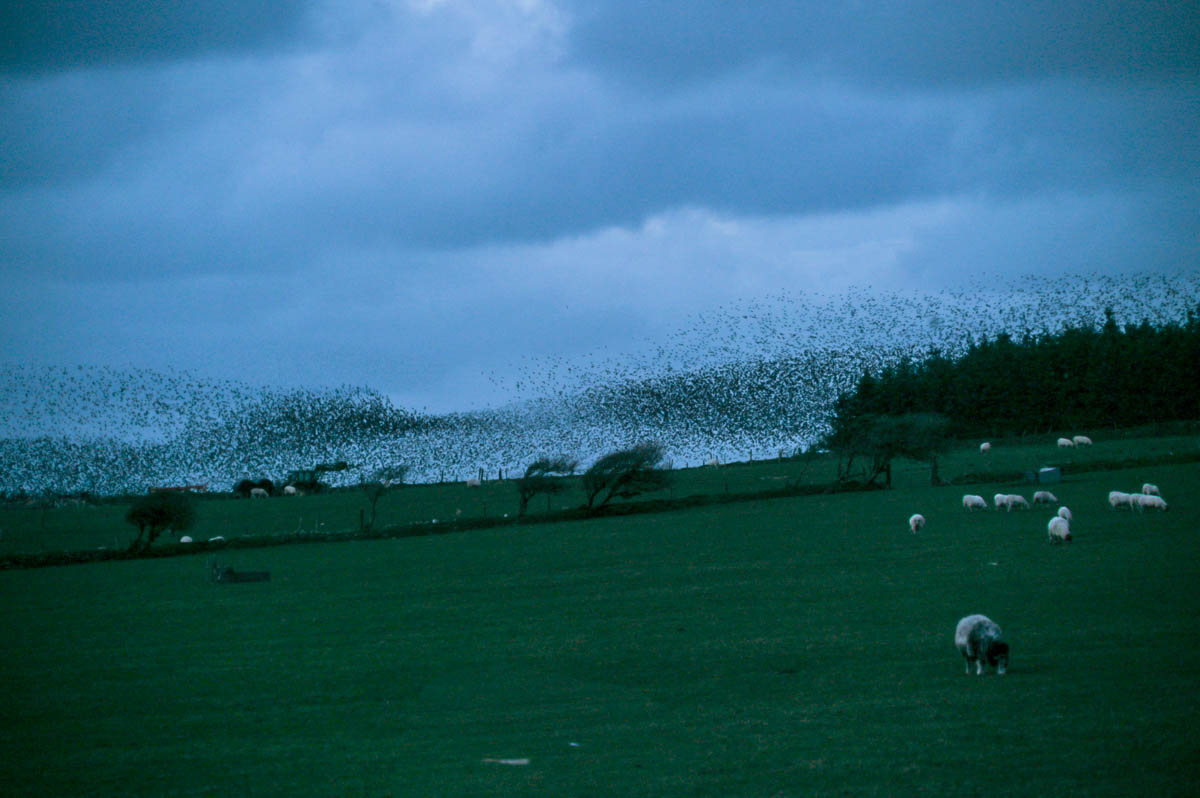
Starling murmurations

Whatever your holiday, if you have one just now, join me in celebrating the amazing things that starlings do at this time of year.

Photos by Ida Swearingen.

Starlings gather at dusk and if the conditions are right they create amazing airborne patterns before they settle into the trees and roost together. The roosting’s for safety, for warmth, and (the experts swear) to exchange information on where the good food is. The murmurations may be to confuse predators.

Starlings also gather for shorter times during the day, condensing onto power lines, where they pack themselves together wing to feather. So tightly, in fact, that they’ve caused the occasional power outage in the Scottish town of Airth. So many gathered on the lines, and they settled and took off in such a mass, that their weight made the wires bounce, shutting down the power, sometimes for seconds and sometimes longer.

Feelgood stories and fuckups: It’s the news from Britain

In 2018, Dean Nicholson was biking from Scotland to Thailand and  on his way through Bosnia picked up a stray kitten who ran after him, miaowing. He fed her what he had on hand, some red pesto sauce. Where I come from, pesto’s green and doesn’t appeal to protein-addicted cats, but the cat was hungry and not about to argue. It was food. She ate it and fell in love.

If you’re British, you should understand that when I say he was biking we’re talking about a push bike. If you’re American, you have no idea what a push bike is. It’s a bike. If you’re neither American or British, you’re on your own because I can’t predict what you’ll understand well enough to translate for you.

The (push)biker asked the vet in the nearest town if anyone had lost a cat, and when no one had he installed her in his handlebar basket and headed for Montenegro. The kitten climbed up his arm to ride on his shoulders instead. That was the point where he fell in love.

A rare relevant photo: This is Fast Eddie, the resident cat. He doesn’t ride bikes,  doesn’t eat red pesto, and isn’t going anywhere he can’t walk. What’s more, I’ve used the photo before.

They’ve been in more than twenty countries since then, he’s made a bed for her in the basket, and the cat, now named Nala, either sleeps there or rides with her paws hanging over the side so she can look out. 

She has her own passport.

If you’re a sucker for cats, the photos are worth clicking through for.

They’d planned to go to Iran but tense politics and a ban on cats in hotel rooms meant they had to turn back. What choice did they have?

In Greece, the human worked as a kayak guide and the cat as a kayak mascot. Lockdowns kept them in Hungary for twelve weeks and closed borders in Austria have kept them from biking through Russia to Thailand, but in the meantime the human has published a book, Nala’s World: One Man, His Rescue Cat, and a Bike Ride around the Globe. I have no idea if it’s any good, but anybody who rescues a stray cat and bikes across a continent with her–and hopes to bike through a second continent as well–deserves a plug.

*

As long as we’re talking about animals and Thailand, the Mu Koh Lanta National Park there has appealed to the public to donate cone-shaped shells by either mail or courier service. The population of hermit crabs has expanded dramatically and the crabs aren’t finding enough empty shells to live in. (Hermit crabs don’t make their own shells.) Some are moving into bottle caps, glass bottles, and cans. 

So far, 200 kilos of shells have been pledged and volunteers will distribute them at a Thai Father’s Day event on December 5. 

It’s not clear why the hermit crab population has grown so. It could be the absence of tourists and the activities that go with them, but it could also be water currents, the weather, the availability of plankton, or other factors.

*

A court in Stoke-on-Trent (and here we get back to Britain) listed upcoming hearings for defendants Tinker Bell, Buzz Lightyear, Sleeping Beauty, Daphne Duck, Bugs Bunny, and a few other miscreants, including some real people who appeared by videolink from prison. 

Guesswork explanations around the courthouse involved someone quitting their job and taking revenge before they headed out the door. Disappointingly, the names turned out to be a way to test the system after it was upgraded. 

The system worked. Entirely too well. 

I used to work with a typesetter (remember typesetters? Oh, you are getting old) who was hired to set some stickers for a meatpacking plant. You know: “turkey legs and thighs,” that kind of thing. She added one that read, “The Pope’s nose: the part of the turkey that went over the fence last.” She assumed the person who’d hired her would have a good laugh and pull it before it went to the printer. 

She became the proud owner of several rolls of Pope’s nose stickers.

*

It could’ve been worse. A French radio station’s website (yes, we’ve left Britain again) ran the obituaries of a hundred people who hadn’t had the decency to die yet. They included Queen Elizabeth II, Brigitte Bardot, and Pele. Also Jimmy Carter, Yoko Ono, Clint Eastwood, Raul Castro, and Ayatollah Ali Khamenei. 

For one of them, Bernard Tapie–a French businessman and politician–this wasn’t the first time he’d been prematurely obituarized. It was the third. At 77 (which looks younger every year), he could live long enough to have it happen several more times.

*

The spam award of the month goes to one that I dug out of my very own WordPress spam folder: “I made over 6.4 million dollars this year using an online platform! And now, this is my main source of income!” 

Which means he or she is sending out spam for a hobby.

*

Book lovers and readers who love independent bookshops and want to see them survive can buy from a new online shop that supports independent bookshops. The site operates in both the UK and the US and is set up to let the shops feature books they like, reproducing what they’d do in a physical shop by putting them on a table for browsers to find. 

You can also use the site to look for a specific book or to see what’s available on, say, the history of Mediterranean countries in the fifteenth century (more than I thought, although after the first half dozen the algorithm got a little strange, picking up the fifteenth edition of a rail atlas of Britain and, making a connection I can’t follow, a book on crocheting).  

One of the many reasons to support independent bookstores is that they can put books they love–books you might not find otherwise–out where you can find them. Online outfits generally do this by algorithm (yes, that book on crocheting); chains put out books they’re paid to put out. (Yes, really.)  

The only thing that would make the site better would be if you could open the book and read a few paragraphs, the way you might in a store.

*

The son of a composer with dementia recorded his father, Paul Harvey, improvising on the piano one day and posted it on Twitter. 

It started, the son said, because it “wasn’t a great day. I remembered this old party trick he used to do, where someone would give him four random notes and he’d compose something on the spot. . . . So I picked four notes out of the ether and Dad did exactly the same thing. And luckily, I filmed it.” 

The elder Harvey said his memory’s fine when he’s playing the piano.

Twitter went nuts, as Twitter does sometimes, and the tune ended up on Radio 4, the BBC’s high-end talk radio station. From there it went to the BBC Philharmonic, where someone arranged it, and musicians recorded their parts from home. blending them into Harvey’s piano recording. 

The BBC recording–and as part of it, a video of Harvey listening to it–is on YouTube and it’s well worth watching. At the end of the recording, Harvey tells his son, “I was just listening to a wonderful piece of music, and all of a sudden I said to meself, ‘I wrote that.’ 

“I won’t forget that.”

Go on. Watch it. Really.

Money from the recording is going to the Alzheimer’s Society and Music for Dementia.

Bring Your Dog to Work Day

June 26 is Bring Your Dog to Work Day. This seems to be a British event, although the website I found doesn’t say so. The clues are: 1) A picture of a dog named Winston, 2) a reference to rescuing dogs in London (although there’s also a reference to rescuing some in Asia, which discerning readers will notice covers a larger area than London), and 3) a .co.uk URL. Once you get past all that, your guess is confirmed by a British phone number in 3.25-point type at the bottom.

This is Moose, who doesn’t need to go to work with anyone else.He has his own job, keeping the vandal hordes from breaking in, even when they’re disguised as neighborhood cats. They don’t fool him.

You’re welcome to mark the day wherever you are. Especially if you’re working from home. As Jane Bernal pointed out on Facebook in response to my Bring your Cat to Work Day post, with social distancing and all, shouldn’t we have been celebrating Bring Your Work to Cat Day?

We should have. So even if your dog likes to travel, even if you’ve gone back to work, call in tomorrow. Explain that it’s Bring Your Work to Dog Day. You’re staying in.

Take Your Cat to Work Day

June 22 was National Take Your Cat to Work Day. I’m not entirely clear what nation that applies to, but it’s probably the U.S., since no one involved seems to remember that other nations exist and might be running on a different schedule. I’m American, so I get to say this: We do tend to forget those things.

Whoever’s nation we’re talking about, though, we’re (as cab drivers liked to say back when I was one of them) a day late and a dollar short, but I don’t see why we shouldn’t celebrate anyway, wherever and whenever we may be. Take your cat to work, friends. Don’t tell him or her that it’s the wrong day. Cats don’t care what the calendar says.

This is Fast Eddie on top of the drying rack, not caring what the calendar says. 

Do it especially if you’re working from home. And if you’re not–well, we all know that cats don’t like to go anywhere they didn’t decide on themselves, so just bring your work home and offer up a few treats in honor of the holiday.

And have a wonderful Take Your Cat to Work Day. From all of us here at Notes from the U.K., which has a wide-ranging, multi-delusional staff of one.

And a cat.

How the hegehog promotes Britishness

The hedgehog is one of Britain’s best-loved creatures.

How do I know that? I googled “beloved hedgehogs” until I found enough material to prove what I was already sure of. Lord Google’s happy to confirm any belief we hold if only we ask the right way and leave an offering of data at his shrine. 

Thank you, Lord G., for what you contribute to the world’s wisdom.

But I also, in the real world, listen to people, including a neighbor who told me some years back,  “We have a hedgehog,” making it sound as if her backyard was being visited by angels instead of a small, spiny, snuffly creature.

Irrelevant photo: Snow on a camellia bud in February. We had two or three inches. Half of Cornwall ran off the road. The other half stayed home.

Ah, but I’m serious about my responsibility to inform the world about  Britain, so I asked my friend Helen about the place hedgehogs hold in British culture and she went into a remebering-childhod reverie, telling me about hedgehogs in the books she read: Fuzzypeg, who’s part of Alice Uttley’s Little Grey Rabbit series, and Mrs. Tiggy-Winkle. If you grow up with these books, apparently, some part of you will forever believe that the hedgehog is a wonderful little creature and an essential part of Britain’s charm.

Or if you want to be snarky about it, which is always more fun than being reverential, part of Britain’s Britishness.

Britain’s Britishness?

Absolutely. Not because it’s clear what Britishness is–it’s not–but because Britain has lots of it and if you eavesdrop on the national conversation you’ll learn that it’s important.

For a while there, defining Britishness was a kind of indoor sport at Westminster. Politicians needed to know what it was so they could impose it on those of us who didn’t fit whatever the definition turned out to be. “Us,” of course, being immigrants. Because that’s the problem with immigrants: They come from places that aren’t Britain, bringing all kinds of -ishnesses that aren’t Britishness.

It turned out, though, that no two politicians agreed about what the ingredients of Britishness were and eventually they stopped talking about them. It was getting embarrassing. 

Or maybe that was because Brexit wasn’t–and isn’t–leaving room in the national conversation for anything else. 

Anyway, I have more than one post about Britishness and I’d love to link you to them, but I never thought to create a category labeled Britishness and I can’t find the damned things. They’re somewhere in this mess. 

None of the politicians mentioned hedgehogs, although you’d think they would have. They should also mention having read the right kids’ books at the right age. Maybe it was all too obvious to think of.

But let’s shut up about that and talk about the hedgehog. It’s native to Europe (which in this case includes Britain; please can we not argue about that right now?), Asia, and Africa. It’s not native to New Zealand but was introduced there to eat slugs and snails. New Zealand conservationists hate them because they compete with native species, but they don’t hate them as much as they hate some of the other beasties that enthusiastic idiots released into the wild, so let’s move on.

The hedgehog’s gone extinct in the Americas but people keep imported types as pets, which is why that cute little British wild animal is making American pet-owners sick. The U.S. Centers for Disease Control has warned people not to kiss and cuddle their hedgehogs because they can spread salmonella. Eight people in the U.S. have gotten salmonella that way since October, and one’s been hospitalized.

That was as of January. It could well be up to nine by the time you read this. As you can see, we’re dealing with an epidemic. Declare an international incident, someone. Send warships.  

The hedgehogs Americans are likely to keep as pets are actually African pygmy hedgehogs, but fact shouldn’t get in the way of a good international incident. American culture is at stake here. Americans only keep African pygmy hedgehogs because the British brainwashed them into thinking they were cute. And (ever so incidentally) because someone on Instagram has one. 

Not to be left out, the RSPCA–the Royal Society for the Prevention of Cruelty to Animals–issued roughly the same warning to British hedgehog cuddlers. Take that, America. We didn’t make you take them into your homes and we’re suffering just as much as you are, in our understated way.

We now have the horrifying statistics, the warnings, and the international posturing out of the way. 

According to the British Hedgehog Preservation Society (of course there’s a British Hedgehog Preservation Society, and it sells books and magnets and all sorts of other things that hedgehogs need), hedgehog spines are actually modified hairs and the average adult hedgehog has 5,000 to 7,000 of them. 

Yes, someone counted them. No, it wasn’t me. 

The spines are a great defense, even though they’re not barbed like porcupine quills. When our dogs found one in the backyard, it rolled into a ball, spines out. The dogs barked insanely and poked their noses at it, then trotted inside, defeated. The hedgehog unrolled itself and waddled off in search of bugs and slugs and a visa to New Zealand.

Somewhere in among all those spines, the hedgehog has a tail. And sex organs. But how do the spiny little things get close enough to each other to create more hedgehogs? Carefully. The female curls her tail upward. The male keeps his relevant body part close to the middle of his belly, so he doesn’t have to climb on top, Humans, who don’t have the same level of interest in the aforesaid body part as hedgehogs do, sometimes mistake it for a belly button. 

Hedgehogs think this is very funny.

Baby hedgehoglets aren’t born prickly, for which their mothers are endlessly grateful. Motherhood’s hard enough without spines. The babies have soft spine stubs that grow and harden within a few weeks.

Hedgehogs eat insects, bugs, slugs, worms, snakes, frogs, toads, eggs, berries, melons, mushrooms, grass, and nice little meaty treats that humans set out for them as long as other creatures don’t get to them first. My best guess is that if they eat melons (which don’t pass the Britishness test, by the way; they’re from Africa and southwest Asia), they also eat berries (some of which do pass the test), but berries aren’t on the list I found, so treat that as guesswork.

That bit about eating slugs? It’s more powerful than children’s books in making gardeners love hedgehogs.

Hegehogs are noctural and they hibernate–or they do if it gets cold enough. With the way climate change has been messing with the seasons lately, some are not going into hibernation and struggle to find enough food over the winter. Even when they’re hibernating, though, they will come out during warm spells and have a snack or two.

They’ve adapted fairly well to city life, but they’re struggling in the countryside, where they’ve been hit hard by the loss of hedgerows and a decline in bug (okay, not just bug: invertebrate) numbers. They also get poisoned by slug pellets and hit by cars.

This is not a fun time to be a hedgehog.

There’s no shortage of campaigns to save them. The Wildlife Trust recommends cutting a small hole in the bottom of your fence (that’s only if you have a fence) so hedgehogs can waddle through. They travel a kilometer or two a night searching for food and mates. That’s mates as in hedgehogs they can breed with, not as in friends. In miles that’s–oh, let’s pretend it’s somewhere betwwen half a mile and a mile. If you were sending a rocket to the moon with calculations like that, you’d miss the whole damn thing, but it’s close enough for a hedgehog. They don’t read, they don’t do math, and they won’t cover any less distance just because I get my numbers wrong.

You can also build it a nice little box for it to hide in and set out some dog or cat food. You can play it patriotic British tunes on your smart phone. If you find a sick or injured hedgehog, you can rehabilitate it. The trust doesn’t tell you not to kiss it–I don’t think it occurred to anyone that you might–but it does tell you to use gardening gloves to pick it up. 

It doesn’t recommend adopting it as a pet.

A group of hedgehogs is called an array. Will you need to know this? Probably not. They’re solitary creatures. Once a female mates, she won’t want the male around. He’d only eat the young. In fact, if the nest is disturbed, the mother might do that herself.

These are the things they don’t put that in the children’s books. 

Hedgehogs used to be called urchins, which came to English from Latin by way of Norman French. By the fifteenth century, an urchin was anyone who looked like a hedgehog, including a hunchback, a goblin, a bad girl (no, don’t ask me–I’ve known and admired plenty of bad girls and none of them struck me as looking like hedgehogs), and a ragged child. By the late eighteenth century, an urchin was in general use to mean a ragged child. 

In the U.S., keeping hedgehogs is illegal in Georgia, California, Hawaii, Pennsylvania, Washington, and New York City–or it was as of January 2018. Calling a kid you’re unhappy with a hedgehog isn’t illegal anywhere but it will earn you some odd looks, as will calling a hedgehog an urchin.

*

My thanks to Flo, who first let me know about the threat hedgehogs pose to America’s health, and to Helen and (while we’re on the subject) assorted other friends who treat my odd questions (“So what is it about the British and hedgehogs?”) as if they were almost normal.

Living dangerously: the Cornish cream tea goes nationwide

The U.K. coffee chain Costa is boldly going where no sensible business wanted to go before.

What are they doing? Selling cream tea the Cornish way, not the Devon way.

Background break: What’s a cream tea? Two plain scones, strawberry (or sometimes blackcurrant, but they’re going with the more popular strawberry) jam, and clotted cream, which is cream that’s been beatified. I’ve made that joke before. My apologies if you remember it, but I couldn’t think of a better explanation. Plus tea, of course, except that Costa will substitute coffee, which will piss off the purists in both counties.

What’s the difference between the Cornish and the Devon cream tea? In Cornwall, you put the jam on the scone first. In Devon, you start with the cream.

Nations have gone to war over less.

Nobody asked for my advice, but I’d have suggested giving people the fixings and letting them figure out what to do. That would let Costa smile serenely and claim nothing is their fault. Because there’ll be hell to pay over this in Devon.

*

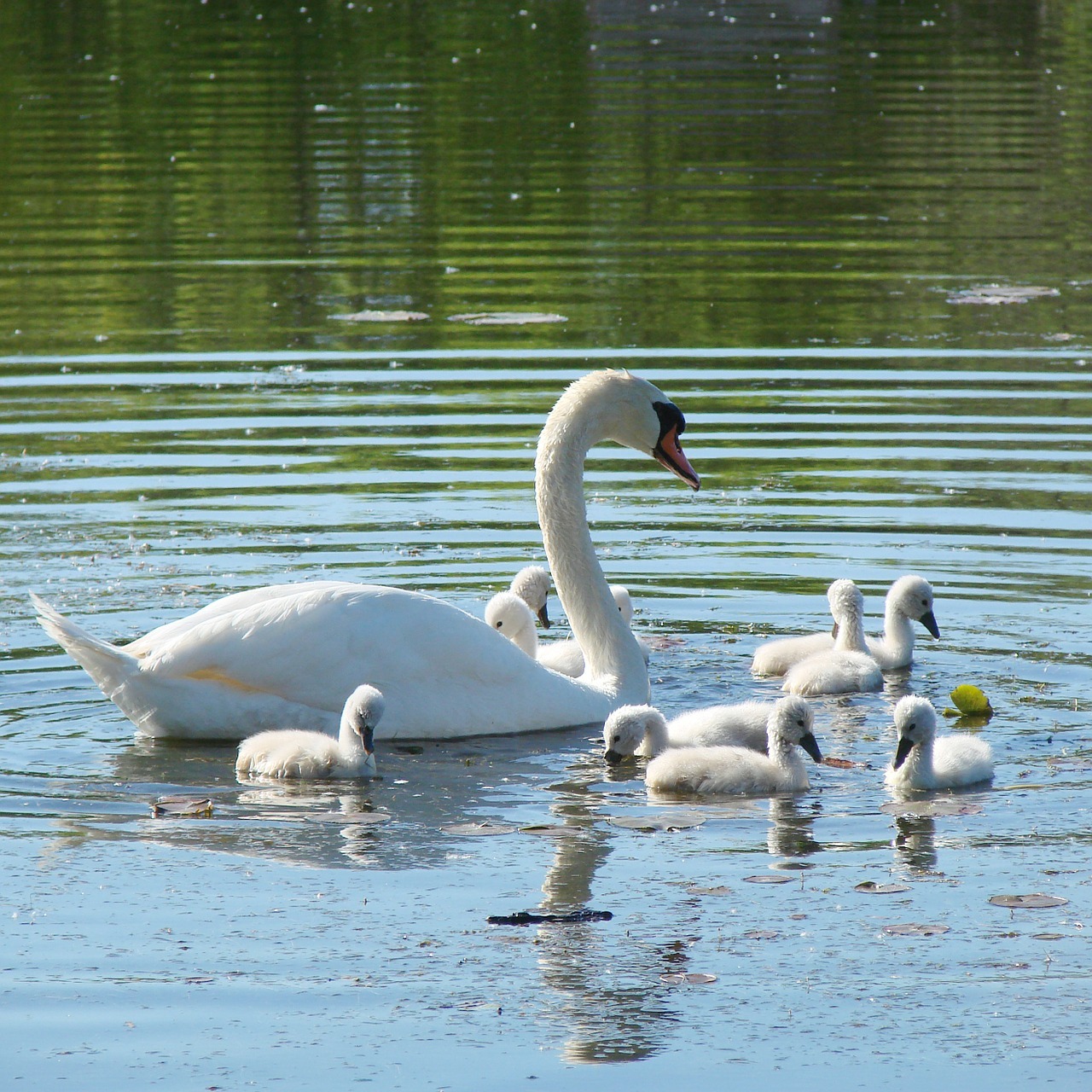
And a quick note: It’s summer, apparently, because the first cygnets—baby swans, to those of you not in the know—have been born at the Abbotsbury Swannery, in Dorset.. The Western Morning News (which I can’t find online, so no link, which is a shame because they had a great photo) reports that this is the traditional signal. Here in Cornwall, it’s gray and I’m wearing two sweatshirts, but who am I to argue with tradition?

A rare relevant photo: Swan with cygnets, from Pixabay.

Caption contest: a post-Easter special

Welcome to the first (and surely the last) ever photo caption contest here at Notes from….

My March 25 post about stolen Easter eggs (sorry, I had to embed the link; it’s a law of the internet) included a screamingly irrelevant photo of our neighbor J. But I’d better let you see the photo yourself:

Screamingly irrelevant photo. J. with Moose. I'll stop with the cat and dog photos soon, but everything else I've shot lately is overexposed.

Screamingly irrelevant photo. J. with Moose.

After it appeared, J. went on Facebook and suggested a caption contest. So this is all her fault.

You should know before you leave your captions in the Comments box that we already have a winner. In fact, I declared it the winner when it was still the only entry. That’s how contests work around here. It’s J. regrets asking the plastic surgeon to “enlarge these puppies.” It comes from J. from New Zealand, who is not to be confused with our neighbor J. from Cornwall. You can tell them apart because only one of them has a dog in her shirt.

But let’s not focus on who gets to win, okay? It’s about the experience, as we were all told when we were eight years old and limped over the finish line last, bleeding, and covered in mud.

Or substitute some equivalent experience. The minute someone says, “as we were all told,” you just know it won’t apply to you, right? In the spirit of complete transparency, I wasn’t told that either. The phrase hadn’t been invented yet when I as eight. We’d barely gotten around to inventing language.

But please, all you strange and lovely people out there, send me a caption anyway. Because it’s that kind of photo. Because we’re that kind of crowd. I’m not sure what kind that is, exactly, but I’m very sure it’s the kind we are.