How British and American beers compare

Belladonna Took wrote to say, “I would like to know about beer. Is it indeed served at room temperature in Britain? And is it real beer with hops and lifeforms in it, and not the chemically scrubbed cat piss that passes for beer over here [in the U.S.]? (I’m not referring to the good stuff one can get from a microbrewery, of course, but the stuff sold in supermarkets.) What about alcohol content? I’m pretty sure it’s lower here.”

Gee, Belladonna, I wish you’d tell how you really feel. Don’t be hold back.

I had to ask around, because it’s been so many years since I ingested alcohol that I don’t remember if it comes in a solid or a gaseous form.

Beer at sundown. Photo by Ida Swearingen

Beer at sundown. Photo by Ida Swearingen

First I asked Google about alcohol content and read that British beer is weaker than American—below 5%, although that will vary from brand to brand and from time to time. I also learned that British brewers, or at least some of them, began making their beer weaker in 2012 because it’s cheaper that way. For them, of course, not for the customer. They probably figured nobody would notice, and since nobody’s burned down the breweries they were probably right. Then I read a list of the alcohol content of American beers and it ranged all place, but some of it was below 5%. So the definitive answer is that it’s complicated and you should never trust me with numbers. But the British stuff is probably weaker.

Sorry, Belladonna. Don’t shoot the messenger.

Next, I asked M., who’s tasted both American and British beer. She said that beer is definitely served at room temperature in the U.K., as is ale, and that they have a richer taste than American beer, so I’m guessing that takes them out of the cat piss category.

A brief interruption here: I have an elderly cat who’s asked me to put it on the record that her piss is nothing at all like American beer and is altogether lovely. She was offended, but if you’d offer a bit of fish by way of apology, Belladonna, I’m sure the incident would be forgotten.

M. also said that lager is more like American beer and is served cold.

And hops? I didn’t ask anyone about this, but yes, hops are involved in both countries. You can’t summon beer out of thin air, even when the beer in question tastes like you did..

Finally, since I was at singers’ night at the pub anyway, I raised the subject there and learned why beer’s served at room temperature and lager’s served cold: Beer’s brewed at room temperature, so its taste develops and is at its best at that temperature. Lager’s brewed in cool cellars and its taste etc. So—unlike so much in life—there’s actually a reason for this and it all makes sense.

Who’d’ve thunk?

And finally a note: This is a bonus post. I usually post twice a week, but I’m working my way through the questions people asked and, I dunno, it seemed like a good idea. Since I’m having a good time with this, I’m still accepting questions about either the U.S. or the U.K.

Easter candy in the U.S. and U.K.: Special late edition

Our friend J., having read my post about Easter candy, sent us some from the U.S. Her cover note said to read the back of the Peeps package because it might inspire me.

“What’s a Peep?” you ask if you’re not from the U.S. It’s sugar, corn syrup, gelatin, yellow #5 (tartrazine), potassium sorbate (a preservative), natural [unspecified and I’d say hard to detect] flavors, and carnauba wax. Yum. They’re gluten free and fat free and shaped (if you have a bit of imagination) like a chick that came into existence by being spat from a spout. Each chick contains 28 calories. That’s 140 calories per serving, because, as an essential part of a balanced diet, serving size has been scientifically determined.

North Cornwall. Thatched cottage.

Irrelevant photo: Thatched cottage with gorse and may in bloom.

The text on the cover claims they’re marshmallow, but they taste like nothing that originated on planet Earth.

No, I’m going to backtrack on that, because I think carnauba wax is used on cars. On planet Earth. So if you’ve ever used your tongue to wax the car, the taste will be familiar. That means, all you Peep Corporation lawyers out there, that I retract my statement about planet Earth. Don’t sue. Please.

The text on the back of the package says that opening it “opens a world of possibilities! [Oh, the thrill implied by that exclamation mark. I’m so carried away I’ll add one of my own: !] From creative crafting and imaginative artwork, to delicious recipes and more, let the fun begin!” And I feel compelled to tell you that the repetitious use of open is theirs. They were aiming for one of those rhythmic poetic thingies. Isn’t it wondrous, the uses writing techniques can be put to?

So basically, what they’re saying here is that these things last forever and therefore can be used in any form of artwork. The Mona Lisa in Peeps? Why not? A Peep perched Thinker-like on the toilet? Sure! More exclamation marks? You got ‘em!

When I worked for a writers organization in Minnesota, one (or possibly two) of my illustrious co-workers impaled a Peep on the bathroom ceiling, where it remained for months without changing in any noticeable way. I’m not sure whether that was craft or art (it gets tricky sometimes, that art/craft question), but I do know the Peep didn’t rot or stretch or draw ants or roaches or anything else that would normally be drawn to food. Those insects? They know stuff. We could learn from them.

I have a bit more trouble with the delicious recipes the text promises. Peep pie? I don’t know what happens to them in the presence of heat. I’m not sure what happens to them, in fact, when they’re eaten. They appear to be indestructible. Do they pass through us whole or does the digestive system work its magic, even on Peeps?

Dedicated as I am to this blog, and to exploring every last aspect of the cultures of the U.S. and Britain, I draw the line at offering myself as a test subject. But I do, once again, wish those of you who celebrate it a happy Easter and those of you who don’t a happy non-Easter. To those of you who love Peeps, I offer my apologies. Our package has been promised to an American Peep-lover in the village, and she’s thrilled by the prospect of all those exclamation marks landing in her house.

And finally, to J. I send my profound thanks. For both the candy and the suggestion. I wouldn’t have thought to turn the package over and read it if you hadn’t told me to.

Eating your way across North Cornwall’s landscape

Spring is what people used to call the hungry gap–the time of year when the food they’d by for the winter was running low and the crops were nowhere near ready to pick. So–I’ve been told–people around here turned to the hedgerows and picked what they could.

flowers, haze 018


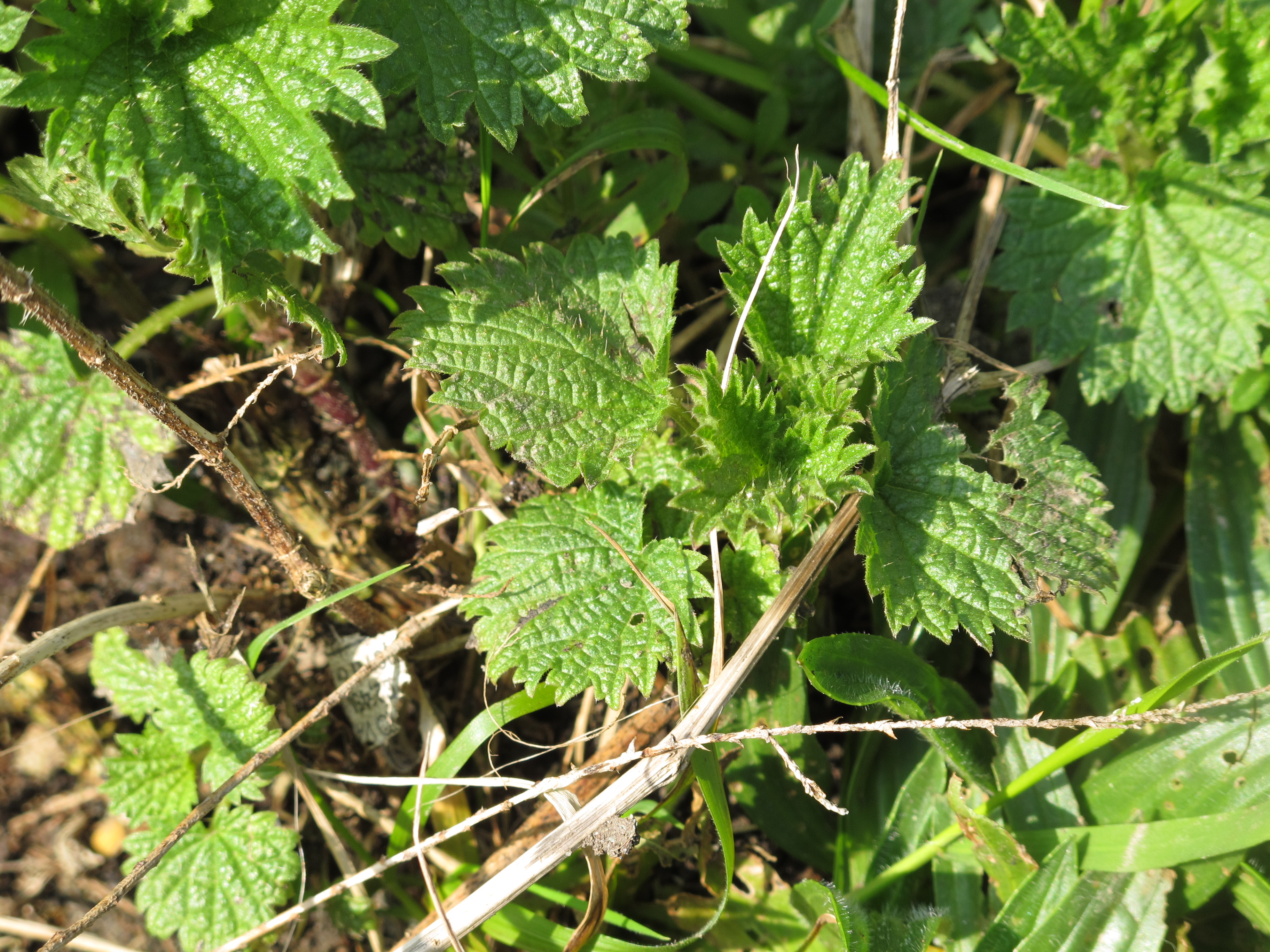
These are nettles–horrible itchy things but they loose their itchiness and are edible as soon as you steam or boil them. You can use them pretty much like spinach, but you have to be careful how you pick them.

flowers, haze 012


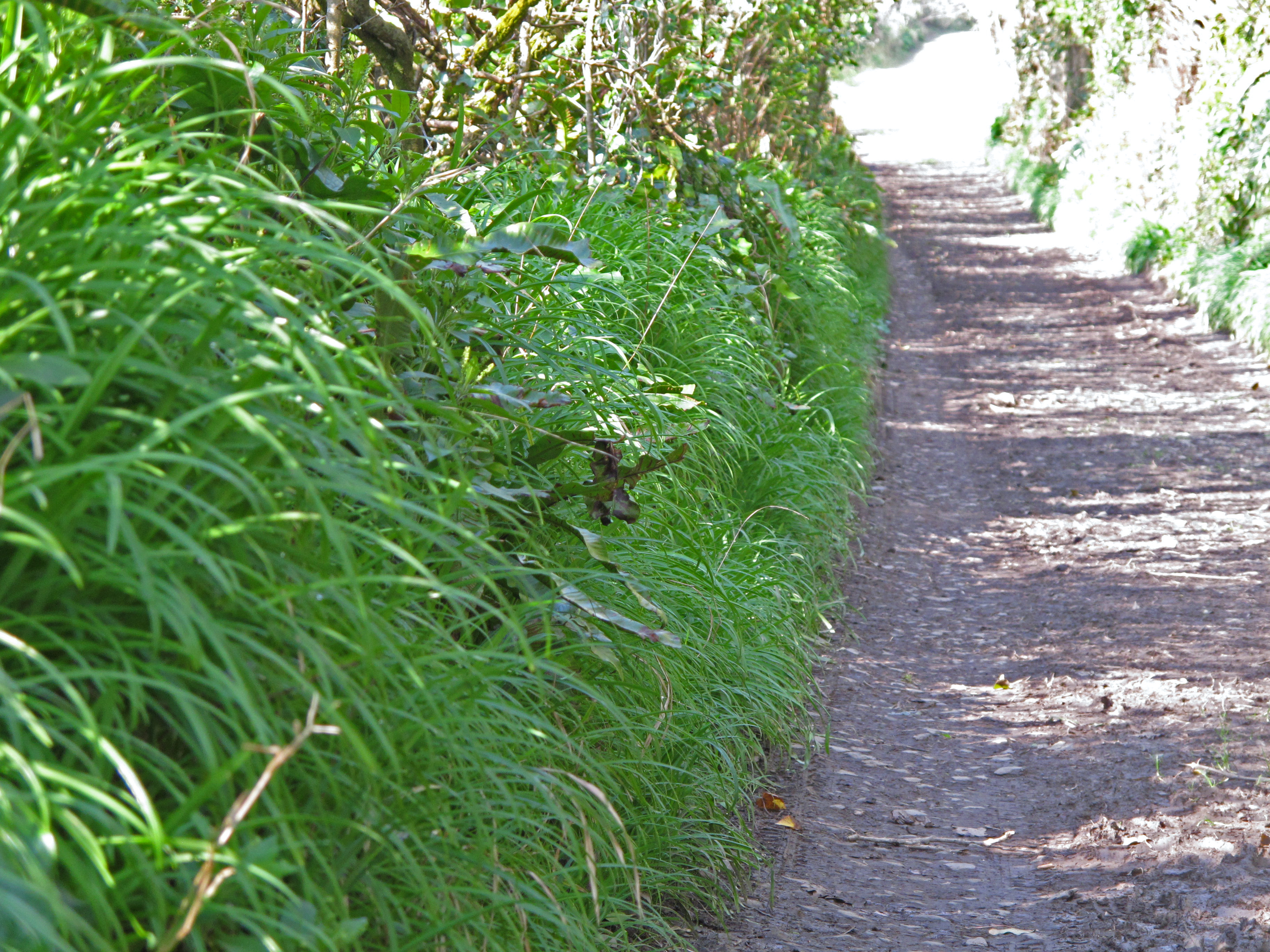
The grassy-looking things are three-cornered leeks. They smell more oniony than garlicky, but all the same I can’t walk past them without wanting a pizza. Good in a salad, or tossed into a pasta sauce at the last minute.

flowers, haze 007

G. tells me this is the ancestor of celery–alexanders. They were brought over by the Romans (or so I’m told; I haven’t been able to confirm that). I’ve never cooked with them but G. has, and he lived to say they’re good. The seed, root, and flower are all edible.

flowers, haze 008

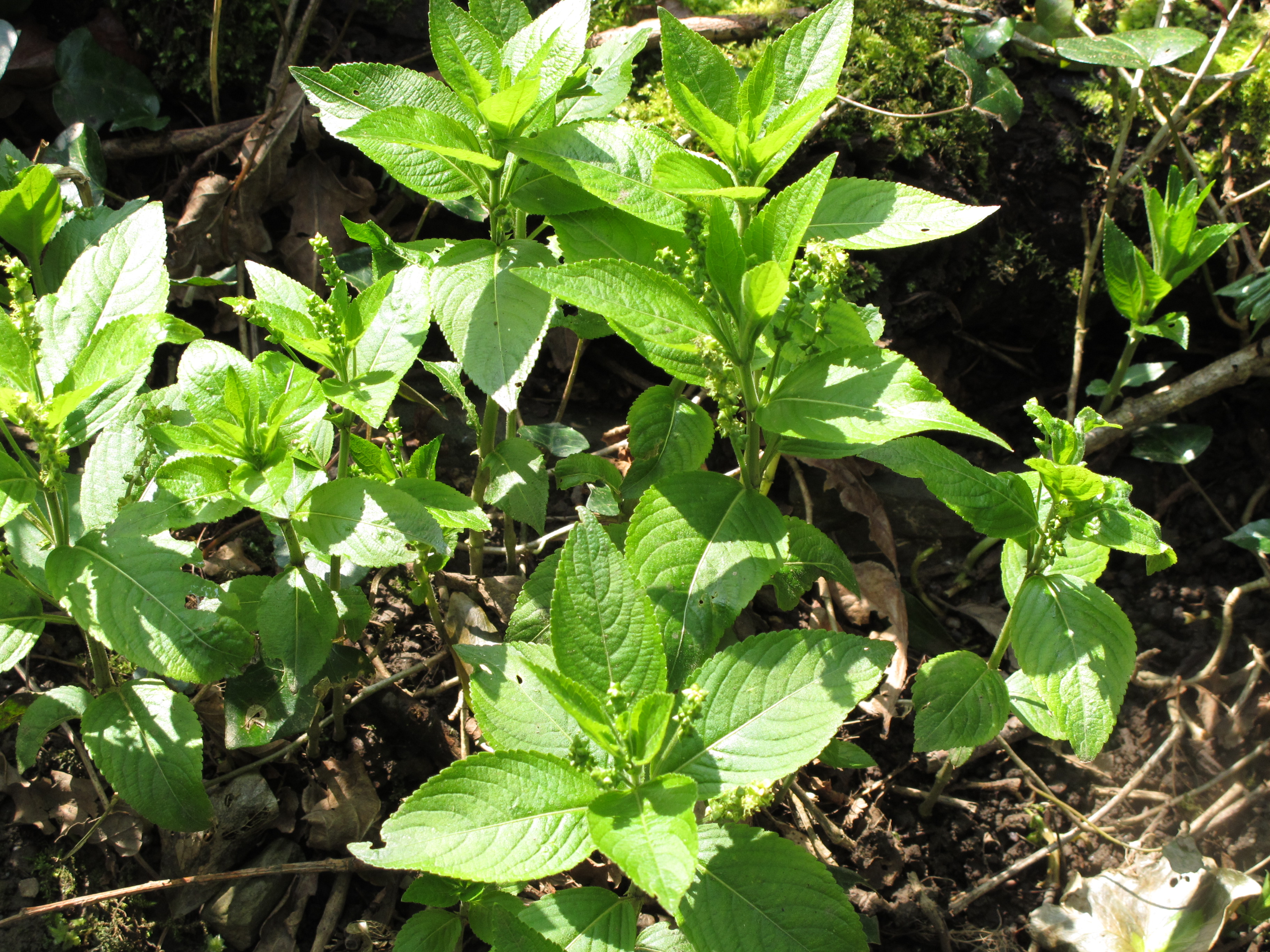
And finally, one not to eat. This is dog’s mercury. M.’s dog eats it, if she can, every spring. She eats it, then she throws up. That’s a dog’s idea of a fun day out. It’s toxic in large doses. The “dog” in the name means the plant isn’t useful. Except to M.’s dog.

American baking in Cornwall: baking powder biscuits

I’ve been browsing through too many blogs lately, so I don’t remember where I found the question “what do Americans mean when they say ‘biscuit’?” (I’m paraphrasing. If I didn’t remember to make a note of where I was, raise your hand, please, if you think I had the foresight to copy the actual words. No hands? I didn’t think so.) I left an answer, then thought that in the interest of intercultural mayhem, which I do so much want to promote, I should answer it here as well. So for anyone who (a) isn’t American or (b) is American but is somehow unaware that biscuits are bliss, I’m going to print a recipe. Just as soon as I manage to shut up.

Which may not before a while. Feel free to scroll down if you’re bored. I’ll never know.

Irrelevant photo: It's spring! Crocuses by our back door.

Irrelevant photo: It’s spring! Crocuses by our back door.

Since I moved to Cornwall and began my campaign to mess with the purity of English cooking, I’ve learned to call biscuits baking powder biscuits to distinguish them from cookies, because that’s what anyone British would think I meant otherwise. Although they also say “biscuits” to mean crackers. While we’re at it, crackers are also something non-edible that show up on the table at Christmas. Are you confused yet? That tells you you’re not British. In case you weren’t sure.

Don’t you just love the English language?

In the U.S., I was more likely to call baking powder biscuits either just plain biscuits or buttermilk biscuits. But let’s stick to the phrase I’m currently using: Baking powder biscuits are a cousin of the scone, but they’re not as sweet. Or if you’re comparing them to savory scones they’re not as—oh, you know, scone-y. Sadly, they’re also not as good cold. The leftovers tend to taste kind of salty. But that only means you have to eat more while they’re warm, because they’re light and glorious then.

I didn’t grow up in the American biscuit zone, which is made up of (a) the South and (b) the African-American community in any part of the country. Those are generalizations, I know, but they’re accurate for the present purpose, which is to say that in spite of my geographical and ethnic limitations, I’ve been around both parts of the zone enough to know good food when I see it, and since Wild Thing’s originally from Texas, learning to make biscuits seemed like a good idea. I mean, if she can not only eat but pronounce both challah and knishes, I can surely make biscuits. She swears mine are better than her mother’s, but I only dare say that in public because her mother’s dead. The difference, I suspect, is that I use butter. You can use margarine if you like, or (probably, but what do I know? I’m a Jewish atheist New Yorker and a distinctly amateur cook, which makes me no expert on the subject) lard or pretty much any other hard fat.

The trick is to use as little liquid as possible—just enough to get the dough to form a ball. Too much liquid and the biscuits will be tough. That much I do know.


Baking Powder Biscuits

(makes 8 or 9)

2 cups flour

1 scant tsp. salt

2 tsp. baking powder

½ tsp. baking soda

1 tsp. sugar

2 ½ oz. (5 tbsp.) butter

¾ cups (approximately) buttermilk or milk with vinegar * (see note below)

Sift the dry ingredients together—or if you’re as lazy as I am, dump them all in a bowl and take a whisk to them. I swear it works just as well. Cut in the butter  or crumble it in with your fingers. Your fingers will warm the butter, so cutting it is better. If you can find a pastry blender, that’s ideal. Don’t lose sleep over how small the bits of butter are; as long as you don’t leave it looking like gravel, it’ll be fine. Stir in just enough buttermilk to form the dough into a ball. Knead if very briefly—no more than 30 seconds—just to bring the dough together fully .

Dust your counter with flour and roll the dough out so it’s about ¾ inch thick. Understand that I’m making up the thickness. Mine vary all over the lot. Cut into rounds with a biscuit cutter or a glass. (My biscuit cutter had a diameter of 2 ¾ inches. Just so’s you know.) Set them on a greased baking sheet, which in the U.S. I called a cookie sheet. It doesn’t matter if they touch.

Bake in a 450 F. / 220 c. oven for 10 to 12 minutes.

Since the thickness of my biscuits varies from batch to batch, I pry one open to make sure they’re done in the center. You’ll want to split them when you eat them anyway, so it doesn’t show.

Eat warm with any combination butter and/or honey, jam, or gravy.


* If you don’t have buttermilk (and it’s not as widely available in the U.K. as it is in the U.S.), you can add some vinegar to the milk—roughly one teaspoon to a cup seems to do it. I sometimes add more. It doesn’t seem to be finicky. Just don’t use a flavored vinegar, or a red one unless you want pink biscuits. White or cider work well.

Looking American: On culture, nationality, and immigration

A few months ago, M. told me, “You’re looking very”—and here you have to imagine a short pause— “American today.”

When I stopped laughing, I asked what American looked like, and you can insert another, somewhat longer pause before you go on, because he had to think about it. Or else he was looking for a gentle way to say it.

“You walk as if the sun always shines on you and you own the world,” he said. Not unkindly, I should add, although from someone else it might have sounded like a complaint.

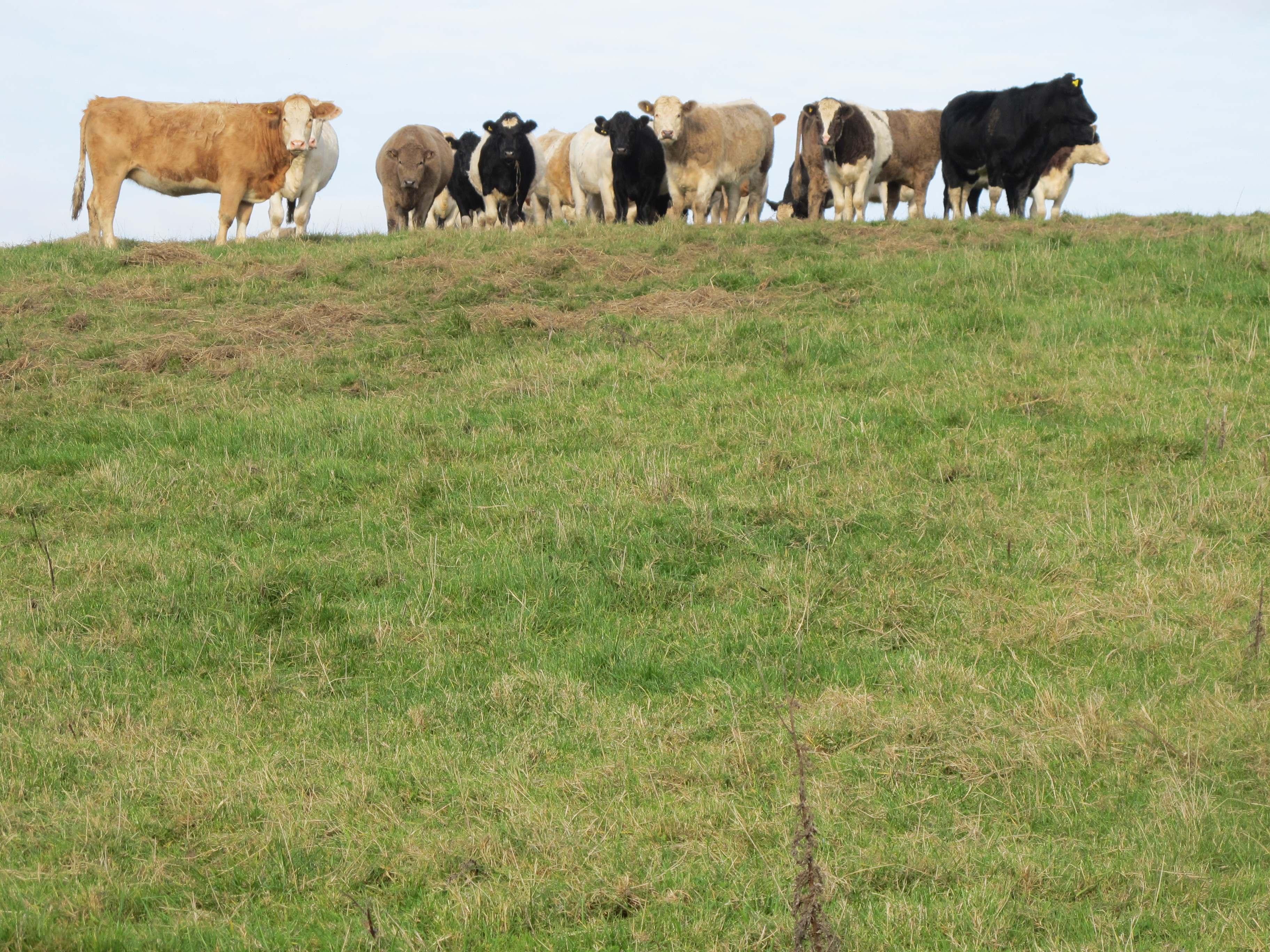
Semi-relevant photo: The sun shining on a herd of cows. (Actually, they were making sure we left their field, and I can't remember if the sun was shining on them or not--it looks like diffuse sunlight. Does that count?)

Semi-relevant photo: The sun shining on a herd of cattle. Actually, they were making sure we left their field, and I can’t remember if the sun was shining on them or not–it looks like diffuse sunlight. That may or may not count.

The sun wasn’t shining on me that day. I’ll skip the details, because they’ll take me off in a whole ‘nother direction, but I’d been shaken by some bad news a few hours earlier, and I was still feeling it.

What does it mean to be so American that I look like I own the world, even (or particularly) when I’m don’t feel that way? Well, what does it mean to belong to any nationality?

The question’s been rattling around in my head lately, at least in part because of the anti-immigrant sentiment that seeps into so much of British politics these days. And into American politics, while we’re at it. You could probably drop any other more or less solvent nation into that sentence, because trouble drives people to immigrate, and the world’s a troubled place these days.

Part of the anti-immigrant feeling is about jobs: If immigrants come over here (wherever here is), they’ll work for less and wages will drop. There’s some logic to this, although what’s really undermining wages is that jobs, and whole industries, have moved overseas, where wages are ruinously cheaper. On top of that, unions don’t have the clout they once did (those two aren’t unrelated), and they were a major force driving wages up.

But another, more emotional, strand of complaint is that immigrants don’t blend in. Basically, the problem with immigrants is that we’re foreigners, and couldn’t we please stop that? Stop talking our languages in public. Stop eating funny foods. Stop dressing differently. Stop running around with different-color skin. Stop cheering for foreign sports teams or holding to foreign religions or using all those alphabets that no decent person knows how to read. I mean, who knows what we’re writing in them?

But once you grow up in a culture, you don’t get to leave it behind—not entirely, even if you want to. No matter how much you work at blending into another one, you carry some part of the original. I walk, apparently, like an American, and I know I sound like one. I even eat like one. The American way of eating involves juggling the fork from the left hand, where we hold it if we need to cut something with knife and fork, to the right hand, which we use to bring the food to the mouth. The British way leaves the fork where it started, in the left hand. This is great, because it lets you use the knife to push food onto your fork—and it’s perfectly good manners when you do. That solves a problem built into the American approach: How do you get the last bits of non-spearable food onto the fork without sneaking a finger onto the plate and hoping no one’s looking? Although it doesn’t solve another problem, which is how to keep the food on your fork, because the British hold the damned thing with the back—the hump—facing up, so that you can’t use the fork’s valley to cradle your food. I haven’t a clue why they do this, but it may explain why mashed potatoes are so popular: you can use them as mortar to hold the rest of your food on your fork.

So I’m a partial fan of the British method, and periodically I try to eat that way—usually with the curved part of the fork facing up, but never mind, I’m compromising here and I want some credit, damn it. All you anti-immigrant campaigners, are you listening? I’m making an effort.

What happens, though? The minute my mind wanders—and it doesn’t take long—my fork’s magically moved itself back to my right hand and I’m eating like an American again. And the sun shines on me.

At this point, while the sun’s shining on me alone, I have to interrupt myself, because I read this post to my writers group and they told me that holding the fork with the hump facing up is posh, presumably because it makes you eat more slowly. Holding it valley-side up is working class. Who’d have thunk? I swear, you have to be born here to figure this stuff out. On the evidence of that alone, though, I ask you: Who should be running the country?

Because of my (sometimes absurd) efforts to publicize both my book and this blog, I’ve written a lot of bios lately (I will post just about anywhere, about almost anything, as long as I get a bio and a link), and I keep describing myself as an American living in Cornwall. That reflects the reality of who I am culturally, but it ignores the fact that I’m a British citizen as well as an American one.

For me, becoming a British citizen was about security, not love or allegiance or culture. I do love the country, but I’m not romantic about citizenship. I wanted to be a citizen because it’s harder to get rid of a citizen than a resident alien. Since the U.K. government had already changed the rules once before Wild Thing and I got the right to stay in the country for the long term,and since we just about got kicked out of the country because of it, we were touchy on the subject. It may be crass, but we wanted the safety that comes with citizenship. We’re grateful for it, but it hasn’t, and can’t, change who we are.

So when I hear someone say that the problem with immigrants is that we don’t acculturate, I can only suggest moving abroad and seeing what happens.

*

A final note: Before my writers group before we fell down the conversational rabbit hole of what it means to have a constitution that isn’t a written document, I learned something else about forks and nationality: More and more of the British are acting like Americans and shuffling their forks from hand to hand as they eat.

And we’re not even the immigrant group anyone’s upset about.

If you want to blame someone, you can blame movies or television, because there aren’t enough Americans here to have that big an impact.

How do foreigners change a culture? Sometimes it’s from a distance.

A foreigner’s guide to Boxing Day

If you’re not British, or living in a British-inflected country, you’re asking, What?

Boxing Day is the day after Christmas.

So what does everyone do, go out and hit each other?

The people Wild Thing and I know mostly stay home and eat the Christmas leftovers. Especially those brussels sprouts. For breakfast, you can use them in bubble and squeak (which does neither, as far as I can figure out). It involves leftover sprouts (or cabbage, or anything else along those lines) and potatoes, bacon, onion, butter or some other sort of fat, and a frying pan. More or less. It’s one of those recipes that use up whatever you have on hand, so there’s no point in being precise about it.

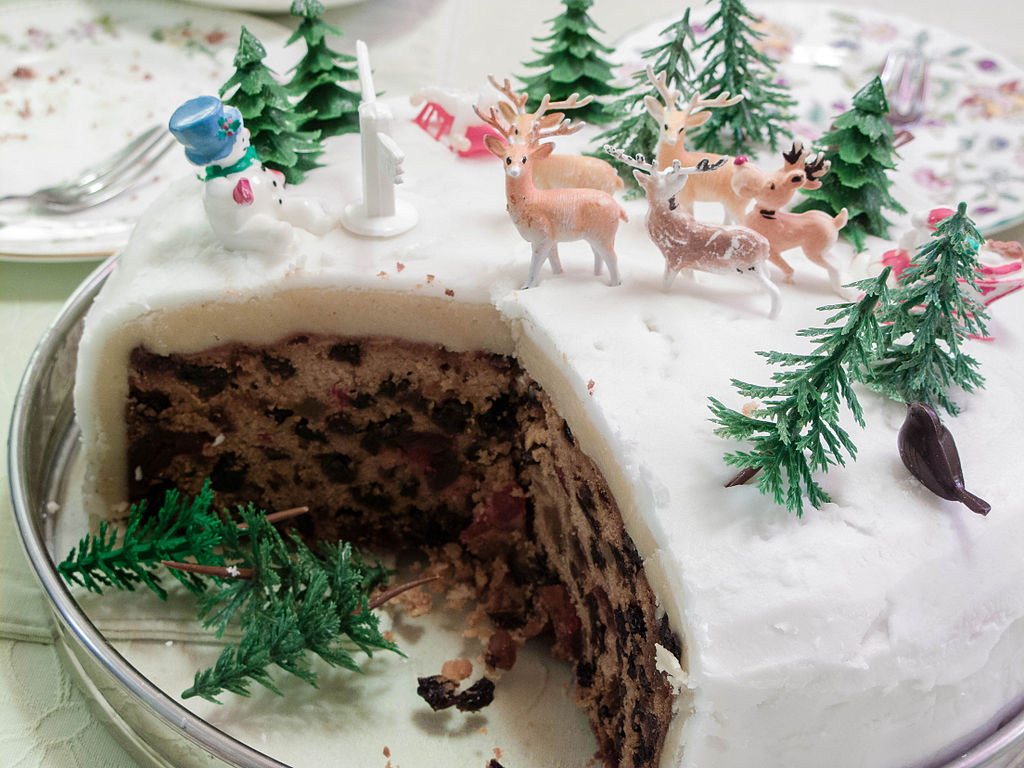
Christmas cake. Photo by James Petts, on Wikimedia.

Christmas cake. Photo by James Petts, on Wikimedia.

After that, you can start on the Christmas cake.

It may be called Boxing Day because it was the day that Victorian ladies and gentlemen gave gift boxes to tradespeople and the servants (who had to work on Christmas day, and probably had to work on Boxing Day as well). Or it may have come from a medieval tradition involving alms boxes, which were opened on Boxing Day and the money given to the poor. Basically no one’s sure, but if you repeat the stories often enough they take on a certain authority.

What’s certain is that it’s a second legal holiday that involves brussels sprouts. Only in Britain.

 *

I’ll be posting once a week until—probably—mid-January, when I’ll go back to twice a week. Enjoy the holidays, whatever you celebrate and however you celebrate them. 

A foreigner’s guide to Christmas in Britain

You can say anything you want about the meaning of Christmas, but I’ll tell you what the meaning is here: brussels sprouts.

What? you ask.

At Christmas dinner, you eat brussels sprouts. Even if you don’t touch them for another 364 days, you put one on your plate and chop it into pieces and poke at it so it looks like some part of it entered your stomach and is becoming one with your body. It doesn’t seem to be a law, but it’s a very powerful cultural imperative. And when someone uses a fancy phrase like cultural imperative, you’d damn well better do it.

Christmas pudding with flaming brandy. Photo by James Scott-Brown, on Wikimedia.

Christmas pudding with flaming brandy. Photo by James Scott-Brown, on Wikimedia.

The brussels sprout is so completely symbolic of Christmas that D. and D. just gave us a box of chocolate brussels sprouts for a Christmas present. Rest easy, though, because they’re purely symbolic. No vegetables were harmed in the making of the candy.

Why is a round green vegetable synonymous with Christmas? Because they grow through the fall and by Christmas they’re ready to eat. And if you’ve got a vegetable so cooperative that you can harvest it in the winter, you’d better include it in the holiday meal. Even if you hate it.

Christmas also involves crackers. Not the crumbly kind you eat with cheese, but rolls of shiny paper and cardboard with bad jokes and riddles, a little plastic present of some kind (about what you used to find in a box of Cracker Jacks, if you’ve ever seen those), and a tissue-paper crown inside. The way to open these is to pick yours up when everyone else does, cross your arms so you can simultaneously offer yours to the person on one side and seize the one the person on the other side is offering you. Then, in unison, everyone pulls and the crackers tear open and spill out their giftlets.  Inevitably, someone ends up with two short ends and no goodies, and if you’re over the age of five you redistribute the riches and everyone ends up with, at the very least, a silly paper crown to put on his or her head. Then everyone who can’t avoid it (and I usually can) reads the jokes and riddles out loud.

In the spirit of Nothing Exceeds like Excess, Christmas demands two desserts: a Christmas pudding and a Christmas cake. The cake is a heavy fruitcake that’s been soaked in brandy for two months and coated in not one layer of icing but two, one of marzipan and another made with egg whites and sugar. The double dose of icing is enough to send even a non-diabetic into a diabetic coma, and that’s without the cake. The pudding, again, has dried fruit and alcohol, but this time with suet and spices and a bunch of other stuff—you’ll have to look up the recipe online if you’re interested, because I’ve never made one—and then it’s steamed (this is why I’ve never made it: I can’t be arsed, as our much-missed friend B. used to say) and soaked in yet more alcohol for a month or so. If you need a bit more in the way of excess, you can serve it with rum or brandy sauce, or with custard, and you can also serve it with flaming brandy if you promise not to set the house on fire.

Messing with British Baking: Chocolate Chip Cookies

Since moving to Cornwall, I’ve made it my mission in life to mess with the Britishness of British baking. Not because British baking is bad. It isn’t; it’s fantastic. Have you eaten shortbread? Or scones? Or pain au chocolat? Or—wait a minute, that last one’s French, isn’t it? (And in case you’re not familiar with the stuff, it’s not pronounced like the English word pain, it’s closer to pan, and it’s basically a croissant with chocolate inside. Mmmm.)

So okay, we’re not talking about a tradition that goes back, unmixed and unmessed-with, to Alfred the Intolerable. British cooking has done what pretty much every culture does: it’s adapted, stolen, borrowed, and claimed as its own whatever bits happened to work—so much so that now people ask, with an almost straight face, “What’s more English than curry?”

How am I carrying out my mission? I’m baking, and I’m feeding my friends and neighbors. It all sounds so harmless, doesn’t it?

Irrelevant Photo: Fountains Abbey

Irrelevant Photo: Fountains Abbey

So here’s my recipe for chocolate chip cookies, because chocolate chip cookies are even more American than Mom and apple pie. They’re probably more American than the flag. The recipe’s in imperial measures. (Shouldn’t we start calling them American measures, by the way? The empire’s gone and—does any country other than the U.S. still use them these days?  And I’m not sure how many people know what imperial measures means.) But back to my point, I’m not going to try translating it into anything sensible like the metric system because the last time I did lost three weeks of my life and didn’t get it right anyway. So forget it. Besides, what’s more American than an irrational and antiquated system of measuring that we inherited from a country that’s since abandoned it and which we will fight to the death rather than give up?

Am I off the topic yet?

The recipe was adapted from one my friend J. found in the Duluth, Minnesota, News Tribune. The introduction explained that the more sugar a cookie has, the more it spreads out in the oven. The original minimized the sugar, which suited me because my chocolate chip cookies had been turning into chocolate chip wafers and I like a thick cookie. I’ve cut the sugar back even further and substituted oatmeal for some of the flour. If that sounds healthy, don’t kid yourself, they’re lethal, but you can increase the sugar if you like. I’ve left the amount a bit vague (a scant ¼ cup, in one place) for exactly that reason. Not to mention because I’m exactly that sort of cook—a bit vague, probably even a bit scant.

If you want the cookies to turn out well (and why would you make them if you didn’t?), you have to find really good dark chocolate—preferably chocolate chips. In the U.S., that means semi-sweet—none of that milk chocolate mess. In the U.K., I’ve had a battle to find good chocolate chips. For years, all I could find were brown waxy things that tasted like buttons that had popped off an old-fashioned shoe. If that’s all you can find, don’t buy them. Chop up chocolate bars (I’ve used 70% chocolate) with the back of a knife and make chocolate chunk cookies, but chunks of chocolate bars don’t keep their shape the way chips do. They’re good but not the same. For some time now, friends have kept us supplied with American chocolate chips, which is a real luxury, especially when you look at the cost of postage, but recently I’ve discovered that Dr. Oetker’s make decent chocolate chips, even if they come in itty bitty bags and are overpriced. In the U.S., you can buy chocolate chips in industrial-size bags. We’re seriously serious about chocolate chips.

If you’re in other countries, I have no chocolate chip advice to offer, but I do know this: If you open the bag and taste them and they don’t taste like much, they won’t get any better when you stir them into the batter and bake them.

The recipe makes an insane number of cookies. (I did warn you that, as a cook, I’m a bit vague.) I freeze whatever we don’t eat on the first day and take them out when we have company. They’re good frozen. Maybe even better. Honest. I discovered this the time I hid them from myself and—surprise surprise—found them. And ate them on the spot.


Chocolate Chip Cookies                               

1 c. whole wheat flour

2 1/3 c. plain white flour

1 ½ c. rolled oats (any thickness will do)

2 tsp. baking soda (that’s bicarbonate of soda)

2 tsp. salt

12 oz. (that’s 3 sticks if you’re American) butter

Scant 2/3 c. brown sugar

Scant ¼ c. white sugar

4 eggs

2 tsp. vanilla

Lots of dark chocolate chips  (about 2 ½ c.)


Cream the butter and sugars. Beat in the eggs, one at a time, and the vanilla. Mix in the dry ingredients, then the chocolate chips. Drop spoonfuls onto greased cookie sheets, leaving some room for them to spread out.

Bake 9 – 11 minutes at 375 F.,  or 185 c., or 165 c. with a fan oven.

Cool 2 minutes or more on baking sheets before removing.

Planning Thanksgiving in Cornwall

We’ve started planning our Thanksgiving party. The guest list is limited by the size of our house, which is a shame because we’d love to add more people. And since there’s no competition—no one says, sorry, but I have to go to my brother’s this year—almost everyone we invite is available. And it’s an American holiday, which gives it an element of cool here.

Our tradition, both here and back in Minnesota, is that we cook the turkey, cranberries, sweet potatoes, and pumpkin pie (usually; back in Minnesota, as D. got older he became a very good cook and he brought the pies), and we ask everyone to bring something. Which is where it gets interesting.

Pumpkin pie--with a neater crust than I make. Photo by the Culinary Geek from Chicago, courtesy of WikiMedia

Pumpkin pie–with a neater crust than I make. Photo by the Culinary Geek from Chicago, courtesy of WikiMedia

The first time we invited we invited M. and J. to our Thanksgiving in Minnesota, was the first time I understood how rigid the traditions are. J. isn’t from the U.S. but she was the cook in the family, and as they told the tale later, M. said “No, you can’t bring that” to everything J. suggested. Macaroni and cheese? No, you can’t bring that. Chocolate cake? No, etc.

So this year, a different J.—an American—told me she’d have to explain to P. that just because root beer floats are American doesn’t mean you can have them at Thanksgiving. I looked at the list of what people were bringing: leek gratin, cauliflower cheese, quiche. Don’t bother, I said. We’ve given up the battle.

The only traditional elements of the meal are the ones we make—turkey, cranberries, sweet potatoes, and pumpkin pie. And baking powder biscuits, which weren’t traditional in my family, but Wild Thing’s from Texas and will never say no to biscuits. The rest is all stuff that would get us all deported if we tried it in the U.S.

So we’ve evolved our own traditions, one of which is the meal isn’t traditional. A second involves me, the vegetarian, cooking a dead bird. Which hardly even strikes me as strange anymore. A third—one we’re trying to break—is that I make cranberry sauce and forget to set it out. A fourth is that we have to have at least one dessert that isn’t pumpkin pie, because although pumpkins grow here they’re considered a squash and people are, um, let’s say hesitant about eating it as a sweet. But we do have to have it. That’s tradition for you. Besides, a few of us like it.

Measuring Butter in a Cornish Kitchen

I made a pound cake a few years ago and a friend asked for the recipe. I copied it for her, and a day or two later, she called up.

“What’s a stick of butter?” she asked.

I was afraid she understood it as a verb: Stick that butter where? The thought threw me enough that it took a bit of back and forth in my head before I got stick of butter translated.

“A quarter of a pound? Four ounces? Eight tablespoons?”

Irrelevant Photo: Cows.

Irrelevant Photo: Cows. They never heard of a stick of butter.

Butter here isn’t sold by the pound, and no one over a certain age thinks in ounces. But when the U.S.—or what later became the U.S.—was young and impressionable, Britain convinced its population to use a completely batty system of measurements: 8 ounces to a cup, 2 cups to a pint, 2 pints to a quart, 4 quarts to a gallon, but look out because ounces are both a measure of weight and a measure of volume but they’re not interchangeable, you just sort of have to know which one the recipe means. Sixteen ounces in a pound. We’re not going to get into bushels and hogsheads and their even more obscure friends and relatives, and I have no idea how many feet to the mile but, for no apparent reason, there are three to the yard. Then the British gave the system up and adopted the completely logical metric system. (Mostly. Car-related distances and speeds are still measured in miles. Go figure.) There was a predictable backlash from people convinced civilization was coming to an end, but by that’s faded away now, leaving us with no quarter pound and no ounces, although they do still use teaspoons and tablespoons sometimes. (Three teaspoons to a tablespoon, in case anyone asks.)

Even I’ve adapted. I stopped asking for a pound of lunchmeat at the deli counter, because even though they’re theoretically bilingual they always thought I was talking about currency—a pound’s worth. Which these days isn’t much. And since no one says half a kilo, I ask for 500 grams.

And I’m a vegetarian.

What does this have to do with butter? When you buy butter here, it doesn’t come marked into tablespoons because you subdivide it by the gram, which unlike the ounce is a measure of weight and only of weight. The packages are close enough to half a pound that I still think of them that way, but they’re not cut into sticks, the way god also intended, they’re sort of flattish and clunky. Hence my friend’s confusion. No one talks about a stick of butter here because there are no sticks of butter.

Sad, isn’t it?

If you plan to bake over here, you need kitchen scales—not just for butter, but for most ingredients, because they’re measured by weight. Of course, a few gifted cooks just know how much of an ingredient they need without having to measure. I knew a woman like that back in Minnesota. I asked her for her pancake recipe once.

“You start with enough milk for pancakes,” she said.

“Edith,” I said. “Never mind.”