A quick history of English hedges

Every country has a mythology about itself, and the countryside figures heavily in England’s. Never mind that three-quarter of the population (give or take a few percentage points) lives in cities–or urban areas if we’re trying to sound impressive about this. When England looks in the mirror, it sees countryside: green fields, shiny clean lambs, and hedges.

I’m limiting this to England, leaving out the rest of Britain, whose history and laws are different. And against my better judgment, I’m counting Cornwall as part of England. That’s not a statement about whether it should be part of England or culturally is part of England. The law treats it as part of England and I know enough about its hedges that I don’t want to leave it out. So all you Cornish nationalists, grab a cup of salt and sprinkle it over your computer screen. I’m talking about hedges here and nothing else.

A rare relevant photo: Cornish fields divided by hedges.

If you’re new to hedgeology, you can think of the hedges (at least the ones that aren’t made of bare stone) as long, narrow woodlands. They grow crops and they shelter and feed wildlife and provide them with safe travel routes. They also define field boundaries, look gorgeous, and embody both history and tradition. Back when rural life was all about staying alive from one harvest to the next, they were an important source of fruit, nuts, wood, and medicine. They were valued for that as much as for their ability to define and divide territory.

And the stone ones? They do most of that but for the bare ones you can forget the long, narrow woodland part.

Why am I mentioning stone walls when this is about hedges? Because the Cornish hedge is made of stone. Some are so heavily covered in plants that you can’t see the stone undernearth and some grow nothing more than a few volunteer wildflowers and small plants. You can find stoneless hedges here, but stone ones (according to my small and unscientific survey) outnumber them. Cornwall’s rich in stone. It’s not a great way to get rich in either money or food, but stone comes with the territory so people put it to use.

[A late addition to the post. In a comment, Bill Roberts added some information about the Cornish hedge that’s worth including here:

[“There is a unique distinction between a Cornish hedge and a dry stone wall. Where the dry stone wall is as it says, a wall made of a single course of stones without mortar, usually seen in the northern counties of England, a Cornish hedge is completely different. It is built in two halves, with an earth core. It is wide at the base tapering as it rises to about 1.2 metres with a concave profile each side called a batter. It supports the structure like an arch supports a bridge. The stones are laid sloping into the centre. The top of the structure is usually covered in earth and planted with hedging plants like blackthorn, or hawthorn to increase the height, which are ‘laid’ like a conventional hedge. There are examples still in use that date back to the bronze age, and Cornish hedges are supposedly the oldest man made structures in the world still being used for their original purpose.”

[For more information about Cornish hedges, see the Guild of Cornish Hedgers website.]

Making hedges

The hedges we’re talking about here aren’t the simple lines of bushes you find around a city or suburban yard–or garden if you’re British. Traditionally, you start by planting some trees or bushes in a line, but then you cut the trunks part of the way through and bend everything above the cut to one side. After that I’m out of my depth and have to refer you to a video.

As the plants grow, all sorts of vining plants work their way through–blackberries, honeysuckle, and whatever else grows locally. By the time the hedge is established, sheep and cattle won’t be wandering through it, and neither will people. Years ago, my partner and I managed to lose our way on a walk and ended up crawling through a hole in a hedge that wasn’t well maintained (the hole wouldn’t have been there if it was well maintained). Crawling through made sense at the time, or seemed to. I came out the other side with a powerful understanding what it means when someone says “you look like you’ve been dragged through a hedge backwards.” 

A well-maintained hedge is an effective border, and hedging’s a skilled job.

In the Cornish hedge, the stones are traditionally laid without mortar. That means you have to pile the damned stones up so that they don’t wander off. A good stone wall can last for hundreds of years. A bad one? Well, I built a bad one and I have to put the stones back in place several times a year. Not all of them, but enough to remind me of the difference between a good Cornish hedge and a bad one. So that’s a skilled job as well.

History

One source I found traces the English hedge back to the Roman occupation of (much but not all of) Britain. Another, which I suspect is more accurate, traces them back to around 1500 BCE, when hedges would’ve been used to mark the boundaries of fields, to enclose clusters of houses, and to fence animals either in or out. By 300 BCE they might have taken on a symbolic value, announcing, “We’re powerful enough to build a bigger hedge than we need, so don’t mess with us. And by the way, this is ours.”

Pre-Roman Britain was tribal and its hedges wouldn’t have indicated individual ownership so much as use, or possibly group ownership, although I’m not sure how well the modern idea  of ownership translates to that period. It wasn’t until the Roman occupation that hedges began to mark individual ownership.

Somewhere between not much and nothing at all is left of those early hedges. Hedges need upkeep, and what needs to be fenced in or out changes, so some wouldn’t have been worth the bother of maintaining. And although rock may last more or less forever, if you build a wall out of it, the wall itself will need maintenance. Still, even if they’d all disappeared completely, they set the pattern. Hedges had become part of the landscape and they were a tool farmers could reach for.

According to the North Wales Wildlife Trust, “Two thirds of England has been continuously hedged for over a thousand years, so many of our older hedgerows are a window into our past. They can range in date from medieval boundaries to the results of the 19th century Enclosures Act when many of the open fields and commons were divided up into smaller pockets.”

We’ll get to enclosure in a minute. We won’t get around to why a North Wales organization is writing about England’s hedges because I don’t have an explanation to offer.

I read somewhere–it’s lost now, so forget finding a link–that you can tell the age of a hedgerow by the variety of blackberry plants in it. The greater the variety, the older the hedge. This is useful if you can tell one variety of blackberry from another, but I can’t. What I can tell you is that blackberries not only grow wild in England, they do it enthusiastically. The fruit’s nice but they’re thorny and they build tiny engines to spread their seeds to new places (these are called birds), and one night they’ll reach through every bedroom window in the country and strangle us all in our beds. They’re only waiting for the signal.

You can also tell the age of a hedge by the variety of species in it. They add roughly one every hundged years. I think that’s in a thirty-meter stretch. It all has to do with Hooper’s Hedgerow Hypothesis.

I can’t can’t put Hooper’s hypothesis to work, but I can tell you that some hedges are old.

The 13th century marks the start of the Enclosure Movement, and hedging became more common. Enclosure meant that large landowners, and occasionally smaller ones, enclosed–used a hedge to fence off–what had until then been common land. That allowed the landowner to claim it as his own, and in this period the landowner would almost invariably have been a his.

Common land was recognized in feudal law, which gave the juiciest rights to the lords but granted some to the peasants, and the use of a common–a piece of land owned by the landlord but set aside for the tenants–was an important one. And yes, the common is, at least in part, the origin of the word commoner. Even today a commoner is still someone with the right to use one of the few surviving pieces of common land.

The commoners’ rights were clearly defined. They might be able to graze animals, gather wood or reeds, fish, dig peat, or take sand or coal. The specific rights varied from common to common. Even though the commoners didn’t own the common, their rights were clear and protected by law and tradition.

Until suddenly they weren’t and commoners found the common pulled out from under them. We think of feudalism as oppressive, and it was, but as feudalism broke down former serfs found themselves personally free but also homeless and starving, which didn’t count as an improvement.

As an anonymous 17th-century poem put it:

          The law locks up the man or woman

          Who steals the goose from off the common

          But lets the greater felon loose

          Who steals the common from the goose.

The first enclosures were relatively limited and mostly, or so I’ve read, about a landowner using the land for something like a deer park, but enclosure became more widespread during the fifteenth and sixteenth centuries. Wool prices had gone up and raising sheep was more profitable than growing grain. By now, the commons were no longer the only land being enclosed. Entire villages were destroyed and their people turned out, becoming vagrants at a time when vagrancy was illegal. According to WikipediaIn the sixteenth century, lack of income made one a pauper. If one lost one’s home as well, one became a vagrant; and vagrants were regarded (and treated) as criminals.”

This was a time of impoverishment, eviction, unemployment, uprooted people. The wool trade became the base of the English economy, but the shift left it dependant on foreign grain and prone to famine.

Hedges became a greater and greater part of the English landscape.

Starting in 1489, Parliament passed eleven acts over 150 years to stop enclosure, to limit its effects, or to fine the people responsible for it, all without managing to stop the process, although it may slowed it down and prevented even greater social havoc.

By the time the Civil War began (that’s 1642, according to Lord Google), Parliament’s leaders supported the rights of landlords. The king had been serving as a brake on enclosure, but with the overthrow of the monarchy, the brakes were off.

By about 1650, wool prices had settled down and wool was no longer driving enclosure, but changes in farming practices continued to. Large-scale farming was more profitable than small scale.  

The Wikipedia entry I quoted above says, “The enclosure movement probably peaked from 1760 to 1832; by the latter date it had essentially completed the destruction of the medieval peasant community.”

The effects of enclosure are hard to overestimate. Riots and rebellions are sprinkled throughout the period, beginning in the 16th century. People destroyed hedges and tried to reclaim pastures. The most organized and ambitious of these were the Diggers. Around 1650, they formed communities and declared the earth a common treasury, cultivating common and unused land in the hope of restoring all land to its “rightful owners, the common people, rather than the king, nobility and gentry who had usurped it.” 

Basing their beliefs on the bible, they called for the overthrow of the nobility, an equalization of wealth, and the abolition of property rights. As the radical priest John Ball had asked in the 1380s, “When Adam delved and Eve span, who was then the gentleman?”

The movement spread rapidly, provoking “a fierce reaction. The Surrey Diggers were persecuted by local gentry with legal action, economic boycott and violence. In April 1650, just one year after the original settlement was founded, the Diggers’ shelters were burned down and their crops destroyed. Other communities met a similar fate to the Surrey group and the movement was effectively suppressed by the end of 1650.”

Their legacy echoes on, though. Wigan has a yearly festival commemorating them. This year’s features a list of musicians that includes Attila the Stockbroker, whose website describes his group’s latest album as “early music meets punk.” I can’t claim to love his voice but his name? Why didn’t I think of it first?

In the eighteenth and nineteenth centuries, parliament passed laws promoting enclosure. As WikiWhatsia puts it, “These parliamentary enclosures consolidated strips in the open fields into more compact units, and enclosed much of the remaining pasture commons or wastes [uninhabited or unused land]. Parliamentary enclosures usually provided commoners with some other land in compensation for the loss of common rights, although often of poor quality and limited extent. Enclosure consisted of exchange in land, and an extinguishing of common rights.”

Fast forward, then, to modern times. With the introduction of tractors, farmers fell out of love with hedges. A bigger field’s easier to plow, and this may well have been true back when they still plowed with horses. This led to some hedges being torn down and others being allowed to decay, but depending on their length, location, and importance, it can be illegal to tear out a hedge. Some are protected by a law from the 1990s and others, in a nice piece of irony, by ancient enclosure laws.

Conservationists watch over them carefully, because they’ve become an important part of the ecosystem.

The modern role of hedges

The North Wales Wildlife Trust says, “Older hedgerows support an amazing diversity of plants and animals and often have archaeologically important old banks and ditches associated with them.”

I was going to list the animals, insects, birds, and plants that hedgerows protect and are made up of, but the quotes lean heavily and unsuccessfully toward poetry, so maybe we’d do just as well to skip them. Hedges keep long lists of wildlife and plantlife alive. For our purposes, that’s enough.

They also slow field runoff, keeping soil and fertilizer in the fields and out of the rivers. They capture carbon and pesticides. They embody a part of England’s history and self-image. They’re also incredibly beautiful.

So here we are, protecting the hedges that once destroyed a way of life.

England, St. George, and the flag

The mayor of Genoa wrote to the queen recently, demanding the back rent on England’s flag, the St. George cross.

I’ll come back to that, but first let’s talk about the flag itself. It’s a red cross on a white field and if you’re not British you may be thinking of the wrong flag. This isn’t the red, white and blue one with crosses and Xs running every which way. That’s Britain’s flag. We’re talking about England’s.

Here’s how it works. England is a nation. Britain, however, is the country that the English nation’s part of. Think of England as a ping-pong ball. Now think of Britain as the fish tank someone threw the ball into at a fair. Someone who had good aim and won a stuffed goldfish and walked away happy, leaving England inside the British fish tank.

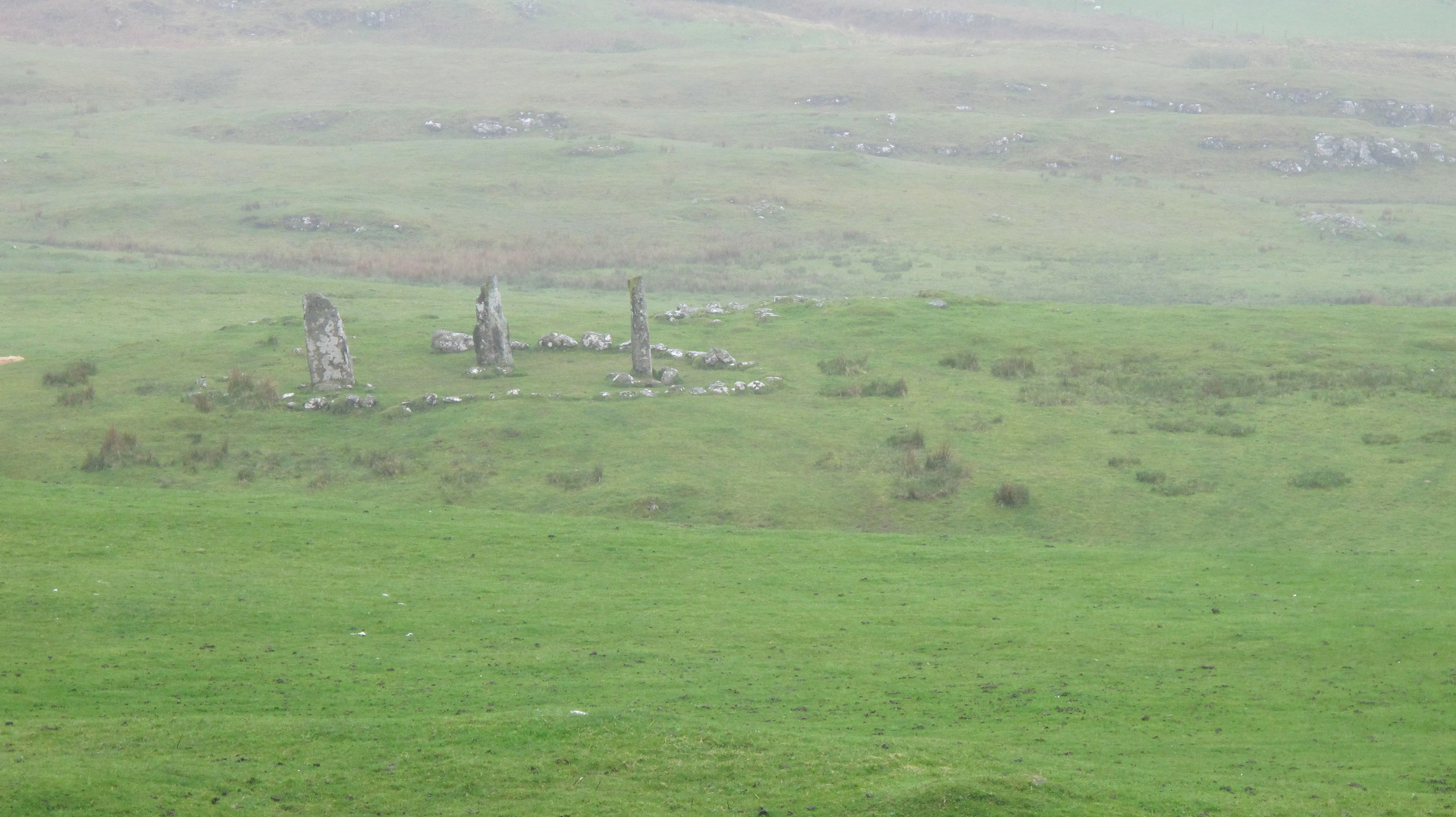
Irrelevant photo: Yeah, any serious blogger would show you a picture of the English flag. This isn’t a flag. It isn’t even England. It’s a stone circle in Scotland.

A week later, the someone looked at the goldfish, wondered why they thought it was worth winning, and dropped it off at a second-hand store (or since this is about Britain, a charity shop).

But the ping-pong ball stayed inside the fish tank. And it brought a flag with it. Also (the metaphor’s breaking down quickly) some of its own laws. The fish tank has a different flag, which incorporates the ping-pong ball’s flag, along with the flags of some of the other ping-pong balls that were thrown in. So the English ping-pong ball has two flags, its own and the fish tank’s.

Like the English ping-pong ball, the tank has a set laws, and they apply to all the ping-pong balls.

The point is not to confuse the ping-pong balls with the fish tank.

Did that clarify things?

I didn’t think it would, but I had to try because–and I have no excuse for this–I often read questions on Quora, and I’ve come to understand that a lot of people can’t tell the difference between a ping-pong ball and a fish tank. Or between England and Britain. Or between a hole in the ground and a part of their anatomy that you’d think they’d have familiarized themselves with by the time they’re old enough to leave questions on a public website.

I used to not just read questions on Quora but answer them. I’ve pretty much stopped now because it was bringing out the worst in me. That’s not hard, but I don’t much like myself when I make fun of people publicly. At least, not after the first rush of damn-that-was-fun.

I’m not being snotty about people not knowing Britain from England, by the way. That’s just a lack of information. It’s the deeper ignorance that I’m talking about. But I am, as usual, off topic.

So, briefly, repetitiously, and more sensibly: Britain has a flag. That’s not the one we’re talking about. England also has a flag. So do Wales, Scotland, and Cornwall (which isn’t recognized as a ping-pong ball but has its own flag anyway; take that, England). Northern Ireland’s also part of Britain and it’s recognized as a nation but it doesn’t have its own flag because all hell would break loose if it tried to choose one. This symbolism stuff can turn ugly pretty easily.

To read a Greek immigrant’s explanation of the Northern Ireland flag situation, follow the link.

With that out of the way, let’s move on:

Genoa adoped St. George as its patron saint in 1190, during the Crusades, and with the saint came his flag. Why was that particular design his flag? Haven’t a clue and by now I doubt anyone else does either, although I expect it was clear at the time. Milan uses the same design but calls it St. Ambrose’s cross. If there really are saints, they’re probably up there arm wrestling over who owns the design.

Or laughing their immaterial asses off.

In the thirteenth century, the English (who weren’t yet British; the fish tank hadn’t been invented yet, never mind the ping-pong ball) adopted the flag from Genoa and, according to an article in the Week, agreed to pay for the privilege. It was “to be flown by its navy to deter enemies from attacking.”

The article doesn’t say why that particular design would deter enemies. Maybe because Genoa was a scarier naval power, but I’m guessing.

Wikipedia (when I last checked) called the Genoa connection a common belief in Victorian times but says it can’t be substantiated. It adds that Richard the Lionheart was supposed to be responsible for adopting the saint and his flag.

According to the Flag Institute (yes, there is such a thing–or at least a website that makes it look like there is), during the Reformation “all religious flags and other saint’s banners, except for St. George’s, were abolished. St. George’s flag had first been used as a maritime flag seven years earlier.”

It was the Flag Insitute–she said defensively–that put the apostrophe in the wrong place. It’s a quote, so I left it. Three points if you spotted the problem.

Those dates don’t match up with the quote from the Week, but let’s not agonize over it. It won’t be on the test. It argues for what Wikiwhatsia said, that it can’t be substantiated.

But England didn’t just buy–or rent–the rights to St. George’s flag, it got George himself as a patron saint. So let’s talk about who he was.

Legend says George was a Roman soldier, born in what’s now Turkey. According to an article in the Independent, “In 303 [the Roman emperor] Diocletian, as part of a crackdown on the growing influence of the Christian community, ordered that all Christian soldiers in the army should be expelled and all Roman soldiers be forced to make the traditional pagan sacrifice.

“St George refused and denounced the edict in front of his fellow soldiers, declaring he was a Christian.

“Diocletian initially tried to convert him with offers of wealth and land but when he refused he was beheaded on 23 April 303.”

Legend has George slaying a dragon at some point–presumably before his death. It was feeding on townspeople. But freedom from dragons doesn’t come free: He’d only do it in if the entire town converted to Christianity.

Nothing in legend connects George to England, but in 1327 Edward III made him the country’s official saint anyway. The beliefs of the time didn’t demand that a patron saint have anything to do with the country that drafted him. He had to embody the country’s characteristics–or to be more accurate about it, the characteristics it wanted to think it had. Or wanted its enemies and possibly even friends to think it had.

There was no practical way for the saints to be consulted about this. They didn’t get to say, “No, I don’t like this country–its topography offends me, its language is too complicated for me to learn, and if that isn’t enough they eat fish and chips and back when I was alive I hated fish.”

They got drafted, and if people prayed to them in a language that was too complicated for them to learn, that was the people’s problem. They prayed for rain and their warts disappeared.

It explains a lot.

So St. George got landed with not just England but also Portugal, Venice, Beirut, Malta, Ethiopia, Georgia, the Palestinian territories, Serbia, and Lithuania. And, of course, Genoa. I don’t think any of the other countries thought they had to rent him from Genoa and why England started that arrangement I don’t know.

I haven’t been able to untangle what flags–if any–all those other places consider to be St. George’s, but I do know that if you google St. George, flag, and Lithuania (I chose Lithuania because it was at the end of the list, not knowing that my fingers don’t like the sequence of the letters), you come up with lots of flag images, the red cross on a white background being only one of them.

What was George expected to do if two of his countries or territories went to war with each other? Intervene on both sides? Pull the covers over his head and weep for humanity? I’m no a expert on religion. In fact, I’m not religious and my lack of religion doesn’t even from this particular religion, so I won’t try to answer. All I can do is raise awkward questions.  

But back to that agreement about the saint and the flag: For years, England paid Genoa for the use of the flag, but it stopped when Genoa was occupied by Austria in 1746. And now, after all those years, Genoa’s mayor is making a claim for unpaid rent, writing to the queen, “Your Majesty, I regret to inform you that from my books [it] looks like you didn’t pay for the last 247 years,” He is, apparently, digging through the archives to figure out how much that comes to.

“That means we are owed over 250 years of back payments,” he wrote, before admitting he was only “half serious”.

“Instead of cash, we could ask England to restore one of our old palaces or make a donation to charity.”

Why is he claiming both 247 years’ worth of payments and over 250 years’ worth? Especially when 1746 was neither 247 or 250 years ago? I can’t answer that. Maybe he sat, dazed, though the same math classes that I did, with roughly equivalent results. I’m in no position to criticize.

What happens if England doesn’t pay up? Genoa isn’t likely to declare war, and if some court has authority over a medieval agreement that can’t be verified, I’m not sure which one it would be. Some European Union court, maybe, but Genoa had better hurry.

How do people read the symbolism of a saint’s cross in the modern world? Most people, I suspect, don’t think about saints when they see it. England’s pretty relaxed about religion.

Personally, I find it a bit weird to live surrounded by flags with religious origins. I’m Jewish and I’m an atheist. I don’t think about either of those things daily, but they set me apart in both predictable and surprising ways. Cornwall’s flag is St. Piran’s cross–white on a black background. I tend to see a symbol of Cornwall, but it is a cross and I can’t not see it as a cross. British history’s bound up with Christianity, with all its symbols and its wars and its beliefs. I accept that. What else could I do with it? It’s not as if it would change if I didn’t. But it reminds me regularly that I’m an outsider here.

The St. George flag doesn’t get much official use these days. Sports fans backing an English team use it some but, awkwardly, the English ultra-right and neo-nazis have adopted it as their emblem, so when you see it displayed you can’t tell if you’re looking at a sports fan or a nazi.

There are, mercifully, more sports fans in the country than neo-nazis and unless the context is clear, I tend to assume sports fan. Still, it’s not something you–or at least I–can put out of your (or my) mind.

The queen may well decide to skip the payment.

English public schools and the old boys’ network

English public schools–now known as bastions of privilege–started out as philanthropic schools to educate the poor. Some of them date back to the Middle Ages and the Renaissance.

By “the poor,” of course, the schools and their founders meant poor boys, and the sons of the rich were specifically excluded from some. Excluding girls was such a given that I doubt anyone thought to mention it.

The term public school first appears in England in 1580 (or in the eighteenth century, depending on who you want to believe). The public part meant that they benefited the public, unlike the private school, whose profit went to the owner.

These were grammar schools. As far as I’ve been able to untangle this mess, that means they taught Latin and Greek, with a heavy emphasis on the classics. When Ben Jonson wrote about Shakespeare that he had “small Latin and less Greek,” he was using those as the measure of a well-educated man. And although the man part isn’t a quote, it’s very much what he was talking about.

Irrelevant photo: A boat on the beach on Iona. With a person who’s wandering off the other way because my every moment is so fascinating.

According the the Encyclopedia Britannica (you’ll find the link in the next paragraph), the emphasis on the Greek and Roman classics continued well into the 20th century. “Organized games, in contrast, were a late development, and, before their introduction, disorderly conduct was intermittently considerable, particularly in the early 19th century. When the demand for men to administer the British Empire led to scores of new foundations during the 19th century, however, the schools tended to adopt the more disciplined, duty-bound, and athletic model.”

But we’ve gotten ahead of our timeline. The schools were good–or at least people thought they were good–and as a result, the Encyclopedia Britannica says, “From about the 17th century the upper classes took increasing advantage of the tuition [meaning teaching, not the money parents paid for their darlings to be taught] afforded by these foundations. As pupils paying the market rate became more numerous, the schools were increasingly transformed into boarding establishments.”  

In other words, the rich muscled their way in and even before anyone had time to introduce standardized tests to prove that this was all wondrous, the sons of the rich outnumbered the sons of the poor.

Since the Britannica is impressive and high-end and its editors and contributors probably knows both Latin and Greek (ancient, of course, not modern), it manages to convince a tilted A to cozy up to the second E in the word encyclopedia, which makes it look (a) like a single letter and (b) much classier than a bare nekked E would, although it adds fuck all in the way of content. That’s very much in keeping with our topic today and we’re going to do without the A, thanks, partly because I don’t have the patience to go searching for a useless character in the depths of my word processing program and partly because I enjoy small and pointless exercises in the art of spite.

In case you’ve ever wondered (and I did), how you pronounce that combination of A and E, it’s pronounced the same way it would be if the A had not only broken up with the E but moved all its stuff out in the middle of the night and left no note and not even a forwarding address. All if does is make the person who uses it look like he or she knows something other people don’t.

Which may or may not be the reason for all that Latin and Greek.

Where were we? Charitable schools to educate people of “humble backgrounds” being taken over by the upper class because they were too good to waste on the humble: As time went on, the schools’ role became to prepare boys for Cambridge and Oxford universities–and also for public service, giving another meaning to the word public.

Ages ago, I read that they were also called public schools because that contrasted with the tradition of upper-class boys being educated at home, by a tutor, but I can’t find any confirmation of that online.

In the nineteenth century, a number of girls’ public schools were established. I haven’t found a date for the earliest ones.

Where did all this lead? As the Britannica so clunkily puts it, “The impact of the public schools in Britain was historically immense. Perhaps in no other post-Renaissance country did an ethos directly and concentratedly inculcated in so few citizens exercise such influence nationally—and internationally, given the crucial role of the public school ethos in helping Britain build its empire. The ethos in question was less an academic one than a class-conscious code of behaviour, speech, and appearance. It set the standard for conduct in the life of officialdom in Britain from the early 19th century to the mid-20th.”

I’ll try a very (very) loose translation of that since, many an eye will have bounced right over it without taking much in: The schools created a set of standards by which members of the upper class could recognize each other and judge each other–and then judge people from other classes and cultures to be less worthy of their spot on the earth, given that those others had so clearly failed to be like those glorious, conforming, upper-class English public-school graduates.

Charming.

Public schools fed their graduates into government and into the varied mechanisms that ran the British Empire. They were a small group and hugely influential, and who you knew mattered. So did who you were, meaning who your family was. 

The old boys’ network? This is where the phrase originated. The old boys were the graduates of these elite schools, and there’s something creepy–at least to my ear–about it when you really hear the word boys in the phrase. These are grown men who don’t seem to have ever quite gotten away from that stage of their lives.   

According to the BBC, by 2017, only 1% of the public schools’ students paid no tuition, which in 2015 averaged £13,194 a year. If a kid boards there, that goes up to £30,369.

The country’s average income in 2015 was in the neighborhood of £27,456. So yeah, she said with a vague gesture in the direction of British understatement, these schools are on the expensive side.  I’ll admit that averages are misleading, since they’re heavily influenced by extreme numbers, but never mind. An average is enough to give us a general idea of the contrast.

So public schools have ended up as places to educate the sons (and now also the daughters) of the rich, and they don’t need to exclude the poor because the poor, the average, and the considerably above average can’t afford them anyway. A token few are stirred through in roughly the proportion of salt to broth, but unlike salt they don’t seem to change the flavor much.

The schools are still treated as charitable institutions, which earns them millions of pounds a year in tax breaks. Or possibly billions. It depends whose statistics you like. I suspect the difference depends on what tax breaks you include in your calculations. Can we just say it’s a lot of money and consider that close enough?

For a while, the government made small, squeaky noises about taking away their tax breaks unless public schools made some gestures in the direction of helping state schools (which, just to confuse the issue, are what Americans would call public schools, since they’re paid for and used by the public, unlike English public schools, which are private; are you still with me here?). Then, oddly enough, they dropped the whole thing.

The continuing influence of public school graduates wouldn’t have had anything to do with that.

A recent review of a book on the public schools mentions research showing that the standard of teaching is “not significantly higher than in the state sector: parents ‘are really paying for smaller classes . . . and a place in the privilege network.’ ”

The book comes with the perfectly neutral title of Posh Boys: How the English Public Schools Ruin Britain and sounds like a well-researched call for their abolition, covering everything from child abuse to money laundering (no, I don’t know any details, but I wish I did) to their role in educating the children of oligarchs.

According to the Times, the students of nine public schools are 94 times more likely to reach “the top” than anyone else. Analysis of the past 125 years of Who’s Who, which lists the most prominent politicians, lawyers, business leaders and civil servants in the UK, found that one in eight entrants in recent editions comes from one of the nine [elite public] schools. This compares with one in five in the 1892 edition.

Yes, friends, it’s another example of human progress, which as a child of the 50s I was taught to believe in. Not specifically. It was so much part of my teachers’ assumptions that no one thought to separate it out as something that needed teaching. Every day in every way, the world was becoming a better place.

Haven’t you noticed?

The houses of Parliament are falling down, falling down, falling down

Members of Britain’s Parliament have been arguing about whether to run away from home.

Why? Well, they come from a broken home. The Palace of Westminster, where they meet, is without too much exaggeration falling apart. To give a fairly random example, on April 22, a stone angel dropped a chunk of stone some 230 feet (that’s 70 meters, or in technical terms, a long damn way) to the ground. If this was the angel’s opinion of the government’s immigration policy (rough summary: we only want immigrants who are just like us, and we don’t really want them either), or on what it’s doing to the National Health Service or public services in general, I couldn’t agree more. Either one is enough to make the angels weep. Also enough to make the angels throw blocks of stone.

I don’t know how much the stone weighed. Enough to flatten a government, but angels have lousy aim, more’s the pity.

Irrelevant photo: a daffodil after the rain.

Westminster Palace isn’t–as the British measure these things–old, but it’s old enough to need £3.9 billion in repairs. Give or take a few hundred million, because the costs always escalate. But why should friends quibble about money, especially small amounts?

Let’s do a bit of history before we talk about what’s broken:

The first palace on the site was built in 1016,

Whether 1016 is a start date or a completion date, I haven’t a clue–construction slow back then–but it happened so long time ago that we don’t really need to know.

Then the Normans conquered the country. They looked the palace over and said, “Nice place. We’ll take it.”

Only they said it in French.

That building burned down in 1512, under Henry VIII. Fire is not a slow process, so one year more than covers it. It was rebuilt, but Henry’s eye had wandered–he had a short attention span–and he’d moved to a different palace. It stopped being a royal residence and was used by Parliament and the royal law courts.

It doesn’t sound like the place was a good fit for Parliament even then. The Lords met in what had been the queen’s chamber, then moved into a larger hall when the George III expanded the peerage and they couldn’t all stuff themselves in any longer. The Commons didn’t have a chamber of its own at first because they were, you know, commoners. They were supposed to feel lucky that they were allowed in at all.

The new building burned in 1834. The replacement incorporated what survived of the old palace (I think that’s medieval replacement; as far as I can figure out, nothing was left of the older old palace) into a gothic-style monster that spreads along the Thames.

“Monster” isn’t a comment on the architecture. I know zilch about architecture. It’s just big.

William IV (no, I don’t know anything about him either; ask me about commas; I’m pretty good with commas) didn’t like the new building and when it was almost completed he offered it to Parliament, which said thanks, Bill, but it really doesn’t work for us either.

But it turns out that nothing else worked for them either, and tradition exerts a powerful pull, so against its better judgment, Parliament moved in.

In 1835, the king opened parliament by assuring them that the fire had been accidental. Who said it hadn’t been? No one that I can find reference to, but there’s nothing like denying a crime to make the world wonder.

And there we’ll leave Parliament for a century or so, with its members following arcane traditions and running around in fancy robes and silly costumes.

During World War II, the building was bombed fourteen separate times. That was not by accident.

Which brings us to the present day, when it’s not London Bridge that’s falling down but Westminster Palace.

What’s wrong with the place? The roof leaks. Sorry, make that roofs, because it has loads of them. The gutters and downpipes are corroding. The stonework’s decaying. Angels are throwing things. It’s full of asbestos. The plumbing’s a disaster. Very few of the 4,000 windows close well. “The heating, ventilation, water, drainage and electrical systems are now extremely antiquated and improvements to fire safety are needed.”

What’s more, the building was made of Anston limestone, which was cheap and easy to carve but it decays quickly, and time’s caught up with it.

One source says the House of Commons only has room for one wheelchair. Another says wheelchair users have to sit in the middle of the chamber in both the Lords and the Commons. Take your choice. Either way, it’s a problem.

Other than that, everything’s fine. Except for the “vast quantities of combustible materials. This and the huge network of ventilation shafts and floor voids [the architects] created to aid ventilation, had the unintended effect of creating ideal conditions for fire and smoke to spread throughout the building.”

The wiring hasn’t been replaced since the 1870s. If the steam pipes blow (they’re older than all of us put together and the steam puts them under pressure), they’ll scatter asbestos in all directions. Grease from the kitchen is leaking onto pipes that carry the electrical wires.

Oh, and there aren’t enough seats for all the MPs. It’s infested with mice. And it caught fire forty times between 2008 and 2012. Four or five people are always on fire patrol. A former cabinet minister called it a death trap. And did I mention the plumbing? It smells bad. And backs up regularly.

It’s not that no one’s tried to maintain the palace, but maintenance can only be done when Parliament isn’t in session and the repairs have been slower than the decay. And, of course, not enough money was dedicated to it. To get the place in working order, they’ll need to pack the Members of Parliament and the Lords into separate boxes (the Lords’ box is lined with ermine; the Commons is just, you know, a very nice box) and move them out so some real work can go on.

In February, against the advice of government ministers, who wanted to form a committee to think about preparing to get ready to study the situation, MPs voted to move out so the work can start.

A decisive move, only they’re still there. Moving out will take a full Act of Parliament, which is “unlikely to happen before 2025.” I think that means the repairs starting, not the act, although you couldn’t prove it by me. An Act of Parliament has to be approved by both houses and then the queen has to wave her magic feather over it. It doesn’t take seven years unless the queen’s trapped in amber.

Some older MPs, primarily Conservatives, don’t want to move out during the work because–or so say the younger MPs who favor the move–they don’t want to serve out their final years in temporary quarters. But staying while the repair work goes on around them could boost the cost to £5.7 billion and stretch the work out so it takes forty years.

If the place doesn’t fall down first.

Some MPs and Lords worry (and others hope) that a move would kill off a few of the more arcane rituals associated with Westminster. Like what? Like the speaker of the Commons opening the day’s session by parading to their meeting room (sorry–it’s called a chamber but I can’t seem to call it that), together with the trainbearer, the chaplain, the secretary, and the serjeant (that’s how they spell it) at arms, with I’m not sure which of them calling out, “Hats off, strangers.” Like each newly appointed speaker being dragged up to the speaker’s chair. Like the doorkeeper calling, “Who goes home?” at the end of the day’s session. Like placing boxes of snuff outside the Commons’ and Lords’ meeting rooms, or MPs having to place a prayer card on a seat to reserve it because (and we’re back to that again) there aren’t enough seats for them all to cram in.

Ah, but there’s more: One  elevator can’t be used when the Lords are voting, and there’s a staircase that only MPs can set foot on. And a blue carpet that you can cross but not loiter on. Plus a room where you’re sometimes allowed to speak and sometimes not and little hooks for MPs to hang up their swords. The Lords have ribbons for theirs.

How do you hang a sword on a ribbon? You’re on your own there. I’ve never tried.

Politically, voting either to move out or to stay is enough to set a politician’s skin twitching. Inevitably, the people who elected them will ask, “You just voted to spend how many billion pounds to spruce up your workplace?” But every year they put off the work adds something like £100 million to the cost.

This is complicated by the government’s inaction on the many high-rise apartment buildings around the country (they’re called tower blocks here) whose siding (called cladding) turns out to be flammable. This came to light when one, Grenfell Tower, burned to a tall and horrifying cinder ini June 2017, killing many of the residents. Cue government handwringing, pious statements, and long-lasting inaction.

But yes, quick pious statement and we’ll go back to the important things: Should the palace be rebuilt exactly as it is, only updated and functional? Or should changes be made?

Like what changes? Well, women MPs complain that the seating’s built for male-size bodies, leaving short women with their legs dangling. (Speaking as a short woman, I can testify: Your back hates you when you sit way that for long.) Or the bars. Do they keep them all?

What bars? Parliament must be the country’s most alcohol-soaked workplace. Once Lords and MPs have hung up their swords (or possibly before, I wouldn’t know), they have a choice of almost thirty bas. Not everyone can drink at all of them. Some are only for lords. Some are for MPs. Journalists drink at a different one. The mice drink at another. The Lords at one point declined to merge their champagne order with the Commons’. It would’ve saved money but they were afraid the champagne wouldn’t be as good.

The public subsidy for all that is $8 million. Exactly why we’ve changed from pounds to dollars for this is beyond me, but it’s okay because we’re bilingual here.

Alcoholism and embarrassing incidents are–well, let’s not say they’re common, let’s say they’re not uncommon. I’m not sure how much of a difference there is between the two but the second one sounds better.

In addition to the bars and cafeteria(s?), there’s a hairdresser, a gym, a florist, another bar, a post office, a travel office, more bars. . . . You’d hardly have to set your well-shod foot in the real world except to convince your constituents that you think only of them.The palace was built at a time when a gentleman belonged to a gentleman’s club, and it seemed natural to recreate that atmosphere.

In spite of the building’s perks and symbolism, some MPs would rather start over someplace else and have proposed building something new instead of rescuing the palace. It could have enough office space, room in the House of Commons for all the MPs,  and functional plumbing. The current building could become a museum, they say.

There’s also been some suggestion that politics might be less adversarial if the Commons’ meeting room were shaped like, say, a horseshoe instead of having ranks of benches facing each other. On the evidence of American politics, I wouldn’t hold out a lot of hope for that.

In the meantime, Big Ben–the big honkin’ clock at the top of the building’s tower–is in the process of being repaired to the tune of £61 million, which is twice the original estimate. The clock’s expected to stay silent until 2021

Why does that need to be done? Cracks in the masonry, leaks, rusting metal, not keeping good time, the possibility that clock itself could hurl itself to the sidewalk in despair.

Is it more pressing than fixing the rest of the building? I’m not sure, but it can be done without decanting–as they put it–the entire parliament and all its support workers into something resembling the real world.

Village raffles and the Cornish Methodists

Until recently, I believed that if you got more than three people together in Cornwall, and possibly anywhere in Britain, you had to hold a raffle. It wasn’t required by law, I’d have said, but by custom, which is much more powerful.

This wasn’t some random belief snatched from the dreamfluff in my mind. At every event we went to, from the village theater group’s performances to the Christmas craft sales, from fundraising lunches to anything else you can think of, there was a raffle. As soon as you went in the door, someone sold you a strip of tickets.

So we assumed raffles had been around from the time of the Druids.

Yes, the Druids. You know why they held the oak tree sacred? Because they used the bark to make raffle tickets.


Irrelevant photo: A rare bit of snow on the whatsit shrub in February.

I’m giving you a link here. Not because it proves the Druids made raffle tickets from oak bark but because it says they held the oak sacred, proving that I didn’t make that part up. I’ve gotten cautious since a web site picked up my riff about Druids worshiping the Great Brussels Sprout and repeated it as—may the universe forgive me, especially for still half-thinking it’s funny—verifiable truth.

So in the name of caution, please remember that there’s a difference between saying the oak was sacred and proving it. I can’t tell you, from my own knowledge, whether it’s true. But that Druid/oak stuff happened a long time ago, and how many of us really care? It’s a side issue.

Were there Druids in Cornwall? The best Lord Google could give me was a bunch of uproar about modern self-proclaimed Druids. So I’ll give you a definite maybe on that. Cornwall has its own history, and it’s not your standard-issue English history.

But we were talking about raffles.

I found out a few weeks back that raffles haven’t been in the village since the Druids (if they were ever in the village). They’re an import. Some Cornish villages don’t hold them at all.

Why not? Because of the Methodists.

The Methodists are not to be confused with the Druids. If you’ll forgive a generalization, Methodists 1) don’t paint (or possibly tattoo) themselves blue and 2) don’t consider the oak sacred. They also don’t drink or gamble. Or at least the early Methodists didn’t. More recently, the church has taken the position that “total abstinence [that’s from alcohol] is a matter for individual choice. It is not a condition of membership. Methodists are recommended to make a personal commitment either to total abstinence or to responsible drinking.”

Communion wine is nonalcoholic.

They’ve also eased up on minor-league gambling, although they do say that just because they’ve loosened of the rules that doesn’t mean chapels should think they can open up a new revenue stream.

Methodism is an important part of Cornish history, and we’ll get to that in a bit. In the meantime, what you need to know is that the great historical divide in the village is between church, which is to say the Church of England, and chapel, which is to say the Methodists.

“Historical,” in this context, means before the flood of incomers guaranteed that the larger divide would be between the old village and the new.

It was the incomers who introduced raffles.

Since I’m neither church nor chapel, I’m not the best person to sum up the differences, but I’ll tell you a story about them:

I was part of a village committee a few years ago and the topic of church and chapel came up. For some reason, it struck me as a good place to ask one of the really important questions that was bothering me: Why is it that chapels have toilets but churches don’t?

“Keeps the sermons short,” someone told me.

I haven’t heard of any village Methodists getting into a huff about the raffles that incomers imported, but I have heard of one who’ll donate a pound to whatever cause the raffle is raising money for but refuse his strip of tickets. I’ve also heard of a nearby village where you wouldn’t dare hold a raffle. There are various strands to the Methodist Church, and in that village they’re old school Methodists.

How did Cornwall become so heavily Methodist?

According to Bernard Deacon’s Cornish studies resources, “On [John Wesley’s] very first visits [to Cornwall] large numbers of people turned out to hear him preach in the open air. Even the opposition stirred up by some local gentry during the politically sensitive time of the Jacobite rebellion in 1745 could not prevent a growing interest in what the Methodists were saying. It wasn’t long before chapels began to appear, especially after the 1760s. By 1785 over 30% of Cornish parishes contained an active Methodist society. Growth then really accelerated and by 1815 the vast majority of parishes (83%) possessed a Methodist presence. By the time of the Religious Census of 1851 a higher proportion of Cornwall’s church-going population attended a Methodist chapel than anywhere else in the British Isles.”

He goes on to say that “the Church of England was failing in Cornwall by the 1770s. Numbers of communicants in that decade were very low in some parishes…. Formerly, the finger of blame for this state of affairs was pointed at its non-resident and distinctly unsaintly clergy. They subcontracted out the business of caring for parishioners to underpaid and incompetent vicars, while preferring to spend their time eating, drinking, chasing after foxes and in general hobnobbing with the landed gentry (to whom many of them were closely related in any case). Yet, research indicates no connection between attendance at Anglican communion in the late eighteenth century and non-residence. Furthermore, energetic and evangelical churchmen were not unknown in Cornwall…. Although the Anglican church in eighteenth century Cornwall…does not appear much worse than anywhere else.”

He suggests several reasons for Methodism’s appeal here. Cornish parishes (meaning Church of England parishes) were larger than they were in England, loosening the church’s control. And industrialization increased this by creating new population centers that were far from the churchtowns established in the medieval period.

I can’t find a definition of churchtown, but our parish has one. It consists of the church and a small handful of houses. Our village doesn’t really have a center, but the churchtown is very much off on its own and most people would’ve had a hike to get there on a Sunday.

The Cornish gentry were also scarcer than the English, “to some extent squeezed out by the Duchy of Cornwall’s manors,” and by a tradition of people making a living as combined smallholder and tinners, which left a tradition of social independence. “The influence of squire and parson” could never be taken for granted, and with the rise of new money, neither could social deference.

At the same time, industrialization—which in Cornwall mostly meant mining and which Deacon points out was rural, not urban—meant that people’s livelihoods weren’t secure. Their jobs and incomes were tied to global fluctuations, and an increased population meant that a smaller percentage of people had smallholdings to fall back on in hard times.

“Traditional life may have looked familiar in the mid and late eighteenth century [but] it was steadily being hollowed out.”

All of this created fertile ground for Wesley’s message, which “assured people that redemption was open to all and anyone with sufficient faith could be saved. This was the news that was energetically propagated by charismatic preachers, many of them local men and some at first women, who spoke the Cornu-English dialect of the people and arose from the people. Moreover, a flexible, adaptable organisational framework of classes and bands, grouped into societies, soon created a vigorous Methodist community that paralleled that of the Church of England, but one that was both bottom-up and much more participatory.”

Historians argue about whether Methodism was a conservative force or a radical one. My best guess is that the argument goes on because it contained elements of both. On the one hand, “it imposed quietist values of self-discipline and patience in the face of suffering in the expectation of the joys to come in the next world, values that dissolved class antagonisms.” On the other hand, it gave a voice to women, to miners, to the disenfranchised. “It legitimated the morality and structures of ‘traditional’ Cornish society. It upheld and validated the cottage as a socio-economic unit in the face of the changes being wreaked by an external modernity.”

For a bit of period detail, let’s quote from The Cornwall guide, which adds that “On one of [Wesley’s] very early visits…the gruelling six day journey from London was made even more difficult by heavy snow on Bodmin Moor. With no road yet built and fearing to get lost as night fell, Wesley sent his two companions ahead to look for refreshment. They arrived at Trewint Cottage, near Altarnun, and asked for food. The owner of the cottage, Digory Isbell, a stonemason, was out, but his wife Elizabeth offered them ‘bread, butter and milk and good hay for the horse’ and refused payment. To her amazement, before they left they knelt on the floor and ‘prayed without a book.’ A few weeks later they returned, this time with John Wesley himself, who had already achieved a modicum of fame. Three hundred neighbours came to hear him preach and Digory was inspired by a passage from the Bible to build an extension onto his house, for the use of John Wesley and his preachers whenever they came to Cornwall.

“Cornwall took to Methodism like no other county in England

“Wesley’s practice of preaching outdoors and in barns and cottages suited Cornwall’s geography; the rural population was huge and many villages were isolated from the parish church. Huge crowds of up to twenty thousand people were drawn to open-air meetings in places such as Gwennap Pit, where Wesley preached eighteen times.

“For a community of miners, facing danger at work every day, farmers and fishermen, threatened by creeping industrialisation, Wesley’s simple doctrine of justification through faith and instant salvation offered comfort, security and hope. John Wesley also set up health and literacy facilities in order to help the impoverished improve their lot, thus making Methodism the religion of the people in contrast to Anglicanism, which had always been the preserve of the rich.… Originally a movement designed to invigorate the Church of England from within, Methodism, certainly in Cornwall, began to drift apart from it.”

So here we are, more than two hundred and fifty years on, and in any village enterprise, attention to the church has to be balance with attention to the chapel and vice versa, even though if you mixed the two congregations together and put them on one side of an old-fashioned set of scales and then compressed the rest of the village on the other, the rest-of-the side would thunk down heavily, lifting the congregation side high in the air. Which can either be a metaphor for being closer to heaven or for losing touch with the ground. Take your pick.

Cheddar Man and British prehistory

Back in 1903, some people digging a drainage trench in Gough’s Cave, in the Cheddar Gorge in Somerset, found a skeleton. In case Cheddar Gorge and Somerset don’t help you locate the cave on the map of your mind, it’s two or three hours’ drive from where I live. That’s fairly useless information but I’m hopiong it’ll create the illusion of a reference point.

The skeleton turned out to be 10,000 years old and is now known as Cheddar Man. Ched (as he won’t mind being called since (a) he’s dead; (b) whatever he spoke wasn’t English and (c) writing hadn’t been invented yet and neither had computers, so he wouldn’t have read this in any case) was around 5’5″ and would’ve weight 10 stone.

A stone? That’s a particularly insane measure of weight that the British abandoned when they (mostly) went metric, but–no, don’t ask me why–a recent newspaper article about the find gave his weight in stones, probably because they were still using it when Ched’s weight was first calculated.

A stone is 14 pounds. I’ll leave you to multiply 10 by 14. I don’t do higher mathematics.

Why didn’t the writer translate stones into kilowhatsits since Britain’s now (mostly) metric?Because. And if that isn’t a good enough reason, make up one of your own.

But before we go on, let’s be completely accurate: When it was found, the skeleton must have been 10,000 minus 105 years old, because in 2018 the headlines are still saying the skeleton’s 10,000 years old. I’m terrible with numbers, but I do understand that 10,000 minus 105 isn’t 10,000.

One article figures that works out to 300 generations ago.

The reason Ched’s back in the news is that up-to-date DNA sequencing has revealed—drumroll, please—that he had very dark skin, blue eyes, and curly brown (or in some articles, black) hair. And as an adult, he wouldn’t have been able to drink milk. I’m guessing that measn he was lactose intolerant, like much of the world’s non-European people and some smallish portion of people of European descent, including me, but the articles I’ve read don’t go into detail on that.

What’s more, they don’t say word one about me. It’s a mystery.

How dark was Ched’s skin? His DNA says it was either dark brown or black, but when I googled him, the featured photos from three different websites showed skin tones that ranged from toasted white bread with a sunburn to seriously dark. Which is interesting, since all three photos are of the same reconstruction.

Photoshop, pre-existing beliefs, and politics lead us to strange results. The darkest photo is the best match for the description, so I’m going to put my trust in that one.

I don’t know if all three photos will still be featured, but you’re welcome to roll the dice by clicking on this link.

Screamingly irrelevant photo. Primroses. If it ever stops raining, we may get these planted. In the meantime, they live on the kitchen counter, which I’ve cleverly hidden by moving the lens in on top of the blossoms. Don’t they look outdoorsy?

Ched wasn’t one of Britain’s first settlers. Early Britain was repeatedly settled and then repeatedly emptied out when glaciers expanded and sent people running for friendlier climates. Today’s residents understand the impulse, although we’re short on glacierless just now.

Neanderthals and pre-Neanderthals settled in Britain at various points, the pre- people being forced south by an ice ago more than 200,000 years ago and the Neanderthals arriving (if I’m reading this correctly; it all gets a little hazy back there because no one was assigned to take notes, which was unforgivably careless) some 100,000 years ago. According to Francis Pryor (I’ll get around to explaining him in a bit), the earliest evidence of human occupation in Britain has recently been redated to roughly a million years ago.

Modern humans, as opposed to Neanderthals and pre-Neanderthals, also settled several times and got chased out by ice ages. Britain wasn’t an island during most of that period, so migration would have been relatively simple. When sea levels were low, it was joined to Europe by a land bridge, now called Doggerland and named after the Dogger Bank, which was in turn named after seventeenth century Dutch fishing boats called Doggers. I stopped following the thread at that point. From time to time, even I notice when I’ve gone too far off topic.

Cheddar Man (who was male, unlike some of the prehistoric “men” named in less discriminating days) is from the group of people who put down roots after the last ice age. In case it helps, we’re talking about the Mesolithic period–the middle stone age. His people came from the Middle East (which wasn’t called the Middle East then, but never mind) through Europe (which wasn’t yet Europe) before coming to Britain (which—never mind, you already know this). They would’ve been hunter-gatherers and weren’t genetically related to Britain’s earlier modern human settlers—the ones who cleared out when the glaciers moved in.

You can think of it as a very early exercise in gentrification and urban clearance if that clarifies anything, although some obvious differences do stand out. The absence of bulldozers, for one. And of urban planning.

Because Ched’s people—let’s call them the Cheddar people; no one else does, but it’s easier—timed their arrival well. No glaciers drove them out. As the climate warmed and sea levels rose, they found themselves on an island. Leaving became more difficult than staying, so they and became the ancestors of Britain’s indigenous white population. A history teacher from the area was tested and turns out to have a female ancestor in common with Ched. Think about that: Ten thousand years later, a descendant’s still in the old neighborhood. That’s a family that stays in one place long enough to have to clean the oven. I was well into my thirties before I did that.

The average Briton carries ten percent of the Cheddar people’s genes. Or possibly the average white Briton. Or the average person who’s at least partially white British. Don’t push your luck by asking me to get this one right. I read four or five articles before I understood that they weren’t saying ten percent of the population was related to them.

The articles I’ve read draw two conclusions from the discovery about Ched’s skin color–and it’s because of his skin color that Ched’s making the headlines:

  1. “It really shows up that these imaginary racial categories that we have are…very modern constructions…that really are not applicable to the past at all.” Tom Booth, archeologist from the Natural History Museum.
  2. Pale skin developed in Europeans later than was previously thought, possibly because the introduction of farming meant that people’s diets were short of vitamin D, creating an evolutionary advantage for lighter skin, which absorbs vitamin D from sunlight more easily.

BBC article suggests that light skin was introduced by a later wave of immigration–the Middle Eastern people who brought farming with them. An earlier theory was that farming spread as an idea; the newer theory is that it spread with people migrating, bringing their knowledge with them.

And the blue eyes? If they had any evolutionary advantage, no one seems to have figured out what it was. It may simply be a glitch that entered the human population and survived.

So how did the Cheddar people live?

Britain’s climate wouldn’t have been very different from today’s. Siberia it wasn’t. Much of the land would’ve been wooded, mostly with birch and pine. And when the first settlers arrived, it would’ve been uninhabited.

I try to imagine that and can’t help thinking hearing scary music. I’ve seen too many movies.

In his book Home: A time traveller’s tales from Britain’s prehistory, Francis Pryor makes a convincing argument that the early hunter-gatherers led a more settled and more sophisticated life than earlier generations of archeologists thougth. Rather than being the kind of nomads who put down no roots, they would have returned to their settlements year after year. They may have been migratory, but they followed seasonal patterns.

They would’ve made and used stone tools. (The age of metal  takes up only 0.01% of human history.) But being stone age people doesn’t mean they lived in caves, clobbered each other on the head with wooden clubs, and grunted. These were modern humans: us minus the technology. Pryor writes, “We have good evidence that early post-Glacial families had warm, thatch- or hide-roofed houses, the earliest of which (8500 B.C.) was discovered very recently, at Star Carr, in North Yorkshire.”

They had domesticated dogs. They used bows and arrows.

The first known farmers lived in Ched’s time but not in Britain. They were in what’s now the Middle East. According to Pryor, farming didn’t reach Britain until around 4000 B.C. The BBC dates that to 5000 to 4500 B.C., and even I, with my phobia about numbers, notice that the dates don’t match. Can we just say farming took a long time to get this far north? Clocks hadn’t been invented. Calendars hadn’t been invented. Hell, writing hadn’t been invented. So let’s cut everyone some slack if their dates don’t match perfectly.

Besides, the change from hunter-gathering to farming didn’t happen quickly. Even Pryor, who argues for a relatively quick transition, says it would’ve taken a couple of centuries.

Once people began to depend on farming, life changed relatively quickly. Farming could support a larger population than hunter-gathering. It led to a division of labor, densely settled communities, impressive monuments, land ownership, relatively rappid technological change, writing, and all the wondrous stuff we were told about at school. It also led to new diseases (caused by those dense settlement patterns), a more restricted diet, wars over territory, and a shitload of hard work for the people on the bottom of the social structure. One of the things about the division of labor is that it’s not just about you making arrows and me making fish hooks because that’s what we’re good at. At some point it also means someone comes along and says, “You do the heavy lifting and I’ll sit around and think profound thoughts.” Or make art. Or protect us from the angry gods. Or tell you what work needs to be done today.

Farming also turned out to be harder work than hunter-gathering. Hunter gatherers put in a much shorter working day than early farmers—and probably than most of us do today. According to one theory (and if I ever knew whose it is, I don’t remember), we should envy them.

So that was Cheddar Man. He had good teeth, indicating a healthy diet. He probably died in his early twenties, but it doesn’t sound like he lived a bad life.

*

And from there, I just have to take you to modern-day New York City. A friend spotted this in a New York Times article about how a serious snow storm affected the city: “The shelves of some New York City grocery stores quickly emptied of milk, eggs and kale as New Yorkers stocked up for the storm…”

Kale.

I’d give you a link to prove I didn’t make that up, but as an old friend used to say, I can’t be arsed.

Why Britain’s called the United Kingdom, or Hey, what do you call your country anyway?

A steady trickle of what’s-Britain? questions have gradually formed a largish pool on my list of odd questions that lead people to this blog.

The Great British Public contributes heavily to one of them: the why’s-Britain-called-great? question. How do I know many questioners are British? They say things like. “Why are we called Great Britain?” It’s subtle, but if you pay attention, you can tell.

I’ve answered the question here so many times that I’ve worn the fun off it, so we’ll skip to the others, which come from baffled outsiders. One persistent question is why the British insist on having multiple names for their country. Is it Britain, Great Britain, the United Kingdom, or England? Wouldn’t it be simpler to have just one name?

Probably, but Britain isn’t a country that’s drawn to simplicity. You’re not convinced? Look at the spelling it invented.

So why is England different from Britain? For roughly the same reasons that New York’s different from the United States of Burgundy’s different from France. Heavy emphasis on roughly, but it’s good enough as a place to start.

The multiple names make sense if you drop into British history and set your assumptions aside. I’ll keep them safe and warm. You can pick them up when you leave.

Ready?

Once upon a time two countries, England and Scotland, were neighbors. Think of them as living upstairs and downstairs, since the maps are drawn that way. And like—well, not like all neighbors but like some, they had fights about how loud the bagpipe music had been on Saturday night and about whose party didn’t end until the last guest passed out at sunrise and about who throws trash out the window.

A damn near relevant photo: This is Minnie the Moocher. It takes more than loud bagpipes to keep her up at night. Or during the day. If you’re going to throw a loud party, she’s the neighbor you want.

They also fought about cattle and massacres and who was the king of the mountain.

This went on for centuries.

Every so often, the two countries went to war, but even when they weren’t fighting, families from both sides of the border raided families on the other side. And for the sake of fairness, sometimes they raided families on their own side, because this wasn’t about  borders or countries, it was about cattle and kinship and which families weren’t big and tough enough to protect themselves.

If one source is correct, it was also about poor land and too little of it. If another source is correct, it was about the breakdown of order. Think of the border area as a kind of failed state. Both explanations sound credible.

Keep in mind that there’s no natural border between Scotland and England, and for a good part of the time we’re talking about the border was fluid. People on one side lived the same way as people on the other side. Families spread across it. You could cross over without saying “Captain, may I?” One or both countries could move it, and at one point, or possibly more, they did.

Which country behaved worse at this stage? My impression is that both did.

For what it’s worth, this part of the history was news to me. I’d read about the Scots raiding the English, but not the other way around. Any guesses on which country’s historians I got that from?

And while we’re talking about me, I knew that England invaded Scotland repeatedly, but not that Scotland invaded England. Guess which country’s songs I listened to.

Scotland and England became distinct countries during the medieval period, Scotland in 843, according to Lord Google, and England in—oh, hell, that’s messier. Wiki-this’ll-all-change-in-a-minute-pedia gives me two years, 927 and 953.

Close enough.

In spite of cohering later, England became the major power on the island of Britain. (The island of Britain, in today’s terms, is the chunk of land made up of Scotland, England, Wales, and—if you count it separately, which some people do and some don’t—Cornwall.)

The BBC (which publishes good, short bits of history on its website) writes, “England had absorbed Wales and Cornwall by 1543, through parliamentary incorporation, political and cultural integration of the ruling elites, and administrative cohesion across church and state.”

Not to mention warfare and a fair bit of brutality here and there.

I can date the English invasions of Scotland back to 1072, when England’s new king, William of Normandy, having conquered England in 1066 thought he’d have Scotland for dessert. He forced Malcolm III, the King of Scotland, to hand over his son as a hostage, which counts as a victory in my book, but he didn’t get to annex Scotland. Maybe he hadn’t been trying.

The two countries continued to be separate. And the English continued to complain about the Scots playing the bagpipes late at night.

To put this in context, the English also have a tradition of bagpiping. The only ones I’ve heard are Northumbrian, They’re smaller than the Scottish ones and use their indoor voice, which since I’ve only heard them played indoors, in a pub, my eardrums and I appreciate immensely.

When I asked nicely, Lord Google led me to a list of eight English invasions of Scotland, For some reason, it didn’t include the one in 1072, so let’s make that nine. Compare that to seven Scottish invasions of England, one of which happened after the two countries were united so I’d call that a rebellion. That takes us down to six.

Another happened during the English Civil War at the request of the English Parliament. I’m not sure whether that’s an invasion, so what the hell, let’s call it five.

This isn’t just about numbers, though, it’s about power. According to History Today, England was “the major power in Britain and Ireland. By the end of the thirteenth century only Scotland stood in the way of the king of England’s claim to be sovereign of Britain.”

So basically, whether it invaded England or not, Scotland wasn’t about to conquer it, but an English conquest of Scotland was a very real possibility. And that’s another reason I knew of the English invasions, not the Scottish ones. They had a different impact. It’s also why I know the Scottish songs—that have that smaller-country-fighting-for-independence purity about them. Even if history’s never as pure as a good song.

A low point in relations between the two countries came in 1328, when Edward III signed the Treaty of Northampton, recognizing Scottish independence, then waited a year and invaded.

Yes, diplomacy’s a wonderful thing.

One form of diplomacy in this period was to marry someone from the royal family of Country A into the royal family of Country B. It guaranteed twenty minutes of good feeling and generations of warfare, because someone in the royal line of Country A was always being born into the royal family of Country B, and a fair portion of them grew up to claim the crown of the country they didn’t grow up in.

Which is how Scotland and England formed the United Kingdom. James IV of Scotland married Henry VII of England’s daughter, Margaret. (Don’t worry about the names. They’re purely decorative.) They duly produced a line of offspring who had a claim on the English throne, which is why:

(A) Mary Queen of Scots was executed. She was Catholic, she had an arguable claim on the English throne, and she was someone English Catholics could rally around if they could only get the Protestant Elizabeth I out of the way.

(B) When Elizabeth, being a professional virgin, died childless, which tends to happen to virgins, England had find a successor, fast. And the successor had to be Protestant. And have some vaguely credible claim to be a descendant of England’s past kings. So they turned to the Scottish king, James VI, who became the English king as well, making him James the VI of Scotland and I of England.

James packed his bags and moved from Scotland to England, which tells you where the power lay, so even though the Scottish line took over the English throne, I don’t think anyone would argue that Scotland took over England. Officially, it was a merger of two separate kingdoms under one king. In reality, Scotland was the junior partner.

As he made his way south, he was so struck by England’s wealth that he said he was “swapping a stony couch for a deep feather bed.”

Doesn’t it warm your heart when a leader puts the nation’s interests first?

So now it’s 1603 and we have one king ruling two separate countries. Each has its own parliament, courts, and laws. James wants to unite the two countries under one parliament. Both parliaments respectfully suggest that he take a hike off a short pier. What does he do? He sidesteps them and proclaims himself King of Great Britain. The English Parliament has already refused to vote him the title, but he does manage to wring it out the the Scottish one.

It wasn’t until 1707 that the United Kingdom was created by the Acts of Union, passed by the English and Scottish parliaments. A united parliament met for the first time in 1707.

James was long since dead.

Let’s go back to History Today:

“The Union actually enshrined the separate existence of central aspects of Scottish society–law, education and the church–and did not create a homogeneous unitary state, a situation which has continued to this day.”

And that, children, is how the crocodile got its tail. It’s also why England is not Britain, why Britain is not England, why Scotland almost voted to secede in 2014, and why the United Kingdom has so many names.

Your assumptions are on the table by the door, with your name written on the side. Be careful not to pick up someone else’s, because you may find it doesn’t fit comfortably.

Swearing, affirming, and the Magna Carta

When Wild Thing and I became British citizens, we had a choice of swearing our allegiance or affirming it. Swearing is religious, of the so-help-me-god variety. Affirming isn’t, and I appreciated having a choice. I grew up in the U.S. with assumption that if I ever had to testify in court I’d have to swear on a book and by a god I don’t believe in if I wanted to be taken seriously. It was the American way.

What made me think that? I watched TV. If that didn’t make me an expert, I don’t know what it’s going to take.

A quick troll through the Great Google informs me, though, that in the U.S. you can actually choose to affirm instead of going with the default setting of a bible-based oath. You can also request a different religious book. But any of those choices call attention to your choice, and I can’t help wondering if whatever you say will be taken less seriously.

Irrelevant photo: If I’d mentioned the War of the Roses, I might’ve tried to slip this in as relevant, but this is the only place in the post that it gets a mention. (It’s also out of season.)

I’m prepared to be as much of a hypocrite as anyone else if it’s in a good cause, such as having my testimony taken seriously, but I’d prefer to be taken seriously without the need to lie. And yes, I’m aware of the irony of being willing to lie in order to convince someone I’m telling the truth.

The Quakers, I’ve read, refuse to take religious oaths on the grounds that they’ll tell the truth in court as they do in the rest of their lives.

Impressive people, the Quakers.

I’ve never had to testify in court except when I got divorced, and I as far as I can remember I didn’t have to swear anything then. What I had to do was say there were no repairs to be made to our marriage, which was more than true.

Oh, and I testified twice in small claims court, which doesn’t quite count.

Anyway, I appreciated being given the choice. I affirmed, and that involved enough hypocrisy, since the allegiance I was being asked for was to the queen and her heirs and successors—they’re covering all bases there—and however crazy the world’s going at the moment, I still can’t see that going back to or maintaining existing monarchies improves the situation. But no one told us what definition of allegiance they were working with, so I managed to find enough room to wiggle my misaligned and complaining belief system into the idea.

No one asked what any of us believed. No one much cared.

Members of Parliament can also either swear (they have a choice of holy books) or affirm (on thin air) their allegiance to the crown, and they can do it in English, Welsh, Gaelic, or Cornish. Since not all MPs even remotely support the crown, they’ve done some interesting things with the oath. Tony Benn added, “As a committed republican, under protest, I take the oath required of me by law.”

A republican—small R—is someone who believes in a republic as opposed to a monarchy. It’s not someone who belongs to the party of Donald Trump.

Dennis Skinner’s oath was even better: “I solemnly swear that I will bear true and faithful allegiance to the Queen when she pays her income tax.”

Tony Banks took the fully adult path of crossing his fingers when he took the oath.

Several attempts have been made to change the oath to something more neutral—to discharge the responsibilities of the office to the best of one’s ability, or to bear “true allegiance” to the people of the United Kingdom—but so far they’ve failed.

In 2017, any number of MPs said they were taking the oath only in order to serve their constituents, and by implication protested having to take it. But MPs can’t debate or vote (or, ahem, get paid) until they go through the ritual, so they have to swear or affirm something. Sadly, no one in the 2017 intake said anything sparklingly funny, although some did protest in various ways. I won’t quote them.

Whoever’s in charge of overseeing oaths doesn’t seem to be in a mood to toss MPs out for messing around with the wording. The feeling seems to be, Hey, let’s not push our luck here. As long as an MP goes through the motions—any motions—that’ll do.

All this swearing and affirming has its origins in the Magna Carta, which was signed in 1215, following an aristocratic rebellion against King John. Neither side took the Magna Carta seriously. The king was using it as a stalling tactic, and although the tradeoff the rebel barons agreed to was surrendering London, they didn’t. Its important impact was long-term: The crown became subject to the law of the land for the first time in English history and the rebels swore allegiance to the crown. It all, quite incidentally, paved the way for a series of oaths that became standard for servants of the crown and members of the judiciary.

As time passed, the hot-button issues of the moment have been added to the oaths people had to swear in order to take their posts. They’ve had to renounce the Pope, or repudiate the claim to the throne of the heirs of James II, or promise to support the Hanoverian succession.

The early oaths were elaborate. Saying “heirs and successors” wasn’t enough to cover all bases, they also had to meander through a bunch of synonyms for swearing Under James I, the first sentence begins, “I, [whoever you are], do truly and sincerely acknowledge, profess, testify, and declare in my conscience before God and the world….” It goes on to say that James is the “lawful and rightful” king and that the Pope is just some old guy sitting on a fancy chair in Rome and wearing funny clothes.

And so on, for the rest of a long paragraph.

Do you get the sense they were still feeling a touch insecure about something?

I start to understand why the thesaurus was invented. Truly and sincerely. Acknowledge, profess, testify, and declare in my conscience. Lawful and rightful. They wanted to close every possible loophole.

Under George IV, the focus shifted to defending him against “all Conspiracies and Attempts whatever, which shall be made against his Person, Crown or Dignity,” and to protecting the Protestant religion. It ended with, “And I do solemnly, in the presence of God, profess, testify, and declare That I do make this Declaration, and every Part thereof, in the plain and ordinary Sense of the Words of this Oath, without any Evasion, Equivocation, or mental Reservation whatsoever. So help me God.”

Oh, and I don’t have my fingers crossed.

Guy Fawkes Night: Who, what, when, where, and why

November 5 is Guy Fawkes Night, when people across most of Britain (we’ll get into the most part eventually) light bonfires and burn a long-dead Catholic plotter in effigy.

The only time I went to a Guy Fawkes Night bonfire, all we burned were some potatoes (and we did’t burn them well enough, if memory serves), but we did at least light a fair-size fire. In other places, they go all out, shooting off fireworks, tossing the effigy into the fire, and (according to what I read) chanting bloodthirsty rhymes. (I’m not really sure if anyone chants it on the spot, but I’ve heard people quote a line or two, so the rhymes do circulate.)

All this dates back to 1605, when a plot to overthrow James I (of England) and VI (of Scotland; same person; same name; it must’ve been confusing for him) failed.

James was the son and successor of Mary Queen of Scots (a Catholic) and the successor of Elizabeth I of England (a Protestant). Elizabeth—being the Virgin Queen and all—had no kids. That’s an occupational hazard of being a virgin queen: Kids are hard to explain. And if you take truth in advertising seriously, they’re even harder to produce. So a successor had to be brought in from another branch of the family, and he had to be a Protestant.

Screamingly irrelevant photo. And what’s worse, I’ve forgotten the name of the thing. It’s a wildflower, and I should know it.

Luckily for Liz, when Mary was de-queenified, James was just thirteen months old. He was crowned in a Protestant church and raised as a Protestant. How he felt about that I don’t know, but I doubt the people in charge cared much. What mattered was what he did, and he didn’t rock the boat.

The powerful weren’t an overly sentimental lot back then. Whether anyone else was, I don’t know.

Why did Liz need a Protestant heir? Because as far as the English Protestants were concerned, Catholics were the boogeyman. The Catholic Church had done what it could to suppress Protestantism, and Protestantism responded by doing the same to Catholicism. No one gets the Nobel Peace Prize for their role in any of this, Although after Henry Kissinger was awarded one, you have to wonder what the prize is worth. And we’re not even going to get into Aung San Suu Kyi’s.

Besides, Alfred Nobel hadn’t been born yet, and I’m not sure peace was even considered a possibility, never mind a goal.

So both sides did their damnedest to stamp out the other religion on whatever soil they controlled, and whichever side was out of power favored freedom of religion. The minute it got power, it used that freedom to stamp out the other religion.

Three cheers for freedom of religion.

Let’s take a break here for a brief (and largely irrelevant) summary of English attitudes toward a couple of non-Christian religions. Grab a cup of tea, okay? Just a small one, because it won’t take long.

Jews had been run out of England in 1290 and weren’t allowed back in until 1656. They were probably still the boogeyman of popular and churchly imagination, but in the absence of any actual Jews that was sort of a sideshow. I don’t expect they generated a lot of passion.

In contrast, after the Pope excommunicated her in 1570, Elizabeth was free to send diplomats and merchants to the Muslim world and to invite Muslims to England, and she took full advantage of that freedom. (The Catholic Church forbid any contact.) Chalk up a win for the law of unintended consequences. According to the BBC, “From as far away as North Africa, the Middle East and Central Asia, Muslims from various walks of life found themselves in London in the 16th Century working as diplomats, merchants, translators, musicians, servants and even prostitutes.” It’s an interesting story but this isn’t the place to get into it. Hold onto that for another post and I’ll see what more I can find out.

Finished with your tea? Good. Let’s go back to Christians fighting each other.

In suppressing whichever religion was out of power, torture was a powerful tool–at least as much to spread fear than to extract information. In fact, fear may have been the more important of the two. Burning people was another important tool. Holding to the wrong religion in the wrong place was a dangerous business. Most people switched allegiances as needed and kept their misgivings to themselves, but not everyone did or could or would. They genuinely believed they’d suffer an eternity in hell if they didn’t do what their religion demanded. So some people took the dangerous route of holding on to their beliefs publicly, while others kept them private—or tried to. That wasn’t as easy as it sounds. Catholics needed priests if they were to follow their religion, and some of the great houses in Britain still have priest holes—hiding places, usually very small, where a visiting priest could be concealed from the priest hunters who scoured the country. If a priest so much as entered England, it was high treason (see below for the explanation of how much fun it was to be drawn and quartered).

After Elizabeth died, English Catholics—or at least some of them—hoped James would introduce a more tolerant climate, allowing them to practice their religion openly, and when he didn’t thirteen of them plotted to blow him up when he opened the next session of Parliament.

What could possibly be more fun? Well, you could toss some potatoes on the fire.

They stashed 36 barrels of gunpowder in the basement of the House of Lords and waited for their moment. They were hoping the explosion would lead to a Catholic uprising. But somebody wrote to the fourth Baron Monteagle, telling him to stay away from the opening of Parliament on November 5. The somebody was probably Monteagle’s brother-in-law, who was one of the plotters. On top of that, the government’s spy network was already sniffing after the plotters. So word got out and when the basement was searched, there sat Guy Fawkes, bored silly and wondering why the i-phone hadn’t been invented yet. In its absence, he had nothing to do than worry about being discovered while he waited for the right moment to touch a match to the fuse.

Or whatever they used instead of a match back then. A Zippo lighter. Or a flint and a bit of steel. We’re not big on historical accuracy this week. One of the sources I read actually did say “a match,” but the great Googlemeister tells me “self-igniting matches” were invented in 1805. This was 1605, so our dates are off a bit, even if they do have a nice symetry.

And what’s a non-self-igniting match anyway?

Guy was caught and tortured but managed to throw himself off the ladder he had to climb in order to be hung, which allowed him to die before he could also be cut down, drawn, and quartered. The goal of hanging, drawing, and quartering is to keep the person alive while it all happens, inflicting the maximum amount of pain and horror.

But for the people who weren’t about to be hung, drawn, and quartered–at least those among ’em who did’t want the Catholics back in power–Guy getting caught was endless fun, so they lit bonfires and generally whooped it up.

In fairness, I can see where Protestants would’ve been relieved not to be back under Catholic rule. I can also see why Catholics wanted to be out from under Protestant rule. The brutality of both sides was a perfect justification for the brutality on both sides, and there’s a lesson for us today in there somewhere.

In response to the plot, the laws against Catholics were tightened. As was the law of unintended consequences.

According to one theory, the gunpowder that the plotters used wouldn’t have blown up Parliament anyway—it had passed its sell-by date. According to another theory, it was enough to blow up everything within 500 meters. Take your pick, because Guy never got to light that match and we can’t know for sure.

The cellars where Guy and his match and his gunpowder hid are still searched in advance of the Queen’s Speech at the opening of Parliament each year. Just in case. Even though the cellars no longer exist. Even though gunpowder wouldn’t be anyone’s weapon of choice anymore. Yes, kiddies, that’s the way things work here in Britain. We don’t care that the cellars were wiped out in a nineteenth-century reconstruction of the building. We’ll search those suckers anyway, because—. Well, as they used to say on 75th Street, where I grew up, just because.

Everyone but me considered that a good enough explanation. For anything. So it’s not just England that works that way.

In Northern Ireland, the various shades of Christianity are still highly charged, so anyone who celebrates Guy Fawkes Day there is (a) Protestant and (b) knowingly getting up the nose of Catholics.

Elsewhere, as far as I can tell, the night’s just an excuse to light fires and shoot off fireworks, but I know how easy it is for a majority group to say, “Oh, that doesn’t mean anything anymore. It’s all just a good time,” while cluelessly offending the hell out of a minority, so I asked a Catholic friend about her experience.

She’d never given it a moment’s thought before I asked, she said. She went to Catholic school, and neither her school or her church ever took a stand against Guy Fawkes Night. By way of contrast, her kids’ Catholic primary school wasn’t shy about telling the students that Halloween had satanic overtones. So if the church had an opinion of the event, we can assume they wouldn’t have been shy about saying so.

When she was young, she and her friends used to sit on the street (this was in London) with a guy–basically a scarecrow made of old clothes and whatever the kids could get their hands on–and ask passersby for “a penny for the guy.” They’d buy fireworks with whatever they collected. And the bloodthirsty rhyme? She remembers it as part of an ad for fireworks.

I don’t know how typical she is of British (or English) Catholics. If anyone else wants to weigh in here, I’m interested.

Guy Fawkes Night is celebrated in Scotland and Wales as well as in England and Cornwall, and I’m not sure what it means to people there, since both places have a conflicted history with England (she said in a masterpiece of understatement). Again, if you’re from there, or from Northern Ireland, I’d love to hear what you have to say.

Why Britain is called Britain

Every so often someone searches the internet asking why Britain’s called Britain and the question lands them in the surreal territory that makes up Notes from the U.K. It’s a sensible question, and it makes a nice change from the related (and way more common) questions about why Britain’s called great. (Answer: ‘cause it’s bigger than the single-patty, quarter-pounder Britain. And it comes with a slice of pickle. Would you like fries with that?)

I’ve been meaning to research the question but put it off because it promised to be complicated. And it fulfilled that promise. It is complicated. Allow me, please, to make it worse.

According to the Online Etymological Dictionary, Britain is the “proper name of the island containing England, Scotland, and Wales, c. 1300, Breteyne, from Old French Bretaigne, from Latin Britannia, earlier Brittania, from Brittani “the Britons” (see Briton). The Old English place-name Brytenlond meant “Wales.” If there was a Celtic name for the island, it has not been recorded.”

Are you confused yet? If not, go back and read that again, because you should be.

Good. If you’re now in the right state of mind, we’re take that mess apart, spread the pieces out on the living room floor, and look at them as carefully as if we expected to understand them. I doubt we’ll get all the parts back where they started, but what the hell, we didn’t write the definition so it’s not our problem. We might just figure out how it worked (if, in fact, it did work) before we pulled it all to pieces.

But before we dismantle the thing, I should let you know that I’ve made labels so we can sort the bits into categories. A lot of them could as easily go in one pile as another, but we need some sort of system if we’re going to keep this organized.

Wish me luck.

Marginally relevant photo: This is Britain, or a bit of it anyway. The picture doesn’t explain anything, but it is what we’re talking about.

The Romans and the Britons

What we’ve got so far, if you read between the lines of that not-very-well-organized definition, is that Britain was named by the Romans, who invaded the place in the first century C.E. and claimed naming rights.

Stop. What’s this C.E. business?

Like many of you (that’s a guess, but humor me), I learned to divide history into B.C. and A.D., using a system that take the birth (or is it death?) of Christ as the dividing point for all time everywhere. I was taught that the initials stood for Before Christ and After Death, which seems to leave the period when he was actually alive a blank, but never mind. It was a good way to remember which set of initials was what.

A.D. actually stands for Anno Domini, Latin for the year of our lord—or so I was told by a teacher who was probably as Jewish as I was and am, but the system was so rigidly in place at the time that neither of us commented on the strangeness of claiming a god who wasn’t ours and using him as our marker. Whatever B.C. really stands for, I’m sure it’s Latin as well, but a quick rattle through Dr. Google’s knowledge pills didn’t leave me any wiser and it’s a side point anyway. If anyone knows, I’d love to hear about it. In the meantime, we’ll stagger forward.

Decades after I learned about B.C. and A.D., I was working as a copy editor for a major publishing house. (I’m retired, much to the publishing world’s relief, and any inconsistencies in style that you find here are because I don’t get paid to care anymore. Wheeeeeeeeeee.) Their encyclopedias were sold in many countries and to many cultures. They needed to be inclusive, so they used C.E. (the Common Era) and B.C.E. (Before the Common Era) instead of A.D. and B.C.

C.E. / B.C.E. is an attempt to keep what as far as I know is the dominant dating system but without assuming that the entire world takes Christ as its reference point. But introducing a new system confuses the hell out of people over I’m not sure what age—and possibly under it. I’m sorry about the confusion. It took me a while to get used to it too, but there’s nothing like getting paid to help a person get on top of a new way of thinking. Now that I’ve made the transition, I like system, but I always feel like I need to explain.

At length, unfortunately.

And as another side point, the Muslim world starts its dating system from an entirely different point: the year Muhammad moved from Quba’ to Medina. So I could be wrong about what the dominant system is. Maybe it’s just been the dominant one in my life. Which is easy enough to mistake for the entire world.

The earliest dating systems tended to use rulers as their reference points—something along the lines of “In the third year of the rule of King Idogar the Insignificant…” That meant that different countries used different reference points and any single country used different reference points at different times. It made piecing the quilt of world history together a nightmare, since after a few centuries no one knew when old Idogar reined. So both the Christian and Muslim systems were massive improvements, giving everyone a stabilized way to track time, even if they both assumed their religions were and always would be the center of everything.

Onward. Or possibly backward to what we were talking about before I so rudely interrupted myself.

When the Romans landed in Britain, the place was inhabited by Celtic tribes—the Britons mentioned in the definition—who don’t seem (emphasis on seem; we can’t know) to have called it “Britain.” What did they call it? Dunno. They would’ve called it something more specific than “home.” They traveled to Europe (more about Europe in a minute), and Europeans traveled to Britain, so everyone involved would’ve needed a name for it. When you step outside of a place, you do need a way to talk about it. And Britain’s an island, which makes it distinct enough that it would’ve screamed out for a name of its own.

But what mattered more than the island at the time was what tribe a Briton belonged to or what tribe’s territory an outsider landed in. Britain wasn’t a united country. It wasn’t a country at all. Whatever it was called referred to the geography, not any political grouping.

As (yet another) a side point, no one had a name for Europe back then. They had names for its parts, but they didn’t think of the whole. It’s not a place with clear geographical borders, so naming it would have been like naming half your hand: It’s just not something most of us feel a need to do. Plus it’s big. No one at that time, as far as I know, would’ve traveled completely around it. So—to use a different comparison—naming it would’ve been like naming yourself and six inches of the air around you. This isn’t a territory most of us need a name for.

What people named were the parts—the places where they and people they knew about lived.

So the Romans invaded Britain and claimed naming rights, and in the process of naming the place named its inhabitants. We don’t know if the pre-Roman Britons had a group name for themselves. Until they were invaded, and probably for some time after, they’d have been more likely to see the differences between their tribe and the neighboring tribes than the samenesses.

The tribal names have come down to us from the Romans as the Iceni, the Cornovi, and so on and on and on. But those names use Latin forms. At best, they’d be Roman manglings of what the tribes called themselves and at worst complete impositions. One of the tribes is called the Setantii. I don’t know Latin, but that sounds suspiciously like the Italian word for 70—settanta

Why call a tribe 70? Once again, dunno. We’d have had to be there. Maybe that wasn’t what it meant at all.

But let’s go back to the word Britain, which comes from Brittania (however you want to spell it). It seems to come from an earlier word, Prettanoi or Prittanoi. And now it’s time to move over by the coffee table, because we’re going to put our pieces on a new pile.

The Celts, the Greeks, and the tattoos

One source says the name Prittanoi (however you choose to spell it) came from the Britons’ “Celtic neighbours in Gaul (modern France) and we know that they had a very similar language. Prettanoi was a native [that means Celtic] word meaning ‘painted people’, and the Prettanoi called the island where they lived Albion, ‘the white land’. [I’ll get to that in a minute. In the meantime, grain of salt here. It’s on the shelf in the kitchen. Thanks.] Later Greek and Roman writers began to call the island Britannia, meaning ‘land of the Britons (Prettanoi).’”

Wikipedia (never mind the link—it will all have changed by now) says (or once said) that the word Prettanoi came to us from the Greek explorer Pytheas, who sailed around the British Isles (quick geography lesson: that includes Ireland) between 330 and 320 B.C.E. and that the word may have come to him from the Gauls.

Another source, and I’ve lost track of it by now—sorry; I’ve looked up too much closely related stuff and it’s all cross-fertilizing—says the word meant “the tattooed people.” The British tribes were known for painting themselves blue, at least when they went into battle, which they allegedly did naked. Spend a winter here and you’ll understand why I say “allegedly.” It’s not Minnesota, but speaking only for myself, I wear clothes and am damn glad to have them.

Some Roman sources claim the tribes didn’t just paint themselves but were tattooed, and a different Wikipedia entry translates Prettanoi as “the painted or tattooed people.” And, for whatever it’s worth, the BBC says that when the Normans invaded, they found the British (I’m not sure which British: the Anglo-Saxons or the Celts or both?) still tattooing themselves, and the Normans took up the habit from them. I’m not sure when they stopped, but I can tell you that they’ve started again, with (as far as I know) no sense that they’re carrying on a longstanding national tradition.

That second Wikipedia entry I mentioned also raises doubts about the word Prettanoi having anything to do with blue paint or tattoos. It links it to the Welsh word pritu (“ Proto-Celtic kwritu,” if that means anything to you), which meant “shape” or “form.” “This leaves us with Pritania,” it says.

Welsh is a descendant of the language spoken by some of the Celtic tribes (we’ll get to why I say “some of” eventually), so looking at Welsh makes sense , but I have no idea why “shape” or “form” would seem like a good name for an island or a people. I admit that both have a shape, but so do most solids.

Okay, when we took that apart, we kind of wrecked it. But what about Albion meaning “the white land”? One source (and again, I’ve lost track of which one; do you honestly care?) says the word’s probably Celtic but related to the Latin albus, meaning white, as in the white cliffs of Dover (presumably), because the land itself is green. That would mean the link to whiteness comes from Latin, not any Celtic language. Celtic and Latin are two very different, very unrelated languages.

I’m willing to believe that a Celtic word sounding roughly like Albion got mixed up with the Latin word meaning “white” and before anyone knew what had happened they were all as confused as I am. Or as you are if you’ve been following me closely.

But let’s not take ourselves too seriously. I have the sense that there’s a lot of guesswork going on here. And that from time to time serious explanation edges over into pure fantasy.

But we’ve wandered. You should know better than to leave me in charge.

If some of the Britons’ neighbors called them the Prittanoi or something vaguely like it, it’s no great surprise that it stuck. Many groups of people have been landed with names (often insulting ones) given to them by their neighbors. The Saami people used to be called Laplanders. The Inuits were called the Eskimo. The Ojibwe were called the Chippewa. They’ve only recently started to insist that the world call them by the names they call themselves.

For the Prittanoi, though, it’s too late. Whatever they called themselves is lost, and so are they.

More about the Celts, a bit about the Greeks, and nothing more about tattoos

While we’re talking about the Celts, let’s back up a bit and ask who they were.

The word describes a group of tribes who ran around Europe before anybody started taking notes. They can be traced back to the upper Danube around 1,400 B.C.E

According to one source, the Celts started arriving in in what’s now Scotland around 900 B.C.E. Which doesn’t mean all the Celts left Europe. One source (I no longer care which one; I’ve lost the will to link) says the Celts were in Austria France, Holland, Belgium, Switzerland, Western Germany, Northern Spain, Turkey, and Hungary in 400 B.C.E. Not that any of those countries existed, but the Celts were in place and absolutely panting for them to be invented.

But another source says the Celts probably arrived in Britain in two waves: the Goidelic-speaking Celts (that means the tribes who spoke one version of a somewhat common language, and I can’t pronounce the word Goidelic either) between 2000 B.C.E. and 1200 B.C.E. and the Brythonic-speaking (that’s the other version) Celts sometime between 500 B.C.E. to 400 B.C.E.

Flip a coin. For our purposes, it doesn’t matter. They got here. That’s all we need to know for now.

The Cornish, Welsh, Gaelic, and Breton languages are descendants of what we now call Celtic.

So why do we call it Celtic? Some sources claim the word Celt (it’s pronounced kelt; have I mentioned lately that English is insane?) comes from the ancient Greek keltoi, meaning “barbarian.” I doubted that because I happen to know that the English word barbarian comes from the Greek barbaros, meaning–you guessed it– “barbarian.” To the Greek ear, anyone who didn’t speak Greek must’ve all sounded like they were saying “bar bar bar baar bar bar bar.”

Where does keltoi come into it, then? Possibly nowhere. When I tried to find a translation, I came up with several people writing on the assumption that it did mean barbarian but not actually translating the word. Which made me—cynic that I am—even more suspicious. One site that looked like it was actually going to translate it ended up telling me about yew trees instead. So for a while there, I didn’t think I could find any proof the word even existed.

Ah, but I knew you were waiting, so I pressed on and found some online dictionaries of ancient Greek.

Now, ancient Greek uses—surprise, surprise—the Greek alphabet, and one dictionary offered me an on-screen keyboard. I don’t know Greek (my vocabulary’s made up of a few food words and a few insults, plus the words for and and barbarian), but I can stumble through parts of the alphabet, so I picked out the word κελτοι and hit Search.

A new screen appeared and said my search for κελτοι had come up blank.

Well, yes, I could see why it might’ve. I don’t know what alphabet that is or whether it’s used on this planet, but it ain’t Greek.

Fine. I found a dictionary that would accept transliterated words and typed in “keltoi.”

New Screen. Great excitement, because we were about to have a revelation.

The word means “Celtic.” Or “Gallic,” since that’s what the Romans called the Celts in what the Romans called Gaul, which covered what’s now France and Germany and a bunch of other places that didn’t have any political existence or possibly even separate names yet.

So the word Celtic derives from a Greek word meaning “Celtic,” which for all I know was taken from a Celtic word meaning “Celtic.”

Do you feel like we’re going in circles here?

Fine. We’re lost. But it’s okay, because we’ll just accept that Celt either comes from a word meaning “Celt” or from thin air and we’ll go on to talk about the part of the definition we started with, which says, “The Old English place-name Brytenlond meant ‘Wales.”

Reinforcing that, another source says that around 1200, Briton meant “a Celtic native of the British Isles,” or “a member of the tribe of the Britons.”

The Angles, the Saxons, and the Normans, but still no more tattoos

To make sense of that, we need to talk about a few more invasions.

The Romans, when they were still running Britain, brought in mercenaries who belonged to a couple of Germanic tribes, the Angles and the Saxons, and ceded land to them, which they settled. I don’t know if they pushed the Celts out of those lands at this stage or not, but I’m willing to guess that the good land suddenly wasn’t in Celtic hands.

After the Romans withdrew, more Angles and Saxons invaded or migrated—take your pick—into Britain. Between them, the Angles and the Saxons pushed the Celts into the corners of Britain—Cornwall, Wales, and Scotland.

The Angles eventually gave their name to England, which gradually became a country instead of a gaggle of small kingdomlets. That much seems clear. Not to mention shockingly simple.

Then Anglo-Saxon England got invaded by the Normans, who came from France but were originally Norse, which is the origin of their name. That brings us to the part of the definition we opened with where it says the word Britain came back into use from the Old French, which had preserved the Roman name, applying it, apparently, to the whole island, not just the Celtic parts.

We’re almost at the end here. Do you feel certain of anything anymore? If so, you haven’t been paying attention. So let’s end with a reminder from the BBC, which at least will take us back to a reliable source:

“Before Roman times, ‘Britain’ was just a geographical entity, and had no political meaning, and no single cultural identity. Arguably this remained generally true until the 17th century, when James I of England and VI of Scotland sought to establish a pan-British monarchy.”

*

Okay, that’s everything I know, and a bit more. If you’d help me get this mess off the living room floor, I’d appreciate it. Just drop it in the trash can as you go out. And have a good Friday the thirteenth. If you want to make corrections, add facts, or subtract facts, I’d welcome it. On the other hand, if you just want to tear your hair and moan, I’ll understand it. And on the third hand, if you want to complain, I’ll understand that as well.