British stereotypes of Americans–and my own

In the U.K., Americans have a reputation for bluntness, but do we live up to the stereotype?

In my last post, without even noticing it I went along with the stereotype, and Belladonna Took wrote, “It absolutely fascinates me that you consider Americans ‘blunt and to the point.’ Maybe that’s true over on the East Coast, but here in the Pacific Northwest? Oh dear, hmmm, I think perhaps it may be a little different. (Note: Everything in the preceding sentence after ‘Oh dear’ is Pacific Northwestese for ‘Oh hell no.’ And it’s pronounced in a lilting smiley voice, so I should probably insert lots of smiley faces. Only stuff it, I won’t, because I’m from Johannesburg.)

“…I had lived here two years before it finally dawned on me that when smiling women remarked, “You’re very direct, aren’t you?” they weren’t actually complimenting me.”

Irrelevant photo: flowers growing in a drystone wall

Irrelevant photo: flowers growing in a drystone wall

Well, damn, it’s amazing what I can learn when I listen to people.

Although I lived in Minnesota for forty years, I’m a New Yorker by birth,by accent, and by attitude, and I don’t think I’m the only New Yorker who’s blunt, but having fallen for one stereotype I’m starting to question everything I take for granted. Still, I think that’s what we’re generally like. Not all of us, but enough to set a pattern.

For years after I moved to Minnesota, I felt like a steamroller. With no particular effort and no intention at all, I seemed to leave people flattened on the pavement, and hell, all I was doing was talking. It’s not that I like an argument, but I do like a good, spirited discussion, and to the people I was now around in Minnesota that sounded like an argument. I guess. You’d have to ask them what it was really about, although they might be too polite to tell you, because if New York’s known for its directness, Minnesota’s known for Minnesota Nice: a relentless effort to keep things bland. Smooth that surface, folks, because it’s all that matters.

Years ago on A Prairie Home Companion (and the link’s to the show’s general website, not the specific shows I’m about to mention), Garrison Keillor did some bits about how Minnesotans talk. They were, I think, from Howard Mohr’s How to Talk Minnesotan. One that stayed with me was what a Minnesotan would say to someone using a welding torch on a full gas tank. It was, more or less, “Y’know, most fellas wouldn’t want to do that.”

In Minnesota when you’re making people uneasy, they’re likely to say either “that’s different” or “that’s interesting.” Ditto if you’ve thoroughly pissed them off. It took me a long, long time to understand what the phrases meant.

So I had a hard time those first few years. Or was that the first few decades? From this distance, it seems like no time at all. For a while, I tried toning myself down and ended up furious at everyone. Eventually I gave that up and let people look after their own welfare. They lived through the experience and I was happier, which it made me easier to be around, so I’m guessing everyone benefited. I was never going to blend in, so the only question was to handle my difference.

I’d lived there for several decades when my supervisor at work pulled me aside to tell me I was intimidating other (unnamed) staff members. Not by anything specific I’d said or done, just by my way of being in the world. If it had been something specific, I’m pretty sure I’d have reacted differently, but since this was about who and how I was, I surprised us both by laughing. She was twenty years too late, I told her, because I’d stopped thinking it was something I could change and anyway I’d stopped wanting to change it .

Twenty was a random grab for a largish number, but the rest of it was as true as anything can be in this complicated world of ours.

If you’re looking for a nifty strategy to help you get along with your supervisor, I don’t recommend that one, but to her credit she dropped the issue, and if she held it against me she kept it to herself. She wasn’t a native Minnesotan, but she’d adapted better than I had. So how did she really feel? I had no way of knowing and I was happy enough to leave it there.

At times when we lived in MInnesota, Wild Thing’s translated for me, because indirection isn’t a language I’m ever going to understand well. But she grew up in Texas and indirection is as natural to her as what other people think is an argument and I think is a discussion is to me. When her mother was bone-deep furious at someone, she’d do what she called heaping coals of fire on their head, which meant smiling and being nice to them to prove how angry she was. And, I’m guessing, how much better than them she was.

So, yeah, Wild Thing made a great translator.

One time we’d gotten a—no, I can’t resist it—whole shitload of manure for the garden and it was sitting in a pile by the alley, where I usually parked. And being the let’s-do-it-later kind of gardeners that we are, it sat there long enough that a neighbor said something about it. I don’t remember exactly what, but it had to do with there being a lot of it. Or how long it had been there. And I smiled and nodded and said yes it was a lot and yes it had been a while.

I’m clueless but I’m not unfriendly.

Then Wild Thing explained: The neighbor wanted some, and wanted to be invited to take it. And wasn’t going to ask. Ever. So we invited and she took and we all lived happily ever after.

I’m not sure how much of the U.S., geographically speaking, values directness and how much values indirectness. I’ve only lived in New York and Minnesota. If some of you want to fill in from your own experiences, it would be fascinating.

I can say two things, though. One is that stereotypes are powerful. If they match any tiny breath of experience in your head, as this one did in mine, you can find yourself blown right into a wall on a full-out storm wind. So thanks to Belladonna for providing the wall. I’m grateful.

The other is about the grain of truth in the stereotype. What I think gives rise to the impression of American bluntness is a sort of surface openness. In public, we take up more physical, emotional, and auditory space than the British. I wouldn’t say we’re uninhibited, but we can give that impression. And we recognize different rules of politeness. It’s easy to mistake all that for bluntness.

I offer than last piece especially as a theory, and I’d love to hear what you think of it. Am I anywhere near the mark?

A government decides to promote British values

The British government worries that Britain may not be British enough. It worries so much that the Department for Education has instructed schools to promote British values.

Part of this is meant to counter the lure ISIS has on a (let’s be realistic, limited but highly publicized) number of young people, but I seem to remember that they started talking about British values back when Scotland was voting on whether to leave the U.K. So I’m guessing that some more general unease lies behind the decision.

Let me be clear: I take ISIS seriously. Hell, I take Scotland seriously. What I don’t take seriously are people who think “promoting British values” is a response to either of those very distinct entities. Especially since the British values campaign forces everyone to confront the awkward question of what those values are. I mean, they’re not , say, the flag or apple pie. They’re hard to define.

Irrelevant photo: an old shed at Trebarwith Strand.

Irrelevant photo: an old shed at Trebarwith Strand. The pink flowers are red campion. I don’t make this stuff up. Really I don’t.

As prime minister, David Cameron defined them as freedom, tolerance, respect for the rule of law, belief in personal and social responsibility, and respect for British institutions. Nick Clegg, when he was deputy prime minister, added gender equality and equality before the law. Then his party tanked in the elections and no one’s consulted him since. Michael Gove, when he was secretary of education, defined them as democracy, the rule of law, individual liberty and mutual respect and tolerance of those with different faiths and beliefs. Awkwardly enough, in 2007 he said trying to define Britishness was “rather un-British.”

Oops.

Since Ofsted (the Office for Standards in Education, Children’s Services and Skills, which should really be OSECSS) will have the joy of assessing the schools’ efforts, it’s published the official set of British values. They’re democracy, the rule of law, individual liberty and mutual respect, and tolerance of those with different faiths and beliefs.

Can we tolerate people with different, non-British values? Sorry, the question’s too complicated. Ofsted lives in a true/false culture.

Do other countries hold to these same values and if they do are the values still specifically British? Sorry, that’s not on the test and we can’t discuss it now.

Can we tolerate politicians offering three sets of non-identical British values plus one opinion trashing the whole idea of codifying them? Of course we can, because by now everyone’s swung their weight behind the official version and has forgotten that they didn’t always agree. Except possibly Nick Clegg and, see above, no one consults him anymore.

In joyful response to this attempt at unifying the nation’s beliefs, a whole lot of people cut loose on Twitter under the hashtag #BritishValues. According to The Independent, some of the early tweets summarizing the aforesaid values included:

  • Being wary of foreigners while having a Belgian beer with an Indian curry in your Spanish villa wearing Indonesian clothes.
  • Queuing; dressing inappropriately when the sun comes out; warm beer; winning World Wars; immigration & Pot Noodles.
  • Wearing socks with sandals
  • complaining about immigration

The Independent article online was open for comments, and they included a few more suggestions:

  • Seeing a rogue traffic cone and immediately working out the nearest sculpture in need of a hat.
  • Denouncing immigrants, while we have a royal family made up of immigrants.
  • Loving fish and chips even though the potato migrated here from abroad.

The comment thread quickly degenerated into arguments, name calling, and “This comment has been deleted,” so I stopped reading. Instead, I went to Twitter to check out the more recent comments. Not all of them are funny. Some are bitter-edged comments about homelessness and not rescuing migrants in the Mediterranean.  Others are about trash in the hedges and dog-poo bags left by the side of the road. But, hey, we try to keep laughing here, even when the world’s going to hell in a handbasket.  The lighter tweets included:

  • The bloke in front of me just put his entire body weight on my foot & I said sorry.
  • Forming an orderly queue.
  • Pie and chips done properly!
  • Get an exclusive 15% off any order from @TwiningsTea

None of these answers the question (and I do understand that it wasn’t posed as a question) of what British values are, but it does point us in the right direction: Whatever they are, they include an ad for tea and a sense of humor. So brew yourself a nice cup and tell me something silly about British values, would you?

Or American values. Or any other nation’s values. I can’t wait to see where this goes.

Intercultural adventures: Reading road signs in the U.K. and the U.S.

How do the British and U.S. cultures differ? Read the road signs and you can learn a lot.

Ice Badger called my attention to the issue in a comment about calling cats. I admit, the link between the two topics isn’t obvious, but it made sense at the time. So fasten your seatbelt, please, because we’re going to investigate road signs and I hate driving while someone’s bouncing around loose in the back seat.

A few weeks ago, Wild Thing and I drove past a temporary road closure sign on the slip road onto the motorway. I’ll translate that: The sign was about repairs and it was beside the freeway entrance.

Wild Thing was driving, so she asked, “What did it say?”

Damn near relevant photo, from Wikimedia. An American road sign--apparently part of a Highway Department test of dangerous signs. The speed limit isn't really 625 mph, it's 62.5.   Why would anyone bother with .5 mph in a speed limit? Never mind. Someone had fun with it, I hope.) And the edge of the sign went through the windshield in a test crash.

Damn near relevant photo, from Wikimedia. An American road sign–apparently part of a Highway Department test of dangerous signs. The edge of the sign went through the windshield in a test crash. And the speed limit isn’t really 625 mph, it’s 62.5. Why would anyone bother with .5 mph in a speed limit? Don’t ask.

Signs announcing repairs are so wordy here that we’ve stopped trying to read them while we’re driving. They say things like, “We’re terribly sorry to announce that this road will be closed between the hours of 7 a.m. and 4 p.m. on the fifth day of March in the year of our lord 2016 for repairs. We regret the inconvenience but the work is necessary for the smooth functioning of the United Kingdom’s infrastructure.”

I exaggerate only slightly. The repair work is done county by county, so they wouldn’t say “United Kingdom,” they’d name the county. But the fine points don’t matter. If you’re going to write a 500-word essay on a movable sign, you have to use small print, and that in turn means that drivers can’t begin to read it until they’re on top of it. And then they’re past it and they’ve only gotten as far as “terribly.”

When I’m the passenger (which isn’t often; I tend to get carsick and do better when I drive), I try to pick dates or times out of a sea of letters. If I see “p.m.” after the first number, it’s overnight construction and I can toss the road closure into the mental drawer marked “Stuff I don’t need to know” unless we’re planning some late-night driving. If I can’t pick out p.m, I have to shove it into the drawer labeled “Things I don’t know much about but that worry me.” In an odd way that’s good, since it’s overstuffed and this particular worry won’t get much individual attention.

On the other hand, if the road’s going to be closed for days at a stretch, I might actually need to know that and I won’t. So it’s worth a bit of worry. Maybe I’ll lay it neatly on the top layer.

To all of that, the Highway Department (which isn’t called that, I’m sure—I’m importing an American term) says, “Tough.”

Or “We’re terribly sorry, but this is the way we do things here.”

What would an American sign say in a similar situation? “Road Closed, March 5, 7 a.m. – 4 p.m.” Or something along those lines. In large print.

It all goes to reinforce national stereotypes, I’m afraid: Americans are blunt and to the point. Or rude, if you like. Road closed. No apologies and no explanations. The British say about themselves that if someone stands on their foot, they’ll–the person whose foot is being stood on–will apologize, so their signs first apologize and then throw in a bunch of extra words to soften the blow.

Defending the honor of a British politician

A politician made a valiant attempt to defend the honor of a colleague last week and accidentally brought the whole British Parliament into disrepute. Or further disrepute. Or just possibly none of the above. Take your pick once I tell you the tale.

Sir Malcolm Bruce, a former deputy leader of the Liberal Democrats, tried to defend Lib Dem MP Alistair Carmichael by saying that if every MP was kicked out of office for lying “we would clear out the House of Commons very fast.”

(Note: You can follow that link safely. Unlike the one in last Tuesday’s post, you won’t find any mankinis on the other end.)

Did Bruce mean that lying was widespread in public life? a BBC interviewer asked.

“No,” he said. “Well, yes.”

cute kitten photo

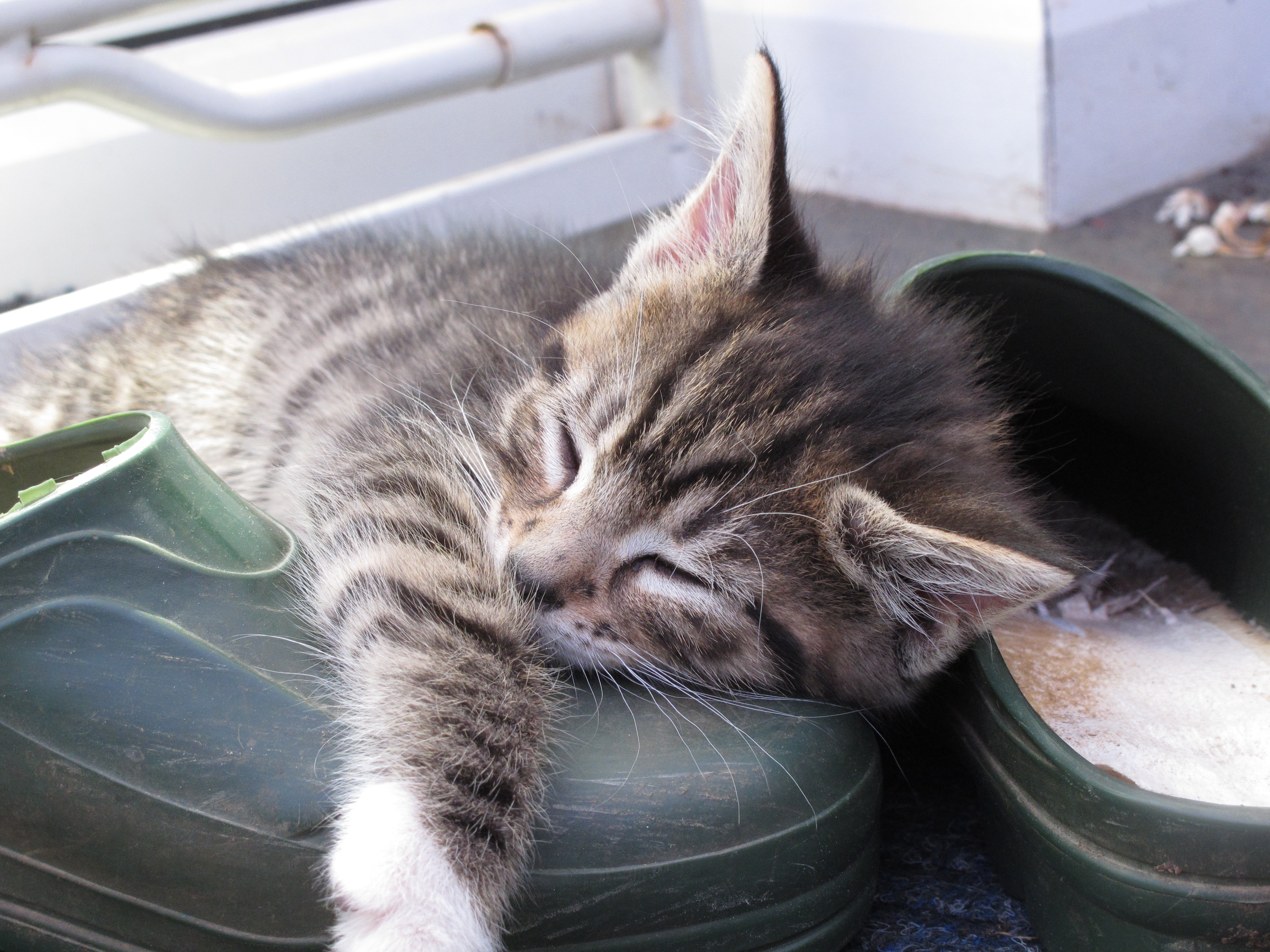
Irrelevant photo: Fast Eddie, fast asleep.

Or, just possibly, both of the above. I’m a great fan of all of the above and none of the above, especially when they’re not logical possibilities. They give us an illusion of choice and expansiveness and—well, I don’t think freedom is too high-flown a word for this. Sure, the world may be falling apart and the weather’s getting stranger by the year, but the range of what’s possible just expanded beyond what’s possible and if that ain’t freedom, my friend, what is?

So once again, take your pick. And if you want it to be both all of the above and none of the above at the same time, be my guest: Pick both. There’s no charge.

But back to our story. Carmichael got into trouble by authorizing a leak before the recent election and then denying that he knew anything about it, and it was the denial that caused the problem, not the leak or even that the information he leaked was apparently inaccurate. Or made up, which is a polite way of saying a lie. You can take your choice there too. We’re just rolling in choices today.

For the sake of both British and non-British readers, I won’t go into the details. Brits have already heard about it and for everyone else I’m already teetering on the edge of incomprehensibility with all this talk of Lib Dems and MPs and disrepute. A politician’s in disrepute? American readers are asking themselves. And this makes the news why? (Am I being unfair here? Are readers in other countries asking the same question?) Besides, the content is almost never what matters in these scandals, it’s cover-up that gets politicians in trouble. How come? Because that’s what we, the ordinary newspaper readers and evening news watchers, can wrap our heads around.

Oh, sure, if someone someone slept with someone they weren’t supposed to sleep with, we can follow that without waiting for the cover-up. But the real scandals? The ones involving billions of dollars, or pounds, or whatevers? The ones, say, involving the banks and the Great Recession of 2008? They’re so deeply incomprehensible that our eyes go glazy the minute we hear about them and I’d better end this paragraph fast or you’’ll all click onto something else.

I’m almost inclined to admire ol’ Malcolm. (Sorry, I just can’t call anyone “Sir.” Like ironing, it’s against my religion.) The impulse to defend a colleague, and for all I know a friend, led him to tell the truth as he knows it, which is that in politics almost everyone lies. Or maybe that should be everyone. Yet another chance to take your pick.

I don’t know which you chose just then, and I don’t suppose it changed anything, but didn’t it give you a wonderful feeling, as if your life had just grown larger?

Accents: Brits sorting Americans from Australians

A while back, I mentioned that I’m sometimes asked if I’m Canadian. When your accent stands out, people feel free to ask questions. Sometimes I’m fine with it, sometimes I’m tired of it, and sometimes when no one comments I wonder why they haven’t noticed. I mean, here I am talking in this improbable accent that I have and nobody’s saying a word about it. I might as well be giving an impassioned political speech wearing a rabbit costume.

Which I should probably try some day.

Sometimes, though, the comments get strange.

Gloucester

Irrelevant photo: A view of Gloucester, from the path to the Cheese Rolling.

Wild Thing was in a store, winding up whatever business they’d transacted, and as she got ready to leave the kid working there said, “Say it.”

“Say it?”

“Go on, say it.”

He was almost begging.

“Say what?”

“G’day.”

So she said, “G’day?” Complete with the question mark, because how could she leave it out. It stood in for, “You do know that’s Australian, right?” as well as “You do understand that this isn’t an Australian accent, don’t you?”

“Brilliant,” he said. Which the American side of my brain still misunderstands as gee, you’re smart, even though the side that tracks British usage knows it’s just an indication that the speaker’s happy.

He was happy. Ill informed, but happy. Why interfere?

*

And in case you wondered why I posted two pieces at almost the same second on Tuesday, it’s because I screwed up. I’d scheduled one in case I didn’t finish the Cheese Rolling post on time. When I did finish it, I rescheduled my backup post, or I thought I did, but clearly I was wrong. Apologies. I do know most of you have other things to do in the course of a day other than read me. Although I can’t think why.

Strange stuff non-Brits want to know about Britain

Two stray questions about Britain that people have asked me to address, which I’ll group together because they’re 600% unrelated: kinky sex and the letter U.


Are the English particularly kinky?

Katie Powell wrote, “I want to know why English folks are so kinky.” I asked her to be more specific and she answered, “The Brits exude this very staid exterior, but then there is the underbelly of kinky sex — maybe the kinkiest in the world? Not violent or dangerous, just kinky . . . .”

Sadly, I’m not willing to do any original research on the topic. Nope, not even for my blog. A few other things I won’t do, in case you need to know about them: I will not eat haggis in order to tell you what it tastes like. Not particularly because it’s haggis but because it involves meat. You can get vegetarian haggis, but that’s like vegetarian bacon—it is vegetarian but it’s not bacon, so it’s not much use if you’re trying to report on bacon. I also won’t get stinking drunk so I can find out if the tendency of drunks in this country to sing is cultural or due to some mysterious influence of the geography. So, sex in the British Isles? It does go on. I’m sure of that. But Wild Thing and I have been together for—wait, let me wrestle with a few numbers—38 years now. That’s long enough, really, for a person to make a commitment to a relationship. To get comfortable in it, and not want to wreck it. And then there are my own tastes to consider (which, forget it, you don’t need to know about, and very probably don’t want to).

cut kitten picture

Screamingly irrelevant photo: Fast Eddie and the laundry

I can report that back in the Stone Ages, when phone booths were the kind of thing you found on any city street, lots of London phone booths were plastered with stickers advertising sexual services designed for specific tastes–mostly S&M, at least as I remember it. I’d never seen the sex trade advertised that way. Does that mean the tastes of actual people here are kinkier than they are anywhere else? I haven’t a clue. Maybe they’re just out in the open more—although I’ve known some Americans whose interests were far from white bread and who had a lot more to say about them than I, for one, wanted to hear. They didn’t plaster them on phone booths, but then they weren’t in business, so they had no reason to.

So this separates into two question: Is there a difference in kink level? Do different cultures channel their kinks in different directions? It’s also possible that the definition of kinky is worth some thought. It assumes there’s a standard practice out there, and I wonder how standard anyone really is. I haven’t a clue, but I’ll leave you with that thought and move on to a question where I can be more useful.


History of the letter U in British and American English

Once upon a time I knew who asked me about this, but I didn’t paste either the name or the link into my notes, and although I swam back through the comments trying to find where it came from it, it was too far and I sank. That’s me you’ll notice on the bottom of all your insightful, hysterical, wonderful comment threads, blowing the last electronic bubbles out of my lungs.

Bad blogger.

So I’m going to be rude and not acknowledge the source of the question.

However. Someone asked me to write about the history of the letter U in British and American usage, and if you’ll let me know who you are I’ll provide a link to your blog. In the meantime, the tale takes us back to two of the most influential compilers of early dictionaries.

When the British first settled in North America, English spelling was still fluid. You went to school, you were issued a toolkit with 26 letters, and as long as another person in possession of that same basic toolkit could figure out what you meant, you were free to spell a word any old which way you wanted. I may exaggerate a bit, but not much.

It was Samuel Johnson, in the eighteenth century, who’s usually credited with (or blamed for) standardizing English spelling, although—as is usual with this kind of thing—there was a general movement in that direction and rather than creating the momentum himself he rode in on its tide. But still, if you don’t like the U in British spellings of words like favour and honour, Old Sam Johnson’s your bad guy. Up until then, English had used  -our interchangeably with -or.  According to an article in Bartleby Johnson “established the position of the u in the –our words. . . . Other lexicographers before him were divided and uncertain; Johnson declared for the u, and though his reasons were very shaky and he often neglected his own precept, his authority was sufficient to set up a usage which still defies attack in England.”

He was so knocked out by the U (which I’m capitalizing and the Bartleby entry doesn’t) that he tried to introduce translatour, emperour, oratour and horrour. Oddly enough, although he kept exterior U-less, its opposite was interiour.

Johnson’s reasoning was that the -our form acknowledged modern English’s French roots. If you know any French, you’ll have noticed that the argument’s shaky. French uses -eur, not -our: honeur; faveur. But never mind, an argument doesn’t have to make sense to be effective. British English is firmly committed to sticking a U into any word it possibly can. And, hell, they’re free, so why not?

If Johnson’s usually credited with standardizing English spelling, Noah Webster’s usually credited with divorcing American spelling from its British ex, although here too other people were already agitating for that and he too rode a tide he didn’t create. The United States was a new nation. It wanted a new culture. You know what it’s like: You have a revolution, you rename the streets, tear down the political statues, replace the schoolbooks.

Webster came down heavily on the side of simplified spellings, and his early books deleted a lot of the language’s silent letters: the B in thumb, the O in leopard, the A in thread. You could cut a 300-page book down to 150 pages if you kept that up. Also the K that was then in frolick, the spare L in traveller and jeweller. He transposed the -RE in words like centre.

“Those people spell best who do not know how to spell,” he said. Or quite possibly wrote. But let’s not split hairs. The point is that they were spelling phonetically and logically, and he set out to follow their lead with spellings like wimmin, tung, porpess, and fantom.

They didn’t all catch on, and as a result generations of schoolchildren toddle home with spelling lists to memorize for no better reason than that they’ll look ignorant if they don’t spell the words in the approved way. Think what they might have time to learn instead if our language made sense.

George Bernard Shaw, in demonstrating the need for rationalized English spelling, is said to have argued that, given the rules of the English language, you should be able to spell fish ghoti: GH as in tough, O as in women, TI and in nation.

Don’t use that on your standardized exams, kids. The people who mark them won’t be impressed.

What Brits really think of American tourists

Gunta asked, “I often wonder what Brits or folks from other cultures think of us Americans at the tourist spots. It can’t be good.”

So I asked around. Most of the answers come from a village Facebook page. Yes, that’s an ancient custom in Cornish villages, having a Facebook page. We do things quaint around here. (If I were Cornish, I believe I’d say, “We do things proper.” But I’m not, so I won’t risk it. When you’re not 600% sure of what you’d be saying, implying, not saying, and vaguely hinting at, I’d advise playing it safe and sounding like yourself. In my case, that’s risk enough.)

Roman wall. Exeter, Devon, U.K.

Nearly relevant photo: Part of the Roman wall in Exeter. Hey, what tourist wouldn’t want to see that? This bit is right beside a parking ramp–or car park, which sounds like a place cars go to play in their time off. The bit of modern fencing looks kind of puny beside it.

A lot of the comments were positive, although I as I’m writing this I seem to notice a tinge of not-so-positive underlying them. I’m not sure if people were being polite (ah, yes, people around here are polite; except when they’re not, of course, but that happens waaay less often than in the U.S., and it has a lot more impact because it’s so unexpected) or if I’m just a sour old bat who’s importing her own view of the world into places it doesn’t belong. Take it all with the usual half cup of salt.

Several people mentioned Americans’ enthusiasm for how old Britain is. V. wrote that anything over 250 years old excites them. Which reminds me to mention that 250 years isn’t all that old around here. I mean, if we’re talking about stone circles, we’ll have to count in thousands of years, not hundreds. So 250 years? Nyeh.

S. wrote that she enjoys Americans’ love of castles, even when they don’t understand what they’re looking at.

What don’t they understand? Well, when N. “worked in Windsor years ago, I heard two American tourists looking up at the castle while a jet flew over out of nearby Heathrow. One said, ‘Gee, you’d think they’d have built it further from the airport.’ ”

If you can top that, you have to leave a comment.

M. wrote that “my dear sister-in-law is American, and when she was dating my brother she was still a tourist (she’s a hard-nut Londoner now, innit?) and we had some fun with her, like the time we (almost) convinced her that Stonehenge is moved around each solstice so it’s never in the same place twice.”

So, enthusiastic, appreciative, and, um, not necessarily well informed—either by their own (lack of) research or by their loving hosts.

And then there are the ones who are well informed but—well, H. wrote about a couple she met when she ran a B & B: “His knowledge of British history was incredible but he did admit it was easy to be an expert when surrounded by idiots. He requested clotted cream with his porridge!! She had a BRAG book containing photos of her grandchildren and proudly bored us for rather a long time.”

I should add that H. liked them. In fact, she called them fabulous.

What else?

Tourists bring their preconceptions with them, and look for ways to reinforce them. A. told a story about running past a group of American tourists (she was late, and stressed, and I’m guessing not in the best of moods) and hearing one call out, “I told you there would be rosy cheeks.” At the time she was annoyed. In retrospect, she thinks it was sweet.

She has a more tolerant nature than I do.

I hadn’t thought of rosy cheeks as something Americans expect of the British, but they do figure in a lot of English novels. So yes, I guess as least some people will come looking for them.

Another distinctive factor is that American tourists tip. And the British, in most situations, don’t. Still talking about her sister-in-law, M. wrote, “One thing I remember about going out with her in London as a tourist is that she never had an umbrella (she certainly does now), and that bar staff loved her, as she had no idea that you’re not supposed to tip them.

“Well, you aren’t, are you?”

Americans, you are not to take that as an instruction not to tip, because A.2 wrote, “And that’s why Americans will always get served before a tight, non-tipping Englishman!!”

Besides, it’s the right thing to do and you know it.

The most negative comments weren’t about Americans as Americans but about the sheer tourist-ness of tourists. T. wrote, “I think it’s just tourists not American tourists. There are a lot of people who simply forget they are travelling to someone’s home / work / life and have a responsibility to allow that to continue. Perhaps it’s just that in recent years there have been more of them and they are often …. easy to spot.”

Like all the other ellipses here, that “…” is his, not mine, so try to hear a pause there while he searches for a polite phrase.

Picking up on his comment, V. wrote, “Much like surfers, small groups of tourists always better.”

As if to prove that it’s tourists, not necessarily American tourists, G. wrote that “most English folk can’t differentiate between an American accent and a Canadian accent.”

I can testify to that. Periodically, I get asked if I’m Canadian. Since Canadian tourists are scarcer than the American variety, I’ve assumed they thought a Canadian would be offended at being taken for an American but that the reverse wouldn’t be true. And, in fact, I’ve never been offended by it. Baffled at first, but not offended. I admit, I’ve never checked my assumption about their assumption against anything as deflating as reality, so don’t take it too seriously. Especially since S. wrote to say that she gets asked the same thing “and I’m German!”

I can’t find any way to account for that.

J.’s American and does know her U.S. accent from her Canadian. She wrote, “I tend to hear [American tourists] before seeing them.” Ah, yes, the national volume control knob. Wild Thing—whose personal volume control knob is set pretty close to High—said simply that American tourists are loud. And our English friends D. and D., who visited us once in Minnesota, told us they’d always thought Wild Thing was loud until they changed planes in Chicago. So I think we’ve got a small consensus here.

Then there’s the question of looks: M.2 said American tourists “do often hit the stereotype, with the cameras, the bum bags, and the baseball caps, but I think that’s quite sweet.”

M.3 thinks they look “jolly, with their shorts and trainers [those are running shoes if you’re American] and baggy T-shirts, whether they’re male or female. They look really happy to be in England. They can’t wait to find out about it all.”

No discussion of Americans would be complete without World War II coming into it, and J. wrote that the “young Americans were very welcome in 1944, and Britain could have not have managed without the Marshall Plan in 1945.” To which V. answered, “Whilst their help in ’44 was invaluable, I didn’t think the UK got that much comparatively from the Marshall Plan … and what we did get took until this millennium to pay back … no economic miracle here (unlike Germany).”

Americans, is that a bit of history you ever heard about?

Finally, to put all this in perspective, V. told a story about her mother, who “stood at the top of the Empire State Building, looked down at the road system and said, ‘I think they could have done that a bit better.’ My sister’s response was to apologise to nearest American, saying, ’I’m so sorry, she still thinks we have an empire …’ “

I’d encourage you all to chip in with a comment, but I figure you know that already. Let’s hear what you can add.

The Palace Guard, the hat, the bears

Cat9984 asked, “Any chance you learned whether they have to kill a fresh bear when someone joins the Palace Guards?”

Great question, and it led me to an exhaustive ten-minute search. Or maybe that was half an hour.

I’ll start my answer with a Mirror Online article about the Ministry of Defense searching for a fake fur replacement for the hats. The article looked like it had been published just that day, but when I checked it again the next day it looked like it had just been published again. In other words, I haven’t a clue how old it is. It’s either breaking news or old—oh, hell, I can’t help myself—hat.

Irrelevant photo: wallflowers, which aren't people who don't get asked to dance, but real spring flowers. That grow happily in field walls--and in my garden.

Irrelevant photo: wallflowers, which aren’t people who don’t get asked to dance, but real spring flowers. That grow happily in field walls.

But forget the timing; let’s talk about the substance. Apparently animal rights activists have made an impact, even on the bastion of tradition that is the Ministry of Defense. I think it was Margaret Sanger who said something along the lines of “Never think that a small, determined band of people cannot change the world. Indeed, throughout history it is the only thing that ever has.” Or something like that. I’m working from (a screamingly imperfect) memory, so that may turn out to be a quote from Groucho Marx, and the quote may have been something along the lines of “Outside of a dog, a book is man’s best friend. Inside of a dog, it’s too dark to read.” What I can say for certain is that there’s a quote out there somewhere. From someone. And it’s great. It might even be relevant, depending on whether it’s the one about changing the world or the one about the dog.

But I’ve wandered, haven’t I?

The bearskin hats were adopted by the grenadiers in the 18th century, because the brimmed hats they’d been wearing blocked their view when they hurled grenades. (We’re in the land of Wikipedia now, having left the Mirror for the moment. I’m providing a link, although by now the article may have been changed so much that it claims the hats were designed by aliens who misunderstood the shape of the human head.)

The bearskin replacements are 18 inches tall. You might think a hat that tall would draw unwelcome attention on the battlefield, but 18th-century British troops weren’t known for their guerrilla tactics, and maybe once you convince yourself that a bright red jacket is a good idea, a foot-and-a-half-high hat doesn’t strike you as a problem.

The hats, according to the Mirror article, are made from the skins of Canadian black bears, and 100 new hats are needed each year.  Why 100? It doesn’t say. Do they have 100 new recruits each year? Do they only have 3, but 97 of the existing soldiers leave their hats in pubs when they stop off after work and never find them again? Do the moths eat holes in them? I just don’t know.

What I can tell you is that each hat requires the skin of an entire bear. Now I lived in Minnesota long enough to know that bears are bigger than hats. Much bigger than hats. Even foot-and-a-half high hats. Even the relatively small black bear.

Ah, but are the hats really are made from the skins of black bears? The Royal Hats website (yes, my friends, there is either a website or a blog out there about everything; every single thing) claims they’re made from the skins of brown bears, which have thicker pelts than black bears.  Then they’re dyed. Who’s right? I don’t know. I haven’t found an official government website that covers the topic, important though it is. Good thing it wasn’t a question in the Life in the U.K. Test or I’d have been kicked out of the country.

Where does the rest of the bear go? Dunno again. I do know that each hat ends up weighing 1.5 pounds.

The army argues that the bears—whether black or brown—are culled anyway to keep the populations in check, so no bears are killed specifically to make the hats and therefore it’s okay. They add that the hats are a symbol of Britain recognized around the world. If they have anything to say about whether the world, having recognized the hats, takes them seriously, I failed to find it.

The Independent  does date its articles, and in 2008 wrote that the hats were “likely” to be replaced, and that Stella McCartney or Vivienne Westwood might be designing the replacements. No, it’s not dated on April Fool’s day; it was posted in August. Apparently, the Ministry of Defense would be meeting with “leading designers” on the question. Now that’s a meeting I’d love to have reported on. Forget the hats—I’ll never be a fashion blogger—what I’d have been listening for was how the two groups communicated. If at all.

Since the only thing I know about Westwood is how to spell her name, I punched her into Google. She offers a nice little swimsuit with a strategically printed fig leaf for £220 pounds. The male equivalent is a steal at £125. The models, I have to say, do not look happy in them, and I don’t blame them. The suits are—as folks in Minnesota say when they disapprove of something—interesting.

And Stella McCartney? She’s offering a fizzy little black dress for £1,795. Sorry: No male equivalent seems to be available.

Neither the swimsuit or the dress strikes me as an obvious choice for the Place Guard, but the times they are a-changin’ and who am I to close off possibilities?

It must’ve been an interesting meeting, but I can’t find any reports on it and they seem not to have agreed on a replacement hat, because the bearskins are still in use.

And what, you might want to know, goes on underneath the hat? Well, one guy got really and truly bored under his and started cutting up in front of Buckingham Palace. My only question is why don’t they all? The Ministry of Defense assured the press that he wasn’t likely to be jailed for it.

Jailed? I know there are things about tradition that I don’t understand, but aren’t they over-reacting a bit by even considering it?

In the meantime, anti-fur activists continue to put pressure on the Ministry of Defense, and I’m going to take advantage of that and set up a meeting to discuss replacing the bearskin with a tasteful little flowered sunhat. The Palace Guard doesn’t throw grenades anymore, so the brims shouldn’t be a problem.

I’m sure they’ll be interested.

Summing up English culture

T. writes,”I was on a bus with about 15 other people and it broke down. Everyone politely got off the bus and onto the replacement and then sat in EXACTLY THE SAME SEATS as they were in before. I’ve never felt so English. The thing is, as we were walking between the buses I knew it was going to happen, and that I would play my own part in it. There is some peer pressure you simply cannot escape.”

So what I said about it being futile to sum up a culture? Wrong again, apparently. But joyously so. Thanks, T.

North Cornwall

Irrelevant photo: You can look at almost any tree around here and see which way the prevailing winds blow.

The British legal profession and its wigs

Retirementally Challenged wants to know why British lawyers wear wigs in court. Her exact question involved the words “stupid white-haired wigs.”

Since I am (a) not a lawyer, (b) not, at least at the moment, a defendant, and (c) a galvanized rather than born-and-raised Brit, I’m the obvious person to answer this question.

In case you’ve never been in a British court and haven’t watched the right mix of TV shows, I should stop to tell you that in at least some courts British lawyers and judges both wear the most bizarre white wigs you’re likely to find outside (or inside, now that I stop to think about it) of a costume shop. They stand up in court looking as if some evil-haired little white critter had curled up on their heads and died there, and not one of them gets the giggles. You’d think one look at each other and they’d go to pieces.

North Cornwall.

Vaguely related photo: A neighbor’s holly makes a break for freedom.

My first-hand experience with the wigs is limited. When Wild Thing and I had to were told to leave Britain and had to appeal, the hearing was what our barrister called informal, which meant wigless. Informal or not, it was still pretty intimidating.

The only other brush I had with wigs was when we were buying our house. Our solicitor (that’s the wigless half of the legal profession, which comes in two flavors in the U.K.) was tolerant enough to keep working with us even though Wild Thing regularly announced that as long as we were doing legal business she wanted to see the wig. (When he told us about stamp tax on the house, she reminded him that we’d fought a revolution over that. We still had to pay, but I was tempted to throw a teabag in the Bude harbor as a sort of memorial protest.

According to the humorless government web site on the subject of legal wigs (yes, folks, someone felt it necessary to create one), what a High Court judge wears was established by the time of Edward III (1327-1377). King Eddie gave the judges the material for their robes, and the style was based on what was worn in the king’s (as opposed to the judges’) court at the time.

In 1635, what judges wore wasn’t changed but it was codified, because—be serious, can’t you?—it was painfully important to get it all right. After that, the standard uniform changed in various and boring ways at various and unimportant times.

How interesting, you say, suppressing a yawn, but what about the wigs?

They were introduced during the reign of Charles II (1660-1685), who wasn’t called Charles the Vain but could have been. The judges took some convincing before they all agreed to wear them, but eventually they caved. I mean challenging the king of a topic of that much importance? That’s risky.

By the reign of George III (1760-1820), wigs were going out of style but still had to be worn by bishops, coachmen, and the legal profession. Now that, friends, is a bizarre combination of professions, and I can’t tell you who enforced the rule, but I do wonder.

Bishops eventually got permission (from who? I dunno) to stop wearing them. Then coaches met the internal combustion engine, and if coachmen hadn’t already gotten permission to burn their wigs it all became irrelevant because the profession disappeared. I’ve been a cab driver, which is close enough to a coachman, and you can trust me on this: You won’t find many cab drivers wearing white wigs.

And those short, curled wiglets that judges and barristers wear today—the ones that don’t cover all their hair? (A barrister, by the way, is the other half of the legal profession—the half that appears in court.) They were adopted around the 1780s “for civil trials” and probably felt like a liberation from the full-scale wigs that came before them. Today, the full wig is only used on ceremonial occasions, of which—this being Britain—there are probably many.

Barrister Harry Mount reports that the wigs are “Itchy, ludicrously expensive and dirty—barristers hold on to the same one for their whole career—they’re also extremely hot.”

But eliminating them entirely? Not going to happen. Civilization in the questionable form in which we know it would come to a crashing end.

So there you have it: the history of the legal wig. What else would you like to know, either about Britain or the U.S.? I’ll answer any question that tickles my fancy, regardless of how unqualified I am.