Crime in Britain

Let’s talk about crime in Britain.

On June 14, the newspaper carried two crime-related stories. The first took place on the Scilly (pronounced, yes, silly) Isles.

You have to understand that if Cornwall’s rural, the Scillies are not just rural but cut off by a whole lot of water. The only way to get there is to take a ferry or a small plane to the largest island. From there, you can take a boat to the smaller ones. None of the islands have much in the way of crime, so it made the news when someone slapped a phony parking ticket on a rented golf buggy and upset a tourist. I think a golf buggy is a golf cart in American, but I can’t swear to that because of my sports allergy, which is too severe for me to get near a golf course, never mind learn the vocabulary. Whatever it’s called, it was being used as transportation because forget bringing a car onto the islands. And it was parked, but not illegally.

Irrelevant photo by Ida Swearingen, who's a better photographer than I am.

Irrelevant photo by Ida Swearingen, who’s a better photographer than I am.

The police say they consider the ticket a malicious communication, which can lead to a six-month jail sentence.

First, though, they have to find the culprit.

What else have the local cops been up to? A seal pup had wandered onto the main street (that’s the high street if you read British). They let it go with a warning. They also broke up a drunken fight between two chefs. It was about whether rock salt was better than sea salt.

Tough neighborhood. If you visit, don’t leave your wallet in your back pocket.

Those of you who aren’t British and followed the link may have been struck by the hats. People who want to be cops in Britain have all sorts of personal reasons, but I’ve never understood how they could get past the hats. I know one serving and one former cop and I’d ask them but I can’t think of a diplomatic way to word the question.

But someone will tell me why the hats are great, and that’s what makes a horse race, so let’s move on.

In Islington, a man was arrested for charging his phone from a socket on the London Overground Trains. He was handcuffed, hauled off to a British Transport police station for abstracting electricity, and then also arrested for unacceptable behavior and becoming aggressive. I’m not sure if this second arrest involved a second set of handcuffs and if the additional charge won him a third set, but I’m fascinated by the idea that they didn’t just throw extra charges at him, they rearrested him—presumably before they’d let him go in the first place.

Abstracting electricity carries a maximum sentence of five years. It’s enough to make a person think the phone isn’t all that important, y’know?

The culprit—sorry, the alleged culprit was later de-arrested. Give me back all those handcuffs, you malefactor!

As far as I know, nobody here uses the word malefactor, but the police really, honestly do use the word villain. With a straight face. It’s just, y’know, what they say. So they arrested the villain for abstracting electricity.

And here we should pause and consider the word abstracting. I know you can’t see electricity, but it seems real enough to my untutored mind, not abstract or theoretical or anything. But I didn’t go to law school, so what do I know? I still get thank-you letters from the schools I might have applied to because my grades were good and they just might have had to accept me.

Well. I apologize for not giving you a link to this earth-shaking article, but I read it in the print edition and can’t find it online. If you rely on electronic media and you can spend your life in ignorance of the things that matter. And maybe that means it really is abstract.

In a different week I might have skipped over both articles, but not long before I read them an expat website sent me a survey about crime “where you live.” I think they meant Britain, but since I live out in the country I told them what it was like literally (and I’m using literally in the literal sense of the word) where I live. I don’t usually answer surveys—it’s hopeless; give me two choices and I’ll pick the third—but for some reason I answered this one.

I wrote that a lot of people in our area leave their doors unlocked. Not everyone, but more than a handful. I know people who leave their keys in the car. It keeps them from wondering where they left them. Them being the keys, not the cars, which are still there in the morning. Except for the time two people who shall remain nameless (especially since I’ve forgotten who it was) decided they were too drunk to walk home so they’d have to drive. They’d walked to the pub, but they knew someone nearby whose keys were always in the car. I won’t get into either the wisdom or the ethics of that—they’re too obvious to bother with. Everyone lived and the car was returned.

That’s not the full list of crimes in the village. I’ll write about them another time.
More about Charles Causley: a bonus post

In “Tea on the Lawn,” I mentioned the poet Charles Causley, who lived in North Cornwall. It was an aside, but R. emailed to say that she was involved in Causley’s care toward the end of his life and that he was a lovely man.

I never know what part of a post is going to activate someone, and that’s one of the things I’ve come to love about blogging.

Causley “wrote one of the first poems that ever really struck a chord with me,” she emailed, “’The Ballad of the Bread Man’. It was a reworking of the Christmas story. I was eleven or twelve when it was read out at the Christmas assembly at my school. I didn’t know who’d written it, and though it always stayed with me, I didn’t actually come across it in print until after he’d died.”

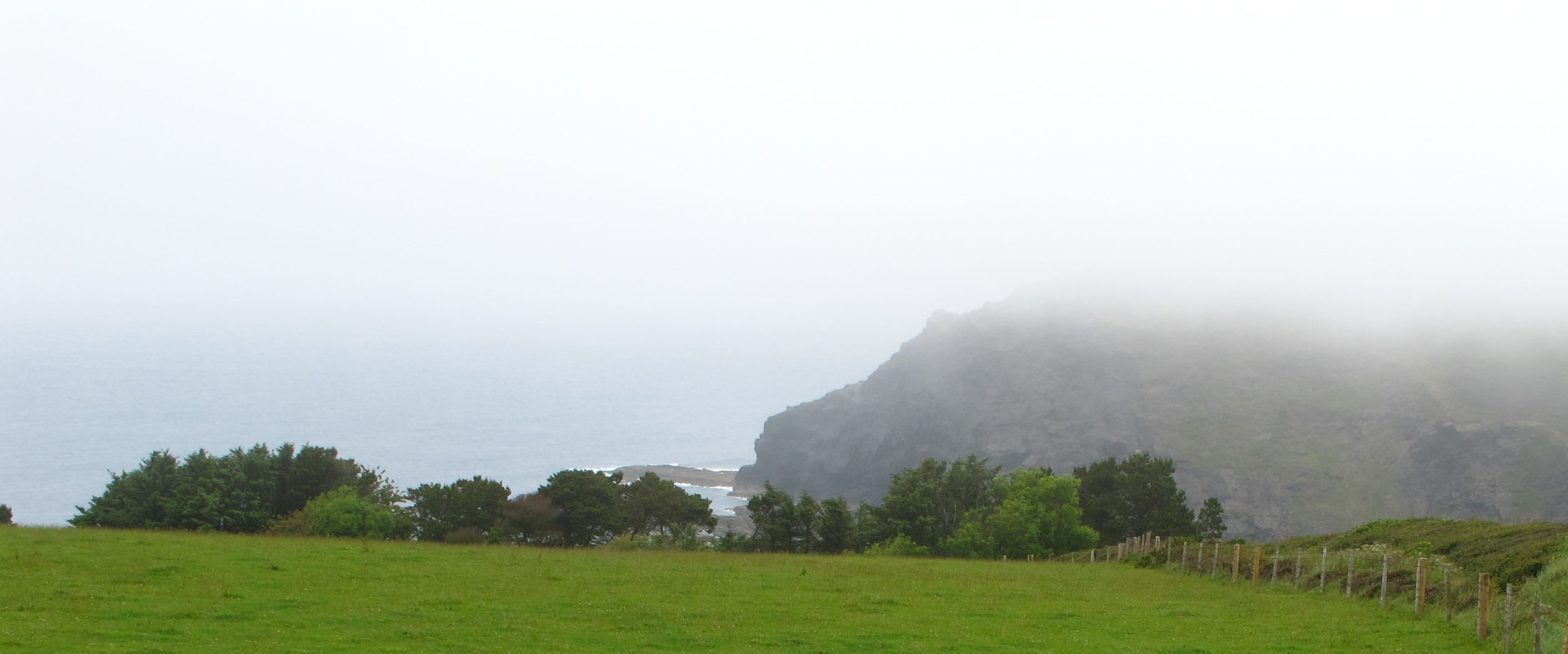
Irrelevant photo, but foggy cliffs seemed to suit the mood.

Irrelevant photo, but foggy cliffs seemed to suit the mood.

As a result, she never got to tell him what it had meant to her. But that didn’t stop her from talking about literature with him.

“We used to have some wonderful conversations about Laurie Lee, and Ted Hughes and the like. And I remember a Fortnum and Mason hamper arrived at Christmas for him; a gift from his publisher. I was so impressed, and all he said was: ‘Well they do get money from selling my books, you know.’

“He was made Companion of Literature. It was 2001 and he got it at the same time as Doris Lessing. It’s held by a maximum of ten people at any one time, and it’s for life. He said they’d only given it to him because he wouldn’t be keeping it for long.

“He’s extremely well loved in Cornwall.”

She added the following memory to give “an impression of his ready wit, even at eighty-four: I was helping him walk down a corridor and the call bell went off.”

Making a reference to the poet John Betjeman’s blank verse autobiography, “he said: ‘Oh you poor girls – summoned by bells, as my friend John would say.’ “

(I’m not sure how important it is to know this, but Cornwall inspired many of Betjeman’s poems.)

“There was a campaign to have Causley made poet laureate when Betjemen died.”

Tea on the lawn: what could be more English?

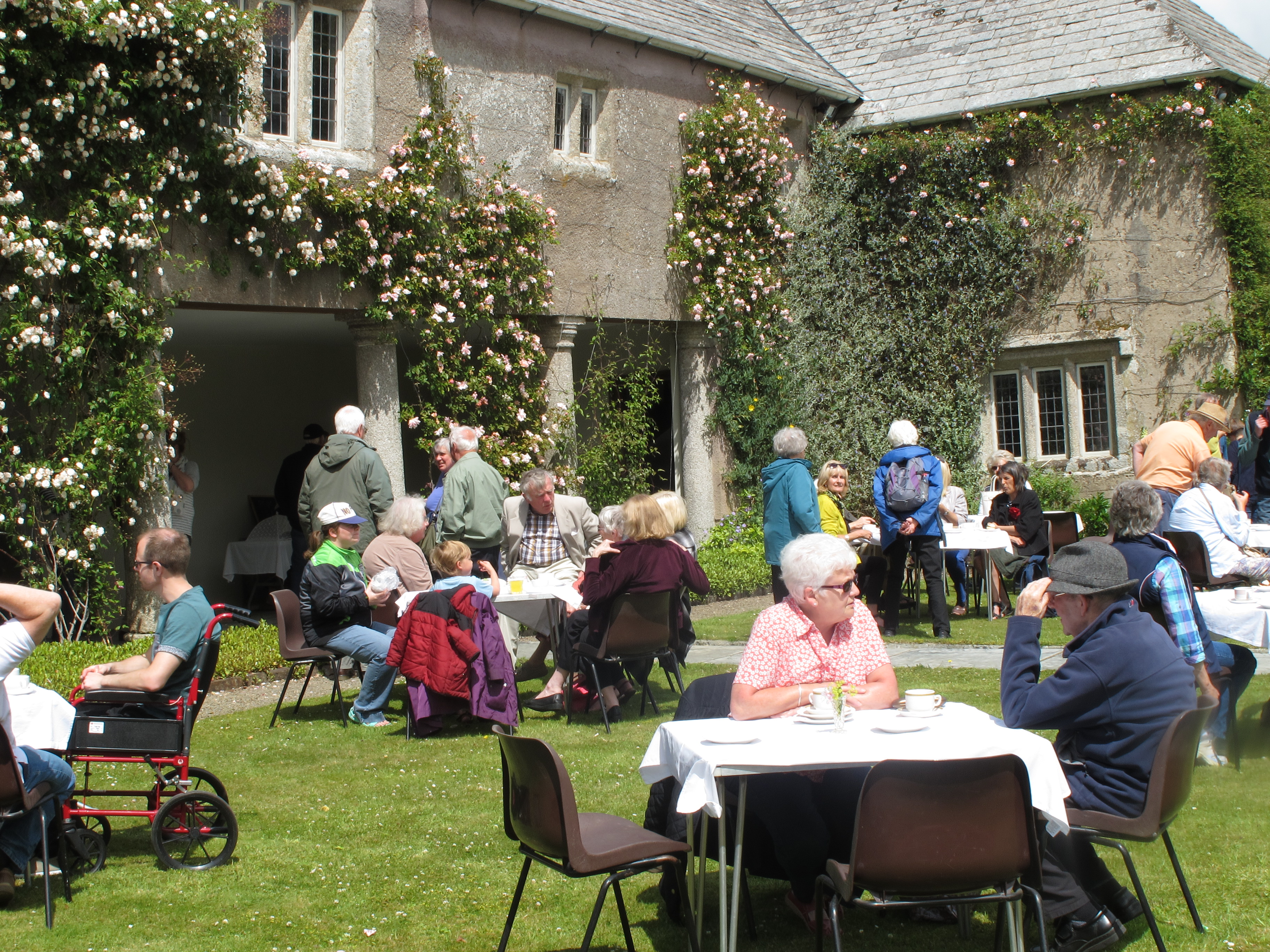
Is anything more English than tea on the lawn of a great house? We’ve were talking about stereotypes since I fell for an inaccurate one about Americans, but linking tea on the lawn—especially the lawn of a great house—to Englishness seems like a safer gamble. (Feel free to take me apart on that if I’m wrong.)

Cream tea at Penhele

Cream tea at Penhele

Recently, Wild Thing and I went to a cream tea at Penhele, a great house not from where we live. It was a fundraiser for the Charles Causley Trust, which (I just checked the website) keeps alive the memory of a local poet and promotes writing in the region where he lived. I’d love to give you a link to some of his poems, but although I’ve been impressed by some of his poetry I didn’t like the only one I found online. Others are under copyright and that makes them a no-go zone. Sorry.

But we didn’t go there to support the Causley Trust. In fact, we didn’t know what the event was raising money for. We didn’t even go for the cream tea, although it was a welcome bonus. What we really wanted was to see the gardens and the house, which are well enough known around here that we ran into half the village almost as soon as we walked in. One of them, J., was a carpenter before he retired (only they say joiner here, or builder, and I’m not all that sure what the difference is) and worked restoring historic buildings. Basically, once he’s done you can’t tell he’s been there. I asked if he knew how old the house was and he pointed to a stone plaque above a doorway in what he told me was the hall. It carried a date in the 1600s—1660, if I remember right. For all I know, other parts are older.

“I worked on those windows,” he said, pointing to the right of the plaque.

I felt like I was sitting next to a rock star.

Most of us—maybe all of us—lined up to buy tea and either scones with jam and clotted

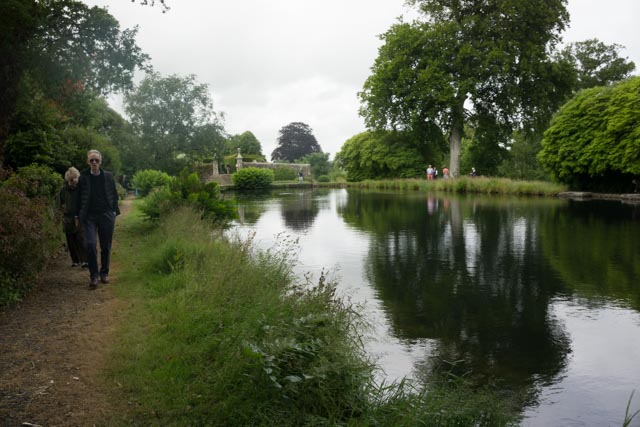
Walking by the lake.

Walking by the lake. Photo by Ida Swearingen

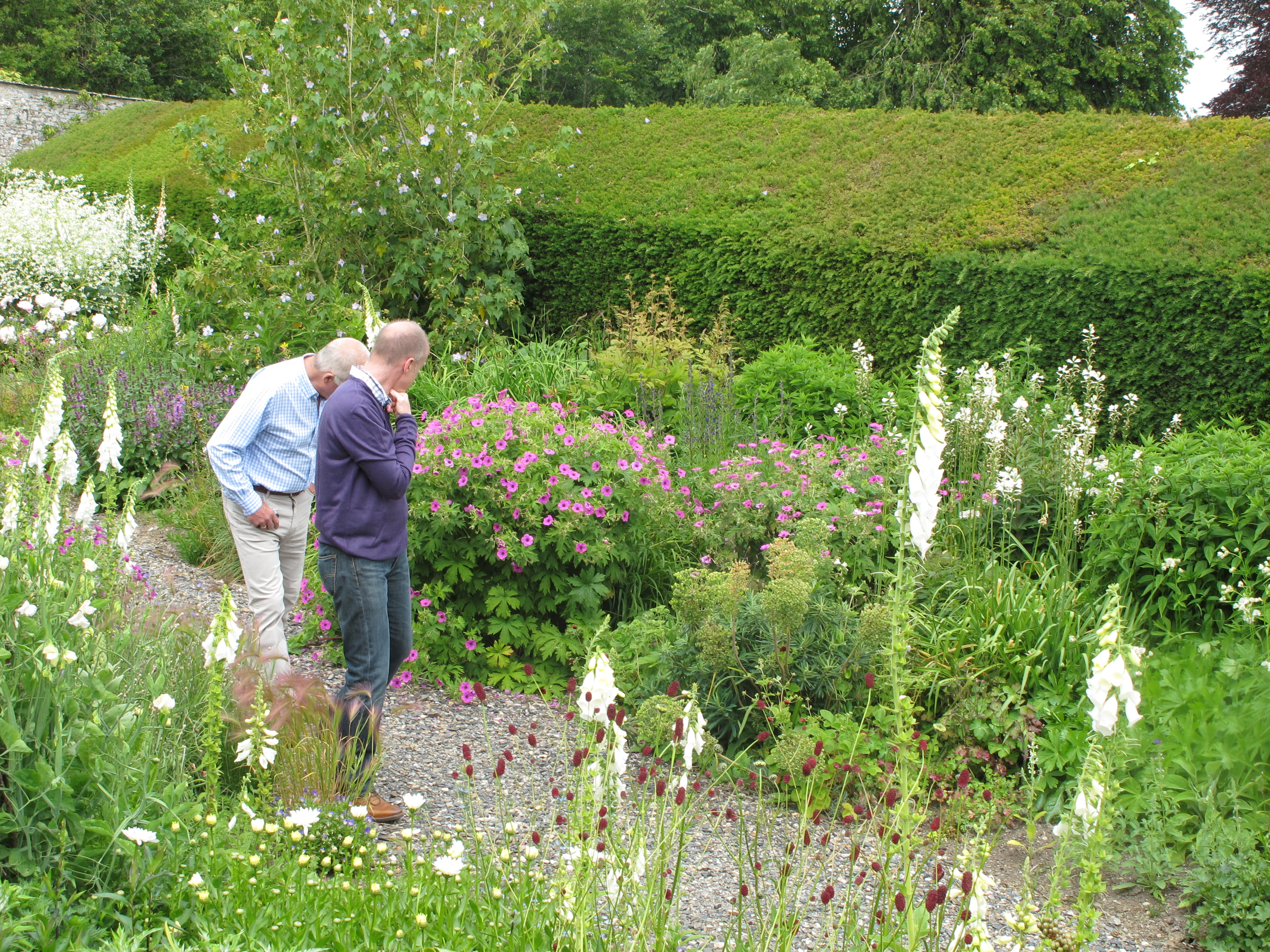
cream (that’s the cream part of a cream tea) or cake, then we drifted along paths and past fields, a lake, a swimming pool (covered), in and out of a series of open rooms formed by a high, dense hedge, and past an empty flowerpot stuck deep into the hedge and looking like a place for someone to hide his or her cigarettes, although I didn’t reach in to be sure since that seemed like an invasion. We paid closest attention to what I’ve learned to call a herbaceous border (you pronounce the H on herb here; I still don’t, but I’ve gotten to the point where both pronunciations sound odd to me), stopping to admire this flower and that one.

penhele 055

Part of the herbaceous border

According to Wikipedia, herbaceous borders became popular in the Victorian era. They’re basically a bunch of flowering plants—what I’d call a flower bed—and they’re gorgeous but take a lot of work. The Wikipedia entry talks about digging up and splitting and replacing plants, but even more than that they take weeding. Endless weeding.

Did I happen to mention how many weeds Wild Thing and I have grown since I started blogging?

I haven't a clue what the flowers are, so I'm not going to try identifying them.

I haven’t a clue what the flowers are, so I can’t identify them.

I overheard several people saying the same thing that came to my mind: “I wonder how many people it takes to keep it looking like this.” No one had the answer, but quite a few seemed like a fair guess.

It all felt a bit like something out of a BBC costume drama—the great house opened for an afternoon so the villagers could put on their company manners and enjoy a day out. It’s less lord-and-lady-of-the-manor these days, but you can’t help noticing the difference between the place you’re admiring and whatever you call home. Still, whatever people’s feelings were about class and inequality—and I expect they ranged all over the scale—everybody seemed willing to put that aside for the day and enjoy the beauty and the hospitality.

Both class and people’s feelings about class are more open in the U.K. than in the U.S., penhele 061where we break out in a rash if anyone uses the word in any context except middle. And the tradition of a grand house opening its gardens to the public is also something I never heard of in the U.S. Wild Thing and I speculated on whether it dates back to Victorian times or to the medieval period. I’d put my money on medieval, because, as crushing as the lord-peasant relationship must have been, it did lay a few obligations on the lord, and those may have included fetes or feasts.

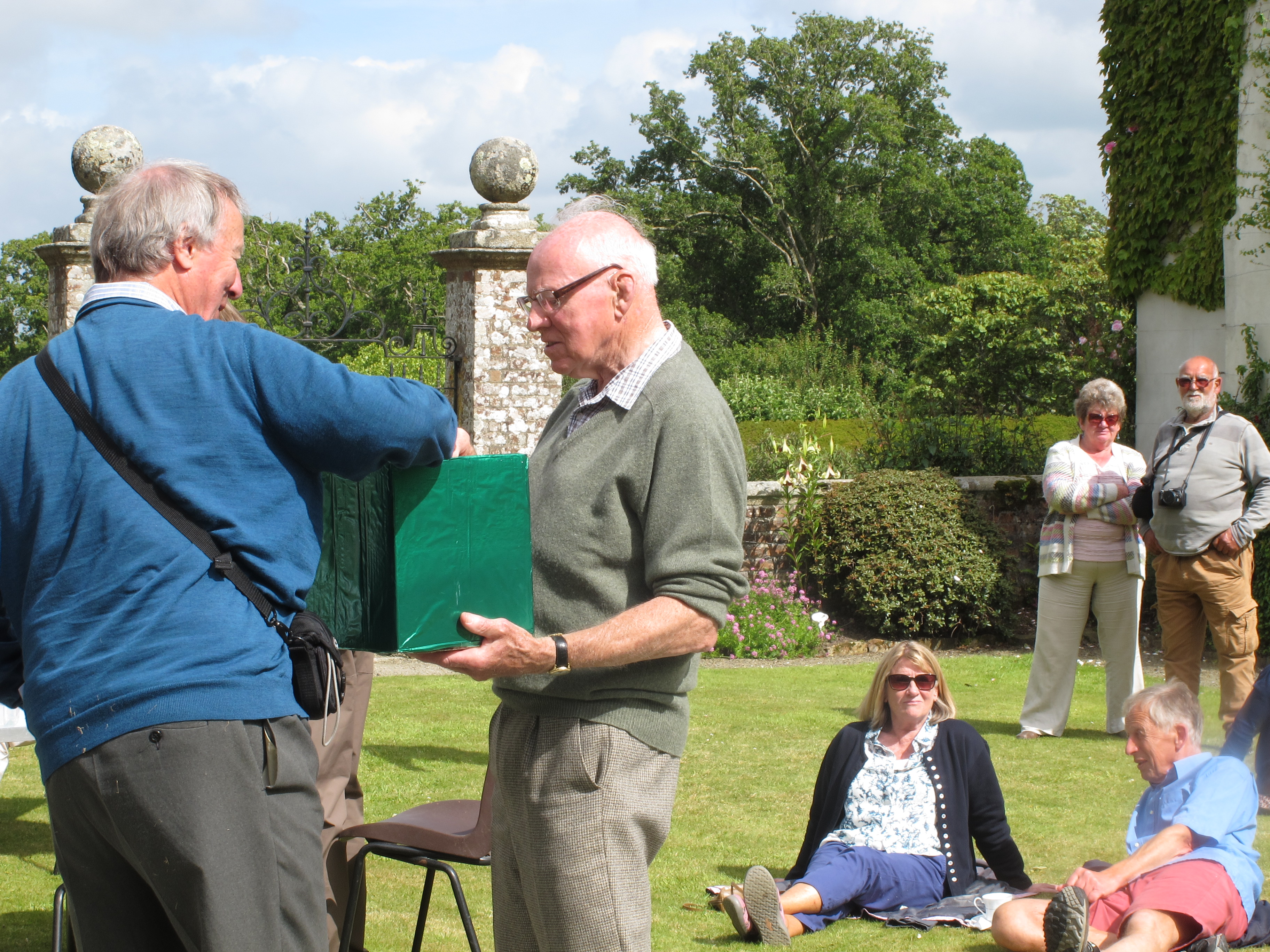
The inescapable raffle

The inescapable raffle

But that’s guesswork. What’s certain (or as certain as I dare be about anything right now) is that the tradition of great houses opening their grounds for fundraisers is part of an English summer.

At the end of the afternoon came the drawing for the raffle. You can’t hold a fundraiser in Cornwall without holding a raffle. There’s no law on the books, but it’s just not done. So at Penhele they held a raffle. And we didn’t win anything.

Cross-cultural adventures: Two Americans call a cat in Britain

Fast Eddie went over the fence for the first time this week. We knew the day was coming, but we’d hoped it wouldn’t come quite so soon. He’s still a very small cat in a very large world. He’s built for climbing, though, and climb he did.

The first we knew about it was when we heard a bird doing what Wild Thing calls checking and our neighbor calls alarming.

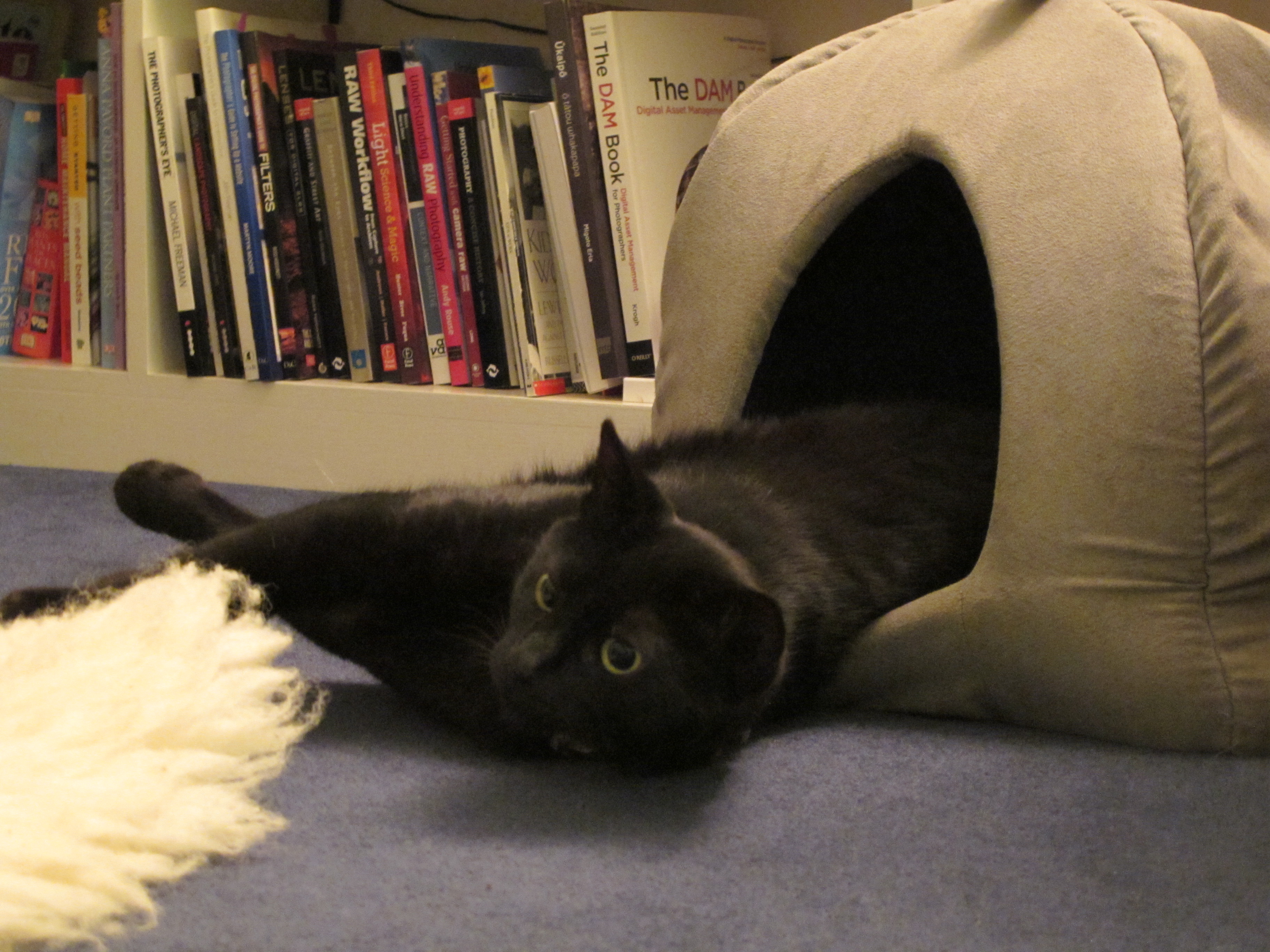
Fast Eddie, the fiercest kitten for 10 yards in any direction

Fast Eddie, the fiercest kitten for 10 yards in any direction

Americans and Brits agree on what the noun alarm means, but use it any other way and we get into that odd stuff that happens when we think we share a language. In the U.S., if you’re alarmed, you’re moving in the direction of panic. It’s a feeling. Once you cross the Atlantic, though, being alarmed is more likely to involve wiring, as is demonstrated by the signs that say, “This door is alarmed.”

And there I was thinking the door was an inanimate object. So now I’m alarmed myself. The announcement seriously destabilized my world view.

Alarm can also involve actions—for example, the bird we heard was alarming, as in making an alarm call, not as in scaring the hell out of us.

So, with today’s language lesson out of the way, let’s go back to the bird. We heard it making a checking / alarming sound, and Wild Thing asked if I knew where Eddie was.

Insert a moment of, ahem, alarm here, because he was nowhere in the house. We went outside and called. He still wasn’t in the habit of coming when we called (we’re working on it), but we did it anyway because, what the hell, humans are a very strange species and it was something we knew how to do.

I need to interrupt myself for a minute here to talk about cross-cultural cat calling. I can’t swear that this is universal, but the Brits I’ve noticed calling cats tend to bend over, rub their fingers together, and say something quiet, like “puss, puss, puss.”

How do Wild Thing and I call our cats? With a two-note call that’s approaches a yodel: “kitt-TEEEE. KITT-teeee” You can hear us most of the way to Devon. Even in Minnesota, it marked us as not being local.

Okay, it wasn’t the only thing that let people know that, but I do remember standing on our open front porch one night when the air was so cold I thought my lungs would shatter and calling our cat by yodeling, “FUZZbucket, KITT-teeee.” (Go ahead, laugh at the name. Everyone else did. A friend used to call him Fuzzbuster and Fuzzduster, with the occasional Fussbudget thrown in for luck. I still think it was a great name.) From the far end of the dark street, a man’s voice echoed, word for word and note for note, “FUZZbucket, KITT-teeee.” I’d call, he’d call, I’d call, he’d call. He had the notes and the tone down perfectly, and I figured if Fuzz had any intention of coming in the echo wouldn’t hurt.

He didn’t, of course. He was a cat. And an old lady down the street used to feed him canned shrimp and keep him with her during the coldest weather. I’m sure he told her he had nowhere else to go.

But that’s a different story and a different place. In this place, I was worried that Eddie might have gone over a fence and discovered that the other side didn’t offer him a way to climb back, and there he’d be, a very small kitten on the wrong side of a tall wall.

So Wild Thing went to our over-the-tallest-fence neighbors. They don’t live on our street and to get to them you more or less have to run up to London, then Hamburg, and then come back to Cornwall to our village to a different street and go through their front gate, which sometimes sticks so badly that you need a chisel and a hammer to get through, and all of that is necessary because, unlike Minneapolis, the neighborhoods here don’t have alleys and the yards here don’t have back gates. In fact, they’re not yards at all, they’re called gardens, and if they’re close together they have barricade-like fences or hedges meant to screen you and your thoughts from any awareness that you have neighbors. It gives back yards (sorry—they’ll always be yards to me) a sense of privacy and quiet, but it could strike someone used to American yards as unfriendly. (I’m not one of them. I like that sense of quiet.)

So Wild Thing was gone for a while, hiking to London and Hamburg and Cornwall and then through the neighbors’ gate, which didn’t happen to stick that day, and I couldn’t think of anything useful to do with myself so I worked on the bread I was making, which was ready to shape into loaves. And at some point something almost weightless brushed against my ankles and I looked down and found Eddie, who hadn’t a clue in the world that he’d just caused an uproar and wouldn’t have minded much if he had known.

So I did what any dyed-in-the-wool New Yorker would do: I went out back and bellowed for Wild Thing. When I was a kid, that’s how the mothers in our neighborhood called us—they leaned out the windows and bellowed our names. (What the ones whose apartments didn’t have windows on the street did I never stopped to wonder. Chose not to reproduce? Lost their kids forever? Waited till they got hungry enough to wander home? I just don’t know.) That was also how we called our mothers: We stood on the sidewalk, tipped our heads back, and bellowed up. To this day, my voice–well, no one who hears me is left with the impression that I’m shy. If you want to bring down the walls of Jericho, leave the trumpets at home and convince me that they need to come down.

Back in New York, every mother somehow knew her own kids’ voices well enough that they didn’t all pop their heads out in unison when one of us bellowed, even though we all yelled the same word, “Mom.”

Oh, damn, I’m getting teary. Thanks for being able to pick my voice out of the maelstrom, Mom. I miss you.

Minnesotans never seemed to bellow for their kids. I don’t know how they got them home. Compared to New Yorkers, Minnesotans are indirect. Or repressed, if you prefer. Or well behaved. It’s all in how you see it. Maybe the intensity of their frustration sends out a vibe that the kids pick up.

But however long I’ve been away from Manhattan, I’m still a New Yorker, so I bellowed. And Wild Thing, who’d just gotten into the neighbors’ yard, answered in true New York fashion (she lived there for ten years and picked up the important skills).

She started the long trek home, and our neighbor, G., who’d somehow managed to hear all this (damn, that man has good ears) popped up on his side of a different fence (we have three immediate neighbors), which is about shoulder height, even on me, and said he’d heard the bird alarming, then seen Eddie running along the top of the fences. The fences make a fine highway if you’re a cat.

Then, G. said, he heard us calling Eddie.

And no doubt laughed his ass off at the volume and sheer uselessness of it all, but he was far too kind–or maybe that’s well behaved–to say so.

Miss Marple and World War II evacuees

I’m sure Miss Marple would agree: There are no secrets in the village. But there’s a lot of misinformation, and if you want to unravel a story, that’s where you start.

Wild Thing and I worked on the village newsletter for a while. Then we stopped and the newsletter continued on. Long story there and not one I’m going to tell (sorry), but I mention it because we got a letter last week addressed not to either of us but to the newsletter’s secretary—no name, just the title—with no street address and a post code that would land you somewhere in the village but not at our house, or even close to it.

And it reached us. Because we used to get mail for the newsletter, and because the letter carrier remembered that.

Remains of a church, destroyed in the bombing of Exeter city center, now preserved as a monument.

Remains of a church, destroyed in the bombing of Exeter city center, now preserved as a monument.

I took the letter to M. She’s not the newsletter’s secretary, but then neither is anyone else. It works just fine without one. She does work on the newsletter and part of her job, at least when I was still involved, was to type up announcements that come in on handwritten scraps of paper, so it more or less made sense to choose her. Here was a handwritten bit of paper. Not a minute’s walk from our house was M. So I rang her bell and handed her the envelope.

“You didn’t open it,” she said.

I hadn’t. Not because I’m virtuous (although, oh, I am; painfully so; if I didn’t swear so much, I’d float a good six inches off the ground) but because I hadn’t been curious about it. Mostly—let’s be honest here—the newsletter’s pretty dull. Suddenly, though, I did care. We were holding a secret and we were inside the village. We were two bad kids, about to be find out something that was none of our business. Except that it was, but let’s not argue, the feeling was delicious.

She tore open the envelope.

The letter turned out to be from a woman who’d been evacuated to the village during World War II, asking for information about someone she’d known. M., who’s much better than I am about knowing who’s related to who(m, if you insist), immediately started talking about who would know. And there I left it. She’ll make a few calls. People will ask around. The network will be activated. If nothing else works, the newsletter will run the letter. Maybe it’ll run it anyway, because other people will want to know about it, and it may trigger reminiscences of those times, and all of that is the job of a village newsletter.

*

If you don’t know the history of the World War II evacuations, or if you’re interested in how it affected the Southwest: Many British cities were heavily bombed and children were evacuated to safer areas. It was a measure of the desperation families felt that they’d send their children off into the unknown, to live with strangers. Most of the evacuees returned home at the end of the war, but a few settled locally, and more than once we’ve met people who, when we asked if they’d always lived in the area, said, “I was evacuated here as a child.”

Of the nearby big cities, Plymouth was heavily bombed, and Exeter was bombed but not as heavily. Unlike Plymouth, it wasn’t targeted for its industrial or military importance, but for its cultural and historical interest, which no one had expected, and although children were evacuated from Plymouth (a predictable target), they’d been evacuated to Exeter, which must have seemed safe. The BBC has compiled a list of bombings in Cornwall and some memories of evacuees and others who lived in Cornwall during the war (and elsewhere in the country, but the link will take you to the Cornwall pages). The memories especially are worth a look.

What are neighbors like in Britain?

On Not Another Tall Blog, Angie K. wrote recently about English people’s reputation for being cold. No, she wasn’t not talking about the weather, she was talking about whether there’s a downside to all that stiff-upper-lip-ness and explored the question of whether the British are good neighbors. Then she asked if I’d tackle the same question.

I sat at the computer and was pontificating away about how to define good neighbors and the differences between neighbors in New York, Minnesota, and Cornwall. Franklin Delano Roosevelt’s Good Neighbor Policy echoed around inside my mostly empty head. It wasn’t relevant and I knew that, but it came to mind anyway. I was failing to be either funny or interesting about any of it when the doorbell rang and who should be there but our actual neighbors—or two of them anyway, along with their baby. You can’t plan this stuff. You could make it up, but as it happens I don’t have to. I shut the computer down, made a pot of tea, and grabbed some brownies out of the freezer (they’re good frozen—I don’t even apologize anymore), and we sat around and talked and admired how well the little guy’s walking.

He’s a gorgeous fellow, just a year old.

Smudge

Smudge

So yes, we’re of good terms with our neighbors. We’re closer to some than others, but where isn’t that true? Some of them seem standoffish, but ditto. Others are warm and delightful. We have small, human interactions with people we don’t know well, and it reinforces the shared idea that we live near each other and can get along. We ask after health, partners, gardens, kids, pets, and anything else we know about. We talk about the weather. Y’know that stereotype about the British and the weather? It’s true. People have a lot to say about it. I mean, we’ve got a lot of weather. And it’s free. Why let it go to waste?

On the other hand, if you take a survey of the village you’ll find we also argue about fences and boundaries and who said what to who and whose fault it was, or whose kid’s fault it was, or what exactly the it was that started the whole disaster anyway. We take each other to court. We pass along stories that are sometimes true and sometimes maybe not so true and sometimes, true or not, should’ve been kept to ourselves. We join clubs and committees and organizations, where we either get along so well we all want to get married and move in together or we have a bitter, six-year battle over whether to start the meeting at 7:01 or 7:03 and whether we need to open a checking account for the £4.39 in our treasury. We think about assassination and wonder why it’s illegal. Memories last a long, long time, and relations can get as toxic here as they do anywhere.

But just over a week ago when our younger cat, Smudge, was killed by a car (yes, today’s photo is actually relevant), the neighbor whose house he was nearest to activated the network—human and virtual—to find out whose cat he was. No more than an hour had gone by before Wild Thing saw the notice on the village Facebook page, and only a few more minutes had passed before someone knocked on the door to ask if he was ours, just in case we hadn’t heard. (Wild Thing had already gone to check, and she brought him home.) If they’d all shrugged their shoulders and told themselves it wasn’t their problem. we’d have spent days looking for him and worrying that he was trapped or hurt somewhere and then finally, endlessly, wondering what had happened to him. I’m grateful to them for letting us know, and grateful for the sympathy they expressed, because we miss him and somehow it helps to hear a few words of comfort.

So neighbors? I’m not trying to draw any large conclusions here, but ours are wonderful.

What Brits really think of American tourists

Gunta asked, “I often wonder what Brits or folks from other cultures think of us Americans at the tourist spots. It can’t be good.”

So I asked around. Most of the answers come from a village Facebook page. Yes, that’s an ancient custom in Cornish villages, having a Facebook page. We do things quaint around here. (If I were Cornish, I believe I’d say, “We do things proper.” But I’m not, so I won’t risk it. When you’re not 600% sure of what you’d be saying, implying, not saying, and vaguely hinting at, I’d advise playing it safe and sounding like yourself. In my case, that’s risk enough.)

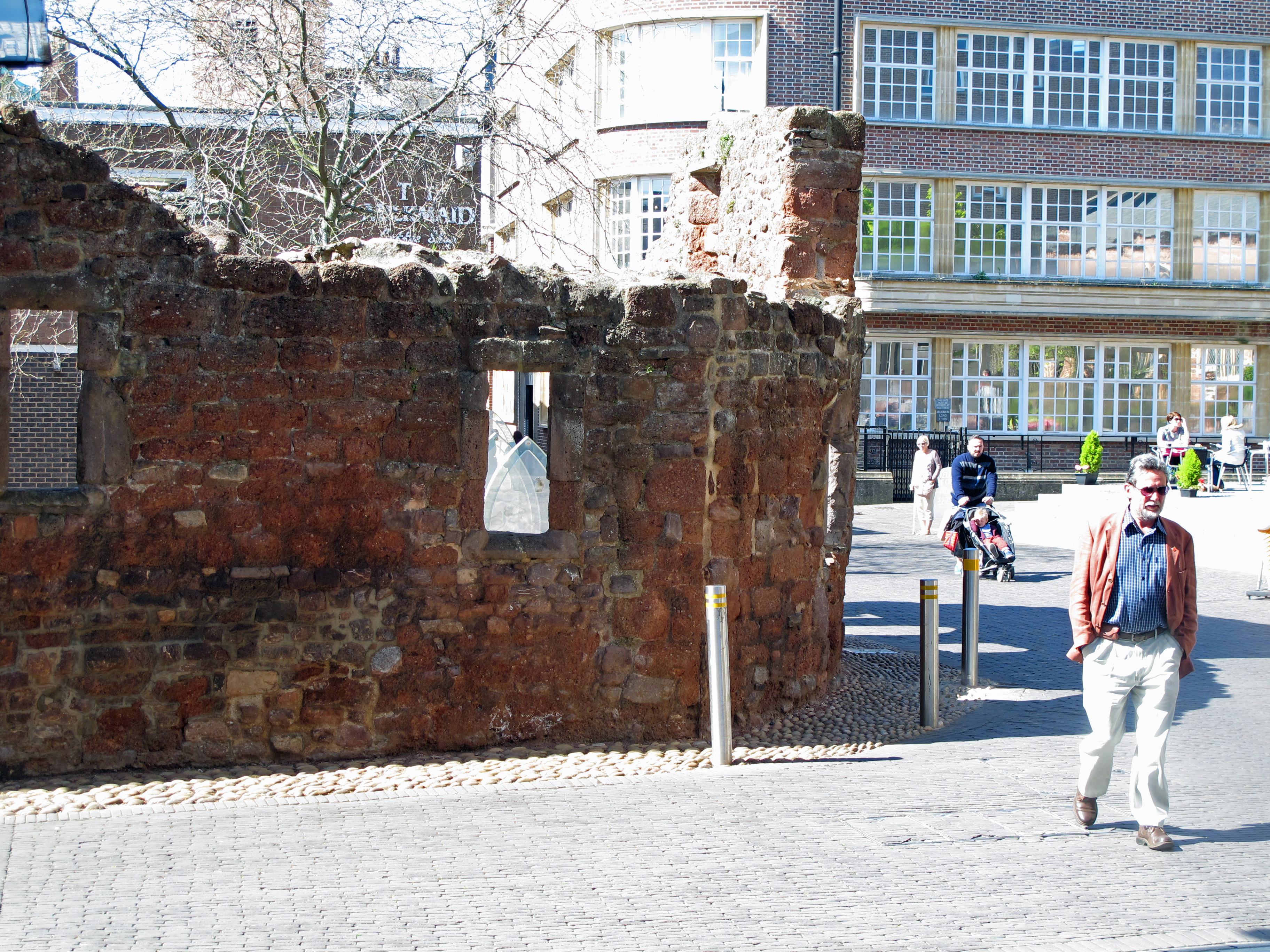
Roman wall. Exeter, Devon, U.K.

Nearly relevant photo: Part of the Roman wall in Exeter. Hey, what tourist wouldn’t want to see that? This bit is right beside a parking ramp–or car park, which sounds like a place cars go to play in their time off. The bit of modern fencing looks kind of puny beside it.

A lot of the comments were positive, although I as I’m writing this I seem to notice a tinge of not-so-positive underlying them. I’m not sure if people were being polite (ah, yes, people around here are polite; except when they’re not, of course, but that happens waaay less often than in the U.S., and it has a lot more impact because it’s so unexpected) or if I’m just a sour old bat who’s importing her own view of the world into places it doesn’t belong. Take it all with the usual half cup of salt.

Several people mentioned Americans’ enthusiasm for how old Britain is. V. wrote that anything over 250 years old excites them. Which reminds me to mention that 250 years isn’t all that old around here. I mean, if we’re talking about stone circles, we’ll have to count in thousands of years, not hundreds. So 250 years? Nyeh.

S. wrote that she enjoys Americans’ love of castles, even when they don’t understand what they’re looking at.

What don’t they understand? Well, when N. “worked in Windsor years ago, I heard two American tourists looking up at the castle while a jet flew over out of nearby Heathrow. One said, ‘Gee, you’d think they’d have built it further from the airport.’ ”

If you can top that, you have to leave a comment.

M. wrote that “my dear sister-in-law is American, and when she was dating my brother she was still a tourist (she’s a hard-nut Londoner now, innit?) and we had some fun with her, like the time we (almost) convinced her that Stonehenge is moved around each solstice so it’s never in the same place twice.”

So, enthusiastic, appreciative, and, um, not necessarily well informed—either by their own (lack of) research or by their loving hosts.

And then there are the ones who are well informed but—well, H. wrote about a couple she met when she ran a B & B: “His knowledge of British history was incredible but he did admit it was easy to be an expert when surrounded by idiots. He requested clotted cream with his porridge!! She had a BRAG book containing photos of her grandchildren and proudly bored us for rather a long time.”

I should add that H. liked them. In fact, she called them fabulous.

What else?

Tourists bring their preconceptions with them, and look for ways to reinforce them. A. told a story about running past a group of American tourists (she was late, and stressed, and I’m guessing not in the best of moods) and hearing one call out, “I told you there would be rosy cheeks.” At the time she was annoyed. In retrospect, she thinks it was sweet.

She has a more tolerant nature than I do.

I hadn’t thought of rosy cheeks as something Americans expect of the British, but they do figure in a lot of English novels. So yes, I guess as least some people will come looking for them.

Another distinctive factor is that American tourists tip. And the British, in most situations, don’t. Still talking about her sister-in-law, M. wrote, “One thing I remember about going out with her in London as a tourist is that she never had an umbrella (she certainly does now), and that bar staff loved her, as she had no idea that you’re not supposed to tip them.

“Well, you aren’t, are you?”

Americans, you are not to take that as an instruction not to tip, because A.2 wrote, “And that’s why Americans will always get served before a tight, non-tipping Englishman!!”

Besides, it’s the right thing to do and you know it.

The most negative comments weren’t about Americans as Americans but about the sheer tourist-ness of tourists. T. wrote, “I think it’s just tourists not American tourists. There are a lot of people who simply forget they are travelling to someone’s home / work / life and have a responsibility to allow that to continue. Perhaps it’s just that in recent years there have been more of them and they are often …. easy to spot.”

Like all the other ellipses here, that “…” is his, not mine, so try to hear a pause there while he searches for a polite phrase.

Picking up on his comment, V. wrote, “Much like surfers, small groups of tourists always better.”

As if to prove that it’s tourists, not necessarily American tourists, G. wrote that “most English folk can’t differentiate between an American accent and a Canadian accent.”

I can testify to that. Periodically, I get asked if I’m Canadian. Since Canadian tourists are scarcer than the American variety, I’ve assumed they thought a Canadian would be offended at being taken for an American but that the reverse wouldn’t be true. And, in fact, I’ve never been offended by it. Baffled at first, but not offended. I admit, I’ve never checked my assumption about their assumption against anything as deflating as reality, so don’t take it too seriously. Especially since S. wrote to say that she gets asked the same thing “and I’m German!”

I can’t find any way to account for that.

J.’s American and does know her U.S. accent from her Canadian. She wrote, “I tend to hear [American tourists] before seeing them.” Ah, yes, the national volume control knob. Wild Thing—whose personal volume control knob is set pretty close to High—said simply that American tourists are loud. And our English friends D. and D., who visited us once in Minnesota, told us they’d always thought Wild Thing was loud until they changed planes in Chicago. So I think we’ve got a small consensus here.

Then there’s the question of looks: M.2 said American tourists “do often hit the stereotype, with the cameras, the bum bags, and the baseball caps, but I think that’s quite sweet.”

M.3 thinks they look “jolly, with their shorts and trainers [those are running shoes if you’re American] and baggy T-shirts, whether they’re male or female. They look really happy to be in England. They can’t wait to find out about it all.”

No discussion of Americans would be complete without World War II coming into it, and J. wrote that the “young Americans were very welcome in 1944, and Britain could have not have managed without the Marshall Plan in 1945.” To which V. answered, “Whilst their help in ’44 was invaluable, I didn’t think the UK got that much comparatively from the Marshall Plan … and what we did get took until this millennium to pay back … no economic miracle here (unlike Germany).”

Americans, is that a bit of history you ever heard about?

Finally, to put all this in perspective, V. told a story about her mother, who “stood at the top of the Empire State Building, looked down at the road system and said, ‘I think they could have done that a bit better.’ My sister’s response was to apologise to nearest American, saying, ’I’m so sorry, she still thinks we have an empire …’ “

I’d encourage you all to chip in with a comment, but I figure you know that already. Let’s hear what you can add.

Class and power in rural Cornwall

I was listening to the radio a while ago (Radio 4, a BBC station, has some great shows, along with some deeply strange ones) and someone said in passing that in the U.S. class is all about money. And I stopped mid-stir (I listen to the radio either in the car or when I’m cooking) and thought, Well, what else would it be about?

Why, heritage, of course. Generations of titles and inbreeding and self-congratulatory silliness. The system’s antiquated and doesn’t match the realities of power anymore, but it’s still creaking around the room on its arthritic legs and interrupting the conversation with irrelevant and embarrassing observations every chance it gets. An aristocratic family may have given its grand house to the National Trust because it couldn’t afford the upkeep, it may have sold it to a celebrity or some foreign oligarch, or it may have kept the place and opened part of it for the riffraff to wander through and gawp at (or as much of the riffraff as can afford the entrance fees, which range from the predictable to the exorbitant), but by god it still has a name and thinks it matters.  (We all have names, I remind myself, but they’ll be happy to tell you that they really have names. The rest of us just have a bunch of sounds for other people to call us by. And in my case, the family name has changed a few times, so that says something about how important we thought it was.)

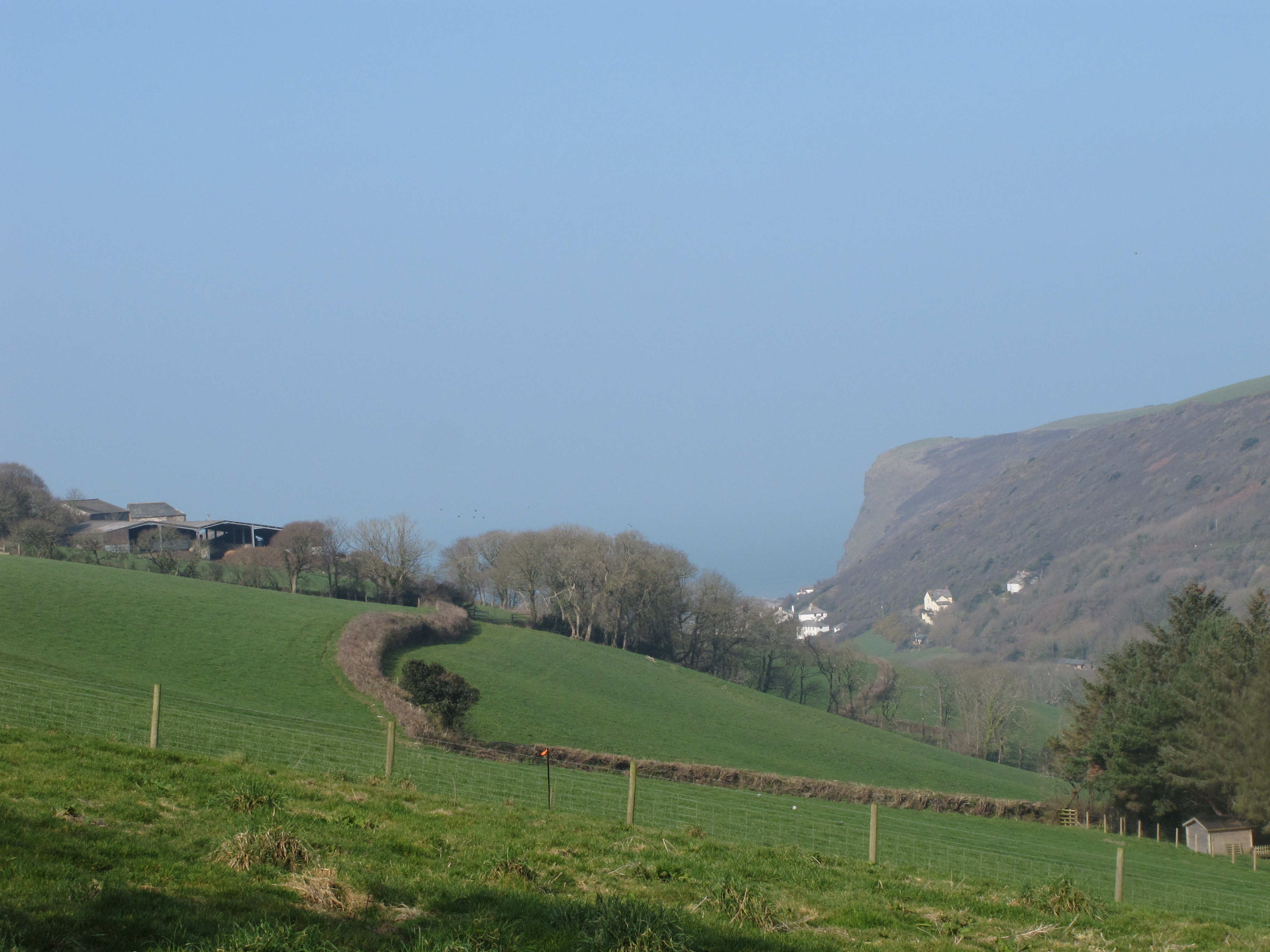
North Cornwall's coast

Irrelevant photo: The cliffs on a hazy day.

But even in Britain, class isn’t all about heritage anymore. Pick any village and someone’s likely to think they’re the lord or lady of the manor. It’s possible that their ancestors once were, but it’s equally (or maybe even more) likely, at least in our part of the country, that they moved down from London a few years ago, bringing a pile of money made doing who knows what, and now that they’ve bought a big house in a small village it’s all gone straight to their head. They throw their weight around in village events and committees, half expecting to recreate the days when Lord Hooha’s word was law. But whether or not they actually are Lord Hooha, it’s not the nineteenth century, never mind the middle ages. Sometimes they get away with it but often they don’t. Either way, the rest of us are torn between annoyance and mockery.

The British countryside and Winnie the Pooh

Nothing reminds me that I’m living in the British countryside quite the way crossing a ford does.

I know. Fords have been around ever since people and small rivers were first introduced, but even so the fords in our village make me think I live in Pooh Corners. And for the record, no, I’m not sure there were any fords in Winnie the Pooh, but there was a stream and—well, I don’t want to pretend I’m being reasonable about this. What I’m remembering, I think, is one of the illustrations, about measuring the height of a stream during a flood.

Funny what sticks with you from your childhood.

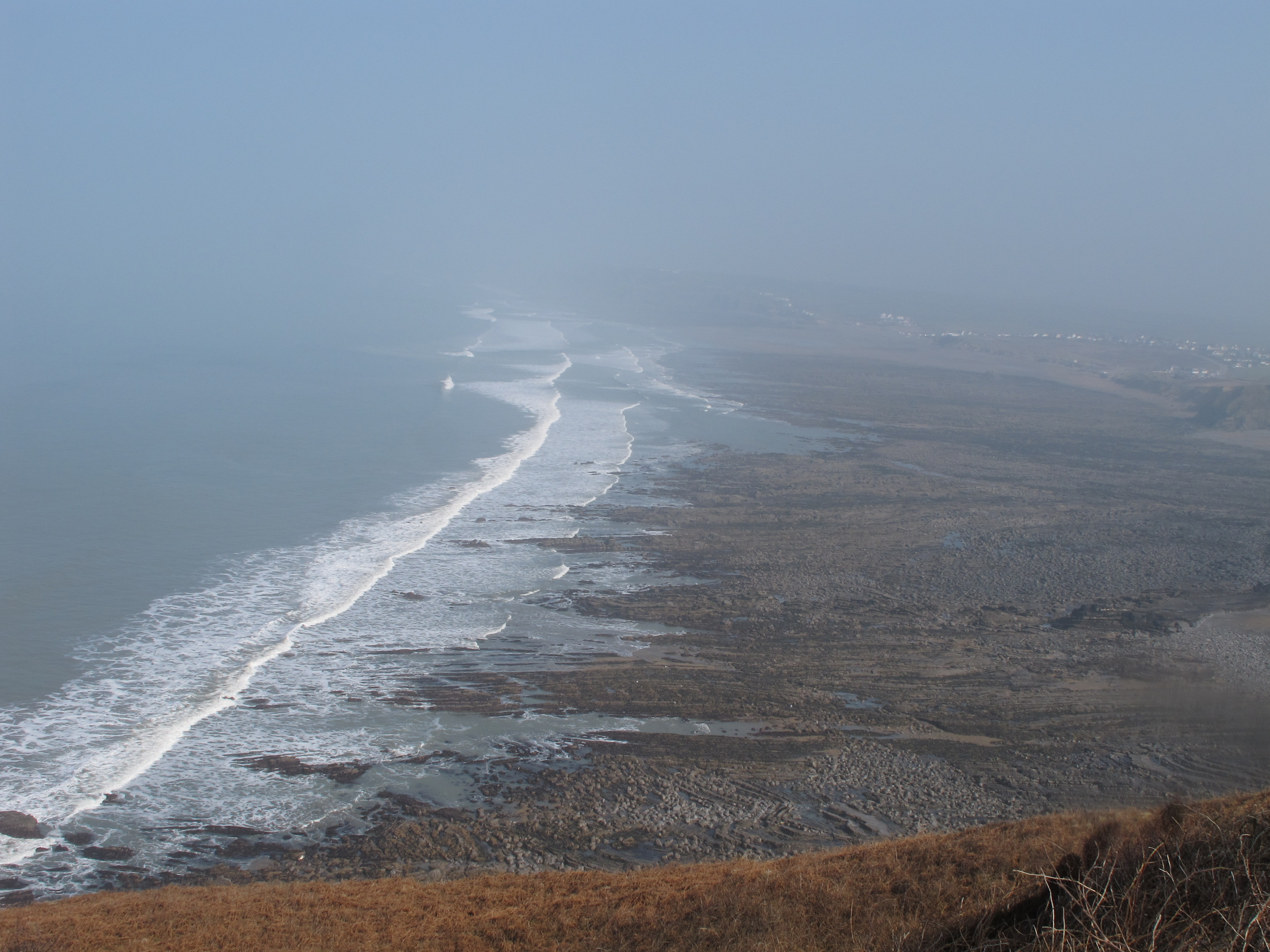
North Cornwall's coast

Irrelevant photo: North Cornwall’s coast on a hazy day

This all goes to show you what a New Yorker I am. New York City doesn’t do fords. In fact, it doesn’t do streams. As far as I know, many years before I was born, someone (or more accurately, some many) maneuvered all of New York’s streams into pipes and then paved them over. The city does have three big honkin’ rivers (or two, or maybe one, depending on what you count as a river and what you count as a straight), and that’s plenty, thanks.

When you grow up with pavement, not having streams seems natural. So much so that I used to wonder where streams came from. Not where rivers came from. They came from upstream, as any fool could see. In case you need further proof of how attuned I was to the natural world, I once looked into a huge hole in the street and was surprised to see earth and rock under the pavement. I don’t know what I expected, but scaffolding probably wouldn’t have surprised me. So living in Cornwall not only with streams but with fords? That’s exotic.

Wild Thing grew up in Texas, and her family used to spend time in Colorado. She swears that when they came to a ford and the river looked higher than usual, her parents would have her wade across to make sure it was safe for the car. She never got washed away, so I’m guessing these weren’t raging torrents. Her parents weren’t reckless or neglectful, but it’s also true that they never stopped her from exploring abandoned mine shafts, so I don’t have the impression that they were over-protective either.

In fairness, she wouldn’t have told them she was exploring mine shafts, but a different set of parents might have asked. Or discussed. Or at least warned.

Whatever the pluses and minuses of their approach, she came out of it with an enviable gift for gauging the depth of a stream, and that’s something I don’t have. I understand three levels: low enough to wade; higher than the waterproof part of my shoes; and ask Wild Thing before taking the car across. The first two are reliable. The third? It’s helpful only if Wild Thing happens to be with me. So far I’ve managed not to get swept away, which is why I’m sitting here typing this. I’ve turned back only once, and I probably I didn’t need to, but I figured it was better to wonder than to be wrong.

Years ago, some government agency set up gauges beside the fords. These look like gigantic rulers and go from 1 at the bottom to You’re in Deep Shit at the top, although in my city-bred opinion you’re in trouble by the time the water reaches 1, because for the most part the gauges sit serenely above the normal flow and I’d turn back long before the water reached them, even though at most fords that means having to back a long way. I’m good at backing a car. I’m not good at estimating fords. Give me a choice and it’s pretty clear which I’ll take.

I’m not sure what the gauges are for, really. Maybe so that, Pooh-like, we can measure the depth of the stream for no better reason than to know if it’s still rising. The valleys here are sharp and narrow, so the rainfall spills into the streams quickly. In a heavy storm, a stream that’s normally a trickle can rise to a torrent, especially if the ground’s already saturated. It can fall just as quickly as it rises, and I suppose a gauge could keep you amused while that’s happening, although you might be smarter to go back to your nice warm kitchen and wait. You could also look for another route if you’re driving. If you’re walking, the fords have foot bridges, so you should be fine. If the water comes up over that, you’d be smart to get out of there instead of watching the gauge.

In my city-bred opinion.

*

And unrelated to that, Notes has now been updated, with a new theme that looks one hell of a lot like the old one but should work on phones. In addition to that, it was going to have all sorts of added Googlery that would tell me if a gnat flew past your screen while you were reading it, and which would also reach through atmosphere and hijack unsuspecting readers, launching my stats to astronomical levels, but the whole thing went wrong and instead my posts stopped reaching most of you. The ancient Greeks called it hubris. So the googlery’s disappeared, everything except the new, barely discernible new theme is back (I hope) to where it started, and I’m toning down my ambitions. Or looking for another way to channel them.

Thanks to the people who wrote to say they couldn’t click through to the “Trouble, trouble, trouble” post. It’s now reappeared (along with a great comment from Cats at the Bar) and I’ve lost another post, which was nothing but an attempt to update the people who couldn’t click through to “Trouble, trouble, trouble.”

Don’t worry about it.

If you have any trouble let me know. But if you get this, that probably means you’re not having any problems.

Arghh.