The pandemic update from Britain: hope, hype, and a tiger running loose

At the risk of injecting a dangerous note of optimism into these updates, a new blood test looks promising. It might–emphasis on might–be able to pick up traces of Covid-19 a day after a person’s been infected. That would be several days before symptoms show up and most importantly (there may be a small question mark involved here) before a person’s contagious.

That’s four days sooner than any existing test can pick up the beast.

It’s been developed by Darpa–the U.S. military’s Defense Advanced Research Projects Agency–by the folks who usually work on diagnosing germ and chemical warfare poisoning. The test’s been rushed to the Food and Drug Administration for fast-track approval. If it is approved, it’s expected to be available in the U.S. in the second half of May.

Possibly. The fine print is that approval isn’t guaranteed. And they won’t know how early it can pick up an infection until the test gets approval and they can gather data. And I don’t know what the plan is about making it available elsewhere. But if it works and if it’s approved and if it’s widely enough available, it would mean pre-infectious people could be quarantined and the transmission chain could be broken. And I could finally do my own damn grocery shopping.

*

Irrelevant photo: A whatsit plant. We got it last year and whatever is it, it survived the winter.

Two other antibody tests are in the works, one from Roche and one from Quotient. The Roche test has gotten FDA approval. Quotient is in the U.K., so the FDA is irrelevant. It says its screening machines could process up to 36,000 tests per day and give results in 35 minutes with 99.8% accuracy. The snag? Both tests are lab-based. They can’t be done at home.

*

With a whole lot of fanfare, the British government announced that it had met it’s (completely arbitrary) goal of testing 100,000 people a day by the end of April. Some of those tests hadn’t been processed yet, mind you. And others hadn’t actually reached anyone. In fact, some were sent out without return envelopes. And only 7% of the 31,000 for care home staff and residents had been used by last weekend.

I mentioned that in an earlier update, but the details have gotten more absurd, so I thought it was worth repeating.

And you know, a number’s a number, so sound the trumpets, please, bandmaster.

When last sighted, the daily test number had dipped below 80,000.

*

One of the mysteries of Covid-19 is being called happy hypoxia: It involves patients whose blood oxygen levels are so low that they should be unconscious but they’re talking, checking their phones, and generally saying they’re comfortable. Which doesn’t make their blood oxygen levels less dangerous, only mystifying.

*

How are people coping with the pandemic? Some 300,000 people in Britain have quit smoking.  And online searches for puppies have gone up by 120%. The Dog’s Trust is begging people to think about how they’re going to deal with the dog when real life picks up again.

*

In a rare display of good sense and global cooperation, a global alliance is expected to pledge $8.2 billion for Covid-19 research and the equitable distribution of vaccines and treatments. Stay tuned. I’ll let you know more when and if I hear about it.

*

Can we talk about something else?

Police in Kent got a call about a big cat running loose, so they called up a helicopter and an armed response team and went looking for it. They found an 85-year-old sculptor and the life-size tiger that’s been in place for 20 years without scaring anyone until now.

One cop figured it was all because a of a recent Netflix series about big-cat ownership in the U.S..

In the interest of making fun of English place names, I should really mention the location. This happened near Underriver, in Ightham. According to all the laws of the language, Ightham should be either  unpronounceable or leave your tongue twisted back on itself and begging for rescue. How do they deal with that locally? They pronounce it Item.

And yes, English does have laws. It also breaks them anytime it the mood takes it.

And Underriver? How are we supposed to understand that? According to Wikipedia, which may or may not know what it’s talking about at any given moment, the name comes from old English and means under the hill.

That makes perfect sense.

If I really had to, I could also tell you how to report potholes in Underrriver. It’s very useful having me around.

The pandemic update from Britain: research, testing, and spitting your coffee

Britain hit its arbitrary goal of testing 100,000 people a day by the end of April, the government announced triumphantly. How’d they do it? By including 52,000 tests that hadn’t been analyzed yet. Or taken, for that matter. They’d been put in the mail. Presumably to real people, although I can’t vouch for that. I have a picture of some hapless intern sent to the corner mailbox and stuffing them in by the handful. After being told to address them to his or her entire third-grade class, thousands of times over. At the addresses they had then. 

Third grade? Sorry. It’s an Americanism. In Britain, it’d be year three, more or less. 

Without the intern’s work, the number was 73,191.

*

Irrelevant photo: rhododendron

The New Scientist article where I found the real test numbers (although for some reason it didn’t mention the intern) also tells me that the U.S. director of national intelligence announced that Covid-19 was not engineered in a Chinese lab, or in any other lab. It’s a natural occurrence. 

Sorry, Don. 

It also mentions that the English and Welsh coronavirus death rate for people from black African backgrounds is 3.5 times higher than for it is white people in England and Wales. Other ethnic minorities are also getting hit harder than whites. 

I don’t have statistics for the U.S., but I do know it’s hitting black people much harder than whites. Which makes the scenes of armed white guys demanding to end state lockdowns particularly chilling.

*

Since we’re messing around on the New Scientist website, let me quote another article: Just four coronaviruses (virii?) are responsible for 20% to 30% of our colds, and they may once have been deadly, toning down as time went on until now they’re no more than a damned nuisance. 

Researchers now believe that all four of these viruses began to infect humans in the past few centuries and, when they did, they probably sparked pandemics.”

A careless person could almost get hopeful, reading that. Waiting this one out, though, is not a workable strategy. All those people who want to wait for herd immunity? They think they’re not part of the herd. They are.

The New Scientist is a good website and very much worth a trip. Especially since a lot of us can’t go anyplace real these days. 

*

Just to prove that it’s useful, and to lead us all quietly away from that dangerous spark of  hope, I’ll draw on one more article from it: It’ll be a long time before we have a vaccine, it says. If, in fact, it turns out to be possible to develop one for this bug. 

The average experimental vaccine has a 6% chance of being safe and effective enough to make it to the market. Of the vaccines that get as far as trials, about 33% make it to the market.

So let’s assume one of the vaccines being frantically worked on in labs around the world works. It’ll take twelve to eighteen months to manufacture enough doses for it to be widely available, and that would be a remarkable speed. The fastest vaccine ever made to date was for Ebola, and that took five years.

To make a vaccine available faster–. Well, basically, you have to start step two before step one is complete, and maybe step three as well. So if the drug fails somewhere along the way, a lot of money gets lost–and time with it. 

Speed also raises worries about safety. There’ll be less time to study the vaccine’s long-term effects, so problems can be missed. And, let’s face it, when an awful lot of money has been committed, people will be under pressure not to quibble about minor problems that might turn out to be major.

Because we all know how all existing political systems welcome whistle blowers. 

*

Some scientists (and in the U.S. at least, some lawmakers, in a rare moment of bipartisanship) and pushing to test vaccines by deliberately exposing a test group to the virus instead of letting nature take its course and seeing how many people get sick. It could shave months off the trial. It could also kill people or leave them with long-term complications.

If you’re spitting your coffee across the room right about now, I have the impression that the idea made immunologist Matthew Memoli from the U.S. National Institute of Allergy and Infectious Diseases do the same thing, although what he actually said is fairly mild: “Where you’re going to give somebody a virus on purpose, you really want to understand the disease so that you know that what you’re doing is a reasonable risk.”

*

The crews from cruise ships–some 100,000 of them–have been left stranded on the ships after their passengers were repatriated. The crew are shut out of ports and banned from air travel home, leaving them stranded. Covid-19 is rife on some of the ships. 

A couple of class action suits have been filed. On some ships, crews report being treated well while on others food it running out and many people aren’t being paid. 

*

An article in the Guardian’s worth your time if you’re trying to wrap your brain around how this virus works. I’ll pick some pieces out of it, but there’s a lot more. It’s accessible and it’s informative.

One subset of patients are showing brain inflammation, agitation, and personality or behavioral changes. Another–including some young ones–are getting strokes. Some patients have low oxygen levels in their blood but aren’t showing much lung damage. If they were suffering from altitude sickness, it would make sense, but they’re not. One doctor’s hunch is that it must have to do with the blood vessels, but the research hasn’t been done yet. 

Another doctor’s hunch is that the virus affects men more than women because it’s activated by androgens. But again, that’s a hunch. 

*

While we’re talking about subsets, a subset of scientists are trying to figure out how this beast spreads. Ending lockdown without understand that is–

Um. It’s hard to find the right word. Dumb? Dangerous? Dicing with disaster?

No, that last one’s three words. 

Anyway, let’s settle for “a problem” and move on.

So various groups of sciencey minds are coming at this from different angles. One is figuring out how virus-laden aerosols (those are–at the risk of, ahem, oversimplifying and distorting just the slightest bit–the tiniest of spit particles, being ridden like race horses by virus jockeys) behave in air. Another gropu is trying to work out if the aerosols carry enough of the virus to be infectious or if infection can only happen with larger droplets–the kind that go flying on the winds of a cough or a sneeze. They can carry larger doses of the virus (someone’s already told you that more isn’t always better, right?) but don’t travel as far as the aerosols. This involves a high-containment lab where they can spray the things around, varying the temperature, humidity, ozone, and sunlight levels. 

Some people get to have all the fun.

Other groups are studying the pathways the virus follows to pass from patients to health and care workers and then to new patients. Half of all new cases in Britain a couple of weeks ago (sorry–I’m always limping behind events here) were among healthcare workers. 

A lot of modeling has been done on the disease’s spread, but so far it’s all based on assumptions about how it spreads. This is research that could fill in that gap.

In the meantime, I am really tired of washing my hands. I just thought you might want to know that. 

*

In the meantime, 77% of Britons want the lockdown to continue and 15% want to see it end.

What happened about the others? They’re watching Coronation Street and won’t notice the lockdown until they run out of new episodes in June.

What the world wants to know about Britain, part I’ve-stopped-counting

It’s time to see what questions the currents of the internet have washing onto our shores. 

Why? Because we’re in the midst of a global pandemic,I’ve gone ever so slightly out of focus, and yet the blog must be fed. So here we go. The questions appear in all their original oddity, and I feel free to make fun of them because I am 609% certain that the people who asked them haven’t stuck around long enough to read what I write. In other words, no human feelings were harmed in the making of this post.

I hope.

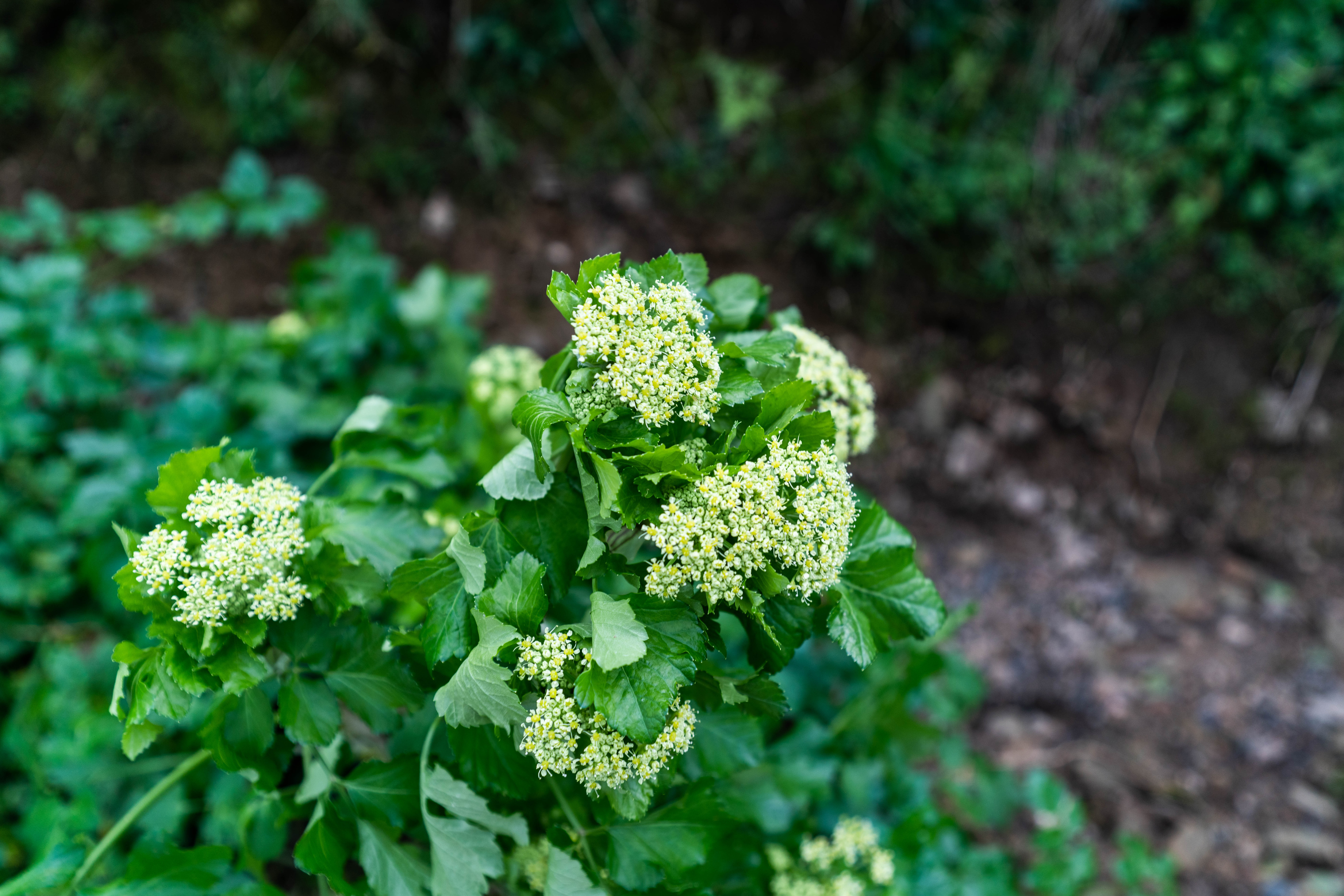
Irrelevant photo: Alexanders–a forerunner of celery, brought to Britain by the Romans as a vegetable and still edible although I admit I’ve never gotten around to trying them.

PANDEMIC QUESTIONS

corona virus vs bubonic plague

Before I try to answer this, I need to establish whether it’s one of those irresistible force vs immovable object questions, as in who’d win in a matchup between them, or one of those  which would you prefer if you had to make a choice questions.

Based on no evidence at all, let’s decide it’s the second. I’d go for the plague, myself. It’s curable these days and the question didn’t come with any fine print saying we’d have to be back in a pre-antibiotic century. 

funny sign for door coroba virus notice

Don’t. It’s not going to work. Especially if you can’t come up with some humor of your own and have to borrow other people’s. 

my husband is in self isolation but does not have corna virus do i need to stay away from him?

I’m not a relationship counselor, so take what I’m about to say with a grain of salt: I don’t think this bodes well for the relationship.

did the eyam isolation work

Define work, please. It didn’t save the residents of Eyam, but then no one thought it would. The goal was to save the people around Eyam. So yes, it worked. At great cost. It’s something we all need to keep in mind. Benefiting ourselves isn’t always the goal. The story’s worth reading if you don’t know it.

GENERAL KNOWLEDGE QUESTIONS

did the tudors smoke

Tobacco first arrived in England in 1586–or possibly earlier, but that’s the most commonly cited date. Elizabeth I–the last of the Tudors–died in 1603, so we’ve got an overlap here. She’s said to have had a puff or two in 1600, but I have it on good authority that she didn’t inhale.

By the 1660s, smoking had become common but by then the Tudors were very dead.

why is britain wonderful

I’d have said that any country’s wonderfulness is a matter of opinion. Wonderfulness isn’t something you can measure on an objective scale. 

the enclosure movement is enacted in england-1760 to 1832

Serious question–I’m impressed–but the enclosure movement wasn’t something that got enacted. It happened

how would beer be compared to england

Well, beer’s an alcoholic drink. England’s one of the component parts of the United Kingdom. That mismatch makes them hard to compare. If you’re in a bar, my advice is to go for the beer. If you’re buying a ticket, go for England. You’ll probably mean Britain, but you’ll be understood.

what do brits call cats

Cats.

what do the british call brownies?

Brownies.

why britain

Why not Britain?

legacy of the feudal system

A baffling habit of electing aristocrats with no identifiable skills that would make them competent in government. 

Me? No, I have no political opinions whatsoever.

is (gt) britain really going down the stank,asit seems

First, I’m going to need a definition of stank, not as the past tense of stink but as a noun. Lord Google had nothing to offer me.

After that, I’m going to need to know why whoever you are thinks it is. That’ll give me some vague idea about whether I agree. Are we talking about austerity destroying the infrastructure? Are we talking about the deplorable habits of resident American bloggers who don’t say please and thank you anywhere near often enough, not to mention the way they contribute to the adoption of words from that inferior dialect known as American English? Are we talking about kids today and everything that’s wrong with them? Y’know. Give me some specifics before we argue about how serious it all is. Or isn’t.

why was church of england referred as dark satanic mills in blake’s jerusalem

Nice try and I admire your subject, but he wasn’t talking about the church. The dark satanic mills were the mills–those early, deathly workshops of the Industrial Revolution that ate the lives of the people who worked there. 

when did berwick on tweed end the crimean war

Every time I assemble a set of search engine questions, I find at least one question about Berwick on Tweed being at war with Russia. And the more often I reprint them, the more of them I get, so I have no one to blame but myself–and possibly John Russell, who first got me writing about the topic. Berwick on Tweed has not been at war with Russia since the Crimean War. It didn’t end the Crimean War. It also didn’t start the Crimean War. You can read the tale here.

BRUSSELS SPROUTS QUESTIONS [yes, this gets a category of its own]

why do we cross sprouts

To get to the other side

what is behind the english obsession of brussel sprouts for xmas dinner

Timing. They ripen just in time for the holidays. The real question is, what’s behind the obsession with why the British eat them at Christmas. Everyone seems to be looking for some deep meaning. People, there isn’t one.

sprouts christmas why

The nation’s sprout-haters ask this pretty much every holiday season, raising their hands to the heavens as they cry out, “Why?” It doesn’t help. Someone dumps sprouts on their plates anyway, and they have to pretend to eat them.

why are brussels sprouts british

I’m tempted to say it’s because Brussels is the capital of Britain but someone’s going to take me seriously so let’s take the question apart instead: What does it mean for a vegetable to have a nationality? That its ancestors immigrated there legally, or before anyone started keeping records, so at least not demonstrably illegally? Or do other countries have to pay a tax when they eat the vegetable, or at least give appropriate amounts of thanks? 

Does it mean it grew there? Or does it just mean it’s eaten in that country? 

What, for that matter, does it mean for a person to have a nationality? Is it a real–as in, innate–thing or do we make it real by our conviction that it is real?

Oh, people, we’re getting in deep here and we’re still only at vegetables. We haven’t started on the fruit. In the interest of saving what little sanity some of us have maintained in the face of global pandemic, the incompetence of most governments, and the downright evil of some others. 

Where was I?

What I was trying to say is that I’m going to skip over the question in the interest of keeping us all marginally sane.

MYSTERIOUS QUESTIONS 

on way put kettle idioma

I’ve taken this apart and put it back together six different ways and still can’t make sense of it. Is someone asking about the idiom “put the kettle on”? If so, what’s “on way” got to do with it? Why is the world such a strange place? 

What does it all mean, bartender?

what does legend say while king alfred was there

It says, “Alfred, put the kettle on. I’m stopping by with some burned cakes.” You can read about that here, although I don’t think I mentioned the burned cakes. They are part of his legend, but they’re a relatively late addition and roughly as reliable as Washington chopping down the cherry tree. 

gower cottage brownies japan us

If these words have anything to do with each other, I haven’t figured out what it is. I suspect they’re part of a joke that starts out, “Five nouns walk into a bar…”

You’re welcome to leave the rest of the joke in the comments section. I’m welcome to censor your contribution if you go over the edge.

Where’s the edge? I don’t know yet but I’m sure we’ll find out and I’m sure it’ll be interesting.

*

A delayed thanks to Autolycus for pointing me in the direction of last week’s post. You can find his blog here. He has a light approach that I enjoy.

Pandemic news from Britain: conspiracies, opera, and where the flour went

Unemployed air crews have opened a first class lounge in several hospitals so they can give National Health Service staff a break. One of the organizers, Dave Fielding, says the crews offer tea, coffee, snacks, and “fifteen to twenty minutes of escape from the decisions they have to take everyday, because coronavirus has increased the pressure on them so much.” 

In spite of what the lounges called–and to everyone’s credit–they’re open to doctors, nurses, and support staff equally.

*

The conspiracy theory du jour links Covid-19 to 5G masts. At least 20 masts have been attacked in the UK since the crisis started, including one serving a hospital. 

As far as I’ve been able to figure out without doing a deep dive into this particular swamp, the idea is that Wuhan was the first place 5G technology was tried, it weakened people’s immune systems, and that boosted the virulence of the common cold, creating Covid-19.

The fact-checking site FullFact reports that Wuhan seems to have been one of the early cities where 5G was rolled out, but not the only one. There’s no evidence that 5G has any effect on the immune system. It’s carried by radio waves, which are non-ionising–in other words, unlike x-rays and UV rays, they don’t affect our DNA. And Covid-19 isn’t a variant on the common cold anyway. 

Other than that, though, the theory’s solid.

You don’t have to dive very deep before you find claims about a link between 5G and mind control. I found them while I was looking for something else, but my mind was being controlled by outside forces and I didn’t click the link although I so wanted to. 

According to newspaper stories, if you dive deeper than I did you’ll find claims that the Jews are behind it all. The far right, apparently, just hates 5G–and, of course, Jews. 

Which brings me to what I want to know about all these Jewish conspiracies: How come no one ever lets me in on them? I’m Jewish. I can keep a secret. And who’d listen to me if I did tell?

*

South Korea has reported that a group of people who recovered from Covid-19 later tested positive again. Some had no symptoms, others got sick. It’s not clear if they were reinfected or if the virus stayed active in their systems, but either way it raises troubling questions about immunity. And a vaccine.

*

A hospital in Wales is injecting blood plasma from patients who recovered from the virus into patients who are struggling with it. It’s the first trial. If you don’t hear any more about it, assume it didn’t work. 

*

One of the mysteries of these Covid months is where all the flour went

The answer is that it didn’t go anywhere. It’s still out there, but it’s not on your supermarket shelves. With so many people stuck at home, the retail demand for flour almost doubled (that’s in the four weeks before March 22 in case you care). The problem is that suppliers can’t move easily from selling it in bulk to selling it in small bags. That involves production lines and machinery and packaging. And, inevitably, money. If you want a tankerful of the stuff, you can probably arrange for a truck to pull up in front of your house. The problem’s going to be storage. 

It’s also easily available in bags, but we’re talking about the kind of bags that weigh 16 kilos or more. In pounds, that’s 16 x 2.2, which equals more than your back’s going to be happy with since it comes in an awkwardly shaped, and possibly floppy, package. Flour mills may not be quite as happy to send a truck out with a single bag, and it won’t amuse your neighbors for nearly as long as a tanker.

Have I mentioned that flour’s flammable? Or not just flammable: explosive. If you decide you need that tankerful, do be careful. I don’t have so many readers that I can afford to lose any.

*

A doctor who changed careers and became an opera singer has returned to medicine to help out during the crisis. (What the hell–who’s staging operas these days anyway?) In quieter moments, he sings to the staff–through a mask. A co-worker filmed him

He’s a tenor. And only drawn to careers that take years of training.

*

Have I mentioned lately that humans are a difficult species? So who-all’s getting blamed for Covid-19? In China, African students and expatriates are getting tested repeatedly–not to mention evicted and turned away by food stores because they’re assumed to be carrying the virus. 

Incidents of online, off line, and presidential blaming of Asians who just might be Chinese are too numerous to count in both the UK and the US–and for all I know elsewhere.

In India, Hindu extremist groups blame Muslims. 

And of course there are 5G masts, Jews, and the Chinese government–a natural alliance if there ever was one. 

As long as we have someone to blame, we can face anything.

*

I wrote last week about Britain’s shortage of protective gear for medical and social care workers, and of course you memorize every word I write. It’s the shortage that lovely and creative volunteers are moving mountains to make up for. The shortage that’s helping spread the disease, especially to health and care workers and the people they treat.

That shortage. 

It turns out that Britain had three chances to buy masks, gowns, and gloves in bulk. But it would have meant buying them along with the European Union, so the government didn’t do it. Because, hey we’re leaving the EU. And what really matters, after all?

Brexit. That’s what matters.

Or possibly it was because they forgot to read the email. Or because the dog ate their homework.

And, what the hell, as long as I’ve depressed us all, I’ll toss this in: Some hospitals are so short on equipment that they’ve stopped using the usual way of checking staff members’ masks to see if they fit safely. It involves a chemical spray and they’re having trouble getting hold of it.

*

We’re going to skip lightly over some pandemic stories because they’re either too heartbreaking or too frustrating, but I do want to mention a few very briefly. The one about the Home Office refusing to take unaccompanied child refugees from the Greek camps, which are overcrowded, undersanitized, and disasters in the making. The one about foreign doctors living in Britain who aren’t allowed to work here because the General Medical Council is too busy doing whatever it’s doing to register them. One particular group were at the final stage of accreditation when their final exams were canceled. Because, of course, of the virus.

*

After Boris Johnson recovered from the coronavirus and left the hospital, he had high praise for the NHS, mentioning two nurses by name. He didn’t mention that he voted against listing a long-standing cap that had kept nurses’ pay from going up.  

One of the nurses he mentioned is from New Zealand and the other from Portugal. Anyone from the EU working in Britain pays £400 for the privilege. For every member of the family. Per year. After Brexit, that’s due to go up to £625. I believe that’s the amount non-EU workers pay, but I haven’t verified that. 

But hey, we are grateful to them. What, they want better pay too?

Britain has a shortage of 40,000 nurses. 

None of those figures are connected in any way.

*

Britain’s on track to test 100,000 people a day for Covid-19 by the end of the month. The fact that halfway through the month we were only testing 18,000 a day has no bearing on anything. 

*

Sorry–we’re getting a bit grim here. Let’s lighten things up. A ninety-nine-year-old World War II veteran decided to raise £1,000 for the NHS–the National Health Service–by walking laps around his back garden, which is what Americans would call a yard, but a yard in Britain is someplace junky, so he was in a garden. Last I checked, he’d raised £3 million. He uses a walker and is doing ten laps a day.

Britain does have a national religion: It’s the NHS.

*

In London, a couple of actors staged the balcony scene from Romeo and Juliet from their  windows. A neighbor played the sax, flute, and cymbals. Probably not all at the same time. 

*

Someone who was missing his regular pub quiz set one up on Facebook and accidentally made it public. Again, it was a fundraiser for the NHS. The next thing he knew 30,000 people had signed up. 

It’s become a regular thing, with 150,000 people involved, and it’s raised £93,000.

Pub quizzes? No, I don’t understand them either. They’re a British thing and people here just love them. Or people who aren’t me do.

Happiness, depression, drunks, and codpieces. It’s the news from Britain.

Let’s start with Brexit, since January 31–the day this post goes live, in case you’re getting here late–is the last day that Britain is still a member of the European Union.

To mark the occasion, Boris Johnson announced a fundraising campaign to rush the repairs on Big Ben so it could ring out when Britain crosses that wild Brexit frontier. The cost was estimated at £500,000. He called it “bung a bob for a Big Ben bong.”

Don’t expect me to give you a word-for-word translation of that into American. Basically, it means “give money” and “I’m cute.”

Then, without the alliteration, a government spokesperson said there might be, um, problems in accepting public donations. Cue assorted forms of confected outrage. The newspaper I deliver to a neighbor (nice neighbor, godawful paper) ran a headline about a Remainer stitchup over Big Ben’s bongs. Because that’s what remainers are about: keeping that clock from ringing.

The headline didn’t get the clock ringing but it saved a bit of Johnson’s alliteration.

The aforesaid hapless government spokesperson was asked if Johnson would apologize to the people who’d already contributed to the crowdfunding campaign. He declined to say either that he would or he wouldn’t. Several times over.

But maybe church bells could ring out all over Britain.

Well, as it turns out that ringing bells, or not ringing them, is governed by church law. Who knew? And  only parish priests get to decide when and whether to ring them. A quick survey by the Guardian didn’t indicate much enthusiasm for it, either on the part of the clergy or the bellringers.

An Exeter Cathedral spokesperson said, “The Church of England in Devon is the church for everyone, whether they voted leave or remain. Church bells are first and foremost a call to worship and, in line with the Central Council for Church Bellringers, we do not feel, in principle, they should be rung for political purposes.”

*

Rumor has it that Boris Johnson has banned the word Brexit from 10 Downing Street as of January 31. It’s not clear why. Maybe it’s his way of addressing people’s Brexit exhaustion: Let’s just not talk about it anymore.They’ll also stop talking about negotiations with the EU and pretend everything’s taken care of. Maybe that’s what people really voted for: not to fix anything, just to stop hearing about it.

So what does the new 50p Brexit coin say? “Peace, prosperity and friendship with all nations.”

Seriously. An earlier edition of 1 million was melted down because it had an exit date that Johnson, in a fit of enthusiasm, promised but then changed–October 31. How much did that cost? Nobody’s saying, although a fair number are asking. In an trial run, a thousand were minted with an earlier date that Theresa May missed.

*

One last bit of Brexit news: Bloomberg Econmics estimated that since the referendum the cost of Brexit has been £130 billion, and if expects another £70 billion to be added to that by the end of the transition period. But hey, it’s only money, right?

If you’re interested in how Brexit is likely to affect business or in the issues around regulation and what alignment with EU regulations means, check out the Brexit Blog.

*

The Church of England’s House of Bishops has issued advice saying that sex should be for married heterosexuals only. Which makes sense. If god had wanted anyone else to have sex, he would have given them sexual desires and clearly he didn’t.

*

Designers have introduced high heels to men’s fashion. One said they made her customers feel “more powerful and sexy.”

The last pair of heels I ever owned–or ever will, and this was back in 1804 or thereabouts –made me feel like I was going to fall down the stairs. That was a split second before I did fall down the stairs. It was sexy as hell. And very powerful. In spite of which I doubt the trend will transfer from the catwalk to the allegedly real world, but if it does, guys, you’re welcome to my share of the damn things, although you’ll probably need a larger size.

I also read that designers are reintroducing the codpiece. You know the codpiece? It’s “a pouch attached to a man’s breeches or close-fitting hose to cover the genitals, worn in the 15th and 16th centuries,” according to Lord Google. A highly exaggerated pouch. Henry VIII wore one. He would have had room to stuff his falconer’s gloves in there, and the falcon along with them. One paper said they’re intended to induce awe. I’m sure they will if you can only get people to stop laughing.  

*

Irrelevant photo: A camellia blossom. In January.

A study of UK students reports that focusing on happiness could leave a person depressed. The students who valued happiness most registered as more depressed.

There’s a lesson in there somewhere.

*

Let’s shift countries for a few entries: An octopus escaped a New Zealand zoo by breaking out of its tank and slipping down a drain to the ocean. A zoo spokesperson said the octopus wasn’t unhappy at the zoo–they’re solitary creatures–just curious. 

I’d need to hear that from the octopus before I feel certain of it, but it didn’t designate a spokesperson before it left.

*

In the US, a drop-down menu on the Department of Agriculture’s website listed Wakanda, the imaginary country in the movie Black Panther, as a free-trade partner. What do the US and Wakanda trade?  Ducks, donkeys, and dairy cows. Possibly more, since those all start with D and I’d hope they’d trade up and down the full alphabet. I’d check but once it hit the papers, someone erased the evidence.

*

A chef in France lost one of his three Michelin stars because a Michelin inspector claimed he’d substituted that English horror, cheddar, for good French reblochon, beaufort, or tomme in a souffle. That threw the chef into a deep depression (he might want to focus less on being happy; I’m told it helps), which in turn threw everybody involved into court.

He lost. Not because anyone proved that he’d used the dread cheddar but because he couldn’t demonstrate that losing the star had hurt his business. A “degustation” menu at his restaurant costs 395 euros.

Me? I like cheddar. Think how much money I’m saving.

*

Coming back in the UK, a five-foot corn snake named Allan broke out of his vivarium (no, I never heard of one either; it’s a bit like an aquarium but without the water) when his people were making one of those Christmas trips that no sane person would make without a five-foot snake in the back seat. 

I’m not sure why they noticed that Allan had gone slither-about, but when they did they pulled off to the side of the motorway (if you’re American, that’s a freeway) and started pulling the car apart. Not figuratively: literally. They pulled out the seats and assorted other parts until they found him curled around the gear shift, trapped. They buttered it but he still couldn’t get loose.

This is sounding more and more like I’m making it up, isn’t it? I’m not. 

They ended up with the Fire and Rescue Service and the Royal Society for the Protection of Animals on the scene, one group cutting through a bit of metal and the other using a damp towel to protect the snake from the heated metal the first group was cutting. 

Allan is fine. There’s no report on how the car is.

*

After a contestant on a British quiz show, Celebrity Mastermind, misidentified Greta Thunberg simply as Sharon, Thunberg changed her Twitter handle to Sharon. 

*

Gardeners in at the Cambridge University Botanical Garden spent years trying to get the Bulbophyllum phalaenopsis orchid to blossom. It finally did in December, and it smells like rotting cabbage. Or a mix of dead rats and smelly socks. Or rotting fish. Choose one randomly, since it didn’t bloom for long and we’ve all missed the chance to describe it ourselves.

Isn’t that sad?

Try not to focus so much on being happy and you won’t feel as bad about it.

*

Dominic Cummings, who as far as I can tell is Boris Johnson’s brain, placed an ad inviting weirdos and misfits (the two nouns are quotes, but I don’t like littering a paragraph with quotation marks around a bunch of bitsy words) to apply for jobs at Number 10 Downing Street, where both Boris and his brain work. Cummings has also (a) called for civil servants to be tested regularly to make sure they’re up to doing their jobs and (b) said he regularly makes decisions that are “well outside” his “circle of competence.”

He has not been tested to see whether he’s up to doing his job, and the weirdos and misfits ad may have been outside his circle of competence, because a few days later Number 10 announced that Cummings won’t be doing any recruiting outside of the usual procedures.

Security may also be outside his circle of competence, because he was using a gmail address in his ad instead of the secure government address he’s supposed to be using. Gmail’s known for reading users’ emails, and in some situations for making them available to third parties. 

*

In January, a 26-year-old Plymouth man denied wounding with intent to cause bodily harm after allegedly throwing a seagull at someone’s head. He didn’t enter a plea to the charge of attempting to injure a wild bird. 

You’d think you could find out more about a story like that, but I haven’t  been able to. Except that it happened in a cafe, that he’s due in court in April, and that he was wearing a smart suit at his bail hearing. You know: the stuff that really matters.

My thanks to Phil Davis for this one. I can’t begin to tell you how much poorer my life would have been if he hadn’t let me know about it.

*

My last news roundup included a story about mysterious packets of money appearing in the village of Blackhall Colliery. The people who left the  money have now outed themselves, but anonymously. Just enough to reassure everyone that the money was meant to be found and that the finders are welcome to keep it.

The two people who left the money aren’t related, aren’t married, aren’t local, and seem to have started out separately before joining forces. They made a point of leaving the cash where it would be found by people who most needed it.

Human books, mystery money, and the Vagina Museum. It’s the news from Britain

I often connect my posts to blog link-ups that limit themselves to family friendly posts (or in one case, reasonably family friendly posts), so this post comes with a warning: Nothing here is pornographic, and I respect it if people don’t want to read anything that’ll yuckify their brains for weeks. I’m pretty sure that nothing here will, but no two people’s definition of yuckification will be 603% identical. So whether or not the post is family friendly will depend on whose family we’re talking about. I use the word vagina. Most families have at least one and some have several–presumably not all on the same family member. So I don’t think I’m pushing the limits too far. I wouldn’t recommend the post to a three-year-old, but your average three-year-old is illiterate, so I think we’re okay.

Later on, there’s a bit about the Bad Sex Awards. This isn’t awarded for anything anyone did–the competition would be too (no pun intended, honestly) stiff. It’s a literary award that no one wants to win. The write-up contains a quote that’s bizarre, and–maybe ill informed is the best way to describe it, not to mention physically impossible. Still, I wouldn’t say it’s pornographic, just very damn strange.

You be the judge. Or if you prefer, bail out now. 

*

A vagina museum has opened in London. But this isn’t just your garden variety vagina museum that we’re talking about. This is the world’s first (and probably its only) vagina museum. 

Why does the world need such a thing? Well, Sarah Creed, who curated its first exhibition, says that “half of people surveyed did not know where the vagina was.” 

The vagina? Is there only one? Or are we talking about the Great Vagina–the one that created the template for all the vaginas that came after?

Clearly, there’s a lot about this that I don’t know, but I do know where my own personal vagina is: It’s in Cornwall. If any of you are having trouble locating yours, an old-fashioned map or one of the apps on your smart phone (it knows where you are) would be a good place to start.

If you don’t have one of your own (that’s a vagina, not a smart phone), you’ll have to settle for more abstract information. The museum might be a good place to start.

You’re welcome. 

*

Mysterious bundles of cash have been appearing in the town of Blackhall Colliery, in Northern Ireland. The bundles almost always add up to £2,000 and they’re left in plain sight on the high street (translation: the main street; it won’t necessarily be any higher than any other street and you don’t have to be under the influence of mind-altering substances to go there). 

What’s going on? No one knows. Or no one who’s talking knows. A police spokesperson said, “This could be the work of a good Samaritan but . . . the circumstances remain a mystery.”

Twelve bundles have been handed in to the police since 2014. If any have been found but not turned it, no one’s saying. But anyone handing the cash in can make a claim to keep it if the owner doesn’t show up.

*

This next item has nothing to do with Britain, but I just have to include it: When the Harriet Tubman biopic was first pitched in Hollywood, back in the dark ages of nineteen-ninety-something-or-other, the head of the Whatever Studio said the script was fantastic and he wanted Julia Roberts to play Tubman.

The writer pointed out, with I have no idea what degree of tact, that Tubman was black and Roberts was white and that the discrepancy might, um, present a problem. I don’t think he said that since the story was about slavery in the US race was a central issue, but he probably should have. In some situations, no point is too obvious to skip over.

“It was so long ago,” the Sage of the Whatever Studio said. “No one is going to know the difference.”

My friends, I despair. 

*

And this next bit has nothing to do with Britain either (we’ll come back home in a minute), but when the $39,900 armored electric Cybertruck was unveiled, Tesla wanted to prove it was “bulletproof to a 9mm handgun,” so after having people attack it with sledgehammers (they barely made a dent), they threw a metal ball at a window. Which smashed. 

To see if that was a fluke, they threw one at another window. Which also smashed.

The exact quote from the Sage of Tesla, Elon Musk, was “Oh my fucking god.” 

The $39,900 price that I quoted is for the basic model. If you really want to–and I just know you do–you can pay $76,900.

*

You’ve probably heard somewhere along the line that accents are important in Britain. They mark your class and your region (unless you learn a new accent, in which case they mark how well or badly you’ve slipped into someone else’s) and they mark everybody else’s attitude toward you. So it’s worth mentioning that a man was charged with being drunk because of his accent.

The story is this: A man named–yes–Shakespeare (Anthony, not Bill) was reported to the Brighton police because he was slurring his words and had a three-year-old with him. The cops appeared, questioned him, and arrested him.

I’m not sure what happened to the three-year-old at this point. She’s probably still traumatized.

Shakespeare’s lawyer (whose name is less interesting than his client’s, so we’ll skip it) said in court, “No offence to people with Scouse accent, but the nature of the accent itself is that it can make people appear drunk.”

Shakespeare was acquitted. And the scouse accent is from Merseyside. That’s Liverpool, give or take a bit of ground around it. 

The word scouse, if WikiWhatsia is right, comes from the name for a stew that was common thereabouts. 

My thanks to Separated by a Common Language, which had a link to the article.

*

The judges of the Bad Sex Awards couldn’t pick a winner this year so they chose two. The idea is to find “the year’s most outstandingly awful scene of sexual description in an otherwise good novel.” 

But never mind who won, because this is from a runner-up, Mary Costello’s The River Capture: “She begged him to go deeper and, no longer afraid of injuring her, he went deep in mind and body, among crowded organ cavities, past the contours of her lungs and liver, and, shimmying past her heart, he felt her perfection.”

And you wonder why I’m not straight?

Okay, that’s not the only reason. And even though it’s been a long time, my memory’s good enough for me to know that passage doesn’t describe a typical encounter. Still, it could put a suggestible person off.

*

On a more uplifting note, the four artists who were finalists for this year’s Turner Prize appealed to the judges not to pick a single winner but to let them share the prize equally. All four works deal with immediate social and political issues, and in their letter the finalists said these issues “differ greatly, and for us it would feel problematic if they were pitted against each other, with the implication that one was more important . . . than the others.”

The judges agreed unanimously.

*

In November, the Central Library Scotland hosted an event where people could borrow a human book for half an hour.

The Human Library is a group of “volunteers that are available to be published as open books on topics that can help us better understand our diversity. The Human Library is a safe space for conversations, where difficult questions are answered by people with personal experience that volunteered to share their knowledge.” 

Can I translate that? You go in and talk to someone knowledgeable who’s agreed to be an open book on some topic. The events started in the U.S. and are about prejudices and stigmas the people / books have faced.

The founder, librarian Allison McFadden-Keesling, talks about the volunteers as books, as in “the books are excited to see one another” and her events have grown from 8 or 10 books at the first event to 35.

My thanks to Deb C. for letting me know about this. 

*

Oh, and happy holidays to you all. If this isn’t the strangest holiday post you’ve seen this year, at least tell me it’s close.

What people really want to know about Britain, part 19-ish

The search engines have been kind lately, washing all manner of collector’s items onto my shores. So let’s see what people want to know about Britain.

But first, for the sake of clarity: It’s in the nature of search engines to wash people to places they’ll never visit again, so I trust I’m not insulting anyone by being just a touch a wise-ass about their question. If I am, take heart from knowing that at this very minute someone somewhere else is making fun of the questions I left behind.


Irrelevant photo: A tree. Pointing–as trees around here do–away from the coast and its winds. Also, incidentally, a repeat, since I forgot to toss in a photo until the last minute. But who’ll notice?

The endless search for knowledge about Britain

why is two fingers an insult in britain

Why is anything an insult? It all has to do with intent, and with the conviction behind the words or gesture. If you can pull together enough toxin, you can insult someone by calling them a fish fry, but it’ll be more powerful if the weight of social agreement says that fish fry is an  insult, or that you’re part of a category of people who can be freely insulted. We’re social creatures, and it makes us vulnerable to hostility from our fellow humans. Even if we don’t share the assumptions their insults are based on, they get to us.

Take the word fat. These days it’s an insult, but only because of the culture’s belief that thin in good. At different times and in assorted cultures, being fat was good. It was healthy, it was sexy, it meant you were rich, or at least solvent. Being skinny? That was the insult. 

As for the two-finger insult, it’s not clear why it’s an insult. The generally accepted explanation is generally accepted to be bullshit. It’s an insult because it’s an insult. And because it’s understood as one.  

sticking two fingers up as a greeting in different cultures

As a general rule, if you’re wandering around a culture you don’t understand, don’t try out a bunch of random hand signals to see if one of them turns out to be a greeting. I can’t prove this, but (humans being what we are) I’m pretty sure the world contains a lot more insulting hand signals than friendly ones. That would mean that, the odds are against your coming up with anything friendly.

british understatement

I keep getting these questions, and in the midst of the Brexit uproar it finally hit me: British understatement? How did the country ever get a reputation for that? MPs in the House of Commons bray and roar at each other and call it debate. The Brexit mayhem has included a prime minister accusing the opposition of surrender at a time when the country isn’t at war. The word betrayal is flying around often enough to pierce the serenest citizenly moment. So understatement? What would happen in public life if the country’s reputation rested on over-reaction? 

Which brings us to the next question.

brexit forgetting evrything you blieved in

Yes, a lot of people have done that.

And that takes us to the next question.

why is britain so great

Well, it invented the scone. And the shortbread, thank you very much. Not to mention the two-finger insult, Brexit, and understatement. If I’d done any of those things–.

No, if I’d done the first two things, believe me, I’d brag about it. In an understated sort of way, and since I’m American no one would expect that.

It’s also managed to con a lot of people into thinking that a geographical description is a statement about its general wonderfulness. 

cuntegrope

Well, of course this question found its way to me. I attract strange questions. It’s part of my understated charm.

I have a vague memory of writing about British street names at one point, and Cuntegrope Alley, or something along those lines, came into the discussion. Along with an Isis street, alley, or place, named after a nearby river and causing no end of trouble for the residents in these twitchy days.

was the uk always called the uk

No. Once upon a time, it wasn’t called anything. No one who used language lived here–or anywhere else. Then people came. We’ll never know what they called it, but the place wasn’t united and it wasn’t a kingdom, and English hadn’t been invented, so almost surely something else. Besides, the area we’re talking about had no reason to think of itself as a single country.

After a while other people came and called it other things. We’ll speed this up because I’m getting bored. The place has been called a lot of things, and oddly enough it still is, with varying degrees of formality: Britain, Great Britain, the United Kingdom. Check back with us in a decade or two and we’ll let you know if we’re still using the word united.

enclosure movement 16th century

Holy shit. This is a sensible question. It’s more than a little frightening to find myself passing as a source for genuine information. I do everything I can to keep this mess accurate–really, I do–but I’m no historian, and posting something weekly means my research is necessarily shallow, even when it’s wide. Cross your fingers for me, folks. Or wish me luck. Or wish the rest of the world luck. I do my best. Let’s hope it works.

isuk road are nartow

Probable translation: Is UK road are narrow. 

No. In most places, they’re wide enough for two conjugations of the same verb to pass each other with barely a scrape.

can i drive a ninefoot wide vehicle on british roads?

That’ll depend in part on how well you drive.And on where you plan to find a 9’-wide vehicle. A Hummer (the widest thing I could find in a short and uninteresting search, although I’ve never seen one in Britain) is roughly seven feet wide. If we jump out of the car category–you did say “vehicle,” not “car”–your standard semi (called an articulated lorry here) is 8’ 4” wide, plus a few decimal points. I’ve seen them squeeze through amazingly tight slots, and one of them did it backwards. 

On the other hand, periodically one or another of them gets stuck between two houses that are less than 8’ 4” wide. And shows up in the papers.

If you’re holding out for the full 9’, though, you could load a prefab houses on the trailer. They’re wide enough to travel with escorts carrying  Wide Load signs. 

Can we assume you have a license to drive one of these things?

photo of wooden floor in tudor times

Taken with an actual Tudor camera, please. Post in the comments section. Reward offered.

photos of british female wigs

Wigs are not, strictly speaking, either male or female. They reproduce asexually.

what are brussel sprouts called in britain

Brussels sprouts. The real question is what they’re called in Brussels.


Questions using the U.S. as a reference point

american in britain “legally obliged” brought weather with you talk about weather

Americans are not legally obliged to bring their own weather to Britain. Even in its most nationalist and mean-spirited phases, the country invites visitors and immigrants alike to share in whatever weather the country has going–all the more so because the British generally figure that anything the weather offers will be terrible. So why not share?

Neither are the British legally obliged to say anything about Americans having brought the weather with them, although the occasional Briton may fall back on that old joke because she or he can’t think of anything else to say. 

I have a hunch–and I can’t support this with anything like data–that the joke about bringing the weather with you is usually made by men. As always, I’d love to know if I’m completely wrong about that.

The British are also not legally obliged to talk about the weather. That would be like passing a law requiring everyone to respect gravity. 

Visiting Americans are welcome to talk about the weather, but they’re not legally obliged to either.

As always, I hope I’ve been able to clarify things. I do think it’s good when we learn about each other’s cultures.

alcohol content us vs uk

Are we talking about the alcohol content of the people? At what time of day? Do we exclude children under the age of five? Or is that the alcohol content of the countries themselves? The first question’s tough, but I don’t know how to even approach the second one. The land–the rock and soil and so forth–I think we can safely exclude. The water–or at least the sewage–may show some second-hand alcohol content. I’m not sure what’s left once the body processes it. I know it shows traces of cocaine, estrogen, antibiotics, and other fun stuff. 

Sorry. I don’t think I’m the right person to answer this.

what do brits really think of americans?

Really, really think of Americans? You mean, when they’re not being understated or hopelessly polite? I could gather up a random patchwork of things people have told me and pretend they stand for what one entire country thinks of another one, but the real question is why you care. I can’t help wondering if this is a particularly American form of paranoia –a sense that the world beyond the borders is hostile territory. 

Does any other group of people worry as much about what other nationalities think of them as Americans do? If anyone has any experience with this, I’d love to hear from you. 

what brits like about americans

  1. Our accents.
  2. The chance to make fun of our accents. In the kindest possible way.
  3. Our brownies.


Questions about the U.S.

why does america have saloon doors on toilets

Because there’s no feeling like swaggering out of the toilet cubicle with your jeans newly re-buttoned and your hands on your six-guns, ready to shoot everyone washing their hands at the sinks. 

Yeah, I watched too many westerns as a kid. The person asking the question did too. May parents warned me.

do canadians talk louder thena americans

No.

how do us mailboxes work

They’re magical. You drop your letter in. Someone who works for the post office comes along and takes it out, along with all its newfound friends and acquaintances, and delivers it to the post office, where someone asks where it wants to go and sends it on its way.. 

What an amazing system.


Mysteries

what do brits think.of pulisic / what nationality is gulibion

I thought these were both typos, but it turns out they’re questions about sports figures. I have a severe sports allergy and have no idea how either question got here. 

Mistaken identities in the (partially British) news

A video showing what seemed to be–if looked at the right way–a Chinese version of the Loch Ness monster paddling around near the Three Gorges Dam turned out to be a twenty-meter-long industrial airbag. Or in some articles, a long piece of tubing, which may or may not be another way of saying the same thing.

What was the right was way to look at it? Mind-altering substances (a category that includes alcohol) have been shown to be effective.

*

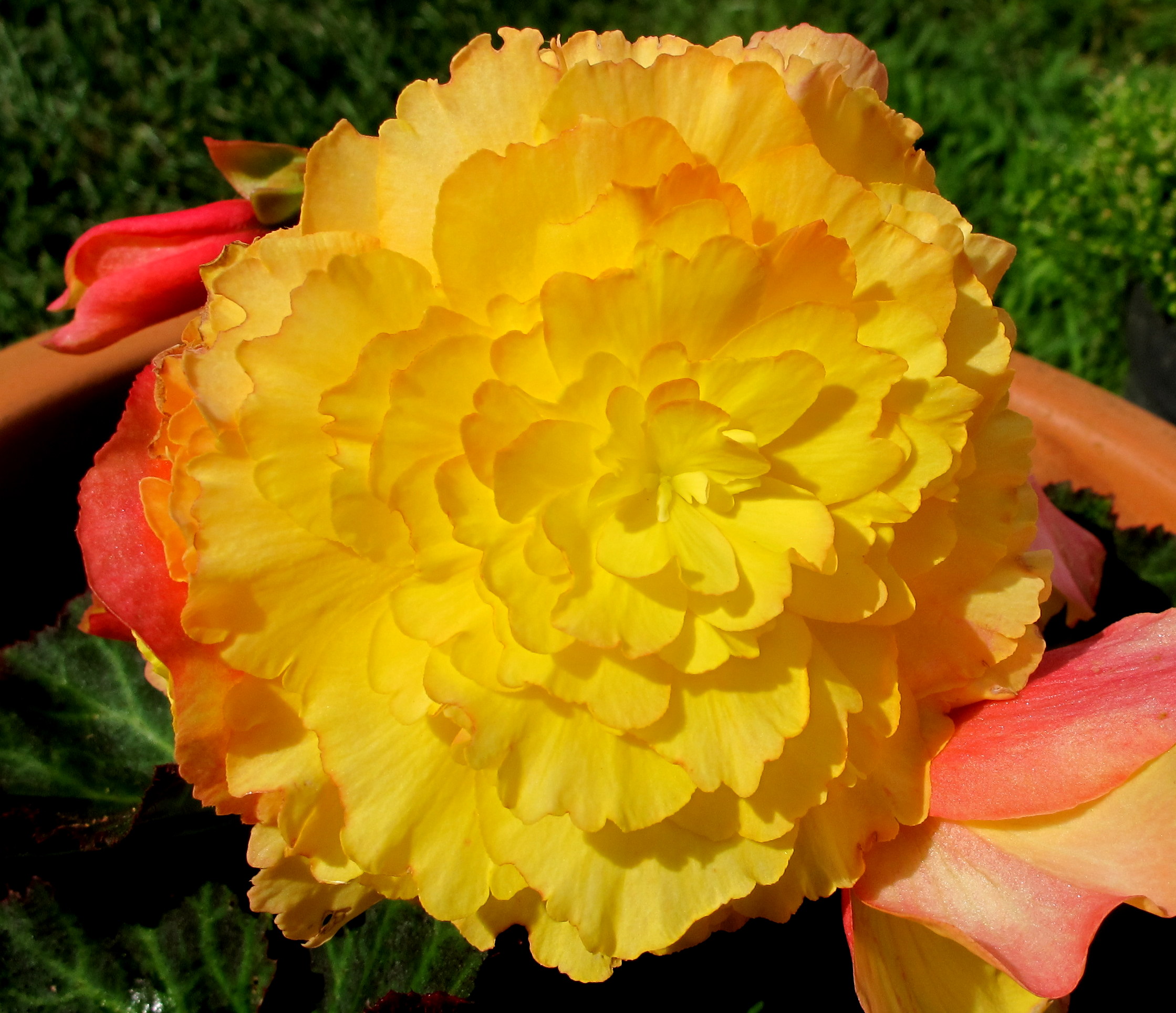
Irrelevant and out-of-season photo: a begonia

In California, a robocop was mistaken for a robocop. It was rolling through a park, demonstrating that it could do everything the police force had said it would do: patrol large open spaces and use its microphone to deter crime. So when a fight broke out, a witness ran up to it and pushed the emergency alert button. 

What did it do? It said, “Step out of the way.”

Eventually she stepped out of the way and it rolled off, stopping now and then to tell people to keep the park clean.

Another witness just called the police on an old-fashioned phone.

The robot turned out not to be connected to any actual police. It called the company that made it. Which may or may not have called the police. I don’t really know.

Its video camera also wasn’t connected to the police department. Its ability to read license plates and track cell phones? Ditto. It will, eventually and presumably, get connected, but in the meantime it runs around playing cops and park attendants and costs $60,000 to $70,000 a year. 

It has not yet been mistaken for the Loch Ness monster.

*

A cash machine in London mistook a fake £20 bill (or note if you’re British) for a real one. Which would be understandable enough except that the bill said, “Twenty poonds” on the back. Not to mention, “This is play money.”

The machine apologized for any problems it might have caused and explained that it can’t actually read.

You can by counterfeit twenties on the internet. They go for around £8 each, although if you’re okay with money that announces that it’s not real you can get ten for around £15.

No, I’m not recommending it. It just seemed like something you’d want to know.

*

The person in charge of the US nuclear arsenal mistook an internet hoax for something real. Rick Perry, the secretary of Energy, reposted a warning having to do with Instagram being able to use people’s photos in accordance with a treaty that the US isn’t part of. 

The good news is that he didn’t run up to a robocop, push a button, and expect it to protect the nuclear arsenal. 

*

“Jerusalem” was voted the U.K.’s favorite hymn. Or at least the favorite of the people who listened to the BBC’s Songs of Praise and took the trouble to vote. 

What’s that got to do with mistaken identity? The song’s almost universally mistaken for a hymn. The words are by William Blake, who was intensely religious but nothing like an orthodox Christian. Among other things, he didn’t attend church and didn’t believe he needed a god to redeem him. The Creator of this World is a very Cruel Being,” he wrote in “A Vision of the Last Judgment.” 

But let’s be fair and separate the writer from the words he wrote. Did he, in spite of himself, write a hymn? Here it is:

Jerusalem
   And did those feet in ancient time
   Walk upon England’s mountains green?
   And was the holy Lamb of God
   On England’s pleasant pastures seen?
   And did the Countenance Divine,
   Shine forth upon our clouded hills?
   And was Jerusalem builded here,
   Among these dark Satanic Mills?

   Bring me my Bow of burning gold:
   Bring me my arrows of desire:
   Bring me my Spear: O clouds unfold!
   Bring me my Chariot of fire!
   I will not cease from Mental Fight,
   Nor shall my sword sleep in my hand:
   Till we have built Jerusalem,
   In England’s green & pleasant Land.

It’s stunning, but is it a hymn? He’s asking if the countenance divine shone forth upon our clouded hills, not saying it did. He only gets into statements when he calls for building a Jerusalem, and that’s in the England of this world, not in the next. I’ll admit that using Jerusalem as a metaphor means drawing from Christian imagery, but that’s as far as I’ll go. Blake had no use for organized religion, and especially for state-sponsored religion. So inevitably his poem has been adopted as the hymn of a state-sponsored religion.

The music that goes with it was written in 1916. (Blake died in 1827.) It’s also beautiful. This version comes from the movie The Loneliness of the Long Distance Runner.

And I still say it’s no hymn. 

*

Five out of ten flies will mistake a cow for not-a-cow if you paint it with zebra stripes–which of course you will sooner or later. They register their belief that this is not a cow by not landing on it and not biting it. The cows painted as zebras still identify as cows. They register this belief by mooing and eating grass and allowing themselves to be milked.

*

A national police database in Britain mistook thousands of cybercrime and fraud reports for a security risk and quarantined them, creating a backlog of 9,000 cases and leaving some of them there for a year. The problem is that the reports include words and symbols that the database’s program recognized as risk markers, so yeah, it quarantined them.

*

Rory Stewart–Member of Parliament; former candidate for leader of the Conservative Party; former member of the Conservative Party; and currently independent candidate for the mayor of London–mistook three Irish musicians for minor gangsters.

Stewart’s plan was to walk through every London borough while he was running for Conservative Party leader, and he asked the men if he could film them. They agreed, then found out he was a politician and said they “didn’t fuck with politics.” They left. 

So far, so good, and if he’d left it at that he’d have been fine, but at a later event he talked about meeting three “sort of minor gangsters” who told him he was an idiot. 

The people he was talking to turn out to be a band called Hare Squad, from Dublin. They’re black, which is presumably why Stewart decided they were gangsters. 

“We’re all about peace and love,” one of them, Lilo Blues, said. 

In addition to being denounced as a racist, Stewart was also asked, “What the hell is a minor gangster?”

*

A four-year-old was mistaken for a neighborhood menace when the Birmingham Council (that’s the city government, and we’re talking about Birmingham in Britain, not in the U.S.) sent her a letter saying she’d been accused to antisocial acts –shouting, banging, and visitors. Presumably that’s disruptive visitors. Visitors aren’t inherently a problem. 

Her mother says the girl has eczema and sometimes cries at night. 

The kid was invited to contact the council if she had any questions. I don’t know if she did, but when I was four my questions would’ve been something along the lines of “what’s for dessert”–nothing the council could’ve answered. 

What’s worse, I couldn’t write yet. Or read. I’m going to go out on a limb and guess that she can’t either.

Well, no wonder she’s getting in trouble. What’s wrong with the schools today?

*

An early Renaissance masterpiece was mistaken for some old thing hanging in a French kitchen. An auctioneer spotted it when he came to value the furniture after the woman decided to move. 

It was auctioned off for 24 million euros.

*

A Viking warrior was mistaken for some other Viking warrior’s nice little wifely homemaker in Norway. For years. Apologies for the heavy use of stereotypes there, but I’m not the only person dragging them into the story.

The good news is that it didn’t bother the warrior, because she’d been dead for years. The thousand-year-old body was correctly identified as a woman, but even though she was buried with an armory big enough to take down several English or Irish villages, when she was first found they disregarded all that because she was a woman and–hey, we know this: Women aren’t warriors and never were. She was just buried with that stuff because, um, they were cleaning house and the weaponry was in the way.

Now a new team of scientists have reinterpreted the skeleton, looking at the partially healed battle wound to her skull, probably made with a sword. A reconstruction of her face–never a 100% reliable thing–shows one tough-looking woman.

Some of the people working on this were from the University of Dundee, so the story does actually have a British connection.

*

This final item has nothing to do with mistaken identity but I had to put it in: Scientists in the US have discovered that driving tiny electric cars lowers stress levels in rats, in theory because of the pleasure of learning a new skill. They used a mix of lab-raised rats and rats from the real world. The real-world rats turned out to be significantly better drivers than the lab rats. 

The point of the experiment was to explore the possibility of drugless treatments for mental illness, but it might be more useful to know that if you’re hitching a ride with a rat you’ll want to look for one raised in the real world. The safe life isn’t necessarily the best preparation. And I tell you that as a former cab driver. 

*

My thanks for Bill, who in response to last week’s post tells me that there is a culture out there that puts the year first when they write the date: the Japanese. Thank you, Bill. Also domo arigato gozai mas.

What the world wants to know about Britain, part 19-ish

The butterfly net I use to trap strange search engine questions has been filling up quickly, so even though I did a what-the-world-wants-to-know post just a few weeks ago, I can’t let riches like these go to waste. The questions are in italics and appear in their original form, however odd it may be.

The search for important information about Britain

england is not another name for great britain!

A-plus for the answer (or in British, A*, pronounced A-star). But what’s your question? And more to the point, why are you bothering Lord Google about something you already know?

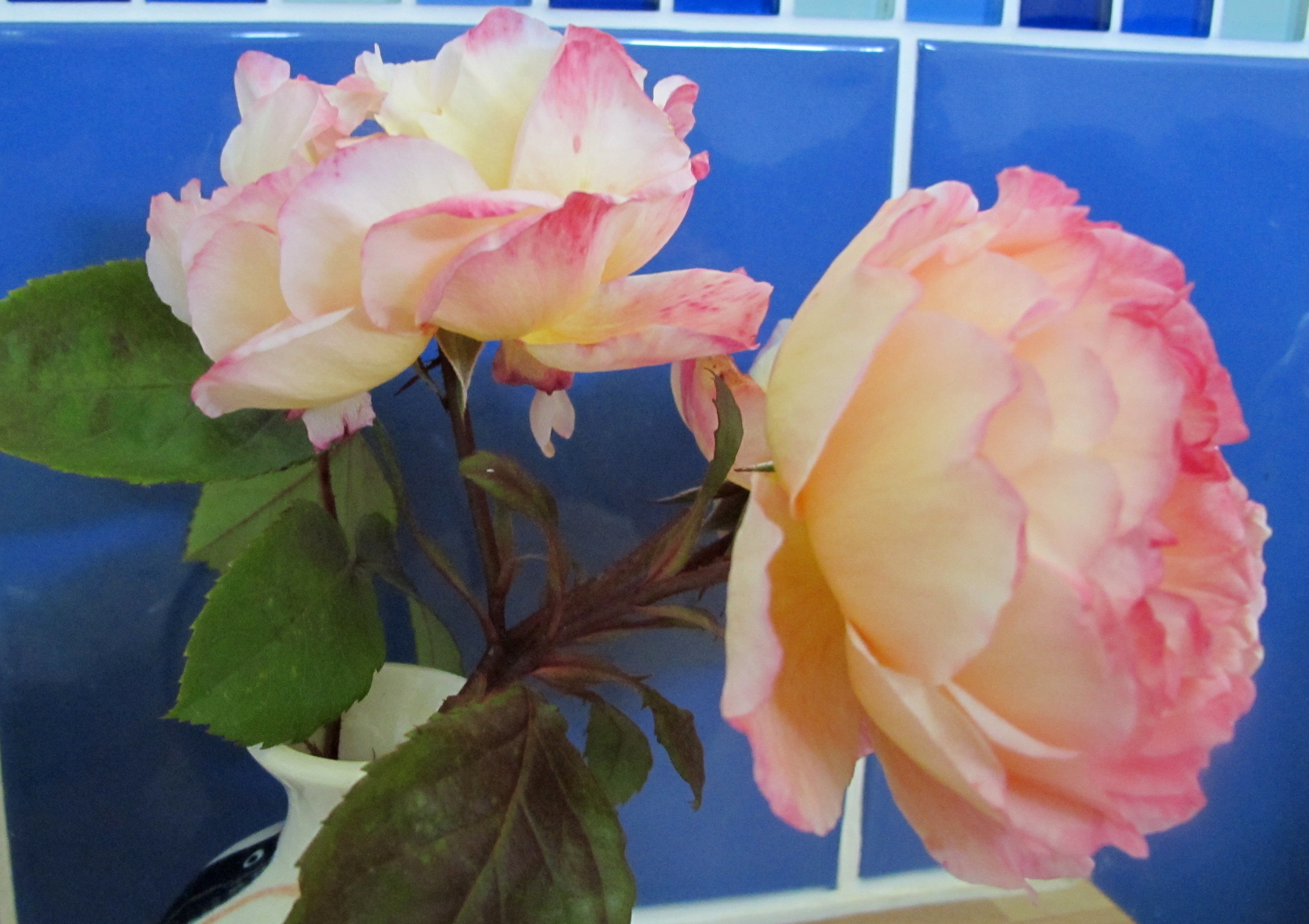
Irrelevant photo: roses.

do brits just talk about weather

Before we can answer this, we have to figure out what it means. This should depend on which word just is hanging off of, but English-language writers dump just into sentences according to what sounds good, then figure that what they’ve written means what they think it means. But any grammar obsessive could tell them that the location determines the meaning. I’m not going to rant about that. The language is used the way it’s used, regardless of what the grammar books say, and I’m on both sides of these issues anyway. Passionately.

Still, it leaves me not knowing what the writer meant. So what are the possible variations here? 

Do Brits just talk about the weather as opposed to doing anything about it? Well, pretty much, yeah. You know how it is. We’re all like that when you come down to it. Talk, talk, talk. And the damned rain keeps coming down.

Or, in defiance of the order the words come in, do they talk just about the weather as opposed to, say, talking about feel-good topics like Brexit and global warming? Well, no. The British talk about all sorts of things. Shoes and ships and sealing wax. Brexit and potatoes and school buses.

Okay, not so much about sealing wax these days. And that’s a Lewis Carroll poem that I’m mangling. His version rhymes.

Or–I’m stretching a point here, but what the hell–do just Brits, as opposed to other people, talk about the weather,? No, it’s  a pretty common topic, given that most of the world’s countries (and therefore people) have something that passes for weather.

I’d go on, but the question only gave me three words to dangle just off of.

I hope I’ve been able to help.

why are we called great britain

Am I the only person who hears something plaintive in this? It has a kind of Mom-why-are-they-callling-me-names? quality.

It’s okay, sweetheat. They don’t mean anything by it. It’s because you’re big. Why don’t we sit down and have  a nice cookie?

Or maybe we should call it a biscuit.

ceremonail position in british government black rod

I’m tired of Black Rod, probably because I’ve heard entirely too much about parliament lately, what with Brexit and all. But yes, Black Rod has a position in the British government. Whether you consider it ceremonial or essential is probably a matter of opinion. Me? I’d call it ceremonial to the point of silliness, but I would, wouldn’t i? 

P.S. You misspelled ceremonial. I nevr misspell anything.

ploughman’s lunch history

It starts as a full plate–cheese, a roll, a pickled onion, chutney, butter if you’re lucky. Three grapes and a twisted slice of orange you’ve gone someplace fancy. Then it gets eaten. Or most of it does and the odd bits get left and someone takes them back to the kitchen and scrapes them in the trash and that’s it. End of history. 

It’s wasteful. I ordered a ploughman’s once or twice because it sounded more appealing than a cheese sandwich, but it’s nothing but a do-it-yourself cheese sandwich. 

characteristics of an aristocrat person how do they act

All aristocrats have exactly the same characteristics, to the point where every morning they call each other to work out what they’re going to wear. 

Okay, I shouldn’t get put off when people ask about this, because I wrote a snarky post about some titled idiot behaving badly and I gave it a clickbait heading about behaving like a British aristocrat. So it’s my own doing if I get search engine questions about it.

But if we’ve established that, let’s go on: Behaving like an aristocrat isn’t about having perfect manners, it’s about (a) considering that your manners, however horrid, are perfect, and (b)looking down on people who don’t behave the way you do–or who try to but who have to learn the secret handshakes from Lord Google.

Lord Google  will never tell us all the secret handshakes, just enough to leave us exposed as wannabes. But even if we find the missing bits and behave exactly like the aristocrats, we were still foolish enough to choose the wrong ancestors so we can’t be part of the club.

Silly  us.

It’s depressing to know (or think I know) that someone out there is trying to play this game. Don’t do it, folks. Aristocracy is a closed and toxic club. They don’t want us in and if we have a brain in our heads, we don’t want in. 

when will we know more about brexit sept 2019

We all wish we had the answer to that. And September’s already well in the past.

does a map show you how narrow a road is

Yes, but measuring the width of the map’s lines to the nearest micro-whatsit won’t help. You have to look at the letters associated with the roads. They won’t exactly tell you the width, but they’ll let you figure out how slow your drive’s likely to be, which is a related question. 

M roads–they have an M before their number– are motorways, the best roads the system offers. A roads–A followed by a number–come next. Some of them are hard to tell from motorways. They’re divided highways with a 70 mph speed limit and make a nice straight line from wherever you started to wherever you’re going. And other A roads are nothing like that. They’re two lanes, and they run through the middle of every town along the route. But they’re better than what comes next: B roads, which may be two lanes but may have one-lane stretches.

Then there are roads that no one bothers to give numbers to. Or they give them numbers but don’t bother to tell anyone what they are. In the summer, in touristed areas, they’re lined with nervous visitors who’ve plastered their cars to the hedges, letting the oncoming cars figure out if there’s room to pass.

There almost always is.

how do british cars pass on such narrow roads?

On the narrowest ones, everyone gets out and disassembles the lighter-colored car, moves it past the darker one, and puts it back together.

Why the lighter one? It’s a simple, non-judgmental way to choose, and it saves time-consuming arguments. 

And if they’re both the same color? Well, that’s where your arguments start. We need a better system. Everyone agrees, but we have to settle the Brexit mess first.

what was uk called before great britain

England, Scotland, Wales, and Cornwall. Unless you want to go back to Latin, the Celtic languages, and Anglo-Saxon. And Pictish. For part of that time, though, we’re dealing with micro-kingdoms and it gets messy.

why do british people eat brussle sprouts at christmas?

Because it gives them the strength to face Boxing Day, that extra holiday that comes on December 26.


The search for important information about everything else

what is the actual date of 2019/09/04

I can answer that: It was 2019/09/04. 

But let’s talk about dating systems, since someone’s brought them up.. The American system starts with the month, follows with the day, and ends with the year, making 04/09/2019  April 9, 2019. The British and European system flips the first two elements, so the same numbers give you 4 September 2019. 

Isn’t this fun?

The British and European system doesn’t use a comma before the year. Or after, in case the sentence straggles on. The American one does.

Moving back and forth between the two systems means that you can’t be sure what date anyone–including your own bewildered self–is talking about unless they name the month or bring in a day that’s larger than twelve.

I don’t know any dating systems that open with the year, so I have no way to tell what, if anything, the date in the question means. I asked Lord Google for help but he told me I wasn’t asking the right question, so I ended up as fodder for someone else’s post about strange search engine questions.

Lord G., as is his way, wouldn’t tell me what the right question was. Dealing with Lord Google is like being trapped in one of those fairy tales where bad things happen because bad things happen and the world doesn’t reward the just and kind.

So what’s the actual date? My best guess is that it doesn’t exist.

is a vigilante sticking up for someone

It never rains weirdness but it pours it down by the bucketful. Is a vigilante sticking up for someone? Not as often in real life as in the movies. Has someone seen too many movies? Probably. Is a movie watcher having trouble finding the line between fiction and reality? Most definitely. 

For what it’s worth, friends, if you’re facing injustice and overwhelming odds, don’t look for a vigilante. And for pete’s sake, don’t become a vigilante. Vigilantes can propel decent shoot-em-up plots–or if not decent, at least popular–but in real life they end up as lone nuts with guns who leave grieving families in their wake. Try organizing. It’s slower and it’s less dramatic, but it spills less blood and it just might do some good in the long run. 

I have no idea why that question came to me. 

how to respectfully decline an award nomination

Be nice. Explain your reasons. Say thanks. Shut up. 

whats cultural about brownies

They like literature and classical music. They’re not much on visual art.

medieval catholic teaching sex

All the medieval Catholics are dead. So are the medieval everybody elses. That means none of them are teaching sex anymore. But they weren’t much good at it, so don’t worry about having missed out.


What the world wants to know about Britain, part 18-ish

Parliament

the ceremonial mace

Ah, yes, the ceremonial mace, the symbol of “royal authority without which neither House [that’s the Commons and the Lords] can meet or pass laws.” (That’s a quote from parliament’s official website.)

Why can’t they meet or pass laws without it? Because that’s how it’s done. Grab the thing and take it home with you and you bring business to a screeching halt. If Boris Johnson really wanted to stop parliament from meeting, he could’ve tried it. It worked for Cromwell. 

a dozen pubs in parliment

At least. Also two A’s. 

mps wearing ties

This at least gets us away from questions about MPs wearing stockings, which is a nice change. Yes, MPs who are of the male persuasion are expected to wear ties. It’s boring, but it’s true.

Irrelevant photo: One rose.

what is the robe that house speaker wears

It’s–um, it’s a robe. Not like a bathrobe type of robe but like–well, it’s called a gown, so a gown type of robe. The current speaker broke with tradition by dressing in an ordinary suit (and yes, a tie, and I’m sure shoes and undies and all that predictable stuff) with the gown over it. That’s instead of wearing what’s called court dress underneath, which is more formal and infinitely more absurd and which speakers before him wore. On high ceremonial occasions, he wears a gown with gold braid.

History, biology, geography

why was great britain created

Well, the mommy britain looked at the daddy britain and thought he was–not exactly handsome, you know, but interesting. And the daddy britain looked at the mommy britain and thought she was someone worth getting to know. Not beautiful exactly, but green and pleasant, and there was just something about her that he couldn’t get out of his mind. And that’s how great britain was created. At first it was called little britain because it followed the traditional pattern of being born small and slowly getting bigger, but as it got older it took after the mommy britain and grew up to be a green and pleasant land. And larger than both its parents. That could be because by then growth hormones were being fed to the cattle, but no one knows for sure.  

is there such a country called britain

Not exactly. The country’s called the United Kingdom of Great Britain and Northern Ireland, known to its friends as the U.K. The Great Britain part of that is that big island you’ll find floating around between Ireland and Europe. It includes Wales, Scotland, and England. And Cornwall if you care to count it separately. Those are nations but they’re not (at the moment–check with me later to be sure we stay up to date) countries. That nation thing is about separate cultures. The country thing about government.

As a political entity, Britain doesn’t exist, but that doesn’t keep politicians from talking as if they were governing it. 

Brexit

brexit and metric

I’m sure someone out there is counting on a triumphant, patriotic return to imperial measures if we leave the E.U., but I doubt it’ll happen. First, changing over is expensive. Second, British businesses will still hope to export (once they wade through all the paperwork) to metric-speaking countries, and it’s easier to export when you share a set of measurements. 

Assuming, of course, that rational minds prevail. 

Stop laughing. It’s been known to happen.

metric except for

…the things that aren’t. Miles, for example. Beer. A random sampling of other stuff. Instead of repeating what I’ve said better elsewhere, allow me to refer you to myself

eveeything you need to know about brexit

Oops. I think I did make that claim, although I’m pretty sure I had another R in it somewhere. The thing is, we can’t take me seriously. No one knows everything we need to know about Brexit. Especially the people who said it would be simple.

So what’s Britain really like?

great in great britain

Yes, I am doing great here, and thanks for asking. Hope you’re doing great as well, wherever you may be.

why back roads in englane are so narrow

Because they’re back roads–the ones not a lot of people drive on. The ones that don’t need to be as wide as the main roads. 

percentage uk people fishn chips or tikka masala

This is, I’d guess, a question about what percent of the British public prefers which, and it drives me to comment not on the topic itself but on the nature of search questions–or of questions in general. Does liking one mean you don’t like the other? Can a country include people who love both or neither? If the answer to the first question is no and to the second is yes, then there’s no way to do a head count.

If, of course, anyone cared enough to bother.

But let’s assume they do care and rejigger the question: As a way of checking in on the great British eating machine, once we find a way not to make this an either/or question, we can’t give people only those two choices. We need to allow for the impact of sausage rolls (and lately, vegan sausage rolls) on the British culture. And pasties. Do we include sweet stuff? Breakfast food? Lunch? Supper/dinner/tea/confusingly named evening meal?

What are we trying to measure here, and what are we going to learn if we get an answer to our questions?

do women lawyers in wales wear wigs

They do. Which means the men lawyers do as well. Some political powers have been devolved to Wales, but their legal system’s still English. Why? Because history’s a messy beast. So if English lawyers of whatever gender wear wigs in court (not in the office; not in the bath; and not in bed–I assume–or on the train), so do the lawyers in Wales. 

In spite of devolution, I’m 99% sure that Scotland and Northern Ireland haven’t gotten rid of them. Maybe if Scotland leaves the U.K., it’ll reconsider. 

I had other wig-related questions to choose from, but I’m tired of wigs. Let’s talk about something else.

throwing of currant buns

That happens in Abingdon-on-Thames on royal-related occasions. Allow me (apologies) to refer you to myself again for what I used to know on the subject but forgot as soon as I published it. 

two finger up in britain

The plural of finger is fingers. If you’re using two of them, you need to topple from the singular into the plural. But I suspect that wasn’t the question.

What was the question?

are english public schools a good thing for education in this country

No.

That was easy.

If things that came from or made in britain were called “british,” something that came from or made in flanders were called ________________________

Flandish.

You’re welcome.

question is berwick upon tweed at war with russia

Answer: No. Sorry. But you could form an organization and push Berwick to declare war. Never underestimate the power that a small, committed group of people can have to make the world a better place. If the search engine questions that wander in here are any measure, a fair few of you are concerned about the issue.

who is berwick on tweed at war with

No one, but that could change any minute now.

what color are mailboxes in england

The same color as in Wales, Scotland, and Northern Ireland. And Cornwall, which is to say in the United Kingdom of Great Britain and Northern Ireland: red.

Random

amazon

Why did this come to me? Because I am bigger than Amazon. And better.