‘Tis the season to sell books, part 2

I don’t normally use this blog to promote my novels, but this one and the one I posted about last week are close to my heart. I’d love them to move further into the world.


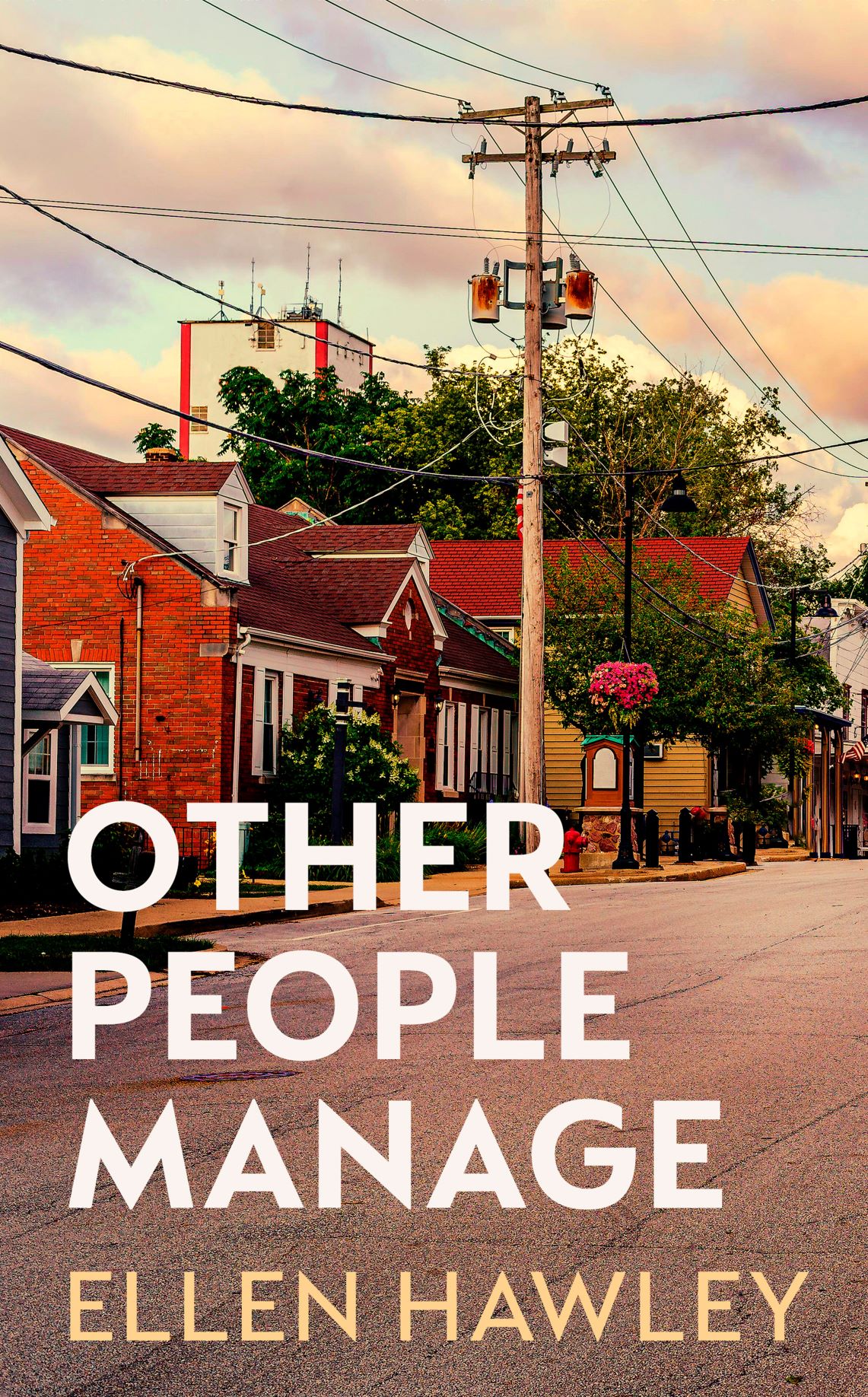
It’s the 1970s and two women begin a relationship that both demands more and gives more than either of them could have imagined. Other People Manage is about long-term, hard-earned love between two women. This isn’t romance, it’s the kind of love you have to work for.

*

“A quietly devastating novel about our failings and how we cope” –Patrick Gale

“A persuasive and deftly told story about a long-lasting love.” —Times Literary Supplement

“A tender and beautiful addition to the literary canon, and a mirror for LGBT readers.” –Joelle Taylor, the Irish Times

*

You can buy it directly from the publisher or from whoever handles those things well in your part of the world. Or borrow it from the library. Libraries are wonderful.

The early English novel, part 2: Clarissa, which was too long even in the abridged form

Last week, class, we discussed how the English novel emerged from the murky soil of class, gender, and (gasp) sexuality, although you shouldn’t spend too much time on that image. I’m reasonably sure it’ll come apart. (If you weren’t taking notes, you can find the post here.) Among other things, I said the early novels depended on the intensity created by the collision of (a) society’s limits on sexuality and (b) the possibility of transgressing those limits. No limits, no transgression. No transgression, no thrill.

So let’s look at one of the novels of the period. You thought you’d get out of here without having to do that, didn’t you? No such luck. We’re going to drag ourselves through Samuel Richardson’s Clarissa.

Why Clarissa? Because I had to read it in high school, and even though it was, mercifully, an abridged version it was still endless and until now I haven’t been able to redeem the time I lost to that book.

Your bad luck.

Irrelevant photo: a rhododendron

Clarissa tells the story of a virtuous young thing (VYT) sequestered by a louche older man (LOM) who threatens her virtue–repetitively and all because she strayed off the path and couldn’t tell the difference between Grandma and a wolf, the silly girl. It wasn’t entirely her fault—someone had set out diversion signs—but still, she took that first fatal step and it doesn’t matter whose fault it is: if it happened to her, and that moved her beyond redemption.

Admittedly, her parents (not her grandma, who as far as I can remember doesn’t appear in the story) have been unwise, insisting that she marry someone repellent. But they had to be or they’d never set the book in motion.

So: the sequestered VYT writes letters to her one and only friend (OOF) because letters are the social media of the day. Occasionally she tells LOM, “Wait, my quill just beeped,” which is enough to keep his hands off her for another hundred or so pages. The letters are the novel. VYT writes to OOF. OOF writes to VYT. LOM writes to his friend, clarifying his wickedness and VYT’s saintly stupidity.

It’s more than a little stilted, but hey, it was an early novel. Writers were still figuring out the form. Hell, I came along hundreds of years later and am writing what I hope will be my sixth novel and I’m still figuring out the form.

You want to know how the story ends, right? Clarissa loses her technical virtue (in other words, her virginity), which leads her to become even more genuinely virtuous, but she dies because how could a woman robbed of her technical virtue live to the last page? Decent society has no place for her, and decent women can’t survive outside of decent society. Decent authors kill them off. Decently.

I had to look up the ending. I not only didn’t remember it, I don’t remember much of what led up to it. What I did remember is that it all happened over and over, and in letters.

In hindsight, the idea that a woman’s virtue consisted of something more than an unnecessary bit of flesh was forward-looking. As was Richardson’s attitude toward money marriages. When I read it in high school, though, I was in possession of all the historical perspective of most teenagers–in other words, I didn’t get it–and his attitude toward women, sex, and morality offended (and bored) the hell out of me, even though this was back in the dark ages of the early 1960s, when we were supposed to accept absurd limits on women’s sexuality, even if we were past arranged marriages. I was one of those forward-thinking young people who was bored and offended before my time.

The book was a great hit when it was published, among other things because it gave young girls an example of how to write a letter if they were ever sequestered by an LOM who threatened their virtue.

The point, however, is that the earliest English novels balanced on a social tightrope. Whatever respectability they had–and it was pretty tenuous (see last week’s post)–depended on promoting conventional morality, while their readability depended on the thrill of transgressing it. Daniel Defoe wrote rogues who rollicked along sinfully for pages and pages only to find remorse and respectability by the end of the tale, at which point they became too dull for the book to go on. And Henry Fielding’s Tom Jones caroused his way across many a page before finding a way back into society and family because a man’s virtue didn’t depend on a disposable bit of flesh or a spotless past.

I’m sure you can still find people who’ll swear the culture’s been going downhill ever since the novel came along, but (or maybe that should be because) it opened up a space where women could discover themselves, and crucially women did this not only as readers but–and this was shockingly new–as writers.

*

I’m looking for topic suggestions, especially for odd corners of English history or culture that might be interesting to explore. I can’t promise to take them–some topics just don’t work, however promising they look at first–but I’d love to hear from you.

The early English novel: morality and–oooh–transgression

It’s easy to think about the past as one long, undifferentiated stretch of sexual repression for women, during which rich men sexually harrassed the servants, kept mistresses, and picked up prostitutes, all while maintaining their status as upstanding members of the community, and single women who had the bad luck to become pregnant were tossed out into the snow to become prostitutes because what else was left for them and, after all, how else was the supply of prostitutes to be maintained?

That’s not completely off base, but it’s also not completely on base either. Nothing’s ever that simple.

 

Irrelevant photo, with an important update: I originally said I was reasonably sure this is a speedwell. I was wrong. It’s alkanet. A wildflower, though, growing in what it decided was the right place.

The Georgian Era

Let’s plunk ourselves down in the Georgian era (that’s, oh, say 1714 to 1830), because sexual attitudes were changing, especially among what one essay I read calls, without defining them, the upper classes. Think of those classes as the zone where the aristocracy met the monied upstarts. As attitudes shifted, upper-class men could be open about having mistresses, and upper-class married women could conduct affairs, although if one of them got pregnant decency demanded that she give up her child.

Decency’s a strange old bird and not prone to making logical demands.

Why the change? Several reasons: One, more of the population had moved to cities, where people couldn’t do as good a job of watching (and gossiping about) each other as they had in villages and small towns, so community sexual policing wasn’t as efficient as it had been. Two, the power of both extreme Protestantism and the Church of England were fading. People were sizing their morality to fit themselves rather than having it handed to them, all stitched and starched into predetermined dimensions. And three, printing–the technology that had made the Bible accessible to anyone who could read it–now made male-oriented pornography (or erotica if you’re happier thinking of it that way) available to anyone who could afford it (and, of course, read–this was before photos).

Increasing numbers of people could read.

That sound you hear is history’s cracked laughter.

Printing also made written advice about sex available, in the forms of both sex manuals and anti-masturbation tracts. You can date the culture’s obsessive fear of masturbation to this era.

Men were assumed to have sexual needs. Women were assumed to be, by nature, more virtuous. This edged out the earlier belief that women were naturally more lustful, which somehow coexisted with the belief that men just kind of naturally raped women if they wanted to and could.

Don’t try to make sense of it. Your brain will catch on fire.

So sexuality (at least for the upper class) was changing, but only within limits. Step outside the limits and society wouldn’t be forgiving–at least not if you’d shown the poor judgement to be of the female persuasion. But society had at least drawn a larger circle for people to stay within, and stepping across that new line was not only imaginable but thrilling. So writing about it could be lucrative.


Enter the novel

We could argue about who wrote the first English novel, but since you’re not actually present and I don’t much care, we won’t. Let the experts place their bets on Chaucer or Defoe or–oh, never mind, other people. We’ll just date it to the early eighteenth century (locking Chaucer out; sorry Geoff) and slam the door in case the experts get noisy. We–or to be more accurate, I–are or am more interested in using the novel as a way to drop into eighteenth century English society.

If you want to argue that we should be talking about Britain instead of England, please do. I have trouble finding the borders. They danced back and forth a bit over the centuries, and no matter where they were people flowed back and forth, books flowed back and forth, even kings and politics flowed back and forth, so how would I know where they were at just the badly defined moment when the novel came into existence?

But while you’re putting your arguments together, I’m going to take advantage of the silence and talk about the novel’s position in eighteenth-century England: Decent people looked down their upper-class noses at it.

What was wrong with it? Well, it appealed to–and was often written by–the middle class. And if that wasn’t bad enough, it was read for the most part by (oh, the shame of it) women. On top of which, it was commercial, and that’s another way of saying it was popular, which even today is understood to mean that it couldn’t possibly be any good.

Who understands popular that way? Why, the people who matter, of course, and I’m always in favor of annoying them.

So the novel was a way for silly people to waste their time, and that attitude still hangs in our cultural corners like a cobweb. As late as the 1980s, when a friend of mine taught at a girls’ public school (if you’re not British, understand that public means private; don’t try to make sense of it), the school librarian informed her that one didn’t read novels in the morning. They were (just barely, I’m guessing) acceptable in the afternoon, but the morning was for nonfiction–in other words, for books that improved one’s mind and character.

Ah, but the novel committed worse sins than frivolity and popularity and keeping bad company. Any number of women wrote novels–some even under their own names–and what’s worse they made a success of it.

Well, no wonder people looked down on the form. And by people, of course, I mean people who thought they were better than women and the middle class. In other words, we’re talking about a small but influential number of folks.


The middle class

Here we’d better stop and define the middle class, because it’s easy to find people who’ll tell you how important it’s emergence was, politically, culturally, or economically, but it’s hard to find a solid definition of what they’re talking about. Does being middle class depend on your income, your lifestyle (don’t get me started on what, if anything, lifestyle means), your aspirations, your education, your relationship to the means of production? Or since we’re talking about Britain (or possibly England), your accent or your ancestors?

The answer depends on who you ask, and anything that hard to define should be approached with caution and a supply of dog treats in case it bites. As (at least in part) an American, I’m acutely aware of this, since almost the entire U.S. population considers itself middle class. Dog treats may not be enough.

In Britain of the eighteenth century, the definition was either complicated or clarified, or possibly both, by the existence of a hereditary aristocracy and an impoverished urban and rural working class. Pretty much anyone you couldn’t slot into either of those two groups qualified as middle class.

The problem there is that such a varied collection of people got dumped into the middle class bucket that they didn’t have a whole lot in common. The bucket accumulated everyone from threadbare clerks to mega-industrialists, along with lawyers (great and small) and managers and engineers and the most marginal shopkeepers. But hazy as the definition is, large as the bucket had to be to hold them all, it’s the definition we have. Let’s work with it.

Whatever the middle class was, it grew rapidly in the seventeenth century, both in numbers and in (unevenly distributed) power. A number of people who weren’t part of the aristocracy were rude enough to get rich off the industrial revolution, and the aristocracy resented that. In the logic of the times, it made sense that the aristocracy looked down on them all. The only respectable way to make money was from land—preferably land that had been in your family since the Norman invasion—and the newly rich were making their money from (do forgive me if I use coarse language here) trade.

And then, to further complicate the picture, a group of people who didn’t get rich got solvent (in either absolute or relative terms), and they had the nerve to proliferate.

But despise the middle class as they would, the aristocracy was stuck with them–especially with the brash industrialists who had too much money to dismiss entirely. So much money, in fact, that the aristocracy shamefacedly married some of their kids to industrialists’ kids.

So parts of the middle class lived very comfortably, thanks, while other parts clung as hard as they could to the lower edges of respectability. And many of them, on all parts of the spectrum, wanted a bit of culture, some because it brightened their lives and their brains and others because culture was the kind of thing that people with money were supposed to buy and at least pretend to appreciate.

Put that together with the growing number of people who could read and had a bit of leisure and what happened? The publishing industry invented itself. Booksellers popped up–mostly men but a few women–and they often doubled as publishers.

But this growing middle class audience wasn’t impressed with the books the aristocracy liked. They wanted books that spoke to their experience of the world, and when the novel came along, that’s what it spoke to, so the novel became an important part of the book trade. Some of those novels were what we think of today as the classics, but they were joined by any number of now-forgotten (probably forgettable and often anonymous) novels that writers cranked out to pick up on the trend of the moment.

If you want a modern parallel, think about science fiction or mysteries. They’re popular, so a lot of pretty awful ones get published on the theory that someone’ll buy them–and someone often does. If you want to look down on either genre, you’ll find lots of ways to prove they’re schlock. Some, though, are competent entertainment and others are not only well written but look deeply into our convoluted world. Both forms have opened up ways to consider the world that earlier genres didn’t make possible.

The same thing happened when writers who weren’t straight, white, middle-to-upper class, Christian, and male broke into print. They spoke to new groups of readers, and they brought new life, energy, understanding, and excitement to publishing–along with new readers.

And a predictable number of people despised them for it and blew trumpets announcing the end of literature, or possibly Western civilization and culture in general.

That’s what it was like when the novel brought middle-class voices into the public conversation. A whole new world became visible. The books may look like the same-old same-old now, but in their time they were a quiet revolution.

By the mid-eighteenth century, circulating libraries (as opposed to the private libraries belonging to either institutions or the wealthy) had come along, and by the end of the century you could find them even in small towns. Books were expensive, but you could pay a library subscription and borrow one after another after another. And again, novels made up a healthy portion of the libraries’ stock.

The public library hadn’t been dreamed of yet. If a poor person could read and was hungry for books, they’d be well advised to steal them. And to be careful about how they did it, because the punishments for even small thefts were horrifying.


What’s all this got to do with morality?

Dragging along in the novel’s wake, with their heads dipping below the waves as they went, came the moralists, sputtering disapproval every time they surfaced. The novel’s reader, they reminded anyone who’d listen, was typically a woman. A young woman. An impressionable young woman (sorry—this level of hyperventilated disapproval demands italics; be grateful I haven’t broken into the exclamation points), who could easily be led astray or overstimulated.

No, I’m not sure what they meant by overstimulated either. I suspect it had something to do with sex, which impressionable young women weren’t supposed to know about or be interested in, although they were prone to falling in love inconveniently, but that, of course, was sentimental, not sexual because see the beginning of the sentence, Q.E.D. And if that seems like circular reasoning, it lost none of its power just because it made no sense. It kept a fair number people trapped in its eddy for many a circuit.

Did I mention that the above applied only to decent impressionable young women? If we’re talking about fallen women and women of the lower classes, a whole different set of truisms would have to be taken out of mothballs.

Middle-class women read novels in part because the more respectable they–that’s the women, not the novels–were, the less likely they were to be able to take any action in the world. They couldn’t work. They couldn’t run a business or own anything in their own names. They couldn’t vote. They had no legal claim even on their children. If their husbands had enough money, they couldn’t clean or cook or get muddy in the garden, because lesser mortals would do that for them. Their education had suited them better for decorative roles than for useful ones.

If they read, it was because they could. Sitting around looking decorative can get old, and a book can open a larger world. And it doesn’t leave dirt under your fingernails, so no one has to know what you’ve been up to.

I started out by saying that sexual conventions were changing, and they were, but they were contradictory and still powerful, especially for marriageable young women, whose sexuality had to be controlled. A good marriage depended on the bride being a virgin, or at least passing for one.

Conventions and morals, though, are never a perfect fit for the real world. Young women faced twin perils: men and themselves. Even the best-protected woman might be raped, and forget the trauma that caused, it would ruin her on the marriage market unless it could be covered up. As for herself, even the most carefully brought up young woman might fall in love with an inconvenient man.

This was the novel’s home turf: convention and transgression. The novel needed both. Without rigid conventions, it couldn’t have transgression. Without transgression, it couldn’t have thrills.


Tune in next week . . .

. . . for the next exciting installment, because this is already too long. I’ll post the second half of it, which at long last makes use of a dismal novel I had to read in high school.  What could be more enticing?

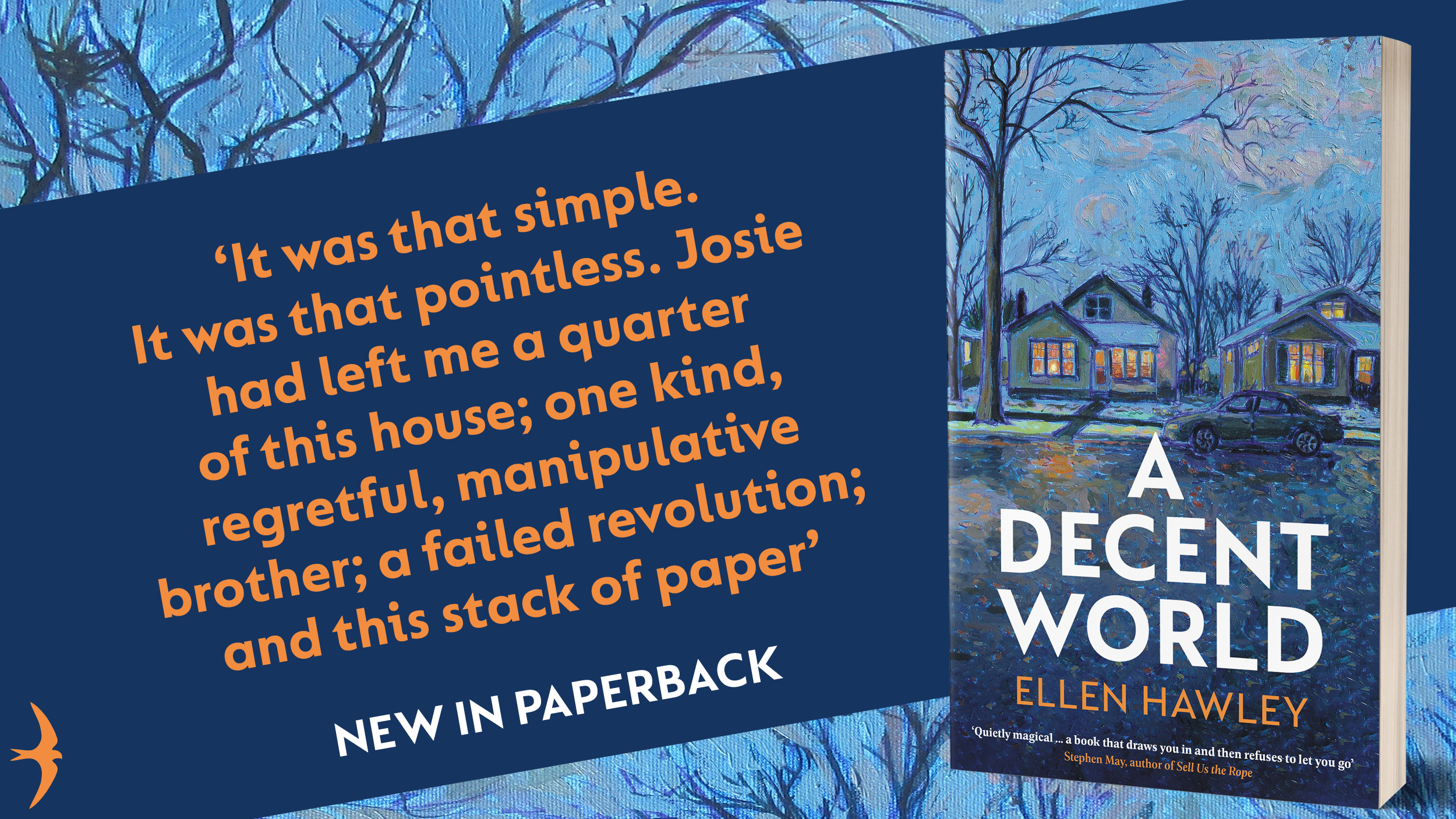
Now out in paperback

Available from Swift Press or The Bad Guys, who do at least make it internationally accessible. (The link is to Amazon US; if you’re elsewhere, Lord Google will be glad to point you in the right direction.) Also available from your local independent bookstore, which needs your support.

Speaking of which, if you can see your way to leaving a review on either Amazon or Goodreads, I’d really appreciate it. They do make a difference.


“Quietly magical. A book that draws you in and then refuses to let you go.”

Stephen May, author of Sell Us the Rope

Sample of Other People Manage now available online

One of the things I hate about buying books online is that I don’t get to browse, which makes buying an act of faith, and occasionally a downright stupid one. So I’m ecstatic to tell you that a sample of my novel Other People Manage is now available online.

Okay, ecstatic’s overstating it, but that’s what life’s like in the virtual world. Everybody who’s posting is ecstatic. And everybody who’s reading is supposed to wish they were. But I am happy about it, and I’m happy to invite you (if you haven’t already read it) to browse and decide whether the book’s something you want to invest actual money in.

Just follow the link.

That ends the commercial section of our presentation. Thank you for your patience.

Other People Manage

Other People Manage is a novel about hard-earned, everyday love. It’s about family, about loss, about the pain we all carry inside and the love that gets us through the day. 
 
It begins in 1970s Minneapolis, with Marge and Peg meeting at the Women’s Coffeehouse. They stay together for decades but live in the shadow of a tragedy that struck early in their relationship. Then Peg dies, leaving Marge to work out what she has left in her life and if she still belongs in the family she’s adopted as her own.
 
“It is rare that a novel of such quiet observation and gentle introspection moves me as profoundly as Other People Manage. . . . A tender and beautiful addition to the literary canon, and a mirror for LGBT readers.”
                                                                                       – Joelle Taylor, in The Irish Times
“A quietly devastating novel about our failings and how we cope.”
                                                                                 – Patrick Gale
“A story that is painful and difficult at the same time that it is deeply rewarding”
                                                                                 – David Huddle
If you already know about the book, my apologies. The thing is, when you publish a book it’s your duty to pester everyone within shouting distance. If I’ve already bothered you, wear earplugs.
You can find a review here.
If you live in Britain–or within reach of the British publishing world–it’s available in bookstores and online. If you’re in the US or anywhere else outside the reach of British publishing, you can order it from Waterstones (they ship internationally and also carry an e-edition). Or get it from the Evil Amazon.
*
Sorry not to offer a real post this week. I’ve been meaning to send this out anyway, and I need a short break. Back next week with some form of mayhem.

Other People Manage

Other People Manage is a novel about the pain we carry and the love that gets us through the day. The publisher, Swift Press, describes is as “a powerful, moving, engrossing story of two women whose lives together start with an unexpected and terrible tragedy, and whose love for each other and their family endures the joys, disappointments and triumphs of life. This is that rare thing in the publishing world: an extraordinary book that was not bought for a six-figure advance in a twelve-way auction, but that will have a huge impact.”

It also happens to be mine, and although it’s not the first one I’ve published I’m incredibly excited about it. It will be available in April 2022, and (not that I’m trying to sell you anything, you understand) you can pre-order it from Waterstone’s. That’s a British bookstore, but it’s open minded enough to ship to other countries.

The reason I’m telling you about it now is that pre-orders can give a book a real boost and I’m shamelessly trying to do that for this one. I think (she said modestly) that it’s good, and I want to get it out into the world where people can find it.

You can find an early review here. And if you’re a reviewer yourself, you can get a copy from NetGalley. If you have any trouble with the link, let me know–I can get you in through the back door.

*

Next Friday, we’ll resume our regularly scheduled programming with a post about Britain. Or possibly the pandemic. In the meantime, thanks for you patience.

Link to a new post on Medium

If you’re not at your wits end keeping up with what I’ve already sent out, you can find a new post I just put on Medium. It’s about what, if anything, it means to be Jewish. And an atheist. In Cornwall, where I’m not likely to find another Jew for miles in any direction, including up, down, and out to sea.

As an aside: The contrast between the British and American attitudes toward atheism surprised me when I first moved here. In the U.S., before I called myself an atheist I tended to stop and ask myself whether I had enough energy for the reaction it might cause. I’m happy to talk about religion and the lack of it, but I don’t have a lot of energy for tense, over-emotional discussions, and they can get that way. I don’t enjoy upsetting people. It’s also, honestly, not the topic I find most interesting in life. So I tended to say “I’m not religious,” which as far as I can figure out means the same thing but didn’t shock people in the same way. In Britain, though, it doesn’t seem to be a big deal, which I love.

If you haven’t discovered Medium, it’s an interesting–I’m not sure what to call it. How about phenomenon? It sounds more specific than thing, although it’s not really. It’s a place to post essays and stories, and it structures in a way that helps people to find them–or tries to. Punch in a topic that interests you and it should call up a range of posts. Many of the ones I’ve read are very good. Within it are several magazines, which if they accept your work can give it a bit of an extra boost. And if they don’t accept it? You just post it anyway.

Does my vocabulary look too British in this?

The differences between British and American English are an endless source of—well, pretty much anything you can name: confusion, fascination, amusement, bad temper, accusations (subtle and otherwise) of either ignorance or stuffiness, depending on which side of the Atlantic taught you your rash assumptions.

I’ve written about the differences between British and American English before, which means I’m supposed to slip in a link or ten to tempt newcomers deeper into the blog. That sounds ominous—step deeper into the dark and trackless blog, my dears. But I have to do it anyway. Who am I to defy the rules of the blogosphere? (Note: I already do with my irrelevant photos, and I’m not likely to stop, but once in a while I should behave like a serious blogger.) So here’s the link: This will connect you to a whole category of posts. You can pick through and see what interests you. Or not. I’ll never know.

Semi-relevant photo: What's more English than morris dancing? I like this shot because the guy on the right looks like he's about to brain the guy on the left. Photo by Ida Swearingen.

Semi-relevant photo: What’s more English than morris dancing? I like this shot because the big guy on the right looks like he’s about to haul off and brain the guy on the left. If you squint, the whole thing begins to look like a brawl. Photo by Ida Swearingen.

Where was I? I’m returning to the topic because Karen wrote to say my writing sounded British to her. I asked what specifically struck her that way and she said what “sounds to my American ears not-so-American” were the phrases “‘he wasn’t being immensely clever” and “trying to conduct a bit of business.” 

I’m probably the last person who’d know if those are not-so-American. When I talk, I still sound American enough to get asked if I’m enjoying my stay (well yes, although it seems like I’ve been here for years), but Britishisms have crept into my brain and my speech. I’d like to think I notice them and build walls around them—you know: the kind with turnstiles, so I have to sacrifice a coin before I can get at them—but I’m not sure the system’s working.

In the first phrase, I wonder if what struck Karen isn’t the word immensely, which is formal—a tone I fall into a lot when I’m kidding around, although I’m never sure if it works. On the other hand, clever may be more common in Britain than in the U.S.  Emphasis on may. I’m not sure. But I can call up the sound of an English accent saying “you clever girl” or “clever clogs” (one is a compliment; the other probably isn’t), but I can’t come up with anything like it in an American accent.

What about the second phrase, trying to conduct a bit of business? Bit shows up a lot in British English. Bits and bobs. Or Zadie Smith’s wonderful phrase about nudity in a movie, the dangly bits. Do we use bits much in American? Ask someone if they’re tired and “a bit” wouldn’t be a strange answer, although “a little” might be a bit more common.

Did the bit in that last phrase jump out and sound British?

Conduct again has a formal tone, and although I’d guess it’s used equally in both versions of the language, we (the we here being Americans) do tend to think British English wears a corset (or at least a top hat) while American English slouches on the couch with its feet on the coffee table. That’s because we think everyone in Britain is belongs to the aristocracy. Even when we know better. We know the laws of physics decree that you can’t have an aristocracy without a whole lot of peasants to keep them fed and et cetera’d, but somewhere underneath whatever our good sense we have we still believe the British are all aristocrats.

We (again meaning Americans) are both right and wrong about the formality of British English. It can be more formal. It also can be gloriously rough and informal—like, I’d guess, any language or national version of a language.

Karen went on to write, “Isn’t this a problem writers encounter all the time when they create characters who are ‘other’? How does a woman writer ‘sound’ male? How does a thirty-something author ‘sound’ like a teenager? How does an American ‘sound’ British?”

The answer is that at their best, writers listen, deeply and actively, and learn their limits. I don’t hesitate to write dialog in a man’s voice, or to write from a man’s point of view. We’re not as different as the world tells us we are, and even if we were I’ve lived around men I don’t live with one, but I know what they sound like.

I wrote from man’s perspective in parts of Open Line (and here we go with the links again) and felt that I knew the character well and did him justice. He wasn’t an admirable person, but I ended up liking him. I’d lived inside his head.

Writing the male characters in The Divorce Diet was different. I only got to see them through my central character’s eyes, and if she was fed up with them, so was I. They’re not as fully realized because of the point of view I chose. You can’t tell every story from every perspective. But their dialog? It didn’t feel like a stretch.

But I know my limits and I stay well away from the edges. I’ve watched writers write dialog that goes past theirs. At its best it embarrasses me as a reader and makes them look ignorant. At its worst it comes off as racist. For myself, the rule is this: If you haven’t lived with it, don’t write it. If you don’t know the accent and vocabulary and attitude and life first hand, don’t write it. That doesn’t mean limit yourself to characters who are replicas of yourself. It means know your limits, and if they form too tight a circle, learn more. Live more widely.

Sorry: I’ve expanded the issue beyond vocabulary, but dialog isn’t just about word choice, it’s about the character. And writing about someone from a different demographic group isn’t just about finding the right words. If you don’t know the reality of another person’s life, you won’t write it with any depth or power. Or respect, no matter how good your intentions are.

Maybe that’s why so many male writers have written paper-thin women: They couldn’t see beyond what they wanted from women, or how women affected them, so they couldn’t create any depth in the women they wrote. You can plug other categories of writer and character into that sentence in whatever combination you like, but I have an English degree and ended up reading a dismal lot of paper-thin women. My patience wore thin and it doesn’t seem to be one of those things that repair themselves with time.

But let’s come back to the original question about words. It worries me when Britishisms creep into my brain. Picture me as an auto mechanic and someone’s slipped metric wrenches my toolbox, which would be fine except I work on American cars and nothing but American cars. They’re fine wrenches, but they don’t fit anything in the shop.

I’d love to work on both kinds of car, but I’m just the kind of maniac who couldn’t keep my wrenches apart.

I’ve tried keeping British words out of my head and it’s not possible. My brain loves words, and it vacuums them up wherever it finds them. And as I typed that, a voice in my head supplied the phrase hoovered them up. Because vacuuming’s a brand-name verb here, based on the Hoover vacuum. Like the American word band-aid, which in British is the generic (if, to me, bizarre sounding) sticking plaster.

Some words get planted more deeply because I use them, however hesitantly. There’s no point in asking where the band-aids are if no one knows what I’m talking about. Others plant themselves deeply because they sound good. People here have such a way of leaning into the word bloody that it makes me want to say it myself. If I find myself in the right time and place, cells in my brain jump up and down like popcorn in the microwave, begging, Can we say that? Please can we say that?

The wall-and-turnstile approach to keeping my vocabularies separate hasn’t been a screaming success. I might have more luck if I think of myself as having two toolboxes (or if I run those pesky foreign cars out of my garage), but I doubt it. It’s a problem I haven’t solved.

Any comments on what I sound like to you are welcome. Or on anything else that comes to mind. This should be interesting.

More about Charles Causley: a bonus post

In “Tea on the Lawn,” I mentioned the poet Charles Causley, who lived in North Cornwall. It was an aside, but R. emailed to say that she was involved in Causley’s care toward the end of his life and that he was a lovely man.

I never know what part of a post is going to activate someone, and that’s one of the things I’ve come to love about blogging.

Causley “wrote one of the first poems that ever really struck a chord with me,” she emailed, “’The Ballad of the Bread Man’. It was a reworking of the Christmas story. I was eleven or twelve when it was read out at the Christmas assembly at my school. I didn’t know who’d written it, and though it always stayed with me, I didn’t actually come across it in print until after he’d died.”

Irrelevant photo, but foggy cliffs seemed to suit the mood.

Irrelevant photo, but foggy cliffs seemed to suit the mood.

As a result, she never got to tell him what it had meant to her. But that didn’t stop her from talking about literature with him.

“We used to have some wonderful conversations about Laurie Lee, and Ted Hughes and the like. And I remember a Fortnum and Mason hamper arrived at Christmas for him; a gift from his publisher. I was so impressed, and all he said was: ‘Well they do get money from selling my books, you know.’

“He was made Companion of Literature. It was 2001 and he got it at the same time as Doris Lessing. It’s held by a maximum of ten people at any one time, and it’s for life. He said they’d only given it to him because he wouldn’t be keeping it for long.

“He’s extremely well loved in Cornwall.”

She added the following memory to give “an impression of his ready wit, even at eighty-four: I was helping him walk down a corridor and the call bell went off.”

Making a reference to the poet John Betjeman’s blank verse autobiography, “he said: ‘Oh you poor girls – summoned by bells, as my friend John would say.’ “

(I’m not sure how important it is to know this, but Cornwall inspired many of Betjeman’s poems.)

“There was a campaign to have Causley made poet laureate when Betjemen died.”