Making a nice cup of tea

When my British friends seriously want some tea, they get specific about what they want: not just tea but a nice cup of tea.

Let’s take that apart: We can leave a and of alone without destabilizing anything important. But think about the word nice. Because you don’t just have a cup of tea in this country, you have a nice cup of tea. Even when the nice is silent, if you listen carefully you can hear it resonating in the background. I need a nice cup of tea, a nice cup of tea, a nice cup of tea.

And if the cup of tea you get tastes like second-hand dishwater? It’s all the more disappointing, because what you wanted was that nice cup of tea, not this travesty you’ve been handed.

In the U.S., we never sit down to a nice cup of coffee. We drink coffee, we make coffee, we drop by our friends’ houses for coffee, and we go out for coffee. But we don’t expect that comforting nice from it. It’s just, you know, an ultra-fat mocha semiccino with whipped cream and caramel sauce with a side of chocolate chip muffin and a triple bacon cheeseburger deluxe on a sesame seed bun. With mayo.

In other words, it’s no big deal.

Irrelevant photo: wild blackberries

Irrelevant photo: wild blackberries

I don’t know what it says about our two cultures that one seeks comfort from a hot drink and the other doesn’t, but I’ve known people here in Britain to welcome a cup of tea the way I’d expect someone to welcome a stiff drink after a day when the computer blew up, the basement flooded, and the dog filed for divorce; I’ve known them to take the first sip and say, like a borderline alcoholic after a brief flirtation with sobriety, “I needed that.”

Or maybe that’s me I’m quoting. If so, forget it. I’m not British. Or I am, but not deeply enough to count.

So let’s move on. People who expect comfort from a hot drink seem to find it. Point made, in a wobbly fashion.

After nice comes cup. Go into any cafe any you can ask for a pot of tea, and in some for a mug. In most places you’ll get a pot whether you ask for it or not, and all of that is fine, but if the nice gets spoken at all, it comes attached to a cup—one of those curved shells you wrap your hands around while the warmth seeps into your half-frozen soul. The thing you bring to your lips, allowing all the love that went into its making to flow into your metaphorical as opposed to your literal heart. It may have been made in a pot, but whoever made it poured it into a cup for you and that’s what we’re talking about— that cup and its the contents, and by extension the acts of making and handing.

We’ve gone well beyond the rational here. This is about caring and nurturing. It’s about love itself, in an indirect way.

So tea is central to the culture. Does that mean an American can’t march in and make a decent cup? Americans seem to hold one of three opinions:

  1. [Fill in the blank] criticizes my tea-making and always will because I’m American. Even if I do it right, I’ll never do it right.
  2. I’ve been to Britain and read every book ever published on the subject. Tea is my religion and I’ve returned home to convert a refined few among the heathens.
  3. Oh, get over it. It’s just a drink. Wanna cup?

If you’ve been hanging around my blog for any length of time, you can guess which category I’m in.

I don’t know how many categories British opinion falls into on the subject, and that may be for the best. However, in my unbiased opinion, I make a decent cup of tea, and if a friend’s in serious need I can even make a nice cup of tea. It’s hot, it’s strong (except when I make it for M., who drinks it so weak that I just boil the water and wave a teabag through the steam), and under normal circumstances it comes with something home baked.

And with that we arrive to the heart of this post. How do you make a nice cup of tea?

Am I qualified to answer that question? Do I care? Uncertainty hasn’t stopped me in the past, and neither has good sense. I don’t see why they should now. I predict, though, that from here on everyone who drinks tea will disagree with me about something. Have a good time, folks. I’m looking forward to it.

You start with the tea. If you’re American, this is the hard part.

Leaf tea: You can go to a fancy tea store and buy leaf tea, choosing one that was picked before sunrise from plants that have never been spoken to harshly. And you can pay any amount of money you like for the privilege, as long the amount is large. If you live in a tea-drinking country, on the other hand, you can buy leaf tea in a supermarket. No one in sight will know how the plants were spoken to or when the tea was picked. But it’s tea.

Wherever you buy it, try a few kinds and see which one you like.

Which means you have to brew it, and the first trick is to avoid stuffing it into anything that won’t let the water flow through. I’ve tried a variety of brewing gizmos over the years and most of them are as useless as stuffing the leaves in an old sock, and that includes the cloth or paper gizmos that imitate teabags. Why you want to avoid teabags and then use something that imitates them I don’t know, especially when they don’t work as well as the teabags you’re avoiding. (I am going to catch such hell for saying that. I can hardly wait.) Choose the wrong gizmo to stuff your leaves into and you’ll end up with expensive tannish water.

Open baskets do work—in this barbarian’s opinion.

In Britain, a lot of the cafes that use leaf tea dump it directly into the pot and give you a strainer, which comes with something to rest it on so you don’t end up splattering teadrops everywhere. Because the leaves are swimming around in the water, you don’t have to worry about whether the water’s flowing through them. The tea will be good and strong, but if you’re slow about drinking it, it’ll turn bitter. Some cafes give you an extra pot with hot water to thin it out with once that happens, but even with the extra water it sometimes gets strong enough to make you grow hair on your tongue.

Teabags: British supermarkets sell more kinds of teabags than they do baked beans, which is another way of saying you have a lot to pick from. If you’re in the U.S., your choices are limited. You can buy Twinings or something along those lines—one of those brands that entombs each teabag in a little plasticky-foily packet so you’ll understand how special it is, and how special you are to have bought it. I hate Twinings. Which—according to Kate Fox’s Watching the English—is because I’m not upper class. The lower classes drink their tea strong. The upper classes wants theirs to be as refined as they (think they) are, so their tea has to be pale and (lack-of-objectivity alert here) flavorless. So if you’re American and you like Twinings, go ahead and drink it and know that you’ve got more class than I have. Or want, thanks.

When I lived in the U.S., I bought Lyons tea from an Irish store near us and it was strong enough to turn my hair gray. Just look at the photo I use. Back when I drank coffee, I had (mostly) black hair. But Lyons is great stuff. If I hadn’t been able to get that, I think I’d have gone for Lipton’s rather than Twinings. At least it has some oomph to it.

Do I use leaf or teabags? Teabags. I used to keep some leaf tea for special occasions but the tea I made with it was never as good and how’s that a way to celebrate?

Water: This is the other ingredient in tea. If you want, you can use bottled water and it may or may not make your tea taste better. It will be more expensive. Your choice. You can use a kettle or a pan to boil it. If you’re in Britain, you’ll almost surely use an electric kettle because it’s fast. You’ll use it so often that you never put it away. If you’re in the U.S. you can still use an electric kettle but only if you’re willing to invest some time in the project. I grew old waiting for electric kettles to boil in the U.S. I’d have been 56 if I’d just put the water on the stove, but no, I had to buy an electric kettle and so I’m 68.

I have no idea why American electric kettles take so long.

What you can’t do is stick the water in the microwave. Even if it’s in a nice cup. Because microwaves don’t get the water not enough. The true secret of a nice cup of tea is that the water has to be boiling when you pour it over the tea. Or, okay, if it stopped boiling 30 seconds before I get to it, I don’t quibble, I just pour. But if it didn’t boil, or if it boiled back when my hair was black, it’s not worth using.

Do you have to warm the kettle? In my book, it depends on how cold the kettle is. Which depends on how cold the house is. If it’s cold, pour a little of the water in it, slosh it around, let it sit if you want to, warm the thing up, then pour the water out and make your tea. And if you’re making a single cup? I’ve never stopped to warm a cup, although it makes as much sense as warming the kettle. And the tea’s been fine, thanks.

I’ve read that you shouldn’t reboil the water because all the air goes out of it, or all the—oh, I don’t know why you’re not supposed to do it. You’re not. All the experts agree. So put in as much as you need and no more.

How long do you brew it? Well, how strong do you like your tea? I remember a huge ad in Paddington Station saying that after five minutes tea was stewed, not brewed. Stewed tea is bad. Why? Because a huge poster in Paddington Station said so.

I don’t leave my tea that long unless I wander off to do something else and forget it, in which case it may be as much as ten minutes before I wander back. If I’m in a hurry, I stir it. What you (and you’ll notice how seamlessly we’ve switched from me to you here) don’t want to do, if you’re using teabags, is squeeze them. It makes the tea bitter. Really. It does. Just lift them out, all dripping and nasty. Or leave them in, but if the tea’s going to be sitting a while, you may end up with a hairy tongue.

Add milk. Or milk and sugar if you feel strongly about it. Then sit back and enjoy a nice cup of tea. With love.


The fluid ounce and the British passport

A friend in the U.S., L., recently sent me an American measuring cup. I’d asked for it because early in my blogging career I read on an expat blog that the British pint contains one more fluid ounce than the American pint. I tucked that information away in the back of my screaming brain to ponder at some time in the future when I suddenly become competent with numbers.

That’s another way of saying, I ignored the information. Even when I’m working with imperial measures, I don’t measure things by the pint, I measure them by the cup or the fluid ounce. But it nagged at me. What, I couldn’t help wondering at 3 a.m. when my brain was fizzing and the kitten had noticed I was awake and decided to see if he couldn’t sleep inside my nostril, if the ounce itself is different?

Nah, I told myself once morning came, my brain settled down, and the kitten had wandered off to play with the dog. They couldn’t do that to me. I’m a citizen.

Irrelevant photo: Corfe Castle, in Dorset.

Irrelevant photo: Corfe Castle, in Dorset.

I had good evidence for this. Not only a British passport, which they don’t hand out to non-citizens, but the fact that my American recipes work, even though I made every last one of them using British measuring cups.

Except cornbread. That doesn’t work. I’ve tried two or three recipes since I moved here, using cornmeal I brought from the U.S., and none of the results were worth eating. But okay, cornbread’s an American dish and doesn’t cross borders. I accepted that. Everything else was fine.

Except, irrelevantly, tomato sauce, but I don’t measure that, I just kind of combine it. Besides, it’s edible, just not the same as I made in the U.S. The canned tomatoes are British. Even the ones that claim to be Italian. That’s the only way I can account for it.

But back to ounces. I’ve been blogging since—oh, since whenever I started. A year ago? More a year ago? Have I explained that I don’t do numbers? Counting to one is beyond me. So it’s been something vaguely related to a year. Although the British year may be longer than the American one, so what does any of this mean, really, in the great scheme of things? The minute itself may be longer. I’m not about to split hairs.

However long it’s been, that’s how long it’s taken me to think, Y’know, maybe I should check on this fluid ounce thing. And so I asked if L. would send me an American measuring cup, and when she did I poured some water back and forth from hers to a British one and it didn’t come to the same marks.

I poured the water out, put both measuring cups in the drying rack, and refused to believe what, between them, they were telling me. I repeat: I’m a citizen. They can’t do this to me.

I tried again a couple of days later and got the same result, and I responded the same way, except that this time I thought, Maybe if I tried it with milk it would be different. Because milk’s white. It’s easier to read. It would give me the answer I wanted.

Finally I emailed L., explaining some of this (I hadn’t thanked her yet, so it was high time), although I made an effort to sound marginally saner than I do here, and she sent me a link. It turns out the British fluid ounce is 0.9607599ths of a U.S. fluid ounce. That just rolls off the tongue, doesn’t it? It’s exactly the kind of number the average home cook can work with.

This information, I decided, must explain the difference between the number of ounces in the British and U.S. pints—someone added the extra ounce so the pints come out even—and off I trotted to Google to confirm my insight.

Nope. The British pint equals 570 ml and the U.S. one equals 470.

Can you hear me screaming? One of the things I’m screaming is that you have to translate this mess into metric in order to compare it. Without the metric system, we couldn’t even discuss it, because in imperial measures it falls off the edge of the English language. We’d be reduced to pouring water on the floor and comparing the size of the spills.

So thank you for the measuring cup, L. I appreciate it and as soon as the medications and the meditation restore my equilibrium I’m going to make another batch of cornbread. My cornmeal’s only eight years old. It should be fine. And if not, what the hell, I got a blog post out of it.

And since we’re not discussing this, I should ask if you’ve noticed that expat is nothing but a fancy word for immigrant. 

The cream tea wars

Cornwall and Devon are separated by the River Tamar and by a whole lot of bitter claims over who makes the best cream tea. Since a few people have left comments lately saying—and I’m about to paraphrase them both inaccurately and irresponsibly—that almost no wars are worth fighting, I think it’s time we stop and contemplate whether this one might not be. Because some things really do matter.

But first, for the sake of those of you whose feet have never been tucked under a table blessed with a cream tea, I need to explain what I’m going on about. The cream tea one of the few things that might convince this atheist that heaven exists. You take a scone and split it in half, then put jam and clotted cream on each half and as you take that first bite you’ll notice your eyes rolling upward toward the heavens in thanks.

swanage 073

Irrelevant photo: To be fair to both Cornwall and Devon, I’m posting a photo from Dorset. Which probably also thinks it invented the cream tea.

What’s clotted cream, though? It’s roughly as thick as whipped cream (don’t quibble; I did say “roughly”) but unsweetened. As well as yellower, gooier, and better. Ignore the disgusting name.

What’s this got to do with wars? Well, in Devon they think they invented both clotted cream and the cream tea. And they put the cream on first. In Cornwall, they also think they invented clotted cream and the cream tea and they put the jam on first. You at the back, settle down. This will be on the test.

In fact, it’s on the test every time I get a cream tea—which isn’t often because the arteries will only put up with just so much abuse. But it does happen now and then and when it does I sit in front of the scones, the dishes of cream and jam, and can’t remember which goes on first. Because I live in Cornwall, and this is serious stuff. It’s also exactly the kind of stuff my mind spits out like a toddler offered rutabaga. Ptooey, it says. I’m not remembering this, and it dances off to review some song lyric it already knows perfectly well, or the name of a wildflower, or something else of its own damn choosing.

Meanwhile, I could get myself run out of the county for this. And if I do, my mind’s going with me so I wish it would pay more attention.

Why does anyone care? Once upon a time, I’d have said it was just something to fight over, but food scientists have researched the issue, looking for the perfect cream tea formula. It turns out you want 40 grams of scone, 30 of cream, and 30 of jam. And—although they don’t mention this—a good-size pot of tea. With milk, a sunny day, and some people you like. Because hurling yourself at a cream tea on your own is right up there with drinking alone.

It turns out that the Devon method makes it easier to spread the fillings but the Cornish method allows you to serve the scone hotter, because the jam insulates the cream and keeps it from running. They don’t actually say which is better, the cowards. Which means they’ve been overtaken by the fate of most peacemakers, which is to piss off both sides.

You will, of course, pledge your allegiance to whichever side you choose, but don’t be surprised to make a few enemies when you do.

If you don’t live in Britain but want to make your own cream tea so you can participate in our wars? You’ll find a scone recipe in a back post and you shouldn’t have any trouble finding strawberry jam in a store, but you’ll have to either find a fancy supermarket and pay an outrageous amount of money for real clotted cream or try to fake it. Here are a couple of attempts I found online. I can’t vouch for either of them. This one’s from Food.com and used heavy cream and sour cream. And this one’s from Just a Pinch and uses cream cheese and whipping cream. Both add a bit of sugar, which makes me skeptical, but it may work. For the real thing, you’ll have to visit. On a sunny day. With friends.

Dealing with the public, U.K. style: part 2

Last Friday I posted a piece about what it’s like dealing with the public in the U.K. Then I did the grocery shopping and became the public.

I need to bore you with a bit of personal background here. On Thursday, I made pizza for Wild Thing, a friend, and myself. Two pizzas to be exact, because our friend is young, with youth’s boundless and enthusiastic ability to eat a lot of whatever’s available. I make a decent pizza, if I do say so myself, with homemade dough but, sadly, bottled sauce. I used homemade sauce once, and although it’s good on spaghetti it was all wrong on pizza. So I use bottled stuff.

But pizza calls for mozzarella.

Irrelevant photo: beach huts at Swannage

Irrelevant photo: beach huts at Swannage

Now unlike the U.S., Britain never attracted a serious wave of Italian immigrants, and it’s a poorer country for it—something that’s worth keeping in mind as we battle it out over how many refugees we’ll allow to reach these green shores. So Cornwall shouldn’t be your first stop if you’re planning a mozzarella tour of the world. When you ask for mozzarella here, most stores will show you little wet balls of the stuff, called fresh mozzarella, sealed in soft plastic coffins.

Do I sound biased? I’ve never tasted truly fresh mozzarella, but I’ve read that it has 24 wonderful qualities and one is lost in each hour after it’s made. The stuff in plastic coffins, then? It’s edible, even if I can’t get excited about it. But it’s Italian, and we’re all impressed with Italian food, so it sells. As the British recover from a traumatic food history, which includes not just rationing during and after World War II but long exposure to baked beans and overboiled cabbage, they’re exercising their gourmet muscles, trying to build up—well, maybe not a reputation as a gourmet nation but a something, a, um, gee, I seem to have gone all flappy and wordless as I try to describe this.

Okay, here’s what I’m trying to say: I opened Saturday’s paper and turned to the recipes while I worked up the courage to face the latest brutalities of the refugee crisis. Because—I know, in the context it’s grotesque, but our world a grotesque place these days—I love reading recipes, and trying a few of them. And the ones I found called for orange blossom honey, fresh curry leaves, and quails’ eggs. And good sherry vinegar. If you have any of the crappy stuff, don’t use it. Not to mention fennel bulbs. (Bleah—licorice flavor. Shudder, shudder, shudder.)

Not all in one recipe, to be fair about this. But still, you know, it’s not the stuff every home cook keeps on hand. Or the stuff rural supermarkets stock.

I can’t help thinking that these things get tossed into British recipes to establish the gourmetocity of the cooks who write them. You know: Look at us. Aren’t we worldly? Don’t we know our ingredients? So what if you never cook it: Aren’t you impressed?

I’ve wandered. Where was I? Fresh mozzarella in little wet packs that preserve it for so long that calling it fresh violates every Truth in Advertising standard ever established. It’s trendy. So the supermarkets sell it. Hell, even our village store’s been known to stock it. And it’s useless for pizza. Once, in desperation, I tried squeezing the water out of it and using it. I might as well have boiled the pizza.

I do not recommend repeating the experiment.

Plain ol’ mozzarella—the nonfresh stuff; I guess you could call it the dry stuff—is hard to find where I live. Maybe in cities it’s easier. For a while our local supermarket, Morrison’s, sold it by the block, which was great. Then they didn’t sell any. Then they sold it grated. Then that disappeared and was replaced with a mozzarella and cheddar mix, which is blasphemy. Then, finally, they sold a Morrison’s brand grated mozzarella again. And all was at peace in North Cornwall.

Until of course it wasn’t. Because the stuff I bought and used on our most recent pizzas? It was white and it melted—so far so much like mozzarella—but it didn’t taste like cheese. The packaging was the same as the mozzarella I’d bought before, but they’re substituted some uncheeselike substance.

And this in a country that takes cheese seriously. That makes and eats wonderful cheese.

And now we return to Friday, when I was shopping in Morrison’s, having made two bad pizzas the day before, and I was in the dairy aisle, where a kid was stocking something and on an impulse I asked him, “If I made a comment on one of your products, is there anyone who actually listens to that sort of thing?”

To which he said something along the lines of, “Gee, I don’t know.”

We both laughed. There was no point in going on about the mozzarella, but there was also no way not to, so I told him about it. We stopped to unscramble that I didn’t mean the fresh stuff, I meant the grated (since they no longer sell it in bricks).

“I only buy the red Leicester,” he said, “and to be honest that’s crap too.”

How could I not like this kid? I seem to remember Wild Thing swearing off red Leicester years ago, for just that reason, although on the basis of our recent experience I’m ready to guess that we don’t know what red Leicester really tastes like. I don’t remember what else we said, but as we were winding down I said, “Well, if there’s anyone to pass my comment on to, tell them some crazy American who lives here complained about the mozzarella.”

He said he would. We were both, I think, pretty sure he wouldn’t, because who was he going to tell? I thought about calling the emergency services number—which is 999 here, in case you need to know that—but I restrained myself.

Hamburger extra: what’s ground beef?

Okay, all you British burger cookers, here’s what you need to know: Ground beef is mince. I called it ground beef because I thought that could be understood in at least two versions of English. Ha. Goes to show what I know. J. called this morning to ask, and I’m glad she did or I’d have gone merrily on thinking I’d been clear. Sorry, everybody. Mince.

Serving Texas hamburgers in Cornwall, part 2: the definitive recipe

I already told you that the only ingredient in a Texas hamburger is beef, and that’s true but I may have oversimplified things. So I’m going to give you the full, formal recipe. Don’t leave here without it.

Before we get down to business, though, I need to explain that the difference between a Texas hamburger and any other kind of American hamburger.

Cornwall; Madron Holy Well

Screamingly irrelevant photo: Tree at Madron Holy Well, near Penzance. The tradition of tying cloth to the tree goes back to pre-Christian times, when it was believed to cure illness. Exactly why people do it today is anyone’s guess. Maybe to cure an illness; maybe to brush shoulders with something ancient or add their bit of cloth to something compelling. I was tempted, because it is compelling, even though I don’t believe it can cure and wasn’t sick to begin with.

People don’t notice regional differences in countries that aren’t theirs, but if you live there, they matter. A California burger comes with lettuce and tomato, and if you live in California it’s just called a hamburger. It’s the rest of the country that calls it a California burger. And a Texas burger? It has one ingredient no one else can match and it has its own cooking method.

The ingredient is attitude. A Texas hamburger has it, and much as I love other parts of the country we just can’t rival Texas for its outright and usually charming bullshit. Without the good ol’ Texas bullshit, what you have is a plain ol’ American hamburger. That’s not bad, but it isn’t from Texas.

If you’re not from Texas can you do Texas bullshit? Probably not. Many and many a year ago in a queendom surrounded by the sea, we were trapped across a table in a broken-down train with an Englishman who lived in Texas and thought he’d learned the trick. What he’d learned to be was loud, self-important, and obnoxious. What he hadn’t learned was charm. It was a very long wait for that train to get moving again.

What do I recommend, then? A) Invite a Texan and turn her or him loose, B) offer your burgers to a group of people who don’t know about the secret ingredient and won’t miss it, or C) call it an American hamburger. Do not, under any circumstances, try to substitute a low-cost bluster for Texas bullshit. You’re better off without it.

And the cooking method? You cook the burgers outdoors, on a hot grill, and you cook them, at most, medium rare. When the burger’s almost done, put the top half of the bun on it. This spreads the grease on it. Wild Thing assures me that’s good.

The grill has to be hot, so the outside gets seared and dark. If you’re using charcoal, Wild Thing tells me you have to let the coals get white hot. Tossing a bit of water on them will release some steam and heat everything up. It’ll also bring a little drama to the process. She uses a gas grill, and she buys hardwood chips, soaks them, and tosses them into the grill to give the meat a smoky flavor. Oak is good, but any hardwood will do. Pine won’t.

What about the folks who can’t bring themselves to eat their burgers rare? We-e-ll, it’s up to you, of course. I suspect Wild Thing’s becoming a bit of a missionary about this, but the fact is that she did re-grill the hamburgers that were brought back to her. Whether she can bring herself to do it a second time is anyone’s guess.

So here’s the recipe. Be sure to get the proportions right:

Texas Hamburgers

Good ground beef

That’s it. Nothing else. Not even salt and pepper. No eggs, no bread crumbs, no shoelaces. Don’t (as I’m sometimes tempted to do) buy cheap ground beef, telling yourself the fat will cook out. Get the good (for which you can read more expensive) stuff, divide it up, pat it into shape, and grill the hell out of it. Put it on a bun, put some ketchup on it, and eat it.

And remember, you got the recipe from a vegetarian.

Serving Texas hamburgers in Cornwall

Texas ran head-on into Britain last weekend and—. I was going to say that I’m not sure who won but it wasn’t a contest so maybe no one had to. Let’s say that both sides learned something.

Maybe.

Our village hall held a fundraising barbecue, and Wild Thing volunteered to make and grill Texas hamburgers.

Irrelevant photo. Four people. Evening. The cliffs.

Irrelevant photo. Four people. Evening. The cliffs.

The first thing you have to understand is that barbecue is one of those words that look like they’d mean the same thing on both sides of the Atlantic but don’t. In Britain it means cooked outside, on a grill. In the U.S., it has to do with sauce, fire, secret rites and recipes. It’s close to being a religion. Maybe it is a religion. I’m a vegetarian and originally a New Yorker, so you shouldn’t take my word on the subject.

The second thing you have to understand is that hamburger’s another of those words. In the U.S., it’s both the raw meat and the cooked thing that you eat. It’s made with ground beef and nothing else. In Britain it means only the thing you eat. The meat it’s made from is called mince, and to make it into a hamburger you add stuff and then cook it. Not just stuff, though, all kinds of stuff. Onion, egg, bread, Worcestershire sauce, mustard, garlic, sweet chili sauce, cumin, coriander, tomato puree, breadcrumbs, bicycle tires. Not all in the same recipe, I admit, but one recipe I found tossed thirteen ingredients into the meat.

It’s enough to drive a Texan to tears. Or drive her to say she’ll make the burgers and everyone else should stand back.

The number of ingredients explains why so many people here buy their hamburgers ready made. Because it never occurs to them that they can just divide up the meat and flatten it. They have to empty the contents of their kitchen cupboards into a bowl and mix it all up before they have—as folks here would say—a proper hamburger.

I don’t suppose I can go any further without mentioning that there were some scandals here a couple of years ago about horsemeat working its way into the food chain and showing up in, yes, preformed hamburger patties. They’re a perfect host, since they have enough extraneous ingredients to hide anything that doesn’t belong there. You could probably slip in a screwdriver and call it chopped onion, only onion’s cheaper so why would you bother?

If you’re from a culture that doesn’t eat horsemeat, finding that you just chowed down on it is shocking. More serious, though, is what its appearance in the burger patties says about how much any of us knows what we’re eating. Is someone selling not just the wrong animals but diseased animals? You can see the problem.

Anybody want to bet that the funding for food inspection has been cut?

Enough with the politics, though. We’re talking burgers.

So Wild Thing bought the beef and shaped the patties. She had some help, but if anyone had been tempted to add anything but beef she was right there to fight them off. Then she stood by the grill, flipping the meat and promoting the politics of the Texas hamburger. When meat’s involved, she does tend to, as J. puts it, open a can of Texas.

So how did the hamburgers go over?

A lot of people liked them enough to ask what was in them.

Beef.

Yes, but what’s in them.

Beef. You don’t add anything.

A. stopped by yesterday to say they were the best hamburgers he’d ever eaten, but he had trouble believing they wouldn’t need something to bind them together. No egg?

Just beef.

So that was one group of people.

Then there was the other group. They brought theirs back and asked if Wild Thing would put them on the grill for another few minutes. Or another twenty. Two or three brought them back again because they could still see pink. If a trace of juice landed on the bun, it wasn’t done.

A couple of the re-grillers volunteered that they liked their steak rare but couldn’t eat hamburger that way. No matter how much Wild Thing begged them to close their eyes and try.

So Wild Thing put them back on the grill. She’s not given to tears, but if she was she’d have wept to do that to good beef.

Who learned what? It’s hard to say. Wild Thing thinks she’s learned that she won’t get to grill the hamburgers next year, although it’s too early to know if she’s right. A few people learned how to make an American burger. If anyone learned to eat their hamburgers rare, I haven’t heard about it.

Tea on the lawn: what could be more English?

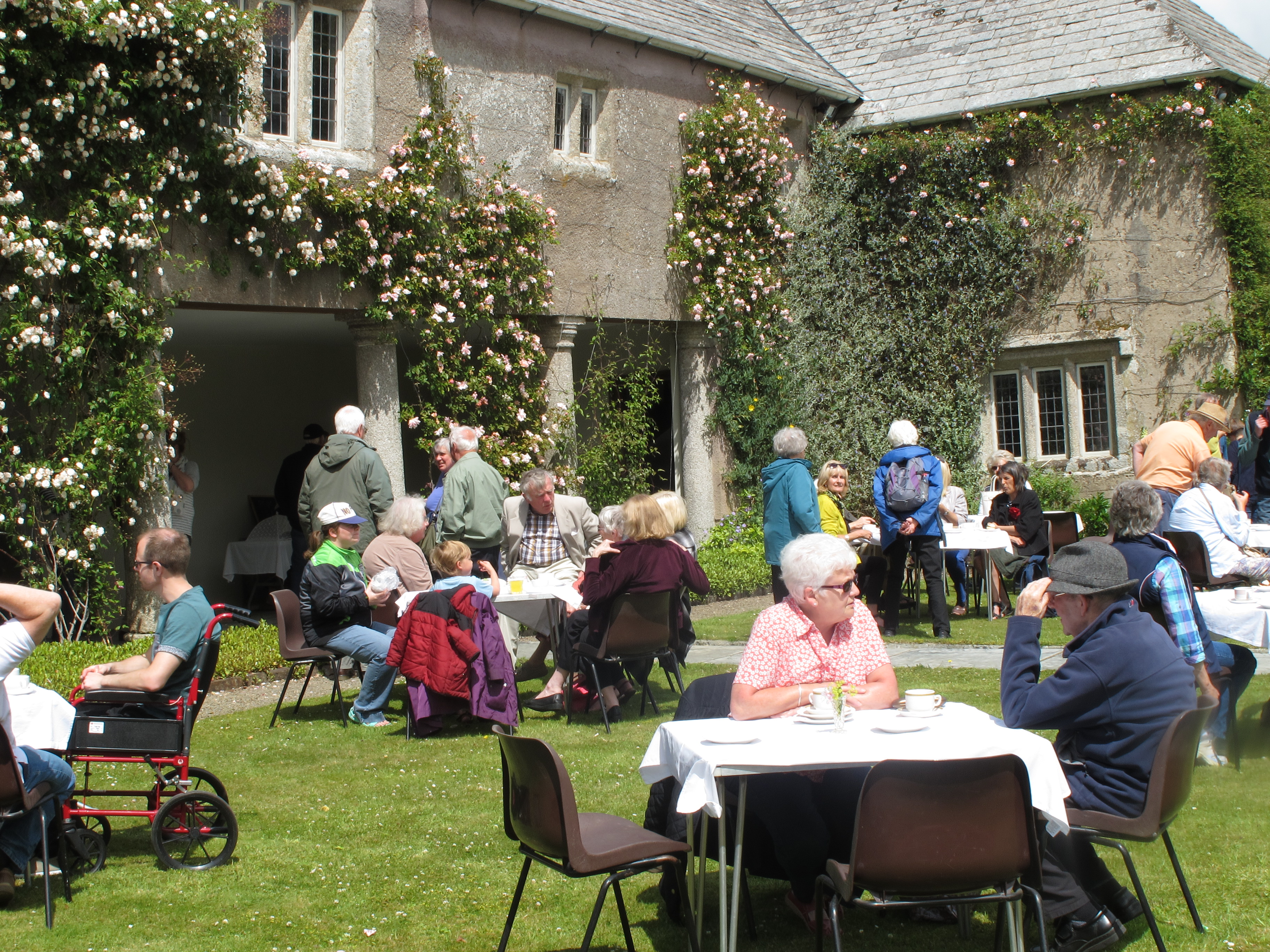
Is anything more English than tea on the lawn of a great house? We’ve were talking about stereotypes since I fell for an inaccurate one about Americans, but linking tea on the lawn—especially the lawn of a great house—to Englishness seems like a safer gamble. (Feel free to take me apart on that if I’m wrong.)

Cream tea at Penhele

Cream tea at Penhele

Recently, Wild Thing and I went to a cream tea at Penhele, a great house not from where we live. It was a fundraiser for the Charles Causley Trust, which (I just checked the website) keeps alive the memory of a local poet and promotes writing in the region where he lived. I’d love to give you a link to some of his poems, but although I’ve been impressed by some of his poetry I didn’t like the only one I found online. Others are under copyright and that makes them a no-go zone. Sorry.

But we didn’t go there to support the Causley Trust. In fact, we didn’t know what the event was raising money for. We didn’t even go for the cream tea, although it was a welcome bonus. What we really wanted was to see the gardens and the house, which are well enough known around here that we ran into half the village almost as soon as we walked in. One of them, J., was a carpenter before he retired (only they say joiner here, or builder, and I’m not all that sure what the difference is) and worked restoring historic buildings. Basically, once he’s done you can’t tell he’s been there. I asked if he knew how old the house was and he pointed to a stone plaque above a doorway in what he told me was the hall. It carried a date in the 1600s—1660, if I remember right. For all I know, other parts are older.

“I worked on those windows,” he said, pointing to the right of the plaque.

I felt like I was sitting next to a rock star.

Most of us—maybe all of us—lined up to buy tea and either scones with jam and clotted

Walking by the lake.

Walking by the lake. Photo by Ida Swearingen

cream (that’s the cream part of a cream tea) or cake, then we drifted along paths and past fields, a lake, a swimming pool (covered), in and out of a series of open rooms formed by a high, dense hedge, and past an empty flowerpot stuck deep into the hedge and looking like a place for someone to hide his or her cigarettes, although I didn’t reach in to be sure since that seemed like an invasion. We paid closest attention to what I’ve learned to call a herbaceous border (you pronounce the H on herb here; I still don’t, but I’ve gotten to the point where both pronunciations sound odd to me), stopping to admire this flower and that one.

penhele 055

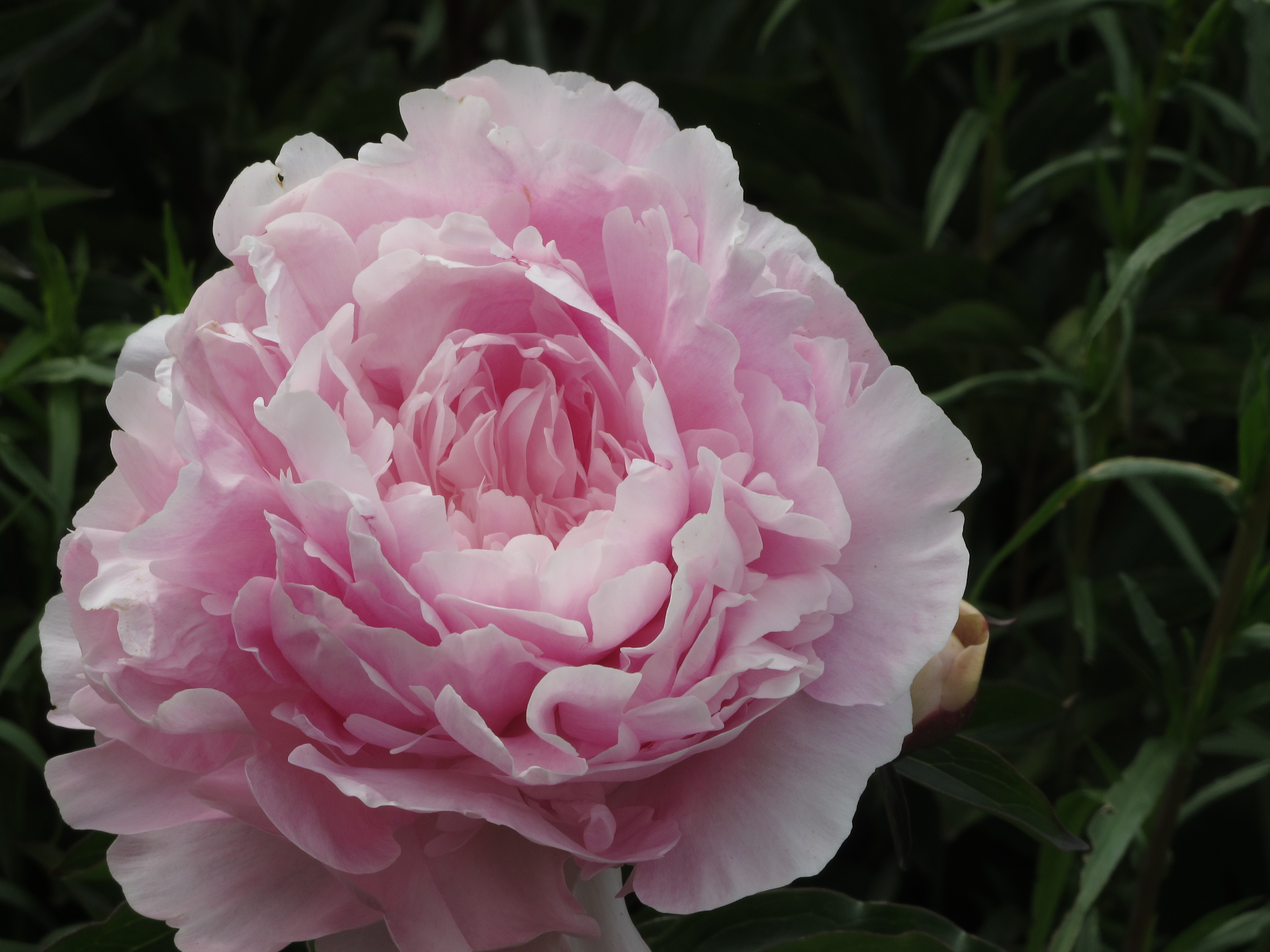
Part of the herbaceous border

According to Wikipedia, herbaceous borders became popular in the Victorian era. They’re basically a bunch of flowering plants—what I’d call a flower bed—and they’re gorgeous but take a lot of work. The Wikipedia entry talks about digging up and splitting and replacing plants, but even more than that they take weeding. Endless weeding.

Did I happen to mention how many weeds Wild Thing and I have grown since I started blogging?

I haven't a clue what the flowers are, so I'm not going to try identifying them.

I haven’t a clue what the flowers are, so I can’t identify them.

I overheard several people saying the same thing that came to my mind: “I wonder how many people it takes to keep it looking like this.” No one had the answer, but quite a few seemed like a fair guess.

It all felt a bit like something out of a BBC costume drama—the great house opened for an afternoon so the villagers could put on their company manners and enjoy a day out. It’s less lord-and-lady-of-the-manor these days, but you can’t help noticing the difference between the place you’re admiring and whatever you call home. Still, whatever people’s feelings were about class and inequality—and I expect they ranged all over the scale—everybody seemed willing to put that aside for the day and enjoy the beauty and the hospitality.

Both class and people’s feelings about class are more open in the U.K. than in the U.S., penhele 061where we break out in a rash if anyone uses the word in any context except middle. And the tradition of a grand house opening its gardens to the public is also something I never heard of in the U.S. Wild Thing and I speculated on whether it dates back to Victorian times or to the medieval period. I’d put my money on medieval, because, as crushing as the lord-peasant relationship must have been, it did lay a few obligations on the lord, and those may have included fetes or feasts.

The inescapable raffle

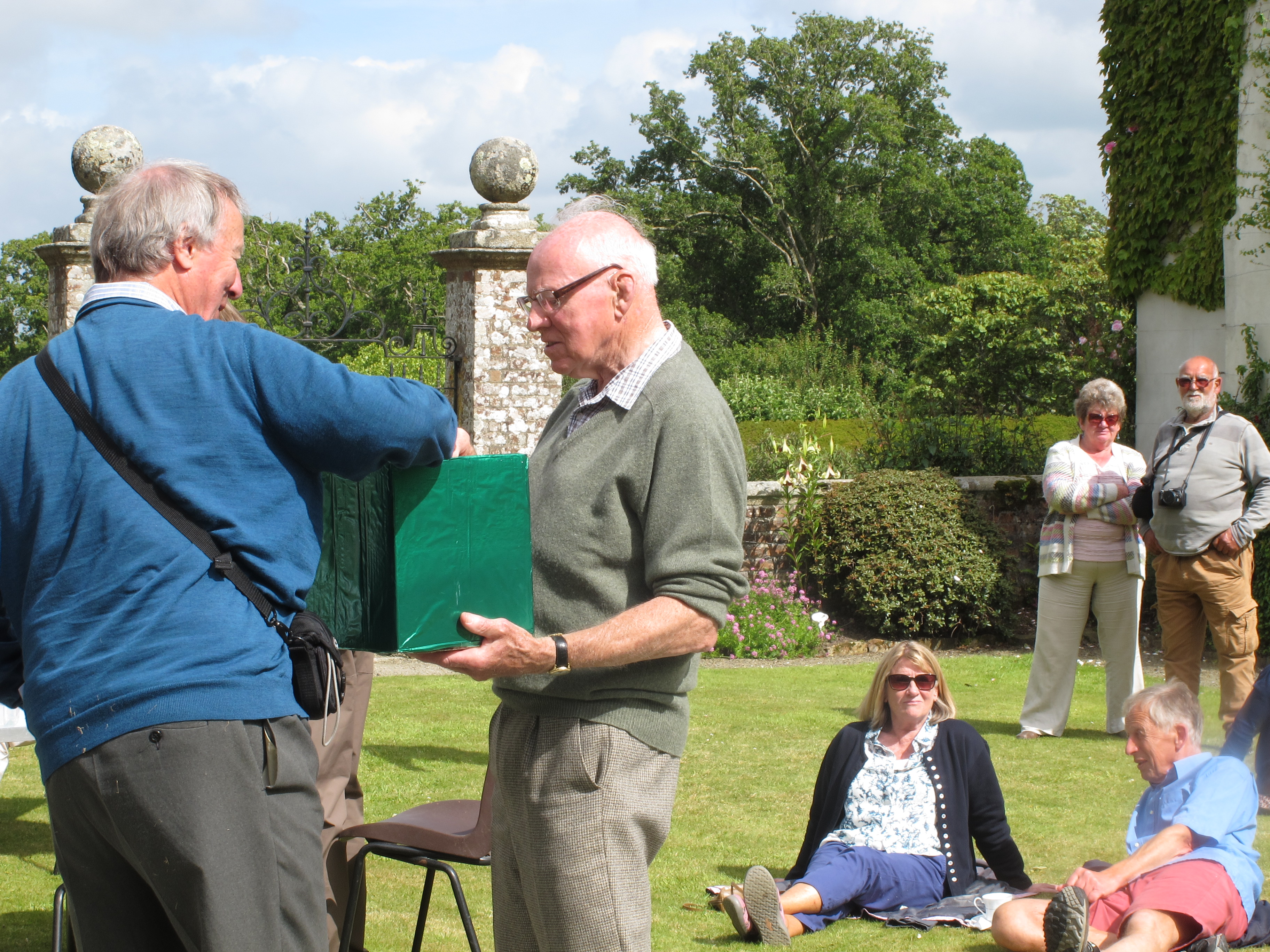
The inescapable raffle

But that’s guesswork. What’s certain (or as certain as I dare be about anything right now) is that the tradition of great houses opening their grounds for fundraisers is part of an English summer.

At the end of the afternoon came the drawing for the raffle. You can’t hold a fundraiser in Cornwall without holding a raffle. There’s no law on the books, but it’s just not done. So at Penhele they held a raffle. And we didn’t win anything.

Peach or blackberry cobbler: an American recipe

One of the small joys of living in the U.K. is messing with British cooking. In the interest of which, I’d like to share an American recipe with you: peach (or blackberry if you prefer) cobbler. And if you live in the U.S., you’re still welcome to it.

I’m not actually from cobbler country. I’m a New Yorker by birth and a Minnesotan by I’m not sure what but whatever it was it lasted many long years. Wild Thing, however, is from Texas so over the years I’ve learned some Southern cooking. Not from her—the only things she likes to cook involve meat—but because it’s fun to feed her something she can get sentimental about.

cobbler, eddie 006The recipe’s is adapted from Trilla Pando’s collection of recipes and interviews, Stirring up memories all the time, which I can’t find online anywhere, new or used, or I’d give you a link. I’d tell you how good the book is, but it would be cruel.

I am, as anyone who’s been reading Notes for a while knows, hopeless with numbers and thoroughly unsystematic, so you’ll find a certain, um, flexibility in some of the measurements. If that worries you, remember that the recipe has survived my numerical incompetence, so it should survive almost anything you can do to it. Except maybe tossing in a half pound of bacon, or some coffee grounds.

A warning: This cobbler (assuming you leave out the bacon and the coffee grounds) has a way of disappearing quickly—it really is good—and I’ve tried doubling the recipe and baking it in a larger dish, but the center never baked through. If you’re going to double it, use two smaller pans.


Peach or blackberry cobbler

4 cups of fruit (or a bit more; I always add more; if you’re using peaches, it’s about 7)

1 to 1½  cups sugar, divided

2 to 4 ounces butter

1 cup flour

2 tsp. baking powder

1 tsp. salt

½ cup milk (whole or 2%, which is called semi-skimmed in the U.K.)


Heat the oven to 350 F. That’s more or less 175 c. Don’t worry about it–it’s close enough. Set a square baking dish (anywhere between 8” and 9” square will do) inside it to heat.

The original recipe has you sprinkle ½ a cup of sugar on the fruit and set it aside for half an hour or so. I don’t bother. It’s sweet enough already. So if you leave that out, you’ll only need a single cup of sugar. If you’re using peaches, slice or chop them. Melt the butter. Sift the dry ingredients together, or measure them out and use a whisk to mix them. As far as I can tell, the whisk works just as well as sifting.

Pour the butter into the baking dish once it’s hot, then convince the batter in on top of it. It’s thick, so this is awkward, but spread it around as best you can. Then spread the fruit on top of that. The batter will rise up through the fruit as if bakes.

Bake for 50 minutes or until the center’s set. Test it with a knife to make sure it’s fully set. If it isn’t, toss it back in the oven (okay, okay, slide it back in the oven) until it is.

Serve plain or with cream or yogurt.

Trilla, if you’re reading this, thanks.

How British beer is brewed: an expert speaks

HalfPint is a trainee beer brewer, and she wrote a comment in response to my post on British and American beers. So let’s hear from someone who actually knows what she’s talking about:

“I work at a brewery and here’s what we do.

“Beer in a fermenting vessel is kept at 22 degrees – which is at a temperature the yeast works best at. After so long it is cooled to 13 degrees and then a few days later to 5 degrees for a couple of days. Yeast for beer ferments at the top – hence the slow temperature drop to help the yeast settle at the bottom of the vat. This is so when we draw it off there hopefully is little yeast in the casks. In the casks a product is added to make sure in 2 days time the remaining yeast has settled to the bottom and you don’t get cloudy beer or floating yeast (which can be bitter to taste). Some bottled beers have this in, to keep the beer alive and maybe taste fresher. These are called Bottle Conditioned. Never pour a full bottle of these out into the glass.

Irrelevant photo: Rhododendron getting ready to bloom.

Irrelevant photo: Rhododendron getting ready to bloom.

“Lager is cool fermented and requires a different yeast that is active at lower temperatures.

“Now serving temperatures, there could be an argument here. We live in the 21st century and therefore we have central heating and insulation so our homes are much warmer. Back in the day a home was a lot cooler. Pub landlords, when keeping casks, have to have good cellar conditions in order to be able to serve a perfect pint. Our brewery suggests with all our beers to pop it in the fridge. However we know some beer lovers prefer ‘room temperature’ so we suggest 1 bottle in the fridge the other not, so they can decide for themselves. Try it next time you have a bottle of your favourite (even if its a Porter or Stout) don’t drink it too quick let it gradually warm up and you will start to taste different things. From this you will roughly know how you like your beer.

“As for percentage – ours range from 3.8% to 9.1%. I’ve had some British beers that are over 12%. In fact quite a few forward thinking micro breweries usually have a range like ours or above. British beers are on the up.

“Now Hops: Flower hops are the natural state, which is what we use in all our brews. Every hop is different in smell and taste. The hops are put in when the mash (malt/barley/oats juice – whatever you’ve used) in the kettle is boiling. If you put it in at the start of the brew, it gives it is flavour and bitterness. The later you put it in through that boiling hour the more aroma and less bitterness it gives off. Each beer is different for us in the quantity and timing. The other type is pellets. We use these in two brews and only put these in when the beer is a few days away from being put in casks, gives it a nicer whiff and a little extra taste.

“Wow you didn’t want a sermon or lecture did you lol. Everyday is a learning day lol.”

Fantastic! Thanks, Halfpint.