Protecting children from English geography

Breaking news: Programs intended to protect children from online pornography and in-head dirty thoughts are filtering out sites whose names include the words Essex and Sussex. Wessex wasn’t mentioned, and I’m not even going to try to explain that.

So there you go. You heard it here first. Or possibly second, since the BBC broke the story. I’d give you a link but it doesn’t seem to be online.

What, you say, an earth-shattering story like that?

Indeed. And I’m sure there’s a conspiracy out there to suppress it.

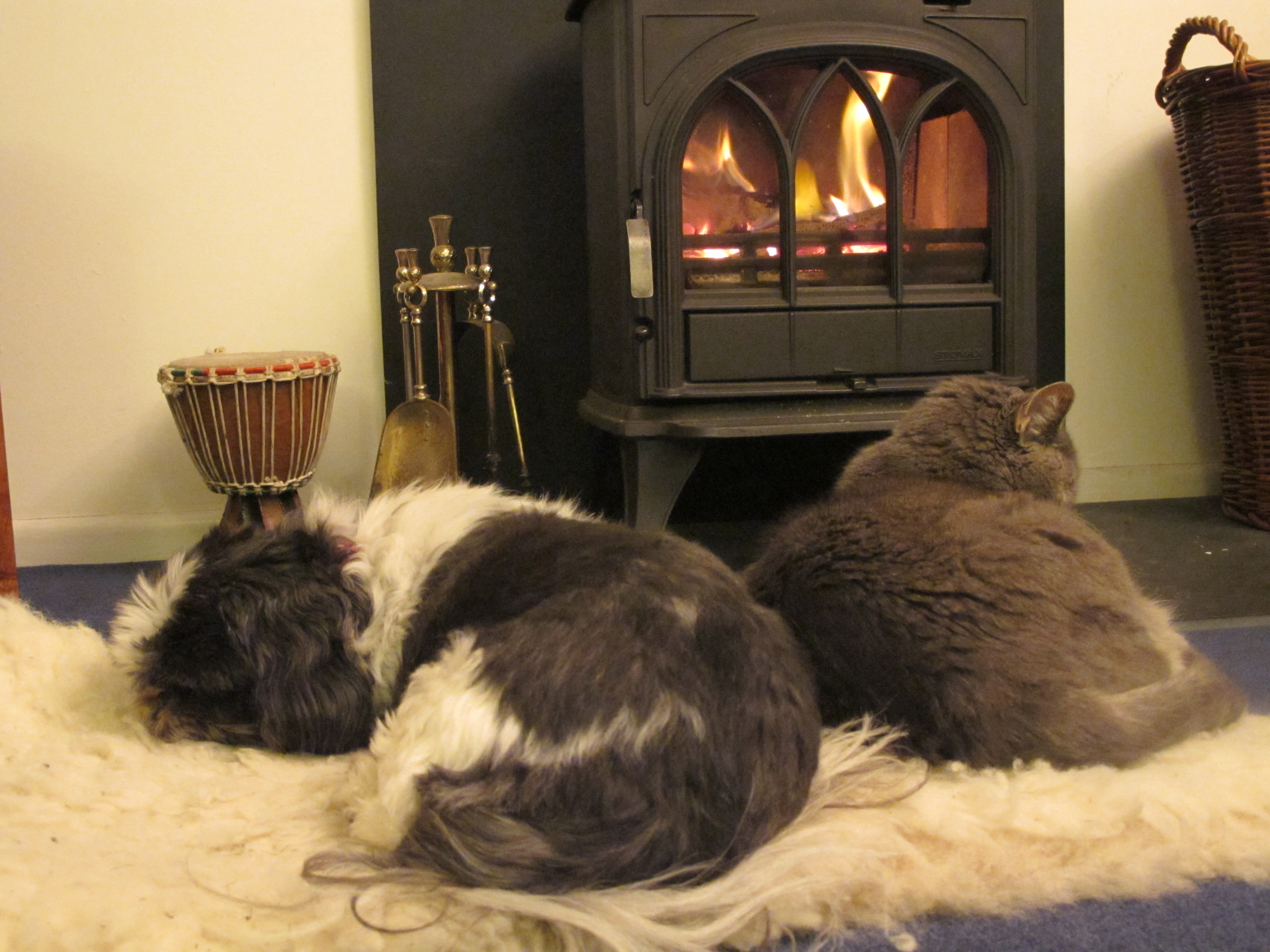
Screamingly irrelevant photo: What we do on a winter evening

Screamingly irrelevant photo: What we do on a winter evening

Manners, American and British

The British have manners. They have such good manners that from time to time they’ll throw them out the window to scold strangers for their lack of them.

Wild Thing and I were in the outdoor section of a café once—a cramped, eat-your-lunch-and-get-out kind of place—and as a couple who’d been sitting nearby wove past our table to leave, one of them said, “In this country, we say please and thank you.”

Sadly, by the time we’d processed the words, they were too far away for a snappy comeback, but “In our country, we’re polite to strangers,” did come to mind. It may not be true, but I still wish I’d been quick enough to say it.

mulfra 030

Irrelevant Photo: Fountains Abbey, in Yorkshire

I have no idea what we’d done, or more likely not done, to piss them off. I’ve been a waitress. Wild Thing and I have both been cab drivers. We’re not the kind of people who think that if they have the money for a meal, or a cab ride, or a tube of toothpaste, it gives them the right to be obnoxious. But we are, I admit, incapable of saying thank you as often as the British do. Buy something at a small store and when you hand in your item to be rung up, the clerk will thank you. When you hand over your money, you’ll get thanked again. (A variation: The clerk may look at the twenty you handed over for something costing less than a pound and say, “Lovely,” or “Brilliant,” as if you’d handed them a slice of chocolate cake, or exact change just when they were about to run out and the banks had all closed and the vandal hordes were all lining up to do their shopping and none of them had brought the exact change.) Then when you go to leave, unless some other customer’s diverted the clerk’s attention, you get thanked a third time, often with the phrase, “Thank you very much, thank you.” Or, “Thank you. Thank you very much, thank you.”

At least it’s like that way out in the country, where we live.

I can’t do that. Can not. Am constitutionally incapable of. I also can’t manage to say you’re welcome three times for a single transaction, especially when I haven’t done anything. I mean, you’re welcome? For what? I bought something. I wanted it enough to hand over money. That’s not a gracious act that I should say “you’re welcome” for. Sometimes I find myself saying “thanks” instead, which is also absurd but doesn’t feel quite as bizarre as “you’re welcome.”

I asked S. once how often she said you’re welcome in response to the multiple thank-yous. She looked startled and said she didn’t think it was “called for” unless you’d done something particularly—well, kind may not have been the word she used but it was the impression she left me with. Unless you’d gone out of your way, somehow. But I doubt she’d never noticed how many times she got thanked per transaction. It’s that old thing about the fish and the water. She swims through an ocean of thank-yous and wouldn’t notice them unless they stopped.

Or that’s what I thought, anyway, until A. and H. told me that you’re welcome is an Americanism, although H. added that there’s an equivalent phrase in Welsh. R. swore that it’s a class thing: If you’re working class, you learn to say “you’re welcome.”

At this point, I understood two things: 1, It’s complicated, and 2, I’ll never completely get it.

“What do you say?” I asked.

“That’s okay” would do, apparently. So would “cheers.” But “cheers” can also be used to mean goodbye, or as a kind of toast—when you lift your glass to someone. According to my British English A to Zed, it also means here’s how! What does here’s how! mean? I looked it up and it’s either too obvious or too unused to include, so I don’t know.

I asked M. and Wild thing what here’s how! meant and they were as blank as I was.

So in this country we say “please” and “thank you,” but we don’t say “you’re welcome.”

If I didn’t know better, I’d think that was rude.

Cockney rhyming slang: it’s real

“It’s parky,” J. said while our dogs sniffed each other in the middle of the empty road.

I must’ve looked as blank as I was.

“You don’t know what I’m talking about, do you?” he asked.

I hadn’t even thought to say so. That’s how blank I was.

“Haven’t a clue.”

“Parky in the mold. Cold. “

Not J.'s dog. I'm cheating. Photo by Sellys, on Wikimedia.

Not J.’s dog. I’m cheating. Photo by Sellys, on Wikimedia.

I managed to say, “Oh.” Then I managed to say “I need a translator.” I didn’t manage to ask what parky was, or what it had to do with a mold. I understand just enough about rhyming slang to know that the phrases aren’t nonsense sounds—they mean something—so it would’ve made sense to ask.

If you haven’t heard of rhyming slang, here’s the five-second summary: It started in the mid-nineteenth century, in east London. One theory claims it was used by thieves as a more or less secret language and another says it started as a game. A third says it was a way of reinforcing neighborhood solidarity. Whatever the origin, it works like this: You take a word and find a phrase that rhymes with it: stairs with apples and pears. Then you drop the word that actually rhymes and say, “I’m going up the apples.” And you leave your clueless friend standing in the middle of the road with her jaw hanging open while the dogs sniff each other.

J. and I said goodbye and he promised to clue me in to a few phrases so I can respond to them and make people think, Ooh, she knows what it’s about.

Although clearly I don’t.

Classes, Couches, and Rest Rooms: Word Choice in Britain and the U.S.

N. read last week’s post on toilets and emailed to say that “toilet has a very lower class cachet in current English. Loo or lavatory are the posh versions, just like sofa vs. settee, sitting room vs. lounge, tea vs. dinner, dinner vs. lunch.

I’ve heard some of those pairings before but have trouble keeping track of which word is high on the class scale and which is low—an incompetence that I kind of enjoy. Let’s face it, it’s all arbitrary and snobbish.

mulfra 080

Cornish Engines. The abandoned mine shafts they mark went out under the sea.

The distinctions are equally arbitrary in the U.S., but the silliness we grow up with has a way of looking like perfect sense. When I was a kid, lunch was the down-to-earth meal. Dinner stuck its nose in the air and demanded white tablecloths (not to mention cloth napkins), and it was the evening meal anyway, which we called supper. I not only thought all that made sense, I thought it was fixed for all time and all places and all people. Where Wild Thing grew up, though, dinner was a big midday meal, something you’d have on Sunday, after church, and I’m sure that seemed just as inevitable and fixed.

Then we moved to the U.K., where the things people take for granted are completely different. Settee? To me that sounds fancy, as if I dropped into a Victorian novel. Sofa sounds more ordinary, although I call the thing a couch and it sits in my living room, since I don’t have either a sitting room or a lounge in my vocabulary.

And tea as a meal? When someone talks about eating tea, I get a mental picture of someone struggling with a knife, a fork, and a cup of liquid. I know that’s not what they mean, but no matter how often I hear it, that’s still what I see.

I like it when my vocabulary sets me outside some of the entrenched divisions. True, it sets me deep in the trench of another division, American vs. British, but I’d be there anyway.

I can’t prove this, but I have a hunch that, compared to their U.S. counterparts, the British upper (and, I guess, middle) classes spend an awful lot of time, and find more ways, to establish their separateness (and I’m sure they’d say superiority) through their use of language. It’s an interesting bit of sociology.

Both cultures, though, do their best to avoid saying what they mean when it comes to human waste. Toilet comes from the French word meaning a cover for clothes (toilette). From there, toilet became first the act of dressing, then a dressing room, and eventually that room with plumbing that polite people don’t mention. So basically, it started as a polite word meaning that room where we do those unmentionable things. Eventually, the unmentionable things contaminated the polite word and we had to find an even more polite word so we could back away from our meaning again. I mean rest room? What on earth does that communicate?

For what it’s worth, not every culture does this. The Middle English word for the equivalent of toilet paper was arse-wisp, according to the Online Etymology Dictonary. The Middle English did, apparently, say exactly what they meant, at least about this.

And unless someone brings up a fascinating new aspect of this discussion, I’ll stop writing about toilets for a while. Really. It’s not the thing I most love to think about in the world.

Great British Telemarketing

Recent and highly unscientific research reveals that you have to do more than move across an ocean to get away from telemarketers.

Okay, Wild Thing and I knew that already. Since we moved here, we’ve been called by people telling us our computer has been affected by such a dangerous virus that the only way to fix it is to read a credit card number into the phone and take a sledge hammer to the hard drive. We get calls from a recorded voice with an urgent message. So urgent that it doesn’t merit a live call. And so on.

On Wednesday, Wild Thing fielded a call that—well, we never did find out what he wanted. Wild Thing picked up the phone and the caller said, “Can I talk to the lady of the house?”

Some of these calls set off reactions we could never have predicted.

“Believe me,” Wild Thing said, in a doom-laden voice, “you don’t want to talk to her.”

She has no idea where that came from—or which of us was the lady he so didn’t want to talk to.

People here commonly use the word lady where we’d say woman. I notice it and I kind of roll my eyes , but in a detached, mildly amused way. And, I should add, an invisible one—the mental eye roll; the virtual one. Sometimes think I should object, but it doesn’t set off any deep reaction in me. You want to call me a lady? I’ve been called worse things, although I’m not sure any of them were more unlikely.

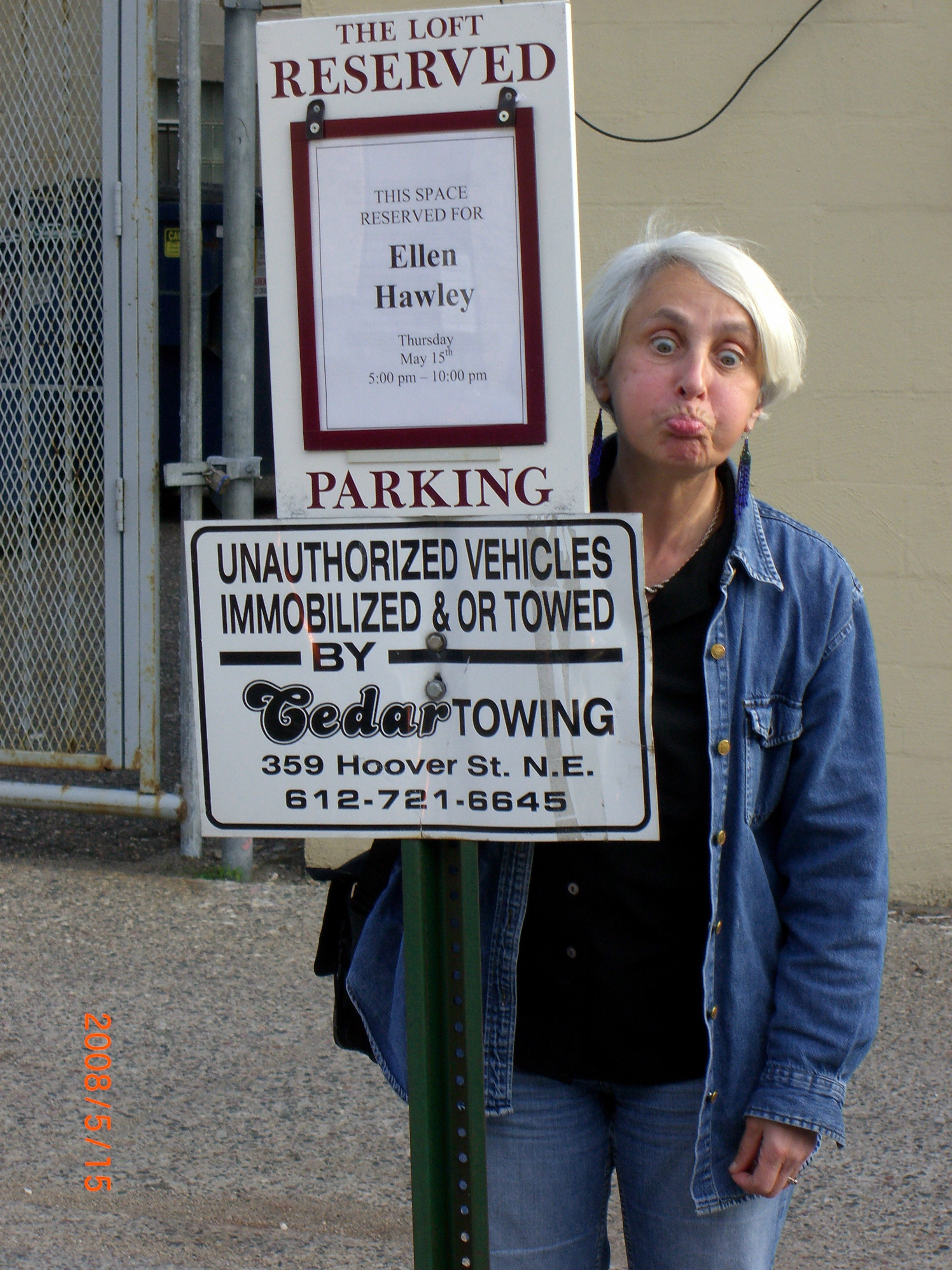
The lady of the house, or one of them, after a reading in Minneapolis, 2008. Photo by Terri Hudoba

The lady of the house, or one of them, after a reading in Minneapolis, 2008. Photo by Terri Hudoba

In the U.S., the telemarketing calls did set me off. The phone was in my name, so I spent a good bit of time fielding calls for Mrs. Hawley, and very few things push my buttons quite like being called Mrs. Hawley. I can’t entirely explain that, but we can begin by saying that I’m not married and I don’t want to be married, but if I did happen to be married I probably wouldn’t be married to myself. Then I can add that I passionately hate the whole business of women being publicly sorted and addressed by marital status. Top it all off with a hefty dose of I-know-my-reaction-isn’t-helping and throw in a telephone, and even though I told myself over and over not to do it, I’d end up saying, “There is no such person. What can I do for you?”

It was unfair, I know. The callers were following a script. Lots of people we know have worked for call centers, and it’s wrong to make a tough, underpaid job any harder than it already is, but there I was being horrible to the people who read the script, not the ones who wrote it. I knew that. I pledged to reform. And then the phone would ring and off I’d go.

Oddly enough, now that I’m living in the U.K., I’m less rabid about being called Mrs., even though it happens more often here. This isn’t my native culture. It can’t touch me as deeply. That makes no sense, but it’s the only explanation I can offer. It still pisses me off, but I’m more distant about it, and less vocal.

Plus the phone isn’t in my name. That helps.

The lady of the house,  though? Sorry, she’s in the back, and the maid’s helping her with her lace gloves. Can you call back when the butler’s available to take a message?

British and American English: The Accent

Two words spoken in an American accent reliably crack up the British: water and butter. It has to do with the difference between English R and the American R, which as far as I can figure out is this: Americans have one and the English have a sort noticeable absence—something you might write as an H, or an apostrophe. WAWtah, as opposed to WAWterrrr.

WAWterrr. Photo by AdriannaNicole

WAWterrr. Photo by AdriannaNicole

I’ve spelled that first syllable the same way but no way does it sound the same. No matter how much I mess around with the spelling, though, I can’t come up with the difference. Put it this way: The English first syllable is well behaved and sits in its chair with a perfectly straight back. The American one slouches and puts its feet on the coffee table.

That may not help. I do understand that.

Okay, I’m writing about English pronunciation as if the English had one single accent. They don’t, but let’s not get into that here. I’m oversimplifying, the same way I’m oversimplifying the American accent, because if I don’t I’ll never write this. I’ll lose myself in complications and sub-points and convolutions so badly that I’ll shut down the computer, go back to bed, and pull the covers over my head. Pretty soon I’ll be joined by two cats and we’ll spend the day there.

They’ll think it’s a day well spent.

Any number of British friends will, in the middle of a conversation involving food or drink, lose all restraint and repeat after us, “BUTTerrrr,” or “WAWterrrr.” They can’t help themselves. It just breaks loose. Even if it was going to fly around the room and break the dishes, they couldn’t keep it in. Sometimes they don’t even wait for us to say it first. I’d love to criticize, but if Wild Thing and I are in the car when the weather comes on and the winds are moderate, we’ll repeat “MAWderit” and laugh as if it was the first time we’d done it. Some jokes just don’t get old.

We’re lucky, though. We have the accent that people think is cool because they’ve grown up watching Hollywood movies. Well, we sort of have it. We have versions of it, with regional flavorings that, from this distance, most people don’t hear. So we don’t get the disapproval that goes with having accents people look down on, or are afraid of. A wave of let’s-all-worry-about-immigrantion is breaking over the country just now, and our accents mark us all. Wild Thing’s and mine get us sorted in the Immigrants We Accept pile. It’s uncomfortable sometimes, but not as uncomfortable as being in the Immigrants We Don’t Accept pile. Still, it’s odd when people react to your accent, even favorably. It’s a bit like having people react to your nose. You’ve been walking around with the thing all your life. You’ve forgotten it’s there and are thinking about something else, but people want to talk to you about it. Over and over.

I’m in the supermarket and the woman at the checkout says, “I love your accent.”

What am I supposed to say? It’s my accent. I’m not responsible for it. When I was a kid, if I’d known I could choose I would have chosen a different variation on the New York accent. Now it’s too late. The glue that holds it in place set long ago.

So I say thanks, just as if she’d said she liked my sweater. Which she’d have called a jumper.

A Recommendation

I just read a post on speaking with an accent on Not Another Tall Blog, by Angie K., and I want to recommend it to you.

Yeah, it’s true that we all have an accent of one sort or another, but when you’re the possessor of one that stands out, suddenly you don’t just have an accent, you have An Accent, and that changes things. Her post makes me want to write about the issue, but it’ll take me a while to catch up with that. In the meantime, do take a look at what she’s written.

Further Adventures in British English: The Letter U

The British love the letter U. They use it at every possible opportunity (neighbour, colour, flavour, savoury), and it drives some of my friends insane that Americans don’t. It’s one of those things: If you let it get to you, it will. Gleefully. If I have to write something in British, I assign myself a handful of U’s and I don’t stop writing until I’ve used them all. When I write in American, I now see tiny gaps in neighbor and color where the U isn’t: colo’r; neighbo’r.

He's been here before, but I can now offer some advice: Make your your spell check is set to the right language.

He’s been here before, but I can now offer some advice: Make your your spellcheck is set to the right language.

And no matter which country I’m writing for, my spell check is set to the other. To my embarrassment, it snuck a U into neighbor a while back, and I posted it on the blog, which T. (copy editor that she is, down to the bone) pointed out diplomatically. I felt like the carrier of an, admittedly mild, disease—U-itis. I don’t have the bug myself, but I did spread it.

Mrs. Baggit Struggles to Keep Britain Tidy

The first time Wild Thing and I visited the U.K., Maggie Thatcher was the prime minister and whatever ministry was in charge of roadsides had planted them with metal signs saying, “Mrs. Baggit Says, ‘Keep Britain Tidy.’”

That bit of brilliant public relations was finished off with a picture of a tied-off bag with a face—Mrs. Baggit’s, presumably, happily stuffed with garbage. It was impossible not to connect her image with Mrs. Thatcher’s, and some small part of my brain continues to insist, in spite of all evidence to the contrary, that Thatcher’s real name was Maggie Baggit.

Irrelevant Photo: Rose Behind Bars, by Ida Swearingen

irrelevant Photo: Rose Behind Bars, by Ida Swearingen

We did a lot of driving on that trip, so we spent a lot of time looking at the signs and finding funny voices to quote them in.

“Mrs. Baggit says…”

Mrs. Baggit had a lot to say on that trip, all of it scold-y, although I can’t remember exactly what it was anymore. Except, of course, for “Keep Britain Tidy.”

To understand why that kept us amused, you need to know that tidy sounds different to an American ear than to a British one. To me, tidy is fussy. It’s small. All I have to do is think about it and I want to make bitsy motions with my fingertips, as if I’m cleaning up a dollhouse. As far as I can tell, none of that is true in the U.K. It’s just a word here. It means neat and doesn’t make your fingers do funny things in the empty air, although H. tells me the Mrs. Baggit part sounds fussy.

I should stop here and admit that when I started that last paragraph I was going to speak for an entire nation: For us (us here being all Americans—every last differentiated, argumentative one of us) tidy is fussy. Then some minimal sense of modesty (not to mention accuracy) caught up with me and I thought it might be nice if I didn’t mistake my mind for the mind of an entire, not to mention large and varied, country, even if I did grow up and live most of my life there. So I’ve backed off a bit. But I still hold that it has different overtones to an American ear than to a British one. That much, I think, is fair.

Language is like that. We think of it as a solid, but it’s not. It’s one of those slow liquids, like Silly Putty, that changes shape depending on what holds it, or who.

So how successful was the campaign? I never saw British roadsides before it started, so I can’t make a comparison, but I know this much: If you look for litter here, you’ll find it. And if you don’t look for it, you’ll find it anyway. I’ve seen places with more, but Mrs. Baggit hasn’t stopped the litterbugs mid-throw.

And who in their right mind thought she would?