English Dog Owners

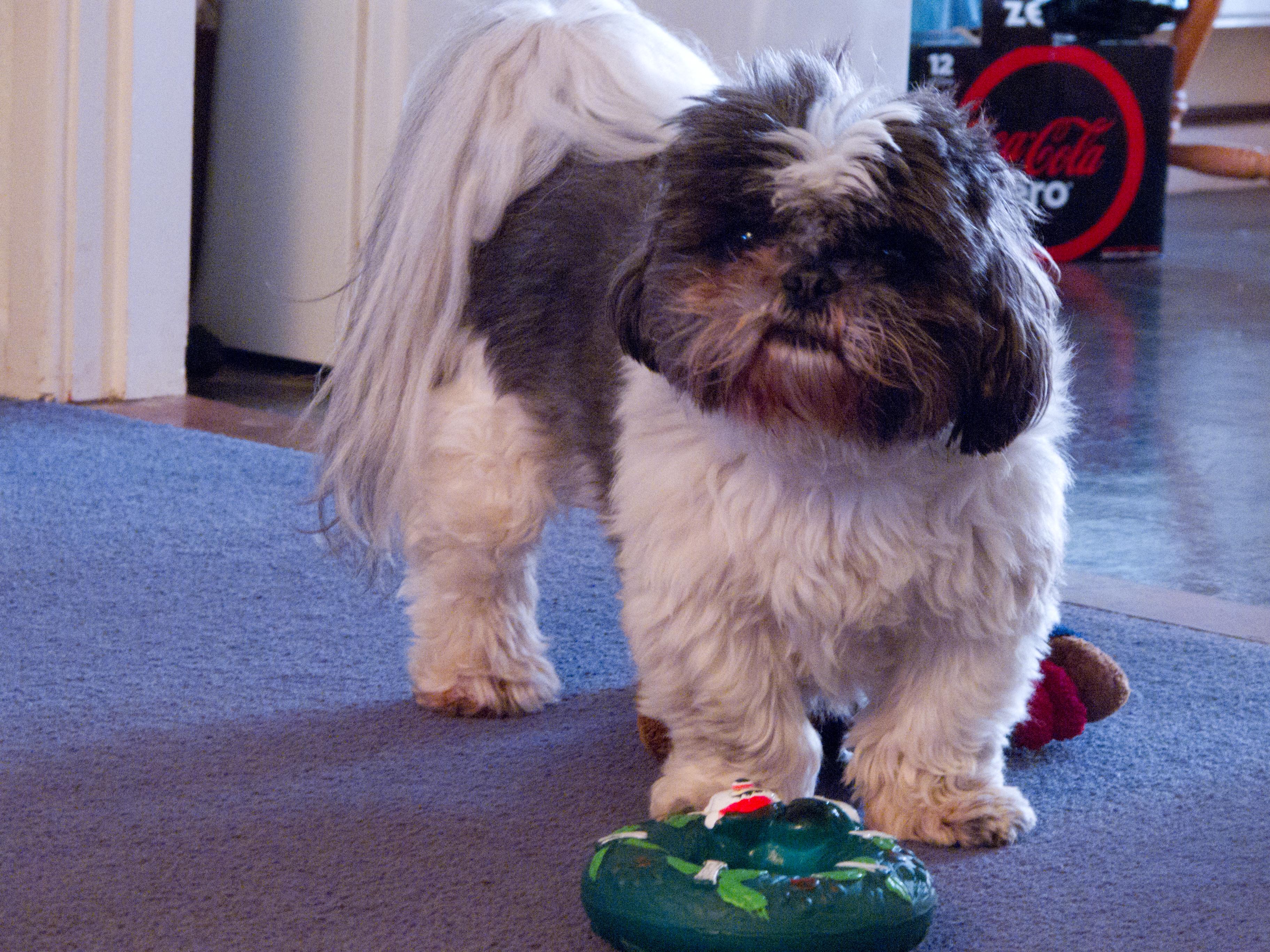
This has happened to me twice now: I was walking the dog—a lovely cluster of fluff and enthusiasm—when another dog walker stopped some 20 feet away and asked, “Is that a dog?”

I looked at her as if I needed to check. Half of me did it to play along with the gag and the other half did it because the question was so strange that maybe it wouldn’t hurt to check. Yes, she was still a dog. Small, I grant you, but so am I. It doesn’t change what we are.

I looked back up.

“Um, yes,” I said. Even the second time, when I knew better.

Would you have to ask if this is a dog?

Would you have to ask if this is a dog?

The other person, both times, reeled his own dog in, explaining that the dog’s snappish with other males, although he’d be fine if my dog were a bitch.

By this time, I understood what the other dog walker saying—bitch, female; dog, male—but excuse me, you can’t call my dog a bitch, and while we’re at it, you can’t tell me my dog’s not a dog. I mean look at her, she’s down there wagging her tail. My cats don’t do that. You want bitch, buddy, talk to me.

But that little drama plays out in my head. When you live in a village you don’t run around starting wars on a whim. Or, yeah, some people do, but their wars enter to gossip chain and circulate forever. Think of it this way: The village keyboard has no Delete button. And whoever you just started a war with? You’ll run into them for the rest of your life.

I admit, I wouldn’t have started a war over this if I was still living in a city. It’s too silly, and I’m not that quick to fly off the handle. But living in a village colors the way I don’t say it. I kept the vague smile that had landed on my face I was first asked if my dog was a dog and I said, “Oh. That. Female. She’s female.”

At which point, both times, the other person let his dog approach and they gave each other a good sniff. The first time, the dog who would have been fine if my dog had been a bitch turned bitchy himself and snapped at her before being hauled off. Which goes to show you something, although I’m damned if I know what.

I won’t swear that any of this is particularly English. We have dog breeders in the U.S., and they probably talk about dogs and bitches, but no one in the States ever asked me if my dog was a dog. Not once.

Summer Solstice in Cornwall

This far north, the longest day of the year goes on for 26 hours.

Okay, that’s not the literal truth. It’s more like 27.

This morning, Wild Thing and I got up at 3:15 (that’s a.m.), staggered out to the car, and drove down the hill to pick up J. so we could drive to a double set of stone circles some 40 minutes from here and join a group of people who gather at the summer and winter solstices to sing up the sun.

Waiting for sunrise

Waiting for sunrise

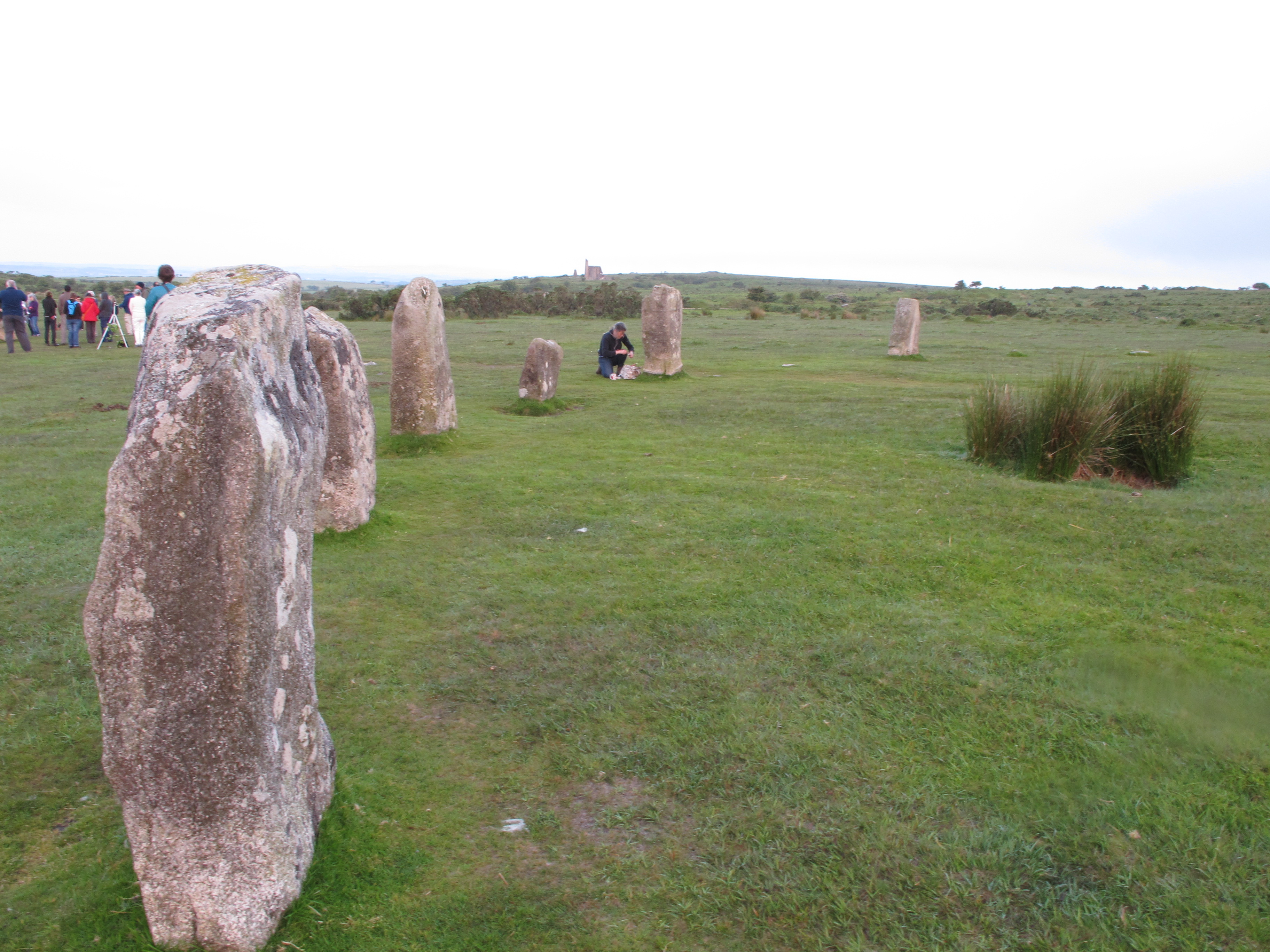
If that sounds new agey and corny, it probably is. I’m not given to new aginess myself, but when you’re surrounded by ancient monuments the way we are here, you can be forgiven for sliding into a bit of nouveau-pagan celebration once in a while. Those who take it seriously do, and those who don’t can still stand inside a stone circle put up by prehistoric people for purposes we can only guess at and be overwhelmed by the scale of human history. It’s the closest I’ve come to touching my ancient ancestors—who (by way of full disclosure) aren’t my ancestors at all, except in the spirit of all humankind being one family. But humankind is one family, and those circles get to me. Not for any magical properties, but for their sheer age.

Sunrise

Sunrise

At the stone circles, we joined some hundred other people, dressed in everything from long skirts and ivy-leaf hair thingies, to shorts and blankets, to winter jackets (it gets cold on the moor), and we sang, and the sun came up, as red as it ever was when our ancestors watched it all those thousands of years ago. Then we headed to village pub, which had opened early for us, and we ate breakfast. It wasn’t an exact replica of the way our ancestors and not-ancestors celebrated the solstice, but everything changes with the times.

Stone circle

Stone circle

This evening, a group of women from the village will gather on the beach to watch the sun go down. J.’s organized the gathering for several years running, but this will be the first time we’ve gone. All I know is that it involves a bonfire and food. Our ancestors would have understood.

Wild Dartmoor ponies, happy to have the moor to themselves again

Wild Dartmoor ponies, happy to have the moor to themselves again

This is the first year that J. started the day by getting up at silly o’clock to watch the sun come up, and I told J. I half expect the evening to end with her falling asleep on the beach and everyone gently carrying her home.

She said everyone would be more likely to dump her in the sea.

Rumors

Walking the dog to the store for the paper this morning, I saw I. and R. standing in the shade of a hedge, catching each other up on who knows what—I was too far away to hear. They talked for a while and parted ways, I. heading down a side road to her house and R walking in my direction.

When we passed, he said, “No papers today.”

I asked if they’d be getting them in later, but he didn’t know. He’d heard it from I. and turned back.  We complained for a while about the distributor the store uses, because this happens a lot, and often, he said, the stores in the next village gets its deliveries.

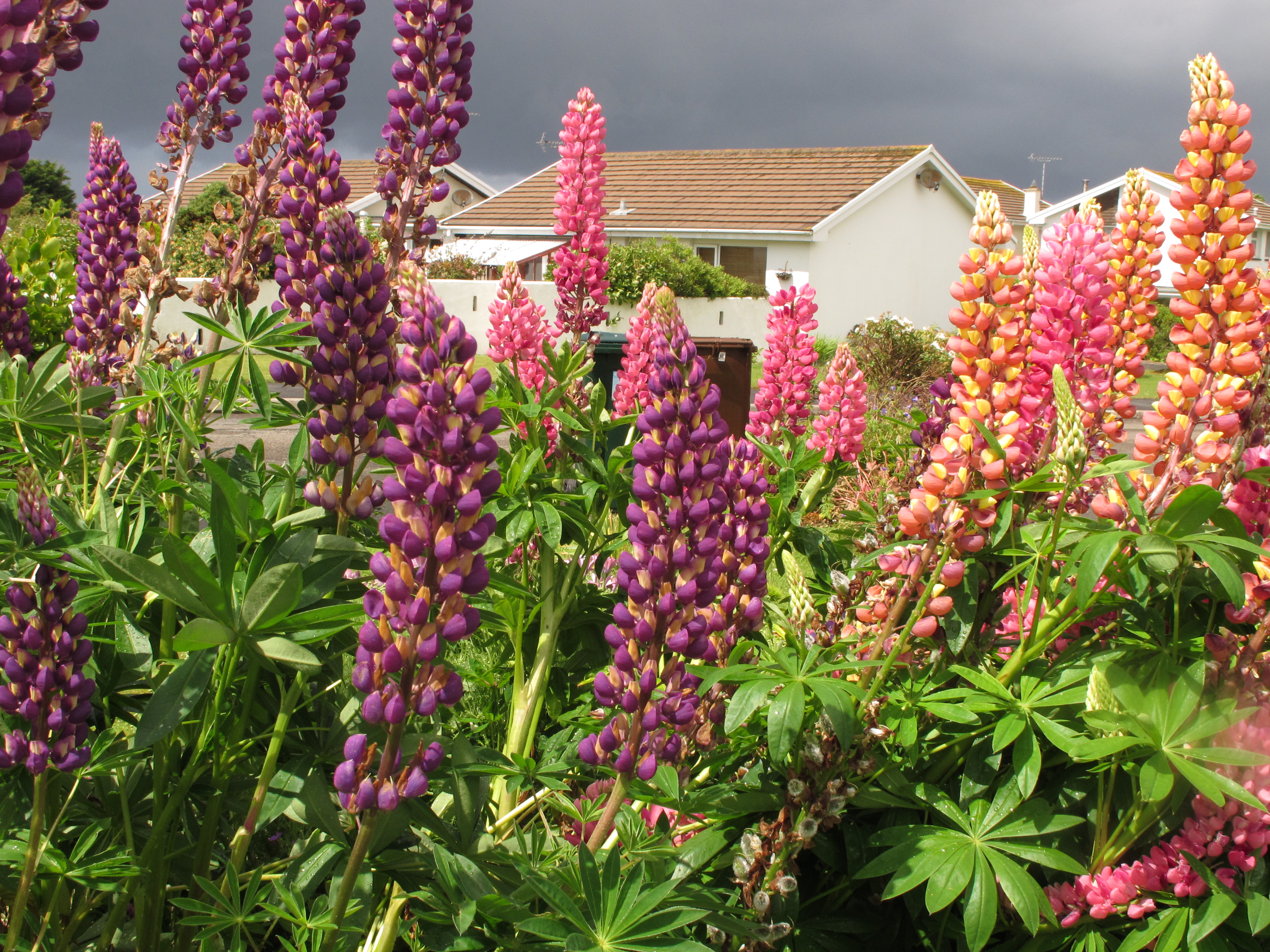
Lupines--in bloom right now.

Lupines–in bloom right now.

Okay, we weren’t complaining about the distributor. We were complaining about the store, for using them.

I had a magazine to drop in someone’s mailbox, so I didn’t turn back, and on the way decided to go to the store anyway, to ask when they expected the delivery. I debated whether to ask for today’s coupon and drive to the next village and buy the paper there. (Newspaper subscriptions, at least out here in the country, involve coupons, which you can either present day by day, anywhere you like, and which give you a discount but no guarantee that the store won’t have run out, or leave with the store, which will then set your paper aside.)

I still hadn’t decided when I got to the store and asked when the papers were expected.   They looked at me blankly.

“We have yours,” they said, and asked who told me they didn’t.

I reconstructed the whisper chain.

“It’s only the Express. R. gets the Mail. We have that.”

And that’s the way word gets around the village. We have no secrets, but have a whole lot of misinformation.

National Insanities

What’s it like living abroad? Every country has its own brand of insanity, but it takes a long time before it seeps into you. I moved here late in my life, so I’ll never understand British craziness the way I understand the American version, but there’s something great about being an outsider. It means you can see a country’s oddities in a way you can’t when you share them.

Sinking-of-ship-cazador-1856 (1)

In 2007, a ship wrecked off the south coast of Devon and its cargo washed up on the beach. (http://www.telegraph.co.uk/news/uknews/1540307/Police-to-clamp-down-on-beach-scavengers.html) It looked nothing like the picture I’ve posted, but there’s a connection, because following ancient local traditions, which date back to the days of sailing ships, everyone for miles around helped themselves. This is called looting if you’re not participating and not letting things go to waste if you are. So far, so logical. But part of the cargo was a container of motorcycles, and instead of pushing, shoving, and grabbing for them, the looters (or non-wasters if you prefer) formed an orderly line and waited their turn. Nobody but Wild Thing and I thought that was funny until we pointed it out, and even then I’m not convinced they weren’t just humoring us when they laughed. Because nothing is more important to the British than forming an orderly line. Except, maybe, calling it a queue.