Strange holiday habits of the British and of one wandering American

The attack of the Christmas cards has begun, and if we don’t deliver ours quickly we’ll have to leave the village. Come December, forget conversation, companionship, helpful acts, even love: Cards are the only measure of friendship. If we don’t give someone a card, they’ll think we don’t like them. Or that we’re such socially awkward clods, we’re not worth liking.

Actually, I’m making that up. I don’t know the thinking behind it is, although I do understand that Christmas cards are more important here than on any other part of the planet. Everyone gives them to everyone, and you have to do it. For all I know, everyone hates it but is as intimidated as we are. The entire country is running around buying and delivering cards only because they’re afraid other people will think they’re either awkward clods or hostile.

Whatever lies behind it, though, we’ve stocked up.

Season's greetings, y'all. Photo by Ida Swearingen

Season’s greetings, y’all. Photo by Ida Swearingen

Where we live, people sneak up to the door and push them through the letter slot. We don’t see the people, just the cards. We’ll be sitting around, our minds so sublimely at peace that we’re levitating inches above the floor, and flap, a card drops through the slot. We flop painfully onto the floor and pick ourselves up to collect the card, but by the time we open the door no one’s out there. Except for the signatures, which we recognize, they might as well be messages from the fairies.

People have a saying here: “Oh, she (or he) is away with the fairies.” (It always seems to start with “Oh.” Maybe that makes is wispier, more away-with-the-fairies-ish.) A number of people Wild Thing and I know could be, and have been, described that way, and maybe they’ve sent these back from wherever the fairies live. The fairies have a delivery service. That’s very thoughtful. But it only works at this time of year.

Okay, a few people deliver their cards in person. They stop in and have a cup of tea. Or they bring them to meetings and hand them around.  If you belong to a club or go to any regular activity, people will show up in December armed with cards and pass them out. Most people write name on the envelopes, which means they have to flip through them, once, twice, fourteen times, to find the right one. Some bring a few spares with no names in case they’ve forgotten anyone, or someone they didn’t expect shows up. It’s an odd mix of touching and impersonal when you get one of these.

It made us feel like awkward clods when we didn’t come with a stack of our own, so we’ve started bringing some (nameless, because we’re not well enough organized to predict who’ll be there). But bringing them makes me—although not Wild Thing—feel like a hypocrite. Not because I don’t normally send Christmas cards, but because handing them out this way strikes me as deeply weird.

I’m not going to try to justify that. It’s just one of those deep cultural weird things.

But I can’t talk about Christmas cards without talking about deep cultural weird things, so here we go: I grew up celebrating Christmas, but in a family of non-religious Jews. The kind of Jews who celebrated a non-religious Christmas. Our Christmas cards always said “Season’s Greetings.” I think that was to accommodate other people’s beliefs rather our own. I mean, we did celebrate Christmas, so I can’t see where saying “Merry Christmas” would be insensitive to our beliefs, but somehow I was left with the odd feeling that it would be. Were we such tender souls that we had to be careful not to insult ourselves? Not by a long shot, but don’t expect this to make sense entirely.

When I was old enough to send my own cards, I searched through box after box, reading the little tag on the back that said, if I was lucky, “Greeting: Happy Holidays.” Or “Season’s Greetings.” I’d settle for either one, although I like the second better. That search was a part of who I was. But it also made practical sense. My—and later our—friends included Christians, Jews, and atheists, and as time when on Buddhists, Muslims, some self-described pagans (no, don’t ask me what it means; my understanding of the word is that it’s what Christians called earlier religions, not what those religions called themselves, but if someone wants to call themselves that, it’s not up to me to call them something else), and some people I’ve left out because I’m not sure what they are. I’ve spent a good part of my life learning not to make assumptions and the learning’s never complete, but I don’t want to summarize where I’m not sure.

So Season’s Greetings it was, even though we all know a Season’s Greetings card is nothing but a disguised Christmas card. A more inclusive one, but still a Christmas card.

And then I moved to the U.K. Where I live now, way out in the country, I’m the only Jew of any description for miles around. I don’t know of any Muslims or Buddhists in the immediate area, and the pagans at least used to celebrate Christmas, whether they do anymore or not. Like the many people around here who aren’t religious, they come from Christian backgrounds, even if you have to go back several generations to find anyone who treated that as a religion. So Season’s Greetings cards are hard to find. And largely irrelevant, since after our first year here, when we sent cards to friends in the states and discovered that the postage cost a small fortune, we give them mostly to friends in the village. In other words, everybody we’re giving cards to celebrates Christmas—some with a religious bent and some without, but Christmas all the same. None of them, I’m sure, celebrates it with the complications that I bring.

And guess what? I still want my cards to say “Season’s Greetings.” It’s like my accent: It’s a part of who I am. I’m a Season’s Greetings kind of person, living in a Merry Christmas kind of place. (I have no idea why I’m capitalizing that except that it’s capitalized on cards, so it becomes a habit. This is what happens to copy editors when they retire: They do all kinds of inconsistent things, and they notice, and wince, and in my case leave some of them uncorrected. And find a perverse joy in that.)

Actually, people here say “Happy Christmas,” not “Merry Christmas.” But that’s a different complication.

Over the years, Wild Thing has alternated between impatience and understanding when I turned over box after box of cards to read the greetings printed on the back. Then she took up photography and we started making our own cards. They can say whatever we want.

Problem solved.

But we still have to sneak up on our friends and neighbors and shove the cards through their letter slots. Otherwise they’ll think we don’t like them.

Or something. I don’t know what they’ll think, but I do know we don’t want them thinking it.

So whatever you celebrate, Season’s Greetings.
Cops and guns, U.S. and U.K. style

No jokes today. Sorry.

Not long after the grand jury voted not to indict Ferguson, Missouri, policeman Darren Wilson for shooting Michael Brown, Wild Thing and I were sitting around the kitchen table with J. and M., talking about cops and guns. J. is a retired British policeman, which is another way of saying that he’s used to working without a gun. U.K. police forces do have armed response teams, but they’re the exception, not the rule. The cops you see on the street are unarmed.

J. did some training for the German police, who are armed, and he came away from it convinced that the gun can be a liability.

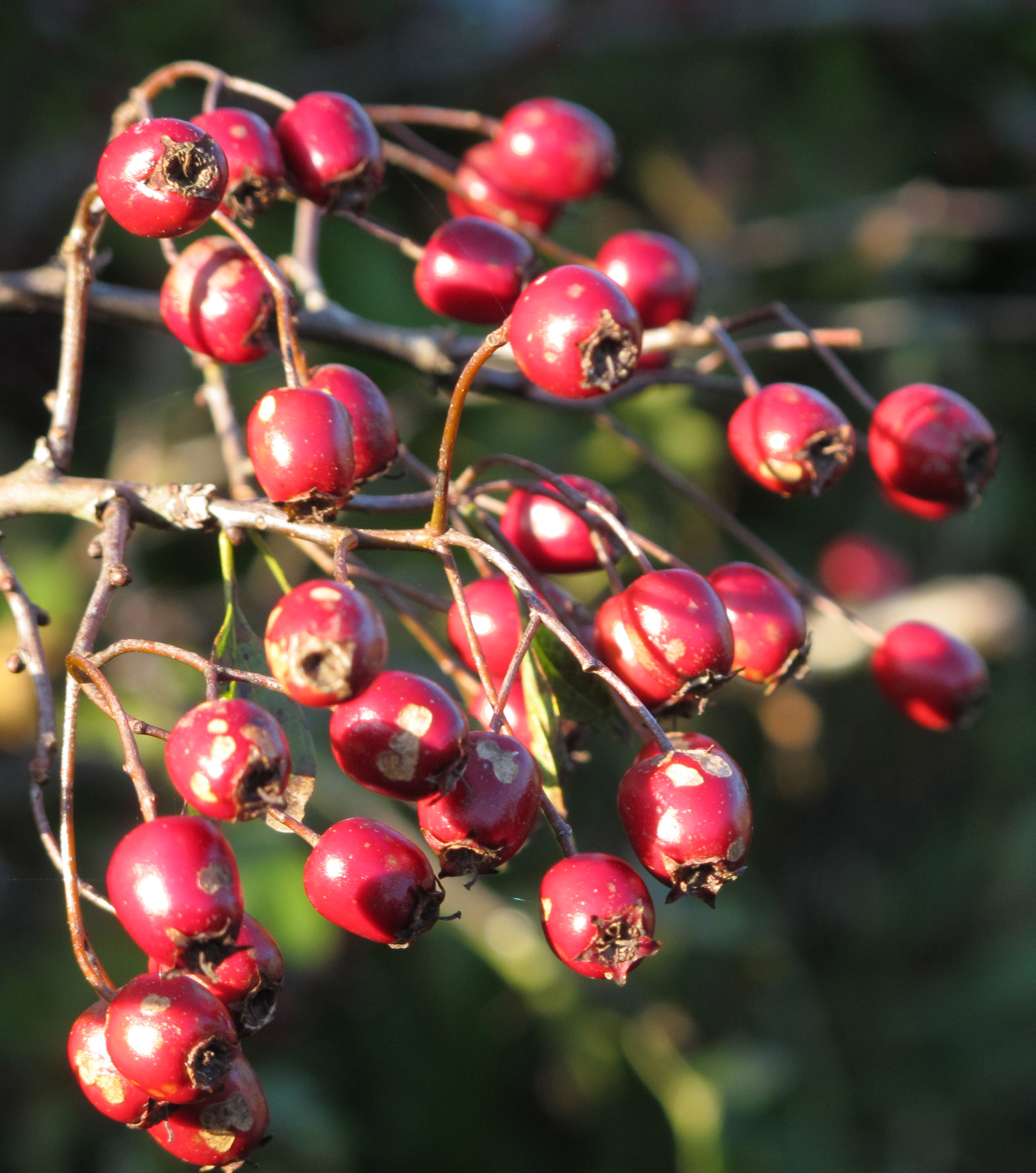
Deeply Irrelevant Photo: Red berries in the fall

Deeply Irrelevant Photo: Red berries in the fall

“Everything they do is about protecting the gun,” he said, angling his body so one hip was away from us and one elbow blocked the imaginary pistol. It means they keep a distance, he said, and that means they have to talk louder. So instead of de-escalating a situation, they stand apart, shouting directions, and everyone gets anxious and angry. In some situations, their guns gave them a false sense of security. He once saw them not search the area around a prisoner in a drug den, although a chisel was within grabbing distance.

What J. learned in his career was to de-escalate. Even in a drug raid, when he was leading a team that had just broken down an apartment door, he found he could keep a normal distance and speak quietly, bringing calm to the situation.

Not carrying a gun, he says, means British cops have to be sensitive to danger and attentive to what is going on around them; carrying a gun means having to keep your distance, because if someone comes at you quickly and you’re too close, you won’t have the chance to use it. That distance changes how policing works.

It’s something to think about.

What to wear if you want to annoy Buckingham Palace

I don’t care how silly it is, I have to weigh in on the flap over how the U.S. press corps dresses when Will and Kate (W. and K. from here on, because, hey, I don’t care if they’re royal, why should they get to use their full names here?) meet with President Obama (President O.).

If you haven’t been following the story, then congratulations: That shows good sense, which you can now pitch out the window while I tell you about it. Buckingham Palace issued a dress code for journalists covering the event, and threatened not to let them in if they violated it. It specified:

  • No jeans.
  • No trainers.
  • No casually dressed members of the media or technicians.
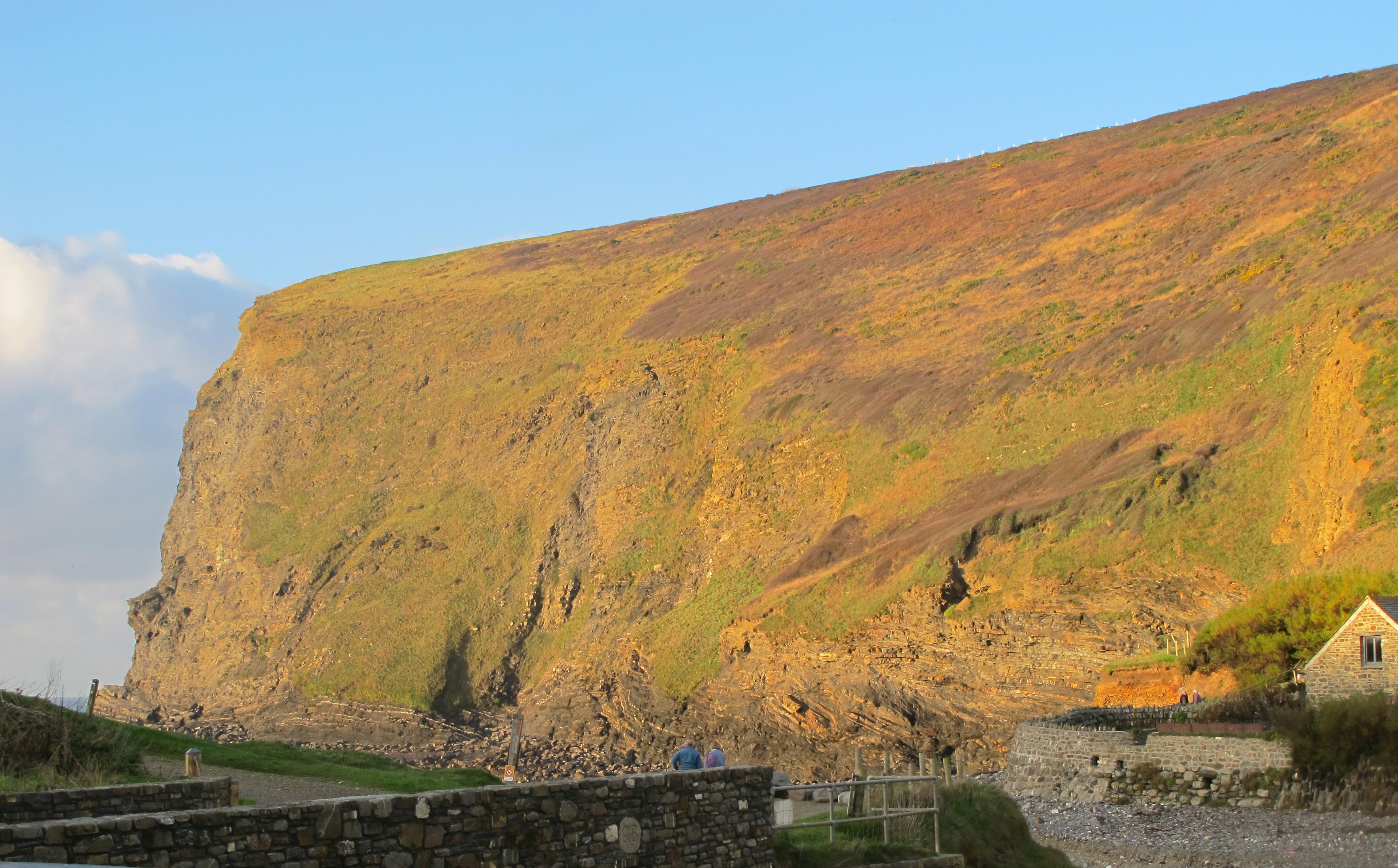
Irrelevant Photo: Cornwall's north coast

Irrelevant Photo: Cornwall’s north coast

To which one press corps member responded, “First of all, what are ‘trainers,’ or for that matter, ‘technicians’? And second, why should the United States’ press corps—who barely bother to brush the muffin crumbs off their polo shirts before lobbing questions at the President of the United States—schlep extra pieces of clothing to work just so they can make small talk with a (perfectly nice-seeming) British air ambulance pilot-in-training and a former chain-store accessories buyer?”

Buckingham Palace fired back by asking, “What’s schlep?”

Okay, that part hasn’t been publicized. It’s just one of those things I intuit.

Having established a constructive dialog, Buckingham Palace (B.P., for the sake of even-handedness) then canceled its dress code and left it up to the White House (what the hell: W.H.) to establish one. Or not. The press corps celebrated by tucking the pajamas they’d planned to wear to the press conference back under their pillows and hanging their toothpaste-flecked bathrobes back on the peg behind the bathroom door. Which strikes me as kind of sad, since I’d have loved to see the footage.

But the silliness goes on. When I looked the stories up online so I could provide links, I dipped into the comments (you’ll find some at this link and others at the link above) and found people, in all seriousness and in some cases with considerable heat, debating whether all Americans are slobs; what the W.H. press corps actually does wear; whether or not it was a sad day for the U.S.; whether the country under discussion is the U.S. or America; who won the war (unspecified, but presumably the War of Independence, a.k.a. the Revolution); whether and when K. wears underwear (don’t ask me, folks; I don’t care if she does or not, although I question the motives of people who spend their time writing about it); when (no whether involved here, apparently) Harry (sorry: H.) visibly doesn’t wear underwear and shows the crown jewels to all and sundry; and why the dress code was a violation of the First Amendment.

The First Amendment, in case you’re wondering, covers freedom of speech, assembly, and religion: “Congress shall make no law respecting an establishment of religion, or prohibiting the free exercise thereof; or abridging the freedom of speech, or of the press; or the right of the people peaceably to assemble, and to petition the government for a redress of grievances.” The founders meant to say something about dress codes but they were rushed that day. These things happen. Setting up a new country is a chaotic business. Besides, I’m not sure pajamas had been invented yet. It was still all nightshirts and nightcaps. This is the problem with a strict interpretation of the constitution.

One particularly heated commenter seemed to be confusing the Rupert Murdoch’s News of the World newspaper phone hacking scandals with the British government’s phone hacking scandals. Lots of us suspect Rupert Murdoch runs the country, possibly with a little help from his friends, but honest, he isn’t the government yet.

The comments are even more fun than the original flap. Or sadder. Or possibly both. Anyway, they all provide an insight into the contrasting insanities of the two countries . And let me be clear about this before someone thinks I’m insulting either of them: I’m convinced that every country on this planet has its own set of insanities. The two that have had it in their hearts to issue me passports are not unique in this.

And trainers, for those of you who need a translation, are running shoes. Or athletic shoes. Or whatever. You know—those things that I’m still convinced we should call sneakers.

Delivery Trucks and Village Gossip on the Cornish Roads

On Monday, I drove to a nearby hamlet to pick up a couple of blueberry plants. The hamlet’s locally famous for its road, which is one lane wide, closely hedged on both sides, and shaped more or less like a gigantic Z. Periodically, a delivery truck will get stuck on the one or the other of the Z’s angles. Or maybe that was only one truck, one time, but by the time the story worked its way to our end of the parish it’s happening once a week, and the trucks get stuck so thoroughly that road only stays open because of a Bermuda Triangle effect: No sooner does a new truck got stuck than it’s wafted bodily to wherever it is that trucks go when they’ve been not just good but a tiny bit careless as well.

Irrelevant Photo: Late Afternoon Light

Irrelevant Photo: Late Afternoon Light

So there I was, leaving with my blueberry plants, and what should I end up following but a truck. It was a blocky, one-piece thing—the kind that could deliver a dining room table, say, or a couch—and it was moving creeping along the way driver do around here when they’re looking for an address, which is another way of saying that it was lost. Except for one small patch of the village, addresses out here have nothing to do with street names and house numbers. Most of our roads don’t have names and most of our houses do, although they don’t necessarily display those names where you’d think to look for them. Most drivers find the post code they’re looking for, then wander helplessly, hoping to spot a name plaque.

Abandon logic, all ye who enter here.

I should have turned around and taken long way home, but—I guess it was curiosity that made me follow the truck. Here was parish legend, about to enact itself in front of my eyes. How could I turn away?

The truck reached the bend and stopped.

It sat there.

I sat there.

Beside the bend is a farm gate, and from behind the gate a dog barked.

I walked up to the truck to ask if they were okay. I mean, what with Bermuda Triangle effect and all, I might be the last person to talk to them. Before I could ask, though, the driver jumped down and asked if I knew where Tre-something was.

This being Cornwall, half the houses are called Tre-something. “Tre” is the Cornish word for homestead. Or according to some people, place. Or town. I don’t speak Cornish, so I can only report the muddle that’s passed around in the name of wisdom. Half the villages are also Tre-something, so I expect the rumors are right: It means both.

The villages that aren’t Tre-something are Saint Whosit.

I’m not good at remembering which house is named what, so I didn’t have a clue where Tre-something was. I asked about the post code and the passenger called it out to me from inside the truck.

This might have been helpful, but I didn’t know the hamlet’s post code.

I can’t think what they’d have done if they hadn’t run into me.

At this point in most can-you-tell-me-how-to-find conversations, the driver decides I’m not worth listening to because with my accent I can’t be local, but these guys didn’t do that. They were desperate, on top of which I hadn’t offered any information for them to dismiss, but even so it made me absurdly fond of them.

Finally the dog barked long enough to bring first one person out of the farmhouse and then two more. The driver asked the first one asked about Tre-something and she asked the other two, then one of them asked who lived there and all four of us shook our heads and said we didn’t recognize the name. At intervals, one after another, we repeated “Tre-something” as if that would help, and we shook our heads some more.

The dog kept barking. I began to suspect it knew Tre-something.

I asked about the farm’s post code and we established that it was the same as the one the guys in the truck were looking for.

If we’d gone on any longer, we’d have asked what they were delivering and what color it as and whether it matched the curtains, but instead one of the people from the farm said he was fairly sure Tre-something was on the other side of the ford. I was fairly sure it wasn’t, not because I knew the first thing about it but because I was convinced that post codes change when they cross water. But honestly, I’ve lived in the parish for eight years. The people on the other side of the gate have spent their lives here. I know—on rare occasions—when to shut up, and I did.

“If it’s not there,” the man said, “you can ask at the post office.”

This is the universal answer to can-you-tell-me-how-to-find questions. The driver headed for his truck.

At this point, I noticed that the truck’s front bumper was snuggled sweetly into the farm’s stone wall, which forms the most unforgiving part of the Z bend. The truck wasn’t, strictly speaking, too big to make the turn, but it was big enough not to make it easily.

I backed up to give it space. It backed up, with the help of some gesturing from behind the fence. In addition to an altruistic desire to help, the people behind the gate wanted to protect their wall.

Before the truck had backed far enough to try the bend again, I understood, with all the clarity of revelation, I didn’t want to be behind it if and when they didn’t find Tre-something on the other side of the ford. The road doesn’t make any sharp bends on that side, but it’s still only one lane wide. If they got into another long conversation, it wasn’t going to be as interesting—especially since I’d be out of excuses for jumping out of my car and joining in. So I backed up 100 yards (I’m making up the numbers, as I make up most numbers, but it was a fair distance) before I could turn in someone’s driveway, and I went home the long way, sacrificing my chance to see if the truck made the turn.

By the time I passed the post office, the truck was parked outside.

I never found out what they were delivering, but I bet someone in the post office did.

Walking the Footpaths in a Cornish Village

On Sunday, I joined the Parish Plod, an event whose aim was to make sure every footpath in the parish was walked in a single day. It’s not a traditional event, but I’m guessing it could turn into one.

We broke into five groups, followed our assigned footpaths, reported back on work they needed, and drank caffeine at one of the beach cafes (and one lucky group stopped at Wooda Farm, a midway point on their route, for homemade cake).

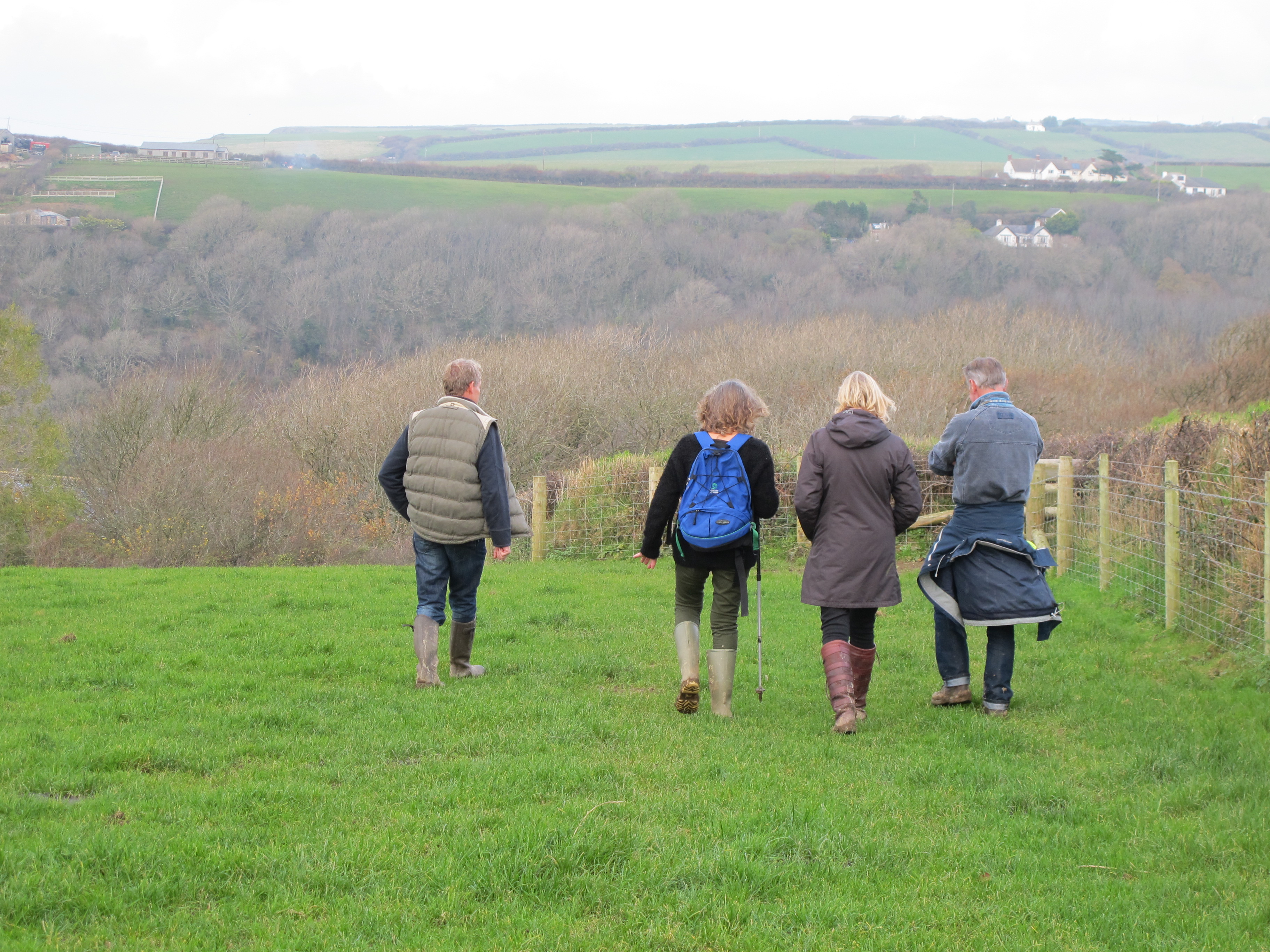
The Parish Plod

The Parish Plod

Eventually, as so many things do, it ended at the pub, at least for some of the walkers.

A word about footpaths in the U.K.: Forget your castles, your cathedrals, your stone circles—the footpaths make me feel I can almost touch history here. I’ve followed paths that have been walked not just for centuries but for thousands of years, and they’re still in use. People walked them before running shoes were invented. Before maps. Before metal. Before pubs, even. The people who built the stone circles walked them, and they saw at least some of the same wildflowers. (Land use patterns and imports would have eliminated some and added others, but some would have been the same.)

These footpaths are protected public rights of way, giving walkers the right to cross private land. They take you across fields, through herds of cattle and sheep, through mud that comes up to your ankles and fights for your boots, along the cliffs by the coast, and sometimes through a farmyard or past someone’s front windows. Some landowners hate them, but if you buy a house with a footpath, then you own a house with a footpath. It’s like owning a house next to a road: You don’t get to move the road just because you’re not crazy about the traffic. In 2004, Madonna butted heads with the laws governing footpaths after she bought a modest little mansion whose land included a footpath, and she came away with a bruised forehead when she tried to close it.  She did win the right to limit people’s access to parts of her land, but ramblers (as dedicated hikers are called) kept the right to cross it.

parish plod 004

Cattle making sure we left their field as we found it.

Many of the old footpaths have been lost, so the ones left in our parish don’t entirely link up, but the ones that are left are a real asset, loved by both tourists and local residents.

The group I went with got back to the café first (we had the shortest route), declared ourselves the winners, and waited for everyone else to straggle in. I brought the dog down to the stream and washed the mud off her, then we came back equally wet and cold, so at least I hadn’t done anything to her that I hadn’t done to myself.

I’ll be surprised if we don’t do it again next year.

Domestic Wildlife

Monday: We have a mouse problem. At least we think we do. The four-legged residents are paying a lot of attention to one corner of the spare room.

Let me be clear about this. We have two cats. Two of them. Enough, you might think, to vanquish even the wiliest of mice, but no, it’s the dog who usually gets rid of them. The dog who looks like a wind-up toy dreamt up by a particularly extravagant little girl. And not some tough, tree-climbing little girl, but the over-the-top stereotype of a little girl in the pink princess dress, complete with the wings and the wand. If she got the job of inventing a wind-up dog, Minnie to Moocher is the one she’d invent.

Never underestimate a foo-foo little dog. Or a girl in a pink princess dress. She—that’s the dog, now, not the girl—is a stone cold killer.

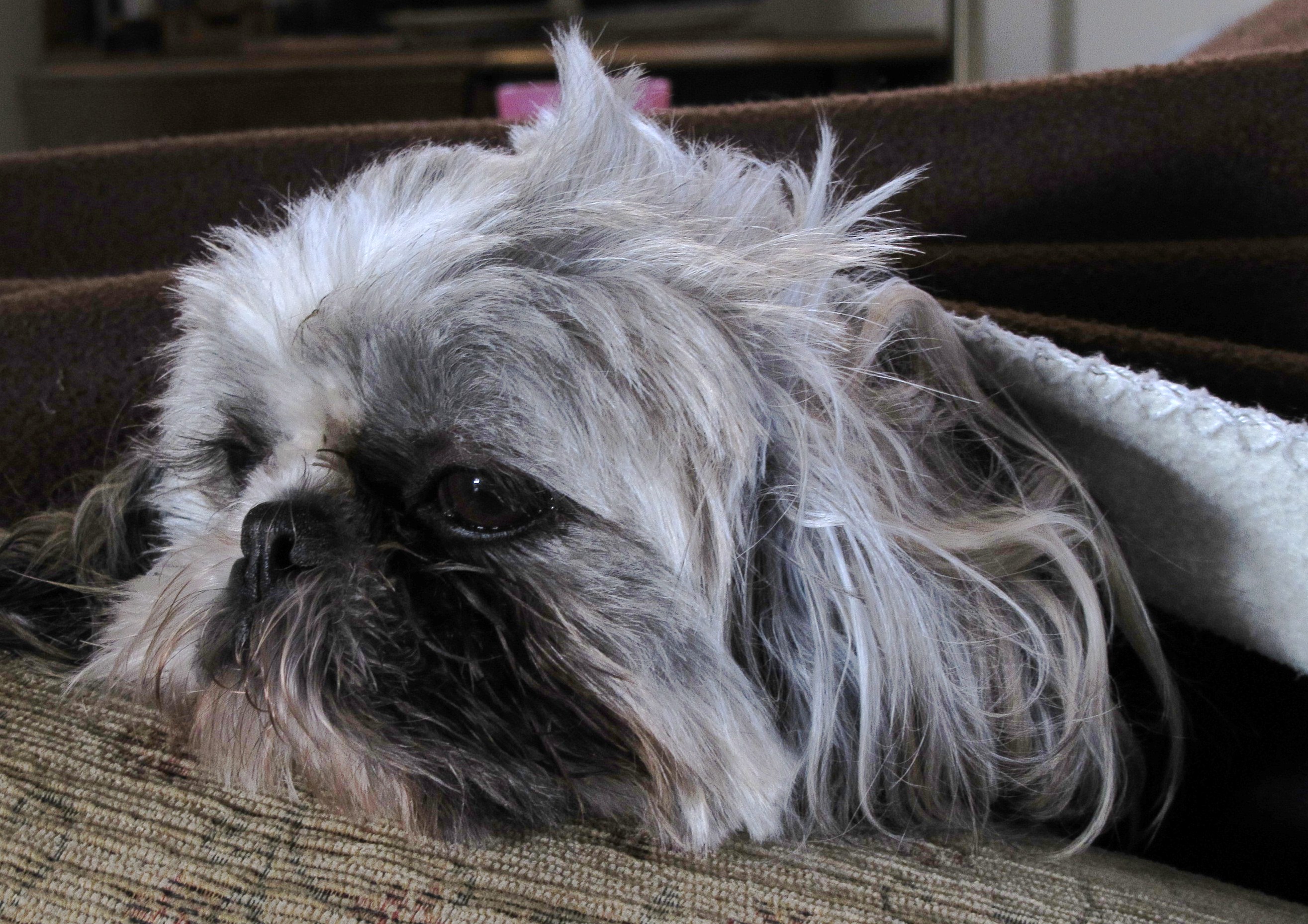
Minnie the Moocher, also known as Killer

Minnie the Moocher, also known as Killer

But we have to start back a way. We live in the country. The weather’s getting cold. Mice are surely looking for a nice warm place to bed down for the winter, but that’s not how the current one got in. I’m sure of that. Our younger cat, Smudge, brings them in. He wants to start a captive breeding program. We’ve discussed this with him, but have you ever tried arguing with a cat? Save your breath. They’re always right. He thinks like a feudal king: Once he stocks the forest—or the back room—with enough game, he’ll keep himself amused forever.

The little horror is one hell of a hunter. When he was younger he brought in birds, mice, voles, rats, and moles, some dead and some living. I’m not sure which were worse, the ones that were so mangled we had to kill them or the ones that were so unmangled that we ended up crawling all over the house, throwing furniture as we went, while we tried to catch them.

One of the rats was in perfect health. He’d brought it in courteously and left it to explore its new surroundings. I was nowhere around, lucky me—I think I was doing the book tour for Open Line—and it took Wild Thing a full day but she finally killed it by bashing it with the bread box. The hunt involved a lot of yelling and some interesting language, none of it on the part of the rat.

Wild Thing did not get her name by accident. And I really do call her that a good bit of the time.

When we found the second of the moles, it was trying to dig its way out through a wall. It’s almost a swimming motion, the way they dig. I got a plastic box with a lid and Wild Thing got the heaviest pair of gardening gloves she could find. She lifted it into the box, it tried to bite her, I put the lid on, and we drove it to a nearby field. The whole time it was in the box, it kept making those swimming motions, digging its way to freedom. When I let it go, it hit the earth still digging.

I’m a city girl so I don’t really know, but I hope the farmer didn’t mind an extra mole in the field.

When we have to catch living creatures, I’m no worse than Wild Thing. Okay, I’m not much worse. She’s bolder about it, but at least I’m useful. I am squeamish, though, about the wounded and the dead, and for the most part I leave those to her. It’s almost fair. She’s squeamish about cleaning the litter box or dealing with cat vomit. But when she had ankle surgery (which has happened three times now, and she only has two ankles) I’ve had to get over it. The first time, post-surgery, that I looked at a mangled but still living bird, I asked myself, Could you kill it if you were being chased by a bear?

I admit, the question makes no sense. If I were being chased by a bear, killing a wounded bird wouldn’t be at the top of my to-do list. I mean, how would that help? But it did focus my mind. I pulled myself together, took the poor thing outside, and bashed its little head in. It was quick and it was the best I could do for the poor beast.

I dealt with the dead and the mangled for many long weeks. Then Wild Thing started moving around without crutches and I got squeamish again. Funny how that works.

These days, Smudge doesn’t bring his prey home as often, and what he does bring is more likely to be fully dead, and if I find the corpse first I can make myself throw it away without waiting for Wild Thing to play undertaker. I use a broom and dust pan, then wash my hands as thoroughly if I’d just juggled a dozen dead rats and then gutted them, but still, I do get rid of it.

Wild Thing picks ‘em up by one foot or the tail.

Tuesday: We haven’t caught the mouse. For the past week, Wild Thing has had some kind of bug that involves waking up at 3 a.m., turning on the light, and coughing for half an hour, so she’s been sleeping in the spare room—the mouse room. Unless (we haven’t seen it yet) it’s a rat. Last night, when she went to bed, she heard some rustling in the corner.

You have to understand something about our spare room. It’s not large, but it does contain a single bed, a bedside table, a tall, narrow chest of drawers, a computer and computer chair, roughly 150 copies of the village calendar plus a box of envelopes for them, 196 plastic sleeves to protect exactly 4 posters for the village calendar, the prototype of the Soyuz space capsule, manuals for every piece of computer equipment that ever passed through our lives, most of which we no longer own, and a cement mixer. Plus a full-size Cornish gig, with all six oars.

I may be exaggerating, but I flinched away from taking a true and unflinching inventory. There’s a bunch of stuff in there, okay? And a mouse. Or quite possibly a rat.

Wild Thing, as I think I’ve already established, is not faint of heart. Her mother once faced down a pawing, snorting bull armed with nothing better than a broom, and won. Wild Thing is worthy of her heritage. But, c’mon, she was going to be asleep. And a rat—well, we both New Yorkers enough to know that rats are capable of crawling up to a sleeping person and taking a bite if their lips have a trace of food, and she’s been living on cough drops. When I say her lips are sweet, I’m not talking being romantic.

When she heard the rustling, she called out to tell me about it, at which point Smudge the mighty hunter went out the window.

I will say in his defense that he’s as sleek and beautiful as any cat, and as self-involved.

Wild Thing went into the living room, where Minnie and our older cat were still sprawled in front of the wood stove. She picked up the Minnie (who’s not allowed in bed), and took her to bed.

There were no rats in the bed that night. By the time Smudge joined them later in the night, there wouldn’t have been room for one.

The older cat is around 17 and never was much of a hunter. She killed a bird once, and Wild Thing took it away from her. She’s convinced Wild Thing ate it herself and she gave up hunting.

Wednesday 10 a.m.: After I wrote Tuesday’s section of this post, we set a trap, closed off the spare room, and caught nothing. As I type, Wild Thing’s tearing the room apart (I just heard a small avalanche; it sounded like paper mixed with broken crockery). Any minute now she’ll check the cement mixer and see if the mouse bedded down there. I expect it moved into the kitchen, though, or the living room, before we closed the room off. On Saturday we have a bunch of people coming over for a delayed Thanksgiving. Last year a mouse crashed the party and provided no end of entertainment. I’m hoping it doesn’t turn out to be an annual event.

Wednesday 4 p.m.: The spare room has a floor. I hadn’t known that. Everything that used to be on the floor is now piled on top of something else and looks frighteningly well organized. If you don’t look too closely. But what matters is that there were no traces of mouse or rat. What Wild Thing found was a set of wings. (Smudge is known for leaving wings, or the heart and lungs. What can I tell you. He’s a fussy eater.) I don’t want to think too hard about what Wild Thing heard and what the story of the kill was, although I’m sure Smudge would be not just happy but proud to tell the tale, in full detail and bleeding color.

We hope to get through our mis-timed Thanksgiving party without a mouse this year.

For the Americans reading this, hope you had a fine and mouseless Thanksgiving.

Classes, Couches, and Rest Rooms: Word Choice in Britain and the U.S.

N. read last week’s post on toilets and emailed to say that “toilet has a very lower class cachet in current English. Loo or lavatory are the posh versions, just like sofa vs. settee, sitting room vs. lounge, tea vs. dinner, dinner vs. lunch.

I’ve heard some of those pairings before but have trouble keeping track of which word is high on the class scale and which is low—an incompetence that I kind of enjoy. Let’s face it, it’s all arbitrary and snobbish.

mulfra 080

Cornish Engines. The abandoned mine shafts they mark went out under the sea.

The distinctions are equally arbitrary in the U.S., but the silliness we grow up with has a way of looking like perfect sense. When I was a kid, lunch was the down-to-earth meal. Dinner stuck its nose in the air and demanded white tablecloths (not to mention cloth napkins), and it was the evening meal anyway, which we called supper. I not only thought all that made sense, I thought it was fixed for all time and all places and all people. Where Wild Thing grew up, though, dinner was a big midday meal, something you’d have on Sunday, after church, and I’m sure that seemed just as inevitable and fixed.

Then we moved to the U.K., where the things people take for granted are completely different. Settee? To me that sounds fancy, as if I dropped into a Victorian novel. Sofa sounds more ordinary, although I call the thing a couch and it sits in my living room, since I don’t have either a sitting room or a lounge in my vocabulary.

And tea as a meal? When someone talks about eating tea, I get a mental picture of someone struggling with a knife, a fork, and a cup of liquid. I know that’s not what they mean, but no matter how often I hear it, that’s still what I see.

I like it when my vocabulary sets me outside some of the entrenched divisions. True, it sets me deep in the trench of another division, American vs. British, but I’d be there anyway.

I can’t prove this, but I have a hunch that, compared to their U.S. counterparts, the British upper (and, I guess, middle) classes spend an awful lot of time, and find more ways, to establish their separateness (and I’m sure they’d say superiority) through their use of language. It’s an interesting bit of sociology.

Both cultures, though, do their best to avoid saying what they mean when it comes to human waste. Toilet comes from the French word meaning a cover for clothes (toilette). From there, toilet became first the act of dressing, then a dressing room, and eventually that room with plumbing that polite people don’t mention. So basically, it started as a polite word meaning that room where we do those unmentionable things. Eventually, the unmentionable things contaminated the polite word and we had to find an even more polite word so we could back away from our meaning again. I mean rest room? What on earth does that communicate?

For what it’s worth, not every culture does this. The Middle English word for the equivalent of toilet paper was arse-wisp, according to the Online Etymology Dictonary. The Middle English did, apparently, say exactly what they meant, at least about this.

And unless someone brings up a fascinating new aspect of this discussion, I’ll stop writing about toilets for a while. Really. It’s not the thing I most love to think about in the world.

Link to an Interview

I keep promising myself that I won’t post any more links to me-related posts on other sites, and I keep making a liar out of myself. Partly because I’m at least as vain as the next person, partly because I want to promote The Divorce Diet–I really do love the book and I’m doing any number of absurd things in the name of promotion, so why draw the line here? But also because other bloggers have been generous in giving me space on their blogs, and I want to offer them some visibility in exchange. So whatever I may have told you about not posting more links? I lied.

Here’s a new link: Rachel Carrera runs a generous series of author interviews, and mine’s only one of many. Her blog is varied and interesting, ranging from writing to cats to autism and far beyond. Hope you’ll check it out.