
On August 13, the town of Clacton returned Reform UK’s poster boy Nigel Farage to Parliament, allowing him to declare victory over Coun Binface, who the Guardian describes as “a parody candidate dressed as an intergalactic rubbish bin.”
If you don’t follow British politics, that paragraph will have sounded odd. Just nod as if it made sense and stay with me. In another few seconds, you’ll have forgotten all about it.
Farage won 63% of the vote and Count Binface won 26%, which is impressive for a guy with a trash can on his head. Whatever’s left over was divided among the other 32 candidates.
Breaking with tradition, Farage stayed away from the high-point event where the candidates line up on stage and the winner is announced, along with the number of votes each candidate got. He said the police had advised him that “a plot was under way to embarrass him [in some tellings, this becomes a threat to his safety] when the result was declared. The Guardian understands that the force did not advise Farage not to attend.”
The BBC understood the same thing but I’ve lost the link. Would you settle for the Huffington Post? Same understanding. Same police force, plus a quote from the Reform UK chair calling the election a “great victory.”
In a separate explanation for his absence, Farage said, “Damned if I’m going to stand on a stage having won a resounding victory , , , to be demeaned and humiliated by nobodies.”
Admittedly, appearing with Count Binface might have been embarrassing, but no one needed a plot to make that happen, and it was Farage who set up the by-election by resigning from Parliament so he could run for the seat he’d just vacated, all of which is what opened the door to a contest with Binface.
The theory goes–and it’s convincing–that he resigned to derail a parliamentary investigation into a £5 million gift he didn’t declare. And a report–sorry, the article I’m relying on doesn’t name it–says Farage’s team told him that resigning would end the investigation. In which case, he might want to think twice about relying on his team next time.
The investigation restarted almost immediately and will have, I’m sure, taken in several other financially iffy actions by the time you read this, making the by-election as pointless and as expensive (£250,000) as it was entertaining, but I’m not writing about financial scandals today, kidlets, I’m writing about alcohol. More specifically, about alcohol and Parliament, because Farage–who’s often photographed holding a pint as if it’s his best and only friend–will waddle back to the booziest workplace in this beer-loving land.
What am I talking about? It turns out that drinking during working hours is not only not frowned upon in Parliament, it’s subsidized. In 2014, Parliament’s bars and restaurants cost the taxpayer £6 million.
It’s a funny thing, but when the Conservatives were on their everybody-has-to-make-do-with-less rampages, they don’t seem to have cast an eye on that line in the budget.
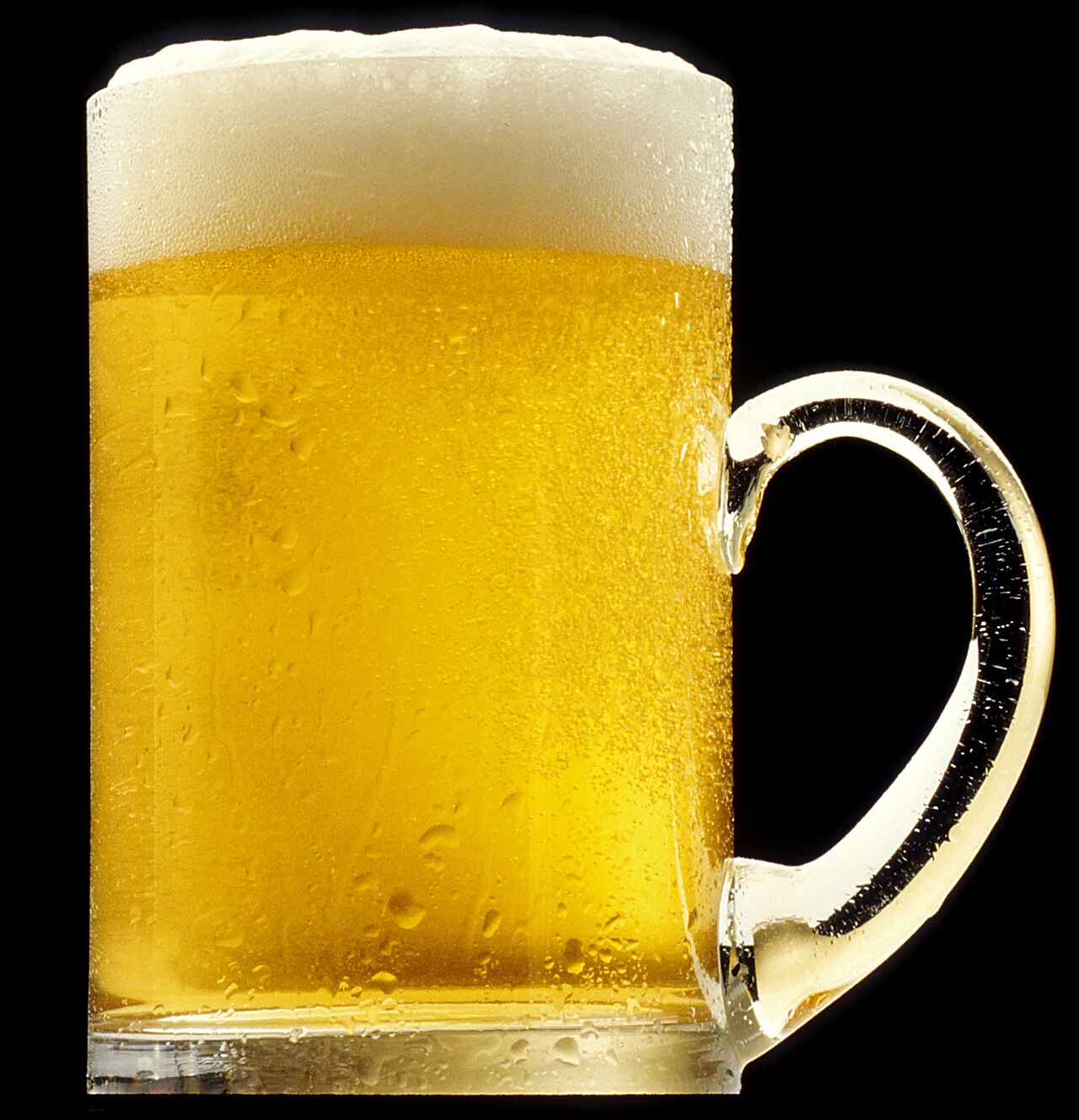
Beer. Compliments of Wikimedia, photo by Len Rizzi, cut by Jan Kameníček. What does “cut by” mean? Haven’t a clue.
Did I just make all that up?
No. By one count, the Houses of Parliament have nine bars on site, along with nineteen restaurants and cafeterias and one lone coffee bar. Included in that count is the Members’ Smoking Room. Members’ means it’s not open to the public. Smoking means nothing. It’s now non-smoking. But it does serve booze, as do, I believe, the restaurants and cafeterias.
Some of them are open to the public, assuming they’ve gotten passes allowing them to be there. Others are for MPs and staffers, and at least one bar and one restaurant are for members of the House of Lords only, protecting them from rubbing elbows with mere elected officials. Some eleven years ago, the Lords refused to save taxpayer money by sharing a catering service with the Commons. It would have forced them to drink an inferior brand of that over-priced fizz known as champagne.
I mean, honestly. The insult.
The booziness of the Westminster work culture landed in the news recently (not for the first time–it’s hardly a secret) because of a study by the Institute of Alcohol Studies. Among other things, the study mentions wine at breakfast meetings and alcohol flowing throughout the day. Soft drinks are so rare at events that MPs and staff members struggle to find them.
The non-financial costs
The impact of all that drinking includes sexual harassment, insults, shouting, swearing, theatening situations (or possibly situations that feel threatening, which aren’t exactly the same thing but never mind, I didn’t design the survey), and hungover or still-woozy colleagues. As one MP put it, “If I wouldn’t operate heavy machinery or drive a car, why should I legislate the laws of the land?”
Younger staff members–particularly women–feel pressured to drink so they’ll fit in.
Either pulling from some part of the report that I didn’t find or drawing on its extensive archive of bad ministerial behavior, the Guardian also mentions allegations of drink spiking and of one MP downing 200 units of alcohol per week. To pour that much down your throat, you’d need to drink ten pints per night. Or per day. Or in the name of moderation, you can divide them evenly between the two.
One MP talked about colleagues drinking so much they ended up in the hospital having their stomachs pumped, then returned to work the next day.
A newly elected Green MP said, “You can smell the alcohol when people are in between votes.”
Atmosphere
Going to a different source, a BBC journalist reporting on what the restaurants, cafes, and boozers are really like spoke to an anonymous someone on the catering staff, who said, “I’ve never seen anyone throw up. I’ve seen four or five pass out.”
Irrelevantly (but interestingly), the source said MPs are polite to the staff for the most part, but when they’re not their arrogance divides along party lines. A Conservative MP will say, “Do you know who I am?” A Labour MP will say, “Do you know how important I am?”
Maybe you have to have lived in Britain for a while to get the joke.
So what are the pubs etc. like? If you want to know about the ambience, follow the link above. This blog is ambience-free. What’s worth repeating is that the Sports and Social club got such a reputation for drunken brawls and general mayhem that in 2018 it was put under new management and its name was changed to the Woolsack.** I’ll go out on a limb and say it’s now suitably boring but I’d love to hear that I’m wrong. I don’t approve of the way they carrying on in Westminster, but I love disapproving.
When Parliament held late night sittings more often than it (apparently) does now, the Strangers bar was the place to find drunken MPs and party whips trying to keep them in line. (The article I’m working from says they were inebriated. If there’s a difference between that and drunk, other than that one crawled out of Latin and the other out of Old English, the mistake is mine and without the least hint of sarcasm I hereby apologize.)
If an MP is still capable of walking, he or she can leave the Strangers and wobble down a corridor to find function rooms, where receptions and events are held most evenings and where–this will surprise you, I know–the booze flows freely. And is free.
So will anything change?
I’m skeptical, although the younger generation is said to drink less. But a spokesperson for Parliament said, “Any changes . . . would ultimately be a matter for members to decide on.” The spokesperson also said everyone’s expected to drink responsibly and behave well, which of course they do. They’re also expected to vote with the country’s best interests at heart, not their own or those of the lobbyist who most recently poured them a drink.
And this is, without a doubt, the best of all possible worlds.
Footnotes
* Thirty-four candidates ran in Clacton, making the ballot the longest in British history. Printing it cost four times more than a normal ballot and left the council wrestling with the logistics of how to fold it into an envelope so it could be sent to postal voters. The major parties–Labour, Conservatives, Liberal Democrats, and Greens–didn’t bother to run candidates. Neither did Restore UK.
** The bar is named after a real woolsack in the House of Lords. I’ll quote Parliament’s website to explain that: “The Woolsack is where the Lord Speaker in the House of Lords sits and resembles*** a large square cushion covered in red cloth. In 1938 it was re-stuffed with a blend of wool from Britain and the other wool producing nations of the Commonwealth. The woolsack is thought to have been introduced in the 14th century to reflect the economic importance of the wool trade in England.” And here we are, seven centuries later, with someone called the Lord Speaker still sitting on a sack of wool.
*** In case it’s not clear, it’s the woolsack that resembles a large square cushion, not the speakers. Although I can’t swear that none of them have.

