About inconsistency: US and UK headline style

If you’re a regular here, you may have already read that I’ve worked as an editor and copy editor. And if you’ve worked as either one and scrolled through the site, what will jump out at you are not my screamingly irrelevant photos but my screamingly inconsistent headline style. Not to mention the editorial sins I commit in a smaller typeface.

What’s going on? I retired, that’s what. I turned in my Chicago Manual of Style. Really. I no longer own a copy, either current or out of date. That’s the bookcase equivalent of saying, “Screw it.”

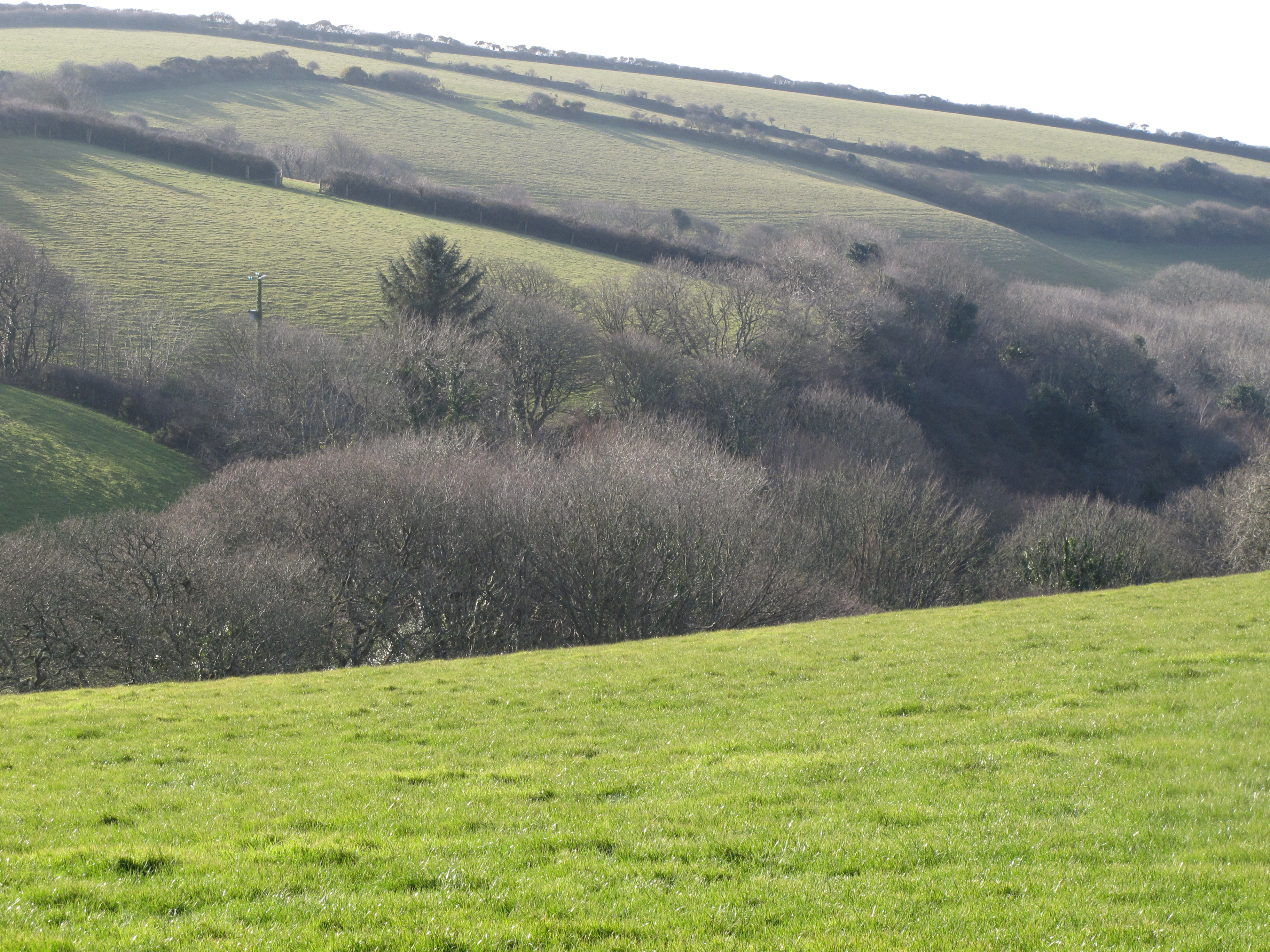
Irrelevant photo: Late winter landscape. Yes, that's grass. It's been sitting there, green, all winter.

Irrelevant photo: Late winter landscape. Yes, that’s grass. It’s been sitting there, green, all winter.

So where do I go to check my style decisions? Nowhere. On some days when I’m writing a headline I capitalize the first word after the colon and on other days I decide not to. For the most part, I’ve stopped using the American style, which capitalizes all the words in a headline except for the ones that never get capitalized because the rules are complex and copy editors need to prove we know something the rest of you don’t or why else would anyone hire us? The British headline style is simpler. As far as I’ve decoded it, it treats the headline like a sentence, which is great because you don’t have to worry about all those American exceptions: Everything but the first word and the proper nouns is lower case.

Ah, but what about the first word after a colon? I’ll break down and confess: I haven’t checked whether it’s capped or lower case because—cue maniacal laughter—I’m retired and I don’t have to.

It’s not that I don’t notice the inconsistencies in my headlines, and it’s not exactly that I don’t have a headline style, it’s just that on any given day I’m likely to decide that I don’t like the style I was using so why don’t I change it—without going back and changing the old ones so they conform?

Of course, once fussbudgetty editorial thinking lodges in your head, it doesn’t vacate willingly, so I haven’t danced unthinkingly off into inconsistency. I’ve danced off while throwing explanations and disguised apologies over my shoulder. So, sorry folks. I am thinking. I am noticing. I just don’t care enough anymore.

Weighing myself in the U.K. and in the U.S.

J. wrote me early in the year, saying (among other, more interesting, things) that she needs to lose ten pounds of holiday weight. I almost wrote back to ask, “What’s a pound?”

It’s not that I’ve forgotten exactly, and it’s not that no one measures in pounds here. Like everything else about living in a country that isn’t at heart your own, it’s complicated.

In theory, most weights are still given in two systems, metric and imperial, to humor the folks who grew up calculating in a pre-metric world and are either too old or too cantankerous to switch over. Or in my case, too old, too cantankerous, and too mathematically incompetent.

Right. That's me, weighing myself. In grams and kilos. Photo by senov.

Right. That’s me, weighing myself. In grams and kilos. Photo by senov.

Our bathroom scale measures in both kilos (2.2 pounds) and stones (14 pounds). Stones are subdivided into pounds, so it’s not that the pound isn’t on there, just that it’s illegible. To make room for two ways of measuring, the manufacturer had to use small print. Insurance-form size print. But even if the print was large enough for me to read and therefore know that I was something stones and something else pounds, I’d still have to multiply the stones by fourteen, which I’m incapable of doing on the hoof and not interested enough to do with a calculator or a pen and paper. I mean, as long as your clothes fit, who cares?

Well, me, at least enough to step on, if not enough to work out the result.

A sensible person—or one who seriously cared to track her weight—would forget about pounds and switch to one or both of the new systems, but you might as well ask me to track my weight in tablespoons, or in cubits, because the new systems don’t mean anything to me. I look at the numbers. I think, I should remember this. And then I walk away, remembering only that I should remember. Numbers do that to me. I look at them and see an elaborate version of almost nothing.

I do have a kind of geographic memory of where the needle usually sits: halfway between two of the larger marks. When it creeps toward the one on the right, I’ve put on weight. When it creeps to the left, it’ll move back to the middle any day, so it doesn’t mean much.

What are the numbers that the needle sits between? I’m not being coy here; I honestly don’t remember. I mean, I still haven’t learned the multiplication tables. You expect me to know my weight in imaginary measurement systems?

But my weight in pounds? I could remember that. At least I remember what it was when I lived around scales that measured in pounds, because I understand in my body what a pound is. Maybe it comes from growing up with them—from measuring in pounds and feet and inches the growing amount of space I took up in the world. To the extent that I can guesstimate a kilo, it’s only in relation to a pound—twice as much with a little extra thrown in.

And a stone? Are you kidding me?

When I first started buying lunchmeat at the deli counter in our local supermarket (which no one but me calls a supermarket, but that’s a different tale), I asked for a pound. Because that’s also an amount of money, the kid behind the counter froze in front of his scale. Maybe I wanted a pound’s worth of lunchmeat. That’s a measurable amount, although not a hell of a lot, but no one asks for it that way. I said, “Half a kilo?” since in the essentially nonmathematical world I inhabit, that’s close enough to a pound to make me happy. He still looked as if he’d been swept up by a tornado and dumped back in math class: If lunchmeat A leaves display plate B at 10:45 and arrives on scale C weighing half a kilo, how long will it be before my manager yells at me for upsetting a customer?

“Five hundred grams?” I said, feeling as if I’d been swept up by that same tornado and dumped in some alternate universe where I could solve a math problem more easily that some other human being. It was destabilizing, but relief flowed over the kid behind the counter as visibly as if someone had poured it over his head from a bucket.

He weighed my five hundred grams, stuck the label on the bag, and handed it over.

To me, the vegetarian. But that, too, is a whole ‘nother story.

So I haven’t a clue how much weight I’d like to lose. Some of my clothes fit just fine, but the washing machine’s been selectively shrinking the smallest of my jeans. They’re not making denim like they used to. They are, sadly, making desserts exactly like they used to, and my body remembers them fondly. It doesn’t want to let them go.

What I know is this: I weigh something or other. It doesn’t really matter how much. When I stand on the scale, the needle moves and I’m reassured that I’m still present in this strange world of ours.

British and American accents: Talking trash to an I-Pad

M. and Wild Thing and I were trying to figure out what time it was in Singapore. You know how sometimes you just need to know that kind of thing? So Wild Thing grabbed the I-Pad she bought last week and said, “Hey, Siri.”

“What?” M. asked.

“She has an imaginary friend,” I said.

“I’m talking to Siri,” Wild Thing said.

My point exactly.

In extended and increasingly colorful ways, M. and I said, “Sure you are.”

Irrelevant photo: Our dog, who's real, even if she looks like a windup toy

Irrelevant photo: Our dog, who’s real, even if she looks like a windup toy

“Siri?” Wild Thing repeated to her I-Pad.

She might as well have been talking to the teapot. So while M. and I discussed the nature and uses of imaginary friends (in increasingly colorful and bizarre ways), Wild Thing—in the bits of air time she managed to snatch from us—explained that she’d set Siri up to have a woman’s voice and an American accent but that she’d reverted to being a British male—and a posh one at that.

Trust Wild Thing to have an imaginary friend with a sex change and an ambiguous national identity.

Because of the new accent, Wild Thing said, Siri couldn’t understand her, and that was why she wasn’t answering.

Unless he wasn’t answering. I don’t want to be insensitive, but this sex change business gets confusing when you’re dealing with invisible friends and virtual beings.

But forget about gender—it’s simple compared to accent. To what extent is an invisible British friend able to understand an American accent? I mean, just how parochial is she or he? And if the American accent’s a problem, is he or she (or, well, whatever) able to understand a working class British accent? Or a Welsh one? Or—well, you get the point: How narrow a range of tolerance are we talking about here? What happens if you have, let’s say, an Iranian accent in your English? Do you have to, and for that matter can you, set up your invisible friend to have her (or his, or whatever’s) very own Iranian accent in English?

I haven’t been impressed with the breadth of understanding demonstrated by virtual voices. We were in New Zealand once, and Wild Thing was on the phone with a computerized system.

“Yes,” she said in response to it doesn’t matter what question.

“I’m sorry,” the computer said, “but I didn’t understand that. Did you say ‘address’?”

“No, I said ‘yes.’”

“Did you say ‘guess’?”

And so forth until Wild Thing pinched her nose and, in her best imitation of a kiwi accent, said, “Yiss.”

“Thank you,” the computer said. (And sent a dress to the wrong address. Not that the address mattered. The last time Wild Thing wore a dress, splinters hadn’t been invented yet. And no, we’re not going to discuss how long it’s been since I wore one. It’s enough to say that I may still remember which end faces the feed.)

But back to that New Zealand virtual voice: What happens if you have a lisp and your yiss sounds like yith? You can’t order 80 kilos of chocolate covered Turkish delight by phone, that’s what, because you can’t confirm your order. You can’t call for a cab. You can’t let the bank know that your credit card just wandered off without you. Because the voice is set to the local accent—one local accent, and if it doesn’t happen to be the one you have, you’re skunked.

Or that’s my, admittedly limited, experience.

Apply this to invisible friends and you have to wonder, How much do they have to be mirror images of ourselves in order to understand us, or in order for us to accept them? If the posh, imaginary British man can’t understand (or be accepted by) the un-posh but entirely real American woman who’s talking into her teapot, what chance do the flesh and blood inhabitants of this planet to have to work out our differences?

M. and Wild Thing and I didn’t have time to explore that question, although no doubt the world would be a better place by now if we had. M. was heading home and we were out of time, not to mention cookies.

Wild Thing had addressed her I-Pad multiple times by then and swore Siri had answered her. Me, though? I didn’t hear a thing. And I’m prepared to speak for M. as well: She didn’t either.

Protecting children from English geography

Breaking news: Programs intended to protect children from online pornography and in-head dirty thoughts are filtering out sites whose names include the words Essex and Sussex. Wessex wasn’t mentioned, and I’m not even going to try to explain that.

So there you go. You heard it here first. Or possibly second, since the BBC broke the story. I’d give you a link but it doesn’t seem to be online.

What, you say, an earth-shattering story like that?

Indeed. And I’m sure there’s a conspiracy out there to suppress it.

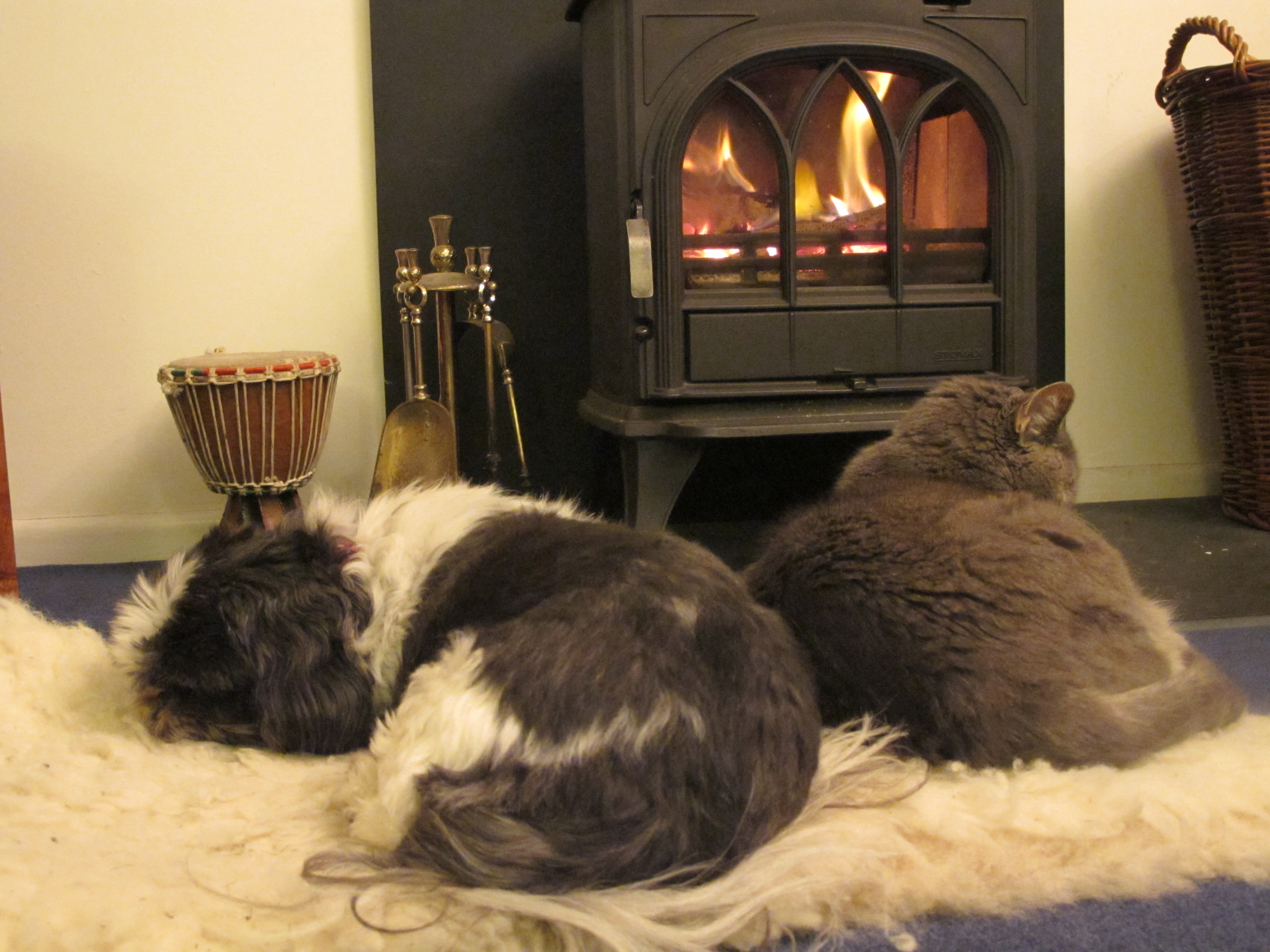
Screamingly irrelevant photo: What we do on a winter evening

Screamingly irrelevant photo: What we do on a winter evening

Beer and British politics: The Pub Landlord runs for office

British politics just got a bit less depressing: A new candidate just entered the race for a parliamentary seat, a comic named Al Murray running under the name of his comedy character, the Pub Landlord. His party’s logo looks a lot like the one the U.K. Independence Party (Ukip) uses, and although I hate to give Ukip any space in my earth-shatteringly influential blog, the joke doesn’t work unless you know a bit about who the Pub Landlord’s making fun of.

Ukip wants to take the U.K. out of the European Union and get rid of all of us pesky foreigners. Or maybe they don’t want to get rid of quite all of us, because Ukip’s leader is married to a woman from Spain, so presumably they’ll make exceptions, but basically they don’t like furriners coming over here, taking British jobs and speaking funny languages on their streets. Last I heard, the party leader’s wife had a paid job in his office, but I guess that wasn’t a British job, it was some other kind of job, so it must be okay.

Irrelevant Photo: Mulfra Quoit, an ancient monument in West Cornwall

Irrelevant Photo: Mulfra Quoit, in West Cornwall

What else does Ukip stand for? Well, it sort of depends when you ask and who you ask and what sort of mood they’re in. And whether they’re still in the party, because periodically one of their candidates goes too far and gets thrown out. One proposed banning Islam and tearing down mosques. Another posted anti-Semitic and anti-Muslim statements on his Facebook page. A third was convicted of assault. Let me quote the Mail Online here: “The Ukip official charged with vetting the party’s election candidates has revealed he spends half his time ‘weeding out the lunatics’. . . .

“The remarks come after one Ukip candidate was recorded making homophobic, racist and obscene comments—while another was exposed as a fantasist after becoming embroiled in a public sex scandal.”

Ukip does stand for a good pint of beer, though—that’s been pretty consistent and to date no one’s been thrown out for it. And they’re polling well considering that they’re a minor and basically bonkers party. Well enough to scare the bejeezus out of the major parties and drag them all into a discussion of what to do about immigration, as if everyone agreed that immigration is what’s wrong with—and probably the only thing wrong with—the country.

But back to the new party: Its name is Free United Kingdom Party, or FUKP. (Yeah, go ahead and pronounce it.) And what’s its platform? The Pub Landlord promises to burn down the Houses of Parliament for the insurance and brick up the Channel Tunnel to keep immigrants out. His most inspired proposal is revaluing the pound so it’s worth £1.10. About cutting immigration, he says, “This is the greatest country in the world and people want to move here. We need an MP to make things worse. Look no further.” On corporations and globalization, he says, “Blah blah blah paradigm blah blah blah, blah blah dialectic blah blah blah blah blah blah game-changer.” Which is pretty much what all the politicians are saying.

Finally, he pledges that the U.K. will leave Europe by 2025 and the solar system by 2050.

Politics hasn’t made this much sense since Screaming Lord Sutch ran on the Official Monster Raving Loony Party ticket.

A new page

For  anyone who’s not sick and tired of me yet, I’ve added a page of links to essays, posts, and assorted other stuff I’ve published elsewhere on the web. You’ll find a damn good recipe for carrot-pineapple cake, an article on uplifting music and TV shows about breakups (hey, I’ll do damn near anything to promote The Divorce Diet), and all sorts of other weird stuff.

Cops and guns, U.S. and U.K. style

No jokes today. Sorry.

Not long after the grand jury voted not to indict Ferguson, Missouri, policeman Darren Wilson for shooting Michael Brown, Wild Thing and I were sitting around the kitchen table with J. and M., talking about cops and guns. J. is a retired British policeman, which is another way of saying that he’s used to working without a gun. U.K. police forces do have armed response teams, but they’re the exception, not the rule. The cops you see on the street are unarmed.

J. did some training for the German police, who are armed, and he came away from it convinced that the gun can be a liability.

Deeply Irrelevant Photo: Red berries in the fall

Deeply Irrelevant Photo: Red berries in the fall

“Everything they do is about protecting the gun,” he said, angling his body so one hip was away from us and one elbow blocked the imaginary pistol. It means they keep a distance, he said, and that means they have to talk louder. So instead of de-escalating a situation, they stand apart, shouting directions, and everyone gets anxious and angry. In some situations, their guns gave them a false sense of security. He once saw them not search the area around a prisoner in a drug den, although a chisel was within grabbing distance.

What J. learned in his career was to de-escalate. Even in a drug raid, when he was leading a team that had just broken down an apartment door, he found he could keep a normal distance and speak quietly, bringing calm to the situation.

Not carrying a gun, he says, means British cops have to be sensitive to danger and attentive to what is going on around them; carrying a gun means having to keep your distance, because if someone comes at you quickly and you’re too close, you won’t have the chance to use it. That distance changes how policing works.

It’s something to think about.