As Britain leaves the European Union

What’s going on with Brexit, you ask? It’s been strange over here, and it’s getting stranger.

First the prime minister set up a referendum on whether Britain should leave the European Union. Why? Because he wanted to shut up the anti-EU wing of his party, the Conservatives. Clever move, Dave.

Then the whole thing went wrong, the Conservative Party dissolved into an internal arm wrestling match, and the country voted to leave the EU. Clever Dave announced that he’ll resign as soon as someone in his party wins the arm-wrestling match, which is now about who gets to replace him.

Bye, Dave.

Moody and irrelevant photo: a man watching the fog roll in.

Moody and irrelevant photo: a man watching the fog roll in.

Then the MPs who belong to the Labour Party, who you’d think would be out celebrating the Conservative-on-Conservative war, called for a vote of no confidence in their own leader, Jeremy Corbyn, who they’ve hated from the time he was elected because he’s from the left wing of their party and they’re not. They blame him for not making a stronger case for staying in the EU.

Corbyn, who was elected by a large majority of the party membership, refused to resign. The Labour Party dissolved into an internal arm wrestling match. Actually, it started when Corbyn was first elected, but it’s gotten worse now.

In the meantime, the Scottish National Party announced that it will demand a second referendum on Scottish independence. Most of Scotland voted to stay in the EU and now they want to leave the UK so they can.

Then they read the small print on something or other and announced that the Scottish Parliament has the power to stop the UK’s exit.

Who knew that? Apparently no one.

A petition calling for a second referendum got so many signatures that the government web site that was hosting it broke down. In almost no time, it had several million signatures. Then a bunch of them turned out to be bogus. Still, that leaves a hell of a lot that aren’t.

It turns out that the petition was started by someone who supported the Leave campaign but didn’t expect it to win. It was hijacked, he said, by Remain supporters.

Well, yes, dear. both sides of that sword were sharpened.

Dave—who, you remember, is resigning—says he won’t make the formal moves that will trigger the British exit. He’ll leave it to his successor. But the EU is calling on the UK to get on with it and end the uncertainty. They’re not in a good mood about all this, and they’d like the UK out of the room, please. The sight of us is bringing back ugly memories. But no one can trigger the Leave process except the country that wants to leave and that country–us–is stalling.

One of the promises of the Leave campaign was that if Britain left, it would save so much money that it could spend £350 million a week on the NHS, which is seriously underfunded at the moment. A few days after the vote, however, all references to that disappeared from the campaign’s website. The top Leave campaigners have all developed amnesia and don’t seem to remember saying that.

Meanwhile, the pound’s fallen to either a 30-year low or a 31-year low, depending on when you turned on your radio. The stock markets have gotten hives.

Polish immigrants reported being handed leaflets telling them to leave now. Assorted other incidents of harassment against Muslims, Poles, and in one incident foreigners in general have been reported, although in that particular incident there may not have actually been any foreigners present. A man in the supermarket started yelling about foreigners and questioning people about where they were from.

Keep in mind that when I say harassment of Muslims and Poles and foreigners, what I really mean is people who might be Muslims or Poles or foreigners, because it’s not always easy to tell. The same thing happens when people start pushing gays around: A few extra people who aren’t gay always get swept in because someone thinks they might be.

It’s hard to tell who to hate these days, you know? This may actually be good, because it reminds people who aren’t in any of those categories what it’s like to be the target of that kind of venom. Some very ugly forces have been unleashed in this campaign.

A lot of the Leave campaign was about “taking our country back.” Who from? It was a kind of fill-in-the-blank slogan. From whoever you think took it from you. For some people, that was an urban elite, because this was a heavily anti-elitist campaign—run by an urban elite who hope to take power from a different urban elite. For other people, it was foreigners, or Muslims, or Poles, or Eastern Europeans in general, or Asians or Africans, or people whose ancestors were Asian or African. It took some of the ugliest threads of the culture and brought them out into the open. Suddenly they felt respectable. Want to yell at foreigners in the supermarket? Want to yell at a young Muslim woman on the bus? The country just told you you could.

It didn’t, but never mind. A certain number of people feel like it did.

The part of the Leave camp that I’m sympathetic to is made up of people whose lives have been bulldozed by globalization. Steady jobs disappeared, industries have moved abroad, and people are left broke and lost and angry. They want to take their country back too. Unfortunately, I don’t think they’ll get it. Not this way.

According to a Guardian article, the Bank of America and Pimco, which I never heard of before, are “warning their clients that the gulf between rich and poor could add to the anti-establishment backlash,” and they consider the Brexit vote part of that.

The queen, by the way, is due for an automatic £2.8 million raise in pay unless the formula that calculates what taxpayers owe her is changed. That’s not related to leaving the EU, but I thought I’d toss it in anyway.

Here in Cornwall, where money’s tight and the EU has invested a lot and where the vote leaned heavily toward Leave, the Cornwall Council turned to the national government asking if they’d match that investment. Part of the Leave campaign’s promise was that once the UK didn’t have to pour money into the EU, it could be spent here.

To which I can only say, don’t count on it. The NHS won’t be getting any £350 million a week. If Cornwall gets any equivalent of the EU investment, I’ll be surprised, she said in a massive display of understatement.

One of the main Leave campaigners, Boris Johnson, wrote in the Telegraph that, basically, nothing good will change and only the bad things—the British involvement with the EU’s bureaucracy—will drop away.

And no one will get colds or flu again, ever.

I’m paraphrasing heavily, but I think I’ve caught the spirit of the column.

Commentators are starting to comment that the Leave campaigners don’t have a plan. We might have been wise to ask them about that a bit earlier, although I doubt it would have changed the vote.

I haven’t written about the referendum until now because it was hard to find anything funny about it. Now, though? It’s still not funny, but the situation’s weird enough to give me something to work with.

I apologize for not giving you links. There are too many. I’m overwhelmed. And in no time they’ll be outdated. In fact, I’m publishing this before my usual Friday deadline because it’ll be out of date otherwise.

Fasten your seatbelts, kids. I don’t know if it’s going to be bumpy, but it’s going to get very, very strange. E.A. posted a photo on Facebook of a man holding a sign that says, “Perhaps it wasn’t a good idea to hold a referendum with the same people who came up with ‘Boaty McBoatface.’ “

The British sense of humor

Do you stay up nights worrying that the British have lost their sense of humor? Put those fears to rest, folks, because it’s alive and well and utterly bizarre. Let’s start (and mostly stay) with the political landscape. What other country boasts an Official Monster Raving Loony Party, a Church of the Militant Elvis Party, and a yogic flying party (which isn’t its official name and the party doesn’t think it’s funny, but we’ll get to that)?

Let’s start with the Monster Raving Loony Party, which was founded by Screaming Lord Sutch and someone with a less interesting name so never mind him. Sutch ran in 41 elections as a candidate for various parties. One of the early ones was the Go to Blazes Party, but then he perfected the art of party-naming and remained a Monster Raving Loony for the rest of his life. The highest number of votes he ever got was 1,114. He’s now gone to that great election campaign in the sky, where I’m sure he’s getting all the votes he deserves (I have no idea how many that would be), and the current leader is Howling Laud Hope.

Irrelevant photo: Birds nesting in postal box, by D.L. Keur. Some of you will have already seem this--I posted a link last week. But D.L. was kind enough to email me the photo so no one can escape. Thanks, D.L. Much appreciated.

Irrelevant photo: Birds nesting in postal box, by D.L. Keur. Some of you will have already seen this, since I posted a link last week. But D.L. was kind enough to email me the photo so no one can escape. Thanks, D.L. The world’s just a smidgen better because a few extra people get to see this.

The party’s policies include fitting air bags to the stock exchange in preparation for the next crash and marking any puddle deeper than 3 inches with a yellow plastic duck. I can’t find it on their web site, probably because I didn’t look closely enough, but I read somewhere else that they want to address global warming by fitting air conditioners to the outside of buildings.

Folks, this is what the world needs: A realistic approach to global warming and the instability of the economy. With yellow plastic ducks.

I can’t explain why the party’s made Official part of its name. Did someone start an unofficial one? Was there a split, with both sides accusing each other of not being true to the party’s principles? Did some part of the membership hold that only puddles deeper than six inches needed to be marked with plastic ducks, or that the ducks didn’t need to be yellow? Until someone goes to a convention and reports back (or on a lower level of commitment, contacts them and asks), the mystery will remain. If I had a shred of respect for myself as a journalist, I’d do email them, but the truth is that I’m no journalist.

Remind me: What do you get out of reading this blog?

Moving on, the Church of the Militant Elvis Party is led by David Bishop, whose name can’t compete with the leaders of the Monster Raving Loony Party. Maybe that’s why he’s also registered several Elvis-themed campaign groups, including the Bus-pass Elvis Party, the Elvis Defence League, and the Elvis and the Yeti Himalayan Preservation Party. I’m not sure what the difference is, in this context, between a political party and a campaign group, and I seriously doubt it matters.

In 2005, the party ran a candidate in Erewash, which is a real place and, sadly, not pronounced Earwash. Based on the usual Google search I do when something’s this earthshaking (hey, I go all out for this blog), I learned that “most people” around there pronounce it Errywash—like ferrywash, but without the F.

I didn’t find any mention of how not-most people around there pronounce it, but it does make a person wonder.

The same search taught me that I can get the wax micro-suctioned out of my ear for just £25—or £35 if I’d rather have it done in the privacy of my own home, because I might feel a little, you know, private about my ears, even though I do walk around with them hanging out for all the world to see. Whoever’s offering that price doesn’t know where I live or they’d charge more.

I’m not usually followed around the internet by earwax ads, so I couldn’t help wondering if the great googlemaster thinks I don’t know how to spell ear or if the great googlemaster just has a sense of humor.

But we were talking about the Church of the Militant Elvis Party. Bishop ran on a promise to (among other things) go to the North Pole and yell at the icebergs to stop melting. He campaigned in a red cat suit, claimed he was heckled—I can’t think why—and got 116 votes. In 2010, his platform included digging moats around houses. No, he didn’t volunteer to dig them. It’s only by following the implications of his campaign promise that I got to the verb dig, and I may be assuming too much. What I read actually said he wanted to introduce them. House, meet moat. Moat, meet house.

Job done. It’s quick, it’s cheap, and it keeps the campaign promise.

Finally we come to the Natural Law Party, which grew out of the transcendental meditation organization. If I remember correctly, some decades ago they trademarked their name and insisted that it be spelled with initial caps and followed by the letters TM, not because that’s an abbreviation of transcendental meditation but to mark that the name was trademarked. I was working as an editor at the time and I wrestled bare-handed with issues of this sort on a daily basis. And lived to tell the tale. So what could I say but, “Oh, yeah? How you gonna make me?”

I said that to myself, mind you, since no one else cared. But that sort of thing mattered to me. And it still does—enough for me to lower case the organization’s name even though capping it would make sense. It is an organization. That is its name. Names are capitalized. But hey, if it matters that much to them, I’m happy to do the opposite.

It’s a good thing I’m writing about political parties instead of running for office. Power goes right to my head.

The Natural Law Party seems to take itself seriously. As well it should. According to the BBC article I linked to just above, “It promised in 1997 to create an ‘ideal quality of life – prosperity, creativity and happiness [for all]’, crime would be reduced by creating coherence in national consciousness, and defence would depend on an integrated national consciousness to make Britain invincible.”

The logic of that sounds as shaky as the grammar, but apparently that would all happen through meditation and yogic flying.

“Yogic what???” you ask.

Why yogic flying, silly, which if you watch the video you’ll learn consists of bouncing around on a mattress with your legs pretzeled across each other like the Buddha’s.

I’m not an expert on the Buddha, but I’m quite sure he didn’t bounce around on a mattress. I don’t think anyone had gotten around to inventing bouncy mattresses back then.

When the Natural Law Party withdrew from the electoral process, it blamed the negativity and cynicism of the electorate. The BBC kinda thought it might have had something to do with how much money it cost them to run each campaign. But hey, that’s cynicism for you.

Enough politics. A final note, to prove the British sense of humor extends from politics into real life: I took a load of brush clippings to the dump the other day (that’s the tip if you’re British), and a guy who worked there helped me empty the car. They do that there if they have the time. It’s very nice, and they’re very nice, and even I managed to be nice. After we’d tossed the last bits of greenery, I found a snail in the back seat.

“Want a snail?” I said for no reason I can quite explain, although I’ll offer a few alternatives. Pick the one you like: It was there. Thanks didn’t seem like enough and I hadn’t thought to bring brownies. I’m a wise-ass and my mouth doesn’t always consult my brain.

“Thanks,” he said after only the smallest hint of hesitation, “but I’m trying to give them up.”

While we’re (marginally) on the subject of thanks, I owe many of them to—argh: someone for suggesting this topic, sending me a couple of initial links, and telling me about the Church of the Militant Elvis Party, thereby enriching my life significantly. (I already knew a bit about the other two but hadn’t thought of writing about them.) We exchanged several comments and I enjoyed the conversation. You’d think I’d know who it was, wouldn’t you? It’s really rude not to remember but I thought (a) that wouldn’t happen and (b) if it did (I know what my memory’s like and I never completely trust it) I could just pick it up from the comments section.

Yes, indeed I could, but which post were we exchanging comments at the end of? None of the ones I checked, and I zipped through a lot of them. So whoever you are, forgive me. And let me know who you are. Please. I’d meant to post a link to your blog, if only I’d been bright enough to leave myself a trail of virtual breadcrumbs, and I can still do that in a follow-up post.

Finally, if anyone wants to push me in the direction of a topic, please do. I don’t promise to write about it–some topics work for me and some just don’t, and I still haven’t found a way to predict which ones will set me going. But I love getting suggestions. It’s the Comments section that makes this so much fun to write.

Boaty McBoatface: an update

If you live in Britain, you probably already know that the will of the people–or, more accurately, the will of 124,000 people, because there’s no such thing as a unanimous people, is there?–has been trampled by the boot of humorless bureaucracy.

And who said journalistic objectivity was dead? That opening was a model of objectivity.

If you want the back story–all in the finest tradition of balanced journalism, of course–you’ll find it here.

The new research ship will not be called the RRS Boaty McBoatface but the RRS David Attenborough. Or–no insult to Mr. Attenborough, who I like as well as I like any other TV presenter–the RRS Snore. In an effort to placate the baying public (or to faintly indicate the ability to detect a joke when in proximity to what seems to be one), one of its remotely operated subs will be called Boaty. Never mind that a sub isn’t actually a boat. Neither is a ship. Or that the public isn’t actually baying.

As long as I’m arguing for my own objectivity, let me interrupt myself to say here and now that I don’t much care what they name the ship, I just like the silliness of it all.

Someone’s already started a petition to rename the ship. When I checked it had 297 signatures. So not a mass movement at the moment, but it’s still worth a newspaper article or two.

But we’re not out of absurdity yet, because a parliamentary committee is getting ready to hear evidence from the Natural Environment Research Council (NERC), which was behind the vote it so spectacularly lost control of. I gather it’ll be asked whether the public engagement was a triumph or a PR disaster.

Isn’t it interesting that they can’t tell the difference? And that of all the problems in this battered world, this is worth their time?

I can’t end without mentioning that NERC isn’t to blame for not choosing the run-away favorite name. That was the science minister, Jo Johnson, who seems to be invisible to parliamentary committees–a spell Harry Potter would envy if he’d chosen a career in politics. NERC’s crime was to turn public opinion loose in an uncontrolled form. I hope they don’t lose their funding for it.

Boaty McBoatface, an unwritten constitution, and the will of the people

The contest to name the new polar research ship has now closed and Boaty McBoatface was the runaway winner with 124,109 votes. The next most popular name (Poppy-Mai, to commemorate a sixteen-month-old girl with incurable cancer) had only 34,371. It’s Bloody Cold Here came in fourth with 10,679.

So is the government going to respect the will of the people? Probably not. Admit it, you wouldn’t have bet much on the chances, would you?

Irrelevant photo: a Cornish dry stone wall.

Irrelevant photo: a Cornish dry stone wall.

Science Minister Jo Johnson announced that “the new royal research ship will be sailing into the world’s iciest waters to address global challenges that affect the lives of hundreds of millions of people. That’s why we want a name that lasts longer than a social media news cycle.”

Those two sentences don’t entirely hang together, but never mind. If you stick a wad of that’s why in between them, they give the appearance of connection and hardly anybody stops to think, Icy waters? Social media cycle? Wait a minute, what do they have to do with each other?

Besides, the name’s already lasted longer than your average social media cycle. Adopt it that and it’ll last longer yet. Furthermore, you’re the guys who created a contest on social media. What did you think was going to happen?

Oh, stop arguing, Ellen. They’re not listening.

So is anyone upset by this? Well, as the Guardian headline so mildly put it, “Tyrants have crushed the people’s will.”

The Guardian doesn’t go in for overstatement and never will.

And a Guardian letter writer asked how, if you can’t trust the people to choose the name of a ship, you can trust them to decide whether or not to leave the European Union.

We’ll let those two comments speak for the nation, okay? I’m sure it’s a representative sample.

In case you need to know this, Science Minister Jo is male, in spite of the way he spells his name. This may be one of those British/American things, because a Robert Burns poem mentions a Jo whose full name is John Anderson (“John Anderson, my Jo”). (I’m using the British mostly lower-case headline and title style here, which feels entirely weird when the only lower-case letter in on my. Never mind. That’s a digression within a digression.) The news story referred to this Jo—Jo Johnson—as he, reasonably enough, but since the Guardian, even if it doesn’t go in for overstatement, used to indulge in typos so freely that it was known as the Grauniad, I wondered if the S in she had gone a-wandering among the fields so green, and I fact-checked it.

Don’t laugh. The little bit of fact checking that I do here—you know, when something truly important comes up—keeps me from spinning off into outer space.

After all that, I didn’t end up referring to Jo as either he or she, but having fact-checked it, I couldn’t let all that work go to waste. Hence this meander through waves of irrelevancy and bad metaphor, after which we’ll return to our point if we remember what it was—and who, in addition to me, we is made up of.

Our topic, girls and boys, was the people’s will, so I hope you’ll allow me to say this: Boaty McBoatface, you were a great ship, even if you continue to be an imaginary one. Your memory will never be sullied by the failures encountered by real ships. And your name will forever appear in the italics proper to all great ships, even if it never graces the prow of a research vessel.

Wanna bet a hundred rowboats, sailboats, and fishing boats appear around the coasts of Britain sporting that name?

So. With the important stuff out of the way, we can now turn to our second news update, which has to do with the doctors’ strikes. I’ll run through as quick a summary as I can manage in an effort to keep anyone who isn’t British—oh, you know I have to say it: on board.

Quick summary: Tyrants crush the people’s will.

No, that was about Boaty. Sorry.

Longer quick summary: Our darling government has been screwing around with a beloved British institution (beloved and the screwing around are not exaggerations; darling is written with a snarl), the National Health Service, to the point where the NHS is now in serious trouble. At some point in the screwing-around process, the government decided to put a category of hospital doctors—called junior doctors, although they aren’t all that junior, but this is complicated enough, so let’s not get into that—on a seven-day schedule. Since it’s not funding the NHS well enough to keep the current five-day service from crumbling at the edges—well, I’m bad at math but even I see some problems here. To oversimplify vastly (sorry: I wrote a longer and infinitesimally more nuanced summary but it made pretty grim reading and I dumped it), the answer is to stretch the doctors even more thinly over the NHS drum.

The two sides negotiated for a while and when that broke down the health secretary, Jeremy Hunt, announced that he’d go ahead and impose the new contract. The doctors announced a series of one- and two-day strikes and five of them initiated a lawsuit, arguing that Hunt has no power to impose a contract.

So that’s the background. The latest twist is that Hunt’s response to the suit no longer talks about “imposing” the contract but about “introducing” it.

No big thing, I’d have thought, but I’d have been wrong, wrong, wrong. The doctors’ lawyer—sorry, let’s get all British here and call her a solicitor, because that’s what she is. Think of it this way if you’re confused: A solicitor is a lawyer; a barrister is a lawyer with chocolate sprinkles, in a waffle cone and a wig. Did that help?

The doctors’ solicitor says, “If the secretary of state was pretending to have a decision-making power but in fact only had the power to make recommendations…the secretary of state will have acted unlawfully by purporting to exercise a power he never had.”

Ouch.

The government is claiming he has the power to introduce the new terms under the 2006 NHS Act. But to impose the new terms? Where is that written? This begins to sound like a constitutional issue, doesn’t it? And that’s why I dragged you through all that not-terribly-fun background. Because Britain has what it likes to call an unwritten constitution, which is made up of past laws, unwritten conventions (these govern procedure), common law (that means precedent), and a random collection of written documents ranging from the Magna Carta (1215) to the Human Rights Act (1998) to a scrap of paper I lost in the mound on the floor beside my computer (2016).

What fascinates me is how you challenge or defend a politician’s power to do something when you have to argue it on the basis of an unwritten constitution. Do you read every case law that might be vaguely relevant? Every statute? How many pages is that? What if you miss the important one? How do you find out about unwritten conventions? Better yet, how do you prove you didn’t make them up? Or that someone else didn’t? They’re, um, not written. Do you do a quick recon on the Magna Carta to see what it had to say, in 1215, about the National Health Service, which wouldn’t be created for another 800 or so years? Will anyone notice that I lost that scrap of paper? Does the future of the NHS rest on my lousy filing habits? Only time will tell, folks. It was on lined yellow paper, with a strip torn off the bottom where I jotted down a phone number. If you see it, let me know ASAP, okay? It could be important.

Making fun of the House of Lords: an appreciation

One of the joys of living in Britain is that you get to make fun of the House of Lords, and I’ve had at least my share of fun with that and probably used up someone else’s portion as well, but a recent (okay, not so recent; it’s taken me a while to get around to this) article in the Guardian’s weekend magazine made me wonder if the chamber may serve some genuine purpose.

But let’s go for the ridiculous first. I learned from the article that the House of Lords has a blue carpet that you can only walk on silently. If you stop and stand on it, you get told off. I’m not sure how you walk on a carpet noisily—maybe you need spurs—but you can’t do that either. The house’s senior official is called Black Rod, but his full title is the Gentleman Usher of the Black Rod. He comes to work in pantaloons and wears a ruffle where a twenty-first century male would wear a tie. Or—well, he probably wears street clothes until he gets to work and then changes. Absurd as the get-up is in the House of Lords, wearing it on the bus would be worse. (I’d love a photo, though. Rush hour. People hanging on the poles. Frilly tie. Pantaloons. I don’t know what kind of shoes you wear with that.)

Irrelevant photo: Minnie the Moocher and Fast Eddie, in a moment of bliss.

Irrelevant photo: Minnie the Moocher and Fast Eddie, in a moment of bliss.

When the lords vote, they line up in corridors, one for Content (adjective, not verb, with the accent on the last syllable) and one for Not Content. Their names are ruled off a list and they’re then counted off by a peer holding a drumstick (“musical, not chicken,” added the lord who described the procedure). When women first joined the Lords, they weren’t allowed to address the doorkeepers.

Why not?

Because.

In case anyone’s interested, I’m capitalizing Lords when it stands in for House of Lords but not when it applies to members of the house, unless the name’s included, in which case it becomes a title and is capped. Is that baroque or what? Normal usage is probably to capitalize it both times but it just seems too damn worshipful and, good (L)lord, I can’t do it. Besides, a lot of Brits capitalize all sorts of words that I’d leave lower case. I suspect they’re overdoing it not just according to American usage but to British as well, but it’s so widely done that it must mean something. Maybe that they’re closer to the German roots of English than Americans are. Or maybe capital letters are on sale and no one’s told me.

I should rush out and Buy and half Dozen.

But back to the Lords: The speaker sits on a woolsack (the current speaker is, apparently, short enough that her feet dangle) and the clerks are equipped with both white wigs and iPads. Is that a great combination or what?

The lords meet in a room built to seat 240 members and there are now 859. Of those, 92 are hereditary. Under Tony Blair, there was a massive cull of hereditary peers; they’re what’s left. Why them instead of some of the others? Haven’t a clue. Other peers are appointed for life and the theory is that they’re experts in one thing or another—science, history, law, medicine, chutney, building blocks—but they also include party hacks and donors, former civil servants, a cheese maker, a children’s TV presenter, a rock star or two (or seven, but who’s counting?), former MPs, 26 bishops (whose bench is the only one that has arms), and the occasional stray novelist.

Peers are nominated by political parties and can be nominated by the public as well. Good luck with that, public. If anyone wants to nominate Wild Thing, go ahead. It’ll be interesting. The governing party gets to make more appointments than the parties that aren’t governing. Are you surprised? Then the appointees have to be approved by an independent commission (exactly how independent it is I’m couldn’t say, although I could take a reckless guess or two), which can make its own nominations, and the list is then approved by the prime minister. I don’t know if he gets to do any final tinkering or not. After all that, the queen waves her magic feather over it. Of 45 appointments in August 2015, 26 belonged to the party currently in office, the Conservatives. One of them is a former MP (that’s Member of Parliament, in case you don’t speak British) who stepped down in 2010 after the public learned that he’d claimed the £2,200 he spent for cleaning his moat on his expenses.

So yes, the system’s working perfectly. They don’t seem to have appointed the guy who got caught claiming the cost of a floating duck island for his country house.

The average age is 69, but the lone Green peer is quoted as saying “You can’t die in parliament. You’re not allowed.” I’d put that down to comic overstatement, but since we’re dealing with the House of Lords it’s probably not.

When the Lords were considering a bill that many people thought would have a disastrous effect on the National Health Service (it passed, and we were right: it has), several friends and I divided up the list of lords who we thought might be swing votes and wrote to all of them. I learned from this that some of them are elderly or ill and don’t show up anymore. They’re not required to, although they’re paid only for days they show up. Last I heard it was £300 a day.

A person could live on that.

I also learned that the peers aren’t provided with a clerical staff. They answer their own mail or they don’t. Mostly they don’t, but one member, Baroness (that’s what the women are called; the men are called Lord) Someone or Other, emailed back. And I emailed her back and she wrote back again and we argued the bill endlessly and purposelessly, since it quickly became clear that neither of us was going to change the other one’s position. It was all I could do to keep from asking, “Why are you writing me? Don’t you have a country to run or something?”

Anyway, she assured me that the bill would work to the benefit of the entire universe and that the sun would shine twenty-five hours a day and Britain would bask in eternal summer. I later saw her name on a list of peers who had investments that should have barred them from voting on the bill (but didn’t), since they were conflicts of interest.

I comfort myself with the thought that when she was writing to me she wasn’t accomplishing anything else.

But. Some of the peers interviewed in the Guardian article made a good case for the Lords having a use.

“A lot of bills are not debated at all in the House of Commons,” one said. “They fall to the House of Lords.”

A lot of the MPs barely even read them.

In the Lords, a certain number of members will actually read the damn things, line by line by dreary line, instead of just voting as their party tells them to. For one thing, they have the commitment and time. For another, since they’re appointed for life they can, if they want to, be independent of their party.

Still, the Lords is an unelected body, and that’s a dangerous way to govern.

The Lords has less power than the Commons (don’t ask; it’s as complicated as the rules governing carpets), but it can in some situations slow legislation down and in others amend or kill it. Since the British system gives a hell of a lot of power to the party that holds a majority in the Commons, the Lords is the only brake the system has. The current gridlock in the U.S. has made me understand what’s wrong with the checks and balances system the U.S. Constitution created. All it takes is one party dedicated to stopping the other for everything to grind to a halt—as long as that party is large enough and ruthless enough. But the British system has made me understand what’s wrong with efficiency. The governing party has a huge amount of power, which can be equally destructive if the governing party’s ruthless enough. The Lords is the one place it may (emphasis on may) not entirely control. Unless it’s in office long enough to stuff it with donors and hacks.

I don’t know what the answer is. But as long as the senior official wears a frilly tie and you can’t stand still on a blue rug, at least we get to laugh about it.

Fighting gay marriage with nuclear weapons, and other fun stuff

I’ve been unfair to my homeland. Here I’ve been writing about the spidery corners of British politics (I could add other links, but enough) and ignoring the ones in the good ol’ U.S. of A..

I have an excuse. For the past almost ten years I’ve been living in Britain, and it can be hard to spot the spiders when you’re ten years and an ocean away. On top of which, British politics dresses up some (but sadly not all) of its political insanity in ermine and ruffles and wigs, which are always good for a laugh, and what can the U.S. do to rival that? But fair’s fair. Let’s talk about Amurrican spiders. Because if I want something to make fun of, holy batshit, have people in my country ever been getting up to some strange stuff lately.

Strangely relevant photo (just keep reading; it'll almost make sense): Minnie the Moocher and Fast Eddie

Strangely relevant photo (just keep reading; it’ll almost make sense): Minnie the Moocher and Fast Eddie

Let’s start with Ted Cruz, who’s running for president in the Republican primary. In August 2015 he told a crowd of cheering supporters that the Southern states should build a nuclear bomb to protect their Christian beliefs. Or maybe it was their right to those beliefs. Subtle difference. Either way, it seems an odd way to wage the battle of beliefs. But it seems gays, lesbians, transsexuals, and bisexuals are persecuting Christians by, you know, getting married and having sex (or more likely the other way around) and then making toast together in the morning and instead of being all lovey dovey like people who are just going out, the married ones are all rumply over their toast and if they talk at all it’s about the cat. If they’re lesbians. Lesbians are known for having cats. There. Now I’ve let you in on our big secret (if, of course, you’re not already lesbian; if you are, you know). Wild Thing and I also have two dogs, so I’m not sure if we’re busting a stereotype or falling right into it. I also don’t know what gay men or transsexuals do to parallel that, so I won’t speculate on what they talk about in the morning. I will say that I personally made toast just yesterday—not for myself but for Wild Thing. I ate oatmeal. With fruit. I’m not sure if Mr. Cruz understands the subtleties this indicates in our relationship or if he cares, but believe me, this is important information.

For the record, we’re not married but we do have a civil partnership. And we’re usually quite civil, even if we don’t always eat the same breakfast. All relationships have these little hiccups now and then.

Okay, full disclosure: I wrote “yesterday” in the last paragraph, but what I really mean is that it was yesterday when I wrote the sentence. It’s now long past. And I’m in Britain, where my toaster and I don’t threaten Mr. Cruz quite as directly as we did when we lived in Minneapolis. But still, our toast is a sign of how seriously civic morality has deteriorated. I have no doubt that some Christian lost his or her faith as I was spreading the butter. As a direct result of what I did.

Damn, I’m powerful.

Cruz also said Christians were being lynched. Presumably by gays, although his wording leaves it ambiguous. Does he understand what the word lynched means? That it’s a real thing that was done to real people of the black persuasion by god-fearing Christian people of the white persuasion? That it was done to terrify an entire community and maintain power? Or does he just think it’s a powerful word and he wants it on his side?

It’s not easy to make fun of this stuff. He’s already gone past exaggeration. He’s gone past absurdity. He’d make a great humor writer if only he had a sense of humor, but as far as I can tell he doesn’t.

Cruz, by the way, has promised that if he’s elected president he’ll ban gluten-free MREs (meals ready to eat—the prepacked stuff soldiers eat in the field) in the military, because they’re politically correct nonsense. That’ll pose a serious problem if he gets elected, because but the military doesn’t offer gluten-free MREs.

Be careful what you promise, Ted, because they’ll be hard to ban.

Personally, if I’m elected president I’m going to keep the army from using frilly pink uniforms. They’re undignified. Besides, I never did like pink. I don’t see why the army can’t humor me on this.

In the meantime, either the good senator himself or his campaign hired an “adult film” actress (as the news story delicately puts it) for a campaign video.

But I don’t want to pick on Cruz alone. Those just happen to be the stories that rose to the top of the cess pool. So let’s consider Texas pastor Rick Scarborough who announced he’d be willing to be burned to death to fight gay marriage. If he said how that would help, I missed it. The same article also mentions a couple who said they’d get a divorce if gay marriage was legalized.

That’ll show ‘em.

None of them said anything about toast. It may be too perverse for their tender sensibilities.

And then there’s Texas Attorney General Ken Paxton, who’s so fired up about the threat gay marriage poses to the Great State that he’s trying to get the word spouse taken off the death certificate of a man who married his partner in a different state but died in Texas. I’m glad to know he hasn’t lost his perspective on what matters in life. And death.

Mr. Paxton himself is under indictment of securities fraud.

So there you have it: my random round-up of American political insanity. It lacks wigs and ruffles, and sometimes it’s hard to read it and keep laughing, but I do my best. Hope I haven’t put you off your toast.

The war on imaginary drugs, U.K. style

What catches a politician’s attention even more than drugs? Why, the chance to appear in public pontificating about drugs, that’s what. And that’s how a Member of Parliament got scammed into publicly condemning an imaginary drug.

You can’t make this stuff up. Or—well, yes, somebody did, but I couldn’t. The best I can do is look on in amazement. The human imagination is endless. Not to mention bizarre.

Back in 1997, David Amess, a Conservative MP representing Basildon, filmed a video condemning a drug called Cake. Which does not now and never has existed. That left him so impressed with his own expertise that he got up in Parliament to ask what the government planned to do about the stuff.

Irrelevant Photo: Sometimes I feel like I'm being watched. That's Moose on the left and Minnie the Moocher on the right. And no, they can't come in.

Irrelevant Photo: Sometimes I feel like I’m being watched. That’s Moose on the left and Minnie the Moocher on the right. And no, they can’t come in.

Cake was invented—if an imaginary substance can be invented—by a TV show, Brass Eye, which among other things satirized moral panics. You made your point there, folks. It doesn’t take much to start one. The drug was also supposed to give users a bloated neck because they retained water and to distort the user’s perception of time by affecting a part of the brain called Shatner’s bassoon. Now, at that point some of us might feel a slight tug on one leg and think, Someone’s pulling that. We might do a bit of research or plug Shatner’s bassoon into Google or, y’know, ask a relative or neighbor who has some first- (or at least third-) hand knowledge of drugs if they’d ever heard of the stuff. But not the intrepid (I think that should technically be the Hono[u]rable) Mr. Amess. He just got up and condemned it as “a big yellow death bullet” and he mentioned that unhappy users were called custard gannets.

Excuse me for a minute. I’m laughing too hard to type. Custard gannets? Can’t you imagine the scene in the Brass Eye writers’ room where someone says, “Let’s call them custard gannets,” and the only sensible (or at least momentarily sober) person in the room says, “Oh, come on, you can’t call them that. Nobody’ll believe it.” But then the sensible person goes out for a cup of tea or—who knows—a shot of much-needed vodka and they quick put it to a vote and custard gannet it is. And poor Mr. Amess not only believes it, he talks about them on video and in the House of Commons.

Of such stuff are great political careers made.

His great moment came in October 2015 (which is why this admittedly old story re-surfaced), when he has appointed to co-chair a committee to shape the government’s new drug policy—the Bill Committee on Psychoactive Drugs. The bill they were considering has since passed and is expected to be signed by the Queen—also, I’m sure, an expert on drugs—in April. It makes formerly legal highs illegal and has been much criticized for being too broad. The substances that will become illegal include including laughing gas and poppers, and one brave soul got up in the House of Lords to say he uses poppers, which have a reputation for giving the user a sexual rush. A fair number of gay men do use them. I’m not sure how many, but enough that even I know about them, and being female and all I don’t hang out where I assume they’re used. For all I know even—gasp, wheeze—straight people use them. I also have no idea what, if anything, they do for women. Remember, I’m 603 years old and can’t be expected to do first-hand research on the subject. If you want to find out, you’ll have to do your own. What I can say is that sexual chemistry works differently in women than in men, as the makers of Viagra could explain. They’d have a second profitable drug if only it were that simple. So I’m guessing they don’t do much for women, but if I’m wrong do let me know.

Where were we?

The bill is so broad that according to the Independent it may accidentally ban marker pens, some glues, pheromone products, and lots of other fun stuff. It has to specifically exclude a few safe psychoactive substances like alcohol, and tobacco. And caffeine. Mind you, I won’t quibble about excluding caffeine. It’s not good for you but I know for a fact that it’s good for me, especially first thing in the morning, and it needs to stay legal. I don’t like breaking laws before noon. But proving that alcohol or tobacco do less damage than poppers or laughing gas—or cake—is going to take some fancy footwork.

So there you have it. Another great moment in politics. My thanks to P., who sent me the links. Without his high-minded civic action I’d have lived out the rest of my days not knowing how easy it is to start a moral panic. And how much fun.

Updates on tea and medical bureaucracy

I get some fantastic comments on this blog and a few of them just have to break out of the comment section. So I’m going to pick up on four of them, two about tea and two about medical bureaucracy.

Tea

If you’re American, you think I already wrote more about tea than is either intellectually or physically possible. But I live in Britain. Tea is the binding force that holds the nation together, and let me tell you it’s looking a little shaky lately, what with Scotland having held a referendum on whether to leave the union and, far more shockingly, so many kids these days getting their caffeine from energy drinks instead of a respectable source like tea. Not to mention the number of tea drinkers allowing themselves to be seduced by fancy coffee and if that isn’t enough the possibility that Scotland will hold another referendum in the (less than immediate) future.

Screamingly irrelevant photo: fall berries. I'm not even sure what they are.

Screamingly irrelevant photo: Fall berries. I’m not sure what they are but I don’t recommend tasting them.

And I’m not sure how the Welsh feel about referendums and secession. Or even whether some purist is going to tell me that the plural is referenda.

So, yeah. We need our tea. And we need to make it right. Which brings me to the point—and yes, there is one. Or two actually. You only had to wait.

J. tells me (and this was in person, not in a blog comment, which is why she’s going by an initial; the tradition may be silly but at least I’m consistent) that I ignored the role of teapots in my last tea post. Sure, I mentioned them, but you can’t make a nice cup of tea, J. says, unless you make it in a pot. Actually, she probably said “a proper cup of tea,” but I was listening to the sense, not the words, sadly. The sense was this: Make it in a cup and it just doesn’t come out right. Even if you only make a single cup, you need to make it in the pot and then pour it into the cup.

Why? Because it’s not a proper cup of tea otherwise, and if it’s not a proper cup of tea it’s not a nice cup of tea. And if it’s not a nice cup of tea, Scotland might just spin out into the North Sea, leaving the northern edge of England a ragged tear (pronounced tare; people may or may not weep about this, but it’s not what we’re talking about) across the land.

That’s not intended, by the way, as a comment on whether Scottish independence is a good idea. I could argue both sides of the proposition with equal passion. But the spinning into the North Sea? That’s just, you know, a fact.

Oh, and the pot has to be warm. Because the tea will brew better.

J.’s of the bone china school of tea drinking. Because it tastes better that way. It doesn’t have to be a fussy little cup and saucer—a mug’s fine—but for her it has to be made of china. Me? I like a heavier mug, but I try not to argue religion with friends.

So that’s one point. And then in the comment section, helenwood wrote about a job she had long ago, working for a tea importer, pouring water over the leaves so the tasters could sip and spit. But that wasn’t what grossed her out—it was that the tea leaves scattered on the warehouse floor, and presumably walked through by one and all, ended up in teabags.

If anything’s going to convert me to leaf tea, that would do it.

Medical bureaucracies

Moving on, then, from a serious topic to the trivia of our lives, we come to what I wrote about medicine in the U.K.

Ianbcross, a doctor who’s worked in the National Health System, commented that the Choose and Book system gives patients a code so they can make an appointment with a specialist online or by phone. “If there are no appointments available,” he writes, “it is up to the hospital to find one for you. You decide whether to accept it or not. This is for routine stuff. If your doc thinks you might have cancer, you get a two week wait appointment from the hospital. Less choice for you, but as soon as they can, they fit you in. Emergencies go directly to hospital, without passing GO, of course.”

Well, this is a guy who knows the system, and his comment made me wonder if I’d misremembered my experiences and Wild Thing’s. So I did what any sane blogger would do: I took a small and unscientific survey (I’ve stolen that phrase; it’s nice, isn’t it?) and came up with the following revelation: Our local surgery (that’s a doctor’s office if you’re American) is all set up so you can use the Click and Book system, but they don’t tell you about it. If you ask to use it, they’re happy to let you use it. But if you don’t already know about it, you can’t ask. So you sit around waiting for that letter.

Unless—as happened to me recently—you get a phone call. From the wrong hospital. But never mind, it was a phone call and it came quickly.

When I acted as an advocate for our neighbor, it wasn’t about getting an appointment but about shaking loose the report from an appointment she’d already had so she could (a) find out what was wrong and (b) do something about it. The doctor had dictated the letter and there it sat, waiting to be typed. And as far as I could tell there it was going to sit and wait until pine trees grew in hell.

The practice manager and I had a leave-it-with-me conversation, and I left it with her until the end of the day, when I called back. Which reminds me to mention that the NHS has a wonderful service called PALS, which stands for Patient Advocacy SomethingWithAnL SomethingWithAnS, not (as it did when I was a kid in New York) the Police Athletic League. I called PALS just after I talked with the practice manager. I suspect it’s owed the credit for getting that letter in the mail. I heard a rumor the service’s funding is going to be cut. I hope it’s not true, because the idea that within an inevitably bureaucratic system are people whose job is to make a nuisance of themselves when things aren’t working for the patient? That’s inspired.

In another comment, Dan Antion reminded me that in the U.S. the first questions anyone medical asks are about your coverage. If you’re not American, you may need that translated: Do you have insurance? Who’s your provider? What plan are you on (secondary translation: does your insurance plan cover this procedure)? And so on. In other words, everyone talks money while you bleed onto the floor, because money is what matters. (Note to the current U.K. government: Are you sure you don’t want to rethink that whole privatization of the NHS thing?)

And if anyone in Britain thinks it’s just the NHS that has unacceptable delays, he tells the story of a friend with a life-threatening condition who needed surgery and was told she couldn’t be seen for six to eight weeks.

The thing about the NHS is that until the current round of disorganizations were introduced, it’s been a unified system, so people talk about unacceptable delays, and newspapers write about them, and word generally gets passed around and everyone’s outraged and wants something done about it, which creates pressure to actually do something. When emergency rooms keep people waiting for more than four hours, it’s considered unacceptable. In the U.S., my father was left waiting in the emergency room for, if I remember right, seventeen hours. With meningitis. At the age of ninety. And he had good insurance. We were furious, but it was business as usual and didn’t tarnish the hospital’s reputation, or the U.S. medical system’s.

A very British sex scandal

I wasn’t going to write about this. Notes isn’t a political blog. And it isn’t a sex blog. But then it occurred to me that what we have here is a particularly British political scandal and—well, I’ve talked myself out of posting this several times, and then talked myself back into it. But it looks like I am going to post it, so I’ll paste an, um, awkward position warning on it and leave it up to you whether to read on.

C’mon, how many of you are really going to stop there?

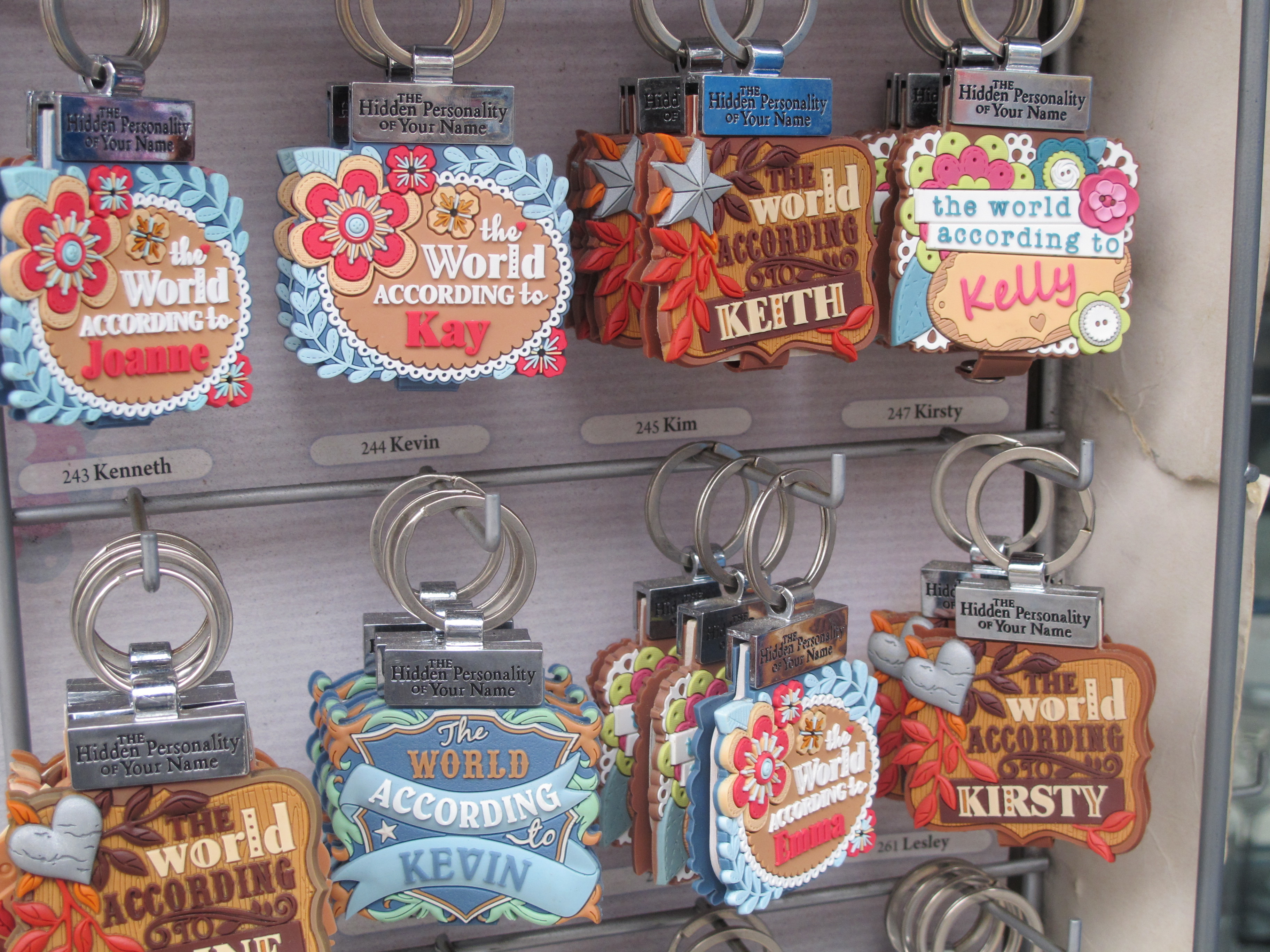
Since we're on a tacky subject, I thought I'd toss in a photo of tacky stuff on sale in Swannage last summer. Do you really want to read on?

Since we’re on a tacky subject, I thought I’d toss in a photo of tacky stuff on sale in Swannage last summer.

Our story begins before the British 2010 election, when Lord Ashcroft—who probably has a first name but doesn’t need to use it because, good lord, he’s a lord—gave some money to the Conservative Party. And when I say “some,” I mean something in the neighborhood of £8 million. (“As you do,” as people here like to say when you couldn’t even remotely.) But when the Conservatives came close enough to winning the election to form a coalition government with the Liberal Democrats, the new Prime Minister, David Cameron, didn’t offer Ashcroft the kind of post he (that’s Ashcroft) believed he (that’s Cameron) had promised him (that’s Ashcroft again).

Well, the good lord isn’t a good enemy to have, because he started work on a biography of Cameron, and bits and pieces are now being leaked to the press. I’m coming late to this story, so when I say “now” I mean last week, but that’s close enough between friends, right? One of them claims that Cameron had sex with a pig.

Well, simulated sex. And the pig was dead at the time, for which I’m grateful. I’m sure the pig would have been as well if it had been in any condition to register an opinion. The exact description is that he put “a private part of his anatomy” in the pig’s mouth.

And then ran for office? Well, yes but not right away. This happened when he was still a student at Oxford, a university that as far as I can tell gathers up not only the most brilliant students but also the hopelessly over-privileged ones, and the folks in that second category apparently can’t find anything better to do with themselves than join bizarre clubs that—well, put it this way: If daddy and mommy didn’t have so much money they’d find their asses in jail for carrying on that way but since daddy and mommy do they not only get away with it, they think it’s their right.

That business about jail? That’s not about the pig, it’s about the vandalism one of the clubs is known for.

Then they go on to run the country and look smug on television. And lecture the rest of us on how to behave.

Now that this is leaking out, #piggate is all over Twitter. I mean, who can resist? The real scandals in our lives—the financial shenanigans, the political dittos, the backroom deals that bring the two categories together? Most of us can’t make heads or tails of them, even when they bring down the economy or bankrupt a country or two. But a sex scandal? Oh, hell yes. We’ll read every inch of type about that.

I’ve given you one link to a newspaper article, but they’re endless. If you want more, you’re on your own. In the U.K., all you have to do is google Cameron and pig. In other countries, you may need to add U.K.

Now I’m not claiming that no American politician ever got up to some kind of antics, sexual or otherwise, in college or afterward, but I’m guessing they never joined a (n allegedly) secret society whose initiation ceremony involved simulated sex with a dead pig. It puts the Clinton-Lewinsky scandal to shame for its lack of imagination. The adage in American politics used to be that you never wanted to get caught in bed with a dead girl or a live boy. Which tells you (a) how much times have changed and (b) how boring American sex scandals are.

Please tell me if I’m wrong about that. Or tell me anything else that seems appropriate. Or, given the topic here, inappropriate. The world’s a far stranger place than most of us imagine.