Avoiding quaintness in Cornwall

“I can see how easy it is to think of us as quaint,” J. said, having read I can’t remember which of my blog posts.

I admitted that I was stretching the quaintness and she admitted that she understood that and we’re still speaking, for which I’m grateful because I like J. But the comment stays with me. I’m not sure if she was amused, hurt, critical, or some mix of them all, and I didn’t think to ask.

I’m not sure how I feel about the conversation, either. Is quaint even the right word? I do look for things to laugh about. Does that end up painting a picture of quaintness? I’m not sure, but I hereby officially admit that I’m exaggerating when I write about Britain. Or as a karate teacher I used to study with liked to say, over-exaggerating. Not by making anything up, but by ignoring the counterbalance: both the oddities of the U.S.—my home country—and the ordinariness of Britain.

Irrelevant photo: Early flowers. Damned if I remember what they're called.

Irrelevant photo: early flowers. Damned if I remember what they’re called.

But foreigners are always tempted to do that. The mailboxes are a different shape? How quaint! How charming! Or, if you’re looking for something to disapprove of, as some people are the minute they’re out of their comfort zone, How backwards! How ignorant! Mailboxes should be square, with a rounded top.

Besides, it’s harder to see the oddities of the culture you’re used to. That’s one of the gifts that being an outsider brings. Drop me back in the U.S. after almost nine years in the U.K. and I expect things I took for granted would look odd. But I’m not there. I work with what’s in front of me, always trying to remember my own absurdity as well, and if possible put more stress on that than on anyone else’s.

So for the sake of balance, here’s a list five of non-quaint things that happened recently.

  • The sun rose this morning. It has no accent, respects no borders, and is not impressed by anyone’s nationalism. Thank you, sun. We all need to be reminded.
  • My car’s oil pressure is low and I left it with the mechanic. [This actually happened a few days ago, but I’ll leave it in the present tense for the illusion of immediacy it creates—and out of laziness.] Probably my fault (bad car owner, wicked car owner). I’d let the oil get low, but I don’t think it was low enough to account for idiot light flashing on. This is distinctly un-quaint, and I feel distinctly idiotic.
  • The mechanic just called. On Wild Thing’s phone, which is the number we gave him. That seemed to make sense at the time—never mind why—only Wild Thing’s not home right now and she couldn’t give me the number to call him back because it’s on her phone and she was using the phone to talk to me and yes, she could have hung up and written it down and called back but she doesn’t have a pen with her. Or paper. And the phone numbers here have a shitload of digits; they’re hard to remember. I’d look the number up but it doesn’t belong to a shop. The mechanic’s a local guy working out of his garage and using his cell phone. Besides, I don’t actually know his last name. Everyone around here swears by him and the garage I’ve used up to now just screwed something up for me. So Wild Thing called the mechanic to give him our home number, but he was on the phone too (it happens that way sometimes), so he couldn’t enter the number. All of that could happen anywhere. I’m not playing quaint with this, although I could. It’s just what happened.
  • A couple in the village are coming up on their golden wedding anniversary. Yay them!
  • I’m trying to remember how many years a golden anniversary marks. If I have to bet, I’m putting my money on fifty. Google could find someone who’d be happy to let me know, but I’d rather be amused by my ignorance.
  • I am, not uncharacteristically, cheating on this list since points two and three are related and four and five are are too. Which is why I’ve added this as a bonus point—six items in a list of five. You can’t say you don’t get your money’s worth out of this blog. Which is a double negative, giving you even more bang for your buck.

Too good to leave in the comments box

In response to “British parliamentary traditions,” Pottsy at Fear of the reaper commented, “I used to work at the U.K. Parliament and sometimes gave tours of the building and would explain the State Opening and all the traditions that go with it, including checking the non-existent cellars (by banging on the floor) for gunpowder.”

Non-existent cellars? I asked. “The cellars they check don’t actually exist and haven’t for at least 150 years,” she wrote back.

So there you have it: They’re not only checking for an impractical and antiquated explosive, they’re checking for it in a place that no longer exists.

British parliamentary traditions

I know, I just wrote a post about red phone boxes and came down on the side of tradition, but really, folks, there’s a limit, and I believe a recent BBC TV series on Parliament has helped me locate it.

The series looks at everything from the building itself (which is falling apart) and the people who keep it running to the MPs and what they do and how they do it. How they do it is often in very arcane ways. How does one MP hand over some papers for a particular category of bill he’s introducing? He walks five steps, bows, walks five more steps, bows again, then walks the rest of the distance and hands over the papers. Makes me wonder what would happen if he didn’t bother bowing, or walked six steps. We played a game like that when I was a kid, Captain, May I? It involved giant steps and banana steps and going back to the starting line if you got it wrong.

Surprisingly relevant picture: a Yoeman of the Guard. Picture by Snapshots of the Past.

Surprisingly relevant picture: a Yoeman of the Guard. Picture by Snapshots of the Past.

The series is alternately fascinating, boring, and horrifying, and it wouldn’t be complete without a few Parliamentary traditions that predate the ox cart. And possibly the ox itself. I will, therefore, ignore the serious stuff and dive directly into the silly (in case I haven’t already done that with the MP and his banana steps). Because we all have enough serious stuff in our lives.

Before the Queen’s Speech (which gets capital letters, implying that it’s her only speech; for all I know, she maintains a regal silence the rest of the year), the Yeomen of the Guard walk through the basement pounding the corridor floors with fancy staffs, checking for barrels of gunpowder. It’s quite a sight, since these are the guys—and these days, I’m happy to say, at least one woman—who wear those memorable red uniforms.

But excuse me? Gunpowder? Barrels? Has anyone heard of drones? Or, I don’t know, intercontinental ballistic missiles? Semtex? There are so many ways to blow things up these days. And explosives aren’t the only danger a monarch faces. She could trip on the hem of her cape. She could fall victim to some prankster substituting one of my posts for the approved speech and there she’d be, with the wrong sheaf of papers in her hands and nothing to do but stop, doggedly read on, or ad lib. And ad libbing doesn’t look to me like one of the skills she’s practiced much.

She reads, by the way, from real paper. Yes, folks, paper. Talk about traditional! And while I’m interrupting myself, I can tell you that I just googled Semtex to make sure I wasn’t mistaking an explosive for a dishwashing liquid. That probably put me on somebody’s watch list. If I wasn’t there already.

But never mind all that. They tap the floors for gunpowder, not semtex and not rogue blog posts. It all dates back to Guy Fawkes and the gunpowder plot.

I want to be clear about this. I’m not recommending you blow up Parliament. Regardless of how you feel about monarchy or the British government or anything else, it would not help the political situation in any way. But there are certain ideas that shouldn’t be planted in people’s heads, and this is one of them. They made it all so picturesque. And I can’t help playing with scenarios. I’m a fiction writer, your honor. And a vegetarian.

No, I’m not sure that’s relevant either, but I mention it just in case—

[A late insertion here: When I first posted this, the paragraph above read, “I’m recommending” instead of “I’m not recommending.” Thanks to K.B., who wrote to say I really would end up on someone’s watch list. This is what happens when you recast a sentence too many times. Bits and pieces of the earlier versions get left in until it becomes meaningless, or means the opposite of what you meant it to mean, your honor.]

Let’s move on before they pass sentence. The Queen’s Speech also involves Black Rod. This is a guy dressed in clothes from another century—possibly another planet, but then who am I to judge?—and he runs around with, yes, a black rod. At the State Opening of Parliament, he’s “sent from the Lords Chamber to the Commons Chamber to summon MPs to hear the Queen’s Speech. Traditionally the door of the Commons is slammed in Black Rod’s face to symbolise the Commons independence.

“He then bangs three times on the door with the rod. The door to the Commons Chamber is then opened and all MPs—talking loudly—follow Black Rod back to the Lords to hear the Queen’s Speech.”

That, by the way, is from Parliament’s own web site. You can tell it’s not mine by the British spelling of symbolise. Not to mention the quotation marks and the straight-faced tone.

This bit of symbolism dates back to the 1600s, when Charles I tried and failed to arrest five MPs, which Parliament considers to mark the autonomy of the Commons from the crown. Slamming the door in Black Rod’s face is like checking for gunpowder. It meant something once and they’ve been re-enacting it ever since.

So as far as I’m concerned, that’s where the far edge of tradition lies. I am, honestly, fascinated that the more, ummm, picturesque traditions continue on. I imagine that with each century they take on a more ceremonial and less meaningful tone, but no one can get rid of them. Maybe no one wants to. Maybe it’s only rude outsiders who see it all as a touch—shall we say bizarre and unnecessary? I don’t want to sound like I think the U.S. has it all figured out. We’re at least as crazy as the next country. But in other and (to me, at least) less picturesque ways.

The iconic British phone box goes literary

BT (that’s British Telecom—a.k.a. the phone company) has been uninstalling the iconic red British telephone boxes all around the country in recent years.

Now, I understand that pay phones aren’t a money-making proposition anymore, but where cell phone coverage is spotty (and around here it has a bad case of the measles) they can be a lifeline. Besides, people like them. They’re iconic. They’re red. They’re shaped like Dr. Who’s police box.

In places, villages have fought to keep them, and as far as I know they’ve lost the battle, no matter how good their arguments. My village lost two—one by the beach, which could potentially have saved a life because it was in a measles spot, and another along the road, which was less important, although could have presented a better argument for keeping that one if somebody hadn’t set it on fire.

In a few places, though, villages lost the phones but kept the boxes and turned them into tiny red libraries, where people take books, leave books, and, judging by the number of images online, take pictures.

Relevant photo for a change: a phone box library at Wall, Staffordshire. Photo by Oosoom.

Relevant photo for a change: a phone box library at Wall, Staffordshire. Photo by Oosoom.

In Banbury, Oxfordshire, a (rare, and probably endangered) working phone shares its red box with a working library, and BT recently made enemies by threatening to remove the shelves because, they wrote, they’re “concerned the books and shelving could cause injury if they were to fall.”

No doubt. They’d cause an even worse injury if they exploded, but neither one is likely, and local residents launched a twitter campaign to save the library: #Saveourphoneboxlibrary.

I haven’t a clue what this has to do with the usual intercultural mayhem I write about. I’ve seen neighborhood-maintained libraries in the U.S. They looked like oversize birdhouses, not phone boxes. But then, I don’t think the U.S. has any phone boxes left in the wild–they’re all in zoos now, where they fall into despair and refuse to breed. Maybe that says something about our cultural differences. I leave it to you to figure out what.

Comparative swearing: U.S. vs. U.K.

In a comment on “More about manners in the U.S. and U.K.,” Karen at Fill Your Own Glass [sorry, everybody; that’s almost the end of the links] wrote, “My impressions have been created solely by movies, but I have believed that people in the U.K. are less inhibited when it comes to cursing and talking about sex.” (She went on to say that it was an insightful post, but I wouldn’t want you to think I’m the kind of person who’d mention that.)

I haven’t a clue whether her impressions are true. What fascinates me about the comment is how you’d measure either.

late winter 002

Near Minions

Let’s say we want to compare how inhibited or uninhibited people are in talking about sex. I mean, I want to be scientific here. How do we compare passing references to serious what-I-did, what-I-didn’t-do, and how-I-feel-about-it conversations? Do we measure in frequency, in length, or in depth?

No puns, please. We’re being scientific here, so settle down in the back row.

If we’re talking about a serious cross-cultural comparison of swearing, how do we balance frequency against intensity? How do we measure the weight do various swear words carry?

People I know here (and it’s entirely possible that my friends swear more than the average Brit) say “bloody” fairly often. How often? Oh, you know, often enough. (You can see why I never became a scientist, right?) But how intense a swear word is bloody? I’d always heard that it’s religious—actually, sacrilegious—in origin and assumed that it packed quite a punch. But a Wikipedia entry raises several milder and way less interesting possibilities. My Dictionary of British Slang and Colloquial Expressions calls it simply “an intensifier,” which makes it sound mild to the point of insipidity. Of course, I once heard a linguist talk dispassionately about the way Americans use the word fucking as an insertion. In fact, he called it “the fucking insertion,” which both illustrated how it was used and cracked me up for weeks afterwards. From this I gather that linguists, like all scientists, whatever their passions, prefer to present a dispassionate surface.

I’ve heard bloody said often enough that it’s made itself a home in my head, and it’s trying to push its way into my speech. It wants to be said, and I want not to say it. Not because I don’t swear—I do, and without being immodest here, I do it well—but because I don’t have a sense of its proportion, its weight, its impact. I don’t like to throw things until I can gauge their impact.

Besides, with my accent it’ll sound very odd.

So there you are, folks. Comparative swearing. I look forward to hearing what you have to say on the subject.

About inconsistency: US and UK headline style

If you’re a regular here, you may have already read that I’ve worked as an editor and copy editor. And if you’ve worked as either one and scrolled through the site, what will jump out at you are not my screamingly irrelevant photos but my screamingly inconsistent headline style. Not to mention the editorial sins I commit in a smaller typeface.

What’s going on? I retired, that’s what. I turned in my Chicago Manual of Style. Really. I no longer own a copy, either current or out of date. That’s the bookcase equivalent of saying, “Screw it.”

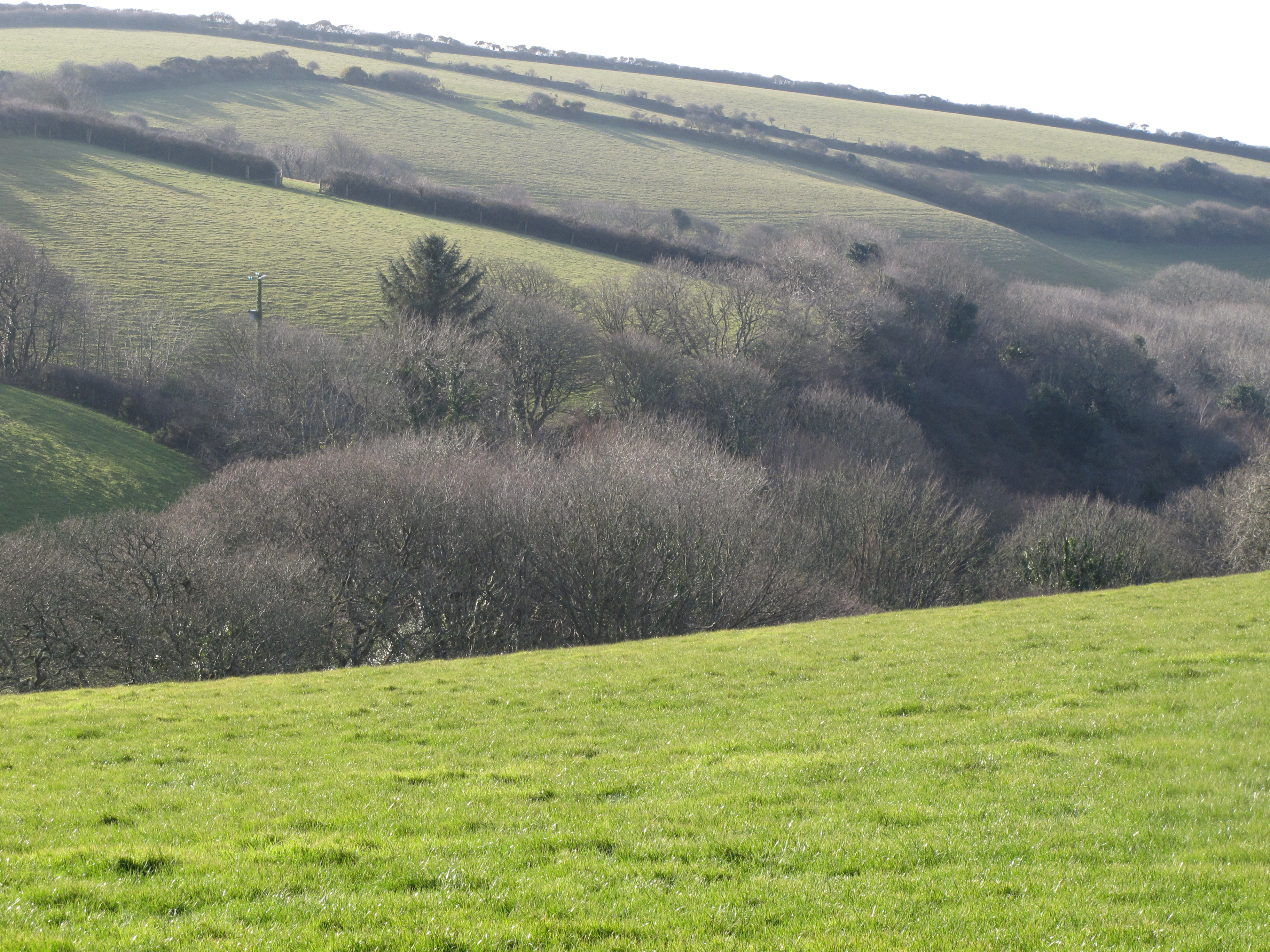
Irrelevant photo: Late winter landscape. Yes, that's grass. It's been sitting there, green, all winter.

Irrelevant photo: Late winter landscape. Yes, that’s grass. It’s been sitting there, green, all winter.

So where do I go to check my style decisions? Nowhere. On some days when I’m writing a headline I capitalize the first word after the colon and on other days I decide not to. For the most part, I’ve stopped using the American style, which capitalizes all the words in a headline except for the ones that never get capitalized because the rules are complex and copy editors need to prove we know something the rest of you don’t or why else would anyone hire us? The British headline style is simpler. As far as I’ve decoded it, it treats the headline like a sentence, which is great because you don’t have to worry about all those American exceptions: Everything but the first word and the proper nouns is lower case.

Ah, but what about the first word after a colon? I’ll break down and confess: I haven’t checked whether it’s capped or lower case because—cue maniacal laughter—I’m retired and I don’t have to.

It’s not that I don’t notice the inconsistencies in my headlines, and it’s not exactly that I don’t have a headline style, it’s just that on any given day I’m likely to decide that I don’t like the style I was using so why don’t I change it—without going back and changing the old ones so they conform?

Of course, once fussbudgetty editorial thinking lodges in your head, it doesn’t vacate willingly, so I haven’t danced unthinkingly off into inconsistency. I’ve danced off while throwing explanations and disguised apologies over my shoulder. So, sorry folks. I am thinking. I am noticing. I just don’t care enough anymore.

More about manners in the U.S. and U.K.

“What do you like about living here?” someone asked me recently.

The questions comes up often enough that I should have a neat answer by now, but for whatever reason, I don’t. Instead I blither vaguely about place and people and history, and sooner or later the other person either takes pity on me or gets bored. Either way, the conversation moves on.

This most recent time, it moved on to the feeling of freedom that the person who’d asked me—let’s call her S.—had when she visited the U.S. To her, Americans are expansive, expressive, and probably a few other ex-things. Expository. Ex post facto. Expresso. (Yes, I’m spelling that wrong. Oddly enough, Spellcheck hasn’t noticed, which is why I’m whispering. It does, however, object that it’s not a full sentence. I love technology.) When S. got back to the U.K., everyone struck her as closed in. She mimed what they looked like and if I’d suggested miserable I think she’d have agreed, although as far as I can tell the people I know here are no more (or less) miserable than the people I know in the U.S.

Irrelevant photo: a camellia, coming into bloom in late winter.

Irrelevant photo: a camellia, coming into bloom in late winter.

Still, I’ve heard this kind of comparison before. A British man married to an American told me he wanted to move the family to the U.S. before his kids started school. The kids would grow up feeling freer, he said.

Before anyone starts waving flags and getting out the marching bands, no one’s talking politics. They’re talking emotions, behavior, deep-rooted culture–hundreds of years of culture. People here complain, just the way people do in the U.S., and the way people have throughout history, that kids these days are badly behaved, but the ones I know are so well behaved they terrify me. They say “please” and “thank you,” not occasionally but often. They say, “Yes, please.” Sometimes I want to ask, Who’s in there, under all those good manners?

I know: I’m an adult. I’m supposed to like good manners, and up to a certain point I do. But—maybe it’s the American in me—beyond that certain point, I get uneasy. I can’t tell who I’m dealing with. All I see is polished surface. I’d rather catch an occasional glimpse of the unplanned person. I mean, if I try to feed you something you don’t like, I’d rather hear about it than worry that you’re choking it down and struggling to look happy.

That’s not good manners, that’s self-punishment.

So yes, on that level, Americans may be more ourselves, although Wild Thing argues that we—and by that I mean Americans—aren’t so much free as disinhibited, which many people mistake for freedom.

Think about it for a while. I’m guessing she’s on to something.

The place where the British are, I think, less about surface than Americans is in the area of looks. My small and unscientific survey reveals that people—and especially women—in the U.K. feel freer to look like themselves than their counterparts in the U.S. Do a comparison of actors—again, especially women. A wider range of looks is acceptable in the U.K. In the U.S., most of them look like they’ve been squeezed out of the same Plastic Princess tube.

Admittedly, as soon as you talk about what people want to look like, you have to talk about income and region and ethnicity and sex and sexuality and gender and a dozen other ways to subdivide the population, and the impact all those things have on how we present ourselves. But I still think that, overall, we’ve locked ourselves into a set of ideal looks that have damn little to do with ourselves.

When I kicked the question around with Wild Thing, she reminded me of the time we looked through A.’s family album with her, when we still lived in the U.S. In the pictures from the thirties and forties, each person looked distinct. As we got into the fifties and beyond, they started to blur and become almost generic—the women most markedly, but the men as well.

But I’m not basing my wild and unscientific theory just on TV, movies, and one family album. I’m basing it on the people I see.

A bit of background, though, before I go on. I’m somewhat face blind—a phrase I learned late in life, which describes an embarrassment I’ve lived with since I was a kid. I have trouble recognizing people I don’t know well. It’s not my eyes, it’s something about the way I process what I see. Basically, within some broad categories (you know: male, female; tall, short; old, young; black, white; scarred, not scarred), everyone looks pretty much alike—two eyes, one nose, all that sort of thing. Back in the U.S., when I taught fiction writing I struggled to sort out which of my students was which, and somewhere along the line I realized that I had more trouble with the women than the men. Why? Makeup. Hair products. Fashion. They worked hard to look alike—at least to my incompetent eye. The men looked more like themselves.

In the U.K., I still have trouble recognizing people, but I don’t think I see as much surface. They don’t all seem to be going for the same set of looks. Some of them don’t seem to be going for any look at all, they just look like what they look like. That’s not the same as not caring what they look like. It’s that they care to look like themselves.

Which is a radical, and freeing, idea.

Having said all that, I’d better repeat that this is all based on a wildly unscientific survey. And now it’s time for everyone to tell me why I’m wrong. Or right.

Measuring time in Ethiopia

J. sends this from the information book in an Ethiopian hotel.

“Ethiopia uses the Ethiopian calendar. One Ethiopian year consists of 13 months; 12 months of 30 days and a thirteenth month of 5 days (6 in a leap year). The Ethiopian new year falls on the 10th or 11th September according to the Gregorian calendar, depending if the year is a leap year. The Ethiopian calendar is 7-8 years behind the Gregorian calendar. The 12-hour clock cycle in Ethiopia is offset by 6 hours. For example, Ethiopia refers to 6 a.m. as 12:00 hours and 12 noon as 6:00 hours. Please bear this in mind when making local appointments.”

So the calendar’s different (lots of that going around) and the names of the hours are different (lots of that going around too, apparently), but the minutes are still the same length.

Measuring time in the US and UK

When I was fielding comments about the insanities involved in figuring out what I weigh in the U.K., I caught myself just before I wrote that at least we all measure time the same way.

Are you sure? I asked my more-than-usually bewildered self. I imagined someone jumping out the magic surge of the internet to tell me that yes, the hour has sixty minutes everywhere but the minutes are longer in the U.S. Why there? Because everything’s bigger in the U.S. Or that’s what people in Britain tell me. Houses, rooms, scones, the spaces in our parking lots. People. So wouldn’t it be just like us to want a longer minute?

It might, but as far as I know the minute really is the same everywhere. And no, Americans don’t all live in mansions any more than the British all live in castles, although the scones and the parking spaces really are bigger. And some of the rooms and houses. I’m not sure about the people.

Irrelevant photo: freezing fog on Davidstow Moor.

Irrelevant photo: freezing fog on Davidstow Moor.

What were we talking about?

My point about time is that we may measure it the same way, but someone always finds a way to complicate things. Usually me. A few years ago, I was working out a time to pick up M. for—I think—a movie.

“A quarter of,” I suggested.

“What does that even mean?” he said.

“A quarter of six.”

Then I realized he wasn’t asking about the hour, he was asking about the quarter of part. I tried translations.

“Five forty-five? A quarter to? Fifteen minutes to six?”

He shook his head.

“But what, grammatically, does it even mean?”

Well, it means a quarter of, obviously, and I had to say the phrase one more time to realize that it doesn’t, but any sort of logic, mean a thing. A quarter of what? Of nothing. It’s just what we say. We know what it means, so what’s your problem?

On the other hand, the British say “half six.” That’s three, right? No, that’s six-thirty. What, grammatically, does that even mean? About as much as a quarter of. But if you’ve grown up with it, it makes all kinds of sense.

Mercifully, no one’s come along to divide the traditional clock into a more rational system—ten hours, 100 minutes. You know, something easier to calculate with. Because some of us would convert to the new system and some of us wouldn’t and we’d all fight about it, and we’re having enough trouble as it is.