How people find a blog

Let’s talk about search engine terms. No, I’m not going to hand out blogging advice. You won’t find any advice here that you’d want to follow, on blogging or any other subject. What I want to explore is that strange and lovely world of search engines and algorithms and other things I don’t understand, about which I want to ask the following profound question: What the hell are they thinking?

I know, thinking’s the wrong word. Algorithms don’t think. Someone does, though. A human mind, with an actual human being attached to it, programs these suckers and sets them loose on the world trusting that they’ll connect the right question to the right answer.

Or not caring if they do.
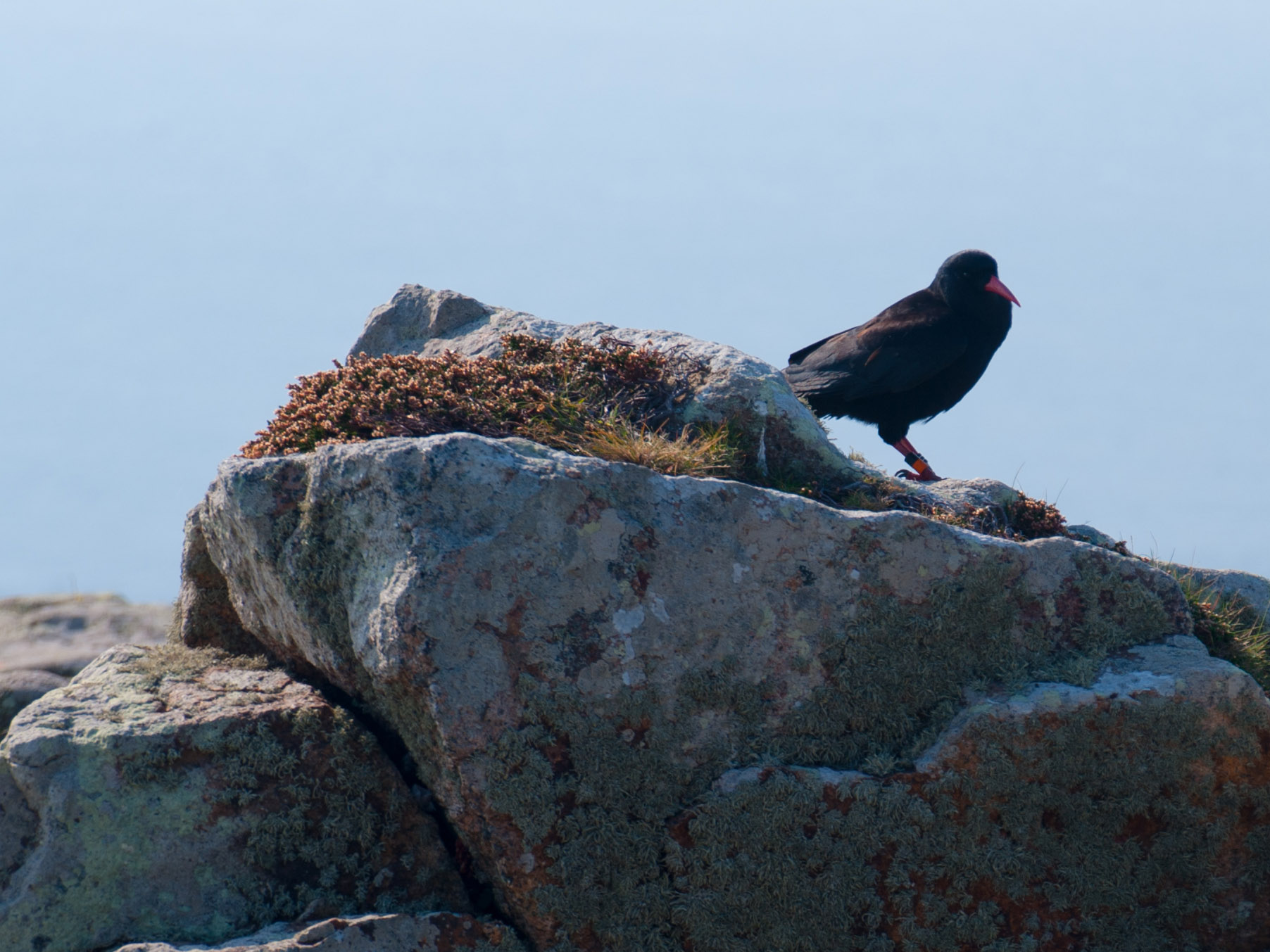
A chough, pronounced "chuff," Cornwall's official bird. It was driven to extinction in Cornwall, but a few years ago a pair flew over from Ireland and nested successfully, and a handful can now be found. Those who know are keeping their locations secret. I know and I ain't telling. Photo by Ida Swearingen, who ain't telling either.

A chough, pronounced “chuff,” Cornwall’s official bird. It was driven to extinction in Cornwall, but a few years ago a pair flew over from Ireland and bred successfully and a handful can now be found. Those who know are keeping their locations secret. I know, at least vaguely, and I’m not telling. Photo by Ida Swearingen, and she isn’t telling either.

And then there are the people who type some of these terms into Google. Spare a moment to wonder what they’re thinking as well.

So here’s how people found Notes from the U.K. (I’ll do a separate post on vaguely relevant search terms. Sooner or later.) They typed in (with Google’s lower case format carefully preserved):

good comments with u: All my good comments contain that letter. Except this one. My bad ones? They don’t.

who are the bigwigs in legal highs: . Okay, I’m pretty clear on what this poor kid was looking for and can make an educated guess or three about what they planned to do with the information. And they were so disappointed to end up in the middle of a discussion of lawyers’ wigs. Sorry, kid. Now get off the internet and go finish your homework. And remember to use the letter u.

kittens dash into rooms they shouldn’t: Rooms and dash are clear enough to work with, but we need a definition of shouldn’t. They shouldn’t because they’ll get scolded? Because they’ll get eaten by the Minotaur? Or the Merrimac? Anyway, we need to define the term. And we need video, which I don’t do. And come to think of it, how young a kitten do they want to see? So I was a disappointment here. I do have a page of kitten pictures, which I haven’t updated lately now that I think about it, but I can’t imagine I’m high up the Google list. How many web sites and blogs did the googler go to before being disappointed by mine? What is it about kittens and the internet that someone went through that many links looking for this?

dog poo for rubbish collection Cornwall: For this, they need to contact the county. Unless they’re looking for dog poo itself. If they can convince me it’s a good idea to donate it, we have plenty. And a nice collection of the cat variety as well. But, well, I will need convincing.

Sumerdress: These are what they wore in Sumeria? Sorry, this isn’t a fashion blog.

kitten club: I can make a fair guess about which regular readers would  join, but I don’t know where to refer them. And a kitten a month? It’s too many. No matter how cute they are. Plus it’s wrong to ship them. They need to be hand delivered, lovingly.

notes of the kettle: This was weird enough that I googled it myself and was, sure enough, led to one of my posts, “Putting the kettle on,” as well as to notes from a community meeting that included the subhead “Vott is kettle,” which is all about JavaScript. Why is said “vott” instead of “what” is a mystery. Or maybe “vott” isn’t a mispronunciation of what but some arcane bit of geek speak. You know: “I’m going to vott your computer now. Stand back.” I’d love to give you a link to this so you don’t think I made it up, but I didn’t copy it down at the time—I was too busy being baffled—and it won’t come up again, but if you want to buy a whistling kettle, several of those links popped up. I think it was when I typed in “vott is kettle.” The connection’s obvious, isn’t it? The kettle whistles and you run into the kitchen yelling, “Vott iz itt dis time?” (Sorry, my phony accent’s a bit woozy. I’m not sure what language group I’m supposed to be imitating and I doubt I’d get it right if I was sure. Normally I wouldn’t stoop to making fun of someone’s accent, but it’s justified this time. Necessary even.) You can find out about Kettle Knudson, who’s either from or visited Bemidji, Minnesota, I’m not sure which, but the story’s in the Bemidji Pioneer. On this I could give you some links but not having them introduces an element of randomness that’s way more fun. What does it all mean, bartender?

tumblr pics of fully clothed grandmothers: I hardly know where to start with this one. Is a website somewhere offering pics of semi-naked grandmothers? And if there is, how do we know the pictures are of genuine grandmothers and not women like me, of a grandmotherly age but without grandchildren, which by any definition I understand disqualifies me from grandmotherhood? I mean, how much less of a turn-on is it once you know the background’s been faked?  You won’t find me on any site of that sort. Not only won’t I lower myself to pretend I have grandchildren but because my clothes are tattooed on, so I’m always fully clothed. Even in the shower. So, how did they find Notes with that in the search engine? The only one of these words I remember using is of, although it’s not impossible that I said everyone somewhere or other was fully clothed. It sounds like me. And in many of the places I go, including the supermarket, they are. Time after time. In fact, even as I type this, I’m fully clothed. It’s chilly in the morning at this time of year. I only frighten the neighbors in warm weather. As for what the googler was looking for, I can only speculate. And I’m not sure I want to.


The fluid ounce and the British passport

A friend in the U.S., L., recently sent me an American measuring cup. I’d asked for it because early in my blogging career I read on an expat blog that the British pint contains one more fluid ounce than the American pint. I tucked that information away in the back of my screaming brain to ponder at some time in the future when I suddenly become competent with numbers.

That’s another way of saying, I ignored the information. Even when I’m working with imperial measures, I don’t measure things by the pint, I measure them by the cup or the fluid ounce. But it nagged at me. What, I couldn’t help wondering at 3 a.m. when my brain was fizzing and the kitten had noticed I was awake and decided to see if he couldn’t sleep inside my nostril, if the ounce itself is different?

Nah, I told myself once morning came, my brain settled down, and the kitten had wandered off to play with the dog. They couldn’t do that to me. I’m a citizen.

Irrelevant photo: Corfe Castle, in Dorset.

Irrelevant photo: Corfe Castle, in Dorset.

I had good evidence for this. Not only a British passport, which they don’t hand out to non-citizens, but the fact that my American recipes work, even though I made every last one of them using British measuring cups.

Except cornbread. That doesn’t work. I’ve tried two or three recipes since I moved here, using cornmeal I brought from the U.S., and none of the results were worth eating. But okay, cornbread’s an American dish and doesn’t cross borders. I accepted that. Everything else was fine.

Except, irrelevantly, tomato sauce, but I don’t measure that, I just kind of combine it. Besides, it’s edible, just not the same as I made in the U.S. The canned tomatoes are British. Even the ones that claim to be Italian. That’s the only way I can account for it.

But back to ounces. I’ve been blogging since—oh, since whenever I started. A year ago? More a year ago? Have I explained that I don’t do numbers? Counting to one is beyond me. So it’s been something vaguely related to a year. Although the British year may be longer than the American one, so what does any of this mean, really, in the great scheme of things? The minute itself may be longer. I’m not about to split hairs.

However long it’s been, that’s how long it’s taken me to think, Y’know, maybe I should check on this fluid ounce thing. And so I asked if L. would send me an American measuring cup, and when she did I poured some water back and forth from hers to a British one and it didn’t come to the same marks.

I poured the water out, put both measuring cups in the drying rack, and refused to believe what, between them, they were telling me. I repeat: I’m a citizen. They can’t do this to me.

I tried again a couple of days later and got the same result, and I responded the same way, except that this time I thought, Maybe if I tried it with milk it would be different. Because milk’s white. It’s easier to read. It would give me the answer I wanted.

Finally I emailed L., explaining some of this (I hadn’t thanked her yet, so it was high time), although I made an effort to sound marginally saner than I do here, and she sent me a link. It turns out the British fluid ounce is 0.9607599ths of a U.S. fluid ounce. That just rolls off the tongue, doesn’t it? It’s exactly the kind of number the average home cook can work with.

This information, I decided, must explain the difference between the number of ounces in the British and U.S. pints—someone added the extra ounce so the pints come out even—and off I trotted to Google to confirm my insight.

Nope. The British pint equals 570 ml and the U.S. one equals 470.

Can you hear me screaming? One of the things I’m screaming is that you have to translate this mess into metric in order to compare it. Without the metric system, we couldn’t even discuss it, because in imperial measures it falls off the edge of the English language. We’d be reduced to pouring water on the floor and comparing the size of the spills.

So thank you for the measuring cup, L. I appreciate it and as soon as the medications and the meditation restore my equilibrium I’m going to make another batch of cornbread. My cornmeal’s only eight years old. It should be fine. And if not, what the hell, I got a blog post out of it.

And since we’re not discussing this, I should ask if you’ve noticed that expat is nothing but a fancy word for immigrant. 

Of dukes and baronesses and scamsters

In September, Alexander Wood was in court for having posed as the duke of Marlborough (there’s a real one; I just checked) and for having run up a bill in the neighborhood of £10,000 at expensive London hotels. No one asked him for identification because they thought it would be “inappropriate to ask.”  I mean, this is (purportedly) a duke, after all. You don’t do a stop-and-frisk on him, and you don’t ask for i.d., even when he runs up a huge whackin’ bill. They did eventually get suspicious when he bought drinks for fellow guests—something I gather no aristocrat would do.

Setting aside this one person’s motivation (the article makes it sound, not surprisingly, like mental health comes into it), Britain does tempt a person to borrow titles.

Irrelevant photo: teasels

Irrelevant photo: teasels

When I went online to donate the money from our village fundraiser to the Red Cross, I was offered a choice of Mr., Mrs., Miss, Ms, Doctor, Lady, Professor, Reverend, Dame, Sir, Major, Captain, Lieutenant Colonel, Colonel, Sister, Lord, Canon, and Other. Oh, wheee! I lost my nerve before finding out whether Other would have given me a blank space to fill in the title of my choice, but I expect it would have.

As an aside, I was once called a dame, but no one mistook me for an aristocrat and no hotel bill was involved. And it wasn’t a compliment.

The Guardian’s subscription form despairs of coming up with a complete list and just leaves a blank line, where you can play as much as you dare. You want to be a general, or the Lord Mayor of Mill Crick? Feel free. Then sit back and see if your correspondence is addressed appropriately. And complain when it isn’t.

Why the blank instead of the list? I can’t help picturing some committee trying to list everything necessary to this title-obsessed land and sinking under the weight of the task. Why, for example, include Colonel but not General? And since this is the Guardian, a generally leftish and egalitarian paper, what about Private? Don’t privates deserve the respect of their title? And since the women members of the House of Lords are addressed as Baroness (something I happen to know because I’ve written letters to a fair few of them, and there’s a tale of its own), doesn’t that merit a mention? Or does Lady cover it? I haven’t a clue. If they’re Lady Whatsit, even though you address them as Baroness, what do they address themselves as? And what about the Barons? The male members of the House of Lords are Lords, not Barons. No, I don’t understand it either. But there are real barons out there, aren’t there? Granted, they probably don’t read the Guardian, but what if they wanted to?

And what about all the Lord Mayors dotted around the country. And the Counsellors: Spare a moment’s thought for all those long-suffering folks who sit on Parish Councils around the country, doing their unpaid and non-party-political bit for the most local level of local government? And Citizen. It was a popular title during the French Revolution. Give it half a chance and it could catch on again.

You can see the problem. Either the committee voted for the blank line and fled or else they’re still meeting, trying to complete the list, sinking deeper into despair with every passing week. Several of its members have been hospitalized for stress and clinical-level nit-picking.

This is what happens in a status-obsessed society. Everyone with a title needs to be recognized, placated, bowed to even.

And on the lowest level, where the rest of us live our lives? I still can’t get myself called Ms. Instead of Mrs.  No matter how often and politely I ask.

How to be British

P. and S. sent me a clipping from their local paper, in which columnist Ericka Waller, moved by the refugee crisis, kindly offers newcomers an eight-point guide to being British. I won’t cover all her points—that dances on the border of copyright violation, not to mention bad manners—but I’ll paraphrase a couple of them. Read the rest for yourself, because you need to know this stuff, even if you’re not British and have no intention of being. And even if you’re already British. With the government’s emphasis on British values these days, you don’t want to give someone the wrong impression, do you?

Besides, it’s a good article.

It may be irrelevant, but it speaks for itself.

It may be irrelevant, but it speaks for itself.

Point number 1: To be British, you must greet people by asking, “How are you?” but if they ask you the same question the only possible answer is, “I’m fine, thanks.” If you say you’re wonderful, you’re being a showoff. If you say you’re terrible, you’re moaning.  If you follow that by going into the details of your toothache or unpaid bills, you’ll either scare people or embarrass them. Or both. People don’t ask because they want to know, they just want to seem polite. Emphasis on seem.

The how-are-you? rule shares a common root with American greeting rituals. We (that’s Americans) ask without remembering that it’s a real question, although we do allow room for someone to say, “Wonderful,” or, “Tired, thanks,” or something along those lines. We also appreciate an occasional twist in the answer—something along the lines of  “better than nothing.” But your toothache? Your unpaid bills? The thousand ways your life’s threatening to fall apart? Nope. We don’t want to know either.

When Wild Thing first started to work as a therapist, she’d occasionally run into clients out in the real world, and if they greeted her she greeted them back. (If they didn’t, she walked on. Being a therapist is—says me who’s never been one but was in a position to observe—deeply weird.) She had to learn not to ask, “How are you?” because in the relationship they’d established that it was a real question. Some people would actually answer. In the middle of a supermarket aisle.

On the flip side, I went to the doctor once about I can’t remember what, and when she walked in and asked how I was I automatically said, “Fine. You?”

She managed not to slap her forehead—or mine—but I expect she wanted to. Imagine that happening to you twenty times a day.

Point number 2: To be British, you must also tut and learn to respond to tutting. “Nothing says Brit like a disapproving tut,” Waller writes. “As you finish the tut, raise your head slightly and roll your eyes elaborately to the heavens for extra punch.” And if someone notices and asks what’s wrong, deny everything. You’re not allowed to explain a tut or say how you actually feel.

As a rule, Americans don’t tut. Or I don’t think we do. But my understanding of the subject is colored by—how am I going to explain this to you? I don’t do well with subtle. If you want to insult me, you need to be clear or it’ll go over my head and where’s the fun in that?

This was a problem in Minnesota, where the official language is Indirect English. Wild Thing was called into service periodically to interpret for me. So maybe I’ve been tutted at all my life and didn’t notice. But I don’t think so. I think we leave the tut, like the tea, to the British.

I’m only aware of British tutting because I’ve been reading about it, both in Waller’s article and in Kate Fox’s wonderful Watching the English. So this is a nation that not only tuts but writes about tutting and ponders the deep cultural meaning of tutting. It wouldn’t be too much to say, the philosophy of tutting. This is a nation that cares about tutting.

The tut is powerful here—or so Fox says. Someone jumped the queue? If they’re British, a lone tut will be enough to shame them back into place. And in case you’re American, you need to understand that a queue is a line, and standing in line is the real British national religion. The Church of England? That’s for show. So we’re talking about someone violating the country’s most sacred principle. And a tut will be enough to remind them of it.

It sounds as if Fox differs from Waller on the tut’s power, but underneath there somewhere I expect they’d agree that it’s power comes from not needing to be explained (or something along those lines—we’re getting into murky waters here) and it will be understood regardless of how much it’s denied.

It’s a wonder this country’s let me stay.

A very British sex scandal

I wasn’t going to write about this. Notes isn’t a political blog. And it isn’t a sex blog. But then it occurred to me that what we have here is a particularly British political scandal and—well, I’ve talked myself out of posting this several times, and then talked myself back into it. But it looks like I am going to post it, so I’ll paste an, um, awkward position warning on it and leave it up to you whether to read on.

C’mon, how many of you are really going to stop there?

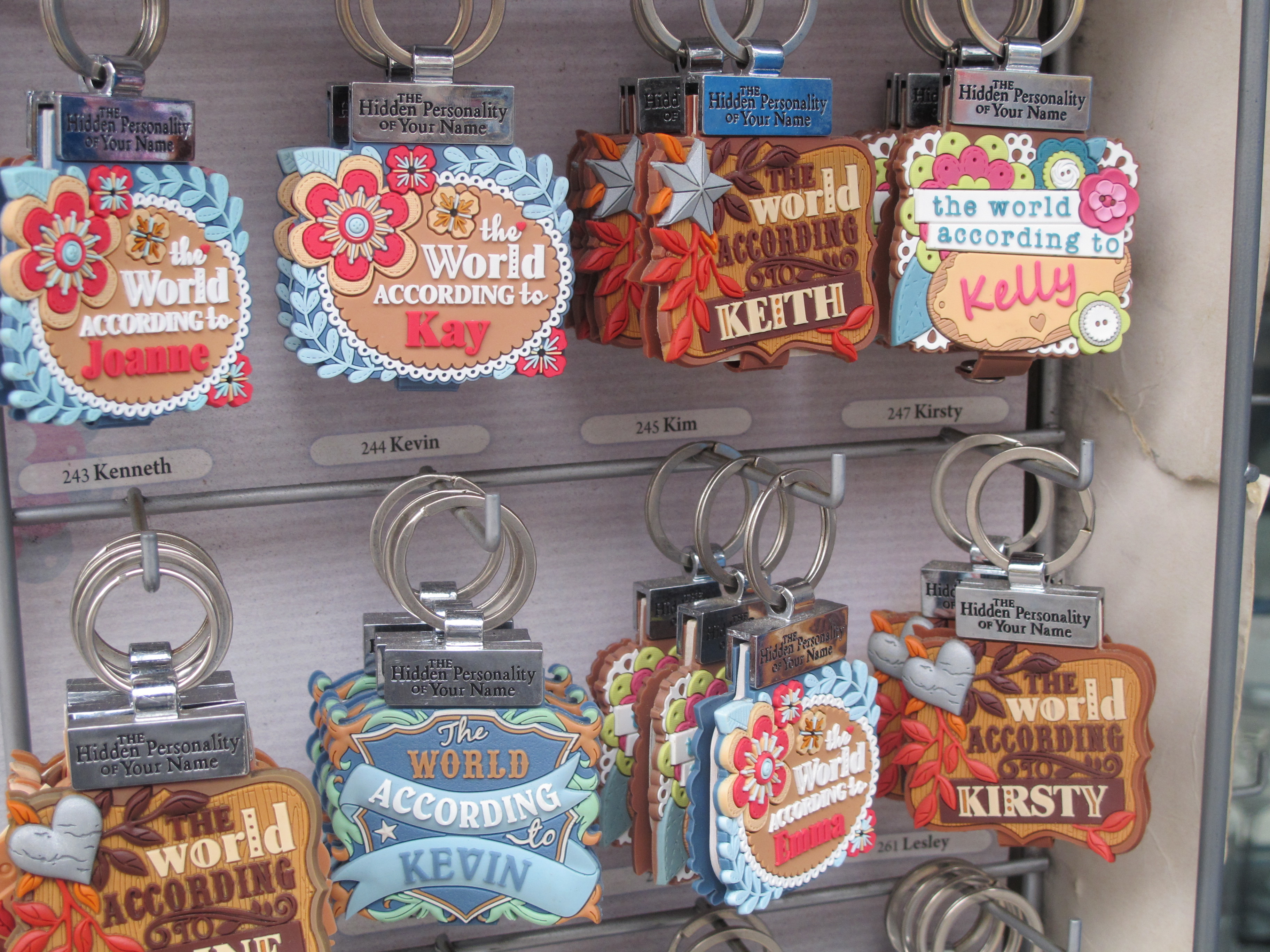
Since we're on a tacky subject, I thought I'd toss in a photo of tacky stuff on sale in Swannage last summer. Do you really want to read on?

Since we’re on a tacky subject, I thought I’d toss in a photo of tacky stuff on sale in Swannage last summer.

Our story begins before the British 2010 election, when Lord Ashcroft—who probably has a first name but doesn’t need to use it because, good lord, he’s a lord—gave some money to the Conservative Party. And when I say “some,” I mean something in the neighborhood of £8 million. (“As you do,” as people here like to say when you couldn’t even remotely.) But when the Conservatives came close enough to winning the election to form a coalition government with the Liberal Democrats, the new Prime Minister, David Cameron, didn’t offer Ashcroft the kind of post he (that’s Ashcroft) believed he (that’s Cameron) had promised him (that’s Ashcroft again).

Well, the good lord isn’t a good enemy to have, because he started work on a biography of Cameron, and bits and pieces are now being leaked to the press. I’m coming late to this story, so when I say “now” I mean last week, but that’s close enough between friends, right? One of them claims that Cameron had sex with a pig.

Well, simulated sex. And the pig was dead at the time, for which I’m grateful. I’m sure the pig would have been as well if it had been in any condition to register an opinion. The exact description is that he put “a private part of his anatomy” in the pig’s mouth.

And then ran for office? Well, yes but not right away. This happened when he was still a student at Oxford, a university that as far as I can tell gathers up not only the most brilliant students but also the hopelessly over-privileged ones, and the folks in that second category apparently can’t find anything better to do with themselves than join bizarre clubs that—well, put it this way: If daddy and mommy didn’t have so much money they’d find their asses in jail for carrying on that way but since daddy and mommy do they not only get away with it, they think it’s their right.

That business about jail? That’s not about the pig, it’s about the vandalism one of the clubs is known for.

Then they go on to run the country and look smug on television. And lecture the rest of us on how to behave.

Now that this is leaking out, #piggate is all over Twitter. I mean, who can resist? The real scandals in our lives—the financial shenanigans, the political dittos, the backroom deals that bring the two categories together? Most of us can’t make heads or tails of them, even when they bring down the economy or bankrupt a country or two. But a sex scandal? Oh, hell yes. We’ll read every inch of type about that.

I’ve given you one link to a newspaper article, but they’re endless. If you want more, you’re on your own. In the U.K., all you have to do is google Cameron and pig. In other countries, you may need to add U.K.

Now I’m not claiming that no American politician ever got up to some kind of antics, sexual or otherwise, in college or afterward, but I’m guessing they never joined a (n allegedly) secret society whose initiation ceremony involved simulated sex with a dead pig. It puts the Clinton-Lewinsky scandal to shame for its lack of imagination. The adage in American politics used to be that you never wanted to get caught in bed with a dead girl or a live boy. Which tells you (a) how much times have changed and (b) how boring American sex scandals are.

Please tell me if I’m wrong about that. Or tell me anything else that seems appropriate. Or, given the topic here, inappropriate. The world’s a far stranger place than most of us imagine.

Cornwall and Calais: small actions, huge issues

This comes with a seriousness warning, along with a heart-warming-story warning. If you read on, you have no one to blame but yourself.

A couple of weeks ago, the refugee crisis activated J., who couldn’t sit back and wring her hands any longer, she had to do something, so set her network in motion and we helped her plan a village coffee morning. (She is one hell of an organizer—I wish I had half her skill.)

The coffee morning’s a tradition here. The Methodist Church has one regularly—something I know only because I see a sign out outside the chapel, not because I go. And the Macmillan cancer charity has a yearly one, which they call the world’s largest coffee morning since it’s on the same day everywhere in the country. And, and, and. Lots of similar examples that won’t make you any wiser if I take more of your time while I list them.

It’s not something I ever heard of in the U.S., but maybe I traveled in the wrong circles.

Soothing and irrelevant photo

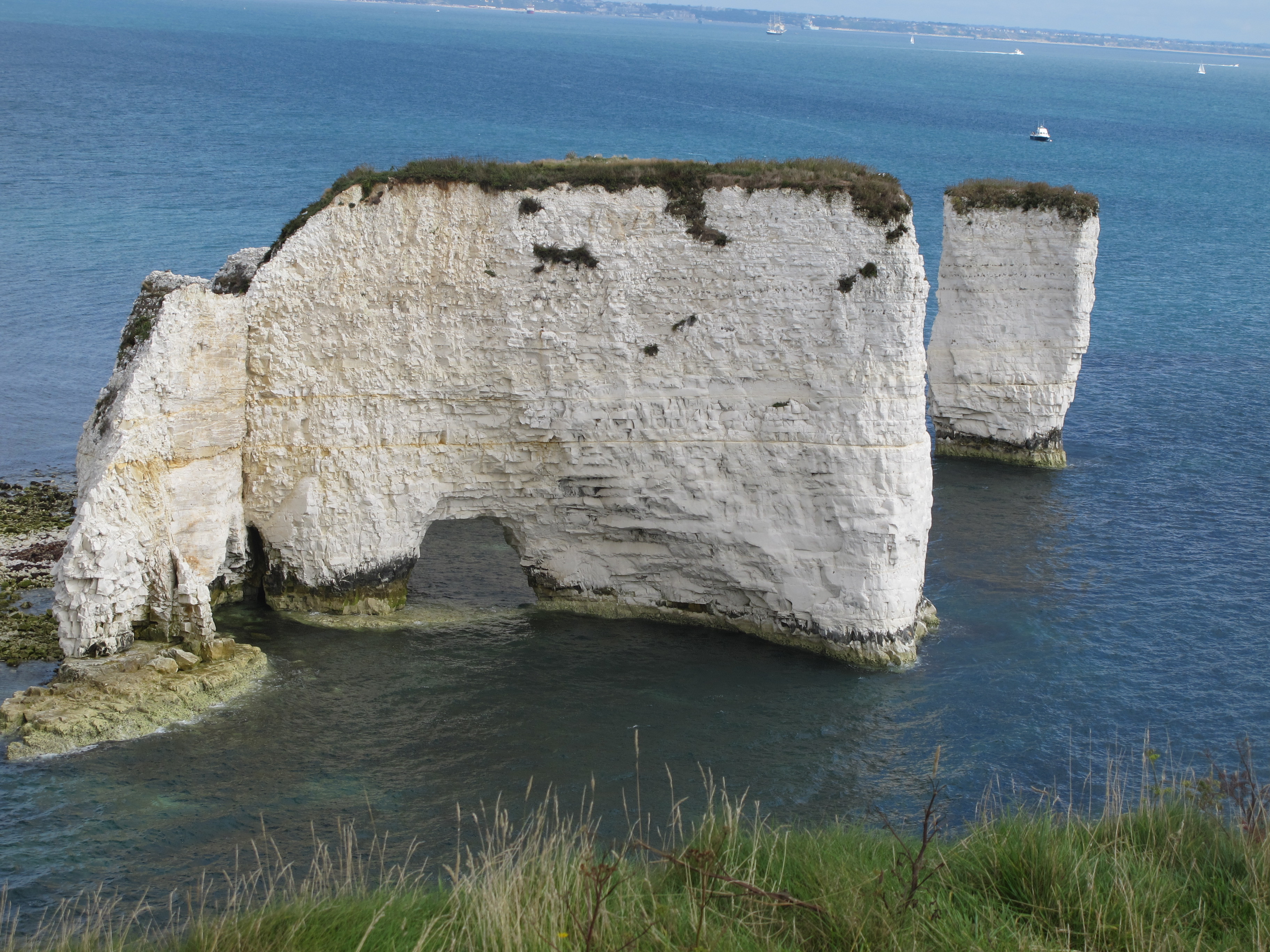
Soothing and irrelevant photo. The cliffs on a hazy day in spring.

So J. got us all in motion, and it was already too late to get a notice in the village newsletter. The crisis was building and still is. We didn’t want to put it off for a month. So we put posters up and we got a notice on the village Facebook site, and the grapevine got to work.

In addition to collecting money, we were also collecting clothes, bedding, toiletries, and a few other things, because out of nowhere a Cornwall to Calais drive had appeared, gathering things for the refugees in Calais, who are stranded by the entrance to the Channel Tunnel, looking for a way into Britain. None of them have visas, and they’re desperate enough not to care. One told a reporter he’d rather die there than be sent home. If I remember right, he was Eritrean—a state I’ve seen described as being very much like North Korea. They’ve chosen Britain for the most part either because they have family here or because they speak the language. (As I write this, police have cleared the camp, forcing them out. Whether it will reform remains to be seen.)

I can’t help remembering that before World War II, a shipload of German-Jewish refugees were turned away by one country after another, because the fear of being swamped by Jewish refugees was as powerful then as the fear of being swamped by non-European, and especially Muslim, refugees is today. And when all their possibilities had been exhausted, the ship took them back to Germany, where they died in the concentration camps.

The Calais refugees, by their simple existence, have stirred up a lot of hostility, of the sorry-but-the-country’s-already-full-and-besides-it’s-ours variety. So we expected some hostility in the village to the coffee morning. With a very few exceptions, we didn’t find it. The photo of the Syrian toddler who drowned crossing the Mediterranean with his family had shocked people. The refugees are, suddenly, fully human in many, possibly most, people’s eyes.

Maybe I’m not being fair in putting it that way. Maybe most people have, in a quiet way, always seen them as human (and not, as the Prime Minister put it, “a swarm”). What I do know is that the photo changed the conversation. People have publicly pledged space in their homes to refugees. Calais, rumors have it, now has as much in the way of clothing etc. as it can handle and what’s still being collected will end up going further—to Hungary, maybe, or to Germany or Austria or Italy or Greece or wherever it’s needed. The situation changes daily. It’s chaotic. We collected without yet knowing where it’s headed, and the people sorting it when we dropped it off weren’t sure either. What we know is that it’s needed, and it will be sent.

So we set up tables for donations at the coffee morning, and before long they overflowed—shoes, warm clothes, pots and pans, candles, toothpaste, soap, shampoo, belts, blankets, towels, tents, backpacks, rucksacks. We bagged it up to make room and more appeared. It was very moving—and all the more so because this wasn’t coming from just the usual suspects, the people we already knew were with us on this. The people donating crossed the political spectrum.

And the people who baked things to sell and who helped out on the morning also crossed the political spectrum.

F. contributed a cake to the coffee morning, and I didn’t try it, which I’ve been regretting because I’ve been hearing how good it was ever since. We’ve never talked politics, so I haven’t a clue where she stands. She grew up in Mauritius, and she told me about a flood they had there. She was helping sort clothes for the Red Cross, because people had lost everything, and they came across two completely impractical things: a wedding dress and a little girl’s princess dress.

The princess dress ended up making a small child very happy. And the wedding dress? A young woman who came in had made her own wedding dress and lost it in the flood. Everyone got together and remade the donated one—which F. said was very glamorous—so it fit her. She got married in it, and I have a hunch she carried herself like a queen and that the story’s still being passed down in her family.

I hope, in this time when people are desperate enough to walk across a continent, cross the Mediterranean in a rubber dingy, and trust themselves to traffickers because not to do so is even more dangerous; when those who can’t take those risks are being warehoused in camps with no schools and not enough to eat and expected to wait there until no one knows when; when countries are saying they’ll take some absurdly small number of refugees because if one more person comes in someone who’s already here will fall off; in times like these, I hope the small gestures of people in a small village will let a few people know they’re not forgotten, not invisible. And I hope it will add to a thousand other small gestures and shame our governments into doing something.

If anyone wants to make a donation, here are a couple of organizations that can make use of it: The United Nations camps were, last I heard, running out of money and needed donations desperately. And the British Red Cross has a Syria Appeal.

There are others, and I don’t know which is most important, which is making best use of the money, or which is placed where the pinch is felt most sharply. All I know is that people are suffering.

Romantic Cornwall

Someone wrote in a comment last week that she’d always harbored romantic visions of Cornwall, and I wrote back (somewhere in this sprawling mess I call a blog) that it’s an easy place to romanticize, even though I’m something of an anti-romantic.

And then on Sunday morning I woke to the sound of a cat upchucking on the floor and thought, What could be more romantic than my life?

Semi-relevant photo: flowers. Romantic, right?

Whoever it was who wrote that comment, I apologize for not remembering and so not being able to find it and link to your blog. It never crossed my mind to post anything about it until the cat threw up this morning, and the comments, much as I love them, are threatening to overwhelm me, so going back and checking them all? Ack. Not possible.

In the meantime, think of romantic Cornwall and the perfect life Wild Thing and I live here.

P.S.: It’s raining.

The cream tea wars

Cornwall and Devon are separated by the River Tamar and by a whole lot of bitter claims over who makes the best cream tea. Since a few people have left comments lately saying—and I’m about to paraphrase them both inaccurately and irresponsibly—that almost no wars are worth fighting, I think it’s time we stop and contemplate whether this one might not be. Because some things really do matter.

But first, for the sake of those of you whose feet have never been tucked under a table blessed with a cream tea, I need to explain what I’m going on about. The cream tea one of the few things that might convince this atheist that heaven exists. You take a scone and split it in half, then put jam and clotted cream on each half and as you take that first bite you’ll notice your eyes rolling upward toward the heavens in thanks.

swanage 073

Irrelevant photo: To be fair to both Cornwall and Devon, I’m posting a photo from Dorset. Which probably also thinks it invented the cream tea.

What’s clotted cream, though? It’s roughly as thick as whipped cream (don’t quibble; I did say “roughly”) but unsweetened. As well as yellower, gooier, and better. Ignore the disgusting name.

What’s this got to do with wars? Well, in Devon they think they invented both clotted cream and the cream tea. And they put the cream on first. In Cornwall, they also think they invented clotted cream and the cream tea and they put the jam on first. You at the back, settle down. This will be on the test.

In fact, it’s on the test every time I get a cream tea—which isn’t often because the arteries will only put up with just so much abuse. But it does happen now and then and when it does I sit in front of the scones, the dishes of cream and jam, and can’t remember which goes on first. Because I live in Cornwall, and this is serious stuff. It’s also exactly the kind of stuff my mind spits out like a toddler offered rutabaga. Ptooey, it says. I’m not remembering this, and it dances off to review some song lyric it already knows perfectly well, or the name of a wildflower, or something else of its own damn choosing.

Meanwhile, I could get myself run out of the county for this. And if I do, my mind’s going with me so I wish it would pay more attention.

Why does anyone care? Once upon a time, I’d have said it was just something to fight over, but food scientists have researched the issue, looking for the perfect cream tea formula. It turns out you want 40 grams of scone, 30 of cream, and 30 of jam. And—although they don’t mention this—a good-size pot of tea. With milk, a sunny day, and some people you like. Because hurling yourself at a cream tea on your own is right up there with drinking alone.

It turns out that the Devon method makes it easier to spread the fillings but the Cornish method allows you to serve the scone hotter, because the jam insulates the cream and keeps it from running. They don’t actually say which is better, the cowards. Which means they’ve been overtaken by the fate of most peacemakers, which is to piss off both sides.

You will, of course, pledge your allegiance to whichever side you choose, but don’t be surprised to make a few enemies when you do.

If you don’t live in Britain but want to make your own cream tea so you can participate in our wars? You’ll find a scone recipe in a back post and you shouldn’t have any trouble finding strawberry jam in a store, but you’ll have to either find a fancy supermarket and pay an outrageous amount of money for real clotted cream or try to fake it. Here are a couple of attempts I found online. I can’t vouch for either of them. This one’s from Food.com and used heavy cream and sour cream. And this one’s from Just a Pinch and uses cream cheese and whipping cream. Both add a bit of sugar, which makes me skeptical, but it may work. For the real thing, you’ll have to visit. On a sunny day. With friends.

Golliwogs: in public and in private memory

In response to my post on comparative racism, leannenz left a comment that made me realize I’d left something important out of the post—a part of my thinking that was clear enough to me but invisible to anyone else. So I’m bringing the issue out of the comments zone and into a post of its own.

Leannenz wrote that she grew up “in the age of Enid Blyton, Noddy, Big Ears and Golly. I had the book Little Black Sambo read to me as a child. Nowadays there is a lot of talk of Noddy and Big Ears being in a homosexual relationship and the racist facet to Golly.

“I look at them now as part of history. They were what they were back in the day, a child’s toy, a child’s book but the thank goodness we have made progress and they are now no longer the accepted norm. Thank goodness people are willing to say they are derogatory and demeaning and don’t have a place in the modern classroom. I would say, let people remember a childhood toy with fondness BUT I would like to think that now people would realise these dolls originated from the colonial era of class system that put people down and would chose not to make or purchase them although I suspect they are still out there.”

I understand that some people have fond memories of golliwogs as childhood toys, and those feelings are their own and no business of mine or anybody else’s. It’s when people assume that their feelings and memories justify the public use of golliwogs that I object.

No more than a few weeks ago, a charity shop in a nearby town decided to celebrate the town’s jazz festival with a window display that included some golliwogs. Somebody objected on a town chat site and was jumped all over by multiple people who use the site—and defended by others. I don’t read the page so I don’t know the numbers, but it sounded like only a few people defended him and a lot of people attacked.

It got ugly quickly, as these things do online.

I was in town just after I heard about it, so I stopped by the store to voice an opinion. They must have already gotten an earful, because the woman I talked to started answering me before I’d gotten to the end of my sentence. It wasn’t her decision. The manager would have to decide. And so on.

They took the display down and wrote on the chat site that the person who put it up had meant no offense. Which I’m sure is true. It was an act of pure cluelessness.

The person who initially raised the question ended the discussion by saying to the people who’d attacked him, “You may not understand this, but your children will.” Which strikes me as a moment of pure grace, under the circumstances.

Thanks to leannenz for her comment, and to the many other people who left thoughtful comments.