The British countryside and Winnie the Pooh

Nothing reminds me that I’m living in the British countryside quite the way crossing a ford does.

I know. Fords have been around ever since people and small rivers were first introduced, but even so the fords in our village make me think I live in Pooh Corners. And for the record, no, I’m not sure there were any fords in Winnie the Pooh, but there was a stream and—well, I don’t want to pretend I’m being reasonable about this. What I’m remembering, I think, is one of the illustrations, about measuring the height of a stream during a flood.

Funny what sticks with you from your childhood.

North Cornwall's coast

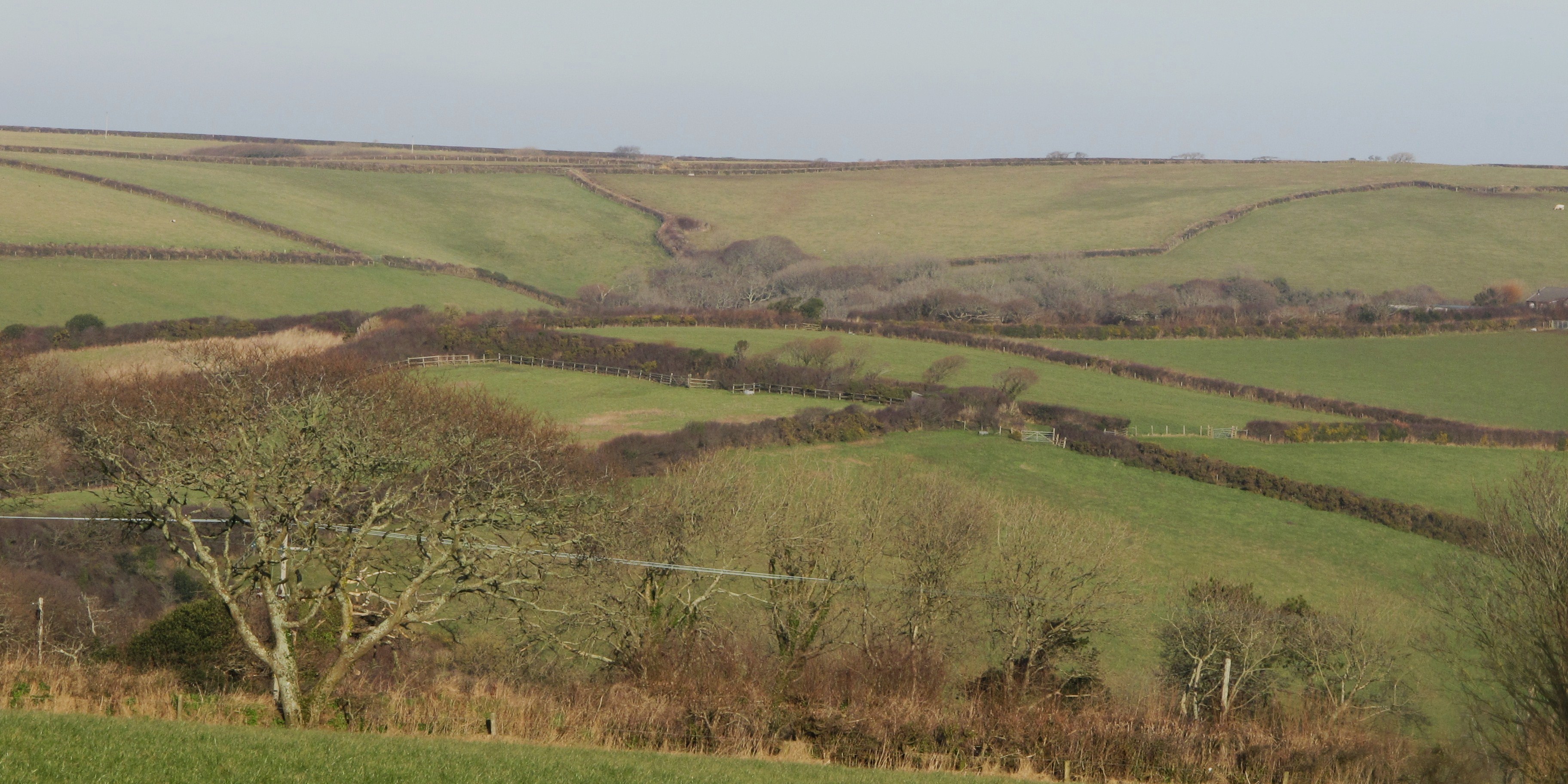
Irrelevant photo: North Cornwall’s coast on a hazy day

This all goes to show you what a New Yorker I am. New York City doesn’t do fords. In fact, it doesn’t do streams. As far as I know, many years before I was born, someone (or more accurately, some many) maneuvered all of New York’s streams into pipes and then paved them over. The city does have three big honkin’ rivers (or two, or maybe one, depending on what you count as a river and what you count as a straight), and that’s plenty, thanks.

When you grow up with pavement, not having streams seems natural. So much so that I used to wonder where streams came from. Not where rivers came from. They came from upstream, as any fool could see. In case you need further proof of how attuned I was to the natural world, I once looked into a huge hole in the street and was surprised to see earth and rock under the pavement. I don’t know what I expected, but scaffolding probably wouldn’t have surprised me. So living in Cornwall not only with streams but with fords? That’s exotic.

Wild Thing grew up in Texas, and her family used to spend time in Colorado. She swears that when they came to a ford and the river looked higher than usual, her parents would have her wade across to make sure it was safe for the car. She never got washed away, so I’m guessing these weren’t raging torrents. Her parents weren’t reckless or neglectful, but it’s also true that they never stopped her from exploring abandoned mine shafts, so I don’t have the impression that they were over-protective either.

In fairness, she wouldn’t have told them she was exploring mine shafts, but a different set of parents might have asked. Or discussed. Or at least warned.

Whatever the pluses and minuses of their approach, she came out of it with an enviable gift for gauging the depth of a stream, and that’s something I don’t have. I understand three levels: low enough to wade; higher than the waterproof part of my shoes; and ask Wild Thing before taking the car across. The first two are reliable. The third? It’s helpful only if Wild Thing happens to be with me. So far I’ve managed not to get swept away, which is why I’m sitting here typing this. I’ve turned back only once, and I probably I didn’t need to, but I figured it was better to wonder than to be wrong.

Years ago, some government agency set up gauges beside the fords. These look like gigantic rulers and go from 1 at the bottom to You’re in Deep Shit at the top, although in my city-bred opinion you’re in trouble by the time the water reaches 1, because for the most part the gauges sit serenely above the normal flow and I’d turn back long before the water reached them, even though at most fords that means having to back a long way. I’m good at backing a car. I’m not good at estimating fords. Give me a choice and it’s pretty clear which I’ll take.

I’m not sure what the gauges are for, really. Maybe so that, Pooh-like, we can measure the depth of the stream for no better reason than to know if it’s still rising. The valleys here are sharp and narrow, so the rainfall spills into the streams quickly. In a heavy storm, a stream that’s normally a trickle can rise to a torrent, especially if the ground’s already saturated. It can fall just as quickly as it rises, and I suppose a gauge could keep you amused while that’s happening, although you might be smarter to go back to your nice warm kitchen and wait. You could also look for another route if you’re driving. If you’re walking, the fords have foot bridges, so you should be fine. If the water comes up over that, you’d be smart to get out of there instead of watching the gauge.

In my city-bred opinion.

*

And unrelated to that, Notes has now been updated, with a new theme that looks one hell of a lot like the old one but should work on phones. In addition to that, it was going to have all sorts of added Googlery that would tell me if a gnat flew past your screen while you were reading it, and which would also reach through atmosphere and hijack unsuspecting readers, launching my stats to astronomical levels, but the whole thing went wrong and instead my posts stopped reaching most of you. The ancient Greeks called it hubris. So the googlery’s disappeared, everything except the new, barely discernible new theme is back (I hope) to where it started, and I’m toning down my ambitions. Or looking for another way to channel them.

Thanks to the people who wrote to say they couldn’t click through to the “Trouble, trouble, trouble” post. It’s now reappeared (along with a great comment from Cats at the Bar) and I’ve lost another post, which was nothing but an attempt to update the people who couldn’t click through to “Trouble, trouble, trouble.”

Don’t worry about it.

If you have any trouble let me know. But if you get this, that probably means you’re not having any problems.

Arghh.

Going postal in the U.S and Britain

In my unending efforts to compare Britain and the U.S., I helped out with a bulk mailing on Tuesday night. Bulk mailing is an American term meaning “damn, we have a lot of paper here.” I’m not sure how you say that in British.

Back in Minnesota, I was the entire staff of a very small writers magazine, and in the early years part of my job was to gather a crew of volunteers and mail the thing. Because it was cheaper to do a bulk mailing, we did a bulk mailing. (Hey, we were a  nonprofit. Money was tight.) This involved crawling around the floor, attaching address labels, and sorting everything according to zip code, and it was this last bit, the sorting, where we’d get into trouble. Every month, I introduced new volunteers to the post office’s bulk mail regulations in tooth-shattering detail, but I never found the right words to make it all clear. That was because what we had to do ran off the edge of the English language.

A footpath in Cornwall, with wildflowers.

Irrelevant photo: The primrose path. Really. These are wild primroses growing along Lover’s Walk. I don’t think the flowers are why the path got that name. Lover’s Walk is one of the few paths in the parish where a couple stood any chance of finding a little privacy.

It was something like this: If we had more than ten addresses in a single zip code, we’d band them together. If we have less, we’d combine it with others in nearby zip codes according to some complicated system I barely understood at the time and can’t come close to remembering now. Even if did remember, though, it ran off the edge of the English language so no explanation would help. Then we’d label the bundles and combine them in some equally obscure and incomprehensible way and dump them in canvas sacks, which again had to be labeled before we hauled them down the stairs and threw them in the back of my car.

That last bit? The one that involved heavy lifting? That was the easy part.

Then I delivered the sacks to the loading dock of the main post office and waited for the phone to ring, which it often did a day or three later. It would be someone from the post office would tell me to come back down, pull the sacks out of the canvas wheelie things they’d been thrown in, and fix the mailing in some obscure way I barely understood at the time and don’t understand at all now.

Remember those new volunteers I said I had trouble explaining the system to? Well, none of this was their fault. If ever there was a system calculated to help me screw up, the U.S. Post Office had found it.

Eventually the organization I worked for paid another organization to do the mailing. Whether that was for efficiency or mercy, I don’t honestly care. I’m still grateful, and the Minneapolis Post Office held a three-day celebration. No mail was delivered until the hangovers wore off.

And now here I am on British soil, and by one of the universe’s little ironies, I was the one who organized last Tuesday night’s mailing. The Truro Post Office is hiring crisis counselors already and we haven’t even delivered the boxes.

What we were mailing was called an election address (anyone but a post office would call it a leaflet) from a parliamentary candidate who has about as much chance of winning the election as I do of following complex instructions from the post office. Any post office. The candidate’s not running to win, although I’m sure he wouldn’t mind if he did, but to raise awareness of the way the National Health Service is being chopped up and privatized and underfunded. I won’t go off into a political rant here, and if you disagree, that’s fine, because the political bit ends here. The point is, even though he’s not running in our district, six friends and I thought it was important enough that we gathered to help out, together with one chocolate cake (which had no opinions on the subject and didn’t survive the night), many rubber bands, five or six kitchen scales, and an awful lot of paper.

Parliamentary candidates in England (and I assume the rest of Britain) have the right to mail one, ahem, election address to everyone in their constituency (which I’d call a district, but I’m not in the U.S. now, so constituency it is). These don’t have to be individually addressed, mercifully, or we’d still be there, pasting and sorting and gashing our teeth. And probably, by now, throwing chocolate cake.

But addressed or not, a post office is a post office, and it has its regulations. The leaflets had to be sorted into bundles of a hundred and banded. We could use either one rubber band on these or two. My instructions didn’t say what would happen if someone used three, but none of us was brave enough to try. Every last leaflet in the bundle had to face the same way. We weren’t sure if the bundles all had to be placed in the boxes facing the same way, so we made sure they did.

We had 24,000 leaflets to mail, which I kept calling 2,400 and, occasionally, 44,000, which helps explain why I shouldn’t be allowed out in public but doesn’t explain why anyone let me to stay in the room while numbers were in use. Rather than count all 24,000 (or 2,400, or 44,000) sheet by sheet, the campaign office had told us to count a few initial bundles and weigh them, and that’s what the scales were for. A hundred leaflets weighed 792 grams. Except when they weighed 790 or 798, because kitchen scales aren’t as accurate as the digital displays make them look like they are. Or except when I’d drift into my dys-whatever-it-is that people allergic to numbers have, and I’d weigh out 992 grams and a few minutes later someone would ask why one of the bundles was so thick and reweigh it.

Then the bundles had to go into boxes, all facing the same way, thanks, and each box had to have a printed label that included a blank spot for the number of leaflets inside. For the sake of our sanity, we put the same number of bundles in each box—twelve.

Do you have any idea how hard it is to count to twelve?

Never mind. We finished in time to eat the cake and all get home by ten. The boxes have to be dropped off on Friday—the day I’m posting this—at a tightly scheduled time, and the person dropping them off has to wear a hi-vis jacket and safety shoes. If male, he has to part his hair on the right and wear black-framed glasses; if female, she must not have used hair spray for two days prior to appearing at the post office and should wear contact lenses.

I’m waiting for the post office to call me down to Truro so I can fix whatever I screwed up. A bundle deep inside one of those boxes has 98 leaflets. Or 102. I’ll have to unband and count them all to find out which one it is.

The post office doesn’t have my phone number, but it’ll find me anyway. Some things that you do in life will follow you, no matter where you hide.

Commercial carrots in blogworld

I’m going to interrupt my exploration of the spidery corners of British culture—you know, the stuff I claim to be doing in the heading of my blog—to explore a spidery corner belonging of the blogosphere.

The other day, I got an email from someone who said nice things about my blog. I fell in love immediately. Who wouldn’t? She has such good taste. She wanted me to write a post that the company she works for would then promote through social media. Since I’m crap with social media and I assume they’re not (although how I think I know that is anyone’s guess), this is a tempting offer.

Irrelevant photo: Here's Wild Thing me, failing to see the solar eclipse. Just out of range is a piece of cardboard with a hole in it, through which the image of the sun declined to make itself seen. It was hazy, and I'm guessing that was the problem.

Irrelevant photo: Here’s Wild Thing and me, failing to see the solar eclipse on a piece of used paper. You can just see the type on the other side. Out of camera range was a piece of cardboard with a hole in it, through which the image of the sun declined to make itself seen. The sky was hazy, and I’m guessing that was the problem. Either that or the image of the sun was holding out for non-recycled paper.

What does she want me to write about? My ideal night out in a foreign city and how to connect with a culture using language and food.

Well, I like language. I like food. In my barbarian way, I like culture(s). I even like cities, and Britain has almost as many cities as it does bizarre festivals. (I made that up. It can’t possibly.) So maybe this fits. Admittedly, my ideal night out is a whole lot less raucous than most people want to read about, but what really bothers me is this feeling that I’d be selling out if I bent the blog off course (if it is off course, which I haven’t established yet) just so I could wolf down the first commercial carrot anyone has bothered to dangle in front of me.

And hell, the carrot isn’t even money. I’m mean, if you’re going to sell out, shouldn’t you get paid?

That tells you I come from a print background. I mean, in blogworld we’re supposed to be thrilled if our words are discovered and circulated, but we’re not supposed to think about money. Even when the circulator hopes to make money out of the exchange.

Does anyone notice something slightly wrong about this?

Even so, I am thinking about it. Carrots are food. I like food. We’ve established that. And I’m crap at social media. We’ve established that as well. It’s the commercial aftertaste of this particular carrot that bothers me.

In the name of transparency, I should say that I haven’t a clue whether I’m supposed to be writing about her request or whether the post—if I ever write, let alone post, it—is supposed to appear completely natural and unsolicited. Also in the name of transparency, I’ll add that I’m not sure how I feel writing about our email exchange. I don’t know if I’m talking behind her back, and if I am whether it’s okay since it’s not gossip, just discussion. Hell, I don’t even know if her back’s turned. Maybe she’s reading this. If so, I hope I’m not creating any hard feelings. She presented me with an interesting problem, and I want to explore it. And she was drawn to my blog, she said, by its creativity, which I take to mean its unpredictability. So here’s me, folks, being unpredictable.

If anyone has opinions or past experiences with this kind of thing, I’d love to hear them. Let’s explore.

Strange British traditions: cheese roll and flaming tar barrels

The other day, Wild Thing and I were talking with friends about the Gloucester Cheese Roll. Unlike an egg roll, which in Britain is an egg on a roll and not (as it is in the U.S.) Chinese veggies and sometimes meat or seafood deep-fried inside a wrapper, this is not cheese on a roll but an event where people chase a wheel of cheese down a very steep hill. (The event is also called the Cheese Rolling and the Cheese Race, but let’s stick with the more confusing name, please.)

In Britain, what Americans call an egg roll is called a spring roll. In the U.S., a spring roll is an unfried egg roll and in case you need to know, I like them better. That’s all as irrelevant as it is confusing, which is why I include it.

For endless images not of an egg roll but of the cheese roll follow this link.

Irrelevant photo: Launceston Castle, with a church in the foreground

Irrelevant photo: Launceston Castle, with a church in the foreground

But back to the event: The winner of the race gets to keep the cheese. The ambulances at the bottom get to carry selected losers to the emergency room, which in Britain is called Accident and Emergency.

That business about the ambulances? That’s not a joke.

“Why,” I asked (and you may need to be reminded at this point that I was sitting around with Wild Thing and our friends), “do people do this?”

“Boredom,” D. said.

Both friends, irrelevantly, have names that begin with D.

“Think of it as a Saturday night in February in a small-town Minnesota bar,” Wild Thing said. “A couple of people go outside and punch each other, then they come back inside and everybody keeps drinking.”

I never lived in small-town Minnesota, but Wild Thing did, so I’m going to have to take her word for this. I do understand boredom, but my way of dealing with it doesn’t usually involve hospitals. So I told D. and D. about our village’s earring fishing contest, which is an ordinary enough fishing contest except the contestants have to use an earring as a lure. It’s been running for a few years. I told them about the Boscastle raft race, in which the teams build rafts but can’t use anything nautical. Last year was its first year. My favorite entry lost. In fact, it sank. It was a picnic table on beer kegs, with a parasol that blew off either before the race started or right after. If I remember correctly, the raft was paddled with skateboards. Still, no ambulances were harmed in the making of either the race or the fishing contest (although the contest didn’t amuse the fish particularly), so I have less trouble understanding them.

From what I’ve seen on the internet, the official cheese roll ended a few years ago, when it couldn’t get insurance, and it’s now organized by an informal (and presumably un-suable) group. The mention of insurance reminded D. (well, one of them) of the flaming tar barrel race in Ottery St. Mary, which went on safely for years, even though people were racing around with, yes, flaming tar barrels, until some idiot tossed an aerosol can into one, and the can did what aerosol cans do when exposed to flaming tar: It blew up. No one—as far as I know—was hurt, but I’m willing to bet a lot of people were scared shitless.

The race continues. I don’t know what they do about insurance. Or aerosol cans and idiots.

The events we talked about fall into two categories: new and ancient. Many of the ancient ones seem to reach back to pre-Christian times and then piggyback themselves onto more recent holidays—May Day; Guy Fawkes Day. You can see the echoes of spring fertility celebrations, of the fall equinox. The tar barrel race is in the fall and you get fire, and days growing shorter. It’s insane, but I do see a connection. The cheese roll, though? It’s in the spring and I may be missing something, but it doesn’t strike me as an obvious way to celebrate the earth’s fertility.

What does it say about a culture that it creates these wonderful, lunatic events? I don’t have a clue, but I do know that they’re not commercial inventions, and they’re not the synthetic creations of a bunch of people nostalgic for the good olde days when knights were bolde and old crones knew the use of every weed that grew in the hedges. They’re created by real people, in place after place. Sort of like weeds, since I just mentioned them. No one plants them; they just grow. If you want folk culture, you could do worse than look here. And I can’t help imagining that they all start in the pub. Go back to Wild Thing’s February small-town Minnesota bar. Boredom plus beer. What could be more powerful? But instead of a simple brawl, these are elaborate events that demand months of planning. Commit-tees. Meetings. Ambulances. Delayed gratification, if you like. Which may be a good thing and may not be. If what you really want is the adrenaline of a fight, you probably fall on the not side. You end up starting a war. Or running through the streets with a flaming tar barrel. Or getting someone else to do it while you stand on the sidelines with a starter’s pistol, you clever devil.

In the interests of learning more about my new home, I hope to get to this year’s cheese roll, and to report back. If all goes well, we’ll discuss the tar barrel race. I make no promises.

The cheese roll is in May and I’m keeping my eye on the calendar.

Stereotyping the English

In response to “An update on search terms,” Drewdog 2060 wrote, “I am finding it difficult to comment as my collar, freshly starched by my butler this morning, is restricting my air supply. Too many good dinners at the gentleman’s club in Pal Mal. I do not, of course subscribe to stereotypes.”

Which got me thinking about stereotypes a bit more—okay, I’m not going to say seriously, since I try not to take my seriousness too seriously here, but a bit more than I had been. Even though I was the one to raise the topic.

When I was a kid, my father would sometimes give voice to a character he called the Constipated Englishman. The CE was a kind of Colonel Blimp figure (more about him in a minute) who never managed any real words but harrumphed a lot and made my brother and me giggle.

Irrelevant photo: Field patterns, late winter

Irrelevant photo: Field patterns, late winter

Ah for those innocent days when you could insult an entire nationality and not have to wonder if it was a good idea. I offer you a verbal wince on my father’s behalf, because wasn’t a person to go in for stereotypes. He never made racist jokes and, with this exception, didn’t make jokes about entire nationalities either. But the English had been winners in the global poker game for so long, even though by then they were losing their chips, that they must’ve struck him as fair game. Besides, he had two giggling kids begging him to do the voice again, on top of which he probably saw the CE not as representative of the entire country but of a particular type of person it had given rise to.

I was too young to understand anything that subtle, so for years I more or less believed the entire English nation was male and upper class and constipated. And yes, if I’d stopped to think about that I’d have known it defied the laws of physics or probability or something else scientific, but that’s the thing with stereotypes—most of the time you don’t stop and think about them. They just drift around in your head like wisps of fog, obscuring one thing and leaving the rest clear. You can stop noticing that they’re there at all.

And here we should get back to Colonel Blimp, who was a cartoon character created by David Low as a result of overhearing two military men in a Turkish bath arguing that cavalry officers should be allowed to wear their spurs inside their tanks.

Um, yes indeed they should. Not to mention their swords. We can discuss the horses another time. I want measure the tanks they used back then before I give a definitive opinion.

Unlike the CE, who never even had a name, Colonel Blimp encapsulated the officers Low overheard so well that the entire type is now named after him. He was a character—particular and individual, even when he stood in for a group. You might want to argue that he was a stereotype, but it would be a harder argument to make.

All this is on my mind because when you write about the differences between cultures—and especially when you try to be funny about it—it’s easy to slide into using stereotypes and being, basically, a shithead. So if I cross the line here, I invite you to throw a rock. Or a cavalry officer’s spurs or a tank—whatever’s handy. Or better yet, a comment. It’ll annoy the hell out of me, and I’ll be grateful.

And in case you’re interested, the profound sociological, nonjudgmental reason that stereotypes are wrong is because they make the person who broadcasts them into a shithead.

Aren’t you glad I’m around to present these things dispassionately?

Notes from the U.K. inspires a poem

Notes has inspired its first poem. Seriously, folks, we’re talking high art here. You can find it at Praying for Eyebrowz (that link’s to the site itself; for the poem specifically, try the first link) and it’s about wood rot. I know, so many poems have been written about wood rot, it’s hard to come up with anything new, but she has. The poem came out of the Comments section of “What people want to know about Americans in Britain,” and I don’t really understand anymore how we got around to wood rot, but we did. Look for Nananoyz’s comments if you want to make sense of it all. And good luck with that.

What people want to know about Americans in Britain

Like so many other bloggers, I’ve become obsessed with my Stats Page. To the point where I have to remind myself that yesterday’s stats won’t change, no matter how many times I check them. And having told myself that, I check them again anyway. (I use the old Stats Page, because it has yesterday’s stats. And because I hate the new one.)

But the most interesting bit of the Stats Page is what I find under Search Engine Terms. This is where I see what people really want to know about Britain. Or about Americans in Britain. Or about life, poor dears, and then they get shunted in my direction and who knows what happens to them next. Nothing good, I’m sure.

Irrelevant photo: Where cats hide on gray days

Irrelevant photo: Where cats hide on gray days

Before we get to the list, I should admit that I’ve edited out the most sensible entries. This isn’t sociology, kids. We’re trying to have fun here, so settle down in the back row. Pay attention.

I’ve left the spelling and capitalization as I found them. When they think no one’s watching, most people are as lazy about capitalization as I am. Of course, it’s possible that either search engines or WordPress turns everything into lower case and the handful of capital letters are only there because I imported them without noticing. Either way, we’re becoming nations of illiterates.

Sad, isn’t it?

Enough. Here’s the list.


british english obsessed with the letter U

tea in motion

slang used today

beech loses sand

lemon drizzle cake american measurements

guy with a camera

lemon drizzle cake notes

why does cnn anchors talk with accent

musical quavers and crotchets

manners American

musical notes in British

uk.com sex (this showed up two days in a row; don’t ask; don’t even think about it)

american chocolate chip cookies uk

what should we do to show good manners in public places in britain (twice in one day, once without the S in manners)

show good maner in public place in britain


What do we learn here?

  1. That what Americans most want to learn about Britain involves lemon drizzle cake, which, sadly, they won’t learn here since we pretty solidly established that the recipe I posted wasn’t a true lemon drizzle cake but some other kind of lemon cake in disguise. In its defense, it was measured in cups.
  2. That what people who could be from anywhere most want to know about Britain has to do with good manners and musical notation. In the case of manners, they sound a bit desperate. I feel bad about that, because I can’t think I’ve been much use on the subject. I’m not sure what subject I have been much use on. I’m nervous about being made an Authority, even if it’s by something as arbitrary as a search engine.
  3. That somebody wants to know about American manners and assumes we have some.
  4. That a lot of strange stuff gets typed into Google and that some of it gets shunted here for no apparent reason. Guy with a camera? Have the words guy and camera even showed up in my posts?

And what could we teach, if anyone who asked was listening? That CNN anchors talk with an accent because if human beings stop talking with accents they don’t talk at all. It’s like breath: no breath, no speech; no accent, no words.

And the uk.com sex query? That sounds a bit desperate, and it makes me want to know what have you lot up to when I wasn’t looking.

The Cornish relay delivery system

Not long ago, someone asked if I could return a handful of leaflets to someone in Truro. Or to someone else in St. Austell. The problem was that I live about an hour from Truro and, oh, 40 minutes or more from St. Austell. I didn’t want to make either drive just to hand over some leaflets, then turn around and drive home.

An aside here: P. told me long ago that time’s an American way of measuring distance, but I swear it’s the only way that makes sense here. Speed depends on the road, and Cornwall’s full of back roads, so distance is only going to tell you just so much.

The solution was to employ the Cornish relay delivery system. Wild Thing and I were meeting with someone relatively nearby (around here, nothing’s truly close) the next morning, and he was meeting with someone else in the afternoon—in Truro. So I gave him the leaflets and asked him to pass them on to the next person, who I’d emailed and who had agreed to either drop them off where they needed to be or let someone pick them up.

Irrelevant photo: Spot the direction of the prevailing wind.

Irrelevant photo: Spot the direction of the prevailing wind.

The same system delivered a leg of lamb to our house a few years ago. Wild Thing—the household meat eater—had bought a leg of lamb from A., who raises lamb, but when she went to pick it up, it had already left. J. had stopped by and was on her way to see a neighbor of ours (let’s call the neighbor J.2 for the sake of either clarity or confusion, take your pick). As far as A. was concerned, it had been delivered. Only we didn’t have the meat.

We went home and Wild Thing called J., who’d stopped by our house, she said, but we were out, so she left it with J.2, who stuck it in her refrigerator.

Are you still with me?

Wild Thing went to J.2’s house, collected her leg of lamb, and stuck the meat in the oven.

We thought it was all very villagey and—here we go again—quaint until we used the same system ourselves. Then we thought it made perfect sense.

Avoiding quaintness in Cornwall

“I can see how easy it is to think of us as quaint,” J. said, having read I can’t remember which of my blog posts.

I admitted that I was stretching the quaintness and she admitted that she understood that and we’re still speaking, for which I’m grateful because I like J. But the comment stays with me. I’m not sure if she was amused, hurt, critical, or some mix of them all, and I didn’t think to ask.

I’m not sure how I feel about the conversation, either. Is quaint even the right word? I do look for things to laugh about. Does that end up painting a picture of quaintness? I’m not sure, but I hereby officially admit that I’m exaggerating when I write about Britain. Or as a karate teacher I used to study with liked to say, over-exaggerating. Not by making anything up, but by ignoring the counterbalance: both the oddities of the U.S.—my home country—and the ordinariness of Britain.

Irrelevant photo: Early flowers. Damned if I remember what they're called.

Irrelevant photo: early flowers. Damned if I remember what they’re called.

But foreigners are always tempted to do that. The mailboxes are a different shape? How quaint! How charming! Or, if you’re looking for something to disapprove of, as some people are the minute they’re out of their comfort zone, How backwards! How ignorant! Mailboxes should be square, with a rounded top.

Besides, it’s harder to see the oddities of the culture you’re used to. That’s one of the gifts that being an outsider brings. Drop me back in the U.S. after almost nine years in the U.K. and I expect things I took for granted would look odd. But I’m not there. I work with what’s in front of me, always trying to remember my own absurdity as well, and if possible put more stress on that than on anyone else’s.

So for the sake of balance, here’s a list five of non-quaint things that happened recently.

  • The sun rose this morning. It has no accent, respects no borders, and is not impressed by anyone’s nationalism. Thank you, sun. We all need to be reminded.
  • My car’s oil pressure is low and I left it with the mechanic. [This actually happened a few days ago, but I’ll leave it in the present tense for the illusion of immediacy it creates—and out of laziness.] Probably my fault (bad car owner, wicked car owner). I’d let the oil get low, but I don’t think it was low enough to account for idiot light flashing on. This is distinctly un-quaint, and I feel distinctly idiotic.
  • The mechanic just called. On Wild Thing’s phone, which is the number we gave him. That seemed to make sense at the time—never mind why—only Wild Thing’s not home right now and she couldn’t give me the number to call him back because it’s on her phone and she was using the phone to talk to me and yes, she could have hung up and written it down and called back but she doesn’t have a pen with her. Or paper. And the phone numbers here have a shitload of digits; they’re hard to remember. I’d look the number up but it doesn’t belong to a shop. The mechanic’s a local guy working out of his garage and using his cell phone. Besides, I don’t actually know his last name. Everyone around here swears by him and the garage I’ve used up to now just screwed something up for me. So Wild Thing called the mechanic to give him our home number, but he was on the phone too (it happens that way sometimes), so he couldn’t enter the number. All of that could happen anywhere. I’m not playing quaint with this, although I could. It’s just what happened.
  • A couple in the village are coming up on their golden wedding anniversary. Yay them!
  • I’m trying to remember how many years a golden anniversary marks. If I have to bet, I’m putting my money on fifty. Google could find someone who’d be happy to let me know, but I’d rather be amused by my ignorance.
  • I am, not uncharacteristically, cheating on this list since points two and three are related and four and five are are too. Which is why I’ve added this as a bonus point—six items in a list of five. You can’t say you don’t get your money’s worth out of this blog. Which is a double negative, giving you even more bang for your buck.

Too good to leave in the comments box

In response to “British parliamentary traditions,” Pottsy at Fear of the reaper commented, “I used to work at the U.K. Parliament and sometimes gave tours of the building and would explain the State Opening and all the traditions that go with it, including checking the non-existent cellars (by banging on the floor) for gunpowder.”

Non-existent cellars? I asked. “The cellars they check don’t actually exist and haven’t for at least 150 years,” she wrote back.

So there you have it: They’re not only checking for an impractical and antiquated explosive, they’re checking for it in a place that no longer exists.