Unknown's avatar

About Ellen Hawley

Fiction writer and blogger, living in Cornwall.

Singing buildings, smart condoms, immigration, and other stuff in the news

The Guardian printed a report on singing buildings recently.

Are singing buildings a sign that the world’s ending? As far as I know, no religious text says it is. Mind you, I haven’t read any religious book from end to end. I tried reading the bible once, when I was young and thought it was something I ought to at least crack the covers of. I got as far as the begats, which bored me into insensibility, before admitting to myself that (a) I didn’t get it and (b) I wasn’t getting anything out of the exercise. So I am officially no expert. But singing buildings do sound harmless: Apparently, when the winds are high enough—and I’m not sure how high that is—certain buildings get the urge to sing. I do some singing myself, so I understand how powerful the impulse can be.

The list of singing buildings include Manchester’s Beetham tower. Several fixes have been tried, and the architect has apologized, but the building sings on, hitting a note close to middle C. If anyone reading this is trying to fix the problem, better breath support should bring that note in right on key. Or so I’ve been told when I go a little flat.

The Cityspire building in Manhattan (who names these things?) used to sing but no longer does. Instead, it’s being treated for depression. That actually might herald the end of the world, and it could be that religious texts need to be updated as architecture and technology evolve.

I’d give you a link for all these claims—they do sound like something I made up—but the Guardian online is mad at me for using it too often and thinks I should subscribe. I would—it’s a fine paper, and I understand how difficult the business climate is for newspapers today—but Wild Thing and I already pay for the print edition and unless you have a tablet you can’t access the online edition based on a print subscription.

Or something along those lines. Google “the strange case of the singing buildings” and you should find it. And in case I wasn’t clear, I was talking about an electronic tablet, not a stone one.

Screamingly irrelevant photo: This is a whatsit plant. In our garden.

What else is happening in the world? Smart condoms are now for sale. How smart are they? Not smart enough to solve your relationship problems or even your (assuming you to be either male and equipped with the relevant organ or female and involved with a male equipped with etc.) sexual—we shouldn’t say “problems” in this context, should we? Issues, then. All it does report back—speed, frequency, girth, skin temperature, and so forth. All those things a thrilling lover needs to know.

Do I hear hysterical laughter from the alto and soprano sections?

The Guardian gave me access to that story. They understand what matters.

Smart condoms probably aren’t a sign that the world’s ending either, but they could evidence that it deserves to.

By the way, as far as I can figure out, they’re not actual condoms, they just work in the vicinity of the real ones. They won’t prevent either pregnancy or venereal disease. They may prevent relaxation and fun.

Moving on:

The CIA, Wikileaks announced, is spying on us through our smart TVs, smartphones, and antivirus software. At our house, we’re assuming some British agency does the same, since Britain helped develop the technology, and that they’ve been listening to everything we say in the living room. Wild Thing’s delighted.

“My opinion finally counts for something somewhere,” the spokesperson for our household said.

[Update: I just checked the link on that story, and (who knows how) I linked it to one of my own posts–about village life and chasing chickens. I’ve left it for the pure silliness of it–and because I thought it was a good, if irrelevant, post. For relevant information, try this link instead.]

What else is happening? A 99-year-old from the Dutch city of Nijmegen had herself arrested because—and I’m making an assumption here—she thought it would be fun. Apparently she’d always been a good girl and, as her niece explained it, she “wanted to experience this.”

O ye who have never sinned enough to be arrested, there is still time to repent. But I warn you: I was arrested in a civil rights demonstration a hundred or so years ago and I didn’t find it a whole lot of fun. Neither, to the best of my knowledge, did anyone I was arrested with. But maybe we went into it for the wrong reasons. Instead of trying to end racism, we should have been trying to have fun, fun, fun.

The tales from our court appearances were pretty funny, but I’ll need a different excuse to tell those.

The 99-year-old isn’t alone. A 102-year-old from Missouri had herself handcuffed and delivered to an event at her retirement home in a police car. It had been on her bucket list.

So let’s talk about bucket lists. I’m all for acknowledging our mortality, but a list of ridiculous things you want to experience before you die? Don’t we have anything better to do with our lives, and if not why are we bothering the planet with our presence here?

For reasons known only to its algorithm, the Guardian gave me access to this story.

From there, we go to immigration. Britain, having held a referendum in which we voted to jump off a cliff of unknown height in a fog so thick that we can’t see what’s at the bottom—this is known as the Brexit referendum, in case you’re not getting the allusion—is now pretending that what we voted for wasn’t to leave the EU but to  get rid of foreigners. As many as possible, and for any reason.

Why?

Well because they’re foreign, silly.

Did I say “they”? Sorry. Slip of the tongue. I’m a foreigner here myself, and citizen or not, I always will be.

So who are they getting rid of? For one, a grandmother who lost her indefinite leave to remain because she spent too much time outside the country caring for her dying parents. You can see why she’d be dangerous. She was held in a detention center for a month and was given no chance to say goodbye to her British husband of 27 years, her two sons, or her granddaughter before being hustled through the airport by the arms and tossed on a plane to Singapore. She had £12 in her pocket and the clothes on her back. That happened on a Sunday, presumably to keep her family from getting hold of a lawyer.

For the government, it’s all about numbers. The more immigrants they throw out, the better the politicians (with rare, brave exceptions) think they look. They’re like people with anorexia—they look in the mirror and never think they’re thin enough.

It turns out that being a citizen is less protection than Wild Thing and I thought when we took citizenship. The home secretary can revoke the citizenship people who weren’t born here if it’s not “conducive to the public good.” No court has to approve it and the person doesn’t have to have been of—or even charged with—a crime. When our current prime minister was in charge of the Home Office, 70 people lost their citizenship that way.

I’d make a joke about that, but I’m afraid I’d suddenly find myself in Singapore. So let’s move on.

The town of Rochdale plans to ban swearing. Also begging, unauthorized collections for charity, loitering, antisocial parking, loud music, drinking in public, and skateboarding. Not to mention bad temper, bad attitudes, bad hairdos, and stupid laws. It’s already made a difference. Asked by a reporter what he thought about it, a resident said, “It’s a load of bullshit.”

Onward. The most hated household chore in Britain is ironing. That’s why I live here. Ironing is against my religion and people don’t laugh when I explain that.

A dog swallowed a toy train and was rushed to the vet for emergency surgery. I believe it was a Thomas the Tank Engine. I am grateful for the existence of a free and fearless press.

Former chancellor George Osborne, who’s still an MP, has been moonlighting at BlackRock, a fund management company. He declared a salary of £650,000. For working four days a month. And then there’s the £800,000 he made in speaking fees.

You know, in a pinch, a person could live on that.

The National Trust has started charging for parking near the Levant mine, in West Cornwall, which has become popular because of the BBC’s Poldark series. The mine was the site of a 1919 disaster in which 31 miners died. The National Trust’s pay-and-display machinery had already been ripped out of the ground once. This time, the coin slots were filled with expanding foam.

I know I’m not supposed to think that’s funny, but I can’t help myself. Expanding foam in the coin slot. Haven’t you ever wanted to do that yourself?

Cornwall’s St. Piran’s flag—a white cross on a black background—was painted onto the information board, just in case the Trust didn’t get the message.

*

And finally, as a reward for slogging through the parts of this that weren’t funny, here’s a comment I just dug out of my spam folder: “Attractive portijon of content. I simply stumblled upon your web site and in accession capital to assert that I get in fact enjoyed account your bpog posts. Anyy way I wiull be subscribingg to your augment or even I achievemewnt you get entry to constantly rapidly.”

Yes. Finally. I aim to establish my bpog as a portijon of content and I’m flattered all to hell that someone noticed.

What, you ask, is a portijon? It’s what you get when you cross a portable toilet with a demijohn. And I—thank you for the applause—have cornered the market.


British storms

In a fit of jealousy that other countries get all the attention for their hurricanes, the Met has started naming lower-grade storms. That’s kind of like being jealous of your sister because she got all the attention what with that polio she had, but you know what humans are like. We’re a difficult species.

But before I go on, a note about the Met. There are two of them: One deals with weather and the other deals with London policing. How does anyone know which is which? Context. That’s the same answer you get when you ask how anyone knows if a speaker just said “there,” “they’re,” or “their.” Or “there, there, there.”

This indicates that living with the English language has made everyone so crazy that a succession of governments hasn’t seen any reason not to call two major governmental bodies by the same nickname. Every so often, someone mixes the Met up with the Met and tries to arrest a storm, but it doesn’t happen often.

I’ll be talking here about the Met that deals with weather. I haven’t been arrested in London yet, but if I am, I’ll tell you everything I learn about the other Met.

Irrelevant photo:

Irrelevant photo: Winter jasmine

Storm Doris hit us last week, just before my last post about the weather went live. A better blogger would’ve rushed in to update the post, but me? I made a couple of mental notes, then I made apple bread. It was a good day to be indoors. I like apples.

I did walk the dogs, and the wind was high enough to make my cheeks flap like rubber. That’s not a scientific measurement, since it’ll happen at a lower and lower velocities the older I get and the rubberier my cheeks get, but it is an indication of a high wind. If you need another measurement, local blogger Bear Humphries wrote on Facebook, “High winds—well, 60-70mph ish—meant loads of pictures on Twitter showing blown over wheelie bins with the words ‘Carnage here.’”

It was carnage. Our empty compost bin blew over.

If you look at the photos the BBC posted, you’ll learn that a barely measureable snowfall slowed traffic to a crawl somewhere north of us (almost the whole country is north of us; the snow may have been heavier north of where the photo was taken, but it may not have been), that trees fell, that waves smashed against breakwaters in the most scenic possible way, and that in the City, which is London’s financial district, a man’s tie was blown to the left—which is to the right in the picture since the photographer was facing him.

It was a blue tie. That may be significant.

If you try the Guardian, you’ll find pictures of women’s hair going feral, cars flipping over, more cars pancaked under trees, trucks jackknifing, and King’s Cross train station turned into a storage area for spare humans, all of whom were stashed in an upright position.

Al Jazeera shows a gritting lorry—translation: a truck that spreads a sand and salt mixture—on its side after a skid. That was in Scotland and it must’ve been embarrassing.

on more than one of those sites, you’ll find pictures of umbrellas trying to devour humans, who are doing their best to hold them off. Why do people take umbrellas out into high winds when they must know it’ll aggravate them? Is the umbrella a fashion statement or something?

Remind me, someone: What is a fashion statement?

But we were talking about Doris: Ferries and flights were canceled. Train travel was disrupted, as train travel always is when the country experiences weather. Any sort of weather, including good. The standing joke when a train’s delayed is that there were leaves on the line, which was genuinely given as an excuse once, although whoever said it said not just that there were leaves on the line but that they were the wrong kind of leaves. Which either makes it better or worse but I don’t think anyone’s been able to figure out which.

The Met classified the storm as a weather bomb, and gusts reached 94 miles per hour in Wales. Unless you turn to other sources, in which case they reached 100 kilometers per hour. Or according to other sources 100 miles per hour. A kilometer’s .62 miles, making 100 kph and 100 mph very different beasts–say a Maine coon cat and a lion.

Anyway, you can take your choice of both wind speeds and measuring systems, because it’s mix and match day here at Weather Station Hawley.

Why do some places report wind speeds in kilometers per hour and others in another in miles per hour, while a few others report them both ways? Because Britain in only intermittently metric. When it grows up it will have to commit itself to one system or the other, but for the moment, folks, give it some space to experiment. It’s just a phase. I’m hoping that if we don’t make an issue of this the country won’t either. Because we’re going to be leaving the E.U. soon, and if we don’t handle this carefully we may go back to measuring in cubits and barleycorns and firkins.

Britain and Minnesota: taking the weather personally

A long time ago, when we were all still rolling stone tablets into our manual typewriters and I was trying to find an agent for my first book (Trip Sheets, she said so casually that no one would think she was promoting it, which in fact she may not be since it was her first book and, hey, she’s moved on), one agent turned it down in the friendly but critical way that, if you know how to read your literary tea leaves, lifts your spirits even while it depresses the hell out of you. She ended her critique by saying, “and then there’s all that weather.”

The book was set in fictionalized Minnesota city, and Minnesota—even fictionalized Minnesota—has a lot of weather. The central character was working her way through school as a cab driver, and cab drivers live with the weather—not to mention in it and by it. I’ve seldom been as hot or as cold as I was when I drove cab. I’ve lived in hotter weather, but it never made me as hot. And living by it? Rain meant good business. Snow and ice meant slow traffic and accidents. On a cold day with dry streets, you’d start counting your money before you even got to work. Everybody wanted a cab in cold weather.

Marginally relevant photo: These are cyclamen, which bloom in the winter.

Marginally relevant photo: These are cyclamen, which bloom in the winter.

Heat and cold and rain and snow meant I was out in heat and cold and rain and snow.

I wanted to write the agent back and say, “Life has a lot of weather.”

I didn’t. She’d made her point, I’d heard her point, and it made no sense to argue. That’s one of the laws of literary life. If an agent or editor doesn’t want your work, you don’t argue. You won’t win and even if you’re right you’ll look like a jerk. Besides, she might have been trying to tell me that the weather wasn’t moving the story forward. If that was true, it was a legitimate gripe, and once a publisher accepted it we did cut a snowstorm or two.

But in addition to being an agent, she was also a New Yorker, and when I lived in New York, even though I got (very) hot and what I then thought was cold (when I moved to Minnesota, I realized I hadn’t been cold at all, just the slightest bit chilly), I didn’t live with weather the way I did in Minnesota. In some places, weather doesn’t just happen, it happens very personally to you. Minnesota’s one of those places.

As is Britain, but for different reasons. It’s one of those cultural things. It you’re British, you believe the country is cold, gray, and rainy. You believe the weather’s terrible. It’s a form of patriotism.

You also believe that going someplace hot and sunny will solve your problems, whatever they happen to be. You’re also likely to believe that sunscreen is for other people and a raging sunburn is the perfect holiday souvenir.

I may get us thrown out of the country for saying this, but having moved here from Minnesota, Wild Thing and I still think we’ve moved to the tropics. In the winter, when we stop to commiserate with friends and neighbors about how cold it is (because it would be rude, not to mention unpatriotic, not to join in a short moan-fest), they sometimes say, “It’s freezing.” And it hit me this winter that when they say that, they mean it literally: It’s not a generalized word for cold; they mean the temperature has crossed over and is now below water’s freezing point.

Which in Minnesota terms means it’s spring. It’s just below freezing? Hooray! Go dig the lawnmower out of the snow bank, because we’ll need it soon. Take a long walk. Put a bet on how long it’ll be before you see a runner dressed in shorts and showing off frighteningly red legs.

Place a side bet on how long it’ll be before he—and in my experience it’s always a he, and he always has light enough skin for the red to show—ends up in the emergency room with frostbite.

Not long ago, here in the village we were all complaining to each other about how cold it was. Was that a week ago? Two weeks? Whenever it was, I joined in with fewer than usual reservations, because it was damp and windy, and that does have a way of cutting through you. On the other hand, I was wearing what’s known here as a winter raincoat.

I’d get my ass laughed out of Minnesota for talking about a winter raincoat, but in this climate it makes sense, because it’s going to rain and it’s going to get—compared to summer—chilly. So: lining; waterproofing. You’re set.

In Minnesota, you’d want a jacket roughly the same thickness as a futon. Forget rain because it’s too cold. I did see a winter rain once and it was almost apocalyptic. It got spookily warm and rained hard, then the temperature dropped faster than I would’ve thought possible and all that water froze in the drains, backing the water up onto the streets, which turned into skating rinks. Then a heavy snow fell on top of the ice and the city shut down. I drove cab the day after the storm, along with maybe half a dozen other drivers. Not because I was gung ho but because I wanted to use the cab to jump-start my car, my friend’s car, and her brother’s car, which had all decided it would be wise to sleep until spring.

It was too cold and none of them started, but by that time I was committed to putting in a day’s work. It was, in a skiddy sort of way, sublime. Everything happened in slow motion and near silence. I was so caught up in it that I don’t even remember what kind of money I made. Probably not much—it was all moving too slow.

But for all that I learned to take the weather personally, I was never a real Minnesotan, only a New Yorker who happened to live there for forty years. In the same way, I’m not really Cornish, I’m just someone who lives here. But the weather? I love it. I join in the moan-fests because it’s the only decent thing to do, but honestly? The weather’s great.

We’re all immigrants, or will be

When you live in a culture you didn’t grow up in—

No, forget you, because we both know I’m talking about me. So let’s try that again:

Because I live in a culture I didn’t grow up in, I’m forever stubbing my toe on cultural differences. Is that last meal of the day—to give you an unimportant example—dinner or supper? If I invite a friend over for dinner (I usually say “supper,” but who knows, I might try to go all British and accidentally use the more ambiguous “dinner”), will she show up at noon when I didn’t plan to start cooking until five?

Irrelevant photo: Frost on the what's-it-called.

Irrelevant photo: Frost on the what’s-it-called.

M. came over for whatever that meal’s called recently—showing up just when I thought she would—and as I set the table my mind wandered off into an extended meditation on the intercultural use of spoons. It’s another of those silly differences. Americans will set the table with a fork, a knife, and a small spoon, but the British will add a big honkin’ soup spoon if they plan to pull dessert out of a hat, a cupboard, or a refrigerator at the end of the meal. Because that’s what they’ll eat it with.

At our house, sorry, you don’t get two spoons.  I learned to set a table the American way, and the younger you learn a thing the more some irrational and very powerful part of you is convinced that it’s right.

And by you, as we all know by now, I mean me, because I’d feel roughly as comfortable setting out two spoons as I would wearing a tutu.

For the record, I don’t own and have never worn a tutu. I do have both size spoons, though, so I debated which ones to use. A small spoon’s good for stirring milk into tea, and M. takes her tea with milk. When I make a pot, I pour the milk in before the tea so it doesn’t need stirring, but it was evening and Wild Thing and I would want herb tea (ah, we get wilder every year), so I’d make M’s in the cup, meaning I couldn’t add the milk first. All that weighed on the side of small spoons.

On the other side of the balance, she could stir her tea with a big spoon and then use if for dessert and feel right at home if a little barbaric. For that matter, she could stir her tea with the handle of her knife. Or her thumb if the mood took her. She’s family. It wouldn’t raise any eyebrows.

I put out small spoons. Some of us stirred our tea with them and some of us left them on the table, American style, because I’m not going to pretend that the American way of setting the table makes more sense than the British way. We put out small spoons because we put out small spoons, not necessarily because anyone will use them. What matters is that the spoons are available.

On such moments are entire cultures balanced.

We used forks for dessert—those of us who didn’t use our fingers. It was American coffee cake, which isn’t one of those things that demand a fork. The fork’s so we can show each other that we’re housebroken.

It was all, I’m sure, a very unBritish meal.

End of example and a chance to move on to my real point, which is that British/American cultural differences aren’t the only kind I stumble over, so let’s move on to a new example:

I’ve been gathering a information on U.K. publishers recently. I published a political satire, Open Line, back in the U.S. in 2008. It’s about alternative facts and fake news, although it doesn’t use either phrase, and it’s become sadly relevant recently, so I’m looking around for a U.K. publisher that might want the British rights. My U.S. publisher’s all for it and that’s as much help as they plan to give me. Index cards struck me as the best way to organize what was quickly becoming a mess.

Now, you have to be over a certain age to know what index cards look like, never mind to understand what they’re for or why they seemed like a better idea than putting it all on the computer. I’m not sure what that age is, but you’ll know which side you’re on and we can all do some guesswork from there.

Our nearby town has a stationery store and right beside it an almost-stationery store, which sells newspapers and lots of toys as well as gum and some school supplies. The stationery store, I was pretty sure, would have index cards, but I got there on a Saturday afternoon and it was closed. That’s a British thing, the half day on Saturday. Not all stores observe it, but when one does I shouldn’t be surprised.

I both was and wasn’t. Cultural differences and all that. If you—and by you of course I mean I; or me, but let’s not get into that because it’s a grammatical rat’s nest—don’t plan for these cultural differences, you stub your toe and swear a bit, then you move on. My feet have thick callouses by now. I went next door.

The store had been reorganized since my last visit, so nothing was where I remembered it. I could have wandered around looking for the stationery section but it would have meant spending time with My Little Pony and Bob the Builder and I couldn’t face either of them just then. Instead, I found the cash register, which would be called the till (I think). Two young women looked up with that bright-eyed, can-I-help-you face people make, and I was struck by how immensely young they were. So young that I thought, No, you probably can’t, but I asked anyway: “I don’t suppose you have index cards, do you?”

And by you, I meant you. Which is grammatically less complicated than the I/me snarl.

One of them turned to the other, looking blank and quietly panicked.

“It’s a generational thing,” I said, meaning it’s a cultural difference and there was no reason she’d know what I was talking about.

The second clerk asked if they weren’t those dividers—.

“Not the dividers,” I said. “The things they divide.” Because it made a skewed kind of sense to me that they’d know about index card dividers but not the cards themselves. Why? Because I had a pack of alphabetical dividers at home, which proved to me that they still existed. The cards I wasn’t so sure about.

No, you didn’t miss anything. That set of connections is at least as irrational as the business about the spoons.

The second clerk showed me where the dividers lived. They were the size of a notebook and not at all what I wanted, but they were near something vaguely related to index cards and I figured they were the closest thing I’d find on a Saturday afternoon, so I bought them.

Which brings me to my point: Cultural differences exist between all kinds of groups, not just immigrants and the native born or majority populations and minority groups. Anyone who thinks immigrants or minority groups should just shut up and adapt to every twitch and wriggle of their new country or of the majority, think about your grandmother. Or your great-grandmother. Or yourself if you’re old enough. Because if we live long enough, we all become immigrants to a world we didn’t grow up in. We adapt to some parts of it and not to others. Humans are like that. Some deep part of our selves insists that this will all make more sense on index cards than on the computer, even though she/you/I know(s) perfectly well how to work the computer. Or looks at the soup spoons and thinks, That’s a ridiculous thing to eat dessert with and I’m not setting it on the table.

No, it’s not exactly the same, but maybe it’s enough to make us stop and think.

Welcome to diversity. It’s more diverse than you think.

*

And, although it has no connection with that, I’d like to report that Britain is suffering from a plague of automated phone calls. Some are annoying but confirm medical appointments, so we put up with them because we don’t want our appointments canceled. And by we I mean every ragged one of us.

Others, though—.

Today (and by today I mean the day I wrote this, which as I edit it has already slipped away) I’ve had five automated calls that start, “This is an urgent announcement…”

I hang up at that point, so I haven’t figured out what the scam is, I just know there is one.

Two came when I was cooking and my hands were oily and Wild Thing wasn’t able to answer the phone so I had to pick it up, slathering oil as I went, in case it was someone real. One came when I was ready to stuff the phone down the next caller’s throat, because the last two had been an urgent announcement.

The next call, which I almost answered by saying, “This is an urgent announcement,” was not only someone real, it was someone I don’t know well enough to pull that sort of stunt on. I was glad that good sense had gotten the better of me, however briefly.

We’ve been getting these calls for months, along with a series that start, “Boiler replace for free.” They also arrive in herds.

Wild Thing registered recently for something that promised to track unwanted calls. It did not promise to get rid of them and so far it’s kept that promise.

I’m not sure who thinks it’s a good investment to pay some company to make these calls. By my calculations, they’d cover Wales in urgency to a depth of six inches if we could only round them up. Calculating that slightly differently, I can also report that they’ve called every landline in Britain 74 times by now.

Does anyone who didn’t take the bait the first time take it on the 73rd?

Paddling in the shallows of the news

Is it possible to dip a toe into the news these days and not drown in sorrow? It is. I’ve been exploring the shallows of the (mostly) British news. Come on in. The water’s silly.

One of our local papers, the Western Morning News, reports that a driver passed PC Mark Freshwater on Tavistock Road while eating pasta “off his lap with a fork.” PC Freshwater gave him “words of advice which he took on board.”

But what really matters here—and you can trust the Westie to focus right in on this—is that “the container appeared to be Tupperware.”

The Westie is a true model of local journalism. No article about a murder, explosion, or other form of violence is complete without a quote from a neighbor, who’s either shocked or horrified or both shocked and horrified. PC Freshwater doesn’t seem to have expressed either emotion, but then this wasn’t a violent crime, and he’s a professional, not a neighbor, so he was able to focus on what mattered, which was the Tupperware. And, I guess, the fork, although it was the Tupperware that sent me over the edge.

That’s the kind of training a cop gets here in Britain. By the time they’re turned loose on the street, they know what matters.

As an aside, I might as well say that I’m both shocked and horrified that the driver was using only a fork, not a knife and fork, as any proper British eater will. And no, anonymous driver, driving is no excuse for bad table manners. Neither is not being at a table. I may be American, and I may have bad table manners, but I do know that much.

I’d give you a link but I couldn’t find the article online. I read my newspapers in print. Screw it, I’m old. If I want to be old fashioned, I’ve earned the right. And if I read all my news online, I’d have missed this and we’d all have been the poorer. I did google “driver eating pasta” and was offered several articles about drivers eating cereal and one about a driver eating pasta, but that was in a different city and a different year. Plus the driver was a different sex. And wasn’t using Tupperware.

Irrelevant photo: This was in bloom in December.

Irrelevant photo: This was in bloom outside our bedroom window in December. December. Don’t let anyone kid you about the British having terrible weather. After 40 years in Minnesota, I’m prepared to swear that this is the tropics.

It is with regret that we now leave PC Freshwater and wade on over to see what’s happening in government security. In December, an article reported that least 1,000 government laptops, computers, and data sticks had been reported missing or stolen since the general election in May of 2015. From the Ministry of Defense alone, the average loss was one item a day. And that’s just from the departments that actually reported their losses. Many managed not to.

When Wild Thing and I first moved to Britain, we regularly saw news stories about secret government documents and computer disks being left on trains. Why did other countries waste their money on spies? we asked each other, when all they needed to do was have their people ride the trains and see what fell into their hands–free and legally.

Then at some point the articles stopped. We missed them but thought maybe the government had gotten better at this stuff. I’m heartened to know that the incompetence continues.

What’s the news from the war on drugs? Antwerp has overtaken London to become the cocaine capital of Europe. But only on weekends. On weekdays, London leads the list.

Go, London.

How does anyone know? You have to test the concentration of cocaine in the sewers. Then you account for how long cocaine takes to work its way through the system and you count backward.

Who’s using all that cocaine? A separate study identifies them as people with household incomes of £50,000 or more.

What’s happening in international relations? In December, in a live TV interview, Foreign Secretary Boris Johnson was asked to name France’s foreign minister and happily identified him as “mon ami” whatever his name is. Then he was asked to name South Korea’s foreign minister and stormed off in a huff. The game was more fun, apparently, when he knew the answers.

The huff was drawn by four milk-white steeds wearing bells.

Does it mean anything that this item follows the cocaine report? Absolutely not. But PC Pasta recommends Tupperware for all your storage needs.

But let’s move now to the U.S., where unnamed White House sources report that Trump believes female staffers should “dress like women.” Sounds simple, doesn’t i?

I am, or so I’ve been told all my life, a woman, and I’ve never had any reason to question that. As I type this, I’m wearing jeans, a turtleneck, a fuzzy pullover-type thing that probably has a name but I have fashion dyslexia and don’t know it. I’m also wearing slippers. And–forgive me if I shock you–a variety of undergarments and two socks, one on each foot.

Am I dressed like a woman? It’s not a trick question, but it’s not a simple one either.

Predictably, people of various sexes (but mostly women) have cut loose on Twitter, using the hashtag #DressLikeAWoman.

Enough confusion. Let’s check in on the religious front, because that’s where you find eternal truths, right? A theological college connected to the Church of England held a GLBT (that’s gay, lesbian, bacon, and tomato, in case you’re not in the know) service where people had entirely too much fun and everybody involved has had to explain that they’re very, very sorry and that when they referred to god as “the Duchess” it was–they really are so very sorry–a typo. And when Psalm 19’s line “Oh Lord, my strength” appeared as “O Duchess, my butchness,” it was an extended typo.

Guys, it could happen to any of us. And in case I haven’t mentioned it, they really are very, very sorry.

And finally, former British chancellor George Osborne has explained that yes, he did earn something in the neighborhood of £600,000 from speaking fees and work as an advisor to a fund management company while he was a Member of Parliament, but it was only because he was sure it would improve the country. By, um, well, you know. When money moves from one bank account to another, the GDP goes up. And computers are employed to make the transfers, which helps keep their little silicon families in fed and clothed.

Thanks, George. I’m sure I speak for all of us when I say we appreciate what you’re doing for us.


What people really want to know about Britain, part something

Let’s take a break from the way the world (or at least the U.S. as I once knew it) is imploding and ask what people really want to know about Britain. Because I don’t know about you, but I need a break from reality.

If you haven’t been reading Notes for long, here’s how I figure out what the world wants to know: I read the questions that lead people here. It’s highly unscientific, since people who want to know about Roman walls wouldn’t have, until today, found anything to lead them here, but what the hell, it’s the method I have to hand.


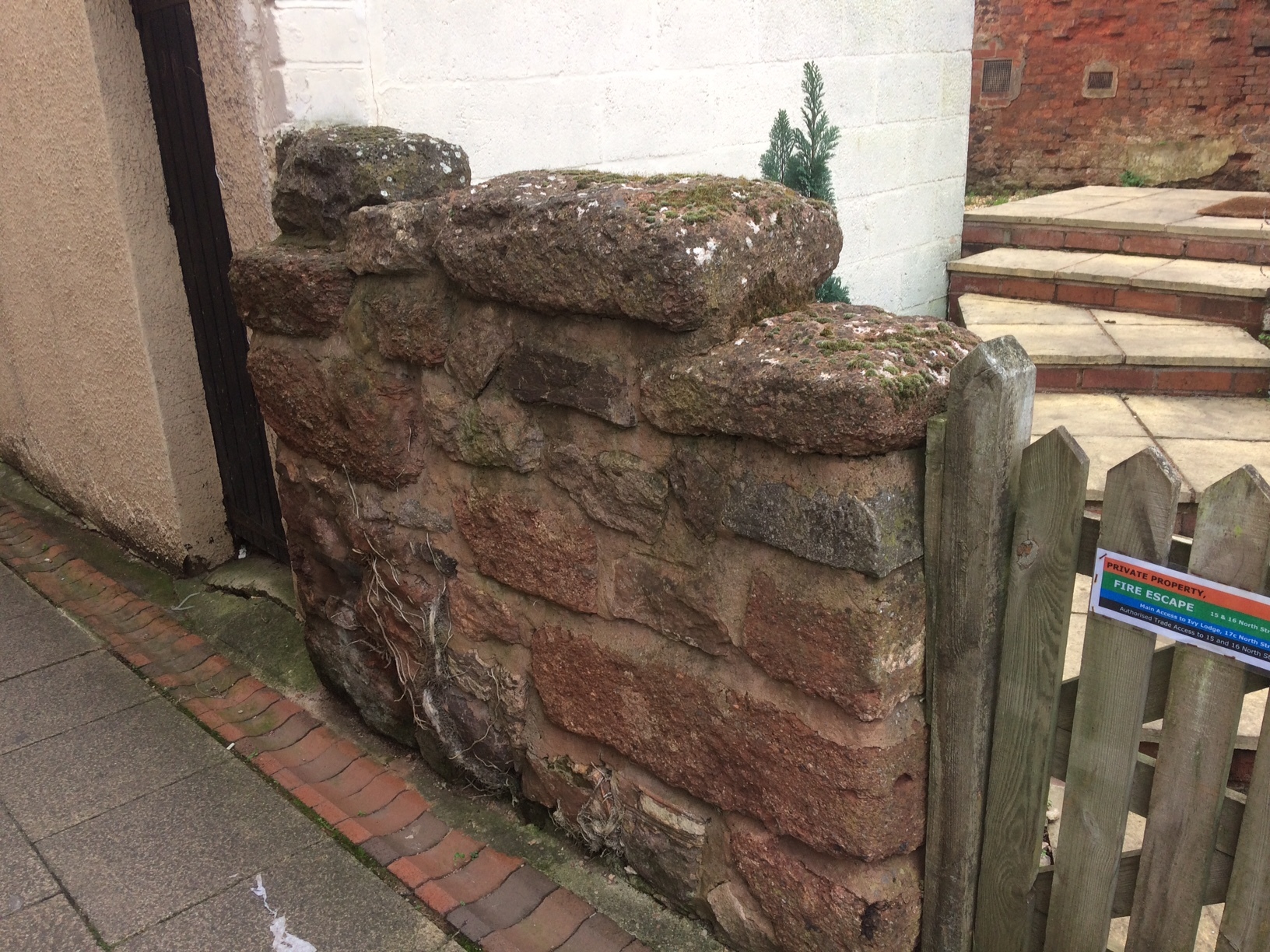
A rare relevant photo: A bit of Roman wall, now fencing off someone's garden in Exeter.

A rare relevant photo: A bit of Roman wall, now fencing off someone’s backyard in Exeter.

As always, people wanted to know about judges’ wigs, and occasionally about lawyers’ wigs. Someone wanted to know why barristers wear wigs, and I live to inform the curious multitudes. It’s because they want to. In spite of all the studying they had to do to become barristers, they watched too much TV and it left them with the impression that they’d look important if they ran around with white, sideways Shirley Temple curls on their heads.

No, I can’t explain it either.

Bonus relevant photo: A single stone, carefully placed in the same yard, which I'd call a garden if I weren't, at heart, American. Our best guess is that that the wall was hit when Exeter was bombed during World War II.

Bonus relevant photo: A single stone from the Roman wall, carefully placed in the same yard, which I’d call a garden if I weren’t, at heart, American. Our best guess is that that the wall was hit when Exeter was bombed during World War II.

A related comment (it wasn’t really a question) read, (and as usual, these come with no capital letters or question marks), “the wig which judges wear in uk courts is a with answers.”

Got that? If the writer’s correct, all those judges share a single wig. This has to be awkward, since although Britain looks small if you’re sitting in a big country like the U.S., it actually takes quite a bit of time to drive a single wig from courthouse to courthouse, stopping at every last one from Land’s End to John O’Groats and from Fishguard to the white cliffs of Dover. No wonder the courts are building up a backlog. It’s not budget cuts, it’s because that damned wig got caught in traffic.

Why do the judges have to wait for the wig to arrive? Because they’ve also been watching too much TV, but also because, as the writer says, “is a with answers.” The wig has the answers. Want to know the correct precedent for the case in front of you (and this is especially important in a country with an unwritten constitution that consists of a random number of historical documents and every damn precedent ever precedented)? The wig knows what it is.

And then it moves on.

Americans, as always, want to know what the British think of them, and especially if they hate them or like them. What is it with my fellow countrypeople? Is crossing the border into a foreign country so terrifying that we have to slip a message in a bottle before we take the risk, asking, “Is anyone out there? Do you hate me?”

Right now, a lot of the people I run into are asking what’s wrong with us (the us here being Americans), and I don’t have a good answer. If you’re American and visit Britain, please don’t take that as personal hostility. It’s political. And it’s a not a bad question.

Within a few days, over a million Britons signed a petition asking to ban Trump from making a state visit to the U.K. But relax, friends, no one’s doing anything extreme like proposing a ban on anyone with an American passport if they were born into one religion or another.

Several questions this time around asked about the phrase tickety boo. One person just typed in the phrase. Another wanted to know who says it. J. does from time to time. So do other people. Does that help?

Probably not. Here’s where I tell you everything I know about it. And more.

As always, a few people wanted to know about British beer and a few others wanted to compare American and British swearing. For all I’ve written about tea, no one who wanted to know about it was led here, they were all seized by larger sites. Grumble, grumble, grumble.

Someone wanted to know, “how to drive straight in a narrow.” Um,  you do that by not turning the wheel. Someone else typed in, “uk narrow streets dangerous for driving.” Oh, I dunno. If you’re careful not to hit anyone, they’re okay. They may be more work than a wide street, but I’m not sure they’re any more dangerous.

A third person asked, “Why are englands roads so narrow.” Because, my friend, a whole shitload of them were built before the first car was ade. They were the widths people needed (or could afford) back then. And—you know how this works—folks built their houses alongside them. And then cars were invented and traffic got out of control and even though people tried shoving the houses back a few feet it didn’t work, so they left them where they were and there they sit to this day. And when one or two of them fall apart or get torn down, they’re replaced by newer buildings but since the neighboring buildings are usually still standing, the road stays narrow.

And that’s how the crocodile got its tale.

Aren’t you glad I’m here to sort this shit out?

The usual wheelbarrowload of people wanted to know why Britain is called Great Britain, or simply why it’s called great. It’s not a moral judgment, it means big. Someone did ask, though, why it was called Britain, which is an interesting twist on the question and if life ever settles down a bit I’ll see what sort of answers I can dig out.

Almost as many people asked about brussels sprouts (usually in the form of why they’re eaten at Christmas) as asked about why Britain was called great. Now that tells you what’s important in the culture.

Someone wanted to know about “Russian hotel aftermath/torch [explicit].” That was before the allegations about Trump and golden showers in a Russian hotel, although maybe somebody knew something even then. Do the allegations mention a torch? I don’t remember any mention of that.

I also didn’t write about that. The search probably landed here because of a post about a hotel fire in Exeter. Which is not in Russia, it’s in Devon. And no one seems to be saying the place was torched.

As far as explicit goes, the post was pretty mild. Sorry if I’ve disappointed you. I lack imagination.

A few questions came from the clued-up. A few people wanted to read about emmits. It’s not something you ask about if you don’t already know a bit. Someone else wanted to know about “tutting in a queue.” Again, you have to know a bit about the British religion, which is standing in line—otherwise known as queuing—and British disapproval, which often takes the form of tutting, before you can ask the question. I’d give you a link to whatever I wrote about all that but I have no idea where it is. Google “tutting in a queue” and “Notes from the U.K.” and you may or may not find it.

Someone else asked, “why do mps walk five steps and bow.” Wow. Good question. Do they? Always? No wonder it’s so hard to accomplish anything sensible. The MPs (that’s Members of Parliament to the uninitiated) are all running around the Westminster chess board like knights with a twitch, one step forward and two to the side, then they bow. With two hops in the middle so it adds up to five.

Can I go watch?

One lone soul asked about kitten post it notes. I’ve used the word post, sometimes in the context of blogging and sometimes in the context of the Royal Mail. And when Fast Eddie was a kitten, I posted (and there’s that word again) photos because I was threatened with a boycott if I didn’t. So there you go. It all comes together.

Someone wanted to know about cockwombles. It was one of my more profound posts, if I do say so myself.

And finally, someone wrote, “notes i have my own rules to.” Uh huh. I have a few of my own rules, and lots of notes. I can even decipher some of then. Others are as much of a mystery as that comment is. I’ll leave it for you to figure out.

Stay sane, people. The world’s getting crazy. And speak up, because this is when it matters. It really, really matters.

Two links on what’s happening in the U.S.

Sue Ranscht sent a link to an article by Yonatan Zunger that argues, in convincing detail, that what we’ve seen happening in the U.S. this week is, as Zunger’s headline puts it, a trial balloon for a coup. It’s worth your time.

And Zipfslaw sent a link to an essay by Asra Q. Nomani and Hala Arafa arguing that non-Muslim women should not wear the hijab in support of Muslim women. I see their point, but in terms of tactics and timing I’m not sure I agree.

I’ll try to pull together something cheerier for Friday.

Following Captain Ahab into deep, deep water

I admire absurdity, especially political absurdity, but I’m finding it hard to laugh right now. As I write this (late Sunday, January 29), people with visas, and possibly with green cards—it’s not clear what’s happening right now, as opposed to what’s being said—with every legal right to enter the U.S. are being barred because they’re Muslims and from the wrong countries.

No, make that presumed Muslims, because I’m sure no one’s asking what they believe. I mean, c’mon, they might be terrorists, so why should anyone listen to them?

It echoes one of America’s moments of national shame, the World War II detention of Japanese-Americans, not because of anything they’d done, or even believed, but because their Japanese heritage meant they must be the enemy.

Is the current detention illegal? You bet your ass it is. It’s discrimination on the basis of religion. It’s refusing people who have a legal right to enter to country permission to enter the country. It violates a 1965 law that forbids discrimination against immigrants on the basis of their national origin.

Although several courts issued temporary stays of execution, Al Jazeera reports that the Department of Homeland Security said it would ignore them. The New York Times reports that the Department of Homeland Security said it would comply with the rulings, but it would also enforce the executive order. Are both things possible? Hard to say. In a world of alternative facts, I’m not sure we’re supposed to care.

The Times also reports that it’s not clear how consistently airport officials are complying with the court order.

When I was a kid, we were taught that the U.S. Constitution’s checks and balances were a stroke of genius of the part of the nation’s founders and the reason for America’s stability. From where I’m sitting, on the far side of the Atlantic, it sounds like the Trump administration wants to throw all that out the window. The executive branch is ready to ride over a federal court because they don’t like what it said. Because they don’t have to. Because who’s going to stop them?

As we used to say when I was a kid, “You and whose army?”

There are bright spots in the picture. Lawyers flooded to airports, volunteering their help. They filed suits, they did all the things lawyers do, except they did them for free. In places they seem to have been allowed to see detainees. In others, they seem not to have been. Protesters also materialized at airports. And at New York’s JFK airport, cab drivers staged a one-hour strike in protest.

On a personal note, my goddaughter—Catholic by baptism, I’m no longer sure what by belief—is considering wearing a headscarf as a gesture of solidarity. I don’t know if she’ll do it—it’s not an easy step to take and she’s concerned that it might actually offend the people she wants to support—but her courage and her commitment are humbling.

If I lived in the U.S., I’d be advocating that all women do it, but I’m an ocean away and don’t feel I have a right to advocate an act I’m in the wrong place to take myself. I’m increasingly uneasy at not being where I ought to be right now.

The U.S. hasn’t slipped irrevocably into one-man rule yet, but the signs are chilling. We’re far out into uncharted waters, friends, and Captain Ahab is at the wheel. I don’t know how long we have to turn the ship around. Although I’m not sure how much impact online petitions have, I’m signing them like mad because it’s something I can do. Because we have to do whatever we can.

Modern life on ancient streets

A few weeks ago, an armored truck parked on one of Launceston’s ancient streets to collect modern money from a store.

To someone born in Britain, Launceston’s streets might not seem ancient, just old. There’s so much older stuff around, it’s easy to get spoiled. Sure, they’re narrow and twisty, and the gatehouse from the old town walls is still standing. I can’t find a date for it, or for when the town walls were either built or torn down, so we’ll  have to settle for knowing that it’s old. The castle was built in 1070 and now a fixer-upper. The church dates to the sixteenth-century but has a tower from the fourteenth century.

But modern life has crept in around all that. Or marched in with hobnailed boots. New buildings have been added to the old, and the stores in old buildings have adapted them to modern uses. It’s easy to walk through and forget everything but the errands that brought you here: a stop at the chain stationery store, the bakery, the antique store (what’s more modern than an antique store?), even the lingerie shop if you have a lingerie kind of disposition.

On the day the armored truck parked, I wasn’t thinking about ancient streets but about the loaf of bread and two scones I was buying, but I gradually became aware of an un-ancient, automated kind of ruckus outside. Wild Thing had stayed outside with the dogs and by the time I joined her a crowd had gathered, not around her but around the armored truck, from which a flat, automated voice was repeating, on a loop, “Help. Help. G4S driver needs assistance. Call the police.”

No one was calling the police. It’s hard to get excited about a looped announcement saying, “Help. Help.” Whoever taped the announcement hadn’t managed to sound like she needed help. She wasn’t real and we all knew it.

Still, she might have done better if she hadn’t mentioned G4S, which is one of those outsourcing companies that does stuff governments no longer want to do themselves. Its focus is on security—something that’s subtly hinted at by its slogan, “Securing your world.” It’s best known for winning the security contract for the London Olympics and then failing to recruit enough staff. It had to be bailed out at the last minute by the army.

I shouldn’t laugh. I know I shouldn’t.

G4S also runs prisons (and “lost control” of one recently: translation, there was a riot), and they a similar company, Serco, had a contract to do electronic monitoring of convicted offenders. As the Telegraph put it, “anomalies were found in the data G4S handed over” to the government and the company had to pay back £109 million. It was all an oversight, I’m sure, and what’s £109 million between friends, but the Serious Fraud Office launched a criminal investigation. I haven’t heard that charges were filed.

What did those bland anomalies consist of? Among other things, they charged the government for monitoring people who either were back in prison or dead.

The dead are so easy to monitor. You can understand the temptation.

So, no, it’s not one of those companies people love, although I probably feel a bit more strongly about it than most of the people clustered around the back of the armored truck.

I asked Wild Thing what was going on and she told me the driver had locked himself inside, but the back door was now open and he was on stage. Which didn’t stop the tape from playing: “Help. Help. G4S driver requires assistance. Call the police.”

What G4S driver really required right then was a bit of privacy to pull himself back together, not to mention a way to stop the damn tape, but he wasn’t getting either of those things. The crowd lingered. And stared. And didn’t call the police. And he couldn’t close the door for fear of locking himself in again.

We left before the tape stopped. For all I know it played for the rest of the day and the driver’s still recovering.

The streets, however, remain as ancient as they were before he locked himself in.

And now a brief aside: When I was looking up dates for the various bits of the town, I consulted Wikipedia. It’s easy, it’s online, and it’s, um, often reliable.

At the end of the entry for Launceston, I found a list of notable residents: a poet, a New Wave guitarist, a sailor, an “antiquary and…oriental traveller,” and at the end of the list, “Emily Lovell, the biological and spiritual successor to Mao Zedong.”

The what?

The link from her name led to a Wikipedia entry on Maoism, where (surprise, surprise) no mention of ol’ Emily jumped out at me. Just to be thorough, I typed her name into Google, which offered to connect me to assorted Emily Lovells via LinkedIn, Instagram, Facebook, etc. They struck me as unsuitable hangouts for the biological and spiritual heir to Mao Zedong, so I skipped them.

I wonder if anyone else has noticed her at the end of the Launceston entry.