Putting the Kettle On

M. has my oven wired. When I bake, an alarm goes off in her house and she appears, as if by magic, at our door.

“Want a cup of tea?” either Wild Thing or I ask.

“Is the pope Catholic?”

She used to answer, “Is the pope a Nazi?” but that was before Francis. She was raised Catholic, so she gets to say stuff like that. I wasn’t raised Catholic so I don’t, but I will claim the right to quote her.

Irrelevant photo: flowers. As if you couldn't have figured that out.

Irrelevant photo: flowers. As if you couldn’t have figured that out.

I make a pot of tea and set out whatever I just finished baking. If I’m still getting it out of the pan, she asks, “Shall I put the kettle on?” Because you don’t want to stand between M. and a cup of tea, not even if you’re producing baked goods.

She never says, “You want me to I make the tea?” That’s what I’d say. With her, it’s all about the kettle. And while we’re at it, I don’t think I’ve ever said “shall I,” although M. says it as if it were a normal part of speech. And she doesn’t have what people here call a posh accent. She just, you know, uses it like language—ordinary, everyday language.

It’s this kind of thing that makes me doubt I’ll never write British (as opposed to American) dialogue. Oh, I can put together a line or two—enough to keep the blog fed—but if I wanted to write a full scene, never mind a full novel, in it? In no time at all I’d have one of my characters saying, “Want me to make the tea?” instead of, “Shall I put the kettle on?” Only it would be the equivalent on some subject where I haven’t noticed—or maybe even heard—the difference.

I know someone whose mind catalogs these small differences. Talking to her is like reaching into a grab bag: You (or more accurately, she) could pull out almost any sort of accent, along with any region’s phrasebook. It all lives in her head, organized into separate drawers (I know, I know, I’ve jumped metaphors; go ahead and shoot me), each neatly labeled, and none of it escapes to mix itself with her own accent—the accent she uses when she’s being herself. It’s an amazing, fascinating gift.

Me, though? I assimilate languages by steeping myself in them, and once I do I’ve taken on the new flavor. In other words, if I pick up a new accent or phrasebook in English, I’ll lose my clarity on the last one—the one I think is my own. Or more than that—is me. If I weren’t a writer, I wouldn’t have any problem with that. As a writer, though, I’m terrified that I’ll make such a cut-and-paste mess out of my accent that I won’t be able to write in any region’s English.

The Divorce Diet ebook is on sale–again

For reasons that I won’t even try to fathom, The Divorce Diet (ebook only) is on sale again: $4.99 starting on August 29 and ending on October 4.

Somewhere in the depths of my contract, the small print says that I get paid in scrip and good wishes when the book’s discounted, but at this point I’d just as soon get the thing out there so people read it. So if you want a copy and read ebooks, but the beast. I’m happy to see it (or in this case, imagine it) in people’s hands.

And if you happen to follow my Facebook page (something I don’t recommend; it’s so boring I don’t even read it, which is why it almost never gets updated) you will have been notified that it was on sale for an entirely different set of dates. Ignore it. I can’t be trusted with a calendar. I think I have it right this time. But if you see me messing around with numbers, run.

On being an incomer in Cornwall

What are we talking about when we say “community”? Or more to the point, what am I talking about?

Do a bunch of people who live in the same place automatically become a community or do we need to add some length of time? Or practical support, emotional support, friendships? What about mutual interests? By mutual interests I don’t mean everyone being obsessed with needlepoint or punk rock but that people’s individual self-interests intertwine with each other’s and with the group’s.

Irrelevant photo: pansies. They bloom all year round here. Having lived in Minnesota, I'm still knocked out by that.

Irrelevant photo: pansies. They bloom all year round here. Having lived in Minnesota, I’m still knocked out by that. These are the ones I’ve rescued, mostly, from the slugs.

Just to complicate things, if we have enough of those elements, do we need to share a place? Does it make sense to use community to mean something a lot like demographic—the African-American community; the Jewish community; the gay community? The groups that spring to mind as examples of this are all minority groups of one sort or another, which says something interesting, although to explore it I’d need a whole ‘nother post and—you may have noticed—it’s not really on topic for Notes.

So having asked those questions, I’m not going to answer them, just leave them with you. Sometimes just asking the questions is worthwhile. Or so I’m going to claim as I duck out on the tough questions.

All this comes to mind because I’ve tossed the word community around pretty loosely lately, and I’m about to do it again.

As an outsider, feeling like I’m part of the community is a big thing. It’s easy to romanticize the idea of community, or this particular community, when I can never be fully a part of it. If I’d grown up in the village, I can imagine my teenage self pounding against its limits, looking for a way out so I could get to what I would have been sure was the real world. I was like that in the community I did grow up in—which at the time I wouldn’t have called a community. As for the real world, I defined it as anywhere I wasn’t.

Some of the kids here are like that. It’s a small village, in a part of the world without a lot of jobs and even fewer that pay well—or that are even full time and year round. Not all the kids move out and not all of them want to, but some can’t wait. Others leave because they have to. Some stay and struggle through, and given the gap between pay levels and the cost of living, it’s not easy.

But here I am, retired and an incomer, counting the signs that I’m part of the community, knowing how absurd I am. I can report two new ones.

We have two overlapping bugs making the rounds, and I caught them both, almost at the same time. What could be more community minded? One’s a bad, fluish cold and the other’s a cough that goes on forever. As nearly as I can reconstruct it, I gave one to Wild Thing and she gave the other to me. Is that a good relationship or what? We thought we were alone in our misery until she staggered to a meeting (you can only isolate yourself for just so long, and besides, the only way to get rid of a bug is to give them to someone else) and returned with a list of other people who’d had one or both for weeks.

So, we have the community cold. Isn’t that heartwarming? It’s also the reason I couldn’t follow up on the second sign that I’m part of the community: J. suggested I write about it the Horticultural Show—a central village institution that I can’t make heads or tails of.

I hesitated because I tend to write—. How am I going to put this? I don’t do travelogues. I don’t do isn’t-it-lovely? With a very few exceptions, if I can’t find something to laugh about—preferably but not necessarily me—then I don’t have a post.

To be clear, I draw the line at writing about other people in ways that would leave them feeling rotten, although the occasional unidentifiable stranger is fair game. As are public figures. I confess, I tend to forget they’re real people.

Given those restrictions, could I go to the horticultural show and find something to write about? J. and I traded emails, and in the process she morphed from the person I’ve known for some years into a cheerleader for the show. Enter something, she wrote. Flowers. Vegetables. Something baked. You’re a baker. It’s right up your alley. Or knit!

Kint? I know how to knit the way I know how to play chess: I know all the moves but much good it does me. I have no way to predict, when I knit, what size or shape the finished product will be, and given the cost of yarn–nah. Besides, I had something like two or three days by then, and if those aren’t enough reasons, I have carpal tunnel syndrome and knitting aggravates it.

As for baking, to enter the show you have to bake something according to a the show’s recipe, not your own. I don’t see the point.

But then, the entire horticultural show is a mystery to me. You wander through and look at, say, eight paper plates of runner beans. Each has the same number of beans. Let’s say three; not many, whatever the actual number is. They all look like runner beans. None of them have spots. None of them have been chewed up by insects. But one plate won first prize and another won second and another won nothing at all, and I can’t see the difference.

So I wrote back to J. that since I didn’t understand how the show is judged it didn’t make sense to enter. Besides, for no reason I could explain, I just plain didn’t want to.

“Let’s pretend,” I wrote, “that it would undermine my journalistic objectivity.”

If you’ve been around here for any time at all, you know how much journalistic objectivity I have, but I did at least include the word pretend.

So she invited me to help set up and watch the judging so I could understand how it worked.

I’d been invited into the heart of village institution.

Which is when I added Wild Thing’s bug (a miserable, fluish thing) to the one I was already carrying and I had to back out. Given that all I could have contributed to the gathering was my germs, J. was glad to have me stay home. And I can’t say I blame her.

Maybe next year I’ll be able to report on the mysteries. Assuming the invitation’s repeated. And assuming I’m not sworn to secrecy.

Hamburger extra: what’s ground beef?

Okay, all you British burger cookers, here’s what you need to know: Ground beef is mince. I called it ground beef because I thought that could be understood in at least two versions of English. Ha. Goes to show what I know. J. called this morning to ask, and I’m glad she did or I’d have gone merrily on thinking I’d been clear. Sorry, everybody. Mince.

Serving Texas hamburgers in Cornwall, part 2: the definitive recipe

I already told you that the only ingredient in a Texas hamburger is beef, and that’s true but I may have oversimplified things. So I’m going to give you the full, formal recipe. Don’t leave here without it.

Before we get down to business, though, I need to explain that the difference between a Texas hamburger and any other kind of American hamburger.

Cornwall; Madron Holy Well

Screamingly irrelevant photo: Tree at Madron Holy Well, near Penzance. The tradition of tying cloth to the tree goes back to pre-Christian times, when it was believed to cure illness. Exactly why people do it today is anyone’s guess. Maybe to cure an illness; maybe to brush shoulders with something ancient or add their bit of cloth to something compelling. I was tempted, because it is compelling, even though I don’t believe it can cure and wasn’t sick to begin with.

People don’t notice regional differences in countries that aren’t theirs, but if you live there, they matter. A California burger comes with lettuce and tomato, and if you live in California it’s just called a hamburger. It’s the rest of the country that calls it a California burger. And a Texas burger? It has one ingredient no one else can match and it has its own cooking method.

The ingredient is attitude. A Texas hamburger has it, and much as I love other parts of the country we just can’t rival Texas for its outright and usually charming bullshit. Without the good ol’ Texas bullshit, what you have is a plain ol’ American hamburger. That’s not bad, but it isn’t from Texas.

If you’re not from Texas can you do Texas bullshit? Probably not. Many and many a year ago in a queendom surrounded by the sea, we were trapped across a table in a broken-down train with an Englishman who lived in Texas and thought he’d learned the trick. What he’d learned to be was loud, self-important, and obnoxious. What he hadn’t learned was charm. It was a very long wait for that train to get moving again.

What do I recommend, then? A) Invite a Texan and turn her or him loose, B) offer your burgers to a group of people who don’t know about the secret ingredient and won’t miss it, or C) call it an American hamburger. Do not, under any circumstances, try to substitute a low-cost bluster for Texas bullshit. You’re better off without it.

And the cooking method? You cook the burgers outdoors, on a hot grill, and you cook them, at most, medium rare. When the burger’s almost done, put the top half of the bun on it. This spreads the grease on it. Wild Thing assures me that’s good.

The grill has to be hot, so the outside gets seared and dark. If you’re using charcoal, Wild Thing tells me you have to let the coals get white hot. Tossing a bit of water on them will release some steam and heat everything up. It’ll also bring a little drama to the process. She uses a gas grill, and she buys hardwood chips, soaks them, and tosses them into the grill to give the meat a smoky flavor. Oak is good, but any hardwood will do. Pine won’t.

What about the folks who can’t bring themselves to eat their burgers rare? We-e-ll, it’s up to you, of course. I suspect Wild Thing’s becoming a bit of a missionary about this, but the fact is that she did re-grill the hamburgers that were brought back to her. Whether she can bring herself to do it a second time is anyone’s guess.

So here’s the recipe. Be sure to get the proportions right:

Texas Hamburgers

Good ground beef

That’s it. Nothing else. Not even salt and pepper. No eggs, no bread crumbs, no shoelaces. Don’t (as I’m sometimes tempted to do) buy cheap ground beef, telling yourself the fat will cook out. Get the good (for which you can read more expensive) stuff, divide it up, pat it into shape, and grill the hell out of it. Put it on a bun, put some ketchup on it, and eat it.

And remember, you got the recipe from a vegetarian.

Serving Texas hamburgers in Cornwall

Texas ran head-on into Britain last weekend and—. I was going to say that I’m not sure who won but it wasn’t a contest so maybe no one had to. Let’s say that both sides learned something.

Maybe.

Our village hall held a fundraising barbecue, and Wild Thing volunteered to make and grill Texas hamburgers.

Irrelevant photo. Four people. Evening. The cliffs.

Irrelevant photo. Four people. Evening. The cliffs.

The first thing you have to understand is that barbecue is one of those words that look like they’d mean the same thing on both sides of the Atlantic but don’t. In Britain it means cooked outside, on a grill. In the U.S., it has to do with sauce, fire, secret rites and recipes. It’s close to being a religion. Maybe it is a religion. I’m a vegetarian and originally a New Yorker, so you shouldn’t take my word on the subject.

The second thing you have to understand is that hamburger’s another of those words. In the U.S., it’s both the raw meat and the cooked thing that you eat. It’s made with ground beef and nothing else. In Britain it means only the thing you eat. The meat it’s made from is called mince, and to make it into a hamburger you add stuff and then cook it. Not just stuff, though, all kinds of stuff. Onion, egg, bread, Worcestershire sauce, mustard, garlic, sweet chili sauce, cumin, coriander, tomato puree, breadcrumbs, bicycle tires. Not all in the same recipe, I admit, but one recipe I found tossed thirteen ingredients into the meat.

It’s enough to drive a Texan to tears. Or drive her to say she’ll make the burgers and everyone else should stand back.

The number of ingredients explains why so many people here buy their hamburgers ready made. Because it never occurs to them that they can just divide up the meat and flatten it. They have to empty the contents of their kitchen cupboards into a bowl and mix it all up before they have—as folks here would say—a proper hamburger.

I don’t suppose I can go any further without mentioning that there were some scandals here a couple of years ago about horsemeat working its way into the food chain and showing up in, yes, preformed hamburger patties. They’re a perfect host, since they have enough extraneous ingredients to hide anything that doesn’t belong there. You could probably slip in a screwdriver and call it chopped onion, only onion’s cheaper so why would you bother?

If you’re from a culture that doesn’t eat horsemeat, finding that you just chowed down on it is shocking. More serious, though, is what its appearance in the burger patties says about how much any of us knows what we’re eating. Is someone selling not just the wrong animals but diseased animals? You can see the problem.

Anybody want to bet that the funding for food inspection has been cut?

Enough with the politics, though. We’re talking burgers.

So Wild Thing bought the beef and shaped the patties. She had some help, but if anyone had been tempted to add anything but beef she was right there to fight them off. Then she stood by the grill, flipping the meat and promoting the politics of the Texas hamburger. When meat’s involved, she does tend to, as J. puts it, open a can of Texas.

So how did the hamburgers go over?

A lot of people liked them enough to ask what was in them.

Beef.

Yes, but what’s in them.

Beef. You don’t add anything.

A. stopped by yesterday to say they were the best hamburgers he’d ever eaten, but he had trouble believing they wouldn’t need something to bind them together. No egg?

Just beef.

So that was one group of people.

Then there was the other group. They brought theirs back and asked if Wild Thing would put them on the grill for another few minutes. Or another twenty. Two or three brought them back again because they could still see pink. If a trace of juice landed on the bun, it wasn’t done.

A couple of the re-grillers volunteered that they liked their steak rare but couldn’t eat hamburger that way. No matter how much Wild Thing begged them to close their eyes and try.

So Wild Thing put them back on the grill. She’s not given to tears, but if she was she’d have wept to do that to good beef.

Who learned what? It’s hard to say. Wild Thing thinks she’s learned that she won’t get to grill the hamburgers next year, although it’s too early to know if she’s right. A few people learned how to make an American burger. If anyone learned to eat their hamburgers rare, I haven’t heard about it.

Terror at the seaside: we all get hysterical about gulls

Let’s talk about wild beasts. Specifically, let’s talk about gulls, since they’ve been in the news here lately. They’re vicious creatures who dive bomb innocent civilians and steal their ice cream cones. Visit to the coast and you’re gambling with your life and your sanity. I’m exaggerating, but at least I admit it.

Yes, friends, the British press is getting hysterical again, so let’s settle for just one link. Enough is plenty.

A rare relevant photo, although it's from Belgium, not Cornwall. From Wikimedia, by Loki11.

A rare relevant photo, although it’s from Belgium, not Cornwall. From Wikimedia, by Loki11.

Before I tell you the terrible tales, I should let you know what I’ve learned about gulls:

They’re not really called seagulls. They’re gulls, and since we’ve already irresponsibly established that they’re vicious we don’t want to make ‘em mad, so we’ll call them what they want to be called. If you don’t believe me that they don’t like being called seagulls, just ask one.

If you dare.

According to Wikipedia, they’re “of the family Laridae in the sub-order Lari. . . . An older name for gulls is mew . . . This term can still be found in certain regional dialects.”  That, irrelevantly, explains a song that mentions seamews. I always wondered what they were. Play nice or I’ll sing it to you.

But back to gulls. (Nice birdy. I’m leaving part of my sandwich right here for you. Leave the finger. I need that.) There have been some incidents, and as usual if they happened to me I wouldn’t be happy about them, but I don’t know how new, or newsworthy, any of this is.

In the most serious incidents, a small dog—a yorkie, a breed that can get so small they’re not really big enough to be dogs—was killed by gulls and a tortoise was ditto. With those two things at the top of the page to draw our eye, column inches have been devoted to cafes and take-away joints trying to protect their customers (and their food) from birds and to children and adults being frightened, and occasionally hurt, by the birds.

Ever since I moved here, I’ve been reading about problems with gulls, or seeing segments on the local news. Or protecting my scones from them. Cornwall’s full of seaside towns and villages, and seaside towns and villages are full of summer visitors, and with the visitors come picnics and ice creams and chips (those are french fries if you’re on the left-hand side of the Atlantic) and so on. And gulls are nothing if not scavengers. If food’s around, they want to know about it. As a result, in some places they now nest on roofs instead of (or more likely, in addition to) the rocky offshore islands they used to like. I seem to remember hearing about a street where the letter carrier refused to deliver mail after getting swooped on once too often. That was a few years ago, then the story disappeared and we never found out what, if anything, got done.

Oddly enough, although gulls sit around on our roof and our neighbors, they don’t do anything more right here than yell and get into the garbage if a fox has already torn the bag open. As far as I know, they don’t even tear the bags themselves, although I can’t swear to that.

In response to this latest flap, the prime minister, David Cameron, has pontificated—sorry, announced that we need to have a big discussion on the subject. He’s counting on the subject disappearing with the summer leaves before he has to figure out needs to be said in the discussion, never mind what has to be done–or worse, have to spend money on it. Should we kill all the gulls? Shut down the seaside? Issue visitors with plastic bubbles?

Saint Ives used to cull gulls and use birds of prey to keep them from nesting. They also had a van driving around town playing loud noises to scare them off. What the van did to the tourists, I don’t know. I wouldn’t think they’d be crazy about loud noises themselves. It probably kept them from nesting on the roofs too.

The thing is, all of that is expensive. A cull costs £10,000. We’re in an age of austerity. That it’s artificially induced (in my not particularly popular opinion) is beside the point. Local governments are having to choose between libraries and leisure centers and then realizing  that they can’t afford either. So St. Ives is trying flapping colored flags. I don’t know how well that’ll work on gulls, but I tried flapping computer disks to keep the birds (blackbirds, I think) off my raspberries. After the first day or two, they were onto my tricks. They not only ate the berries, they set up their laptops on the outside table.

Truro is trying paint that reflects the sun’s UV rays. My guess is that we’ll be seeing gulls with sunglasses in the center of town.

When this first came out, I heard a scientist interviewed on the BBC’s Radio 4. He’d designed a study of urban gulls with an eye toward finding a solution to the problems they present. Embarrassingly enough–not for him but the the government–it was first funded but then defunded before it ever got going. It’s an age of austerity. We can’t afford that sort of frippery until everyone gets hysterical and starts yelling that someone had better do something. Even if it’s random and ineffective.

An update on political absurdity

This British American Life has a funnier example of American political absurdity than the one I sent out a little while ago. Follow the link to learn about the paperwork you have to submit if you want to be reimbursed for going to the moon. Because you can never tell when you might need to know that.

And while we’re talking about absurdity, don’t you just love that I provided a link back to my own post, even though I said wasn’t as funny? Anybody want to place bets on how many people will follow it?

The Mother of Parliaments and the mother of all silliness

After I promoted a post on political absurdity, a Google+ user, Andrew Knighton, wrote to say that “when Caroline Lucas [Member of Parliament for the Green Party] became an MP she received a ceremonial dagger on a ribbon days before she received the computer equipment she needed to do her job. I love absurdity as much as the next man, but as a Brit I’d really like to see the traditions swept up and replaced with decent processes.”

I can’t disagree—what happened is completely batty and I’m sure politics would make more sense if they stopped handing out ceremonial daggers and started handing out computers—but you have to admire the sheer insanity of it all. Or at least, I do.

Before I go on, I should either remind or inform you that Parliament likes to call itself the Mother of Parliaments. I’m not enough of a historian to know if that’s a fair claim, but it does at least explain the title I used.

Screamingly irrelevant photo: Minnie the Moocher (left) and Fast Eddie

Screamingly irrelevant photo: Minnie the Moocher (left) and Fast Eddie

With that behind us, I should tell you that I tried to confirm that whole dagger business by googling variations of Caroline Lucas, ceremonial dagger, and so forth. I ended up with articles on Sikh ceremonial daggers, The Vampire Diaries (I’m sure there’s some connection but I didn’t click through and try to figure out what it is), fracking as a dagger pointed at I didn’t click through to find out what—the heart of England, if I had to guess—and so forth. I did click through to something about the City Remembrancer, whose role dates back to 1571 and who does I didn’t read enough to find out what but damn, wouldn’t it be fun when someone asks what you do to say, “I’m the City Remembrancer”?

Anyway, I can’t confirm that the thing about Lucas and the dagger is true, although I’m sure it is. It’s too batty not to be. What I did find was an article by Lucas on what no one tells you before you enter Parliament.

Among other things, she reports that although the parliamentary smoking ban dates back to 1693, snuff is available at taxpayer expense. She’s never seen anyone dip in, but she did try it once, just to see what it was like. She says Parliament is like Hogwarts meets Gilbert and Sullivan. In the old palace, “The wood panelling is gloomy, the carpets have come straight from a 1970s pub, and there’s a pervading smell of school dinners.” Ah, the majesty of it all.

MPs don’t refer to each other by name when they’re speaking in the chamber. They call each other “the honorable member from [wherever]” or if the person being talked about is of higher status “the right honorable. . . .” She capitalizes all of that. There’s probably a rule about that too. These people can talk in capital letters. Me, I can manage italics once in a while, but I’m sparing with capital letters.

She also writes that most MPs have no idea what they’re voting on, so they have to follow party discipline and vote the way they’re told.

She doesn’t mention daggers, but I recommend the article anyway. Whether you agree with her politics or not, this woman can write. And she’s got a sense of humor.

Crime in Britain, part 3: emergency calls

Ever wonder what it’s like handling emergency calls? You know, the pressure, the life-and-death situations, the idiot who calls because a parking meter ate his change?

Okay, I made up the parking meter, but the real stories are better. The Avon and Somerset Police took to Twitter in the hope that it would educate us about what the word emergency means. I’m not convinced it will, but it’s been fun.

For all I know, they weren’t hoping to change things but just wanted to keep themselves amused.

Anyway, since I’ve been writing about the serious side of crime lately, I thought I’d let you know what emergency calls are like before I move on to some other topic.

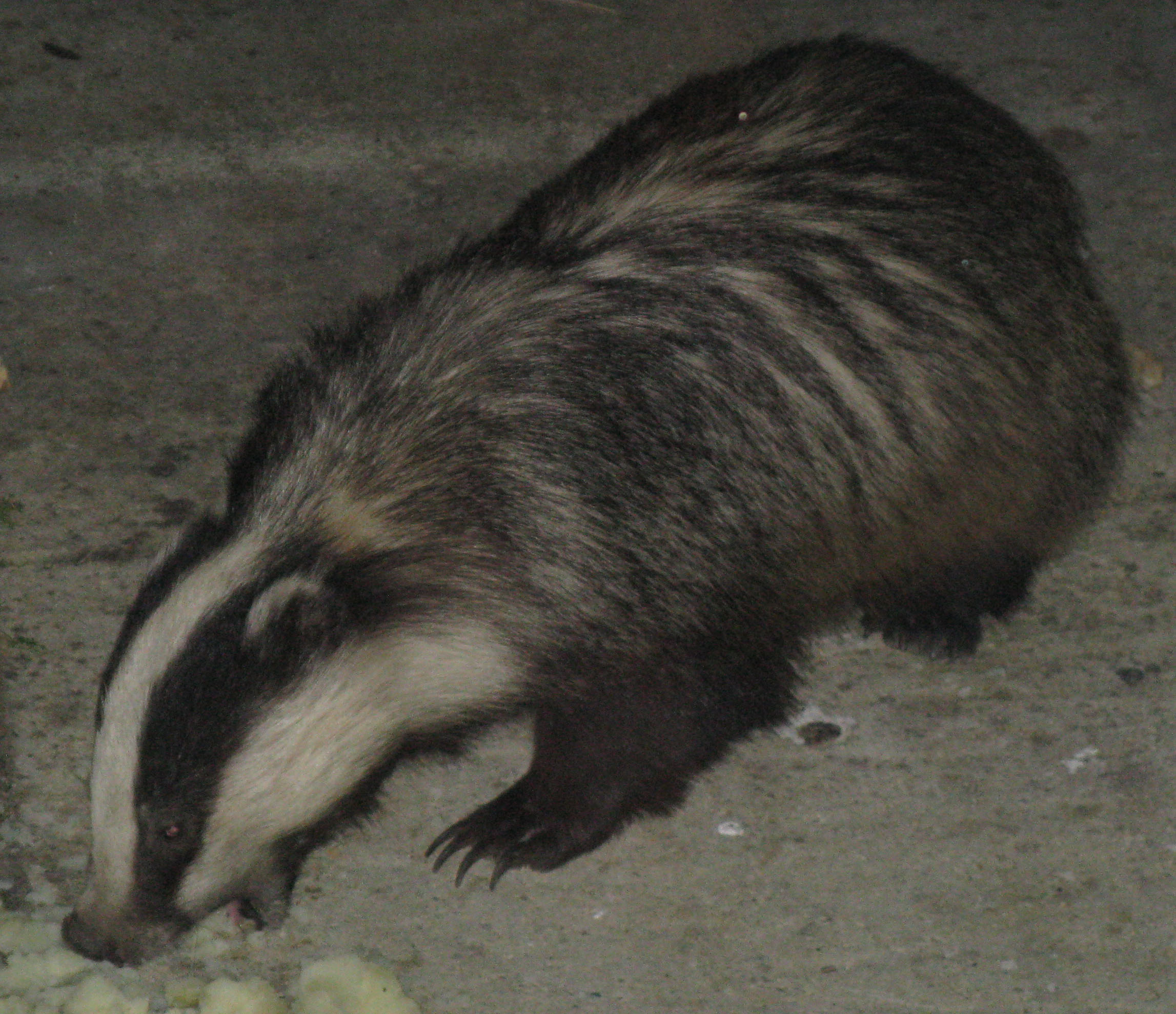
Let’s start with the man who reported being chased by a vicious badger. He dangled his keys at it and scared it away, he said, and he wasn’t sure where it had gone but he thought maybe someone ought to know about it. Just to put it on record, I guess, so in case it attacked again it would have a prior—well, not conviction exactly. Convictions are only possible if you’re human, so let’s just say something vaguely related to a prior conviction.

Relevant photo. I couldn't help myself. I had no idea what a badger looked like before I moved here, so I thought I ought to toss one in. This is from Wikimedia, taken by Prosthetic Head, and don't ask me what that means. I'm only repeating what the data says. It's scarier than the badger if you ask me.

Relevant photo. I couldn’t help myself. I had no idea what a badger looked like before I moved here, so I thought I ought to toss one in. This is from Wikimedia, taken by Prosthetic Head, and don’t ask me what that means. I’m only repeating what the data says. It’s scarier than the badger if you ask me.

He and the call handler agreed that he should maybe call animal control, and that got him out of her hair. Then the story was tweeted (and probably press released), and both the BBC and the Western Morning News picked it up, and even though I’m adding my miniature noise to the uproar I do kind of feel sorry for the guy.

Okay, moment of conscience over. What are the other calls like?

A man called because a gull stole his sandwich, and a woman called because a guest house owner refused to cook her a breakfast.

Let’s assume she was a guest there.

A caller asked to speak to the queen. Someone reported being splashed by a puddle. That makes it sound like the puddle was the active agent, which means I could safely insert vicious, as in splashed by a vicious puddle. Someone else complained that a taxi seat belt was too tight. A man found a melon on his doorstep, cut into slices. That’s the melon, not the doorstep. A woman reported that Mary Berry kidnapped her. Mary Berry, for those of you who don’t live in the U.K., is a TV presenter. She bakes, and she’s neither young nor threatening looking. If she kidnapped you, you could expect cake and a nice cup of tea. You might, however, have to wear an apron and learn to use a whisk. But I’m getting sidetracked. A drunk asked for a ride home.  A woman reported a wisp in her house. A man reported that his mobile phone provider was robbing him because he had no service.

It’s a dangerous world out there.

The police tweeted this kind of stuff for twenty-four hours at #ASP24, where you can still find it—or could last time I checked; I’m not sure how long these things hang around. There’s also some lovely insanity mixed into the general self-promotion if you go to @ASPoliceLIVE. I can’t put those in as links because Twitter links don’t work. Who knew that? Raise your hands please.

Even before I knew that, though, I knew they’d wreck the sentence.

And with that, I’ll wish you all a safe and happy weekend. Try not to call cops, the fire department, or an ambulance, no matter how vicious the puddles are where you live.